Create and Sell Digital Products: A Practical Guide
If you’re ready to create and sell digital products, you need a real-world blueprint, not just a bunch of theory. I’m going to walk you through a clear path that takes you from a simple idea to a reliable source of income. We'll cover four essential parts: coming up with a profitable idea, building something people actually want, setting up your online shop, and getting it in front of the right customers.
Your Blueprint for Digital Product Success

Turning what you know into a business can feel like a huge mountain to climb, but it doesn't have to be. The secret isn't some revolutionary "big idea"—it's about following a solid, repeatable process. This approach works whether you’re a seasoned expert or just getting started, because it cuts through the noise and helps you sidestep the tech headaches that stop most people in their tracks.
Think of this guide as your roadmap. We’ll break down the entire journey into small, manageable steps. You'll learn how to make sure people will actually buy your idea before you build it, how to create a product that delivers real value, and how to pick the right tools that help you grow instead of holding you back.
Understanding the Opportunity
Let's talk numbers for a second. The market for digital products isn't just growing; it's exploding. The global market is projected to hit an incredible $6.8 trillion by 2025.
What’s fueling this? People everywhere are hungry for online courses, e-books, and private communities to learn new skills and solve their problems. This creates a massive opening for creators like you to build a business without worrying about inventory or shipping. You can learn more about these digital product trends and their impact on e-commerce.
By focusing on the right steps, you can put yourself right in the middle of this demand.
The Four Phases of Digital Product Success
Before we dive deep, let's look at the big picture. I've broken down the entire process into four key phases. Think of this table as your strategic checklist for turning your expertise into a thriving online business. Each phase builds on the last, giving you a repeatable formula you can use for any digital product you launch down the road.
The Four Phases of Digital Product Success
| Phase | Primary Goal | Key Actions |
|---|---|---|
| 1. Ideation & Validation | Confirm a paying audience exists for your idea. | Find real customer pain points, check out the competition, and run simple polls or surveys to see if people are interested. |
| 2. Product Creation | Build a high-value product that solves a specific problem. | Outline your content, pick the best format (course, e-book, community), and obsess over delivering a great user experience. |
| 3. Platform Setup | Choose an all-in-one system to host and sell your product. | Go with a platform that offers 0% transaction fees, native video hosting, custom domain support, and built-in tools for courses and community. |
| 4. Marketing & Sales | Reach your ideal customers and turn them into buyers. | Create a pre-launch waitlist, write a sales page that converts, and use content marketing to attract your target audience. |
Mastering these four areas is the key. It's not about being perfect, but about taking consistent, focused action in each stage. Now, let's get into the details of the first phase: finding that winning idea.
Finding and Validating Your Profitable Idea

This is where so many creators get it wrong. They build something they think is brilliant, launch it with high hopes, and then… crickets. To sidestep that painful experience, the first and most crucial step is to find an idea people will actually open their wallets for.
It's tempting to follow the old advice to "follow your passion," but that's only half the story. The real goal isn't just to find an idea; it's to find a problem. Profitable digital products are simply solutions to nagging, specific problems. This simple shift in thinking—from "what can I create?" to "what can I solve?"—changes everything.
Pinpoint Your Unique Area of Expertise
Let's start by looking at what you already know. The sweet spot for a great digital product lies at the intersection of your skills, your interests, and what people are actually looking for. What subject could you talk about for hours without getting bored? What do friends and coworkers constantly ask you for help with?
Think beyond your 9-to-5 job. This could be a hobby you've poured thousands of hours into or a personal challenge you've successfully navigated.
Grab a notebook and jot down everything that comes to mind. Don't filter yourself.
- Professional Skills: Are you the go-to project manager who can teach anyone a productivity system? Or maybe you're a developer who has a knack for explaining complex code in simple terms.
- Personal Experiences: Have you figured out the confusing process of buying your first home or finally managed to train a stubborn puppy? That’s valuable knowledge.
- Hobbies and Passions: Maybe you're an expert gardener, a skilled musician, or a wizard at planning incredible trips on a shoestring budget.
Once you have a running list, you're ready to start digging for the real pain points inside each of those areas. This is where your market research truly begins.
Uncover Customer Pain Points Through Social Listening
The best ideas won't come from a brainstorm in your office. They'll come directly from your future customers. You need to become an obsessive listener and observer in the places where your audience hangs out online. Think forums like Reddit, private Facebook groups, and niche online communities.
Keep an eye out for recurring questions and frustrations. You're looking for phrases like, "How do I…?", "I'm really struggling with…", or "Does anyone know a good tool for…?". Pay close attention to the exact words people use—this is the language they use to describe their problems, and it’s gold for your future product and marketing.
My Two Cents: A validated idea isn't a guess. It's a direct response to a conversation your audience is already having. If you find people asking the same questions over and over, you've stumbled upon a powerful signal of demand.
For instance, if you're in a Facebook group for new freelance writers, you’ll likely see dozens of posts from people asking for contract templates or help with pricing their services. That’s your sign. A "Freelance Starter Kit" e-book or a pack of templates would almost certainly sell. The market has done the hard work for you.
Analyze Competitors to Find Your Opening
Okay, so you have an idea that seems promising. Now, it's time to scope out the competition. Don't let the presence of other products discourage you. Competition is a good thing! It proves there's an active, paying market for your topic.
Your job isn't to copy what's already out there. It's to find a gap you can fill.
As you look at what your competitors are offering, ask yourself a few key questions:
- What formats are they selling? If everyone is offering a 200-page e-book, maybe your audience would prefer a hands-on video course or a private support community.
- Who is their target audience? Is it broad? You might be able to find more success by niching down. Instead of a general "social media marketing" course, you could create one specifically for local coffee shops.
- What are their customers saying? Dive into the reviews and comments sections. What do people rave about? More importantly, what do they complain is missing? That feedback is your roadmap to creating something better.
By finding a unique angle or serving an overlooked corner of the market, you can carve out your own profitable space. This research is the foundation for everything that comes next. And as you do this work, remember that an email list is your most powerful asset. To get a head start, check out our guide on how to build an email list and start gathering interested leads from day one.
From Idea to Asset: Building Your High-Value Digital Product
You’ve got a killer idea that you know will help people. Fantastic. Now comes the fun part: turning that concept into a real, tangible product that your customers will be thrilled to buy. This is where you roll up your sleeves and transform your expertise into a polished, professional solution.
The goal here isn't just to dump information. It’s to create something so genuinely valuable that the price feels like a steal. We're talking about crafting an experience—one that solves a real problem and makes your customers feel seen, understood, and successful. A product built this way practically sells itself and keeps people coming back for more.
Give Your Content a Backbone: The Power of a Good Outline
Before you even think about hitting record or typing a single word, you need a solid plan. A detailed outline is your roadmap. It ensures every single piece of your product has a clear purpose and logically guides your customer toward the result you promised them.
Start with the finish line. What’s the ultimate transformation your customer will achieve? Once you have that locked in, work backward. Break down the journey into digestible modules or chapters.
Here’s a simple structure that works almost every time:
- Module 1: The Foundation. What are the absolute must-know concepts a beginner needs? Get them started on the right foot and build their confidence early.
- Module 2: The Core Method. This is the meat of your product. Lay out your signature process in a clear, step-by-step way that’s impossible to misunderstand.
- Module 3: Leveling Up. Introduce the advanced stuff—the nuanced strategies and pro tips for people who've mastered the basics and are hungry for more.
- Module 4: What's Next? Don’t just leave them hanging. Provide checklists, templates, or a simple roadmap to help them keep the momentum going long after they’ve finished your product.
This kind of structure prevents overwhelm and gives your customers a series of "quick wins," which is crucial for keeping them engaged and motivated.
Choosing the Right Vehicle for Your Knowledge
How you deliver your content matters. The format you choose should feel like a natural fit for both the information you're sharing and the way your audience likes to learn.
E-books, for instance, are perfect for structured, text-heavy information like guides, frameworks, or even recipe collections. They're relatively quick to create and provide a fantastic, low-cost entry point for new customers. If you're leaning this way, our guide on how to make and sell an e-book walks you through the entire process.
Online courses, on the other hand, are the go-to for teaching complex skills that really benefit from a visual "show, don't just tell" approach. And the demand is huge.
The online learning market is on a rocket ship, projected to hit around $840 billion by 2030. This boom is driven by people wanting flexible, accessible ways to learn new skills. In fact, digital products as a whole have generated over $2.5 trillion in value annually as of 2025. You can see more digital product statistics and trends here.
A paid community is a brilliant option for topics that thrive on interaction and accountability. This format not only creates a recurring revenue stream but also helps you build deep, lasting relationships with your biggest fans. As Przemysław Niemczuk of TreningBiegacza.pl notes, a platform’s course module should combine “simplicity and high functionality.” The real magic, though, often happens when you combine these formats into a single, cohesive offer.
Don't Let Tech Ruin a Great Product
The actual experience of using your product is just as important as the content inside. A clunky, confusing setup can completely undermine the most brilliant information. Nobody wants to juggle three different logins for your course videos, community forum, and payment history. It's a recipe for frustration and refunds.
This is where having everything under one roof becomes a massive advantage. Imagine a customer buys your course and immediately gets access to the video lessons and a private community channel just for that course—all with one password, all under your brand. That's a smooth, professional experience that boosts engagement from day one.
Platforms like Zanfia are built for this. They come with native video hosting, which means you can ditch expensive third-party services like Vimeo or Wistia while still supporting integrations. Your videos live right on the platform, saving you a ton of money and headaches. Plus, the smart video player automatically saves a student's progress, so they can pick up right where they left off. When everything just works, you look like a pro and your customers can focus on what matters: getting results.
Choosing Your All-In-One Platform
Let's talk about the engine of your digital product business: your tech stack. Get this right, and you’ll have a smooth, automated machine propelling you forward. Get it wrong, and you're signing up for constant friction, tech headaches, and frustrating manual work. Honestly, this is one of the biggest decisions you'll make.
So many creators start by duct-taping different tools together. A WordPress site here, a few plugins for payments, another for courses, and maybe a separate Discord for the community. It feels flexible at first, but it quickly becomes a fragile, disjointed mess that needs constant babysitting.
The smarter alternative? A truly integrated, all-in-one platform built from the ground up for creators.
Why a Unified System Matters
Imagine a world where your sales page, checkout, course content, and community discussions all live under one roof. That’s what a unified system gives you. For your customers, it’s a seamless dream—one login, one consistent brand experience. For you, it means less time fighting with tech and more time doing what you love: creating.
Before you even pick a platform, you need to be crystal clear on what you're selling. This decision tree can help you map out which digital product format really clicks with your goals and your audience.
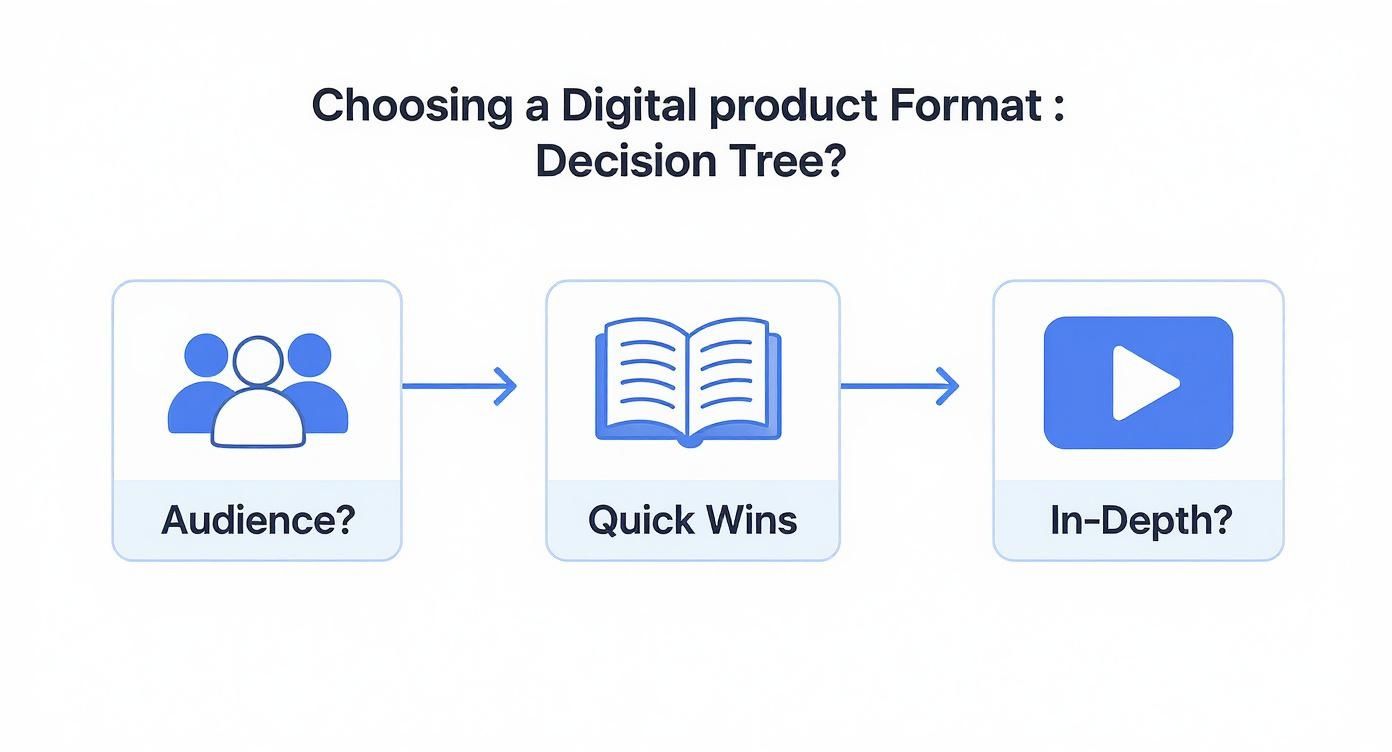
As you can see, the sweet spot is finding that balance between what your audience needs and what you can realistically deliver. That insight will guide you toward the right product, whether it's a quick-win e-book or a deep-dive course.
Key Features for Serious Creators
As you start looking at platforms, a few features separate the professional-grade tools from the basic ones. These aren't just nice-to-haves; they're essential for launching and scaling.
- Custom Domain and White-Labeling: Your brand is everything. A platform that slaps its own logo all over your pages is diluting your identity. You need a solution that lets you use your own domain and is fully white-labeled. Your customers should feel like they're in your world, not the platform's.
- Flexible Monetization Models: Your business isn't static, and your platform shouldn't be either. Basic tools might only handle simple one-time payments. A serious platform needs to support subscriptions, installment plans, bundles, and upsells. This is how you maximize customer lifetime value.
- Integrated Community and Courses: Real engagement dies when you send people to a separate Facebook Group. An integrated platform like Zanfia keeps your learning and discussions in one place, which is a game-changer for boosting interaction and keeping members around.
For a much deeper look at the options out there, check out our guide on the best platforms to sell digital products for detailed comparisons.
Platform Comparison: Digital Product Solutions
To make this a bit clearer, let's break down the three main types of solutions you'll encounter. Each has its pros and cons, but for a creator who wants to focus on growth without becoming a full-time IT manager, the difference is stark.
| Feature | WordPress + Plugins | Marketplace-Style Platforms | All-In-One SaaS (like Zanfia) |
|---|---|---|---|
| Branding Control | Full control but requires technical skill | Limited; platform branding is prominent | Full control with white-labeling & custom domains |
| Transaction Fees | None from WordPress, just payment processor fees | High (often 5-10% per sale) on top of processor fees | 0% platform fees; only standard processor fees |
| Ease of Use | High learning curve; constant updates/maintenance | Very easy to start, but restrictive | User-friendly; designed for non-technical creators |
| Integrated Features | Disjointed; requires multiple, often conflicting, plugins | Varies, but community is almost always separate | Fully integrated (courses, community, sales, email) |
| Long-Term Scalability | Can become slow and unstable as you add more plugins | Limited by platform's features and rules | Built to scale with you without tech headaches |
The takeaway here is that while starting with a marketplace or a DIY WordPress site seems appealing, an all-in-one SaaS platform is built for sustainable, long-term success. It handles the tech so you can handle the business, providing what developer Daniel Roziecki calls "peace of mind."
The Hidden Cost of Transaction Fees
This is a big one. It's so easy to overlook, but platform fees can silently drain your profits. Many platforms look cheap upfront because they take a percentage of every single sale you make. A small 5% cut might not sound like much at first, but it adds up—fast.
Think about it: For established creators earning PLN 10k–100k+ a month, a platform that takes a cut on every transaction could be costing them tens of thousands of zlotys every single year. That's money you earned that goes straight into the platform's pocket instead of back into your business.
This is why a 0% platform transaction fee model is so powerful. With a platform like Zanfia, you pay a flat SaaS subscription and keep 100% of your sales revenue. The only other fees are the standard ones from payment processors like Stripe or PayU. It's a transparent model that lets the platform grow with you, not at your expense.
The Power of Built-In Automation
Finally, a top-tier platform should buy you back your most valuable resource: time. This is where powerful automation and workflows become non-negotiable.
Imagine a system that automatically does all of this for you:
- Grants course access the second a payment goes through.
- Adds a new customer to the right community channel based on what they bought.
- Kicks off a welcome email sequence to onboard new members perfectly.
- Handles subscription renewals and revokes access if a payment fails.
This isn't a fantasy. These automations can easily save you 5–10+ hours of mind-numbing admin work every single month. That’s time you can pour back into creating content, engaging with your community, or planning your next big launch. When your platform handles the busywork, you’re free to be the visionary your business needs.
Marketing and Selling Your Digital Product
Creating a fantastic digital product is a huge accomplishment, but it's really just the starting line. Now comes the part where the rubber meets the road: getting that product into the hands of the people who will actually benefit from it.
Great marketing isn't about shouting from the rooftops or using aggressive sales tactics. It's about building real connections and showing people your value long before you ever ask them to buy. This is how you turn casual interest into actual income. It takes a smart mix of building anticipation, making a compelling case for your product, and offering it in a way that just makes sense for your audience.
Build Buzz with a Pre-Launch Waitlist
Want to know one of the best ways to set yourself up for a successful launch? Start building your audience before your product is even finished. A pre-launch waitlist is your secret weapon here.
Think of it as a simple landing page where people can drop their email to be the first to know when you go live. You can sweeten the deal by offering an early-bird discount or some exclusive bonus content for signing up. This isn't just about collecting emails, though. It validates your idea one last time, creates a group of eager future customers, and gives you a direct channel to share behind-the-scenes peeks and build genuine excitement. Come launch day, you won't be talking to an empty room; you'll be launching to a warm audience that's ready to click "buy."
Attract Your Ideal Customers with Content Marketing
To get the right people to find you consistently, you need to be seen as a trusted resource in your field. That's the whole idea behind content marketing. Instead of just pushing your product, you create valuable content—like blog posts, videos, or tutorials—that solves smaller problems for your ideal customer.
For instance, if your digital product is a comprehensive course on financial planning, you could start by sharing blog posts on "How to Create Your First Budget" or "5 Common Investing Myths." This strategy works on a few different levels:
- It builds your authority. You're showing, not just telling, that you're an expert who gets their struggles.
- It drives organic traffic. Good content gets found on Google, bringing new people to your doorstep for free.
- It nurtures trust. When you give away genuinely helpful information, people are far more open to hearing about your paid solution later on.
Creating helpful content is definitely a long game, but it’s the most sustainable way to build an audience that views you as the go-to expert. If you want to get started, digging into some proven content marketing best practices is a great next step.
Design a High-Converting Sales Page
Your sales page is your online salesperson, working for you 24/7. Its only job is to convince someone that your product is the answer they’ve been searching for. Every single element, from the headline down to the buy button, needs to be meticulously crafted.
A great sales page isn’t about hype; it's about empathy, clarity, and proof. It needs to clearly define the problem, paint a picture of the amazing transformation your customer wants, and then position your product as the bridge to get them there. Use clear, benefit-focused headlines, scannable bullet points, and language that sounds like you're talking to a friend.
As serial entrepreneur and investor Artur Kurasiński puts it, a platform should be “the most convenient and simplest solution for paid newsletters, courses and community on the Polish market.” That same thinking applies to your sales page. If it's confusing or feels like a chore to read, you've already lost the sale.
And don't underestimate the power of social proof. Adding testimonials from real people is one of the quickest ways to build trust. When a potential customer sees someone just like them who got real results from your product, their confidence to buy goes through the roof.
Choose a Smart Pricing Strategy
How you price your product says a lot about your brand and directly shapes your revenue. The best platforms give you the freedom to choose the model that fits your product and audience best.
- One-Time Purchase: Simple and straightforward. The customer pays once for lifetime access. This is perfect for standalone products like e-books, templates, or workshops.
- Subscription/Membership: If you provide ongoing value, like a community or a course with regular updates, this is the way to go. It creates predictable, recurring revenue for your business.
- Installment Plans: A fantastic way to make higher-priced products more affordable. Breaking a $500 course into four monthly payments of $125 can dramatically increase your sales.
- Bundles: Package a few related products together for a special price. This not only increases the average order value but also gives your customer an even better deal.
This is where an all-in-one platform like Zanfia really shines. It lets you easily set up all of these options without any technical headaches. It eliminates the need for expensive foreign alternatives by offering a single, modern payment system optimized for digital goods. This flexibility means you can create offers that are a perfect match for where your audience is and where your business is headed.
Automating Your Business to Scale and Grow
If you want to sustainably create and sell digital products, you’ll quickly find there’s a ceiling to what you can do on your own. Real growth—the kind that doesn't lead to burnout—comes down to one thing: automation. By setting up smart systems to manage the repetitive, time-sucking tasks, you get your time back to focus on what really moves the needle: creating great products and connecting with your people.
This isn't about needing some overly complex, expensive software suite. It's about letting your platform do the heavy lifting for you. Most modern all-in-one systems are built to handle the busywork, saving creators an average of 5–10+ hours every single month.
Key Automations to Set Up First
Think about all the little things you have to do manually every time someone buys from you. Each of those steps is a prime candidate for automation. A well-oiled platform can run these tasks for you around the clock, instantly and without errors.
Here's where to start:
- Instant Access Delivery: The second a customer’s payment goes through, they should have their e-book, course login, or community invite. No delays, no "where's my stuff?" emails. This one change alone can drastically cut down on support requests.
- Smart Community Onboarding: You can automatically add new customers to the right community channels. For example, anyone who buys your advanced course gets dropped right into the "Advanced Members" group. You don't have to lift a finger.
- Automated Welcome Sequences: A personalized welcome email series can be triggered the moment a purchase is made. This is your chance to make an amazing first impression and guide new customers on how to get the most out of their purchase.
Wojciech Pisarski, the CEO of wMinutę, put it perfectly. He said that without a platform like Zanfia, building a paid newsletter and community in Poland would be "much harder—it’s the best tool in the market." It just goes to show how essential the right automated tools are, especially when you're carving out a space in a specific market.
Streamlining Your Finances and Operations
Automation isn't just for the customer-facing side of things; it's a lifesaver for your back-office operations, too.
Having seamless integrations with local payment gateways like Stripe, PayU, Przelewy24, and BLIK is non-negotiable. It lets people pay how they want to pay, which can make a real difference in your conversion rates.
Even better, you can connect your platform to Polish invoicing tools like inFakt or Fakturownia. Imagine an invoice being automatically generated and sent after every single transaction. This deep understanding of local tax requirements and business needs is a key advantage of a domestic platform.
As your business grows, you can look at more advanced automations. For instance, you could even explore building a chatbot for your business to handle common customer support queries.
These systems don't just save you time. They build a professional, reliable experience for your customers and give you the headspace to think strategically about your next move.
If you want to go deeper on this, check out our guide on scaling with systems.
Got Questions? We've Got Answers
When you're first getting into the world of digital products, it's natural to have a few questions pop up. Let's walk through some of the things people wonder about most often.
What’s the Best “First” Digital Product?
If you're just dipping your toes in, you can't go wrong with templates or e-books.
Think about it: they don't demand the intense production schedule or technical wizardry of a full-blown video course. You can write an e-book in a simple document editor or create a set of social media templates with a user-friendly design tool. It's the perfect way for "Potential Explorers"—experts stuck in pre-launch paralysis—to get their first product to market with the lowest risk.
How in the World Do I Price This Thing?
This is the big one, isn't it? The key is to price based on the value and transformation you deliver, not just the hours you put in.
A good starting point is to see what others in your space are charging for similar products. But don't just copy them. Be confident in what you've created. A price that's too low can sometimes make potential buyers think your product isn't valuable.
For more expensive items, like an in-depth course, consider offering payment plans. This can make your product feel much more attainable and seriously increase your sales.
"If you plan to sell digital products and build a community of paying customers, Zanfia is the best solution."
– Mateusz Grzywiński, EFL Teacher
Should I Be Worried About People Stealing My Product?
It’s a valid concern. While piracy is always a possibility when you're selling digital goods, it shouldn't stop you from moving forward.
Your best defense is to focus on building a strong community around your brand. When people feel a genuine connection to you and believe in your work, they're far more likely to support you by purchasing legitimately.
Plus, using a secure, all-in-one platform to host and sell your products adds a critical layer of security. These systems automatically manage who gets access, making it much harder for content to be shared without permission.
Ready to stop juggling a dozen different tools and start building your digital product business the smart way? Zanfia gives you a true all-in-one platform with 0% transaction fees, integrated courses, and a powerful community builder—all under your own brand. Start your journey with Zanfia today.