

Top 12 Digital Product Platforms Compared (2026)

The creator economy is booming, but turning your expertise into stable revenue can feel overwhelming. You're juggling content creation, marketing, and the endless tech puzzle of cobbling together different tools. The single biggest hurdle? Finding the right platform to sell your digital products without the chaos. A scattered system of separate tools for your community, courses, and downloads creates friction for you and your customers, leading to lost sales and wasted time. This guide cuts through the noise.
We'll break down the top 12 platforms to sell digital products, analyzing them from the perspective of a creator who needs to scale efficiently. Instead of just listing features, we'll provide an honest assessment of each option's strengths, weaknesses, and ideal use cases. You'll find direct links and screenshots to see how each platform works in practice, helping you visualize your future digital storefront. While selecting the right platform is vital, creators also need to understand legal aspects such as UK Font Licensing for Commercial Use to ensure compliance for their digital products.
This resource is designed to help you find the perfect solution for your specific needs, whether you're selling a simple ebook, a comprehensive online course, or building a paid community. We'll explore everything from specialized payment gateways to all-in-one solutions that centralize your business by combining courses, communities, and digital products in one place. Our goal is to empower you to make an informed decision and build a streamlined, profitable digital business. Let's dive in.
1. Zanfia
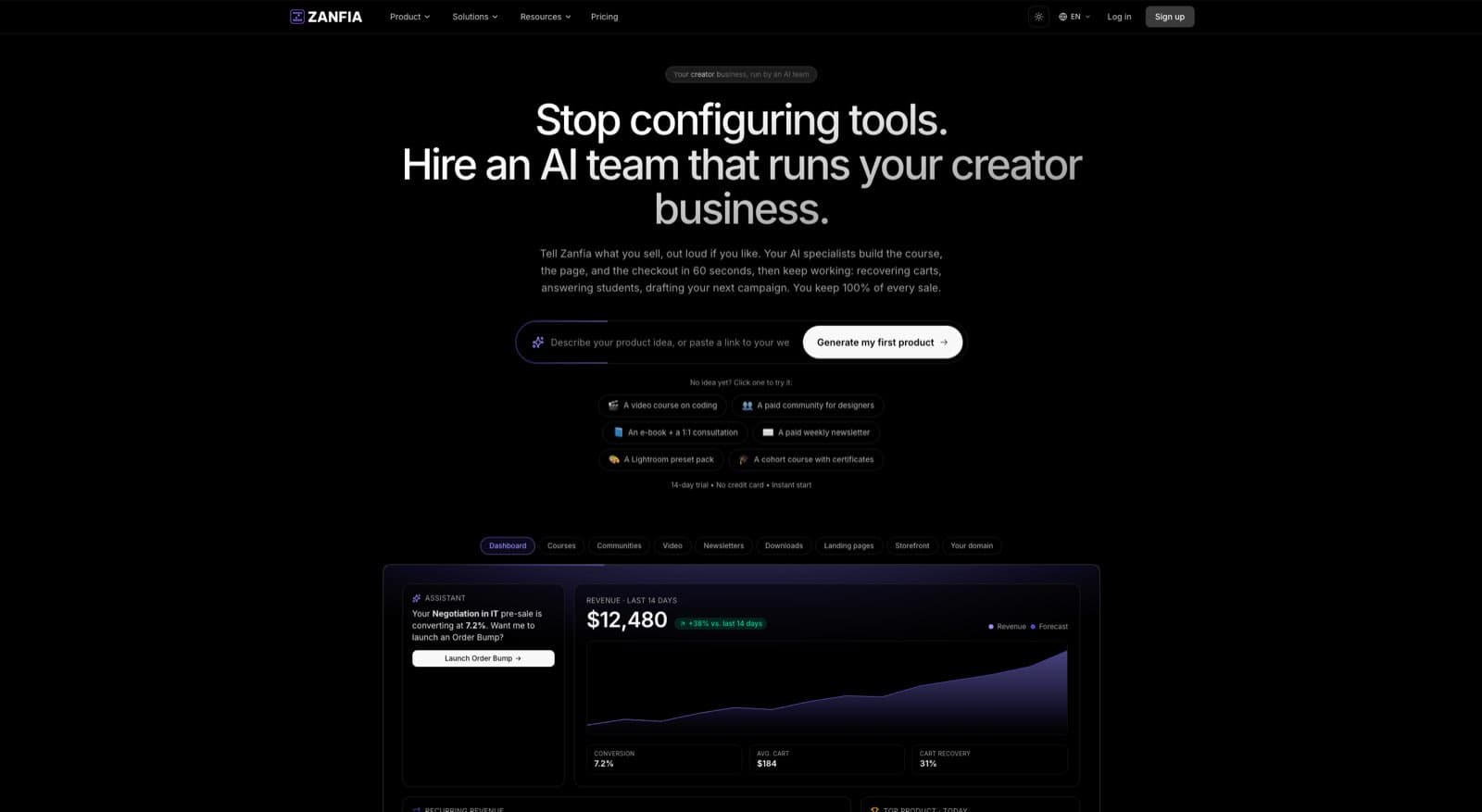
For creators ready to move beyond a simple storefront and build a scalable business ecosystem, Zanfia acts as an AI team that runs the creator business, with the platform as the place where that work lands. It directly solves the problem of "creator chaos" by pairing an AI assistant, agents and an MCP endpoint (availability depends on the plan, see the current Zanfia pricing) with an integrated system for community building, online courses, and digital product sales under your brand. This integrated approach means the AI team drafts, schedules and hands off work while you sell and foster an engaged community around your expertise, all managed from one dashboard. Zanfia is engineered for serious creators who want to consolidate their tech stack and replace the complexity of juggling multiple tools with a streamlined, efficient solution.
Why Zanfia Stands Out
What distinguishes Zanfia is how deeply the AI team is wired into the workflow. Anything you can do by clicking is also doable through the assistant, and by voice: you dictate what should happen instead of configuring it. On higher plans the MCP endpoint lets your own AI agents act on your workspace directly (see the current Zanfia pricing for what unlocks where). The visual automation builder connects events in the customer journey end to end: a new course enrollment can automatically grant access to an exclusive community channel, push the customer to a segment in ActiveCampaign, Kit or MailerLite, and trigger a welcome sequence, all without manual intervention. This is the key to scaling your business without hiring a team.
This level of automation, combined with robust analytics for tracking sales funnels and customer behavior, provides a data-driven framework for growth. You can sell across 12 product types under one brand, from ebooks and downloadable files to subscriptions, paid newsletters, and exclusive knowledge bases. For those focused on recurring revenue, Zanfia was built to sell: a modern checkout with order bumps, upsells and installments (so you can split a $600 course into four payments), test mode for buying your own product before launch, and support for Stripe and PayPal along with Apple Pay and Google Pay wallets, making it one of the most versatile platforms to sell digital products available. Its capabilities are particularly well-suited for building tiered access models; learn more about how you can create a complete membership website on zanfia.com.
Practical Considerations and Pricing
Zanfia operates on a subscription model with several tiers designed to accommodate businesses at different stages of growth. Every paid plan starts with a 14-day free trial with no credit card required. As of August 2026, Starter is $39/month ($31/month billed annually), Growth is $79/month ($63/month billed annually), Pro is $149/month ($119/month billed annually), and Scale is $249/month ($199/month billed annually). A significant advantage is the 0% platform commission on customer sales, meaning only the standard payment processor fee applies (roughly 2.9% + $0.30 in the US on Stripe).
Key Features for Creators:
- AI team, voice control and MCP endpoint: Run the business by chat or voice, and connect your own AI agents through the MCP endpoint. Availability of the full Assistant, MCP, API/CLI/webhooks and white-label AI depends on the plan, see the current Zanfia pricing .
- Integrated Communities: Build professional discussion channels with role-based access and an AI agent that writes from your own content, with everything it publishes labeled as AI.
- Advanced Course Platform: Features include a smart video player, progress tracking, drip content unlocking, quizzes with attempt statistics, and per-student completion certificates.
- Versatile Digital Storefront: Sell ebooks, subscriptions, paid newsletters, and knowledge bases with a modern cart that supports order bumps, upsells and installments (availability depends on the plan, see the current Zanfia pricing ).
- Powerful Automations: The visual Workflows builder connects customer actions to tasks, streamlining marketing, onboarding, and access management.
While its pricing may be a higher initial investment compared to single-purpose tools, the value of its consolidated, all-in-one functionality often provides a greater long-term ROI. Referral programs and Meta attribution inside advanced analytics are marked coming soon, and communities inside the mobile app are still rolling out per workspace, so check your dashboard before relying on them. For creators who want an AI team running the business day to day, the combination of exceptional customer support and a comprehensive feature set makes it a strong choice for monetizing expertise and building a durable online brand.
Website: https://zanfia.com
2. Shopify
Shopify is a household name in e-commerce, and for good reason. While often associated with physical goods, it has evolved into a powerhouse among platforms to sell digital products, offering a full-fledged online store experience. This makes it an ideal choice for serious creators and businesses aiming to build a substantial brand presence and scale their operations with a reliable, feature-rich foundation. Its strength lies in its all-in-one nature: you get a customizable storefront, a high-converting checkout process, and powerful analytics right out of the box.
What truly sets Shopify apart is its massive app ecosystem. While the core platform handles the storefront and payment processing, you'll need to install apps to manage digital downloads, subscriptions, or course content. This can be both a pro and a con. It offers incredible flexibility, allowing you to handpick tools for your exact needs, but it can also add to your monthly costs and lead to the exact "creator chaos" of managing multiple tools that integrated platforms solve. For instance, you can integrate apps for e-books, software licenses, or even connect to external membership sites.
Key Considerations for Shopify
- Best For : Entrepreneurs who plan to sell a mix of digital and physical products or who need a highly scalable and customizable storefront with multichannel selling capabilities.
- Pricing : Plans start at $29/month (for the Basic plan when billed annually) plus transaction fees. Digital delivery often requires paid apps, which can range from $5 to $50+ per month.
- Unique Feature : The Shopify App Store is its superpower, providing integrations for nearly any function imaginable, from digital watermarking to complex subscription models.
Website: https://www.shopify.com/pricing
3. WooCommerce (WordPress)
For creators who want ultimate control and ownership over their digital storefront, WooCommerce is the undisputed king. As a free, open-source plugin for the world’s most popular CMS, WordPress, it transforms any self-hosted website into a powerful e-commerce engine. This makes it one of the most flexible platforms to sell digital products, appealing to those who are comfortable with a more hands-on approach and wish to avoid the monthly fees associated with hosted platforms. Its strength is in its limitless customizability and direct integration with your existing WordPress content.
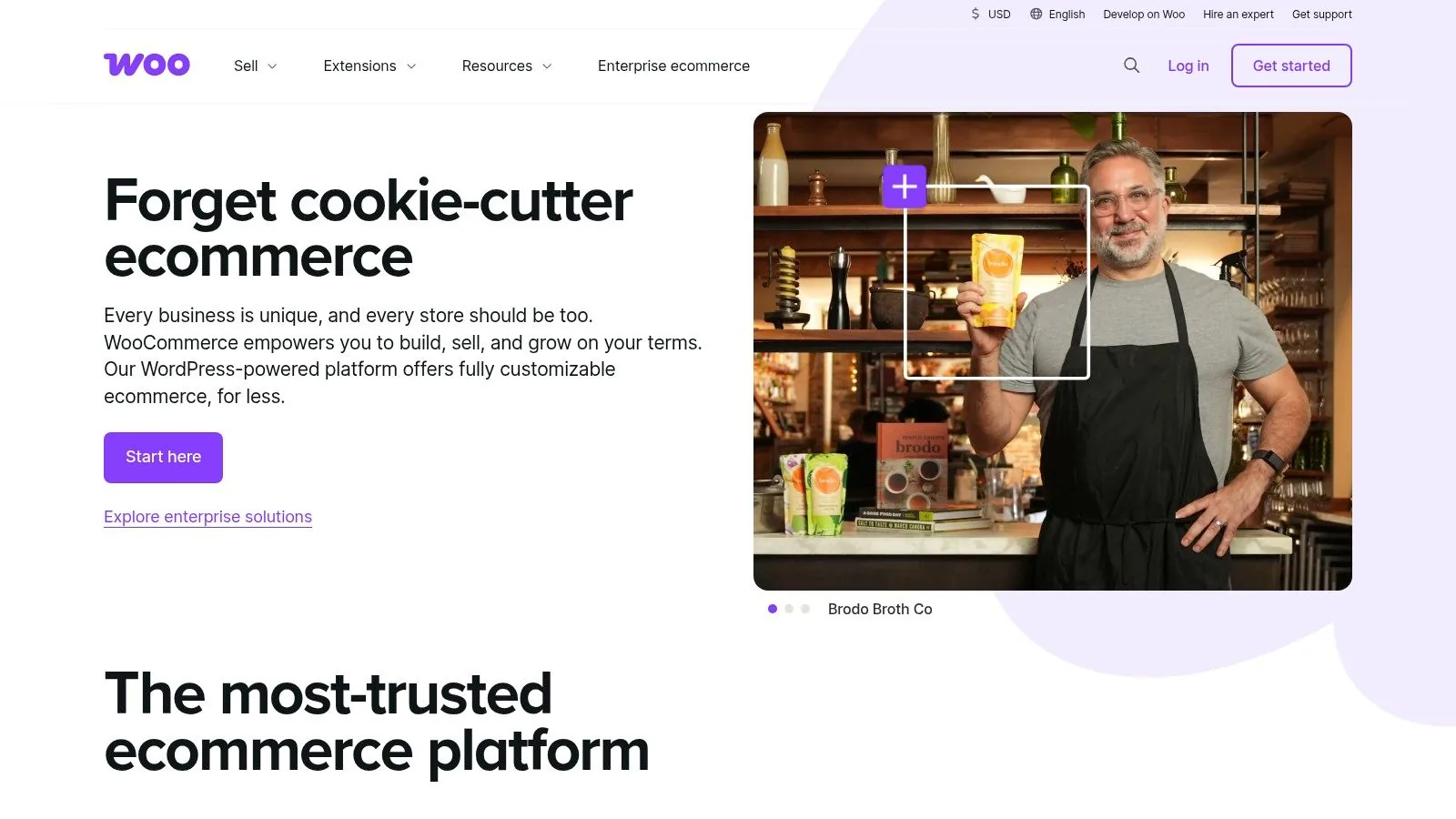
WooCommerce supports digital products natively, allowing you to easily mark items as "Downloadable" and "Virtual" to manage file access and remove shipping. The real power, however, comes from its vast ecosystem of extensions. You can add functionalities for subscriptions, memberships, and complex licensing with both free and premium add-ons. While this provides incredible freedom, it also means you are responsible for your own hosting, security, and updates. Properly configuring your store involves several steps, and a critical part of that process is choosing the best payment gateway for WooCommerce to ensure secure and smooth transactions. By taking the time to build a solid foundation, you can develop powerful systems for scaling your business.
Key Considerations for WooCommerce
- Best For : WordPress users, tech-savvy creators, and businesses who want full ownership of their store and data, with the ability to customize every aspect of the experience.
- Pricing : The core WooCommerce plugin is free. However, you must pay for web hosting (typically $10-$50/month), a domain name, and potentially premium themes or extensions, which can range from $50 to $200+ each.
- Unique Feature : Its open-source nature and massive extension library give you unparalleled freedom to build a completely bespoke e-commerce solution tailored precisely to your digital product needs without being locked into a specific platform's ecosystem.
Website: https://woocommerce.com
4. Etsy (Digital Downloads)
Etsy is best known as a sprawling marketplace for handmade physical goods, but it has carved out a significant niche as one of the most accessible platforms to sell digital products. It's an excellent starting point for creators focused on items like printables, templates, digital art, and patterns. The primary advantage is Etsy's massive, built-in audience of buyers who are actively searching for unique digital items, which can significantly reduce the initial marketing burden compared to building a website from scratch.
The platform streamlines the process by handling payment processing and automatic delivery of digital files to customers upon purchase. While you don't get the branding control of a dedicated storefront, you benefit from the trust and recognition associated with the Etsy name. However, this convenience comes at the cost of marketplace fees and intense competition. Success requires strong SEO within Etsy's search algorithm and a product that stands out in a crowded field, a very different challenge than driving traffic to your own site.
Key Considerations for Etsy
- Best For : Creatives and artists selling individual, low-cost digital items like templates, SVG files, digital planners, and printables who want to leverage a pre-existing marketplace.
- Pricing : A $0.20 USD listing fee per item, plus a 6.5% transaction fee on the total order amount. Additional payment processing and offsite ad fees may also apply.
- Unique Feature : Its greatest strength is its built-in search traffic. As a powerful marketplace, Etsy brings millions of motivated buyers directly to your digital doorstep, offering unparalleled organic exposure for new sellers.
Website: https://www.etsy.com
5. Gumroad
Gumroad has long been a favorite among independent creators, and its core philosophy is all about simplicity and speed. It stands out as one of the most accessible platforms to sell digital products by stripping away the complexities of building a full-scale e-commerce site. Instead, it offers a direct path to monetization, allowing you to create a simple product page, set a price, and start selling in minutes. This frictionless approach makes it perfect for artists, writers, and musicians who want to sell directly to their audience without any technical overhead.
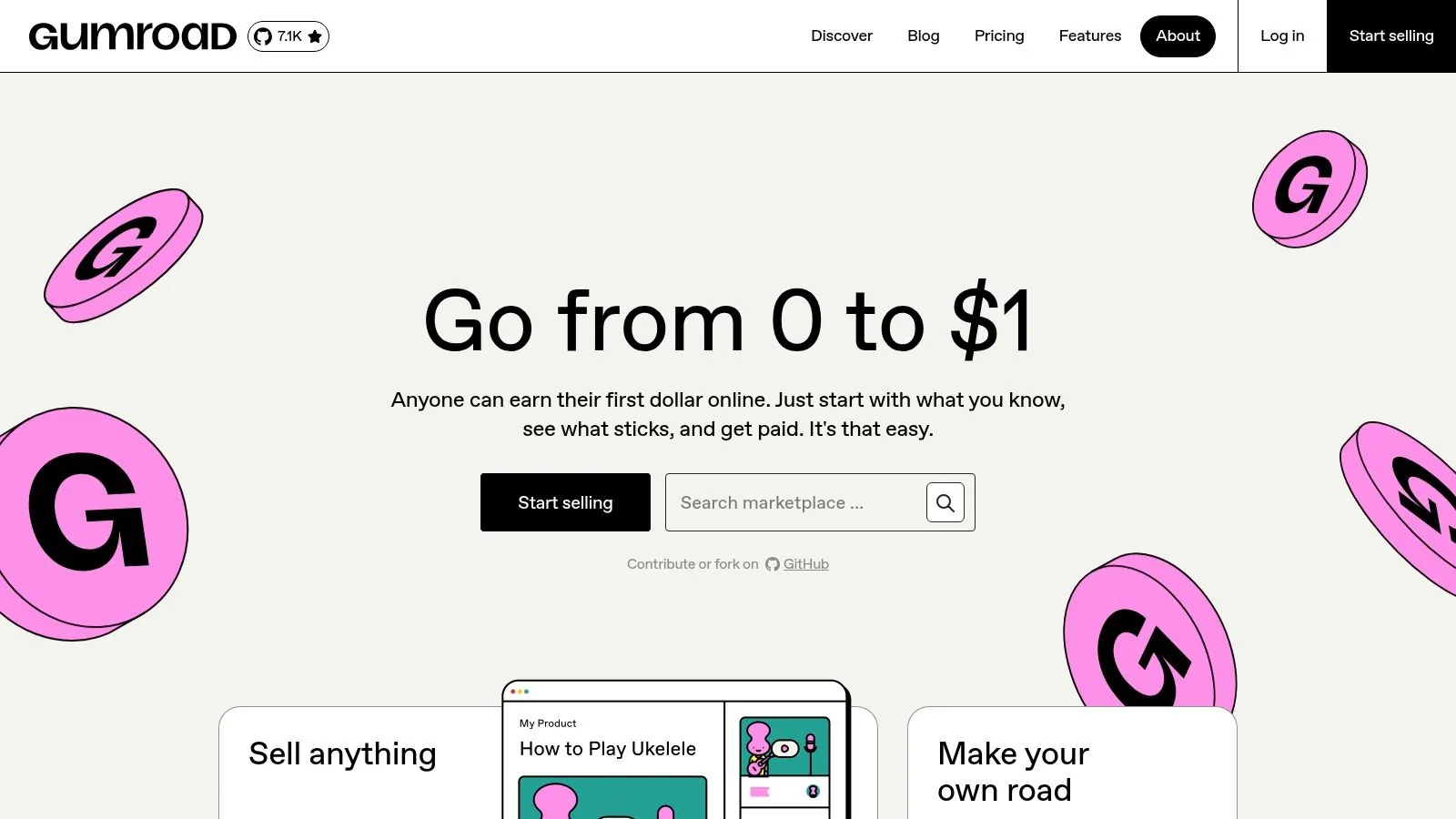
The platform is designed for direct-to-fan sales, whether through a simple storefront, an embeddable checkout on your blog, or a direct link shared on social media. While it doesn't offer the deep customization of a platform like Shopify, it provides essential tools like basic audience management, email updates, and simple analytics. It also supports various product types, from one-off downloads like e-books and presets to recurring memberships and software license keys, making it surprisingly versatile. The platform even supports simple upselling workflows to help increase your average order value; you can find more strategies for what is upselling and cross-selling on zanfia.com.
Key Considerations for Gumroad
- Best For : Individual creators, artists, and writers looking for the quickest, simplest way to sell digital goods directly to their audience with no upfront monthly costs.
- Pricing : No monthly fees. Gumroad takes a flat 10% fee on every sale until you reach lifetime earnings milestones, which then reduce the fee.
- Unique Feature : Its "pay what you want" pricing model is a standout, empowering customers to pay more than the minimum price, which can significantly boost revenue for creators with a loyal following.
Website: https://gumroad.com
6. Sellfy
Sellfy is a purpose-built e-commerce platform that excels in simplicity, making it one of the most accessible platforms to sell digital products. It’s designed for creators who want a straightforward, branded storefront without the complexity of a massive system like Shopify. You can get a clean, professional-looking store up and running in minutes, focusing on selling your e-books, presets, or digital art rather than wrestling with technical configurations. The platform’s main appeal is its all-in-one approach for creators, bundling store hosting, product delivery, and marketing tools into a single subscription.
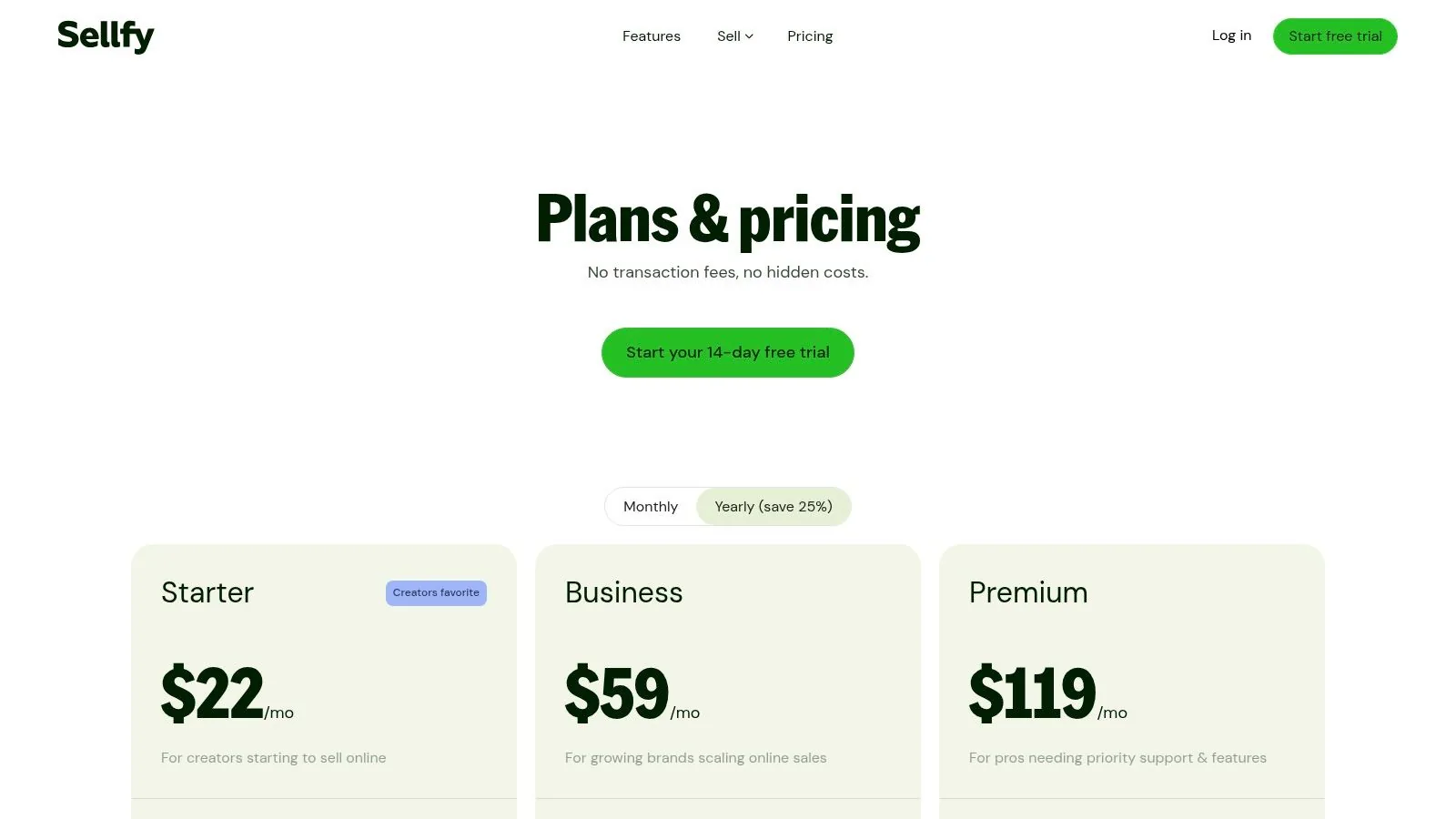
What makes Sellfy stand out is its commitment to zero transaction fees on all plans, allowing creators to keep more of their revenue (standard payment processor fees from Stripe/PayPal still apply). It also includes built-in marketing features like discount codes, email marketing, and upselling, which are often paid add-ons elsewhere. However, a key limitation is that its plans come with annual sales caps, meaning you’ll need to upgrade as your business grows. This model works well for emerging creators but can become a constraint for high-volume sellers.
Key Considerations for Sellfy
- Best For : Creators, artists, and influencers looking for an easy-to-use, all-in-one platform to sell digital downloads, subscriptions, and print-on-demand merchandise directly to their audience.
- Pricing : Plans start at $22/month (when billed biennially) and go up based on your annual sales revenue. All plans come with 0% transaction fees.
- Unique Feature : The combination of zero platform transaction fees and built-in marketing tools (like email marketing and cart abandonment on higher tiers) provides immense value for creators focused on profitability and growth from day one.
Website: https://sellfy.com/pricing
7. Payhip
Payhip is an impressively straightforward and accessible platform designed for creators who want to start selling digital products with minimal friction. It offers a direct-to-consumer model that supports digital downloads, online courses, memberships, and even coaching services. Its major appeal lies in its simplicity and an incredibly generous free-forever plan, making it a strong option for those just starting out or operating on a tight budget. It’s an all-in-one solution that bundles the storefront, product hosting, and marketing tools into one neat package.
What makes Payhip stand out, especially for creators selling internationally, is its built-in, automated handling of EU and UK VAT. This feature alone saves countless hours of administrative work and provides peace of mind, as the platform automatically collects and remits the correct tax based on the customer's location. While its storefront customization is more basic than platforms like Shopify, it provides all the essential tools needed to succeed, including an affiliate system, coupons, and simple email marketing integrations, allowing you to focus on creating and selling rather than on complex tech.
Key Considerations for Payhip
- Best For : Beginners, solopreneurs, and creators looking for a free or low-cost, all-in-one platform with automated EU/UK VAT handling.
- Pricing : Offers a Free Forever plan with a 5% transaction fee. Paid plans start at $29/month, reducing the transaction fee to 2% (Pro) or 0% (Business).
- Unique Feature : Its strongest differentiator is the automatic EU & UK VAT management. This is a massive benefit for sellers with a global audience, simplifying a complex part of international digital commerce.
Website: https://payhip.com/pricing
8. SendOwl
SendOwl is a purpose-built checkout and delivery engine designed for one thing: selling digital goods efficiently and securely. Unlike all-in-one platforms that try to be everything, SendOwl focuses on providing a robust, embeddable checkout experience that you can add to your existing website, blog, or social media bio. This makes it an excellent choice for creators who already have a home base and simply need a powerful, no-fuss tool to handle payments and secure file delivery without building an entirely new store.
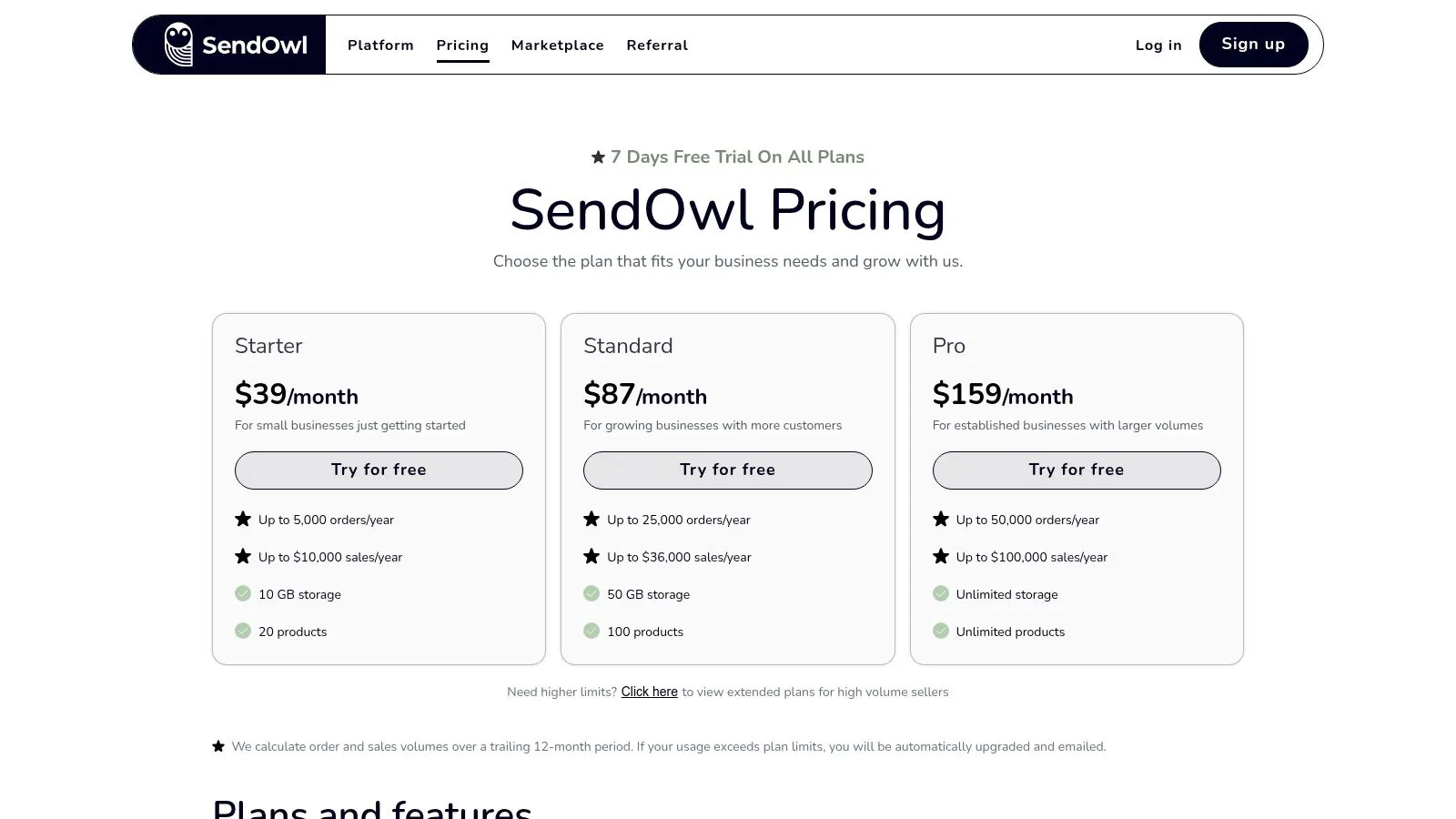
What makes SendOwl a standout option among platforms to sell digital products is its emphasis on security and marketing automation. It includes features like PDF stamping to discourage unauthorized sharing and license key generation for software sales. The platform also offers built-in tools for upsells, cart abandonment recovery, and affiliate marketing, helping you maximize revenue from every transaction. While its interface is clean, it lacks the full storefront customization offered by other solutions, reinforcing its role as a specialized checkout overlay rather than a complete website builder.
Key Considerations for SendOwl
- Best For : Creators and businesses with an existing website who need a fast, secure, and conversion-optimized checkout system for digital files, software, or subscriptions.
- Pricing : Plans start at a flat $15/month for up to 30 products and 3GB of storage. Higher-tier plans offer more products and storage with no transaction fees.
- Unique Feature : Its specialized security tools, like PDF stamping and license key generation , make it one of the best platforms for protecting high-value digital assets.
Website: https://www.sendowl.com/pricing
9. Lemon Squeezy
Lemon Squeezy is built specifically for creators who dread the complexities of global sales tax and compliance. As a Merchant of Record (MoR), it acts as the official seller on your behalf, taking on the massive administrative burden of calculating, collecting, and remitting taxes worldwide. This makes it an incredibly attractive platform for indie developers, SaaS founders, and digital product sellers who want to focus on creating, not on navigating intricate international tax laws. It provides a streamlined solution for anyone selling software, subscriptions, or digital downloads to a global audience.

The platform's strength is its simplicity. You can get set up with hosted checkouts or payment links in minutes, all while Lemon Squeezy handles fraud protection, currency conversions, and customer support for billing inquiries. It supports a wide range of business models, from one-time purchases and subscriptions to software license key management. While this hands-off approach is a huge advantage, it's important to note that platforms offering this level of service often provide less direct control over branding and the customer journey. You trade deep customization for ultimate convenience.
Key Considerations for Lemon Squeezy
- Best For : SaaS businesses, software developers, and creators selling templates or plugins who need an all-in-one solution for global sales tax and compliance without the headache.
- Pricing : A simple fee structure of 5% + $0.50 per transaction, plus standard payment processing fees. No monthly fees for the core MoR service.
- Unique Feature : Its Merchant of Record model is the standout feature, completely offloading the responsibility for global sales tax, VAT, and GST from the creator.
Website: https://www.lemonsqueezy.com/pricing
10. Paddle
Paddle is engineered for a specific, yet crucial, segment of the digital economy: software, SaaS, and digital product businesses that need to scale globally without getting bogged down by operational complexities. Unlike storefront builders, Paddle acts as a Merchant of Record (MoR). This means it takes on the full financial liability for every transaction, handling global sales tax, VAT, payment processing, fraud prevention, and compliance on your behalf. This makes it one of the most powerful platforms to sell digital products for businesses prioritizing growth over manual financial management.

The platform is distinctly developer-centric, offering robust APIs and tools that allow you to integrate a secure, localized checkout experience directly into your website or app. It excels at managing complex billing logic, including subscriptions, invoicing, and dunning (the process of recovering failed payments). By offloading the entire revenue infrastructure, you can focus purely on product development and marketing, knowing that the complexities of selling into hundreds of countries are completely managed for you.
Key Considerations for Paddle
- Best For : SaaS companies, software developers, and established digital product businesses that need to automate global tax compliance, manage subscriptions, and reduce operational overhead.
- Pricing : Paddle uses a simple, all-in-one fee structure of 5% + $0.50 per transaction. There are no monthly fees, and this rate includes all payment processing, currency conversion, tax handling, and fraud protection costs.
- Unique Feature : Its Merchant of Record model is its core differentiator. A single integration and contract gives you a global payment and tax compliance solution, drastically simplifying international sales and reducing business risk.
Website: https://www.paddle.com
11. Podia
Podia is designed as an all-in-one platform for creators who want to build an entire business ecosystem, not just sell a single product. It combines online courses, digital downloads, memberships, coaching, and webinars under one roof, reducing the need to stitch together multiple tools. This makes it a strong choice for creators who value simplicity and want to offer a diverse range of products without the technical headache of managing separate platforms. Its core strength is providing a cohesive experience for both the creator and the customer.
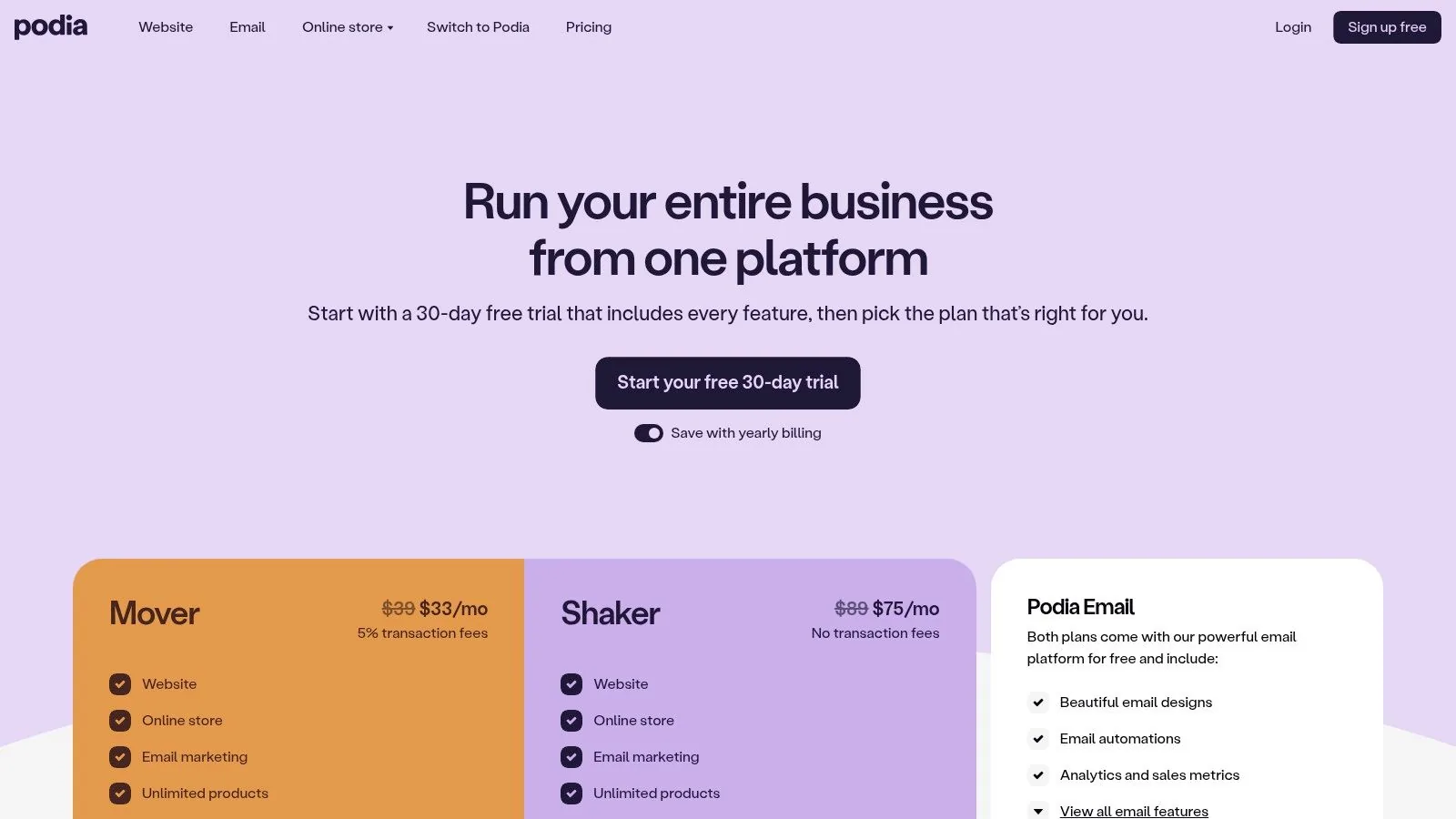
What makes Podia one of the stronger all-in-one platforms to sell digital products is its emphasis on community and marketing. Unlike many competitors that focus solely on the transaction, Podia includes built-in email marketing, affiliate management, and a website builder. A key distinction from a hub like Zanfia is how these pieces are connected. Podia bundles them as separate but linked features, while Zanfia goes further with an AI team, voice control, and an MCP endpoint (availability depends on the plan) that lets your own AI agents work with your workspace, so community channels can be tied directly to specific course modules or product purchases for a truly seamless user journey.
Key Considerations for Podia
- Best For : Creators who want a simple, all-in-one solution for selling multiple types of digital products (courses, downloads, memberships) and need integrated marketing tools.
- Pricing : Offers a free plan with an 8% transaction fee. Paid plans start at $33/month (billed annually) with 0% transaction fees and more features.
- Unique Feature : The unified dashboard allows you to manage your website, email lists, products, and affiliate program all in one place, streamlining your entire business operation.
Website: https://www.podia.com/pricing
12. Teachable
Teachable is a giant in the world of online education, positioning itself as a strong choice among platforms to sell digital products for creators focused on courses. While it excels at delivering a comprehensive learning experience, it also supports the sale of coaching services and digital downloads, making it a well-rounded choice for educators who want to diversify their product offerings under one roof. The platform is designed to make creating and managing a course-centric business as seamless as possible, handling everything from student enrollment to payment processing.
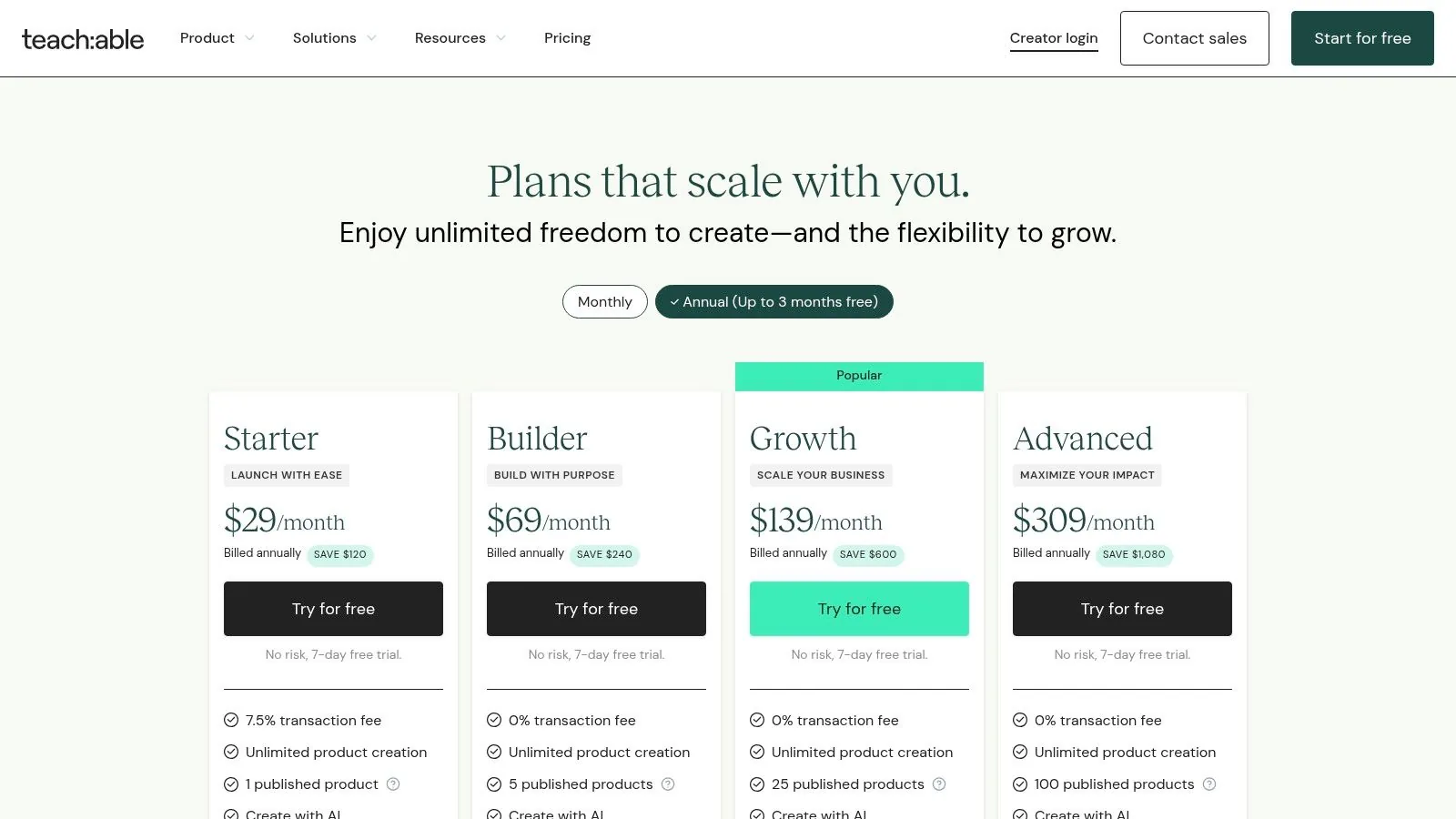
What makes Teachable stand out is its commitment to the student experience. Features like a dedicated mobile app for iOS and Android, course completion certificates, and built-in quizzes ensure that learners stay engaged. For creators, the platform simplifies the business side with its native payment gateway, Teachable:pay, which handles global payments and sales tax compliance automatically. While it's one of the best online teaching platforms, it's worth noting that its strength is primarily in structured courses, and its digital download functionality is more basic compared to specialized platforms.
Key Considerations for Teachable
- Best For : Online educators and coaches whose primary offering is courses and who want an all-in-one solution for student management, content delivery, and sales.
- Pricing : A free plan is available with 10% transaction fees. Paid plans start at $39/month (billed annually), with the Pro plan and above offering zero platform transaction fees.
- Unique Feature : The dedicated student mobile app provides a superior learning experience on the go, a feature not commonly found on platforms that aren't course-first.
Website: https://teachable.com/pricing
Top 12 Digital Product Selling Platforms Comparison
| Platform | Core Features / Capabilities | User Experience / Quality ★ | Value Proposition 💰 | Target Audience 👥 | Unique Selling Points ✨ | Price Points 💰 |
|---|---|---|---|---|---|---|
| Zanfia 🏆 | AI team, MCP endpoint, communities, courses, newsletters, memberships, automation | ★★★★☆ User-friendly, branded environment | 0% platform commission, 14-day free trial, no credit card | Creators, businesses, brands | AI-first with voice control, order bumps, installments and test mode | Starter $39/mo ($31 annual) |
| Shopify | Full store, POS, multichannel sales, app ecosystem | ★★★★☆ Reliable, high conversion templates | Monthly fees + transaction costs | Growing ecommerce businesses | Large app ecosystem, multichannel sales | From $$ monthly + fees |
| WooCommerce | WordPress plugin for downloads, customization, extensions | ★★★☆☆ Highly customizable but self-managed | Free core, costs for hosting & plugins | Developers, DIY site owners | Full control, large extensions library | Free core; paid extras |
| Etsy (Digital) | Marketplace for printables & digital downloads with auto-delivery | ★★★☆☆ Easy, exposure to buyers | Marketplace fees, limited branding | Creatives, first-time sellers | Built-in traffic, easy setup | Listing + transaction fees |
| Gumroad | Simple storefront for downloads, memberships, embedded checkout | ★★★☆☆ Fast launch, minimal setup | No monthly fees, 10% platform fee | Indie creators, quick sellers | No subscription fees, simple sales links | 10% per sale |
| Sellfy | Digital products, subscriptions, print-on-demand, marketing tools | ★★★☆☆ Straightforward setup and design | No platform transaction fees | Creators wanting branding | Built-in marketing, custom domain | Tiered plans with sales caps |
| Payhip | Downloads, courses, memberships, EU/UK VAT compliance | ★★★☆☆ Simple design, free plan available | Free-forever plan, platform fees on lower tiers | Small creators, EU/UK sellers | Automated VAT compliance | Free + paid tiers with fees |
| SendOwl | Secure digital delivery, license keys, PDF stamping | ★★★☆☆ Efficient delivery, API friendly | Predictable pricing, no platform cut on high tiers | Sellers needing secure delivery | License management, embeddable checkout | Monthly plans |
| Lemon Squeezy | Merchant-of-Record, tax, fraud, subscriptions | ★★★★☆ Simplifies global compliance | Simple fee structure, per-transaction fees | Indie developers, SaaS sellers | Offloads tax & compliance | Per sale fees |
| Paddle | Global payments, tax, fraud, subscriptions, developer tools | ★★★★☆ Robust platform, risk reduction | Per-transaction fees | Software & SaaS vendors | Single contract multiple countries | Per sale fees |
| Podia | Downloads, courses, coaching, webinars, memberships, email tools | ★★★★☆ Easy launch, good all-in-one balance | 5% platform fee on low tier | Creators, coaches | Integrated marketing and affiliate tools | Monthly tiers + fees |
| Teachable | Course-first, coaching, downloads, mobile apps | ★★★★☆ Strong course experience | Platform fees on starter, none on higher | Course creators | Mobile apps, certificates, strong checkout | Monthly plans + fees |
From Scattered Tools to a Central Business Hub
Navigating the landscape of platforms to sell digital products can feel overwhelming. As we've explored, your options range from simple, single-purpose checkout tools like Gumroad and SendOwl to powerful e-commerce giants like Shopify, and even specialized marketplaces such as Etsy. Each has its place. A beginner might find the instant setup of Payhip appealing, while a developer managing complex software licensing might lean towards Paddle or Lemon Squeezy for their robust tax handling.
However, the journey from a fledgling creator to a scalable business owner reveals a critical challenge: fragmentation. Relying on a patchwork of disconnected tools creates what we call "creator chaos." You end up juggling a Shopify store for your ebooks, a separate platform like Teachable for your courses, a Discord server for your community, and a third-party email service to tie it all together. This isn't just inefficient; it's a barrier to growth. It fractures the customer experience and consumes your most valuable resource: time.
The Strategic Shift: From Selling Products to Building an Ecosystem
The most successful creators aren't just selling individual digital products; they are building a cohesive business ecosystem. They understand that a customer who buys an ebook is a prime candidate for a premium course, and a student who completes that course is likely to become a valuable member of a paid community. This journey is impossible to manage effectively when your core business functions are scattered across a dozen different logins and fragile integrations.
The key takeaway from this extensive review is that your choice of platform is a foundational business decision. It determines your ability to scale, your efficiency, and the quality of your customer relationships. While specialized tools can get you started, the long-term path to stable revenue lies in consolidation.
Why a Central Hub is Your Most Powerful Asset
An integrated platform isn't about having more features; it's about having the right features working together seamlessly. This is where a central hub like Zanfia transforms your operations. Instead of duct-taping your checkout to your course platform, you get an AI team you can run by chat or by voice, a visual automation builder, and (on higher plans, see the current Zanfia pricing) an MCP endpoint that lets your own AI agents act on your workspace to create a frictionless customer journey.
Consider these practical scenarios that become effortless with a unified system:
- Automatic Upsells: When a customer purchases your ebook, an automation can instantly grant them access to a private, read-only channel within your community, where you share bonus content and tease your next course.
- Seamless Onboarding: A new student enrolling in your course is automatically added to the corresponding student community and tagged in your mailing system for a tailored welcome sequence.
- Integrated Rewards: Referral programs are coming soon, so you will be able to reward existing customers for bringing in new ones directly inside your workspace, turning your biggest fans into your most effective marketing channel.
Ultimately, choosing from the many platforms to sell digital products is less about the transaction and more about the transformation. It's about moving from a scattered collection of tools to a central business hub that empowers you to build a resilient, scalable, and profitable creator business under your own brand. You can finally stop spending your days managing technology and start focusing on what you do best: creating value for your audience.
FAQ
Do I need extra apps to sell digital downloads on Shopify?
Yes. Shopify handles the storefront, checkout, and payment processing, but managing digital downloads, subscriptions, or course content requires installing apps from the Shopify App Store. Those apps typically add $5 to $50+ per month on top of the base plan, which starts at $29/month on the Basic plan billed annually.
What does it actually cost to run a WooCommerce store if the plugin is free?
The WooCommerce plugin itself is free, but you're responsible for web hosting (typically $10-$50/month), a domain name, and often premium themes or extensions that range from $50 to $200+ each. You also handle your own security and updates, so the trade-off for full ownership is more hands-on maintenance.
What fees does Etsy charge for selling digital downloads?
Etsy charges a $0.20 USD listing fee per item and a 6.5% transaction fee on the total order amount. Additional payment processing and offsite ad fees may also apply, so the built-in marketplace traffic comes at the cost of ongoing per-sale fees and heavy competition.
How does Gumroad's pricing work if there are no monthly fees?
Gumroad has no monthly subscription cost, but it takes a flat 10% fee on every sale. That fee reduces once you hit lifetime earnings milestones, so the model favors creators just starting out over those doing higher volume.
Which of these platforms is best if I want to sell courses, a community, and digital products under one brand?
An integrated platform is the fit when you want to avoid stitching separate tools for community, courses, and downloads. Zanfia sells across product types like courses, communities, ebooks, subscriptions, and paid newsletters from one dashboard, with a visual automation builder tying customer actions to access and marketing (plan-dependent, see zanfia.com/pricing).
Ready to escape the chaos of managing multiple tools and build a unified business? Zanfia provides the integrated platform to sell your digital products, host your courses, and grow your community, all in one place. Start your 14-day free trial, no credit card required, at Zanfia.