

Best Platforms to Sell Digital Products in 2026 (Free and Paid)

The digital product market is booming, but your success depends on how you sell, not just what you create. Juggling different tools for courses, downloads, and communities creates a disjointed experience for your customers and an administrative nightmare for you. The key to scaling your creator business is finding a single, powerful hub that simplifies operations, not complicates them. An all-in-one platform like Zanfia, which combines digital products, online courses, and community spaces, can serve as the central operations hub for your entire business.
This guide cuts through the noise to analyze the 12 best platforms to sell digital products. Our goal is to help you identify the one that fits your specific business goals, whether you're just starting or looking to consolidate and grow. We'll examine each option based on real-world use cases, complete with screenshots and direct links, so you can make a strategic decision that saves you time and builds a stable, recurring revenue stream. Forget the feature lists; this is about finding the right foundation for your digital headquarters. We’ll show you exactly how to choose a system that streamlines your work, from payment processing to customer management.
1. Zanfia
Zanfia is an AI team that runs a creator business, and a platform second. Instead of stitching together a course tool, a community tool and a checkout, the creator hires an AI team that handles the work across all three, then dictates changes by chat or voice rather than clicking through settings. Courses, communities, paid newsletters, ebooks, consulting bookings and digital downloads all live under one brand, and the checkout is built so that work ends in a sale. If your strategy leans on AI, community and a fast path to revenue, Zanfia is a strong fit for serious creators.
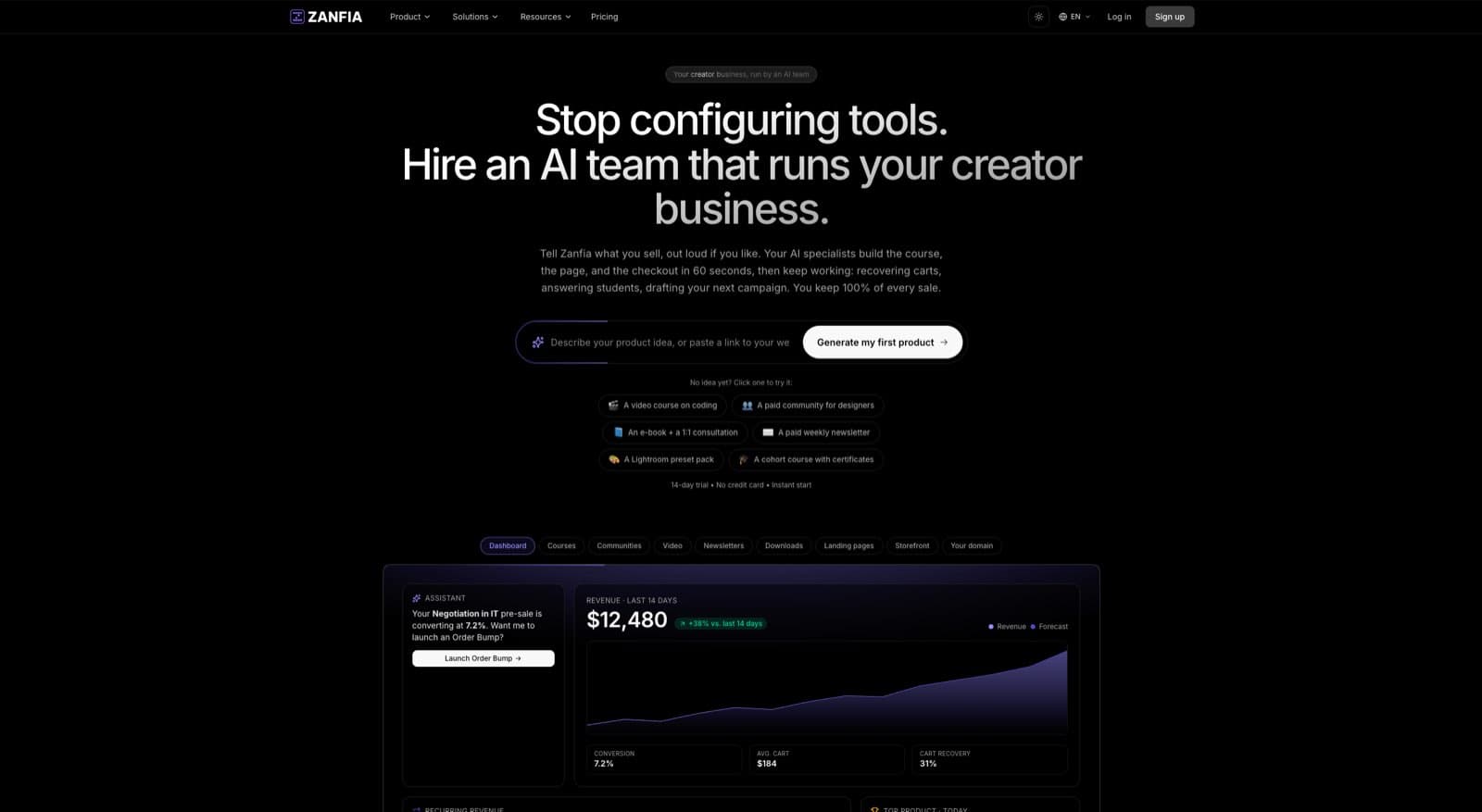
What sets Zanfia apart is that the assistant can perform any action available in the interface, and agents can act on the workspace through an MCP endpoint on every plan. You aren't just selling a file; you're running a branded ecosystem where a course purchase can automatically grant access to a private discussion channel, and where you can bundle a paid newsletter subscription with exclusive access to a knowledge base, all managed in one dashboard. The checkout supports order bumps, upsells and installments (for example, splitting a $600 course into four payments), and a test mode lets you buy your own product before launch to confirm the flow works end to end.
Key Features and Use Cases
Zanfia’s feature set is designed for strategic growth, allowing you to scale your digital business efficiently.
- Integrated Product Suite: Sell 12 product types including online courses, ebooks, paid newsletters, knowledge bases, communities, bundles, services and consultations through a modern checkout with order bumps, installments and upsells.
- Voice-ready assistant: Dictate instead of configuring. The assistant performs actions available in the interface by chat or voice, and agents can connect to the workspace through the MCP endpoint (available on every plan, see the current Zanfia pricing ).
- Professional Communities: Build and manage dedicated discussion spaces with thematic channels, member management, and moderation to foster direct customer engagement, with an optional AI agent that writes from your own content (everything it publishes is labeled as AI).
- Powerful Automations: Connect events in the customer journey with specific actions. Automatically enroll a new member into a welcome sequence or grant access to a bonus resource upon purchase, saving you hours of manual work.
- Full Brand Personalization: Maintain brand consistency with your own custom domain, logo, and brand colors, creating a dedicated customer panel that feels entirely your own.
Pros & Cons
| Pros | Cons |
|---|---|
| AI team that runs the business, with a voice-ready assistant and an MCP endpoint for outside agents. | Headline AI capabilities (full Assistant) are plan-dependent, while the MCP endpoint is on every plan, so check the current pricing page. |
| Comprehensive all-in-one platform integrating courses, community, and digital products under one brand. | The sheer richness of features might present a learning curve for complete beginners. |
| Checkout built to sell, with order bumps, installments, upsells and a test mode for buying your own product before launch. | |
| Full branding control with custom domains, logo, and colors, and a seamless customer journey from purchase to community. |
Pricing
As of August 2026, Zanfia plans start at $39/month, or $31/month billed annually, on Starter (250 active clients, 5 products, 1,500 AI credits/month). Growth is $79/month or $63 billed annually, Pro is $149/month or $119 billed annually, and Scale is $249/month or $199 billed annually. Every plan includes a 14-day free trial with no credit card required, and platform commission on customer sales is 0% (only standard payment processor fees apply). For full details see https://zanfia.com/pricing.
Website: https://zanfia.com
2. Shopify
Shopify is a household name in ecommerce for a reason: it provides a robust, scalable foundation for building a complete online brand, not just a product page. While often associated with physical goods, its powerful ecosystem makes it an excellent choice for creators who want total control over their storefront and plan to build a diverse product line. This platform is ideal if you envision a future that might include merchandise alongside your ebooks, courses, or software licenses.

Unlike simpler platforms, Shopify gives you a full-fledged website with a blog, advanced analytics, and powerful marketing tools built-in. Digital product delivery is handled through its massive app marketplace. Apps like "Digital Downloads" (a free option from Shopify) or more advanced solutions handle secure file delivery, PDF stamping, and software license key generation. While this requires setup, it offers immense flexibility. When handling payments, it's wise to plan for potential issues; implementing effective Shopify chargeback protection strategies is essential for securing your revenue stream from the start.
Key Considerations
- Pricing: Plans start at around $29/month (Basic) and scale up, plus standard credit card processing fees. Digital delivery apps may add extra monthly costs.
- Best For: Entrepreneurs who need a comprehensive storefront with advanced marketing and plan to sell both digital and physical products. It is particularly well-suited for those interested in building a high-ticket ecommerce business.
- Pros: Unmatched app ecosystem, powerful built-in marketing features (discounts, abandoned cart recovery), and highly scalable.
- Cons: Can be more complex to set up than all-in-one platforms and recurring costs can add up with multiple apps.
3. WooCommerce (WordPress)
For creators who want ultimate control and ownership over their digital empire, WooCommerce is the undisputed open-source champion. As a free plugin for the world’s most popular CMS, WordPress, it transforms a standard website into a powerful ecommerce engine. This combination is a strong fit if your strategy involves deep content marketing, SEO, and building a fully customized brand experience from the ground up, free from platform-imposed transaction fees.
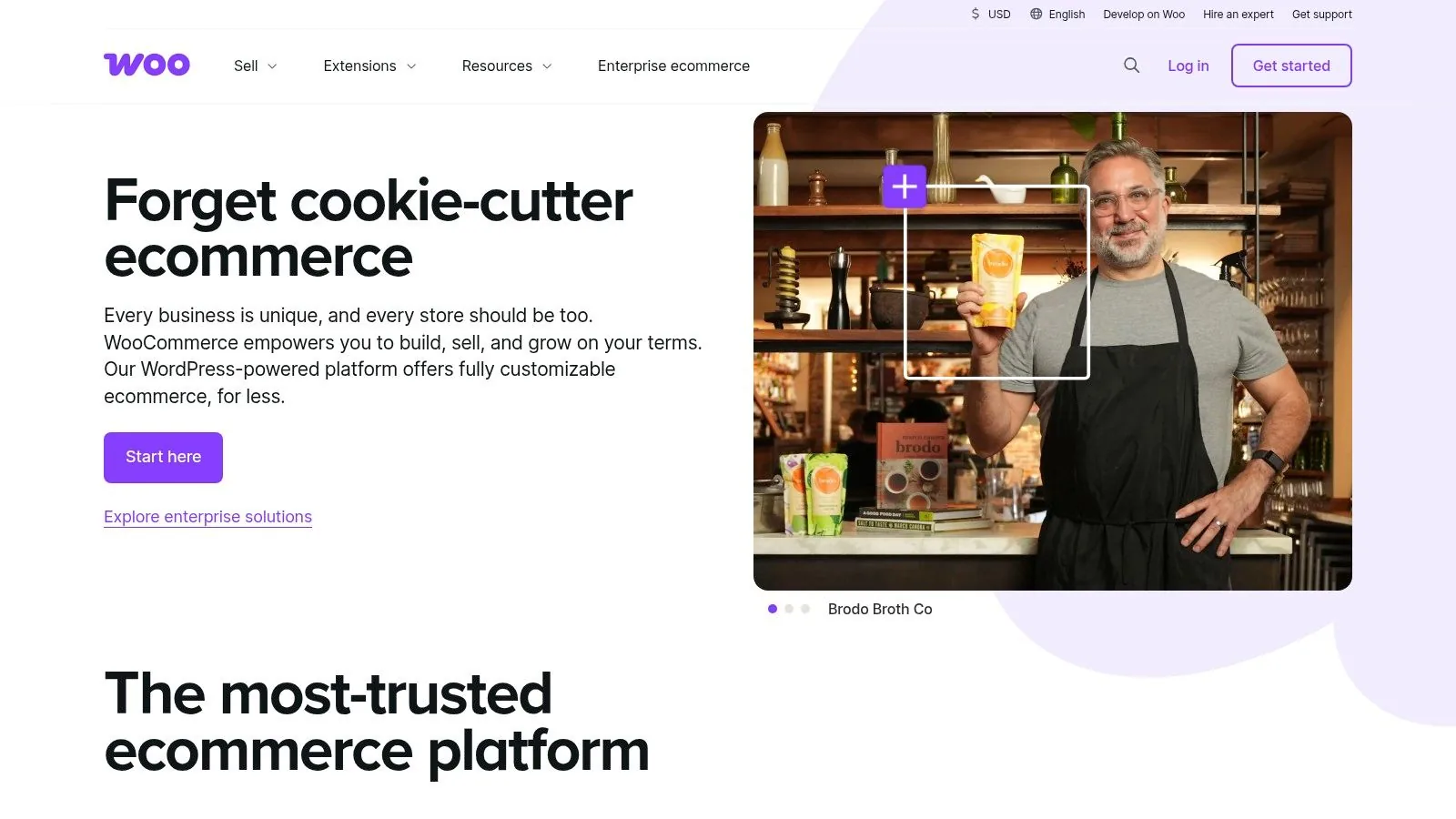
WooCommerce handles digital goods natively, allowing you to easily upload files, set download limits, and control access expiry after a purchase. The real power, however, lies in its limitless customization through a massive ecosystem of themes and plugins for everything from advanced subscriptions to learning management systems. This freedom comes with responsibility, you are in charge of hosting, security, and updates. While this offers unparalleled flexibility, creators looking for a more integrated solution without the technical overhead might prefer platforms like Zanfia, where an AI team handles work across courses, communities and digital products in one managed system, and creators dictate changes by chat or voice.
Key Considerations
- Pricing: The WooCommerce plugin is free. Costs come from web hosting, domain registration, premium themes, and paid extension plugins. Payment gateway fees also apply.
- Best For: Tech-savvy entrepreneurs and bloggers already using WordPress who want maximum control over their storefront and are willing to manage the technical aspects.
- Pros: Complete ownership and control, no platform transaction fees, and unparalleled flexibility through thousands of plugins and themes.
- Cons: Requires self-management of hosting, security, and updates. Performance is highly dependent on your hosting provider, and support is primarily community-driven.
4. Gumroad
Gumroad has long been a favorite for individual creators and artists due to its sheer simplicity and focus on getting your product live in minutes. This platform is designed for selling digital downloads, memberships, and subscriptions with almost zero technical overhead. If your main goal is to upload a file, set a price, and start selling immediately without worrying about website maintenance, Gumroad is an incredibly efficient choice for creators who want the fastest path to a live product page.
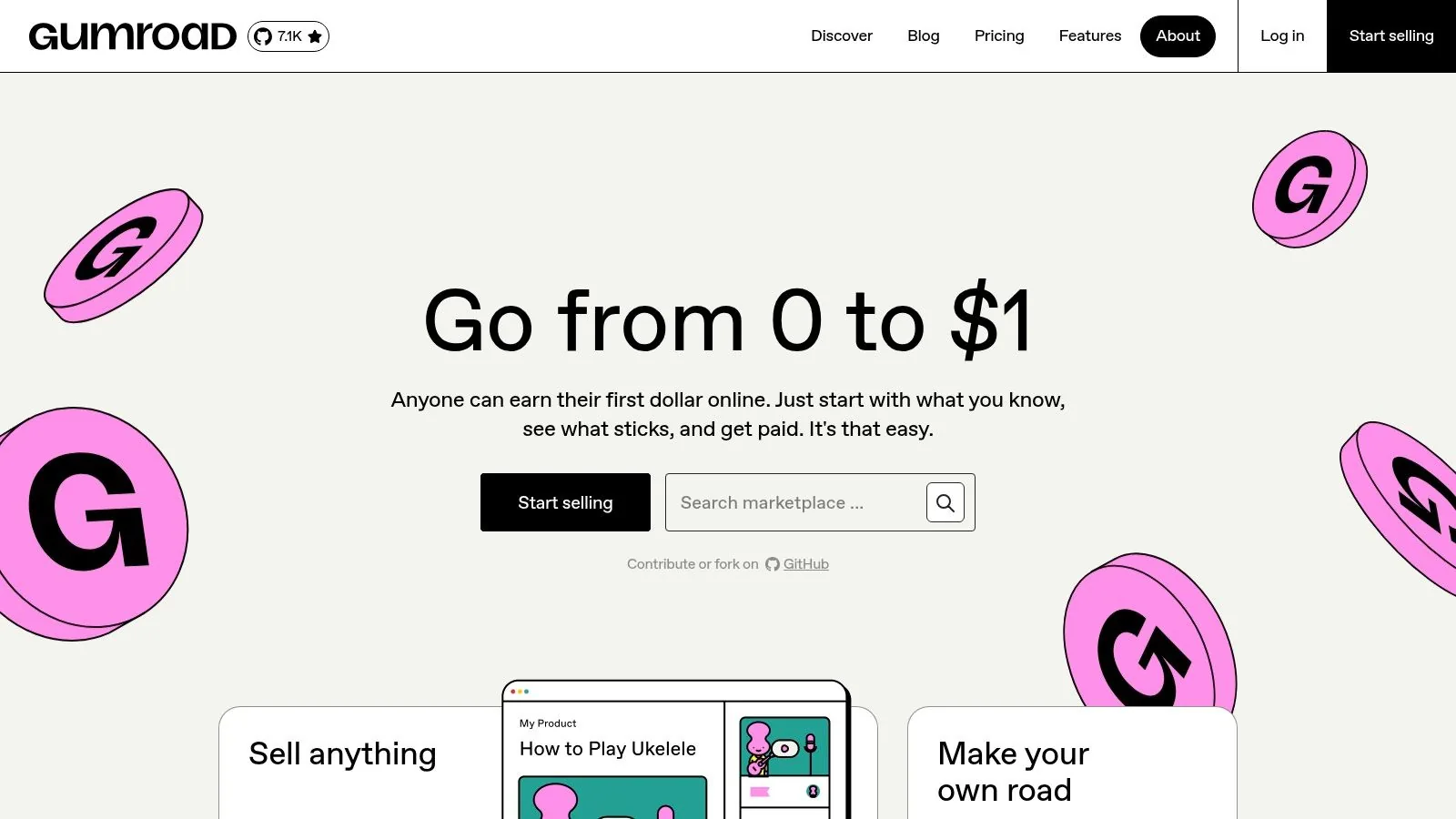
It operates on a creator-first model, providing a hosted storefront and handling secure file delivery automatically. Features like pay-what-you-want pricing, tiered memberships, and basic audience engagement tools are built-in. While its simplicity is a strength, it also means limited design control. To maximize sales on such a direct platform, it's crucial to have a highly effective product page; applying proven conversion rate optimization strategies can significantly boost your results. For creators seeking more brand control and integrated features like courses and communities, a platform like Zanfia pairs a checkout built to sell (order bumps, installments, upsells) with an AI team that runs the day-to-day work, all under one brand.
Key Considerations
- Pricing: No monthly fees. Gumroad takes a flat 10% fee on every sale, which includes credit card processing fees. This fee decreases with higher lifetime earnings.
- Best For: Solo creators, artists, and writers who want the fastest and simplest way to sell digital downloads, subscriptions, or ebooks without monthly costs.
- Pros: Extremely easy and fast setup, no monthly subscription fees, and a simple, predictable fee structure.
- Cons: The flat 10% fee can be higher than other platforms at scale, and customization options for your storefront are very limited.
5. Payhip
Payhip is a direct-to-creator platform that excels in simplicity, making it a strong option among platforms to sell digital products for those who want a quick, hassle-free setup. It's an all-in-one solution designed specifically for downloads, online courses, and memberships, removing the technical hurdles often found on more complex ecommerce sites. The platform's major draw is its straightforward approach, especially its transparent handling of EU/UK VAT, which it collects and remits automatically on behalf of creators.
Unlike platforms requiring extensive configuration, Payhip provides every core feature out of the box, including a store builder, affiliate tools, and email marketing. This integrated system means you can manage your entire digital business from one dashboard. For creators looking to build a dedicated community around their products, platforms like Zanfia offer a powerful alternative by hiring an AI team that runs work across courses, communities and digital products, with a voice-ready assistant that lets the creator dictate changes instead of clicking through menus. However, Payhip's strength lies in its instant payouts via Stripe or PayPal, giving you immediate access to your earnings.
Key Considerations
- Pricing: Starts with a Free plan (5% transaction fee), a Plus plan at $29/month (2% fee), and a Pro plan at $99/month (0% fee). Standard Stripe/PayPal fees apply to all tiers.
- Best For: Solo creators, artists, and educators who need a simple, low-cost entry point to sell downloads, courses, or memberships without a steep learning curve.
- Pros: All features are available on the free plan, automatic EU/UK VAT handling, and instant payouts provide excellent cash flow.
- Cons: Limited design customization compared to full website builders and fewer third-party integrations than larger ecosystems like Shopify.
6. Sellfy
Sellfy is a streamlined ecommerce platform built specifically for creators who need a simple, fast way to sell digital products, subscriptions, and print-on-demand merchandise. It stands out by offering a clean, all-in-one solution that includes robust marketing features without the complexity of a massive app ecosystem. This makes it an excellent choice for creators who want to launch quickly and focus on selling rather than on extensive technical setup.
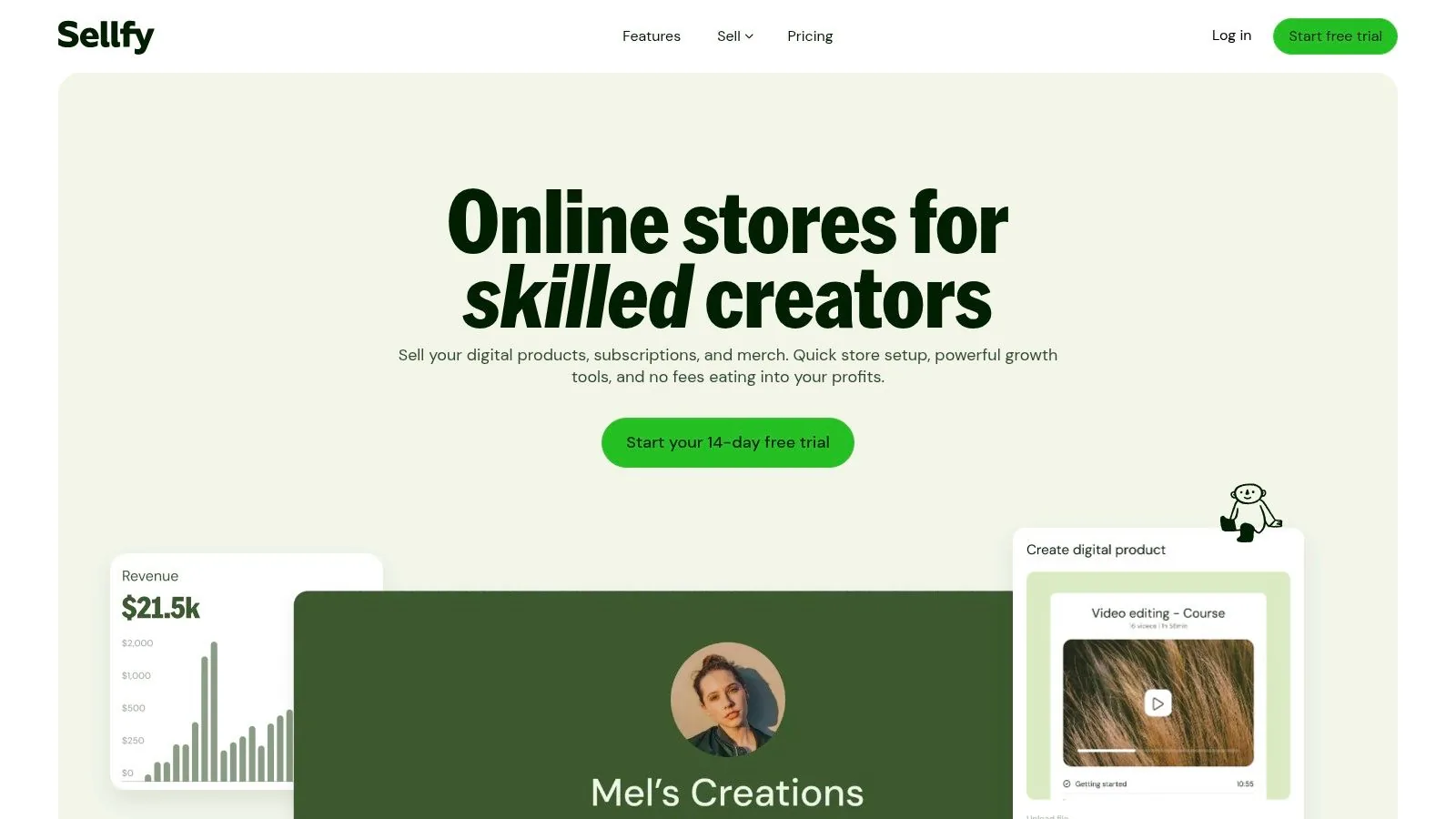
Unlike platforms that require third-party apps for core functions, Sellfy integrates email marketing, discount codes, and upselling tools directly into its dashboard. This built-in approach simplifies operations, allowing you to manage your store from one place. It handles secure file delivery for downloads and video streaming, making it a solid option for selling digital products. Its subscription feature is also a key benefit for creators looking to generate recurring revenue, a model which has become increasingly popular as seen in these subscription business model examples for creators.
Key Considerations
- Pricing: Plans start around $29/month (Starter), with tiers based on annual sales volume. There are no platform transaction fees, only standard Stripe/PayPal processing fees.
- Best For: Solo creators, artists, and influencers who need a quick-to-launch, easy-to-manage storefront with strong built-in marketing tools.
- Pros: Very user-friendly with a quick setup process, no platform transaction fees, and solid built-in features for marketing and upselling.
- Cons: Less customizable than platforms like Shopify or WooCommerce, and annual sales caps on each plan can force premature upgrades.
7. Lemon Squeezy (Merchant of Record)
Lemon Squeezy positions itself as the ultimate "done-for-you" solution for creators who want to sell globally without navigating the complexities of international sales tax and compliance. It operates as a Merchant of Record (MoR), meaning it legally takes on the responsibility for processing payments, handling fraud, and remitting sales taxes worldwide. This makes it a fantastic choice for sellers of software, SaaS, ebooks, and other digital downloads who want to focus purely on creating and marketing their products, not on administrative headaches.
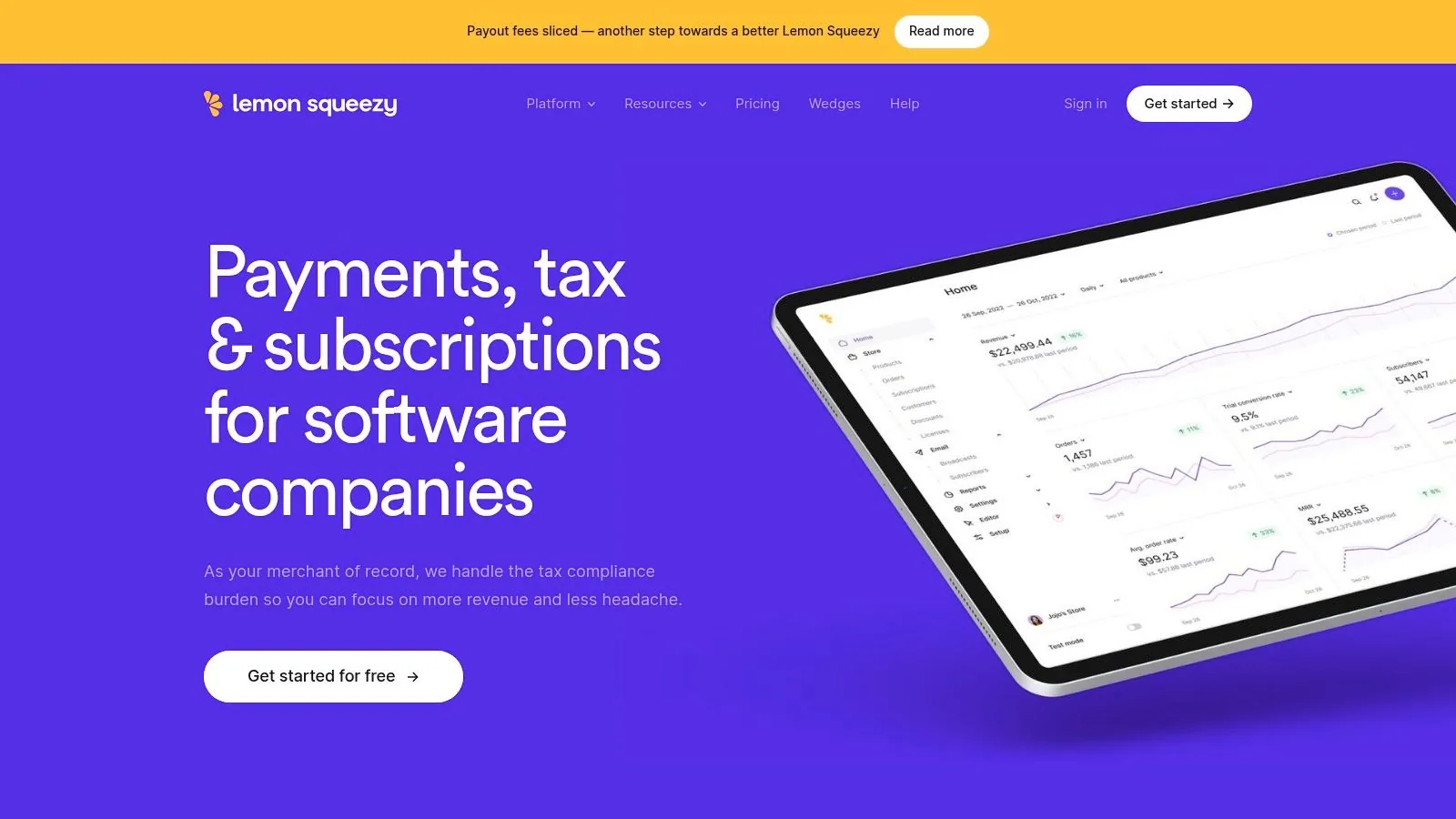
The platform is built to handle the specific needs of digital sellers, offering features like license key generation, secure download links, and subscription billing right out of the box. Unlike platforms that require multiple add-ons, Lemon Squeezy integrates these functions natively. While this all-in-one MoR service is powerful, creators seeking deeper integration between their sales and community-building efforts may find platforms like Zanfia more suitable. With Zanfia, an AI team runs work across your digital products, courses and branded community space, and the creator can dictate updates by chat or voice, creating a seamless customer journey from purchase to engagement without leaving your ecosystem.
Key Considerations
- Pricing: No monthly fees. Pricing is a flat 5% + 50¢ per transaction, plus standard credit card processing fees (which vary by region). Includes email marketing for up to 500 subscribers.
- Best For: SaaS founders, software developers, and creators who need a simple, all-in-one system that completely handles global tax compliance and payments.
- Pros: Offloads the immense legal and operational burden of taxes and compliance, no monthly platform fees, and built-in features for software and subscriptions.
- Cons: Per-transaction fees can be higher than DIY payment processors at very high volume, and payouts are scheduled twice-monthly rather than being instant.
8. Paddle (Merchant of Record)
Paddle offers a fundamentally different approach compared to traditional storefronts, positioning itself as a Merchant of Record (MoR). This model is a game-changer for software, SaaS, and digital product sellers who want to offload the immense operational complexity of global sales. Instead of you selling directly to the customer, Paddle handles the entire transaction, including payment processing, fraud detection, and, most importantly, calculating and remitting sales taxes and VAT worldwide.

This platform is not a website builder; it's a powerful backend payments infrastructure that you integrate into your existing site or application. This makes it a strong choice for businesses that need robust subscription billing, invoicing, and API-driven flexibility. By taking on the legal and financial liabilities of each sale, Paddle frees you to focus entirely on your product and marketing, removing a massive administrative and compliance burden that often hinders international growth for creators and developers.
Key Considerations
- Pricing: Operates on a flat-fee model, typically 5% + 50¢ per transaction, which includes payment processing and all MoR services. No monthly fees.
- Best For: SaaS companies, software developers, and established creators who need a comprehensive solution for global tax compliance and advanced subscription management.
- Pros: Dramatically simplifies global tax and VAT compliance, provides robust subscription and SaaS billing tools, and consolidates payment, invoicing, and fraud protection.
- Cons: The flat fee can be higher than direct payment gateways at a large scale, and it requires technical integration rather than being an out-of-the-box storefront.
9. Etsy
Etsy is less of a standalone platform and more of a massive, bustling marketplace. While known for handmade physical goods, it has a thriving digital product scene driven by immense built-in buyer traffic. It stands out as perhaps the fastest way to get your digital creations, like printables, templates, or SVG files, in front of an active, ready-to-buy audience without needing to build a website or audience from scratch.
The platform handles the entire transaction process, including integrated payments and instant digital file delivery. Creating a listing is straightforward, and once a customer purchases, Etsy hosts and delivers the files for you, making it a very hands-off process. This simplicity, however, comes with a trade-off. You are renting space in Etsy's ecosystem, which means you're competing directly with thousands of other sellers and have limited branding control. For creators focused on building a direct customer relationship and a long-term brand, a platform like Zanfia offers a far better solution: an AI team runs work across your digital products and private community spaces under your own domain, and you can dictate changes by chat or voice instead of clicking through menus.
Key Considerations
- Pricing: Etsy charges a listing fee ($0.20), a transaction fee (6.5%), and a payment processing fee. Additional fees for offsite ads may also apply.
- Best For: New creators and artists specializing in high-demand digital items like printables, planners, templates, and craft patterns who want to tap into existing traffic.
- Cons: High competition, fees can add up quickly, and buyers cannot download files through the mobile app, which can cause confusion.
- Pros: Access to a huge built-in audience actively searching for digital products, simple listing process, and trusted brand recognition.
10. Creative Market
For designers, by designers-that’s the core principle behind Creative Market. This platform is a curated marketplace specifically for design assets, including fonts, graphics, templates, themes, and photos. Unlike general-purpose platforms, it connects sellers directly with a large, built-in audience of creative professionals actively searching for high-quality resources. This makes it a powerful choice if your digital products cater to a design-savvy crowd, as it eliminates the need to build an audience from scratch.
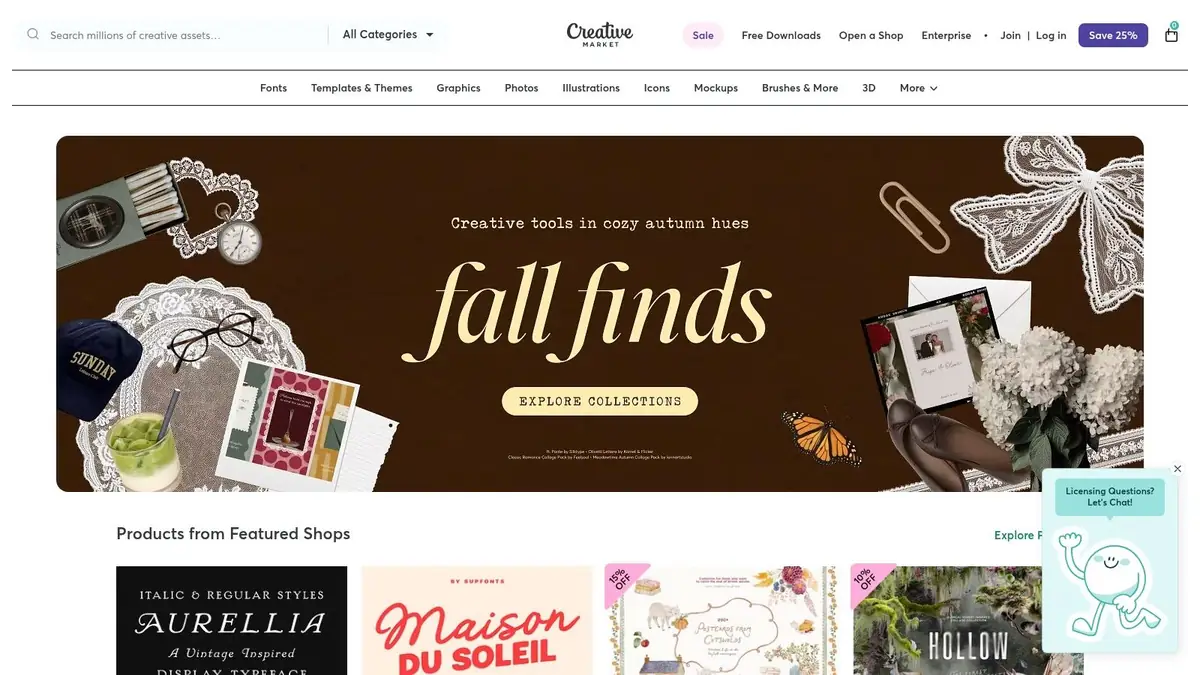
Sellers on Creative Market can set their own prices (within category minimums) and benefit from the platform's established reputation and traffic. The process is straightforward, although you must apply and be approved to open a shop. This quality control helps maintain the marketplace's high standards. For creators who want to build a more direct relationship with their audience, a platform like Creative Market can be a great starting point before transitioning to an all-in-one solution. A tool like Zanfia, for instance, allows you to sell the same digital products while also building a community space directly for your customers, with an AI team that runs the work and a voice-ready assistant that performs actions available in the interface.
Key Considerations
- Pricing: Free to open a shop after approval. The commission is typically 50%, with the platform covering payment processing fees. Buyers pay a small, separate service fee.
- Best For: Graphic designers, illustrators, typographers, and photographers who create high-quality, ready-to-use digital assets for other creative professionals.
- Pros: Access to a large, targeted audience of design professionals, clear and simple commission structure, and strong brand reputation.
- Cons: Requires an application to become a seller, and competition can be very high in popular categories like fonts and social media templates.
11. itch.io
itch.io has carved out a unique niche as the go-to marketplace for independent game developers, but its flexibility makes it a powerful choice for a much wider range of creators. It's a platform built for artists, musicians, writers, and toolmakers who want a direct, community-focused way to distribute their work. If you create zines, comics, game assets, or experimental software, itch.io provides a space that prioritizes creative freedom and direct audience connection over a corporate, polished storefront.
The platform stands out with its creator-first "open revenue sharing" model, where you decide what percentage of sales the platform keeps, even setting it to zero. This philosophy extends to its sales options, supporting pay-what-you-want pricing, bundles, and direct community engagement tools. While it may not have the mainstream traffic of a major app store, its dedicated user base is actively looking for unique and unconventional digital products, making it an excellent platform for creators who value community and control over mass-market appeal.
Key Considerations
- Pricing: Free to upload and sell. itch.io uses an open revenue sharing model where you set the percentage they receive (defaults to 10%, can be 0%). Standard payment processor fees apply.
- Best For: Indie game developers, comic artists, zine creators, and makers of digital assets who want a creator-friendly platform with a built-in, supportive community.
- Pros: Highly flexible, creator-centric revenue model, strong community features, and supports a wide range of unique digital goods beyond typical ebooks or courses.
- Cons: Niche audience may not suit all product types, and payment processor rules can be restrictive for certain content categories.
12. Amazon Kindle Direct Publishing (KDP)
For authors focused exclusively on ebooks and print-on-demand paperbacks, Amazon Kindle Direct Publishing (KDP) is the undisputed market leader. It provides a direct line to the world's largest bookstore, offering unmatched reach and a trusted customer base. This platform is the go-to choice for self-published authors who want to tap into the massive Kindle ecosystem and leverage Amazon's powerful search and recommendation algorithms for discoverability.
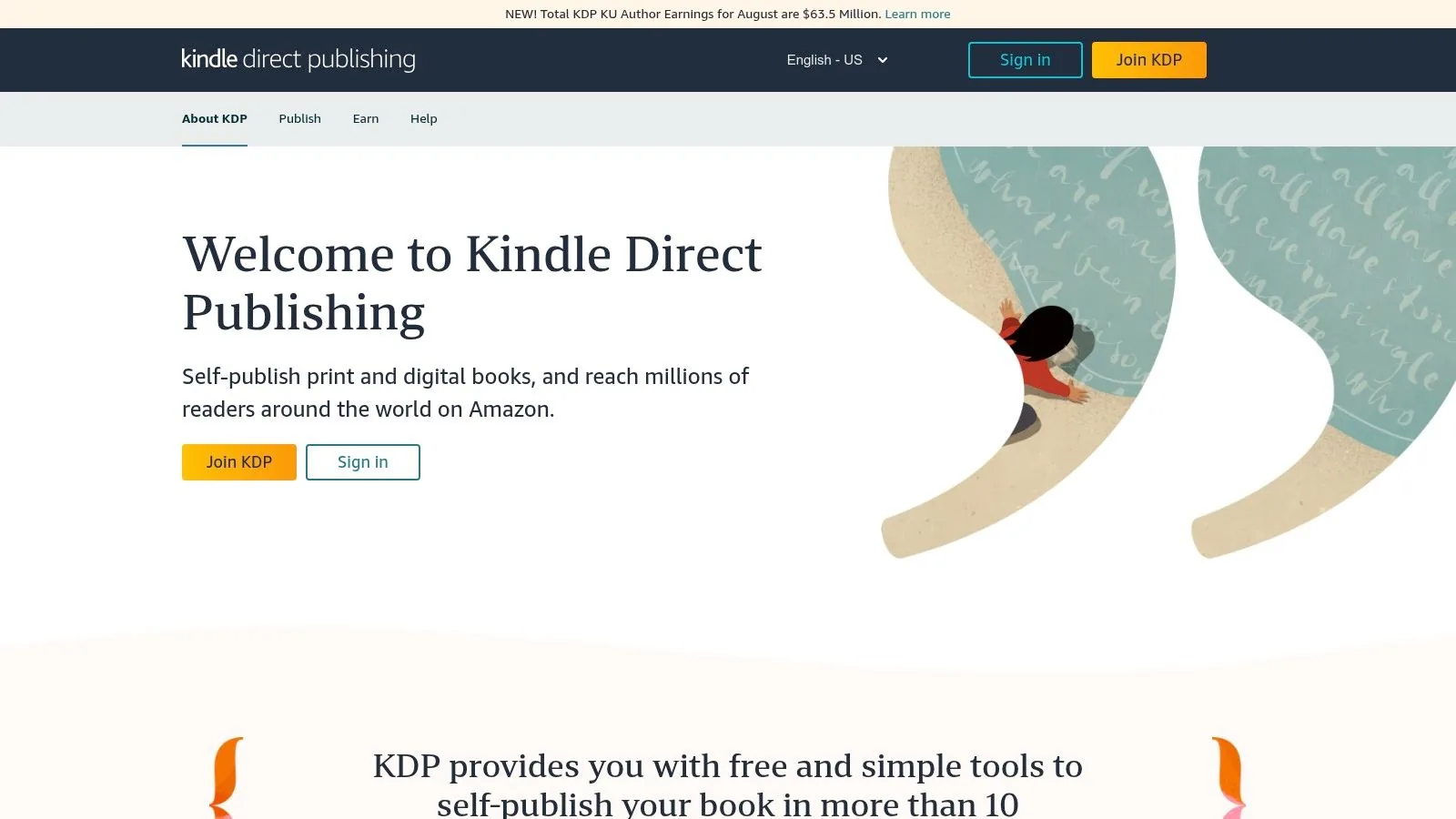
KDP simplifies the publishing process by handling file conversion, sales, and delivery, allowing authors to focus on writing. Its royalty structure is straightforward, offering either 35% or 70% depending on the book's price and territory. The platform also includes promotional tools like Kindle Countdown Deals to help boost visibility. While it excels at selling books, creators looking to diversify into courses or memberships will find it limiting compared to all-in-one solutions. For those authors, platforms that combine book sales with educational content, like some of the best online teaching platforms, may offer a more holistic approach to building a business around their expertise.
Key Considerations
- Pricing: Free to publish. Royalties are either 35% or 70% of the list price, with the 70% option including delivery fees that are deducted from your earnings.
- Best For: Self-published authors of ebooks and paperbacks who want to maximize their reach within the Amazon and Kindle marketplaces.
- Pros: Access to the largest U.S. ebook buyer base, a reliable purchasing and delivery system, and clear promotional tools.
- Cons: The 70% royalty tier has strict pricing and territory constraints. Enrolling in KDP Select requires a 90-day exclusivity commitment to Amazon.
Top 12 Digital Product Sales Platforms Comparison
| Platform | Core Features / Characteristics | User Experience / Quality ★ | Value Proposition 💰 | Target Audience 👥 | Unique Selling Points ✨ | Price Points 💰 |
|---|---|---|---|---|---|---|
| Zanfia 🏆 | AI team runs courses, communities, digital products; checkout with order bumps, installments, upsells; test mode | ★★★★☆ Voice-ready assistant, integrated analytics | 0% platform commission, 14-day free trial (no card) | Professional creators, entrepreneurs | AI-first, agent-first, MCP endpoint for outside agents (every plan) | From $39/mo, or $31/mo billed annually |
| Shopify | Full ecommerce store + apps for digital goods | ★★★★☆ Mature marketing & ecosystem | Scalable, extensive app ecosystem | Ecommerce sellers, brands | Best-in-class marketing tools, multi-channel sales | Transparent monthly plans |
| WooCommerce (WordPress) | Open-source plugin with full control, file protection | ★★★★☆ Customizable, self-managed hosting | Cost-effective with self-hosting | Developers, DIY sellers | Full ownership, highly customizable | Free plugin + hosting/gateways fees |
| Gumroad | Hosted checkout for digital downloads, memberships | ★★★☆☆ Simple, minimal setup | No monthly fees, only flat transaction fee | Solo creators, small studios | Pay-what-you-want, no storefront maintenance | No monthly fee, 10% fee per sale |
| Payhip | Hosted store with VAT handling & instant payouts | ★★★☆☆ Easy setup | Transparent fees, instant payout | Digital sellers, EU/UK focused | Built-in VAT compliance, free tier with features | Free tier + pay-as-you-go fees |
| Sellfy | Hosted store with downloads, subscriptions, print-on-demand | ★★★☆☆ Marketing tools built-in | No platform transaction fees | Digital creators, subscription sellers | Predictable costs, Amazon-backed hosting | Tiered plans with sales caps |
| Lemon Squeezy (Merchant of Record) | All-in-one MoR for software & digital sales, global compliance | ★★★★☆ Focus on compliance, global support | No monthly fee, pay only on sales | Software sellers, SaaS providers | Handles taxes, chargebacks, licensing automatically | Flat per-transaction fees |
| Paddle (Merchant of Record) | MoR with SaaS billing, tax compliance, invoicing | ★★★★☆ Enterprise grade | Reduces legal burden, global tax handling | Enterprise sellers, SaaS | Advanced SaaS billing, fraud protection | Per-transaction fees, integration needed |
| Etsy | Large marketplace for digital printables & templates | ★★★☆☆ High demand but limited mobile UX | Tap into built-in audience | Crafters, designers | Instant download, integrated payment | Listing + transaction + payment fees |
| Creative Market | Curated marketplace for design assets | ★★★☆☆ Professional creative audience | 50% commission with clear licensing | Designers, agencies | Design-focused, seller price control | 50% commission + small buyer fee |
| itch.io | Indie games & digital content marketplace | ★★★☆☆ Flexible storefront, pay-what-you-want | Creator-friendly revenue model | Indie developers, creatives | Customizable pages, flexible payout & revenue share | Default 10% revenue share (adjustable) |
| Amazon Kindle Direct Publishing (KDP) | Ebook self-publishing with global reach | ★★★★☆ Large buyer base, promo tools | High royalties within constraints | Authors, ebook publishers | Leading ebook platform, print-on-demand option | 35%-70% royalty, exclusivity option |
From Chaos to Control: Unify Your Creator Business
Navigating the landscape of digital product platforms can feel overwhelming. We've explored a wide range of options, from robust e-commerce giants like Shopify and dedicated marketplaces like Etsy to specialized payment processors like Lemon Squeezy. Each tool offers a unique set of features tailored to specific creator needs, whether you're a WordPress power user leveraging WooCommerce or a game developer finding a home on itch.io. The key takeaway is that the best platform to sell digital products isn't a one-size-fits-all solution; it’s the one that aligns with your business model, technical comfort level, and long-term vision.
Finding Your Perfect Fit
Your decision-making process should be guided by a clear understanding of your priorities.
- For maximum control and customization: A self-hosted solution like WooCommerce gives you unparalleled freedom but requires more technical management.
- For simplicity and speed: Platforms like Gumroad and Payhip allow you to start selling in minutes with minimal setup, making them ideal for beginners.
- For leveraging existing audiences: Marketplaces such as Etsy and Creative Market provide built-in traffic but come with higher fees and less brand control.
- For hands-off tax and compliance: Merchants of Record like Paddle and Lemon Squeezy are invaluable for creators who want to offload the complexities of global sales tax.
However, a crucial pattern emerges for creators aiming for sustainable, long-term growth. Patching together multiple specialized tools often leads to a fragmented business. You end up managing separate logins, customer lists, and payment systems, creating a disjointed experience for your audience and an administrative headache for yourself.
The Power of an Integrated Hub
The most strategic approach is to move from a collection of disparate tools to a unified operational hub. This is where a platform like Zanfia works well for creators who want AI to run the day-to-day work. Instead of just selling a standalone ebook or a one-off template, you can build an entire ecosystem around your brand: an AI team runs work across courses, communities and digital products, and you dictate changes by chat or voice instead of clicking through menus. Sell a digital product, then seamlessly invite that customer into an exclusive, paid community space built right into the same platform. Host your online courses with integrated video and student progress tracking, all under your custom domain and branding.
This consolidation isn't just about convenience; it's about creating a powerful, cohesive customer journey that fosters loyalty and increases lifetime value. Zanfia's checkout is built to sell (with order bumps, installments like splitting a $600 course into four payments, upsells, and a test mode for buying your own product before launch), and its automations connect events so that a purchase automatically triggers community access or an email welcome sequence. When your audience can access your courses, products, and community in one place, you remove friction and build a stronger connection. Of course, once you've established your selling platform, Mastering Social Media Content Creation is essential to engage your audience and drive traffic to your digital products. An integrated platform makes it easier to direct that traffic to a central, branded destination where your audience can explore everything you have to offer.
FAQ
What kinds of digital products can I sell on an all-in-one platform like Zanfia?
Zanfia lets you sell 12 product types under one brand, including online courses, ebooks, paid newsletters, knowledge bases, communities, bundles, services and consultations. Everything runs through a modern checkout with order bumps, installments and upsells, so you can package different formats without stitching separate tools together. Full product details are on zanfia.com/pricing.
Does WooCommerce really cost nothing to run?
The WooCommerce plugin itself is free, but the real bill comes from web hosting, domain registration, premium themes and paid extension plugins. You also pay standard payment gateway fees on every sale. In exchange you get complete ownership, no platform transaction fees and unlimited customization, provided you are willing to manage hosting, security and updates yourself.
Is Gumroad's 10% fee actually a good deal compared to platforms with monthly plans?
Gumroad charges no monthly fee and takes a flat 10% per sale that includes credit card processing, which is efficient at low volume. As your revenue grows, that flat 10% can become more expensive than a fixed monthly subscription on another platform. The trade-off is speed and simplicity versus long-term margin.
How does Payhip handle EU and UK VAT for digital products?
Payhip collects and remits EU and UK VAT automatically on behalf of creators, which removes one of the most tedious parts of selling digital products internationally. This is bundled into the platform rather than requiring a separate tax tool. It is a key reason the article highlights Payhip for creators who want a hassle-free setup.
What's the difference between a storefront platform like Shopify and a creator-focused one like Sellfy?
Shopify gives you a full-fledged website with a blog, advanced analytics, marketing tools and a huge app marketplace, but digital delivery is handled through add-on apps that require setup. Sellfy is built specifically for creators and bakes email marketing, discount codes, upsells and secure file delivery directly into the dashboard. Shopify wins on scale and flexibility; Sellfy wins on speed and simplicity for a pure digital catalog.
Ready to replace the chaos of managing multiple tools with a single, powerful hub? Zanfia helps thousands of creators build communities, courses, and digital products with an AI team that runs the work. Start building your unified creator business today with a 14-day free trial, no credit card required.