

How to Split Test Landing Page: A Creator’s Guide
Most creators don't have a traffic problem first. They have a clarity problem.
A sales page gets visits, people browse, maybe they even scroll, but too few take the next step. So the usual reaction is to rewrite everything, swap the design, add more proof, shorten the form, change the price, and hope something sticks. That's not optimization. That's stress wearing a strategy costume.
A split test landing page turns that mess into a clean decision. You keep a control, create one variation, send comparable traffic to both, and judge the result by one business metric. That approach became standard in conversion work because it replaces opinion with measurable experiments, not because it's fancy or technical (Leadpages on split testing basics).
For creators, this matters even more than it does for large teams. You don't have endless traffic, a research department, or time for redesigns that may not pay off. You need tests that are small, clear, and tied to revenue.
From Guesswork to Growth Forming Your Hypothesis
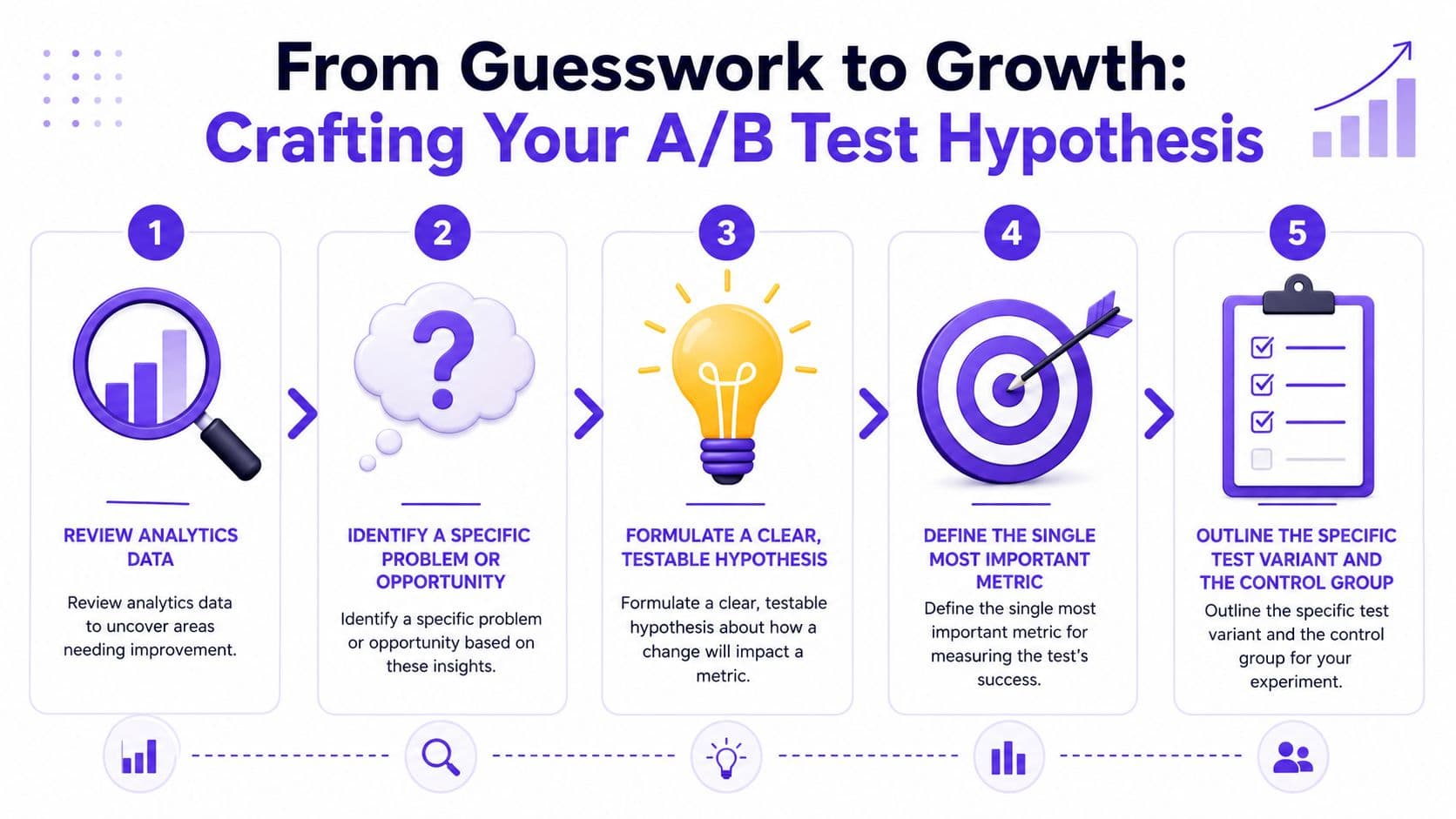
A creator launches a sales page, sees traffic come in, and assumes the next fix is a new headline or a different layout. That usually produces busy work, not better conversions. A strong hypothesis starts with a specific business problem, then ties one page change to one expected revenue outcome.
Look for friction, not random ideas
Start with the point where buyers hesitate.
If a course page gets visits but very few checkouts, the issue may be message clarity, offer framing, or trust. If people read for a while but do not click, the CTA may be weak, delayed, or disconnected from the promise above it. If they leave fast, the headline may be pulling in the wrong audience or failing to explain the offer quickly.
Good CRO work uses behavior signals to diagnose that friction before anyone builds a variant. Google's guidance on website testing and experimentation reflects the same principle. Define the question first, then test the change that addresses it.
Inside Zanfia, that grounding is easier because an AI team runs the diagnostic and reporting work for you: the assistant reads the page, checkout, and sales data in one workspace and can be directed by chat or by voice to surface where visitors stall. You can check visits against sign-ups or purchases without stitching together three separate tools and guessing where the drop-off happened. That matters for creators because the best hypothesis is rarely "what should I redesign?" It is "what is blocking the next sale?"
Practical rule: Test the bottleneck closest to revenue.
If you are still unsure whether the offer itself deserves optimization, review this guide on how to validate a business idea before investing time in page tests. Better testing starts with a valid offer.
Use the If, Then, Because framework
A useful hypothesis fits in one sentence and forces precision:
- If I change the headline to focus on the result,
- then more visitors will start checkout,
- because the page will explain the value faster.
That format works because it removes vagueness. It also exposes weak thinking early. "Let's make the page feel stronger" gives you nothing to measure. "If I move the CTA above the fold, then more visitors will click because they can act before losing momentum" gives you a clear change and a clear expected effect.
For creators, this discipline protects limited traffic. On Zanfia, every test can connect back to the metric that matters, whether that is booked calls, email sign-ups, or paid conversions, and a checkout built to sell (order bumps, installments, upsells, wallets) means a headline win actually shows up in revenue. The point is not to create more experiments. The point is to run fewer tests that have a realistic chance of increasing revenue.
Here are better and worse examples for a course sales page:
| Approach | Example |
|---|---|
| Weak | "Let's make the page more dynamic." |
| Better | "If I move the CTA higher on the page, then more visitors will click it because they won't need to scroll to act." |
| Better | "If I replace feature-led copy with outcome-led copy, then more readers will start checkout because they'll understand the result they're buying." |
Pick one metric that decides the test
Every hypothesis needs one deciding metric before the test starts.
For a lead magnet page, use email sign-ups. For a paid workshop page, use completed purchases. For a webinar page, use registrations. Secondary metrics such as scroll depth or time on page can help explain behavior, but they should not overrule the primary goal.
Many creator tests go off track. A page version can produce longer sessions and still make less money. If the goal is sales, judge the test by sales.
That standard keeps split testing useful inside Zanfia. You are not optimizing a page in isolation. You are improving a step in the revenue path.
Designing and Building Your Test Variants
Once the hypothesis is clear, build the lightest possible variation.
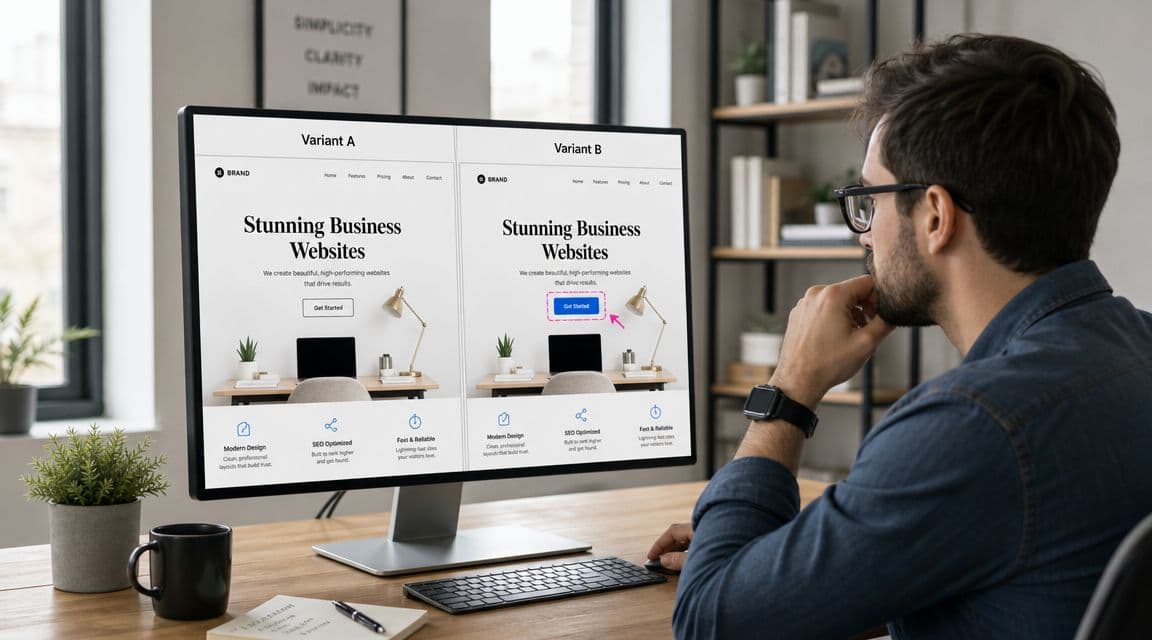
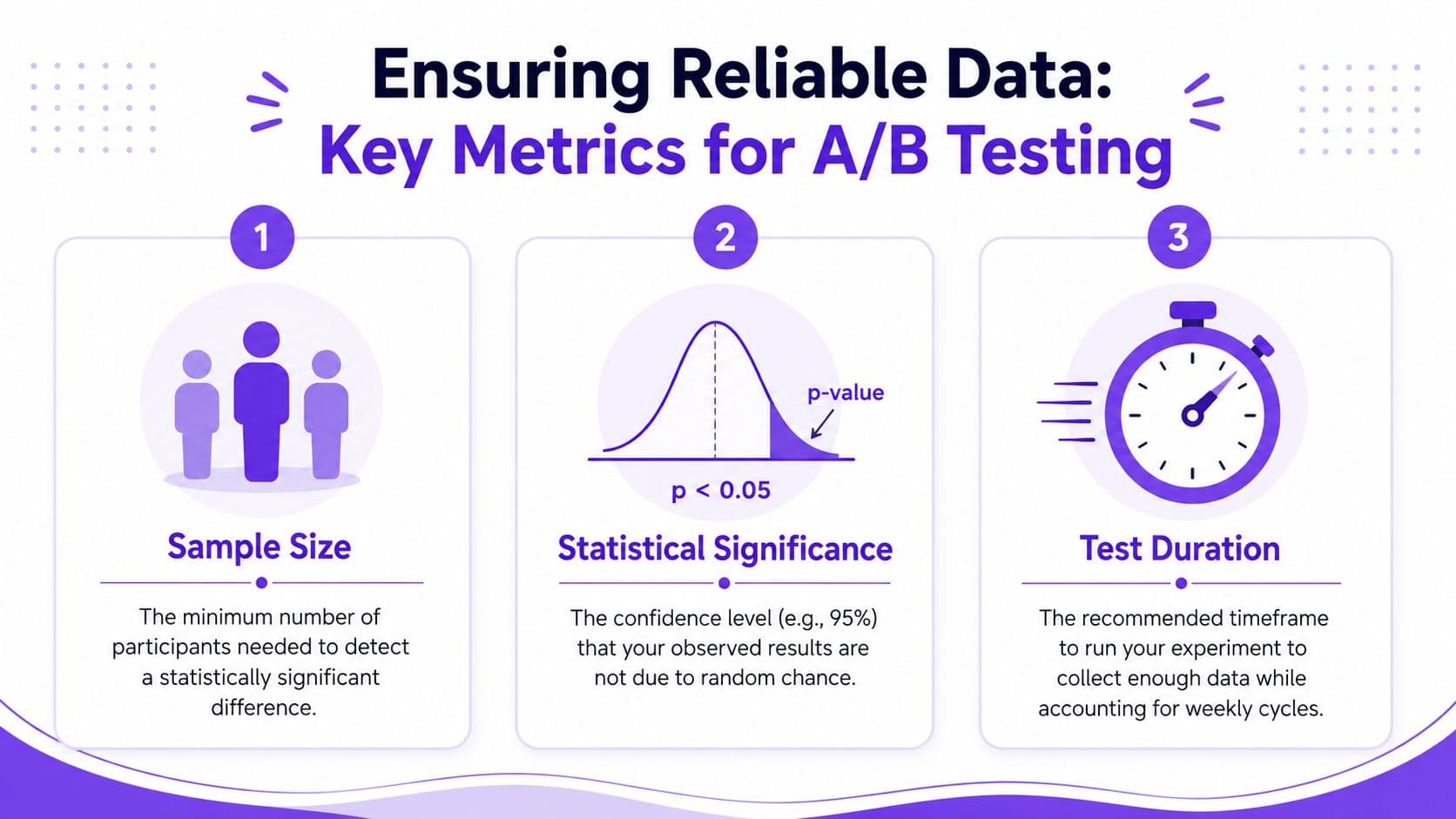
That means one changed element per variant and one primary metric. Reliable workflows usually focus on high-impact elements like headlines, CTAs, or images, then keep the rest of the page unchanged. Many marketers also recommend running the test for at least a full week and aiming for about 95% confidence before calling a winner (Mailchimp on landing page split testing).
What to test first
Not every element deserves equal attention. Start where purchase intent is shaped.
- Headline: This is often the biggest lever because it frames the offer. A weak headline describes the product. A stronger one describes the result.
- CTA copy: "Buy now" and "Start learning today" ask for the same click in different ways. One may feel transactional, the other directional.
- Hero visual: A generic stock image usually adds little. A product preview, lesson interface, or community view can reduce ambiguity.
- Offer framing: Sometimes the page doesn't need prettier copy. It needs a clearer promise, bundle, or purchase path.
What usually doesn't help early on is testing tiny cosmetic details before you've tested message clarity. Button shade matters less than whether the button promise matches the visitor's intent.
A variant should answer one question well. If it answers five questions badly, you won't know what caused the result.
Keep the control clean
Creators often sabotage their own test by introducing side changes "while they're in there." Don't.
If you're testing the headline, leave the CTA, page structure, image, and form alone. If you're testing form length, keep the copy stable. Attribution gets messy the moment multiple variables move at once.
An AI-first setup streamlines these efforts. On Zanfia, a creator can dictate a change to the assistant ("duplicate this page, swap only the headline") instead of clicking through a builder, then track outcomes inside the same workspace used for digital products, checkout, payments, and member access. That removes the usual friction of stitching together a page builder, checkout tool, and separate reporting layer, and because the checkout supports order bumps, installments, and test mode, you can verify the full path before the first real visitor sees it.
For messaging work, I also like studying frameworks that sharpen problem-solution clarity before testing. This breakdown of the agitate and solve copy approach is a useful reference when your page feels accurate but not persuasive.
Build the variant like a scientist, not a designer
Before launch, run a quick checklist:
- Name the control and variant clearly. You'll thank yourself later.
- Confirm the single changed element. If you can't describe it in one line, you've changed too much.
- Check the CTA path. Broken checkout flows ruin tests.
- Match mobile and desktop experience. A variant can look clean on desktop and collapse on mobile.
A practical walkthrough helps if this process still feels abstract:
The point isn't to build a perfect challenger. It's to build a valid one.
Running Your Test for Reliable Data
You launch two versions on Monday. By Tuesday afternoon, one page is ahead by three sales. If you call the winner there, you are not measuring page performance. You are measuring a short burst of traffic under one narrow set of conditions.
Reliable testing comes down to control. Send comparable traffic to each version, keep the offer and timing consistent, and let the test run long enough to capture normal buyer behavior. On Zanfia, that process is easier to manage because the landing page, checkout, and product access live in one system, and you can run a test purchase in test mode before you spend a dollar sending traffic. You can watch the full path from visit to revenue without exporting data across separate tools and hoping attribution still holds.
What reliability means in practice
A clean split test gives each page a fair shot.
That usually means an even traffic split and a stable test environment. If Version A gets colder ad traffic while Version B gets returning email subscribers, the result says more about audience quality than page performance. The same problem shows up when one version runs mostly on weekdays and the other gets weekend traffic.
Creators run into this constantly. A launch email goes out late. An ad platform spends unevenly. A partner posts one link at a better time. Small execution gaps create big interpretation problems.
How to run the test without contaminating it
A workable setup is straightforward:
- Email split: send comparable audience segments to each page and keep the email copy the same except for the link.
- Ad split: hold audience, budget, creative, and offer steady so the page is the main variable.
- Organic or partner traffic: use this only if you can control timing closely enough to keep the audience mix reasonably similar.
If you are unsure whether your sources are consistent enough, review this guide on how to analyze website traffic before a split test. Traffic quality problems often look like page-test wins until revenue proves otherwise.
I also recommend watching the downstream metric, not just the page conversion. For many creators, the real question is not which page collected more clicks, but which page produced more paid conversions or higher revenue per visitor. That is where an AI-first setup helps. Zanfia lets you judge the test against business outcomes inside the same workflow used to sell and deliver the product, and the assistant can pull those numbers on request rather than making you build a report.
How long should you let it run
Long enough to cover normal variation. Short enough to avoid dragging a weak test on for weeks with no meaningful volume.
In practice, that means setting the test live, choosing an evaluation window in advance, and resisting the urge to stop at the first spike. Early leaders often fade once device mix, day-of-week behavior, and source quality even out. I have seen creators pause a test after a handful of conversions, push the "winner" live, and then watch revenue settle back to baseline because the sample was too thin to trust.
A better operating rule is simple. Do not judge the test on a single day. Judge it after both versions have seen enough comparable traffic to reflect your usual buying pattern.
If you want a grounded benchmark for how conversion expectations vary by funnel and offer type, Fypion's B2B conversion tips are a useful reference point, especially when you need to sense-check whether a lift is meaningful or just normal fluctuation.
Patience protects the test. Impatience turns it back into guesswork.
Analyzing Results and Declaring a Clear Winner
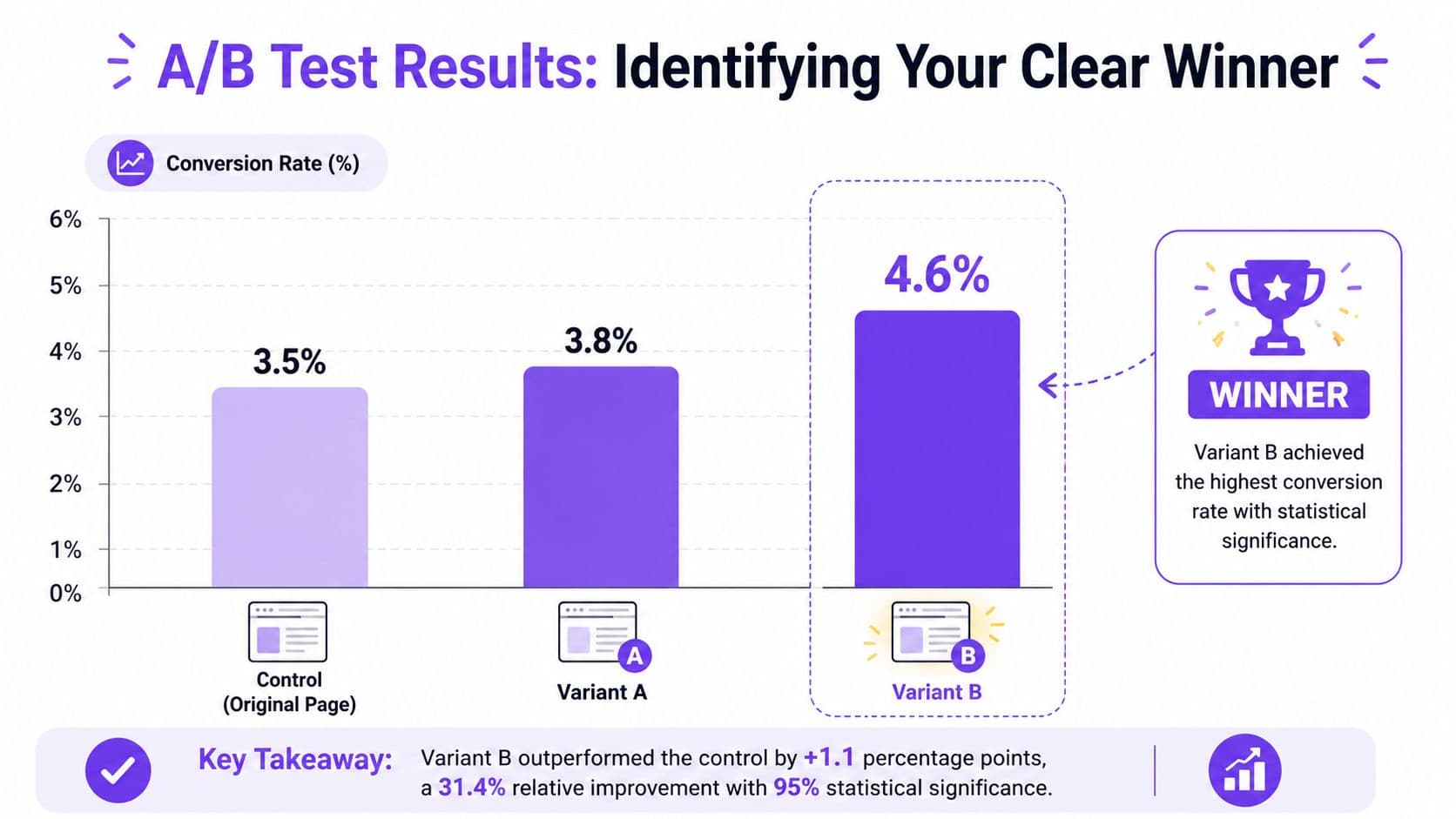
When the test ends, there's a tendency to jump straight to the top-line result, missing the useful part. The winner isn't just the page with more conversions. It's the page that improved the primary metric you defined in advance under conditions you'd trust enough to repeat.
Start with the metric that mattered most
If your hypothesis aimed to improve course purchases, compare purchases. If the goal was email sign-ups, compare sign-ups. Don't switch to a softer metric because the main one didn't move.
A simple review sequence works well:
- Look at visitors for Page A and Page B.
- Look at the number of target actions on each page.
- Calculate conversion rate for each version.
- Check whether the result is strong enough to trust operationally.
- Review secondary behavior only after the primary metric.
This is one reason integrated reporting matters. When your page, checkout, and product delivery sit in the same system, you can see whether the variant drove more actual business activity rather than just more curiosity. That kind of clarity is especially useful when the transaction path is part of the conversion, not just a form submit.
Read the result like an operator
Suppose Variant B wins on purchases. Good. Now ask a better question: why did it win?
Did the revised headline make the offer easier to understand? Did the CTA reduce hesitation? Did the shorter form remove friction? The answer shapes the next test.
A useful habit is to keep a test log with four fields:
| Field | What to record |
|---|---|
| Hypothesis | What you expected and why |
| Change made | The single edited element |
| Primary outcome | Which version won on the main metric |
| Interpretation | Your best explanation for the result |
That log becomes more valuable over time than any single winner.
For teams selling to businesses or higher-intent buyers, I also recommend reviewing broader sales-page thinking alongside your own data. Fypion's B2B conversion tips are useful because they push you to connect page behavior with buying context, not just clicks.
If you want a deeper process for turning test outcomes into systematic improvements, this guide to conversion rate optimization strategies is a strong next read.
A good analysis doesn't end with "B won." It ends with "B won because the page reduced a specific doubt."
What if there isn't a winner
That result is still useful.
If the difference is too small or inconsistent to trust, keep the control and document the lesson. Maybe the tested variable wasn't important enough. Maybe the hypothesis was directionally wrong. Maybe your traffic volume wasn't ready for that test yet.
No clear winner is frustrating. It's also honest. And honest data saves money.
Avoiding Common Pitfalls and Applying Your Learnings
The dangerous part of split testing isn't complexity. It's overconfidence.
Industry guidance often points to roughly 1,000 visitors per variation and about 100 conversions per variation before results are stable enough to trust, especially on pages with moderate conversion rates. That same guidance warns against stopping tests early, failing to randomize traffic evenly, and ignoring segment effects such as a page winning on mobile while losing on desktop (Personizely on split test stability and pitfalls).
Mistakes that quietly poison results
Some errors are obvious. Others look like momentum.
- Stopping early: A temporary lead isn't the same as a reliable result.
- Testing too many changes: If the headline, CTA, and visual changed together, you don't know what caused the lift or drop.
- Sending uneven traffic: A warm email audience to one page and colder ad traffic to the other isn't a fair comparison.
- Ignoring segments: A global winner can hide local failures. Mobile and desktop often behave differently. New visitors and returning buyers can, too.
The safest mindset is simple. Every result needs an explanation strong enough that you'd be willing to repeat the test conditions.
Apply the lesson beyond one page
The main advantage comes after the test.
If a stronger promise in the headline improves one course page, that insight may also improve your webinar registration, lead magnet page, paid newsletter pitch, or community waitlist. If a clearer CTA reduces hesitation on a digital product page, that principle often carries into email and checkout copy too.
Creators gain by thinking in systems, not isolated pages. A landing page test is rarely about one page. It's about discovering what your audience responds to across the whole journey.
If you want a framework for applying those lessons more broadly, these landing page optimization best practices are a practical companion resource.
What advanced creators should test next
Once the basics are already solid, shallow tests get less useful. Mature pages often benefit more from higher-order experiments such as:
- Offer framing: Position the same product around speed, depth, access, or transformation.
- Traffic-source consistency: Align the page message more tightly with the ad, email, or creator content that brought the visit.
- Multi-step funnel logic: Test whether more context before checkout helps or hurts compared with a shorter path.
That's usually where serious gains come from after the obvious headline and button tests have already been exhausted.
Start Optimizing Your Creator Business Today
A creator launches a sales page, watches traffic come in, and sees sales stall. The usual reaction is a redesign. The better move is a controlled test on the page that already affects revenue.
Split testing works best as an operating habit, not a one-off project. Start with a page tied to a real offer, test one meaningful change, and judge the result against the conversion goal you already track.
Keep the first pass simple:
- Choose a page that gets real traffic and sales intent.
- Write one clear hypothesis.
- Build one variation.
- Run the test cleanly.
- Keep the winner and record what changed.
That process is manageable for a solo creator. It is also easier to sustain on Zanfia, where an AI team handles the setup work: you dictate the change by chat or voice, the assistant duplicates the page and swaps the element, and the page, product, checkout, payments, and funnel data all live in the same workspace. You can test what changes conversion and connect that result to actual revenue, without stitching together separate tools or paying for a complicated optimization stack. Availability of the full Assistant and the MCP endpoint depends on the plan, see the current Zanfia pricing.
Small gains matter. A stronger page can improve product sales, raise the value of your traffic, and give you a clearer basis for the next decision.
FAQ
How do I choose which element to test first on my landing page?
Start with elements that shape purchase intent: the headline, CTA copy, hero visual, or offer framing. Focus on the bottleneck closest to revenue rather than cosmetic details like button shade. A weak headline that describes the product instead of the result is often the biggest lever to test first.
How long should I run a split test before declaring a winner?
Run the test long enough to cover normal variation in device mix, day-of-week behavior, and source quality, typically at least a full week, aiming for about 95% confidence before calling a winner. Set an evaluation window in advance and resist stopping at the first spike, because early leaders often fade once traffic evens out. Judging after a single day or a handful of conversions turns the test back into guesswork.
What is the If, Then, Because framework and why should I use it?
It is a one-sentence hypothesis format: If I change X, then Y will happen, because Z. It forces precision, exposes vague thinking early, and ties one page change to one expected revenue outcome. For example: If I move the CTA above the fold, then more visitors will click because they can act before losing momentum.
Can I test multiple changes at once to save time?
No. Change only one element per variant, because attribution gets messy the moment multiple variables move at once. If you are testing the headline, leave the CTA, page structure, image, and form alone. A variant should answer one question well, otherwise you will not know what caused the result.
Which metric should decide the winner of my test?
Pick one primary metric tied to the business goal before the test starts: email sign-ups for a lead magnet page, completed purchases for a paid workshop, or registrations for a webinar. Secondary metrics like scroll depth or time on page can help explain behavior but should not overrule the primary goal. A page version can produce longer sessions and still make less money, so if the goal is sales, judge the test by sales.
If you want to put this into practice, Zanfia gives creators one platform to build landing pages, sell digital products, manage memberships and newsletters, automate follow-up, and track performance on their own domain. As of August 2026, Zanfia charges 0% platform commission on customer sales (only the payment processor takes its standard cut), and the checkout is built to sell: order bumps, installments, upsells, Apple Pay and Google Pay, plus a test mode so you can buy your own product before the first real visitor sees it. Plans start at $39/month, or $31/month billed annually, with a 14-day free trial and no credit card required.