

Content Marketing Best Practices for Scalable Growth

In a digital landscape saturated with content, simply creating more isn't enough. Many creators and businesses feel stuck, publishing valuable material that fails to generate meaningful traffic, leads, or sales. The missing link isn't effort, it's strategy. Adopting proven content marketing best practices is the difference between shouting into the void and building a predictable engine for growth. If this sounds familiar, it's often a sign of a deeper issue, and exploring Why Your Strategy Might Be Stuck can provide crucial insights into common pitfalls.
This guide moves beyond generic advice to provide ten actionable, expert-backed strategies that will transform your content from a cost center into a powerful asset. Whether you're a seasoned 'Business Architect' earning PLN 10k-100k+ a month and hitting a growth ceiling, or a 'Potential Explorer' ready to launch your first digital product, these principles will provide the clarity and direction needed to scale effectively. By the end of this article, you'll have a clear roadmap to create content that not only ranks and engages but also drives sustainable revenue for your online business. We will cover everything from defining goals and knowing your audience to leveraging social proof and measuring what truly matters.
1. Define Clear Goals and KPIs
Effective content marketing doesn't happen by accident; it's the result of a deliberate strategy grounded in clear, measurable objectives. Before creating a single piece of content, you must define what success looks like for your business. This foundational step is one of the most critical content marketing best practices as it transforms your efforts from aimless content creation into a focused, results-driven engine for growth.
Without goals, you're essentially flying blind. Are you trying to increase brand awareness, generate qualified leads, boost organic traffic, or improve customer retention? Each objective requires a different type of content and a unique set of metrics to track progress. Defining these goals and their corresponding Key Performance Indicators (KPIs) provides the roadmap for your entire strategy.
Implementation and Examples
Start by aligning your content goals with broader business objectives. If your company’s primary goal is to increase revenue by 20%, a relevant content marketing goal would be to generate a specific number of marketing-qualified leads (MQLs) each month.
- For Lead Generation: HubSpot is a prime example. They track how many leads are generated from specific blog posts, e-books, and webinars, allowing them to calculate the customer acquisition cost (CAC) for their content efforts.
- For Brand Awareness & Engagement: Buffer measures social media engagement rates, follower growth, and brand mentions to gauge their content's reach and impact.
- For Organic Traffic & Authority: An agency might track organic traffic growth, keyword rankings, and the number of high-quality backlinks earned through its content.
Actionable Tips
To implement this effectively:
- Start Small: Choose 3-5 primary KPIs that directly impact your main business goals. Avoid "vanity metrics" that don't correlate with revenue or growth.
- Set Timelines: Establish both short-term (e.g., quarterly) and long-term (e.g., annual) goals to maintain momentum and track progress.
- Review and Adjust: Your goals aren't set in stone. Review your KPIs quarterly to see what's working and pivot your strategy as needed. For a deeper dive into this, you can learn more about how to measure content marketing ROI on zanfia.com.
- Use Attribution: Employ attribution modeling to connect specific content pieces to conversions and revenue, proving the direct value of your work.
2. Know Your Audience Deeply
Knowing your audience deeply means mapping their goals, pain points, preferences, and behaviors into detailed buyer personas. This content marketing best practice ensures every blog post, video, or newsletter feels tailor-made for your community. Conduct research using surveys, one-on-one interviews, website analytics, and social listening platforms to capture motivations and challenges. When you understand who you are creating for, your content naturally drives higher engagement and conversions.

Implementation and Examples
- Drift built segmented personas for marketing and sales to personalize chat experiences.
- Mailchimp uses industry, company size, and behavior segments to tailor email content.
- Salesforce mines its customer data to shape educational blogs and webinars.
- For creators, a platform like Zanfia offers an all-in-one ecosystem where community interaction, course progress, and purchase history provide rich, unified data for building accurate audience personas—all under your own domain.
Actionable Tips
- Interview 10–15 customers to validate and enrich your personas.
- Analyze website behavior in your platform's dashboard to spot content preferences.
- Craft content that directly addresses each segment’s pain points.
- Update personas quarterly as market needs shift.
- Segment your email list or community channels for targeted messaging.
Use this method when launching a new product, optimizing your email list, or refining community channels to ensure your message hits the mark.
Learn more about Know Your Audience Deeply on zanfia.com
3. Create High-Quality, Value-Driven Content
The core of any successful strategy is the content itself. One of the most essential content marketing best practices is to shift focus from promotion to genuine value. High-quality content is well-researched, expertly crafted, and designed to solve a specific problem for your audience. It educates, entertains, or inspires without demanding an immediate sale, building a foundation of trust and establishing your brand as a credible authority.
This value-first approach is what separates fleeting campaigns from long-term brand equity. When your content consistently helps people, they begin to see you as a reliable resource, not just a vendor. This trust fosters loyalty, encourages organic sharing, and earns valuable backlinks, creating a sustainable engine for traffic and growth that far outlasts any paid advertisement.
Implementation and Examples
To implement this, you must prioritize your audience's needs over your sales pitch. Think about their biggest challenges and create comprehensive resources that provide clear, actionable solutions. The goal is to become the go-to source in your niche.
- For Establishing Authority: Neil Patel's blog provides exhaustive guides on SEO and digital marketing, attracting millions of visitors who trust his expertise. Similarly, Moz’s "Beginner's Guide to SEO" has become an industry-standard resource.
- For Building Emotional Connection: Apple rarely focuses on product specs in its content. Instead, it tells compelling stories about how its technology empowers creativity and connects people, building a powerful brand identity.
- For Showcasing Authentic Insights: Basecamp's "Signal vs. Noise" blog shares candid thoughts on productivity and running a business, resonating with an audience tired of generic corporate content.
Actionable Tips
To create content that stands out:
- Invest in Quality: Hire professional writers and editors to ensure your content is polished, accurate, and engaging.
- Focus on Depth: Don't just skim the surface. Create content that thoroughly solves a specific problem or answers a complex question.
- Support with Data: Use original research, statistics, and case studies to add credibility and make your content more compelling.
- Leverage Visuals: Incorporate high-quality images, infographics, and videos to enhance comprehension and break up text. Creating engaging video content is a powerful way to deliver value, and you can explore this further by learning how to create a video training course on zanfia.com.
- Keep it Fresh: Regularly update your top-performing content to ensure it remains accurate, relevant, and valuable to your audience.
4. Implement a Strategic Content Calendar
Consistent content creation is the engine of any successful marketing strategy, but consistency without a plan leads to chaos. A strategic content calendar is the blueprint that organizes your efforts, ensuring every piece of content is purposeful, timely, and aligned with your business goals. This tool is one of the most fundamental content marketing best practices because it transforms random acts of content into a coordinated, strategic campaign.
A well-structured calendar maps out topics, formats, responsible team members, publishing dates, and promotional channels. This foresight prevents last-minute scrambling, ensures a balanced content mix across different stages of the buyer's journey, and helps you capitalize on seasonal trends or company milestones. It provides a single source of truth for your entire team, fostering alignment and efficiency.

Implementation and Examples
The goal is to move from reactive to proactive content creation. Instead of asking "What should we post today?", your team will be executing a pre-planned strategy designed weeks or months in advance. This approach ensures you never miss an opportunity to engage your audience.
- For Team Collaboration: Platforms like CoSchedule allow large marketing teams to plan, create, and schedule content months ahead, integrating all channels from blogs to social media.
- For Campaign Coordination: A brand like Nike uses a detailed calendar to align its product launches with social media campaigns, blog posts, and influencer collaborations for maximum impact.
- For Integrated Businesses: A company using a unified platform like Zanfia can use a content calendar to plan a series of webinars, tutorials, and community events that coincide with new course releases, ensuring their audience is educated and engaged in a single, branded ecosystem.
Actionable Tips
To build a calendar that works for you:
- Plan Ahead, Stay Flexible: Map out your core content pillars and campaigns 2-3 months in advance, but leave about 20% of your schedule open for timely, reactive content that addresses current events or industry trends.
- Color-Code for Clarity: Use colors to differentiate between content formats (blog, video, social), campaign themes, or stages of the marketing funnel.
- Include Promotion: Your calendar shouldn't end at "publish." Schedule promotional activities like email newsletters, social media posts, and outreach for each content piece.
- Use the Right Tools: Leverage platforms like Asana, Monday.com, or Trello to build a dynamic, collaborative calendar that your whole team can access and update. For more ideas on maximizing your output, see how to implement powerful content repurposing strategies on zanfia.com.
5. Optimize for Search Engines (SEO)
Great content is useless if no one can find it. Optimizing your content for search engines (SEO) is a fundamental practice that turns your website into a magnet for organic traffic. This involves a strategic approach to keyword research, on-page optimization, and building authority, ensuring your target audience discovers your content exactly when they need it. SEO is one of the most powerful content marketing best practices because it delivers sustainable, long-term traffic and builds brand credibility without continuous ad spend.

Unlike paid advertising, which stops working the moment you turn it off, SEO-driven content works for you around the clock. By creating comprehensive, valuable content that answers searcher intent, you establish your brand as a trusted authority. This not only drives traffic but also attracts high-quality backlinks, further boosting your domain's reputation in the eyes of search engines like Google.
Implementation and Examples
The goal is to align your content with the terms and questions your audience is actively searching for. This requires a deep understanding of their pain points and a commitment to creating the best possible answer on the internet.
- For Authority Building: Brian Dean's Backlinko is a masterclass in this, creating exhaustive guides on specific SEO topics that consistently rank at the top of search results and attract thousands of backlinks.
- For Comprehensive Resources: Wikipedia dominates search results for informational queries because its content is structured, internally linked, and incredibly comprehensive, satisfying user intent perfectly.
- For Niche Expertise: Ahrefs publishes data-driven research and in-depth articles about SEO, which naturally become go-to resources for other marketers, earning them valuable links and industry authority.
Actionable Tips
To integrate SEO into your content workflow:
- Target Long-Tail Keywords: Start by creating content for more specific, long-tail keywords. They have lower competition and often attract a more qualified audience.
- Optimize On-Page Elements: Write descriptive, keyword-rich title tags and meta descriptions that entice users to click.
- Build Internal Links: Link between relevant articles on your site to help search engines understand your content structure and keep visitors engaged longer.
- Prioritize Backlinks: Earn links from authoritative and relevant websites to signal to Google that your content is trustworthy and valuable. For a deeper understanding of this, you can learn more about how to bring traffic to your blog on zanfia.com.
- Update and Refresh: Regularly update your high-performing content to keep it fresh, accurate, and relevant, which can significantly boost its ranking.
6. Diversify Content Formats and Channels
Relying on a single content format is like fishing with only one type of bait; you’ll only catch what likes that specific offering. Truly effective content marketing meets audiences where they are and speaks to them in the format they prefer. This is why diversifying your content formats and distribution channels is one of the most impactful content marketing best practices you can adopt. It broadens your reach, deepens engagement, and caters to varied consumption habits.
Your audience isn't monolithic. Some people prefer watching videos, others listen to podcasts during their commute, and many still love to read in-depth articles. By limiting yourself to just one format, you are intentionally ignoring large segments of your potential audience. A multi-format, multi-channel approach ensures your core message resonates as widely as possible, amplifying its impact and extending the lifespan of your core ideas.
Implementation and Examples
The core principle is repurposing: take one central idea and adapt it for different platforms and preferences. This "create once, distribute many" model maximizes your content creation ROI.
- For Content Multiplication: Gary Vaynerchuk is a master of this, famously turning a single keynote speech into dozens of micro-content pieces like short video clips for TikTok, quote graphics for Instagram, and audio snippets for podcasts.
- For Educational Content: HubSpot excels by offering its expertise through blog posts, downloadable e-books, comprehensive video courses, and insightful webinars, all interconnected to guide users through the marketing funnel.
- For Integrated Learning: Polish creators use Zanfia to offer courses with native video hosting, then repurpose key lessons into downloadable e-books or paid newsletter content, all managed within a single, unified system that supports diverse formats.
Actionable Tips
To implement this strategy effectively:
- Identify Top-Performing Formats: Use your analytics to see what your audience engages with most. Do videos get more shares? Do blog posts drive more conversions? Double down on what works.
- Repurpose Core Content: Turn your most successful blog post into an infographic, a video script, or a series of social media posts.
- Adapt Content Natively: Don't just copy and paste. A video for LinkedIn should be more professional than a casual, trend-driven TikTok video. Tailor the content to fit the platform's culture.
- Measure Performance by Channel: Track engagement and conversion rates for each format and channel to understand where your efforts are most effective and allocate resources accordingly.
7. Build an Email Marketing Strategy
Email marketing remains one of the most powerful and high-ROI channels available to marketers. Rather than being just a sales tool, a sophisticated email strategy is a core component of modern content marketing best practices. It allows you to build a direct, personal line of communication with your audience, nurturing them from curious prospects into loyal customers and brand advocates.
By delivering valuable, relevant content directly to their inbox, you bypass the crowded and unpredictable algorithms of social media. This direct access is crucial for building lasting relationships, driving consistent traffic, and guiding subscribers through the customer journey. An effective email strategy transforms your content from a passive resource into an active engagement engine, delivering the right message to the right person at the right time.
Implementation and Examples
The goal is to move beyond generic email blasts and create a segmented, personalized experience. Your email list is not a monolith; it’s a collection of individuals with different interests, needs, and levels of engagement.
- For Creators & Experts: ConvertKit excels at helping creators segment their audiences based on engagement and interests, allowing for hyper-personalized content delivery that builds a dedicated following.
- For E-commerce: Amazon’s recommendation engine is a prime example. They use browsing and purchase history to send highly personalized emails with product suggestions, driving significant repeat sales.
- For Local Businesses: Starbucks uses its loyalty program data to send personalized offers, new product announcements, and engaging content that encourages repeat visits and strengthens brand loyalty.
Actionable Tips
To implement this effectively:
- Grow with Value: Use compelling lead magnets like e-books, checklists, or exclusive templates to encourage sign-ups. Don't just ask for an email; offer something valuable in return.
- Segment Your Audience: Group subscribers by their interests, purchase history, or where they are in the sales funnel. This allows for more targeted and effective messaging.
- Automate and Personalize: Create automated welcome sequences for new subscribers and use personalization tokens (like their first name) in subject lines and email bodies to increase open rates.
- Balance Your Content: Follow the 80/20 rule. Send 80% valuable, educational, or entertaining content and only 20% promotional material to keep your audience engaged and avoid unsubscribes.
- Offer Exclusives: Make your email list feel special by providing exclusive content, early access to products, or subscriber-only discounts. This is a key strategy for platforms like Zanfia, which enable creators to easily run paid newsletters and memberships as part of a unified digital product ecosystem.
8. Leverage Social Proof and User-Generated Content
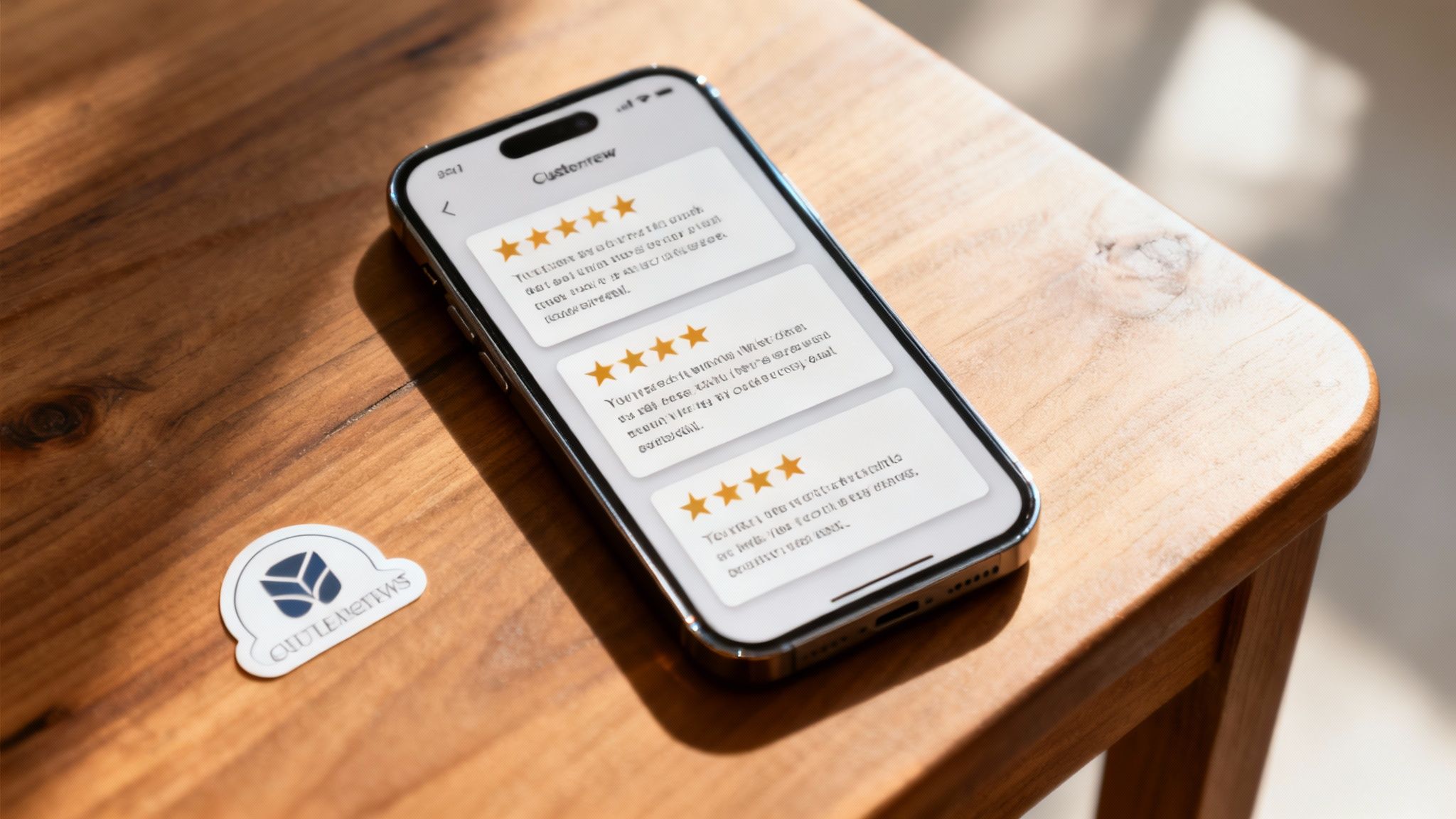
Your best marketers are often your own customers. Leveraging social proof and user-generated content (UGC) means using authentic customer voices, such as testimonials, reviews, and case studies, to build trust and credibility. This approach shifts the focus from what you say about your brand to what real users experience, which is one of the most powerful content marketing best practices for overcoming skepticism and driving conversions.
By showcasing genuine satisfaction, you validate your product’s value in a way that traditional advertising cannot. UGC also expands your content library and amplifies your reach organically as customers share their positive experiences within their own networks, turning happy clients into a volunteer marketing force.
Implementation and Examples
Integrating social proof can be as simple as adding a reviews section to your website or as complex as building an entire brand around customer stories. The key is to make customer advocacy a visible and central part of your marketing.
- For E-commerce: Amazon’s product pages are a masterclass in social proof, where customer reviews and ratings are critical decision-making factors for buyers.
- For Community-Based Brands: Glossier built its beauty empire by featuring real customer photos on its social media, making its audience feel like part of the brand. Similarly, Airbnb’s entire platform runs on the trust generated by host and guest reviews.
- For Digital Creators: The all-in-one platform Zanfia features powerful testimonials from respected Polish entrepreneurs like tech investor Artur Kurasiński, who calls it “the most convenient and simplest solution” on the local market. This social proof validates the platform’s claims, builds immense credibility, and showcases real-world results for its target audience of digital creators.
Actionable Tips
To effectively implement this strategy:
- Actively Request Feedback: Don't wait for reviews to come in. Systematically ask satisfied customers for testimonials or to share their stories on social media.
- Create a Case Study Pipeline: Develop a process to identify successful customers and document their journey and results in detailed case studies.
- Incentivize Sharing: Run contests or feature a "customer of the week" to encourage users to share content featuring your product.
- Showcase Everywhere: Feature UGC and testimonials prominently on your website, product pages, social media feeds, and in your email marketing campaigns.
- Always Get Permission: Before repurposing a customer’s content, photo, or testimonial for marketing purposes, ensure you have their explicit consent.
9. Measure, Analyze, and Iterate
Creating great content is only half the battle; understanding its performance is what separates successful strategies from wasted effort. The practice of measuring, analyzing, and iterating is a cornerstone of modern content marketing best practices. This continuous feedback loop ensures your strategy evolves based on real user data, not just assumptions, transforming your content into a highly optimized, ROI-generating machine.
Without a commitment to data, you’re operating in the dark. By tracking key metrics, you can identify what resonates with your audience, pinpoint underperforming assets, and double down on what works. This data-driven approach allows for constant improvement, ensuring that every piece of content you create is more effective than the last. It’s about making smarter decisions to maximize your impact and resources.
Implementation and Examples
Data-driven iteration is common among top-tier digital companies that treat every user interaction as a learning opportunity. They build a culture of experimentation to constantly refine their approach and improve user experience, which directly impacts their bottom line.
- For User Engagement: Netflix famously A/B tests everything from movie thumbnails to its recommendation algorithm to maximize watch time and user satisfaction.
- For Conversion Optimization: Amazon continuously experiments with button colors, product page layouts, and email subject lines to optimize its conversion funnel.
- For Integrated Analytics: All-in-one platforms give creators a huge advantage here. For example, Zanfia’s built-in analytics provide deep visibility at every stage of the funnel—helping users identify bottlenecks, optimize page layouts, and refine content to maximize engagement, retention, and revenue without needing complex external tools.
Actionable Tips
To effectively implement a measure-and-iterate cycle:
- Establish a Reporting Cadence: Create monthly or quarterly performance reports focusing on the KPIs you defined in your goals. Share these insights with your team.
- Set Up Proper Analytics: Ensure Google Analytics 4 is configured with proper event tracking to measure the actions that matter most to your business.
- Build an Experimentation Framework: Start with a clear hypothesis for every test (e.g., "Changing the CTA from 'Learn More' to 'Get Your Free Guide' will increase downloads by 15%").
- Log Everything: Keep an ongoing log of all experiments, their results, and the key takeaways. This builds organizational knowledge and prevents repeating mistakes. For a practical application of this, a platform like Zanfia provides built-in analytics that lets creators see engagement and conversion data at every funnel stage, making it easier to identify what needs optimization.
- Test One Variable: When possible, test only one variable at a time (e.g., the headline or the image) to get clean, unambiguous results.
10. Build Strategic Partnerships and Distribution Channels
Content marketing best practices include leveraging partnerships and distribution channels to multiply your reach without a matching increase in resources. By guest posting, co-marketing, influencer collaborations and syndication, you place content in front of new audiences, build high-quality backlinks for SEO and gain credibility through association with respected brands. Beyond defining goals, understanding exactly how to measure content marketing success is crucial for proving ROI and continuous improvement.
Implementation and Examples
- Guest Posting: Neil Patel writes for major publications like Forbes and Entrepreneur to tap into those communities.
- Co-Marketing: HubSpot partners with complementary tools for joint webinars and e-books, splitting production costs and doubling distribution.
- Influencer Collaborations: Brands team up with niche influencers for sponsored content series that resonate authentically.
- Syndication: Medium and LinkedIn distribution helps thought leaders reach professional audiences without building new channels.
- Podcast Guesting: Hosting or appearing as an expert expands your voice to engaged listeners.
- Platform Partnerships: For Polish creators, a platform like Zanfia offers a unique advantage by enabling them to build a strong, independent brand identity under their own domain, making them more attractive partners for collaboration within their niche.
Actionable Tips
- Identify publications and creators your audience already trusts
- Send personalized pitches that highlight mutual benefit
- Produce original content tailored to each partner, avoid repurposed material
- Nurture relationships before proposing a collaboration
- Test new formats and channels to gauge audience response
- Document partnership metrics to justify ongoing efforts
- Start small with micro-influencers or niche communities before scaling up
Top 10 Content Marketing Best Practices Comparison
| Item | 🔄 Implementation Complexity | ⚡ Resource Requirements | 📊 Expected Outcomes | 💡 Ideal Use Cases | ⭐ Key Advantages |
|---|---|---|---|---|---|
| Define Clear Goals and KPIs | Moderate 🔄 — stakeholder alignment, setup time | Low–Moderate ⚡ — analytics tools & reporting time | Clear measurement of performance; enables ROI tracking 📊 | Strategic planning, campaign accountability, budget justification | High ⭐⭐⭐ — directs efforts and enables data-driven adjustments |
| Know Your Audience Deeply | High 🔄 — research, interviews, ongoing updates | Moderate–High ⚡ — research tools, time, panels | Higher relevance and engagement; better personalization 📊 | Product-market fit, personalization, segmentation strategies | High ⭐⭐⭐ — reduces wasted effort; improves targeting |
| Create High-Quality, Value-Driven Content | High 🔄 — editorial process, review, research | High ⚡ — skilled writers, designers, production time | Long-term organic traffic, authority, backlinks 📊 | Thought leadership, competitive niches, evergreen assets | High ⭐⭐⭐ — builds trust and sustained organic value |
| Implement a Strategic Content Calendar | Moderate 🔄 — planning cadence, team coordination | Low–Moderate ⚡ — calendar tools, planning time | Consistent publishing and balanced content mix 📊 | Teams scaling content, campaign scheduling, cross-channel coordination | Medium ⭐⭐ — improves consistency and resource allocation |
| Optimize for Search Engines (SEO) | High 🔄 — technical and content work, ongoing | Moderate–High ⚡ — SEO tools, expertise, time | Sustainable organic traffic growth; compounding returns 📊 | Organic growth strategies, content-driven acquisition | High ⭐⭐⭐ — lowers long-term acquisition cost; improves discoverability |
| Diversify Content Formats and Channels | High 🔄 — format-specific workflows, coordination | High ⚡ — production capabilities across formats | Broader reach and engagement across audiences 📊 | Multi-segment audiences, repurposing strategies, platform-specific campaigns | Medium–High ⭐⭐✨ — increases resilience and reach; maximizes ROI via repurposing |
| Build an Email Marketing Strategy | Moderate 🔄 — segmentation, automation setup | Moderate ⚡ — ESP, list growth resources, copywriting | High ROI, stronger retention and direct conversions 📊 | Lead nurturing, retention, direct-response campaigns | High ⭐⭐⭐ — owned channel; scalable personalization and automation |
| Leverage Social Proof and User-Generated Content | Low–Moderate 🔄 — collection and curation systems | Low–Moderate ⚡ — community programs, incentives | Increased trust and conversions; expanded organic reach 📊 | E‑commerce, community-led brands, product launches | Medium ⭐⭐ — authentic advocacy; low production cost for content |
| Measure, Analyze, and Iterate | Moderate–High 🔄 — analytics setup, experimentation cadence | Moderate–High ⚡ — analytics tools, analysts, testing platforms | Continuous improvement and optimized ROI over time 📊 | Data-driven teams, SaaS optimization, conversion rate improvement | High ⭐⭐⭐ — reduces guesswork; accelerates learning and results |
| Build Strategic Partnerships & Distribution | High 🔄 — partner vetting, co-creation, agreements | Moderate ⚡ — outreach time, joint production resources | Expanded audience reach, backlinks, shared credibility 📊 | Market expansion, co-marketing campaigns, syndication | Medium–High ⭐⭐ — multiplies impact without proportional spend; builds credibility |
From Best Practices to Business Growth: Your Next Move
We’ve journeyed through the essential pillars of modern content marketing, from setting clear, measurable goals to building strategic distribution channels. The ten best practices outlined in this guide are not just isolated tactics; they represent a holistic framework for creating a powerful, sustainable engine for business growth. You've learned the importance of deeply understanding your audience, producing value-driven content that solves real problems, and optimizing every piece for maximum visibility and impact.
The core takeaway is that success isn't about doing one thing perfectly. It's about creating a cohesive system where high-quality content, strategic SEO, targeted distribution, and continuous analysis work together. This integration transforms scattered efforts into a predictable flywheel that attracts, engages, and converts your ideal customers. Mastering these content marketing best practices is a continuous process of learning, implementing, and refining. It’s about moving from simply creating content to building a strategic asset that fuels your entire business.
Turning Knowledge into Action
The true challenge lies in execution. Juggling disparate tools for your courses, community, email, and e-commerce can create friction, drain your time, and fragment the customer experience. A disjointed tech stack makes it difficult to implement these best practices consistently. Imagine trying to analyze user journeys when your community lives on Discord, your courses on one platform, and your payments on another. It's an operational headache that steals focus from what truly matters: creating value.
This is where a unified platform becomes a game-changer, especially for creators and entrepreneurs who are tired of losing revenue to high transaction fees and wasting time on technical maintenance. By centralizing your operations, you can seamlessly execute your entire content strategy.
For Polish creators, this is precisely the problem Zanfia was built to solve. It provides an all-in-one ecosystem to build your online business under your own brand and domain. You can host advanced online courses with native video, cultivate a thriving community, sell digital products, and manage subscriptions, all from one place. Critically, Zanfia operates on a 0% platform transaction fee model, so you keep 100% of your revenue.
By automating tasks like granting course access, sending invoices via inFakt or Fakturownia, and managing subscriptions, you can reclaim 5-10+ hours every month. This is time you can reinvest directly into applying the content marketing best practices we've discussed: refining your content, engaging your community, and analyzing performance to fuel your growth.
Ready to stop juggling tools and start building a scalable, professional online business? Discover how Zanfia provides the integrated platform to implement these content marketing best practices seamlessly, all under your own brand with zero platform fees. Take control of your content, community, and commerce by visiting Zanfia to see how you can grow with clarity and confidence.

One comment
Comments are closed.




[…] clients to build a sustainable business. This often comes from smart marketing. Learning some content marketing best practices will help you attract the kind of clients you actually want to work […]