

How to Bring Traffic to My Blog in Simple Steps
Getting traffic to your blog is a two-part game: you have to pull in new readers while also giving your current ones a reason to come back. The best way I've found to do this is by blending smart search engine optimization (SEO) to show up in search results, consistently promoting content where people actually hang out online, and genuinely engaging with my audience to build a loyal following.
Your Blueprint for Consistent Blog Traffic
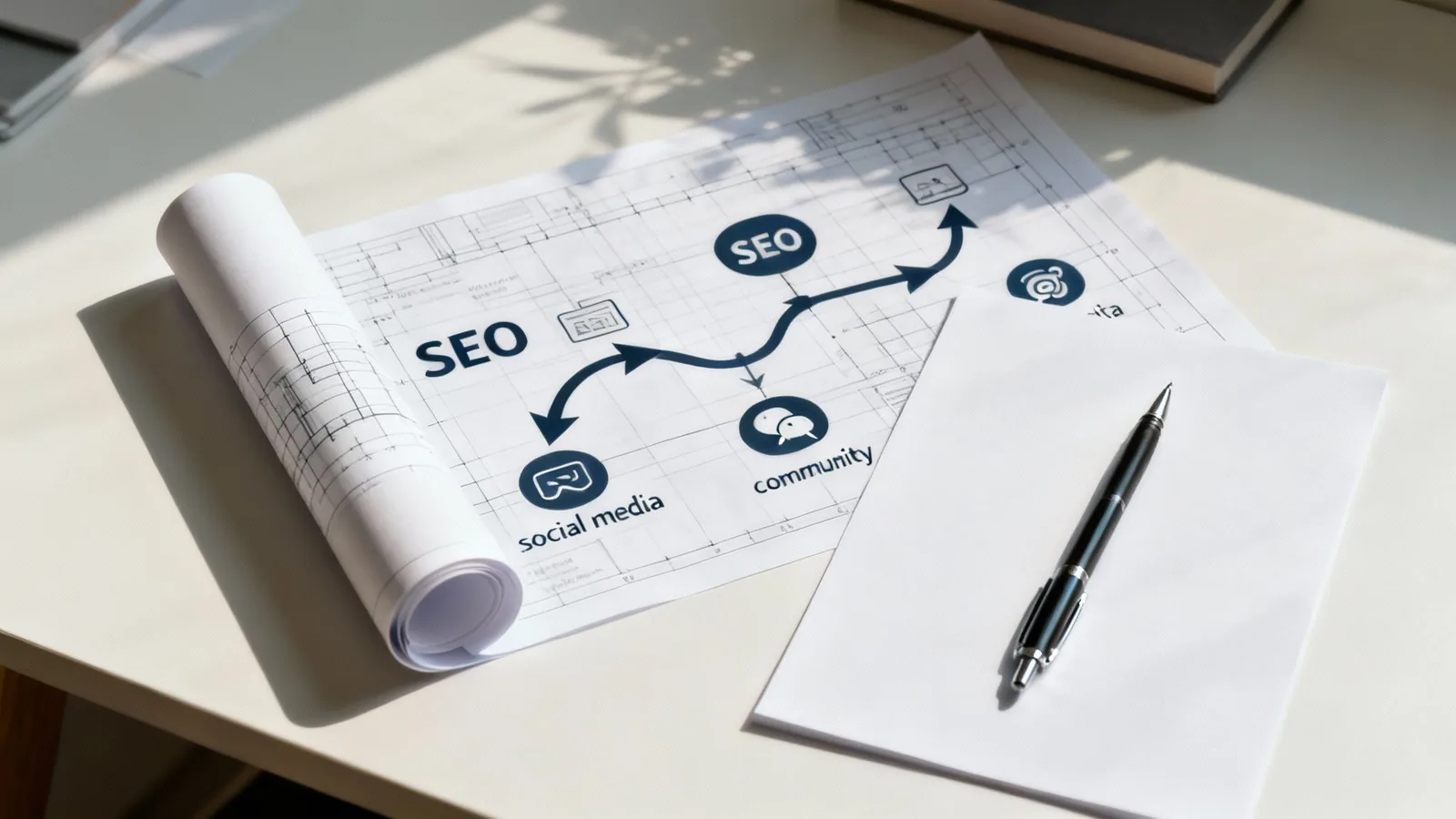
Does it ever feel like you're publishing fantastic content into a black hole? It’s a common frustration that leads way too many talented creators to burn out. This guide is designed to fix that by giving you a clear, repeatable roadmap to bring consistent traffic to your blog. We’ll cover everything from SEO that attracts the right kind of readers to building a promotion engine that does the heavy lifting for you.
But first, let's be real. Building a dedicated audience is a marathon, not a sprint. The idea here is to give you a solid strategic foundation before we get into the nitty-gritty tactics that lead to real, sustainable growth.
Setting Realistic Timelines for Growth
One of the biggest mistakes I see new bloggers make is getting impatient. You post a few articles and expect the floodgates to open, but growth is almost always a slow, steady climb. In fact, most industry stats show that getting real traction can take over a year. Hitting that first big milestone of 1,000 monthly sessions can take up to six months, which underscores just how important long-term commitment is.
The secret to sustainable traffic isn't a single viral post; it's the consistent application of a well-defined strategy over time. Think of each blog post not as a lottery ticket but as a brick you're laying for the foundation of your digital presence.
The Core Pillars of Blog Traffic
To build a blog that actually gets noticed, you need a system that attacks the problem from multiple angles. Instead of chasing every shiny new trend, your time is better spent mastering a few fundamental pillars. Once you have these down, you can create repeatable processes, which is crucial when you're ready to start scaling with systems and automations.
Here’s a quick look at the fundamental strategies required to successfully attract and grow your blog's readership.
Core Pillars of Blog Traffic Generation
| Pillar | Primary Goal | Key Activities |
|---|---|---|
| Attraction (SEO) | Capture organic search interest from new audiences. | Keyword research, on-page optimization, content creation, link building. |
| Promotion (Distribution) | Amplify content reach beyond search engines. | Social media sharing, email newsletters, influencer outreach, paid ads. |
| Engagement (Community) | Convert one-time visitors into loyal fans. | Responding to comments, building an email list, creating forums or groups. |
Mastering these three areas is the key to creating a blog that not only attracts visitors but also keeps them coming back for more.
These are the three pillars we will focus on in this guide, and there are many expert tips on how to improve website traffic that dive deeper into these same core ideas.
- Attraction (SEO): This is how new people find you. When you optimize your content for search engines, you create a lasting source of visitors who are actively looking for the exact answers you provide. It’s powerful stuff.
- Promotion (Distribution): This is how you get your voice heard. Actively sharing your content on social media, through newsletters, and with relevant partners ensures it reaches a much wider audience than organic search alone ever could.
- Engagement (Community): This is how you turn casual visitors into true fans. By encouraging comments, building a dedicated email list, and fostering community spaces, you build loyalty and generate the most reliable traffic of all: repeat visitors.
Mastering SEO to Attract Your Ideal Readers

If you're serious about growing your blog, you need a way to get in front of people who are actively looking for what you offer. This is where Search Engine Optimization (SEO) comes in. It’s the engine that powers discovery, connecting your content with an audience that's already raising its hand for help.
Think of it this way: every time someone types a question into Google, they're voicing a need. Your job is to create the single best answer to that need. To do that well, you need to understand the difference between on-page vs. off-page SEO. For now, let’s focus on the on-page elements—the things you can control directly on your blog.
Digging for Gold with Keyword Research
Before you write a single word, you need a map. That map is keyword research. This isn't about stuffing your articles with repetitive phrases; it's about uncovering the exact language your audience uses when they’re searching for answers.
Start by brainstorming broad topics in your niche. If you’re a coach for online creators, your buckets might be "digital products," "community building," or "online courses." From there, use a keyword tool to dig deeper and find the specific, long-tail phrases people are actually typing into search bars.
A few tips from the trenches:
- Focus on Intent: Ask why someone is searching. Are they just looking for information ("what is a paid newsletter"), comparing options ("Zanfia vs. Skool"), or ready to buy ("best platform for selling courses")? Your content needs to match that intent.
- Hunt for Questions: Keywords starting with "how," "what," and "why" are pure gold. They signal a clear problem you can solve.
- Spy on the Competition: See who’s ranking at the top for your target keyword. Read their articles. Can you create something more detailed, more helpful, or with a fresher perspective?
Crafting Content That Ranks and Resonates
With your target keywords in hand, it’s time to create. The goal is simple but demanding: produce the most comprehensive and genuinely helpful resource on the internet for that topic.
Often, that means going deeper than your competitors. While the average blog post hovers around 1,394 words, top-ranking content is frequently closer to 2,450 words. This isn't about fluff; it's about providing enough detail to truly satisfy a reader's curiosity.
The best SEO advice I ever got was to stop writing for Google and start writing for a real person with a real problem. When you create truly helpful content, you nail it for both your reader and the search algorithms.
To make sure search engines understand what your masterpiece is about, you need to dial in your on-page SEO. These are the technical signposts that give Google context.
Key On-Page SEO Signals
| Element | What It Does | Best Practice Example |
|---|---|---|
| Title Tag | Your clickable headline in search results. | "How to Launch a Paid Community: A Step-by-Step Guide" |
| Meta Description | The short summary that appears under your title. | "Learn how to build and monetize a thriving online community. Our guide covers platform choice, content strategy, and engagement tactics." |
| H1 Tag | The main title on the actual blog post page. | Should be nearly identical to your Title Tag. |
| H2/H3 Tags | Subheadings that break up your content into scannable sections. | "Choosing Your Community Platform" or "Setting Your Membership Price" |
The Underestimated Power of Internal Linking
Here's one of the most overlooked strategies for boosting your blog traffic: internal linking. It’s simply the act of linking from one article on your site to another relevant article on your site. Don't sleep on this.
It's a huge win for two reasons. First, it helps search engines crawl your site more effectively, showing them how your content is all connected. Second, it keeps people on your site longer. When you guide them from one useful article to the next, they stick around, which sends a strong positive signal to Google.
A smart internal linking strategy can also directly impact your business goals. You can create pathways that lead readers to your most important articles—the ones that drive sign-ups or sales. Platforms with built-in automation can take this to the next level, for example by triggering a welcome email sequence when a reader signs up from a specific blog post. These automations can save creators 5–10+ hours a month, letting them focus on value-packed content instead of admin chores.
Building a Powerful Content Promotion Engine
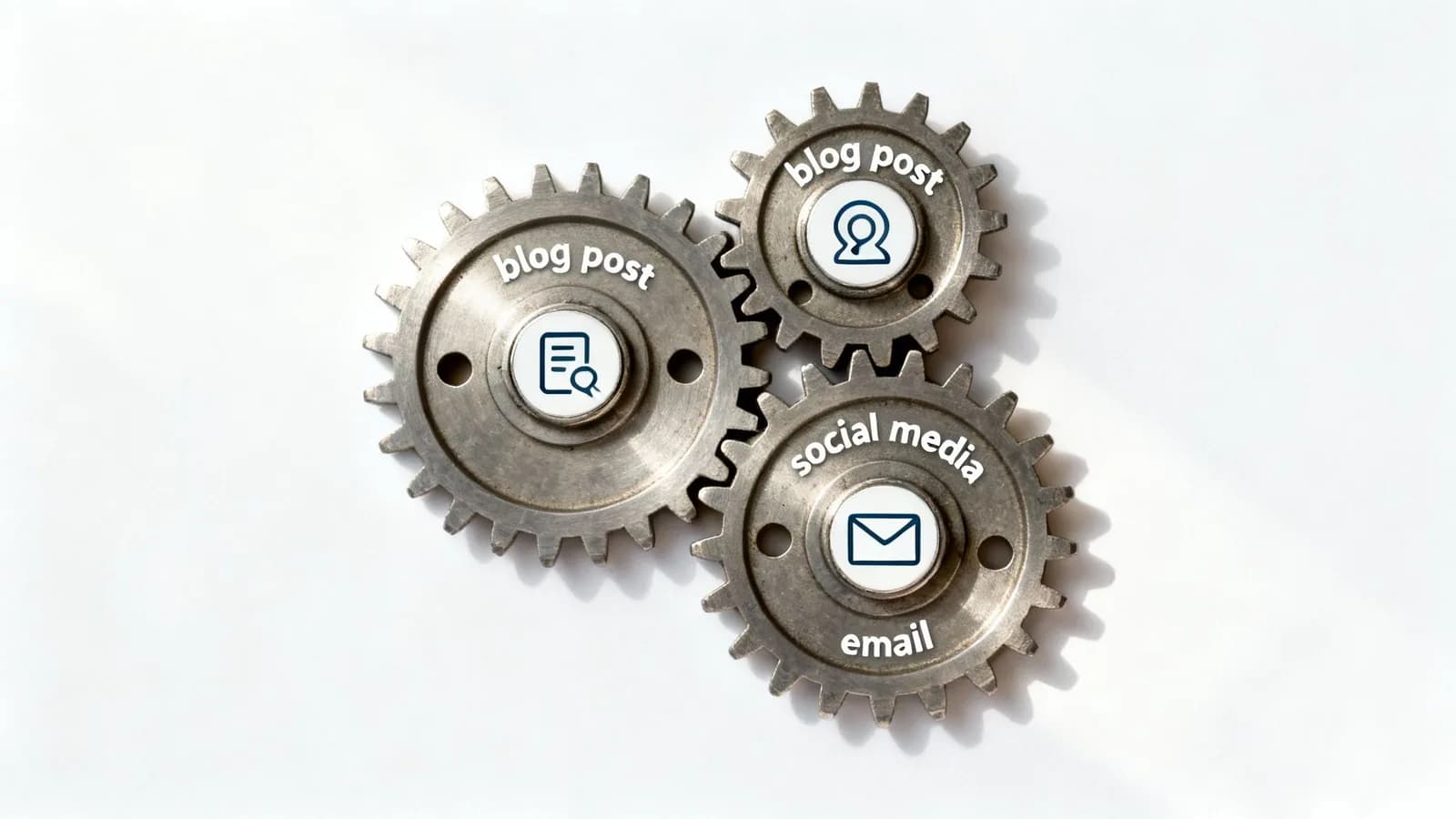
Here's a hard truth: amazing content isn't enough. Hitting "publish" is just the starting line, not the finish. If you want to actually bring traffic to your blog, you need a system for getting your hard work in front of the right people. Without a real promotion engine, even the best article will just sit there collecting dust.
A smart promotion strategy isn't about just blasting your link across every social media platform you can think of. It’s about being deliberate. You need to focus your energy where it'll make a real difference and build a repeatable process that gives every new article a fighting chance.
Choose Your Channels Wisely
The sheer number of social platforms out there can be paralyzing. But the secret isn't to be everywhere at once—that’s a surefire recipe for burnout and getting mediocre results across the board. The real secret is to be where your ideal audience already hangs out.
Start by picking just two or three primary channels where you know your target readers are active.
- Got a B2B audience? LinkedIn and X (the platform formerly known as Twitter) are your best bets for sharing in-depth articles and professional takes.
- In a visual niche like food, design, or travel? Then Instagram and Pinterest are your go-to. Think of them less as social networks and more as visual search engines that can drive a ton of traffic.
- Writing about a community-driven topic? Niche Facebook Groups or specialized forums can be absolute goldmines for engaging directly with people who care.
Once you’ve picked your core platforms, really commit to them. Learn their unique language and what kind of format works best. A link you drop on LinkedIn needs a completely different introduction than a visual you share on Instagram.
Multiply Your Impact with Content Repurposing
A single, high-quality blog post can take hours—sometimes days—to create. Letting it exist only as a blog post is a huge missed opportunity. This is where content repurposing comes in. It’s all about transforming that one core piece of content into multiple different assets.
This approach doesn't just save you a ton of time; it also helps you reach people who prefer different formats. For a deeper dive, check out our guide on effective content repurposing strategies.
The goal is to work smarter, not harder. A single 2,000-word blog post can be the source material for a week's worth of promotional content across all your channels, keeping your message fresh and visible.
Let’s say you wrote a detailed guide on "How to Launch Your First Online Course." You could easily turn that into:
- A carousel post for Instagram highlighting the 5 key steps.
- An infographic for Pinterest visualizing the course launch timeline.
- A short video for TikTok or Reels talking about a common mistake to avoid.
- A thread on X breaking down the main takeaways into bite-sized tips.
This way, your core message reaches a much wider audience than the original blog post ever could on its own.
Build Your Most Valuable Asset: Your Email List
Social media is great for getting discovered, but email is where you build real, lasting relationships with your readers. Your email list is a direct line to your most engaged followers—it’s an asset you actually own and control, no matter what algorithm changes come your way.
Data from HubSpot's 2025 State of Blogging Report backs this up. While social media is the most popular channel, used by 83% of businesses to drive blog traffic, email newsletters aren't far behind. A solid 47% of businesses use them to keep readers coming back for more.
This strategy is about creating a sustainable source of repeat traffic. Every blog post you publish should have a clear call-to-action that encourages people to subscribe. Make it a no-brainer by offering something valuable in return, like a free checklist, a short e-book, or access to exclusive content.
A newsletter lets you tell subscribers about new posts, share behind-the-scenes stories, and eventually, turn those casual readers into loyal customers.
Tap Into Existing Audiences with Partnerships and Community
Writing great content is half the battle. The other half? Getting it in front of people. Instead of trying to build an audience from scratch, one of the smartest things you can do is tap into audiences that already exist.
By teaming up with other creators and showing up in established communities, you get to "borrow" their audience. It's a way to introduce yourself and your expertise to a group of people who are already warmed up and interested in what you have to say. Think of it as a trusted introduction—when a blog your readers love features your work, it’s a powerful endorsement that can send a flood of high-quality traffic your way.
Earn Authority with Strategic Guest Posting
Guest posting is a time-honored classic for a reason: it works. You write a high-quality article for another blog in your niche, and in return, you get exposure to their readership and a valuable backlink to your site. It’s one of the best ways to build your reputation as a go-to expert.
The secret is to be picky. Don't just blast out a generic pitch to every blog you find. Instead, create a small, curated list of sites where your ideal reader already hangs out.
- Relevance is King: Only target blogs that are a tight fit with your own. If you write about sustainable gardening, a guest post on a homesteading blog is a perfect match.
- Look for a Pulse: Check for signs of life. Are people leaving comments? Are posts getting shared? An active, engaged audience is far more likely to click over to your blog.
- Do Your Homework: Before you even think about pitching, become a real reader. Get a feel for their tone, the topics they cover, and what their most popular articles look like. A personalized pitch that shows you get them is a hundred times more effective.
Connect with Influencers Authentically
Forget a "spray and pray" approach to influencer outreach. In the blogging world, this is all about building real relationships with people who have the trust and attention of your target audience. This could be a fellow blogger with a big following, a podcast host, or an expert with a buzzing newsletter.
The big mistake people make is asking for a share right away. That almost never works. Instead, you need to play the long game.
Start by giving, not asking. Share their content, leave thoughtful comments on their blog posts, and interact with them on social media. When you finally do reach out, you’ll be a familiar face, not just another random person with a request.
When you do have the perfect article to share, make it ridiculously easy for them. A short email highlighting a key point you think their specific audience will love, along with a pre-written snippet for a tweet or post, can make all the difference.
This simple workflow visualizes how you can turn this into a repeatable process.
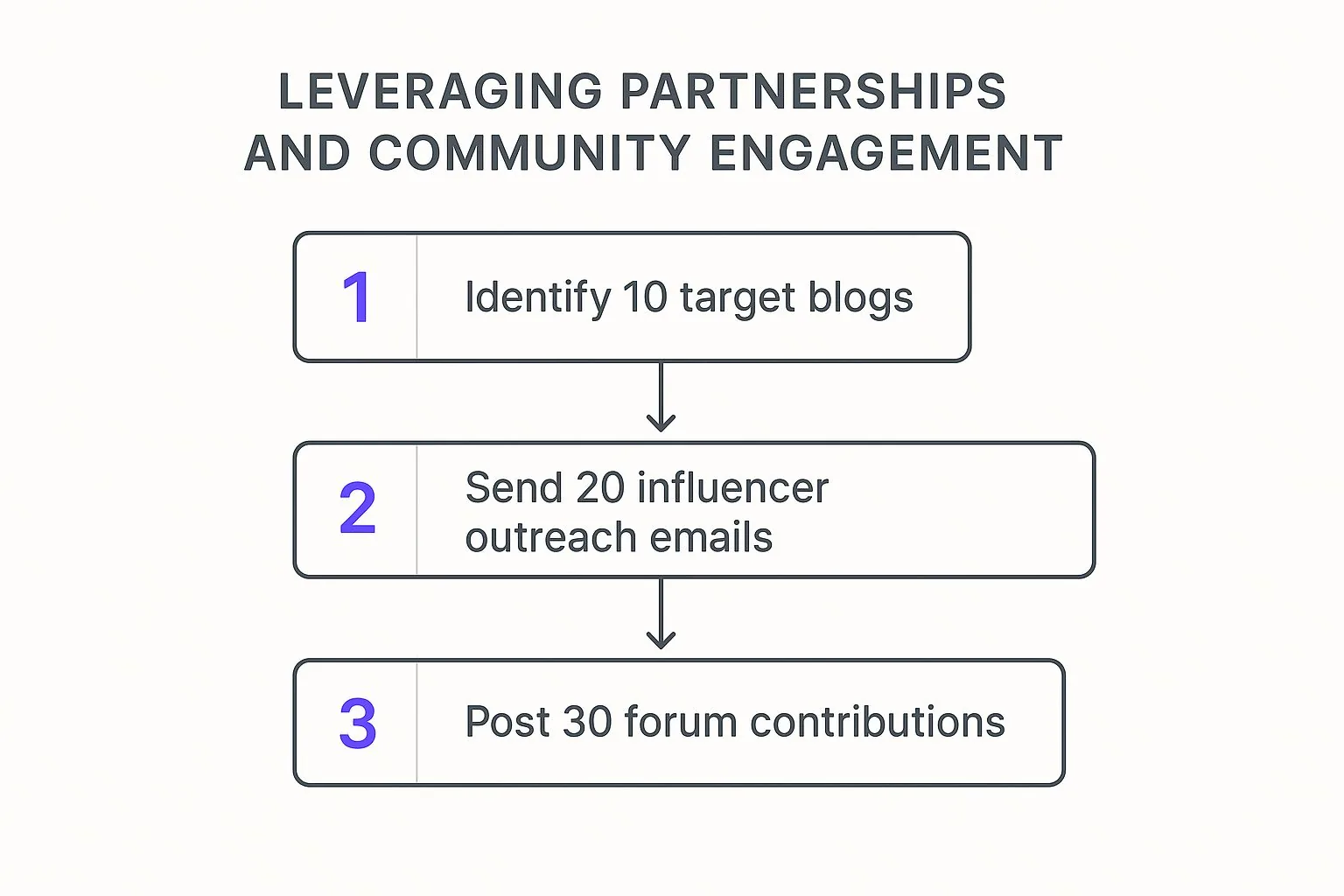
Breaking down your outreach into a clear, manageable sprint like this turns a big, intimidating goal into a series of simple actions.
Become a Familiar Voice in Online Communities
Your ideal readers are already gathering in places like Facebook groups, Slack channels, niche forums, and on Reddit. They’re asking questions and looking for solutions. Your job is to go where they are and become a helpful, trusted voice.
This is not about link-dropping. That's the fastest way to get yourself kicked out. This is about genuine participation. Answer questions. Offer insightful advice. Share your expertise with no strings attached.
As you consistently show up and provide real value, people will naturally get curious. They'll start to recognize your name and wonder who this smart, helpful person is. Most of these platforms let you put a link in your profile, and that’s where the magic happens. People will click it on their own to learn more about you.
This strategy drives some of the most qualified traffic you can get because these visitors already see you as a credible source. It’s also the very foundation for turning passive readers into loyal fans, a core principle in how to build an online community that sticks around.
Turning Traffic Into a Thriving Community
Getting people to your blog is a huge win, but honestly, it's just the first mile of the marathon. The real magic isn't in the clicks; it's in building relationships. Traffic can be fickle, but a loyal community? That’s what gives your blog staying power, turning one-time readers into genuine fans who stick around.
This is where you shift from being just another content publisher to becoming a community leader. The trick is to give visitors a compelling reason to stay long after they've finished that one article. You need to roll out the welcome mat and show them a clear path to a deeper connection.
The First Handshake: From Visitor to Subscriber
Let's be clear: your most valuable asset isn't your follower count on social media. It’s your email list. It’s the one direct line you have to your most interested readers, where you aren't fighting an algorithm just to be heard. So, the first real step in building your community is turning a reader into a subscriber.
To make that happen, you need a great "lead magnet"—a compelling offer that goes beyond a generic "sign up for updates" box. Think of it as a value exchange. You're giving them something genuinely useful in return for their email.
Here are a few ideas that work wonders:
- The Handy Checklist: If your post is a "how-to" guide, offer a slick, downloadable checklist that makes the process foolproof.
- The Mini E-book: Bundle your best posts on a specific topic into one easy-to-digest guide. People love having everything in one place.
- The Exclusive Video: Create a short video that shows the practical side of your blog post, like a quick tutorial that brings the concept to life.
Getting this first step right is everything. For a much deeper dive, we've put together a complete guide on how to build an email list from scratch. This process truly lays the foundation for all the good stuff to come.
Beyond the Newsletter: Nurturing Your People
Once they're on your list, the real work of community building begins. A weekly newsletter is a solid start, but you can create something so much more immersive. The goal is to build a central hub where your audience can connect, ask questions, and learn from each other.
The most successful online businesses are no longer just selling information; they are selling belonging. They create spaces where people feel seen, heard, and connected to a shared purpose.
This is your cue to move beyond simple email updates. Start offering exclusive value that makes them feel like insiders, whether that’s a free forum, a private Slack channel, or a paid membership.
Unifying Your World: Content and Community as One
Here’s a huge roadblock I see creators hit all the time: a fragmented experience. They have a blog over here, a community on Discord or a Facebook group over there, and their online courses on yet another platform. This forces your members to hop between different sites, which creates friction and weakens your brand.
A unified platform solves this mess. Zanfia is built around an AI team that runs the operational work of a creator business, with courses, paid communities, and newsletters all living under one brand. Creators dictate the work by chat or voice instead of clicking through menus, and every action available in the interface can be triggered that way. The checkout is built to sell, with order bumps, installments and test mode so you can buy your own product end-to-end before launch. On top of that, agents can act on the workspace through Zanfia's MCP endpoint, which is available on higher plans (see the current Zanfia pricing). The result: your members read a lesson, join a topic channel, and get community announcements without ever leaving your brand.
Let's look at how you can intentionally guide a visitor from being a one-time reader to an active community member.
From Traffic to Community Conversion Funnel
This table breaks down the journey of turning a casual blog visitor into a loyal advocate for your brand. Each stage has a specific goal and requires different tactics and tools to be effective.
| Stage | Objective | Example Tactic | Key Tool |
|---|---|---|---|
| Awareness | Attract first-time visitors | SEO-optimized blog post | Google Analytics |
| Conversion | Capture their email address | Gated e-book or checklist | Email Marketing Software |
| Engagement | Build an initial relationship | Welcome email sequence | ConvertKit |
| Community | Foster member-to-member interaction | Private discussion forum | Community Platform |
| Advocacy | Turn members into promoters | Member referral program | Zanfia |
By thinking through this funnel, you can create a seamless experience that naturally encourages deeper engagement at every step.
When you keep everything under your own domain and brand, you create a professional, cohesive world for your audience. You’re no longer just sending traffic to your blog; you’re inviting them into your home base. This is how you transform fleeting page views into a thriving, profitable community that lasts.
Got Blog Traffic Questions? Let's Get Them Answered.
Growing a blog can feel like you're trying to solve a puzzle in the dark. You get one piece to fit, and suddenly the whole picture changes. It's totally normal to have questions pop up along the way, so let's tackle some of the most common ones that tend to get creators stuck.
How Long Does This Actually Take?
This is the big one, isn't it? The honest-to-goodness answer is that it almost always takes longer than you hope, but the results are absolutely worth the wait.
Sure, a post can go viral overnight, but that's like winning the lottery. Sustainable, meaningful traffic is a slow burn. If you're starting from scratch, hitting your first 1,000 monthly visitors is a realistic goal for your first three to six months of consistent work.
But getting real traction—where Google starts to see you as a legitimate source—that often takes a year or more. The most important thing you can do is stay consistent. Think of every high-quality post as another brick in your foundation. It might not seem like much at first, but over time, you're building something that can stand on its own.
Stop measuring your progress day by day. You'll drive yourself crazy. Instead, look at your growth quarter by quarter. The early days are about building momentum, not hitting home runs. Keep publishing, keep promoting, and the traffic will come.
What Should I Tackle First: SEO or Social Media?
Ah, the classic chicken-or-the-egg dilemma for new bloggers. My advice? Don't think of it as an either/or choice. Think about what each one does best.
- Social media is for instant feedback. When you're just starting out, social media is your best friend. It’s where you can get your first few eyeballs on your work, test out ideas, and see what actually resonates with people. Sharing your posts in the right communities can bring in that crucial first trickle of traffic.
- SEO is your long-term wealth. SEO is the work you do today that pays you back for years. It takes a while to kick in, but the organic traffic it brings is pure gold—it comes from people who are actively looking for the exact solutions you're providing.
The best strategy is to do both. Use social media to get the word out and build connections right now, while you're planting SEO seeds in every article for your future growth.
How Do I Know What's Actually Working?
You can't get better if you don't know what's moving the needle. It's easy to get lost in a sea of data, but you only need to focus on a few key things. Get a free Google Analytics account set up, and keep an eye on these two reports:
- Where is my traffic coming from? In GA4, go to
Acquisition > Traffic acquisition. This report cuts right to the chase, showing you if your visitors are coming from Google (Organic Search), Pinterest (Organic Social), your email list (Email), or somewhere else. - What content are people reading? Check out
Engagement > Pages and screens. This shows you which articles are your heavy hitters.
If you see that Pinterest is sending you ten times more traffic than X (formerly Twitter), you know exactly where to focus your energy. This data lets you make smart decisions instead of just guessing.
How Can I Make Money Without Plastering My Site with Ads?
Once you've built an audience, making an income from your hard work is the natural next step. The secret is to add more value, not just more ads. Many successful creators are skipping the ad-based model entirely and focusing on selling their own digital products.
This is your chance to offer something premium—an e-book, a paid newsletter, an online course, or an exclusive community. When you provide something that solves a real problem for your readers, monetization feels like a helpful extension of the trust you’ve already built, not a cheap sales pitch.
But this is also where many creators hit a financial wall. Most platforms take a hefty cut of every sale, eating away at your profit. That’s why choosing the right platform matters. Zanfia currently charges 0% platform commission on customer sales, so only the standard payment processor fees apply (Stripe is roughly 2.9% + $0.30 in the US). It runs on a straightforward SaaS subscription, starting at $39/month, or $31/month billed annually, on the Starter plan, with a 14-day free trial and no credit card required. There is also an AI team baked in: the assistant handles work you would normally click through, you can dictate actions by voice, and the checkout is built to sell with order bumps, installments and test mode so you can buy your own product before launch.
With a model like this, your success isn't punished by rising fees. As your blog traffic and sales grow, you get to reinvest that money back into your business, not someone else's.
Ready to turn your blog traffic into a real business? Zanfia gives you an AI team that runs the operational work behind selling online courses, paid communities, newsletters and digital products under your own brand, with a checkout built to convert and 0% platform commission on sales. Start building your creator business with Zanfia today.