

How to Build Online Community: The Definitive Guide for Creators
Building an online community is about much more than just gathering people in one place. It’s about creating a space with a clear, shared purpose that genuinely connects its members. This is how you transform a passive audience into a loyal, engaged group that finds real value in being there, ultimately building a scalable and profitable digital business.
Defining The Heart Of Your Community
Before you even think about platforms or invitations, you have to nail down your community's core purpose. A thriving community isn't just another group chat; it's a destination. It's a place where members feel understood, can work toward common goals, and get something tangible out of it. This foundational "why" is what separates successful communities from those that end up as digital ghost towns.
Many creators scatter their audience across fragmented tools like a Facebook group here, a Discord server there. While these platforms have their place, they often dilute your brand identity and pull people away from your main offerings. A professional, integrated solution is essential for creators who want to build a strong, independent brand.
The real goal is to treat your community as a central asset to your business, not a side project. When you build this asset on your own domain, you create a seamless, professional home for your members. They don't have to bounce between different apps—your courses, discussions, and content can all live under one roof. This not only strengthens your brand but also dramatically boosts engagement, lifetime value, and member retention.
Why A Clear Purpose Matters
Think of your community's purpose as its North Star. It guides every single decision, from the content you create to your moderation style. Without a clear "why," engagement inevitably fizzles out because members are left wondering what to expect or how to contribute. A strong, well-defined purpose gets everyone on the same page.
Here's what a clear purpose actually does for you:
- It Attracts the Right People: A specific mission statement acts as a filter, drawing in members who are genuinely invested in your topic. This leads to much higher-quality discussions.
- It Drives Engagement: When members know the goal—whether it's mastering a new skill or connecting with peers—they're far more likely to jump in and participate.
- It Simplifies Content Creation: Knowing your community's purpose makes it infinitely easier to develop relevant content, events, and resources that your members will actually find useful.
The infographic below really drives home how a clear purpose acts as the central hub connecting every other element of a successful community.
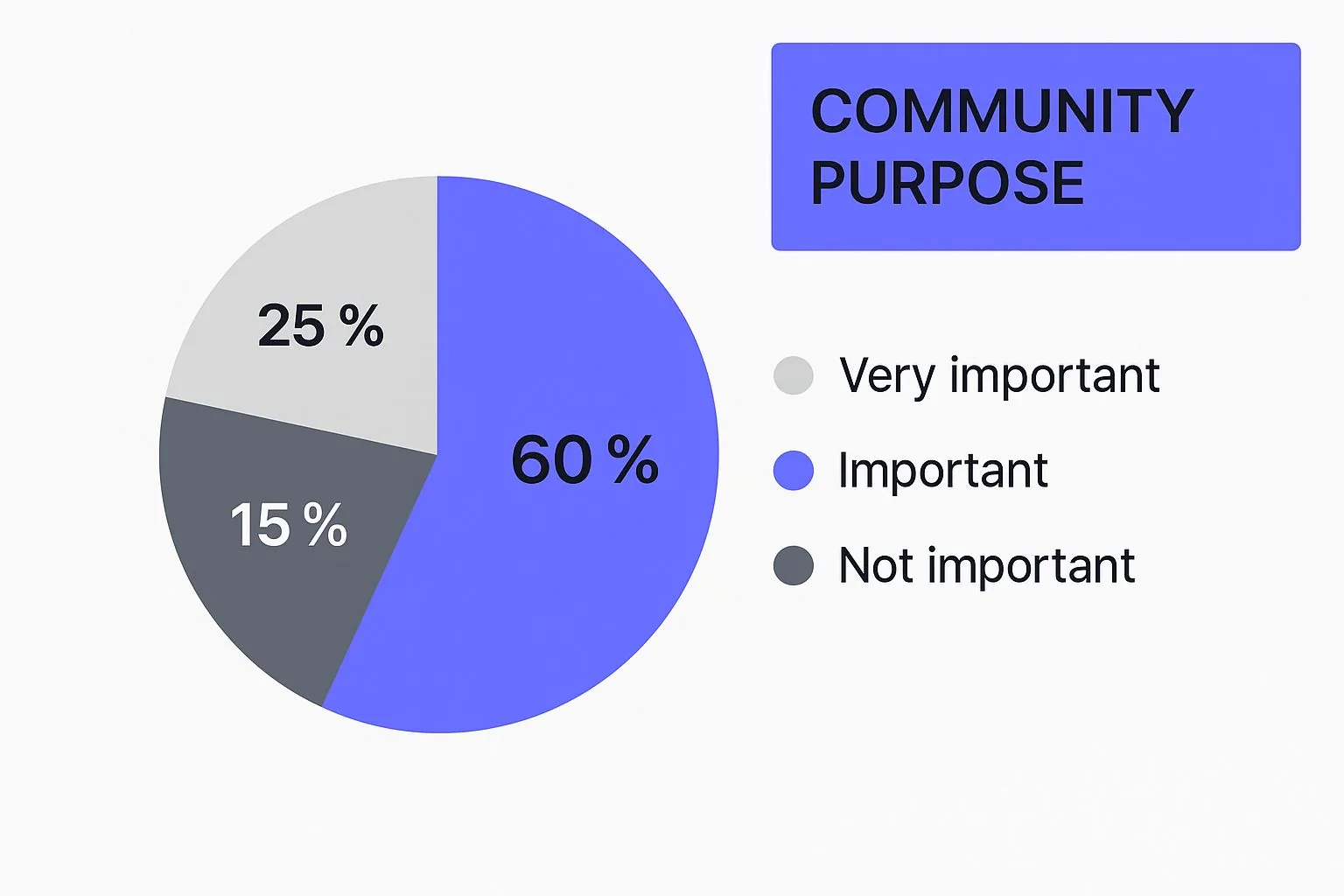
As you can see, a well-defined purpose is directly tied to member engagement, your content strategy, and ultimately, long-term loyalty.
Getting these foundational pieces right from the start is crucial. This table breaks down the core pillars you'll want to focus on as you begin planning.
Core Pillars of a Successful Online Community
| Pillar | Key Objective | Why It Matters |
|---|---|---|
| Shared Purpose | Define a clear mission and vision for the community. | Gives members a reason to join and stay. It's the "glue" that holds everything together. |
| Clear Guidelines | Establish rules for respectful and constructive interaction. | Creates a safe and welcoming environment where people feel comfortable participating. |
| Valuable Content | Provide resources, discussions, and events that serve the community's purpose. | Keeps members coming back and reinforces the value of being part of the group. |
| Active Engagement | Foster member-to-member connections and facilitate discussions. | Turns a passive audience into an active, self-sustaining community where members lead. |
Focusing on these pillars will give your community the strong structure it needs to grow and thrive. To dig deeper into laying this groundwork, check out these essential community building strategies for more guidance on your initial setup.
A community without a shared purpose is just a crowd. Your mission statement is what transforms a group of individuals into a unified tribe, giving them a reason to show up and contribute day after day.
Once you've defined your purpose, the next logical step is setting clear expectations for behavior. This means creating guidelines that protect the space and encourage respectful interaction. You can learn more about crafting effective guidelines in our guide on the essential rules of the community. Getting this right from day one sets the stage for a positive and sustainable member experience.
Choosing Your Community's Digital Home
Deciding where your community will live online is one of the most critical decisions you'll make. This isn't just about picking some software; it's about building the home where your members will connect, share, and grow. The platform you choose will shape everything from their daily experience to your own sanity as an administrator, and ultimately, your bottom line.
Many creators start out by duct-taping different tools together. They'll have a WordPress site, plugins for payments, a separate forum, and a Discord server or Facebook Group. While this "piecemeal" approach might seem cheap, it leads to a disjointed, clunky experience for members juggling multiple logins. For you, it means endless tech headaches, plugin juggling, and no peace of mind.
The Power of an Integrated System
The smart move is to use an all-in-one platform where your community, courses, content, and payments all exist under a single roof with a single login. This creates a seamless, professional world that puts your brand—not the technology—at the center of the experience.
Think about it: a new member buys your course and is instantly granted access to a private discussion channel just for that course. They can chat with other students and ask you questions right there, next to the video lessons. That's the magic of an integrated system—it makes engagement feel natural and effortless.
Choosing your platform is a foundational business decision. A fragmented system forces your members to adapt to your tools. An integrated system adapts to your members, creating a frictionless journey that dramatically increases their lifetime value.
Zanfia was built to solve this problem end to end. It runs an AI team for the creator: an assistant that knows every screen in the product and can act on it by chat or by voice, so you dictate work instead of clicking through settings. Courses, communities, newsletters and 12 product types live under one brand on your own domain, and the checkout is built to sell with order bumps, installments and a test mode you can use to buy your own product before launch. For creators bringing their own agents, the platform exposes an MCP endpoint on higher plans (see the current Zanfia pricing) so AI assistants can work with your workspace directly.
Community Platform Comparison Integrated vs Piecemeal
Choosing between an all-in-one platform and a piecemeal approach is a major fork in the road. An integrated system streamlines everything, while a collection of separate tools gives you granular control but adds complexity. Here’s a breakdown of what to expect with each option.
| Feature | Integrated Platform (e.g., Zanfia) | Piecemeal Approach (e.g., WordPress + Plugins + Discord) |
|---|---|---|
| Member Experience | Seamless single login; unified interface. | Multiple logins; disjointed and confusing for users. |
| Admin Workload | Centralized dashboard; simplified management. | Juggling multiple admin panels; integration headaches. |
| Branding & Control | Full white-label and custom domain. | Branding is fragmented across different platforms. |
| Checkout Built to Sell | Order bumps, installments, upsells and a test mode built in. | Requires additional plugins or third-party checkout tools. |
| Hidden Costs | Transparent pricing; often fewer hidden fees. | Costs for plugins, hosting, and transaction fees add up quickly. |
| Data & Analytics | Centralized data for clear insights. | Data is siloed, making a complete picture difficult. |
Ultimately, an integrated platform is an investment in a professional, scalable experience. A piecemeal approach can work for small projects, but it often creates more problems than it solves as you grow.
Key Features to Look for in a Community Platform
When you're vetting platforms, there are a few non-negotiable features you need to build a professional, scalable business. These are the elements that give you control, elevate the member experience, and protect your revenue.
- White-Label and Custom Domain: Your community needs to feel like your space. Look for white-label options that let you use your own branding and a custom domain. This is essential for experts and premium brands unwilling to dilute their reputation on a platform that imposes generic branding.
- Integrated Community and Courses: The ability to tie discussion forums directly to your course content is a game-changer. It turns passive learning into an active, social experience—a cornerstone of any successful online community.
- Flexible Monetization Options: Your business model will change over time. A solid platform should support subscriptions, one-time purchases, installment plans, and product bundles. This kind of flexibility lets you meet your customers where they are and maximize every revenue opportunity.
- Native Video Hosting: Relying on third-party services like Vimeo or Wistia can add hundreds of dollars in monthly fees. A platform with built-in video hosting simplifies your tech stack and cuts down on expenses, so you can focus on creating great content.
The global market for online community platforms is exploding, with projections to hit $112.4 million in 2025. This isn't a fluke; it's driven by a real demand for connected, collaborative digital spaces. Businesses are finally realizing that investing in platforms that build loyalty is the key to driving sustainable revenue.
Protecting Your Margins with a Fair Fee Structure
One of the most overlooked—and most costly—mistakes creators make is ignoring the platform's fee structure. Many platforms quietly take a cut of every sale you make, often between 5% and 10%. That might not seem like a lot at first, but as you scale, those transaction fees can siphon off tens of thousands of dollars from your hard-earned revenue.
This is where a transparent, fair model makes all the difference. Zanfia, as of August 2026, charges a 0% platform commission on customer sales. The only fees are the standard ones charged by payment processors like Stripe or PayPal (roughly 2.9% + $0.30 in the US). For creators earning thousands per month, that's a massive financial advantage. It means more money to reinvest in your content, marketing, and your members.
Our guide on choosing the right community platform for creators dives deeper into these financial details. Your digital home should be an asset that grows with you, not at your expense.
Designing an Unforgettable Member Journey
Once you've picked your platform, the real work begins. The focus shifts from the tech itself to the people who will call it home. This is where you map out the member journey—the path that turns a curious visitor into a die-hard advocate for your community. It’s all about creating an experience that feels welcoming and engaging from the very first click.
Think about it: a clunky, confusing start can send a new member running for the hills. But a smooth, thoughtful introduction? That sets the stage for genuine, long-term connection. The goal is to make every single member feel seen, guided, and valued from day one.
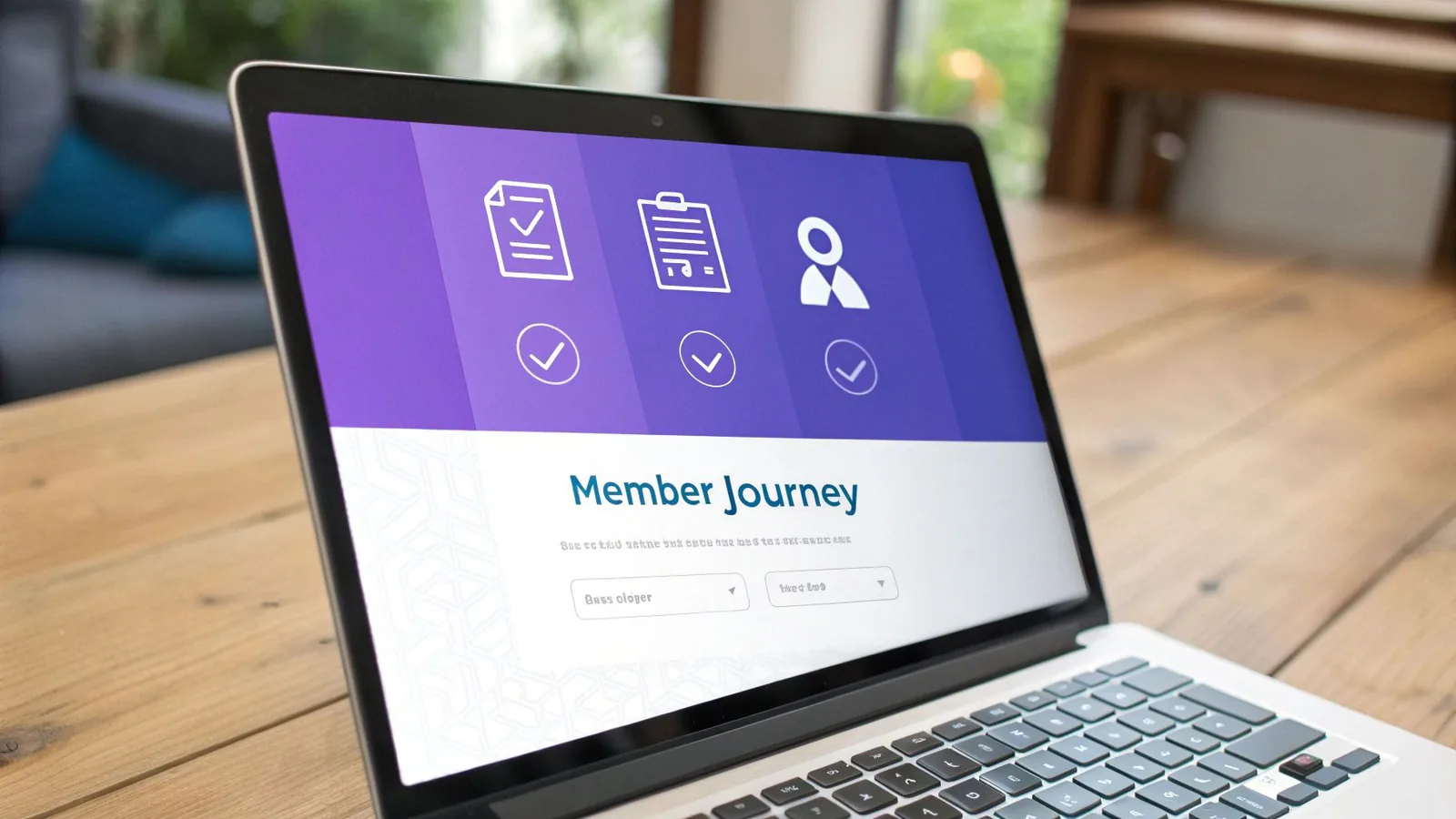
This all starts with a seamless onboarding process. Let’s say someone just bought one of your courses. In a perfect world, they’d get instant access not just to the course material, but also to a private discussion channel just for that program's students. That immediate link between the content they bought and the community built around it is powerful. It removes friction and encourages them to start talking right away.
Crafting a Flawless Onboarding Experience
Those first few hours in your community are absolutely critical. Your onboarding needs to feel less like a stuffy corporate orientation and more like a warm welcome from a friend who knows the ropes. The secret here is automation that doesn't feel automated.
Modern platforms can handle the heavy lifting so no one falls through the cracks. With Zanfia, the workflow builder can trigger a welcome email, add the new member to the right community channels based on what they bought, and unlock all their content without you having to lift a finger. Because the assistant is voice-ready and knows every screen in the product, you can set up or adjust these flows by dictation instead of clicking through menus.
A solid automated onboarding flow should always deliver on these key points:
- Instant Access: No waiting periods. Members need immediate access to their courses, downloads, and community channels.
- A Clear Welcome: A personalized welcome email should hit their inbox right away, confirming their purchase and spelling out the first few steps they should take.
- Guided Discovery: Gently nudge them toward the most important places, like an introductions thread, a "start here" guide, or the community guidelines.
A great onboarding experience answers a new member's unspoken questions: "Am I in the right place? What should I do next? Does anyone even know I'm here?" When you answer these questions proactively, you build trust from the get-go.
Getting this right prevents that feeling of overwhelm that so often sends new members away. It helps them find value fast instead of getting lost in the noise.
The Art of Personalization and Structure
Generic, one-size-fits-all experiences just don't work anymore. In fact, 80% of consumers say they prefer brands that deliver personalized experiences. This means using what you know about your members to tailor their journey—recommending specific content, discussions, or even other products that match their interests. Top community managers are already leaning into these data-driven strategies, as highlighted in the latest community management trends for 2025.
For personalization to truly shine, your community needs a logical structure. Forget dumping everyone into one giant, chaotic feed.
Organize your space into distinct, purposeful areas:
- Topical Channels: Create channels for different subjects or skill levels. This lets members dive deep into the conversations that matter most to them.
- Announcement Channels: Use read-only channels for your important updates and news. This ensures your key messages don't get buried.
- Tiered Groups: Organize members into groups based on their purchases or membership levels, giving them private spaces for focused discussion. This is perfect for offering premium members exclusive content or direct access to you through Q&A sessions—a tactic often used in high-touch group learning. For more on this, check out our guide on running successful cohort-based courses .
This kind of intentional design is what guides people to value. It helps them find what they need, connect with the right people, and feel like the community was built just for them. By designing a journey that is both automated and deeply personal, you create a space where members don't just visit—they truly belong.
Keeping the Conversation Going: How to Sustain Community Engagement
Getting your community platform live is just the starting line. The real work—and the real magic—happens next. You have to turn an empty digital room into a buzzing, self-sustaining hub of interaction. Let's be honest, an empty community is just expensive software. But a lively one? That's an asset that builds incredible loyalty and fuels growth. The trick is to intentionally spark conversations and build a culture where people want to jump in.
Think of your first members as the trailblazers. They set the tone for everyone else who joins. But getting those initial chats flowing can feel a bit like throwing a party and worrying no one will talk to each other. This is where you, as the community leader, have to step up and be the ultimate host. Don't just wait for people to talk—give them something to talk about.

Ultimately, engagement is a direct result of members feeling a real connection and seeing consistent value in showing up. This is the core of how to retain customers and build real loyalty.
The "Lurker" Problem (and Why It's Not a Problem)
Let’s get one thing straight: a huge chunk of your members will be "lurkers." They'll read, they'll watch, but they'll rarely post. That's completely normal. The goal isn't to force every single person to become a power-poster. Instead, you want to create an environment that’s so welcoming and valuable that more people feel comfortable jumping into the conversation.
You can gently nudge people out of the shadows by creating low-stakes ways to participate. These small actions build confidence and help lurkers find their voice over time.
I've seen these tactics work wonders for sparking those first conversations:
- Daily Prompts: Post a simple, open-ended question every day. It could be about your niche ("What's one small win you had this week?") or just for fun ("What's the best book you've read recently?").
- Welcome Rituals: Start a dedicated thread for new members to introduce themselves. As the leader, make a point to welcome every single person by name and ask them a follow-up question. This shows you're paying attention.
- Weekly Polls: Polls are the ultimate low-effort engagement tool. They're quick, easy, and can often kickstart much deeper discussions in the comments.
These simple, repeatable actions create a rhythm for your community. Members start to expect them, and participation becomes a natural habit.
Creating Can't-Miss Moments
While daily prompts keep the engine humming, you also need to plan "tentpole" events—high-value experiences that bring everyone together. These are the moments members will remember and talk about long after they're over.
Member-only events are fantastic for this. They make your community feel exclusive and are a powerful way to thank members for their investment.
Here are a few high-impact ideas I love:
- Live Q&As: Host regular "ask me anything" (AMA) sessions. Giving members direct access to your expertise is a huge perk, especially if they're paying for access.
- Member-Only Workshops: Go deeper than a Q&A and actually teach a specific skill. This works incredibly well if you can tie the workshop topic to a module in one of your online courses.
- Fun Challenges: Run a 7-day or 30-day challenge focused on a clear goal. This creates a powerful sense of camaraderie and shared accountability as everyone works toward the same objective.
The most engaged communities aren't built on content alone; they are built on shared experiences. A workshop or a challenge transforms passive members into active collaborators, forging bonds that a simple discussion thread never could.
These events do more than just spike your engagement metrics for a week. They create real, lasting connections between your members, and that's the true glue of any strong community.
Empowering Your Members to Take the Lead
As you grow, you simply can't be the one starting every single conversation. The long-term goal is to foster a culture where your members start creating content themselves. Your most active members will naturally become ambassadors who help carry the torch.
Keep an eye out for your "superusers"—the folks who consistently show up, answer questions, and welcome newcomers. These people are your greatest asset. Empower them! Give them a special badge or title, shout them out publicly, or even grant them moderator permissions. When members feel a sense of ownership, they become fiercely invested in the community's success.
A critical metric to watch here is the "discussion reply gap." New data shows that while a typical community in 2025 might see around 1,156 total logins per month, a shocking 59% of new posts get no reply at all. Think about that. More than half of the people brave enough to post are met with silence.
This is a massive opportunity. By empowering your superusers to monitor new posts and make sure no question goes unanswered, you can close this gap and make every single member feel seen and heard. You can see more of these community benchmarks on HigherLogic.com.
Choosing a platform with great notification systems and moderator tools makes this much easier. It helps you and your ambassadors stay on top of the conversation, turning your community from a static forum into a dynamic, interactive home for your people.
How to Make Money With Your Community (Without Selling Out)
A buzzing online community is a fantastic asset, but it's also the cornerstone of a scalable business. The trick is to introduce monetization in a way that feels like a natural part of the experience, not a sudden paywall. Your goal isn't just to charge for access; it's to create offerings so valuable that members are genuinely excited to pay for them.
This means getting more creative than just a simple monthly fee. The most successful community builders have an ecosystem of offers—courses, paid newsletters, e-books, and premium memberships—all managed through a single payment system.
Think Beyond a Single Price Tag
A one-size-fits-all membership fee is a missed opportunity. Your community is made up of diverse members with different needs. Your pricing needs to reflect this reality.
One of the easiest wins here is offering more flexible ways to pay. A checkout built to sell should support Stripe and PayPal for cards, plus wallet payments like Apple Pay and Google Pay, so buyers can pay in one tap on mobile without hunting for their wallet.
Here are a few models that work really well in practice:
- One-Time Purchases: Perfect for things like an e-book, a standalone online course, or a recorded workshop. It's a low-commitment way for someone new to buy from you.
- Subscriptions: This is your bread and butter for ongoing community access and recurring revenue. It creates predictable income and gives members a reason to stick around long-term.
- Installment Plans: Got a high-ticket program or course? Splitting a $600 course into four payments makes it accessible to a much wider audience and can dramatically increase sales.
Another pro-tip is to bundle your products. Don't just sell a course and a community membership separately. Package them together as a high-value offer. This not only makes the deal look more attractive but also gets your new students immediately active in the community, which is a huge win for engagement. For a deeper dive, check out our guide on how to effectively monetize online content.
How Your Platform Choice Hits Your Wallet
This is a big one that people often overlook: the platform you choose to host and sell through directly impacts how much money you actually keep. Many platforms look great on the surface, but they quietly take a cut of every single transaction—often between 5% and 10%. That might not sound like a lot at first, but for creators pulling in several thousand dollars a month, those fees become a massive drain.
Choosing a platform with 0% platform transaction fees isn't just about saving a few bucks. It's a fundamental business decision. Every dollar not paid in platform fees is a dollar you can reinvest in your community, your content, or your marketing.
This is why a platform like Zanfia can be a strong fit for creators focused on margins. As of August 2026, it runs on a straightforward SaaS subscription model with a 0% platform commission on customer sales, starting at $39/month, or $31/month billed annually, on Starter. The only standard fees are the ones from payment processors like Stripe or PayPal (roughly 2.9% + $0.30 in the US), which you'd pay anywhere. Every plan includes a 14-day free trial with no credit card required. See the current Zanfia pricing for the full breakdown.
Let's put some real numbers to this.
Imagine you're a creator making a solid $5,000 per month.
- On a platform that takes an 8% cut , you’re handing over $400 every single month.
- Over the course of a year, that’s $4,800 gone. Poof.
With a 0% platform commission model, that entire $4,800 stays right where it belongs: in your business. This kind of transparent pricing means the platform grows with you, not at your expense. It lets you protect your profit margins and scale your community without constantly worrying about platform fees eating into your success.
Scaling Your Community with Smart Automation
So, your community is taking off. What started as a small, tight-knit group is now ballooning into hundreds, maybe even thousands of members. This is the dream, right? But it's also where things can get chaotic. The hands-on tasks you used to manage easily—welcoming every new person, manually adding them to channels, sending out reminders—suddenly feel like a full-time job.
This is the exact moment where you need to stop working in your community and start working on it. The secret isn't cloning yourself; it's smart automation. By setting up systems to handle the repetitive, behind-the-scenes work, you free yourself up to do what actually matters: creating killer content and engaging with your people.
Think about it. A new member pays, and instantly, they get a welcome email, are dropped into the right course, and added to the correct private groups. That’s what the right tools can do for you today.
Reclaiming Your Time with Automated Workflows
Getting your automation dialed in can realistically save you 5–10+ hours every single month. Seriously. Just think of all the tedious, manual jobs that clutter up your to-do list. A platform with solid automation just… handles them. 24/7. With Zanfia, the AI assistant knows the whole application and can build or edit these flows for you by chat or by voice, so you describe what you want in plain English instead of clicking through settings screens.
Here are the non-negotiable workflows you should set up first:
- Post-Purchase Onboarding: When someone buys, they should immediately get access to their course and be added to the relevant community groups. No waiting, no manual clicks from you.
- Subscription Management: Let the system handle failed payments, send renewal reminders, and automatically revoke access if a member cancels.
- Welcome Sequences: Set up a series of emails that automatically go out to new members over their first week, helping them get oriented and feel at home.
These systems don't just save you a ton of time; they create a polished, professional experience for your members from day one. If you want to dive deeper into setting this up, check out our guide on scaling with systems for a complete blueprint.
Using Data to Drive Growth
Automation takes care of the grunt work, but analytics show you where to go next. You can't grow what you don't measure, and flying blind is a recipe for stagnation. Tracking the right numbers is how you understand what your members are really doing and make smart decisions that lead to real growth.
Analytics transform guesswork into strategy. Built-in analytics give you deep visibility at every stage of the funnel, telling you not just what your members are doing, but what they truly value, allowing you to double down on what works and fix what doesn't.
Don't get overwhelmed by all the charts and graphs. Just start with these core metrics:
- Engagement Rates: Which channels are buzzing with activity? What kind of content sparks the most comments and reactions?
- Member Retention: What's your monthly churn rate? Is there a specific point in the member journey (say, month three) where people tend to leave?
- Sales Performance: Which of your products are the top sellers? How are your different marketing funnels converting?
This kind of data is gold. It helps you identify bottlenecks, optimize page layouts, and refine your entire strategy. By keeping a close eye on your community's health through analytics, you’re not just running a community—you’re building a strong, profitable business.
Frequently Asked Questions
Building a community from scratch brings up a lot of questions. It's a path many have walked, and you'll find the same challenges pop up time and again. Let's tackle some of the most common ones I hear from creators.
How Much Time Does This Actually Take?
This is the big one, isn't it? When you're just starting out, plan on dedicating a solid 5-10 hours per week. This is your hands-on time for sparking conversations, creating content, and making sure every new member feels seen.
But here’s the thing: the goal isn’t to work more as it grows. The goal is to build a community that starts to run itself. By empowering your most active members and automating the repetitive stuff—like welcome sequences—you can pull back your direct involvement. Powerful automations can easily save you 5–10+ hours a month, letting you focus on value-packed content instead of admin chores.
What if I Launch to Crickets?
Ah, the "empty party" fear. It's completely normal, but you can absolutely get ahead of it. Your first role is to be the ultimate host. You can't just open the doors and hope people start chatting. You have to get the ball rolling yourself.
- Be the conversation starter. Post daily prompts, ask interesting questions, and share what's on your mind.
- Welcome every single person by name. A personal hello goes a long way in making someone feel like they belong.
- Enlist some help! Before you go live, bring in a small group of "founding members." They can help you kickstart discussions from day one.
Momentum is built, not found. Your consistent energy in those early days is what shows everyone else it's a place worth investing their time in.
Can I Really Do This on a Shoestring Budget?
Yes, you absolutely can, especially if you're looking for the lowest-risk way to launch. The most valuable investment you'll make isn't money; it's your time and your passion for the topic.
Start by focusing on delivering incredible value. Once you've done that and you're ready to start earning from your work, your choice of platform becomes a huge deal. Look for one that doesn't penalize you for success. For example, Zanfia currently charges a 0% platform commission on customer sales, which means you keep everything after standard payment processor fees. That allows you to pour your profits back into making the community even better, instead of giving a cut to a platform for every sale.
Ready to build a thriving community and scale your digital business all under one roof? Zanfia is an all-in-one platform where an AI team runs the day-to-day of your creator business: an assistant that knows every screen and can act on it by chat or voice, courses, communities, newsletters and 12 product types under one brand, and a checkout built to sell with order bumps, installments and a test mode you can use to buy your own product before launch. See how it works and start a 14-day free trial (no credit card required) at https://zanfia.com.