The 12 Best Free Newsletter Platforms for Creators in 2026
Starting a newsletter is one of the most powerful ways to build a direct, owned relationship with your audience, but choosing the right tool can feel overwhelming. With so many options available, how do you find a platform that not only fits your budget today but also supports your long-term growth as a creator or small business owner? This guide is designed to cut through the noise and provide clear, actionable insights.
We will dive deep into the 12 best free newsletter platforms on the market, analyzing their core features, crucial limitations, and ideal use cases. We'll explore who benefits most from each tool, from solo writers launching on Substack to small businesses scaling with MailerLite, helping you understand the critical trade-offs between generous free tiers and necessary paid upgrades. For a broader look at tools that go beyond just newsletters, it's beneficial to compare different options, such as those covered in our guide to the best email marketing software platforms.
Each platform review includes detailed pros and cons, screenshots of the user interface, and direct links so you can start exploring immediately. We'll also examine how an integrated alternative like Zanfia compares, offering a unified ecosystem for creators who want to combine newsletters with courses, communities, and digital products. By the end of this comprehensive breakdown, you will have a clear roadmap to selecting a platform that empowers you to launch, grow, and eventually monetize your passion, without getting bogged down by technical complexities or hidden costs.
Table of Contents
1. Substack
Substack is one of the most recognizable and best free newsletter platforms, designed primarily for individual writers and creators. Its core strength lies in its radical simplicity. You can launch a professional-looking newsletter, complete with an online archive of past issues, in under ten minutes. There are no complicated design tools or intricate automation sequences to learn, making it the perfect choice for those who want to focus purely on writing and publishing.
The platform operates on a "free until you monetize" model. You can send unlimited emails to an unlimited number of free subscribers without paying a monthly fee. This low-risk entry point is a major draw for emerging creators. Substack also provides built-in discovery features like Recommendations and Notes, which help new writers find an audience directly on the platform. If you're struggling with what to publish, exploring different newsletter content ideas can help you find your voice.
Key Features & Limitations
- Ease of Use: An exceptionally clean and intuitive interface lets you publish your first issue almost immediately.
- Monetization: Seamlessly integrates with Stripe to enable paid subscriptions and tiered membership levels.
- Pricing Structure: It's free to publish, but Substack takes a 10% cut of all revenue from paid subscriptions, on top of standard Stripe processing fees.
- Limitations: Lacks advanced segmentation, A/B testing, and automation features found in more robust email marketing services. Customization options are minimal.
Substack is ideal for journalists, authors, and thought leaders who prioritize content and community over complex marketing funnels.
2. beehiiv
Born from the minds behind the Morning Brew newsletter, beehiiv is a growth-oriented platform designed for creators who want more than just a publishing tool. Its core philosophy centers on providing sophisticated growth mechanisms, such as a built-in referral program and an ad network, that are typically reserved for enterprise-level services. It strikes an impressive balance between a clean, modern user interface and a powerful suite of features for scaling and monetizing an audience.
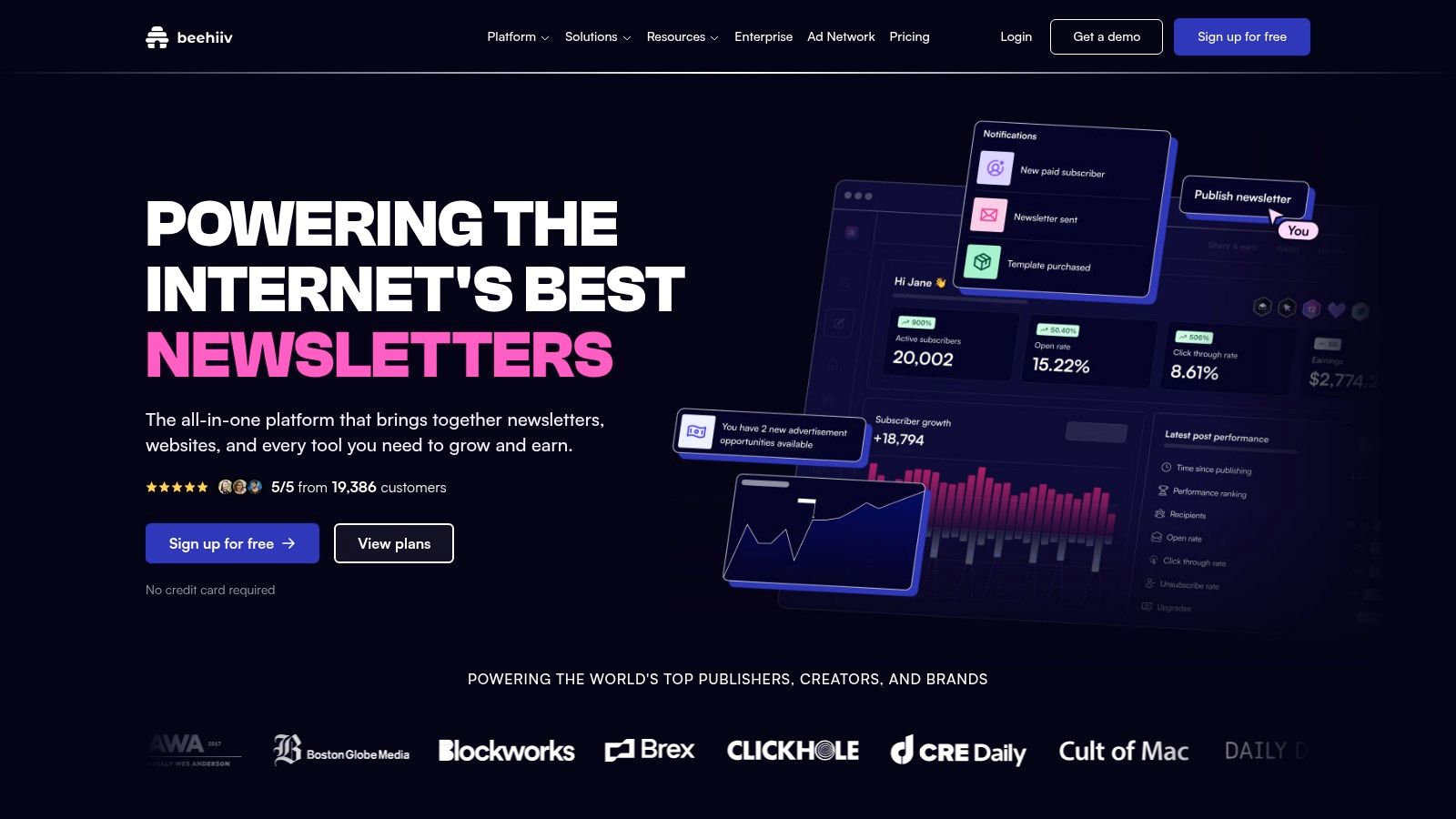
The platform's free "Launch" plan is one of the most generous among the best free newsletter platforms, offering up to 2,500 subscribers and unlimited sends. This gives new creators significant runway before needing to upgrade. Unlike simpler tools, beehiiv provides advanced analytics, audience polls, and segmentation even on its free tier, giving you deep insights into your readership from day one. This focus on data-driven growth makes it a strong contender for serious media startups and individual creators with ambitious goals.
Key Features & Limitations
- Growth Tools: Offers a powerful suite of features including a referral program, recommendation network (Boosts), and an ad network to help you grow and monetize.
- Generous Free Plan: The "Launch" plan supports up to 2,500 subscribers with unlimited sends, a custom domain, and robust analytics at no cost.
- Pricing Structure: The free plan is robust, but beehiiv charges a 2.9% transaction fee on paid subscriptions. Paid plans unlock advanced features and lower transaction fees.
- Limitations: Full automation sequences, A/B testing, and removing beehiiv branding are reserved for paid tiers. The most advanced monetization tools are on higher-tier plans.
Beehiiv is ideal for ambitious creators and media brands focused on rapid subscriber growth and diverse monetization strategies beyond simple paid subscriptions.
3. Kit (formerly ConvertKit)
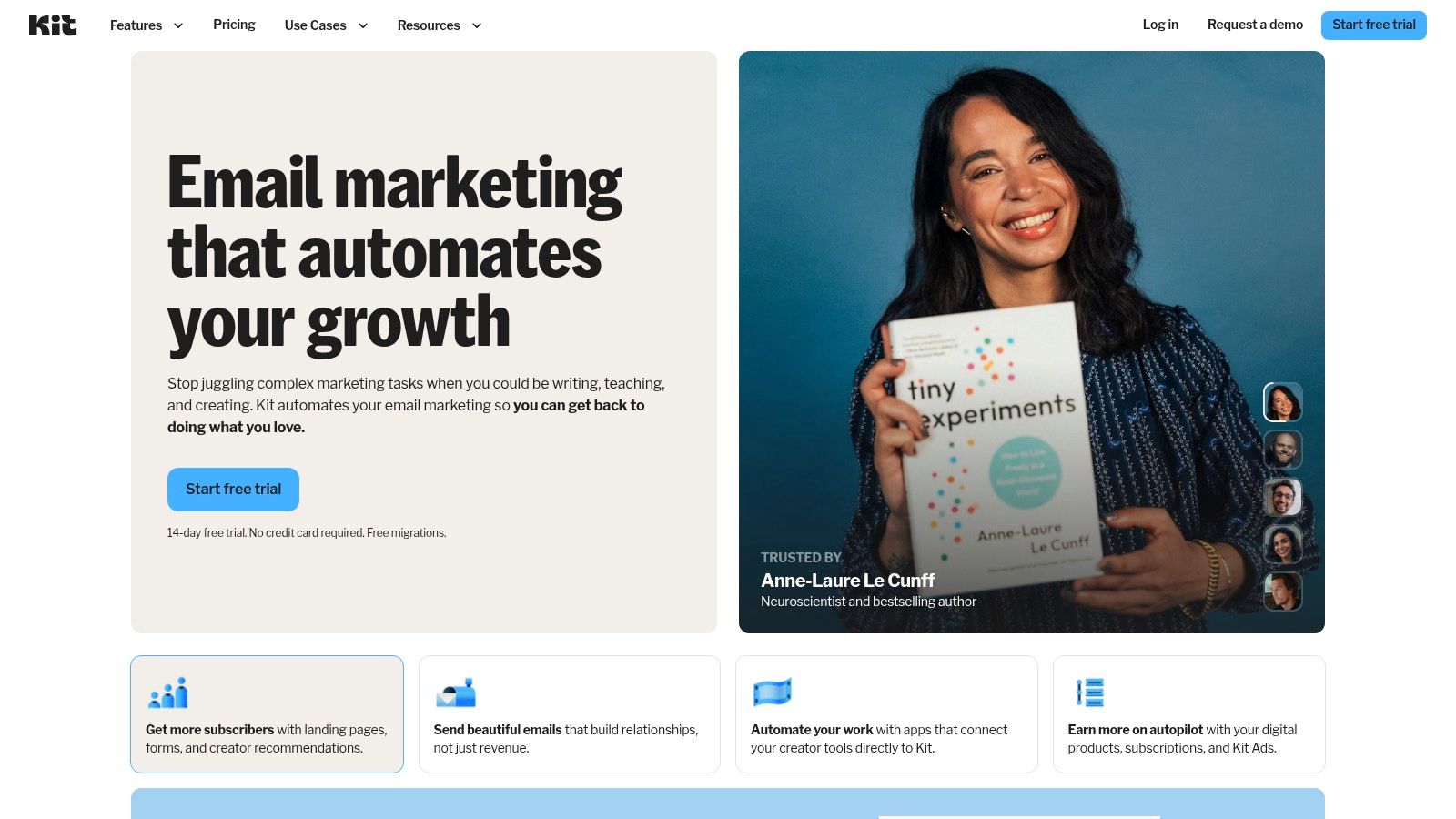
Kit, which was formerly known as ConvertKit, is a powerful, creator-focused platform that has recently become one of the best free newsletter platforms thanks to its incredibly generous free plan. Designed specifically for bloggers, artists, and creators selling digital products, Kit excels at bridging the gap between a simple newsletter and a full-fledged email marketing engine. It offers a smooth, user-friendly experience that helps creators grow their audience and monetize their work directly.
The platform's standout free plan allows you to manage up to 10,000 subscribers with unlimited email sends, a limit that is unmatched by most competitors. This makes it an exceptional starting point for creators with an existing audience or those with high growth potential. Kit also provides built-in tools for creating landing pages and sign-up forms, along with commerce features to sell digital products and paid newsletters, positioning it as a powerful all-in-one solution for creator businesses.
Key Features & Limitations
- Generous Free Plan: Manage up to 10,000 subscribers with unlimited broadcasts, forms, and pages at no cost.
- Creator Monetization: Includes built-in commerce tools to sell digital products and paid newsletter subscriptions directly.
- Basic Automation: The free plan includes one basic automation rule and one email sequence, offering a taste of more advanced features. Understanding what is email automation can help you leverage this effectively.
- Limitations: The free plan includes Kit branding and a Kit-managed recommendation slot in your emails. Full automation capabilities, advanced segmentation, and integrations are reserved for paid plans.
Kit is the ideal choice for ambitious creators who need a scalable platform that can grow with them from a free newsletter to a sophisticated marketing and sales operation.
4. MailerLite
MailerLite is a powerful email marketing service that bridges the gap between simple newsletter tools and complex marketing automation platforms. It stands out by offering a surprisingly rich feature set on its free plan, making it one of the best free newsletter platforms for those who want more than just basic sending capabilities. Its approachable, clean interface makes it easy for beginners to get started with features often reserved for paid tiers, such as landing pages, pop-ups, and even basic automation.
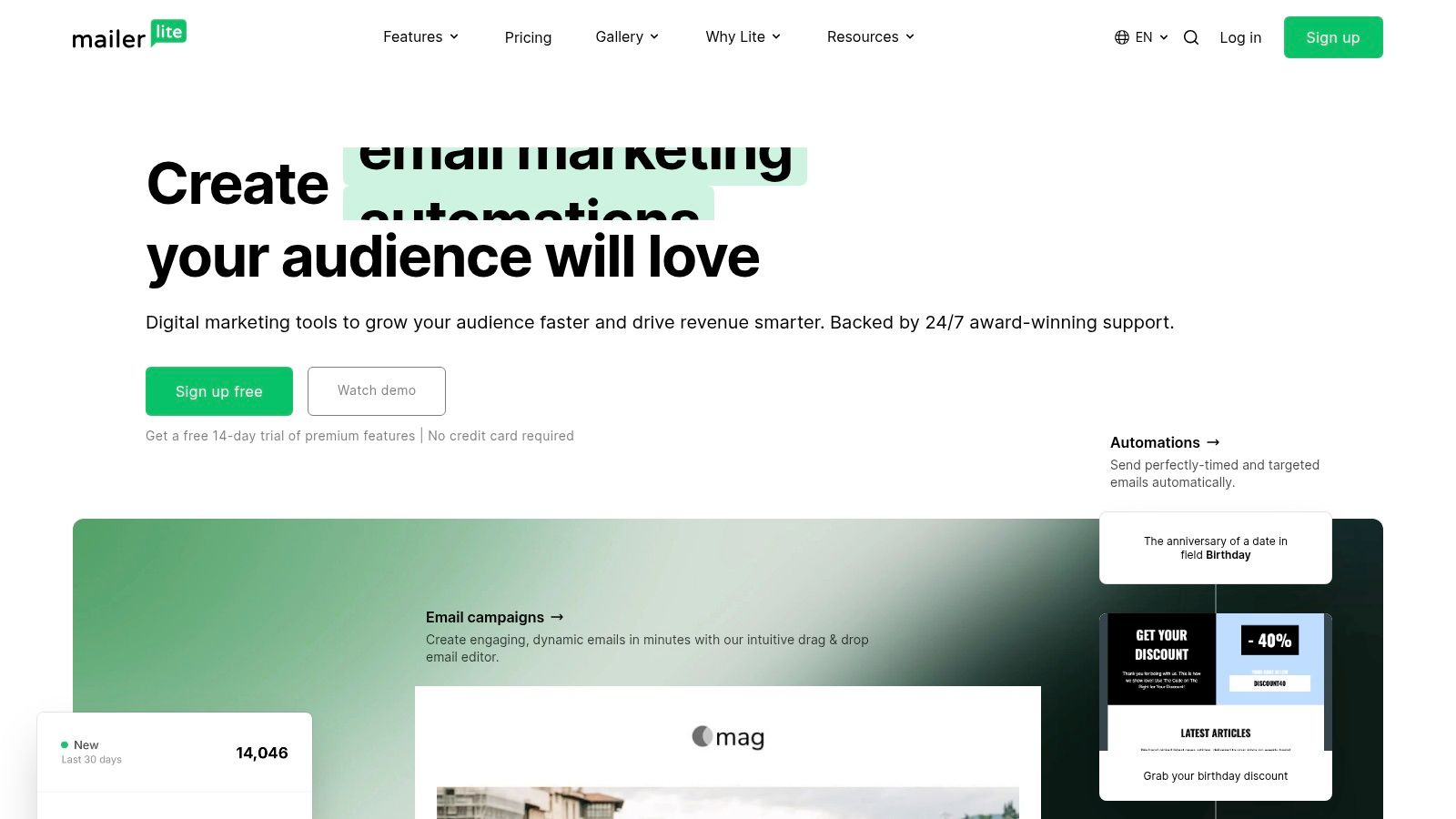
The platform's generous free tier allows you to send up to 12,000 emails per month to 500 subscribers, providing ample room for a new creator or small business to grow an initial audience. Beyond newsletters, you can build a full website or landing page and create signup forms to capture leads directly. Effective email list management becomes crucial as you grow, and MailerLite provides the foundational tools to start organizing your contacts from day one. This makes it a great choice for users who anticipate needing more marketing tools as their list expands.
Key Features & Limitations
- Generous Free Plan: Includes a drag-and-drop editor, website and landing page builder, pop-ups, and basic automation for up to 500 subscribers.
- User-Friendly Interface: The editor and dashboard are intuitive, making it simple to design professional-looking emails without a steep learning curve.
- Pricing Structure: The free plan is robust, but subscriber and feature limits are firm. Paid plans unlock unlimited monthly emails, more templates, and advanced features.
- Limitations: The free plan is capped at 500 subscribers, which is lower than some competitors. Many advanced templates and A/B testing features are locked behind a paywall.
MailerLite is ideal for small businesses, bloggers, and creators who need an all-in-one marketing toolkit on a budget and plan to scale over time.
5. Brevo (formerly Sendinblue)
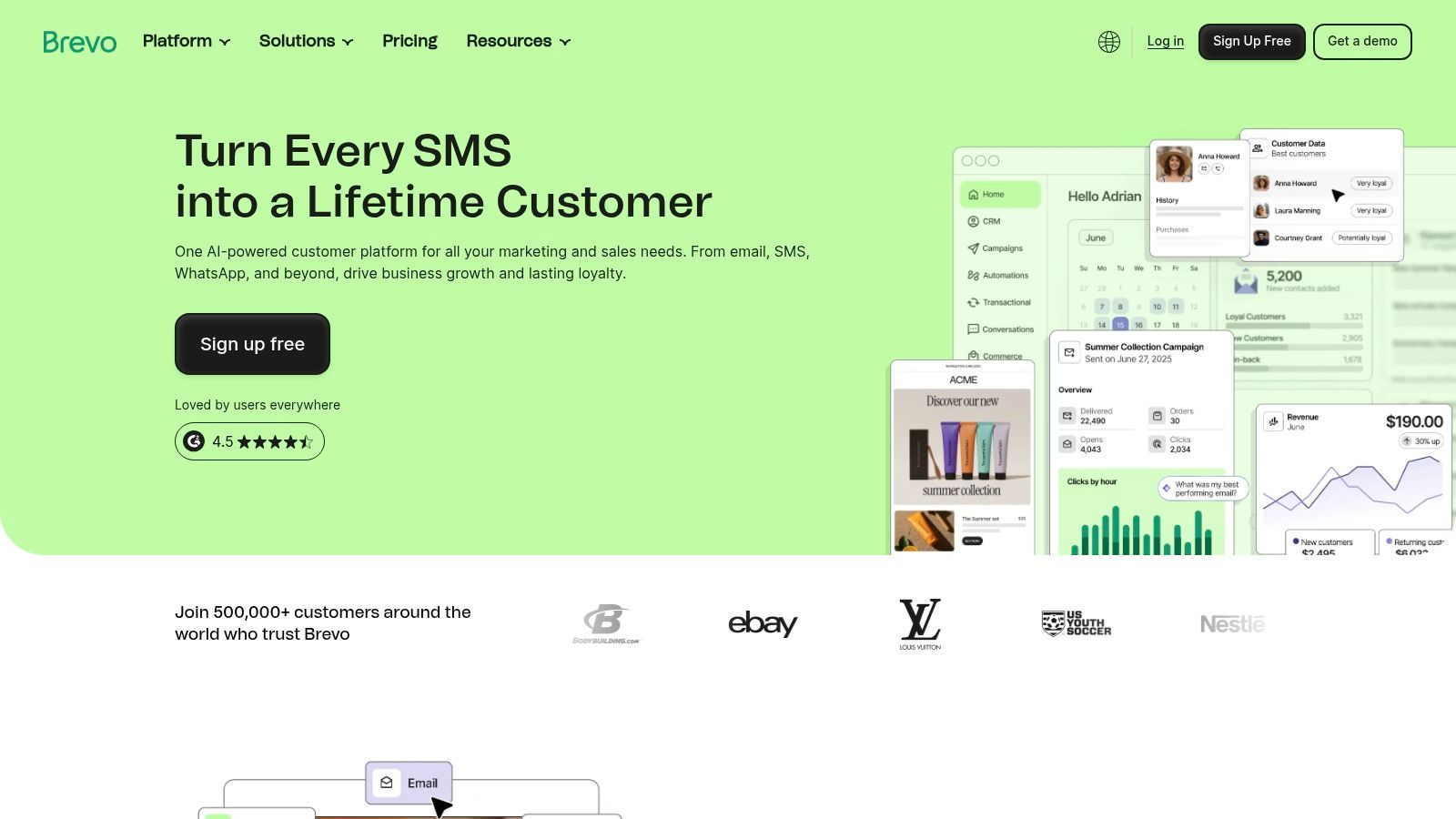
Brevo positions itself as an all-in-one marketing suite, and its newsletter functionality is a core part of a much larger platform that includes CRM, SMS, and chat. It stands out among the best free newsletter platforms for users who need more than just email but aren't ready to pay for a premium service. Its free plan is uniquely structured, offering an exceptionally high contact limit, making it ideal for those who are growing their audience but send campaigns infrequently.
This platform is a strong choice for small businesses or startups that need a central hub for customer communication without an initial investment. While other free platforms focus purely on the newsletter, Brevo provides a glimpse into advanced marketing automation and contact management, allowing you to build more complex workflows from day one. This makes it a scalable solution that can grow with your business needs.
Key Features & Limitations
- Generous Free Plan: Store up to 100,000 contacts and send up to 300 emails per day (9,000 per month) for free.
- Marketing Toolkit: The free tier includes not just email marketing but also basic marketing automation, transactional emails, and contact segmentation.
- Daily Sending Cap: The 300-email-per-day limit can be a significant bottleneck for sending a newsletter to a large list quickly. This structure is better for drip campaigns than for time-sensitive broadcasts. Understanding how to improve email deliverability is crucial when working with sending caps.
- Limitations: The free plan includes Brevo branding on all emails. Advanced features like landing pages, A/B testing, and more complex automations are reserved for paid tiers.
Brevo is perfect for small businesses that prioritize contact list growth and need basic automation features but have a low sending frequency.
6. EmailOctopus
EmailOctopus positions itself as a lightweight and highly affordable email marketing service, making it one of the best free newsletter platforms for budget-conscious creators and small businesses. Its key differentiator is a remarkably generous free plan combined with a clean, no-fuss user interface. This approach removes the complexity common in larger platforms, allowing users to quickly set up sign-up forms, manage subscribers, and send campaigns without a steep learning curve.
The platform's free "Starter" plan is a major draw, offering one of the highest subscriber limits in the industry. Users can manage up to 2,500 subscribers and send 10,000 emails per month without any cost. While it lacks the advanced segmentation and deep analytics of enterprise-level tools, it provides all the core features needed to grow a newsletter, including customizable landing pages and simple welcome email automations. For those with technical skills, the "Connect" plan allows sending emails through Amazon's Simple Email Service (SES) at an extremely low cost, though this requires separate setup and management of an AWS account.
Key Features & Limitations
- Generous Free Plan: Supports up to 2,500 subscribers and 10,000 emails per month, which is significantly more than many competitors offer.
- Ease of Use: A minimalist and intuitive dashboard makes it simple to create and send newsletters, even for complete beginners.
- Pricing Structure: The free plan includes EmailOctopus branding. Paid plans are very affordable, and the "Connect" option offers ultra-low-cost sending via Amazon SES for advanced users.
- Limitations: The free plan has limited reporting data retention and lacks advanced features like A/B testing, complex automation workflows, or deep subscriber segmentation.
EmailOctopus is ideal for startups, bloggers, and small nonprofits who need a reliable, cost-effective solution and prioritize a high free subscriber limit over advanced marketing automation tools.
7. Buttondown
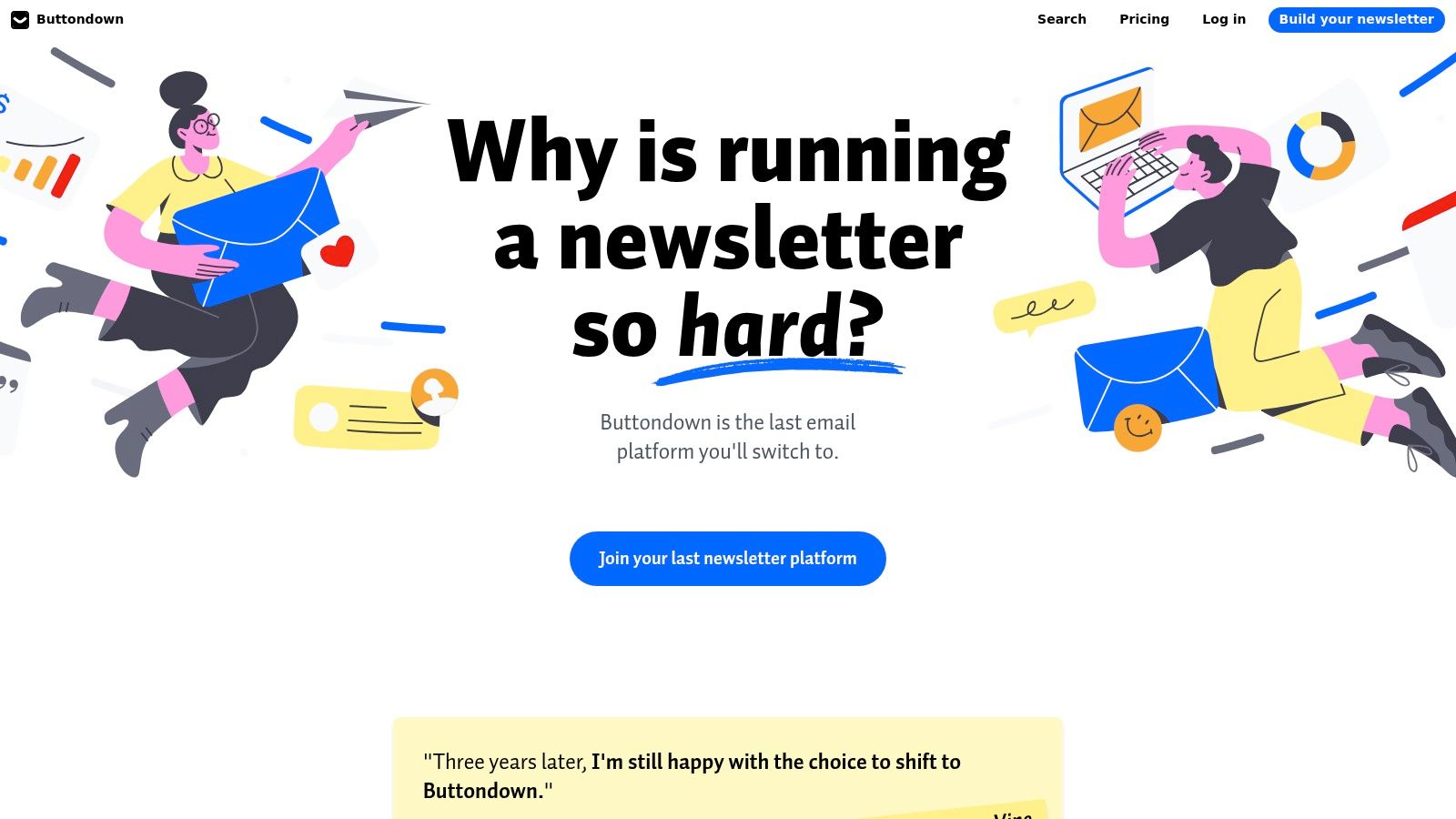
Buttondown is a minimalist, privacy-focused tool that stands out among the best free newsletter platforms for its elegant simplicity and developer-friendly approach. Designed for solo creators and small teams who value a clean, distraction-free writing experience, it avoids the feature bloat common in larger services. The platform is built by a single person, which translates to a highly personal and responsive support experience, and a product philosophy centered on core functionality done exceptionally well.
It operates on a transparent, pay-as-you-grow model that is free for your first 100 subscribers. This makes it an excellent, low-risk starting point for writers testing a new idea. Buttondown’s interface is famously clean, supporting both Markdown and rich-text editing, allowing you to focus purely on your words. It's an ideal choice for technical writers, developers, and creators who appreciate a tool that is powerful under the hood but simple on the surface.
Key Features & Limitations
- Clean User Experience: A minimalist, fast, and distraction-free editor that supports Markdown for efficient writing.
- Transparent Pricing: Free for the first 100 subscribers, with clear, à-la-carte pricing for features like automations and paid subscriptions as you grow.
- Pricing Structure: The free plan is limited to 100 subscribers. Paid plans offer more features and higher subscriber limits, but many advanced tools are paid add-ons.
- Limitations: The free tier is one of the smallest available, and its modular pricing can become costly if you need multiple advanced features like segmentation and automations.
Buttondown is perfect for writers and indie creators who want a straightforward, no-nonsense tool with a strong emphasis on privacy and a predictable cost structure.
8. GetResponse
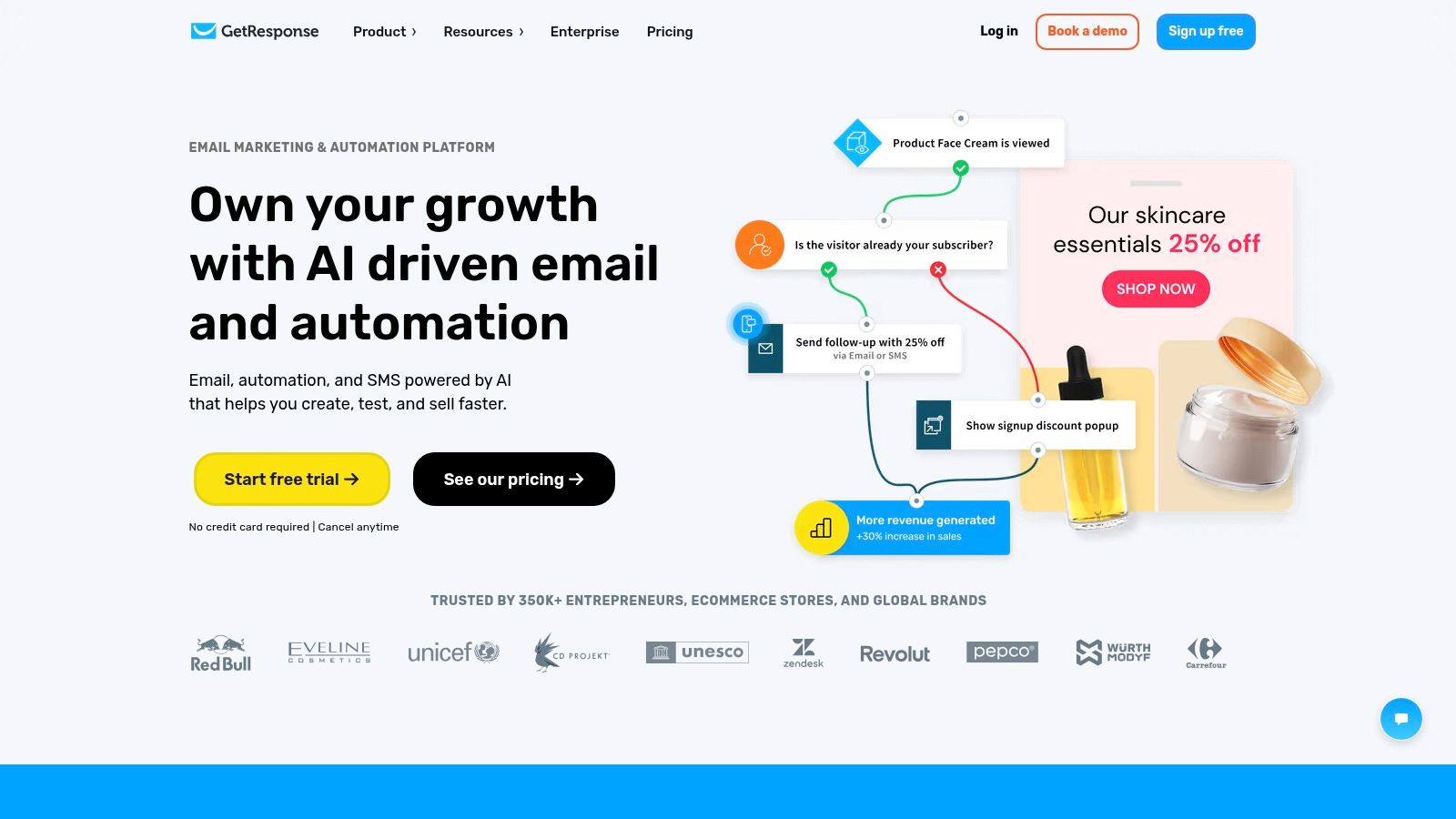
GetResponse is a long-standing player in the email marketing world, offering a comprehensive suite of tools that extends far beyond simple newsletters. Its "Free-Forever" plan makes it one of the best free newsletter platforms for those who anticipate needing more advanced marketing features as they grow. This plan provides a solid entry point for new creators to build their initial audience with professional tools.
The platform's strength lies in its scalability. You can start for free, building your email list with its high-quality landing pages, forms, and popups, which are impressively included even in the free tier. As your needs evolve, GetResponse offers a clear upgrade path to sophisticated marketing automation, sales funnels, and e-commerce integrations, making it a powerful all-in-one solution.
Key Features & Limitations
- Generous Free Plan: Includes up to 500 contacts, 2,500 monthly email sends, a website builder, and unlimited landing pages.
- Powerful Add-ons: Even the free plan provides access to a robust drag-and-drop landing page and form builder.
- Pricing Structure: The free plan is truly free but includes GetResponse branding. Paid plans unlock advanced automation, unlimited sends, and e-commerce tools.
- Limitations: The free contact and sending limits are tighter than some competitors. Accessing the platform's signature marketing automation and sales funnels requires upgrading to a paid subscription.
GetResponse is ideal for small businesses and marketers who want a free starting point with a platform that can grow with them into a complete marketing and sales machine.
9. MailPoet (WordPress)
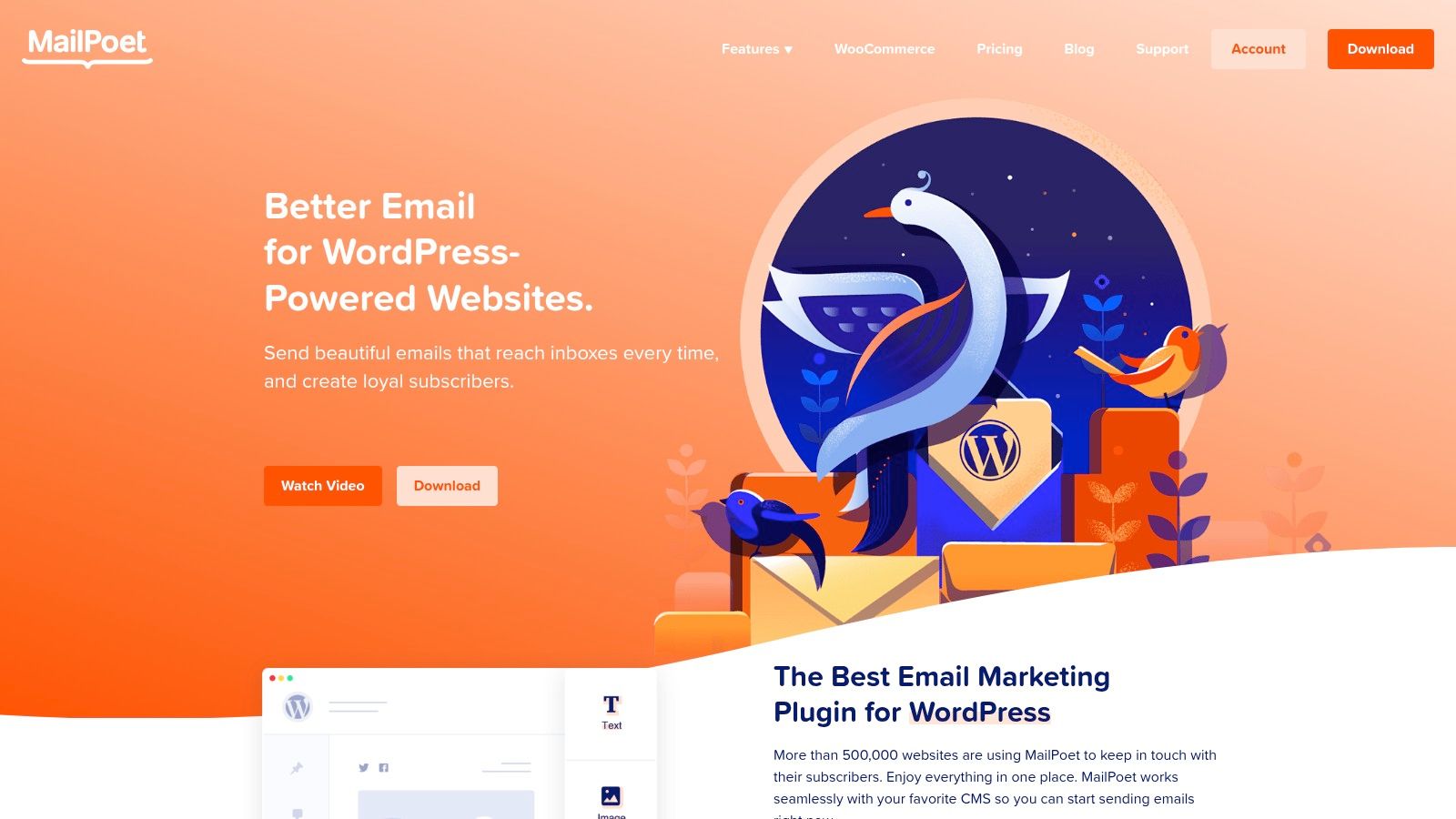
For WordPress users who want to keep everything under one roof, MailPoet is one of the best free newsletter platforms available. It’s not a separate service but a powerful plugin that lives directly inside your WordPress dashboard. This native integration is its greatest strength, allowing you to manage subscribers, create newsletters with a drag-and-drop editor, and send campaigns without ever leaving your site's backend. The setup is straightforward, making it perfect for website owners who value convenience and a unified workflow.
The plugin operates on a freemium model, offering a generous free plan for new and growing websites. You can send emails to up to 500 subscribers without any cost, using its built-in sending service to ensure high deliverability. This eliminates the complexity of configuring a third-party SMTP service. Its deep integration with WooCommerce is a major benefit for e-commerce stores, enabling automated emails like abandoned cart reminders and purchase follow-ups directly from WordPress.
Key Features & Limitations
- WordPress Integration: Manage your entire email marketing operation from your WordPress dashboard, including subscriber forms and email creation.
- WooCommerce Support: Send automated e-commerce emails to customers based on their purchasing behavior.
- Pricing Structure: The free plan supports up to 500 subscribers and 5,000 emails per month. Paid plans unlock higher limits and advanced features.
- Limitations: The free subscriber limit is lower than some dedicated platforms. Advanced segmentation, detailed analytics, and automation features require upgrading to a paid subscription.
MailPoet is ideal for bloggers, small business owners, and online stores built on WordPress who want a simple, fully integrated email solution without needing a separate account.
10. Ghost
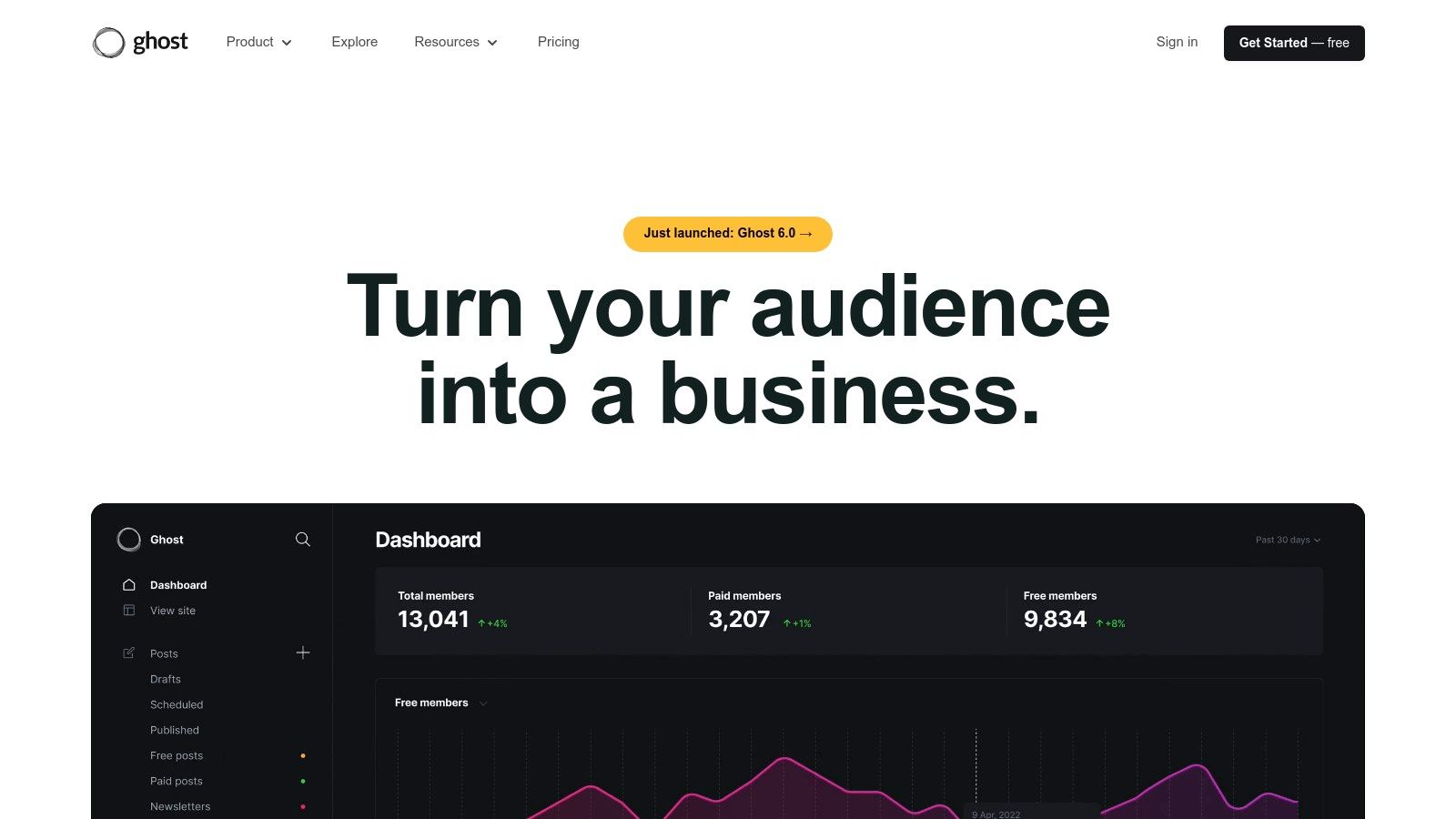
Ghost is a powerful open-source publishing platform that positions itself as a robust alternative for creators who want total control over their brand and business. It seamlessly combines a professional-grade CMS with integrated email newsletters and membership features. Unlike closed-platform competitors, Ghost gives you the freedom to choose: you can self-host the software for free (paying only for your server) or opt for their managed Ghost(Pro) hosting service for convenience. This makes it an excellent choice for publishers who prioritize ownership of their content, audience data, and revenue streams.
This platform is fundamentally built for serious publishers who want to create a complete media hub, not just send emails. You can build a custom-designed website with a blog, premium content, and member-only sections, all while running a sophisticated newsletter operation from the same dashboard. This unified approach provides a seamless experience for your audience, allowing them to read articles, sign up, and manage their subscription in one place.
Key Features & Limitations
- Complete Ownership: When self-hosting, you have full control over your data, design, and technology stack.
- Monetization: Offers built-in paid subscriptions via Stripe, allowing for multiple membership tiers and special offers with 0% transaction fees from Ghost itself.
- Pricing Structure: Self-hosting is free (you cover server costs), while the managed Ghost(Pro) service is a paid subscription.
- Limitations: The "free" path requires technical knowledge for setup and maintenance (self-hosting). The platform has a steeper learning curve than simple newsletter tools, and its advanced features might be overkill for creators who only want to send basic emails.
Ghost is ideal for professional bloggers, independent publishers, and businesses who want to build a multifaceted media brand and are comfortable with a more technical setup to achieve full control.
11. LinkedIn Newsletters
For B2B professionals, consultants, and industry experts, LinkedIn Newsletters offers a unique way to distribute content directly within the world's largest professional network. Instead of building an email list from scratch, this tool leverages your existing connections and followers, automatically notifying them when you publish a new edition. This built-in distribution mechanism makes it one of the best free newsletter platforms for those whose target audience is already active on LinkedIn.
The platform is designed for seamless integration with your professional brand. When you publish, the newsletter appears as an article tied to your profile or company page, and it is also delivered directly to subscribers' inboxes. This dual-distribution model maximizes visibility. For creators leveraging this ecosystem, understanding how to post articles on LinkedIn to maximize their reach is crucial for expanding their professional audience and driving engagement. The setup is simple, allowing you to focus on creating valuable industry insights rather than managing a separate email service provider.
Key Features & Limitations
- Native Distribution: Automatically notifies your network connections and followers, helping you gain initial subscribers quickly and effortlessly.
- Zero Cost: Completely free to use with no limits on subscribers or sends, making it a risk-free option for professionals.
- Platform Integration: Leverages your existing LinkedIn profile and audience, reinforcing your personal brand and authority in your field.
- Limitations: Lacks any advanced email marketing features like segmentation, automation, or A/B testing. Customization is minimal and branding is tied entirely to the LinkedIn interface.
LinkedIn Newsletters is ideal for B2B marketers, thought leaders, and executives who want to build influence and share expertise with a professional audience without the overhead of a traditional email platform.
12. Mailchimp
Mailchimp is one of the most established names in email marketing, and for many, it was their first introduction to newsletters. It has evolved into a comprehensive marketing platform, but its core email service remains a popular, albeit more limited, free option. The platform is known for its user-friendly drag-and-drop editor, a wide array of professional templates, and a massive ecosystem of integrations with other business tools, making it a familiar choice for many.
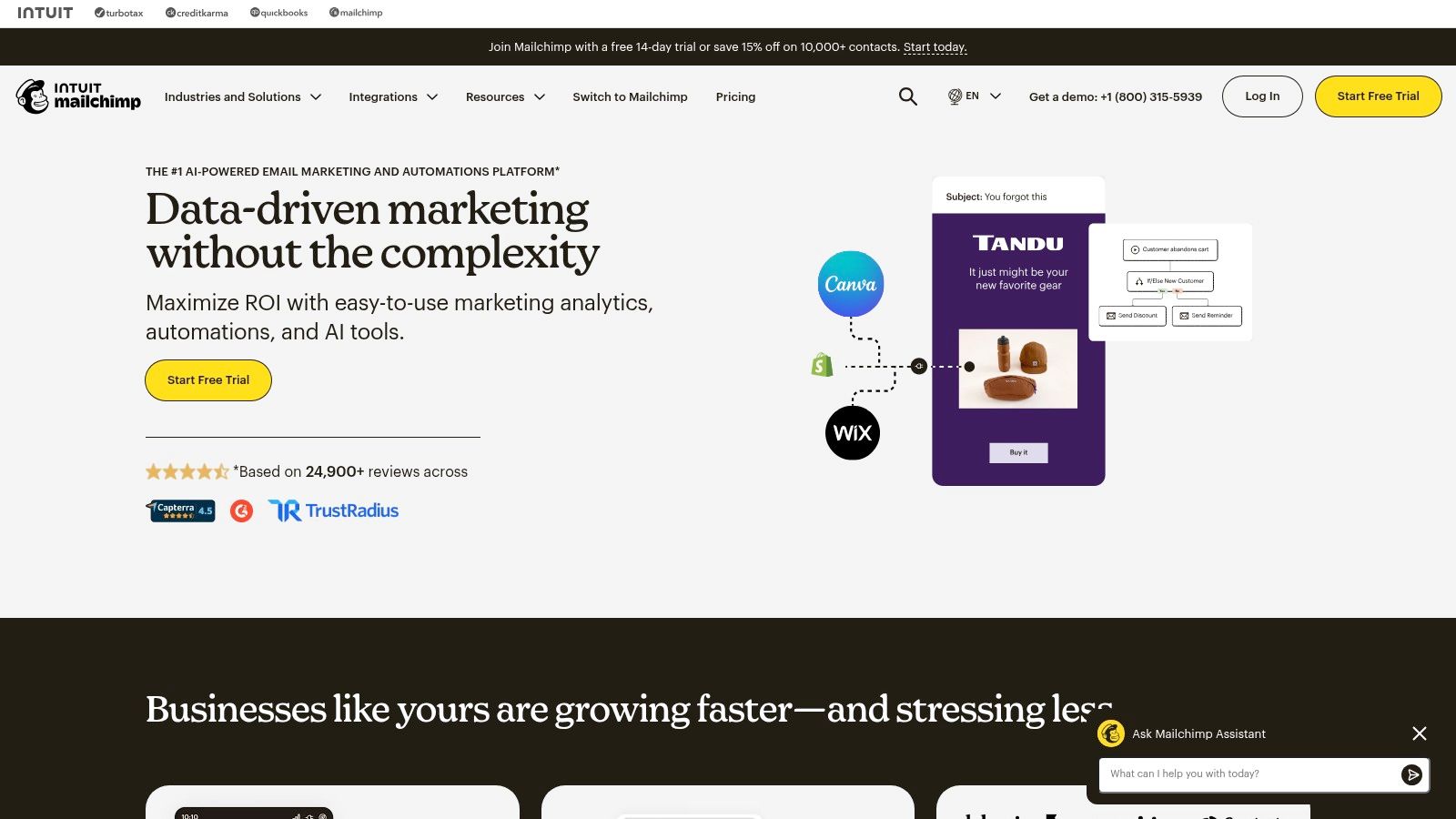
While once a leader among the best free newsletter platforms, its free plan has become more restrictive over time. It can still serve as a solid starting point for users with very small lists or those who want to test the platform's robust feature set before committing to a paid plan. Its extensive library of guides, tutorials, and educational resources provides immense value for beginners learning the ropes of email marketing and list management.
Key Features & Limitations
- Ease of Use: A reputable, familiar interface with a high-quality drag-and-drop builder and numerous templates makes creating newsletters straightforward.
- Integrations: Offers a vast ecosystem of integrations with e-commerce platforms, CRMs, and other apps, which is a major advantage for businesses.
- Pricing Structure: The free plan has significant caps on contacts and monthly sends, which have been reduced recently. Upgrading unlocks automations, A/B testing, and higher limits.
- Limitations: The free plan's limits are now quite low (currently 500 contacts and 1,000 monthly sends), and many advanced features are gated behind expensive paid tiers. Mailchimp branding is required on free plan emails.
Mailchimp is ideal for small businesses or individuals who anticipate needing a powerful, all-in-one marketing suite in the future and want to start on a familiar platform.
Top 12 Free Newsletter Platforms — Feature Comparison
| Platform | Core features | UX & Quality (★) | Pricing / Value (💰) | Best for (👥) | Unique selling points (✨ / 🏆) |
|---|---|---|---|---|---|
| Substack | Newsletters, paid subs, web archive | ★★★★☆ simple & fast | 💰 Free to publish; 10% platform fee + Stripe | 👥 Solo writers & indie creators | ✨ Built-in discovery & reader recommendations; 🏆 fastest setup |
| beehiiv | Referrals, ad network, automations | ★★★★☆ growth-focused | 💰 Generous free tier; paid tiers unlock Boosts/referrals | 👥 Growth-focused creators & media startups | ✨ Referral systems & ad monetization; 🏆 roadmap for scale |
| Kit (ConvertKit) | Email, commerce, recommendations, automations | ★★★★☆ creator-friendly | 💰 Free up to 10k subs; paid for full automations | 👥 Creators selling digital products | ✨ Built-in commerce + recommendation network; 🏆 high free cap |
| MailerLite | Drag-and-drop editor, landing pages, pop-ups | ★★★★☆ user-friendly, good deliverability | 💰 Free up to 500 subs /12k emails; affordable upgrades | 👥 Small businesses & beginners | ✨ Strong landing page tools on free plan |
| Brevo (Sendinblue) | Email, SMS, CRM, transactional email | ★★★☆☆ reliable contact management | 💰 Free 300 emails/day; store up to 100k contacts | 👥 Low-volume newsletters needing CRM | ✨ Very large contact storage on free plan; transactional support |
| EmailOctopus | Simple automations, landing pages, SES option | ★★★☆☆ minimalist & efficient | 💰 Free up to 2.5k subs /10k emails; SES plan for low costs | 👥 Budget-minded creators | ✨ Amazon SES sending for very low delivery costs |
| Buttondown | Markdown editor, hosted archives, add-ons | ★★★★☆ minimalist & privacy-focused | 💰 Free first 100 subs; pay-as-you-grow add-ons | 👥 Solo creators who want simplicity | ✨ Clean UX, transparent indie pricing |
| GetResponse | Email, landing pages, funnels, automations | ★★★★☆ full-featured suite | 💰 Free up to 500 contacts /2.5k sends; paid adds funnels | 👥 Growing businesses & marketers | ✨ Deep automation & funnel builder; 🏆 scalable features |
| MailPoet (WordPress) | WP-native email plugin, sending service, WooCommerce | ★★★☆☆ integrated WP experience | 💰 Free ~500 subs /5k emails; paid for higher limits | 👥 WordPress site owners | ✨ Newsletter management inside WordPress; WooCommerce support |
| Ghost | CMS + newsletters, memberships, Stripe payments | ★★★★☆ publisher-grade control | 💰 Self-host free (hosting costs); Ghost(Pro) paid hosting | 👥 Publishers & creators wanting ownership | ✨ Full control & membership commerce; 🏆 open-source stack |
| LinkedIn Newsletters | On-platform newsletters, auto-notify followers | ★★★☆☆ high distribution, low customization | 💰 Free (platform-bound) | 👥 B2B creators & professionals | ✨ Built-in network distribution & auto-notify (zero cost) |
| Mailchimp | Templates, campaigns, automations, integrations | ★★★☆☆ familiar UI & ecosystem | 💰 Limited free plan; paid tiers for full features | 👥 Small businesses & marketers needing integrations | ✨ Large integrations marketplace; 🏆 industry standard |
Beyond the Inbox: When to Graduate from a Free Newsletter Tool to an All-in-One Platform
Navigating the landscape of the best free newsletter platforms can feel like the first major step in building a digital presence. As we've explored, tools like Substack, beehiiv, and MailerLite offer incredible value, providing the essential features to launch, write, and grow an audience from zero without any initial financial investment. They are the perfect launchpad, allowing you to validate your ideas, build momentum, and connect directly with your first true fans.
For "Potential Explorers"—experts with valuable know-how but who are overwhelmed by tech—these free tools are more than enough. They remove the technical barriers and financial risks, empowering you to focus purely on creating high-quality content and finding your voice. Whether it's the simplicity of Buttondown, the WordPress integration of MailPoet, or the powerful free tier of Brevo, there is a no-cost solution perfectly suited to help you plant your flag.
Recognizing the Ceiling of "Free"
However, growth inevitably introduces complexity. As your audience expands and your ambitions grow, the limitations of a standalone, free newsletter tool become increasingly apparent. You might find yourself wanting to offer a premium course, build a private community, or sell a digital download. Suddenly, your "free" newsletter platform is just one piece of a disjointed, multi-tool puzzle.
This is the critical inflection point where many successful creators, or "Business Architects" earning PLN 10k–100k+ a month, find themselves. You're juggling a newsletter in MailerLite, a community on a chaotic Discord server, an online course hosted on a separate platform, and an e-commerce plugin for your e-books. This creates a fragmented experience for your audience, who have to manage multiple logins and navigate different interfaces. For you, it becomes an administrative nightmare of data syncing, payment tracking, and managing disparate systems, stealing valuable time that could be spent on creation.
The Strategic Leap to an Integrated Ecosystem
This is precisely when graduating from a free newsletter tool to an all-in-one platform becomes a strategic necessity, not a luxury. The goal is to move from a collection of siloed tools to a unified ecosystem that consolidates your entire digital business under a single, branded roof. This transition is less about finding a "better" newsletter tool and more about adopting a holistic business infrastructure.
An integrated platform like Zanfia is engineered to solve this exact problem of fragmentation and inefficiency. It allows you to bring your paid newsletter, online courses, exclusive community, and digital products together in one place, all hosted on your own custom domain. This creates a seamless, professional experience for your members, significantly boosting engagement, retention, and lifetime value.
More importantly, this move fundamentally changes your business economics. One of the most significant, yet often overlooked, costs of scaling on many platforms is the percentage-based transaction fee. A 5% or 10% cut might seem small when you're starting, but for established creators, those fees can amount to thousands of dollars in lost revenue annually.
A platform built on a transparent SaaS subscription model, like Zanfia's, eliminates this hidden tax on your success. With a revolutionary 0% platform transaction fee, you keep 100% of the revenue you generate. This single feature can drastically improve your margins, freeing up capital to reinvest in your business. For "Craft Masters" operating at the top of their field, protecting revenue and delivering a premium, white-labeled experience is non-negotiable.
Furthermore, a true all-in-one system introduces powerful automations that a free newsletter tool simply cannot match. Imagine instantly granting course access after a purchase, automatically adding a new subscriber to the correct community channel, and having invoices generated and sent without lifting a finger via integrations with local tools like inFakt. These workflows can save 5-10+ hours of manual administrative work every month, allowing you to focus on high-impact activities.
The journey starts with finding one of the best free newsletter platforms to build your foundation. But as you succeed and your vision expands, remember that your tech stack must evolve with you. The ultimate goal is to build a scalable, profitable, and manageable digital business that serves both you and your audience for the long term.
Ready to move beyond a fragmented toolset and build a unified, profitable digital business on your own domain? Discover how Zanfia combines your newsletter, courses, community, and digital products into one seamless platform with 0% transaction fees. See why top Polish creators trust Zanfia to scale their brand and revenue by visiting Zanfia today.