

A Creator’s Guide to Email List Management: The Zanfia Approach
Email list management is the art and science of how you grow, organize, and maintain your list of subscribers. It’s not just about collecting email addresses. It’s about building a direct, owned channel of communication with people who want to hear from you—a channel that turns followers into loyal customers and drives real revenue for your digital products.
Why Your Email List Is Your Most Valuable Asset
Let's be blunt. Social media followers don't belong to you; they belong to the platform. Your reach can vanish overnight with a simple algorithm change. Your email list, on the other hand, is an asset you own completely.
This direct line to your audience is the most reliable channel you have for building relationships, launching products, and generating a predictable income. For a modern creator, it’s the engine of the entire business. Smart creators make email list management a top priority because they know a well-cared-for list is the bedrock for selling online courses, communities, and digital downloads.
The Power of Ownership and Direct Communication
Think about the difference. When you post on social media, you’re just one voice shouting in a crowded, chaotic feed. But when you send an email, you land in a personal, private space: their inbox. That intimacy is perfect for creating real connections and delivering value without all the noise and distraction.
This direct access is priceless when you have something important to say—a new e-book dropping, a course opening for enrollment, or an update for your paid newsletter. You aren't just crossing your fingers and hoping the algorithm cooperates. You're making sure your message gets delivered.
Your email list is the only marketing channel where you have full control. It's a direct conversation with people who have explicitly raised their hands and said, "Yes, I want to hear from you." This level of intent is unmatched.
Driving Revenue and ROI
Great list management isn't just about sending nice emails; it’s about making money. Email marketing consistently delivers one of the highest returns on investment (ROI) out there. In 2025, we're talking about an average return between $36 and $42 for every $1 spent. That’s serious converting power.
If you're looking for a deep dive into strategy, these B2B email marketing best practices are a great resource. You can also explore more email marketing statistics over at inboxally.com.
For creators selling digital products, this ROI translates into tangible results:
- Targeted Promotions: You can send a special offer for your advanced course only to subscribers who bought the introductory e-book.
- Successful Launches: Build genuine excitement and drive a flood of sales for a new product launch with a carefully planned email sequence.
- Automated Sales: Use welcome sequences and abandoned cart emails to convert new leads and recover lost revenue while you sleep.
To wrap your head around why this is so critical, it helps to break down the core functions of list management and how they directly affect your business.
Core Pillars of Email List Management
This table summarizes the fundamental concepts and their direct impact on your online business's success.
| Pillar | Core Function | Business Impact |
|---|---|---|
| Growth | Consistently adding new, qualified subscribers to your list. | Expands your audience reach and potential customer base. |
| Segmentation | Dividing your list into smaller groups based on interests or behavior. | Allows for highly personalized messaging, boosting engagement and conversions. |
| Hygiene | Regularly cleaning your list by removing inactive subscribers. | Improves deliverability, reduces costs, and protects your sender reputation. |
| Automation | Setting up automated email sequences (workflows) for specific triggers. | Nurtures leads, drives sales, and saves you significant time on manual tasks. |
Getting these pillars right is what separates a thriving digital business from one that’s constantly struggling to find its next customer.
This is where a platform like Zanfia rethinks the setup. Instead of selling you another course tool, Zanfia gives you an AI team that runs the operational side of your creator business, with courses, a community, and downloads all landing under one brand. You can dictate what you want by chat or by voice instead of clicking through menus, and every product ends in a checkout built to sell, with order bumps, installments, and upsells. When someone buys your e-book, they can be automatically tagged and dropped into a sequence that nudges them toward your premium course, without you lifting a finger. This kind of setup easily saves creators 5-10+ hours per month on mind-numbing admin work, freeing you up to do what you do best: create.
Growing a High-Quality Email List That Converts
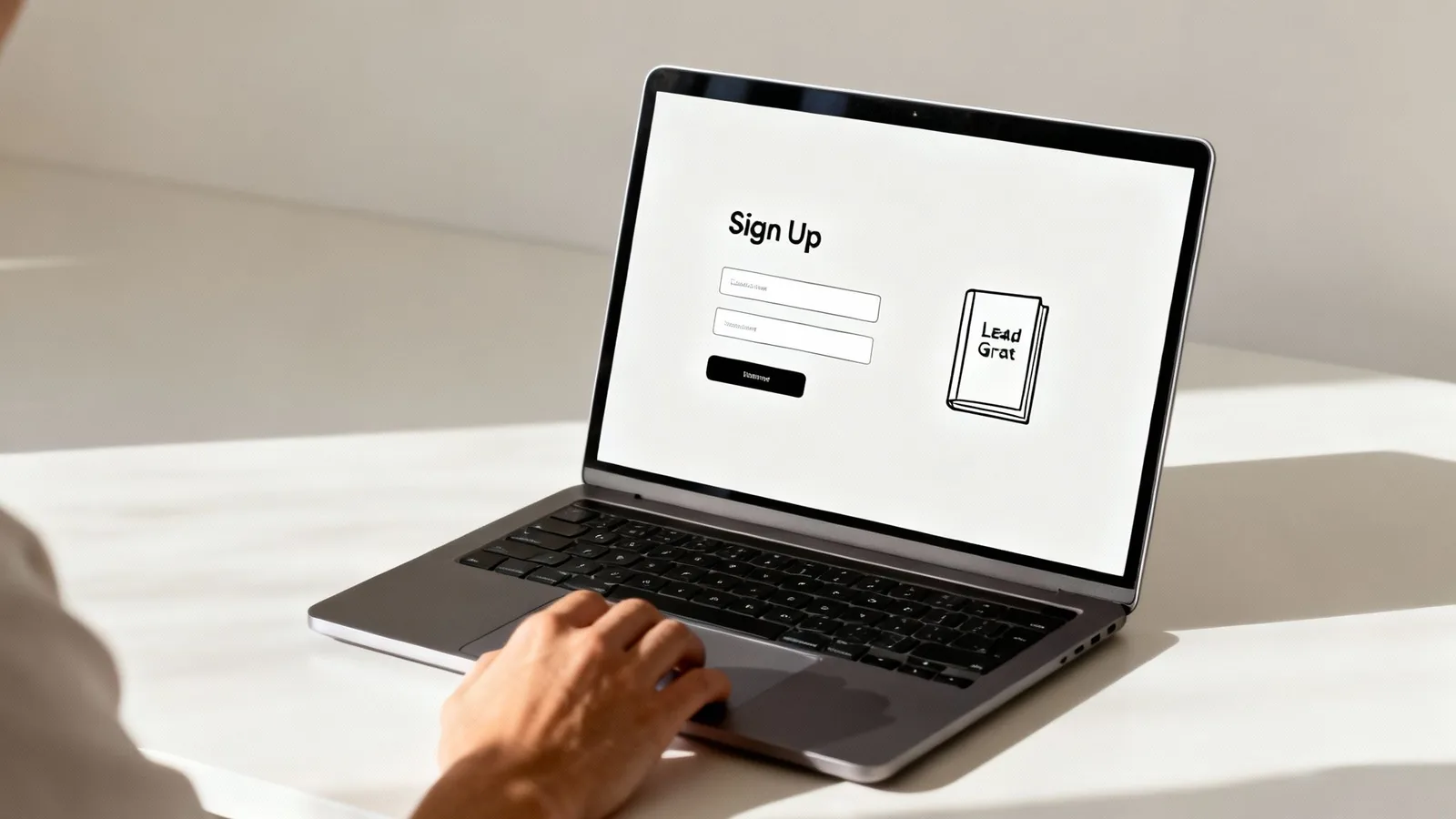
Let's be honest, smart email list management doesn't start with the first "send" button you hit. It starts way earlier, with the very first person who decides to subscribe. I’ve learned over the years that it’s all about quality, not just stacking up numbers.
Give me ten engaged subscribers who actually care about what I have to say over a hundred who grabbed a freebie and vanished. The real goal is to attract people who are genuinely excited about your work. You're looking for future customers, the ones who will eventually invest in your paid newsletters, courses, or community. It all comes down to a powerful value exchange from the very beginning.
Crafting Irresistible Lead Magnets
A lead magnet is that valuable thing you offer in exchange for an email. But a great lead magnet does so much more than just add a name to your list. It needs to solve a real, specific problem for your ideal customer and give them a tantalizing preview of the value you deliver in your paid products.
Forget the generic checklist. It's time to think bigger. What if you offered a piece of a premium product that leaves people hungry for the rest?
- A Mini-Course: Slice off the first module of your signature online course and give it away. This lets potential students experience your teaching style firsthand, making the decision to buy the full course a no-brainer.
- An Exclusive E-book Chapter: Share a chapter that packs a serious punch from a paid e-book. If you're a business coach, maybe it's the chapter on landing your first high-ticket client. It's an instant authority builder.
- Community Access Pass: Offer a temporary pass to a specific, high-value channel in your paid community. This turns lurkers into active participants by letting them experience the buzz and value for themselves.
The best lead magnets aren't just random downloads; they're strategic doorways into your world. They should align perfectly with what you sell, ensuring that every new subscriber is a genuinely qualified lead from day one. For more ideas, you should check out our complete guide on how to build an email list that actually works.
Designing High-Converting Landing Pages
Once you have a fantastic lead magnet, it needs a dedicated home. This is where a clean, focused landing page is absolutely critical. This page has one job and one job only: convince visitors to hand over their email address.
With a platform like Zanfia, you can build these pages without ever touching a line of code. You can even describe the page you want out loud and let the AI team assemble it for you, then tweak it in the visual editor. The entire focus shifts to the user's experience.
A high-converting landing page is clear, concise, and compelling. It ruthlessly eliminates distractions and guides the visitor toward a single action. Every single element—from the headline to the button—must reinforce the value of what you're offering.
Here’s a simple structure that I’ve seen work time and time again:
- A Killer Headline: Don't be vague. Instead of "Download Our E-book," try something like, "Master Your First 5 Facebook Ads in 30 Minutes."
- Supporting Subheading: Quickly explain who it's for and what they'll get. For example: "A free guide for course creators struggling to get their first 100 students."
- Benefit-Driven Bullet Points: List 3-5 real outcomes. What will they be able to do after they get your freebie?
- A Simple Opt-In Form: Only ask for what you absolutely need. Usually, a first name and email are plenty. Every extra field you add is another reason for them to leave.
- A Clear Call-to-Action (CTA): Use energetic, action-oriented text on your button. "Send Me the Guide!" feels so much more engaging than a boring "Submit."
By keeping the page simple and laser-focused on the value, you create a smooth, frictionless path that makes signing up easy.
Promoting Your Offer to Build Momentum
Look, creating a great lead magnet and a slick landing page is only half the job. Now, you’ve got to get it in front of the right eyeballs. Smart promotion is what turns your list-building engine into a consistent source of new, qualified leads.
Start by sharing your offer where your ideal audience already congregates. This could be on your social media channels, inside relevant online groups, or through partnerships with other creators in your space.
Just make sure your call to action is always crystal clear and points people directly to your landing page. This kind of integrated approach makes sure your list-building efforts are always humming in the background, attracting the exact kind of subscribers you want in your community.
Using Smart Segmentation to Boost Engagement
Sending the same generic email to your entire list is a surefire way to get ignored, or worse, land you in the spam folder. This is where smart segmentation completely changes the game. It’s the difference between shouting into a crowd and having a real, one-on-one conversation that resonates.
So, what is it? Segmentation is simply the practice of dividing your main email list into smaller, more focused groups based on what you know about them. Think of it like this: you wouldn’t pitch an advanced masterclass to someone who just discovered your work yesterday.
When you can send a special offer for a new course only to students who finished your beginner e-book, you're tapping into the power of relevance. It makes your audience feel seen, and that’s what drives them to open, click, and buy.
Moving Beyond One-Size-Fits-All Messaging
The whole point of segmentation is to deliver value at the right time. A brand-new subscriber who just downloaded a free checklist needs a welcome and nurturing sequence. A long-time customer who has bought three of your products, on the other hand, might be ready for an exclusive offer or a behind-the-scenes look at your next project.
For creators, this opens up a ton of powerful strategies:
- Segment by Purchase History: Create a group of everyone who bought your "Productivity for Beginners" e-book. Now you have a warm audience to pitch your "Advanced Productivity Systems" online course.
- Segment by Engagement Level: How about grouping subscribers who have completed more than 75% of a specific course? These are your super-fans, perfect for an invite to a premium community or a high-ticket workshop.
- Segment by Stated Interests: Let people tell you what they want. If you cover multiple topics, add a simple checkbox on your signup form. This way, your yoga content only goes to the yogis, and your business coaching tips only go to the aspiring entrepreneurs.
This isn't just a "nice-to-have" feature; it's a proven growth driver. The data doesn't lie: segmented email campaigns see a 14.31% higher open rate and a staggering 100.95% higher click-through rate compared to generic blasts. As you can see from these email marketing statistics on dripify.com, relevance is everything.
How Zanfia Puts Your Segmentation on Autopilot
Trying to manually sort contacts into different lists would be a full-time job. This is where an integrated platform like Zanfia becomes your secret weapon. Zanfia unifies your products, courses, and community under your own brand, and the AI team behind the platform handles the segmentation on your behalf. Users get tagged based on their actions the moment those actions happen, and you can ask for a new segment out loud instead of clicking through menus. If you prefer to work with your own agents, the MCP endpoint lets an AI assistant do the same job from wherever you already work (availability depends on the plan, see the current Zanfia pricing).
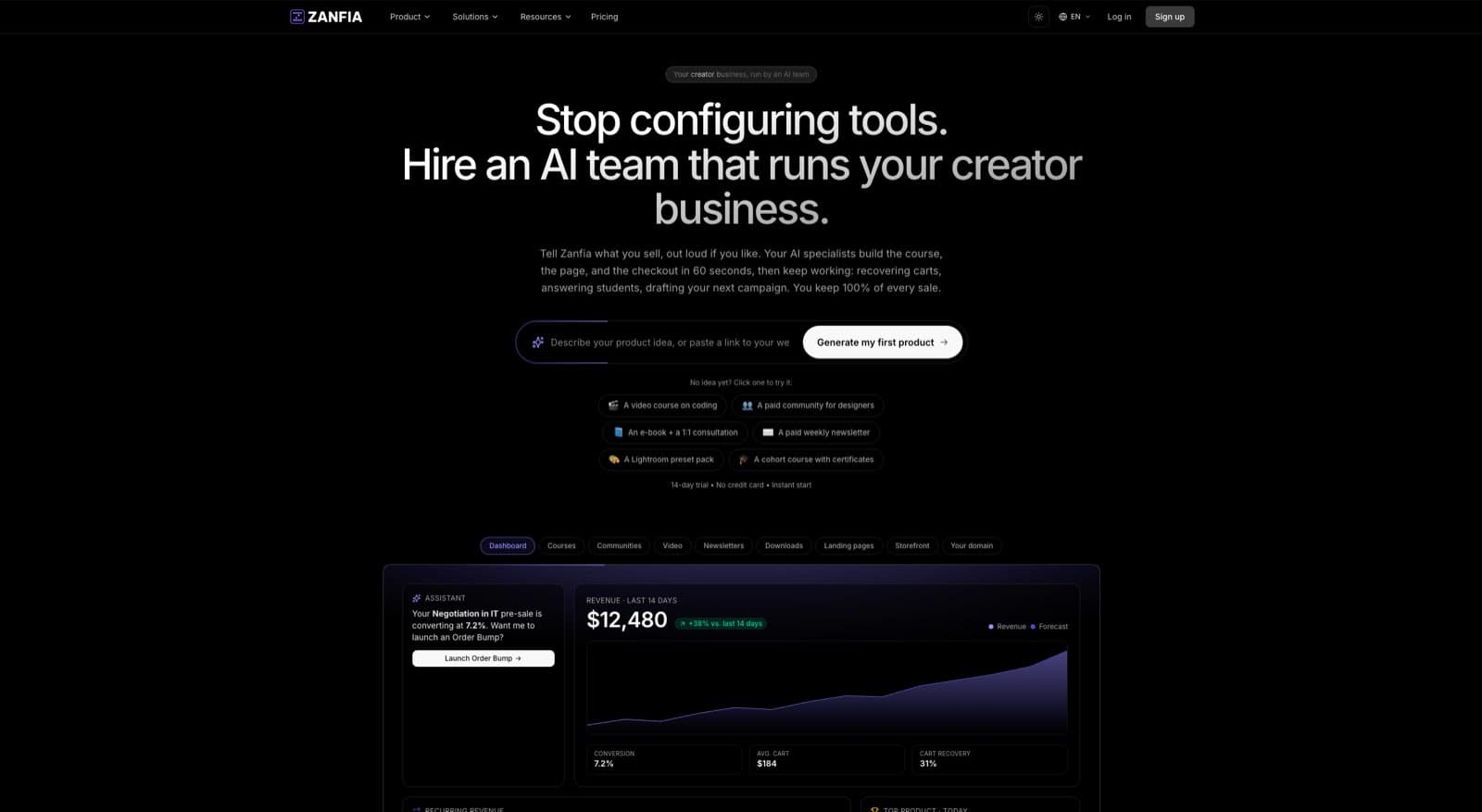
The process is incredibly smooth. When someone takes an action—like buying a product, finishing a lesson, or joining a community—Zanfia can automatically add a specific tag to their profile.
Here's a peek at how Zanfia’s unified dashboard pulls everything together, laying the groundwork for truly intelligent segmentation.
Having all your products, courses, and community in one place makes it simple to set up rules that tag people based on how they interact with your brand.
For instance, you can set a rule to add a tag like "Completed-Beginner-Course" the moment a student finishes the final lesson. Just like that, they’re dropped into a new segment, ready for a targeted follow-up sequence about your advanced program. This automated email list management frees up your time and ensures your communication is always perfectly timed. Our guide on how to increase customer retention dives deeper into how these personalized touchpoints build incredible loyalty.
Effective segmentation makes your audience feel seen and understood. When you send emails that align with their specific journey, you're not just a random creator in their inbox; you're a trusted guide who provides real value at the right moment.
The table below breaks down a few practical ways you can segment your audience as a creator using Zanfia’s features.
Practical Segmentation Strategies for Digital Creators
| Segmentation Type | How It Works in Zanfia | Best For Achieving |
|---|---|---|
| Purchase-Based | Automatically tags users when they buy a specific product, course, or community membership. | Upselling related products, cross-selling complementary offers, and identifying your most valuable customers. |
| Engagement-Based | Applies tags when a user completes a course, finishes a lesson, or posts in a community. | Rewarding your most active members, re-engaging inactive subscribers, and identifying potential brand advocates. |
| Interest-Based | Users self-select interests via a form, or you apply tags based on which lead magnet they downloaded. | Sending highly relevant content, increasing click-through rates, and reducing unsubscribes from irrelevant emails. |
| Activity-Based | Tracks email opens and clicks to create segments of "active" or "inactive" subscribers. | Running re-engagement campaigns to win back subscribers or cleaning your list to improve overall deliverability. |
These strategies move your email marketing from a simple broadcast tool to a dynamic system for building real relationships.
Ultimately, smart segmentation is about building a stronger, more profitable connection with your audience. It helps you nurture leads, drive sales, and create a loyal community that will stick with you for the long haul.
Automating Your Email Marketing to Save Hours of Work
What if you could nurture new leads, onboard customers, and even recover lost sales while you were busy doing something else? That's not just a nice idea—it's the reality of smart email automation. Truly effective email list management goes beyond just organizing contacts; it's about building systems that do the heavy lifting for you, 24/7.
Setting up automated workflows, often called sequences, is probably the single most impactful thing you can do to scale your business without burning yourself out. These sequences run in the background, triggered by specific actions your subscribers take. This ensures everyone gets the right message at the right time.
Creating Your Core Automation Sequences
For most creators, there are three essential sequences that form the foundation of a solid automation strategy. If you nail these, you'll see a real difference in your revenue and have more time back in your day.
- The Welcome Sequence: This is your big first impression. When someone joins your list, an automated welcome series can introduce your brand, deliver the freebie they signed up for, and point them toward what to do next. It’s all about building trust right from the start.
- The Abandoned Cart Reminder: It happens all the time—a potential customer adds your course to their cart but gets distracted. Instead of that sale disappearing forever, an automated email can give them a gentle nudge. You can use it to address common questions or highlight a key benefit to encourage them to finish checking out.
- The Post-Purchase Follow-Up: The customer relationship doesn’t end at the checkout. A good post-purchase sequence can deliver access to their new course, invite them into your private community, and even suggest a complementary product. This is how you turn a one-time buyer into a loyal fan.
This infographic breaks down a simple but effective flow for tagging subscribers and sending them automated, targeted emails.
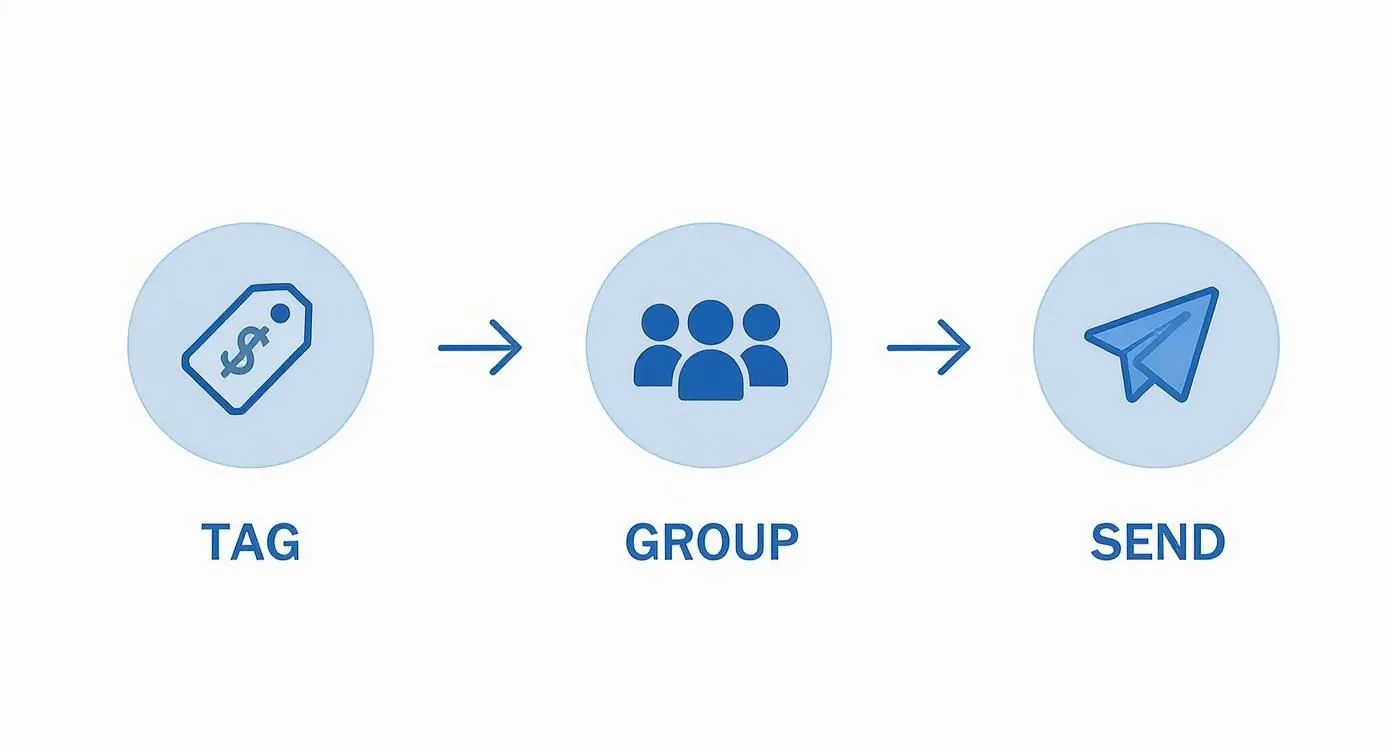
You can see how a single action triggers a tag, which then slots a user into the perfect group for a tailored email sequence—all without you lifting a finger.
How Zanfia Automates Your Business Operations
This might sound complicated, but an all-in-one platform like Zanfia is specifically designed to make this easy. Your courses, community, and sales are all connected in one place, and an AI team runs the automations across them so you don't have to wire the plumbing yourself. You can describe the workflow you want out loud or in chat, and the assistant sets it up inside the visual builder. If you need a great starting point for your own outreach, these 12 best email sequence templates can really help streamline the process and boost your conversions.
The goal of automation is to handle the repetitive, predictable tasks so you can pour your energy into the creative work that only you can do. It's about building a business that supports you, not the other way around.
Zanfia's workflow engine is built to get these time-sucking manual tasks off your plate. You can instantly grant course access after a payment, add buyers to the right community channels, kick off a welcome sequence, offer an order bump or installment plan at checkout so a $600 course can be split into four payments, and even revoke access if a subscription ends. Native email campaigns and broadcasts are rolling out to workspaces, so by the time you read this the sending itself may already live inside Zanfia too, check your dashboard or the current Zanfia pricing page for what is open on your account.
These automations routinely save creators 5–10+ hours a month. That’s time you can now spend creating amazing content.
By systemizing these key moments in the customer journey, you build a reliable machine that nurtures relationships and drives sales on its own. For a deeper dive into this idea, check out our article on scaling with systems. It’s full of practical insights for creators ready to grow. This is how you transition from being a busy creator to a strategic business owner.
Keeping Your Email List Healthy and Engaged
Building an email list is just the start. The real work—and where the real value lies—is in keeping it healthy and engaged over time. You can't just set it and forget it. This ongoing process is what we call list hygiene, and it's one of the most critical parts of managing a successful email strategy.
It might feel wrong to intentionally shrink your list, but trust me, cutting out inactive subscribers is a massive win. A bloated list packed with people who never open your emails actively hurts you. It tanks your sender reputation, drags down your open rates, and makes it more likely your emails end up in the spam folder. A lean, engaged list ensures your message actually gets to the people who want it.
Finding and Winning Back Cold Subscribers
First things first, you need to identify who has gone "cold." These are the subscribers who haven't opened or clicked an email from you in the last three to six months. They're just sitting there, silently damaging your deliverability stats.
But don't just hit the delete button yet. Your next move is to run a re-engagement campaign, sometimes called a "win-back" sequence. This is your last-ditch effort to get them interested again.
Here's a simple, three-part campaign I've seen work wonders:
- The Gentle Nudge: Start with a compelling subject line like, "Is this goodbye?" or "We miss you." In the email, gently remind them of the value you offer and what they're missing out on. Why did they sign up in the first place? Remind them.
- The Special Offer: If the first email gets ignored, sweeten the deal. Offer an exclusive discount, a really useful freebie, or a piece of high-value content to spark their interest again. Make it an offer they can't easily refuse.
- The Final Goodbye: This is it. Be direct and transparent. Let them know you value their inbox space and plan to remove them if they don't take action (like clicking a link to stay subscribed). This final step ensures only the truly interested people remain on your list.
A clean list is a profitable list. When you focus on subscribers who are actually listening, you don't just protect your sender reputation. You also get a much clearer picture of what content is resonating, allowing you to create more of what works.
Handling Unsubscribes and Bounces Gracefully
How you manage unsubscribes and bounces is just as important as cleaning out cold contacts. When someone wants to leave, let them. Make the unsubscribe process dead simple. Hiding that link or making them solve a puzzle to opt-out is a surefire way to get your emails marked as spam, which is far worse than losing one subscriber.
You also have to be ruthless with bounces. There are two kinds you'll see:
- Hard Bounces: These are permanent failures, meaning the email address is fake, misspelled, or simply doesn't exist. Get them off your list immediately. No exceptions.
- Soft Bounces: These are temporary problems, like a full inbox or a server issue. Your email platform will usually try again, but if an address keeps soft-bouncing over and over, it's time to remove it.
Keeping your list clean is a continuous job, but the payoff is huge. With nearly 4.5 billion email users sending around 376 billion emails every single day, you have to be precise to cut through the noise. As you can see from these email marketing stats on optinmonster.com, the scale is massive.
This disciplined approach protects your most valuable marketing asset and ensures your efforts aren't wasted. As you work to re-engage your audience, you can also develop a community that is both active and profitable.
Measuring What Matters to Optimize Your Strategy
You can't improve what you don't measure. Solid email list management is what turns your strategy from pure guesswork into a predictable system for growth. To get there, you have to stop chasing vanity metrics and start focusing on the numbers that actually move the needle for your business.
With built-in analytics, you can see exactly which subject lines get opened, what content drives clicks, and which segments are your most profitable. This data-backed approach lets you confidently A/B test your ideas, refine your messaging, and make sure every email you send delivers real, tangible results.
Key Metrics That Drive Decisions
While there are dozens of data points you could track, a few key metrics really tell most of the story. Zeroing in on these will give you the clearest picture of what's working and where you need to make adjustments.
- Open Rate: This is your first impression. It tells you how effective your subject lines and pre-header text are at grabbing attention in a crowded inbox. If your open rate is lagging, it might mean your subject lines are uninspired or your sender reputation needs some work.
- Click-Through Rate (CTR): This measures how many people actually clicked a link inside your email after opening it. CTR is a powerful indicator of how compelling your content and calls-to-action really are.
- Conversion Rate: This is the ultimate bottom-line metric. It tracks how many subscribers took the specific action you wanted, whether that’s buying a product, signing up for a webinar, or joining your community.
Turning Insights Into Action
Just tracking these numbers is the easy part. The real magic happens when you use that data to make smarter decisions.
For example, if you notice a specific segment has a high open rate but a surprisingly low CTR, that's a huge clue. It tells you the subject line did its job and got them in the door, but the email content itself didn't deliver on the promise.
Data isn't just about looking at reports. It's about asking the right questions. "Why did this email perform better than that one?" "What does this segment's behavior tell me about their needs?" Answering these questions is how you optimize.
A platform like Zanfia pulls all this data into one place, giving you deep visibility into every stage of your funnel. You can even ask the AI team to summarize what changed week over week, by chat or by voice, instead of digging through a dashboard yourself. That makes it much easier to spot bottlenecks and refine your content, which leads to better engagement and a much higher return on your efforts.
As of the current model, Zanfia charges 0% platform commission on your customer sales, so the revenue you generate from these optimized campaigns stays with you (only your payment processor takes its standard cut). You can learn more about Zanfia's creator-first approach on their site.
These metrics also feed into a bigger picture of your business health. You can start to see how your list management directly impacts a customer's total spending over time. To better understand this crucial connection, check out our article on customer lifetime value calculation.
Got Questions About List Management? We’ve Got Answers.
Even pros run into questions when it comes to keeping an email list healthy and effective. Let's tackle some of the most common ones I hear from creators.
How Often Should I Actually Email My List?
There’s no single right answer here, but the golden rule is consistency. Whether you decide on daily, weekly, or bi-weekly emails, pick a cadence you can stick with. The real goal is to become a familiar, welcome presence in their inbox, not an annoying one.
If you commit to a weekly newsletter, send it weekly. Simple as that. Now, if you're in the middle of a big product launch, it's totally fine to ramp up the frequency for a few days. The main thing is that every email delivers value, making subscribers genuinely glad they signed up.
What's the Best Way to Handle Unsubscribes?
Don't fight it. In fact, make it incredibly easy for people to opt-out. Burying your unsubscribe link is a surefire way to get your emails flagged as spam, which torpedoes your sender reputation. A clean, one-click unsubscribe process shows you're a confident, professional brand.
An unsubscribe isn't a personal rejection—it's just a natural part of list hygiene. Think of it as your audience self-cleaning. Someone who isn't your ideal customer is removing themselves, which boosts your engagement metrics with the people who actually want what you're offering.
Should I Really Delete Inactive Subscribers?
Yes, you absolutely should. A smaller list of die-hard fans who open every email is infinitely more valuable than a huge list of subscribers who ignore you. Culling your list of people who haven't opened an email in 3-6 months directly improves your deliverability. This helps ensure your messages actually land in the primary inbox of your most engaged followers.
Before you hit delete, it’s a good practice to run a re-engagement campaign. Give them one last chance to raise their hand and say they still want to hear from you. If they don't bite? It's time to say a graceful goodbye. A clean list is a profitable list.
Ready to run your email list, community, and digital products with an AI team instead of a stack of tools you have to wire yourself? Zanfia brings your products, checkout, and audience into one place, lets you drive it by chat or voice, and gives you a checkout built to sell with order bumps, installments, and upsells. As of the current model, Zanfia charges 0% platform commission on your customer sales (only your payment processor takes its standard cut). Start with a 14-day free trial, no credit card required. Discover how Zanfia can streamline your creator business today.