

The 12 Best LMS for Small Business: A 2026 Guide to Scaling Up
Choosing the best LMS for small business isn't just about picking software; it’s about selecting a growth partner. The right platform can help you onboard new team members, educate customers about your products, or build a new revenue stream by monetizing your expertise. A great Learning Management System automates tedious admin tasks, fosters a vibrant and engaged community, and scales your operations efficiently, all without taking a significant cut of your hard-earned revenue.
However, the sheer number of options is overwhelming. You’ll find everything from complex corporate systems designed for massive enterprises to simple WordPress plugins and all-in-one platforms for creators. This landscape makes it difficult to distinguish marketing hype from real-world functionality, leaving you unsure of which solution truly fits your specific needs and budget.
This guide cuts directly through that noise. We provide a detailed breakdown of the top 12 LMS platforms, analyzing their unique strengths, critical weaknesses, and ideal use cases. Each review includes screenshots and direct links to help you evaluate the user experience firsthand. Beyond specific learning management needs, understanding how an LMS integrates with other essential business productivity apps can help streamline overall operations and create a more cohesive tech stack. Whether you’re a digital creator launching your first course, a consultant building a client training academy, or a growing company standardizing employee onboarding, this comprehensive list will give you the clarity needed to make the right choice and find the perfect launchpad for your goals.
1. Zanfia
Zanfia is an AI-first all-in-one platform for digital creators and small businesses who want the work of running the business (drafting lessons, answering community questions, publishing, tracking sales) handled by an AI team, not by a stack of separate tools. Courses, communities, paid newsletters, knowledge bases and digital downloads all live inside the same workspace, and anything a creator can do by clicking they can also do by chat, voice, or through an MCP endpoint that connects outside AI assistants to their workspace (availability depends on the plan, see the current Zanfia pricing).
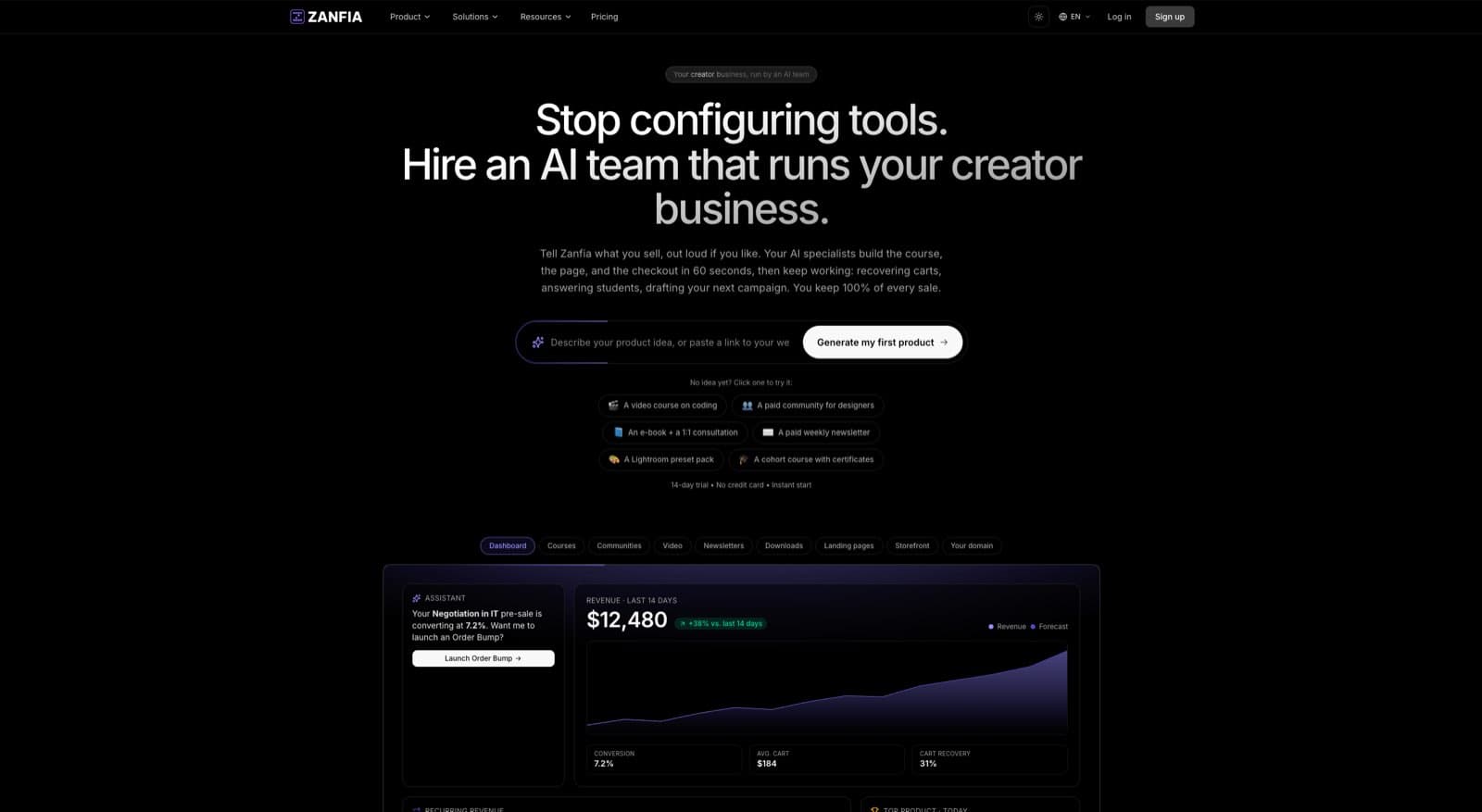
Underneath the AI layer, Zanfia is designed to keep members inside your brand rather than shuttling them off to Discord or Facebook. Community, course content and checkout all live on your own subdomain (or a mapped custom domain), and the community includes an AI agent that writes from your own content, with every AI-generated post clearly labeled as AI. On pricing, Zanfia charges 0% platform commission on customer sales as of August 2026; you keep 100% of the revenue and only pay the standard payment processor fee (Stripe or PayPal, roughly 2.9% + $0.30 in the US).
Core Strengths and Features
- AI team, not just an LMS: A built-in Assistant handles work across the platform by chat or voice, metered as AI credits per month. Depending on your plan, an MCP endpoint lets your own AI assistants act on the workspace, and white-label AI is available on higher tiers (see the current Zanfia pricing ).
- True all-in-one ecosystem: Manage courses with native video hosting (with optional YouTube, Vimeo, Wistia and Bunny.net player integrations), run communities with topic channels, direct messages and an AI agent, sell digital downloads, and run subscriptions or installment plans from one dashboard.
- 0% platform commission on sales: You keep 100% of what customers pay, with only the payment processor taking its standard cut. The SaaS subscription is the entire platform cost.
- Complete white-label branding: Every plan includes your own
slug.zanfia.cosubdomain; custom domains and removing Zanfia branding are available on higher plans (see the current Zanfia pricing ). Clients experience your brand, not Zanfia’s. - Powerful automations: A visual Workflows builder grants course access after payment, adds buyers to community channels, triggers tag and list sync into your email tool, and handles renewals and failed payments automatically.
- Global payment stack: Stripe and PayPal power the checkout, with Apple Pay and Google Pay supported, plus order bumps, upsells (available on higher plans, see the current Zanfia pricing ), coupons, multi-quantity offers and a test mode for verifying tracking end to end before your first real sale.
Who is Zanfia Best For?
Zanfia is a good fit for course creators, coaches, membership operators and paid newsletter publishers who want their platform to double as an AI team, and for small businesses standardizing customer education under their own brand. As tech investor Artur Kurasiński put it, it’s “the most convenient and simplest solution for paid newsletters, courses and community.”
Pros:
- Keeps 100% of your revenue with a 0% platform commission model as of August 2026.
- AI team, MCP endpoint and community AI agent are built in, not bolted on.
- Unifies community, courses, newsletters and e-commerce, replacing several tools.
- Strong brand control with custom domains and white-label options on higher tiers.
- Native iOS and Android mobile app for courses, paid newsletters and knowledge bases.
Cons:
- Headline AI capabilities are tiered across plans, so which AI features you unlock depends on the tier you pick (see the current Zanfia pricing ).
- Some 2.0 capabilities such as Email Campaigns and communities inside the mobile app are still rolling out to workspaces; check your account before relying on them.
Learn more at: https://zanfia.com
2. TalentLMS
TalentLMS is a cloud-based learning management system that has carved out a strong reputation for being exceptionally user-friendly and quick to deploy. It’s an ideal choice for small businesses that need to get a training program running quickly without a steep learning curve or significant administrative overhead. The platform’s clean interface makes it simple for both administrators and learners to navigate, ensuring a smooth user experience from day one.
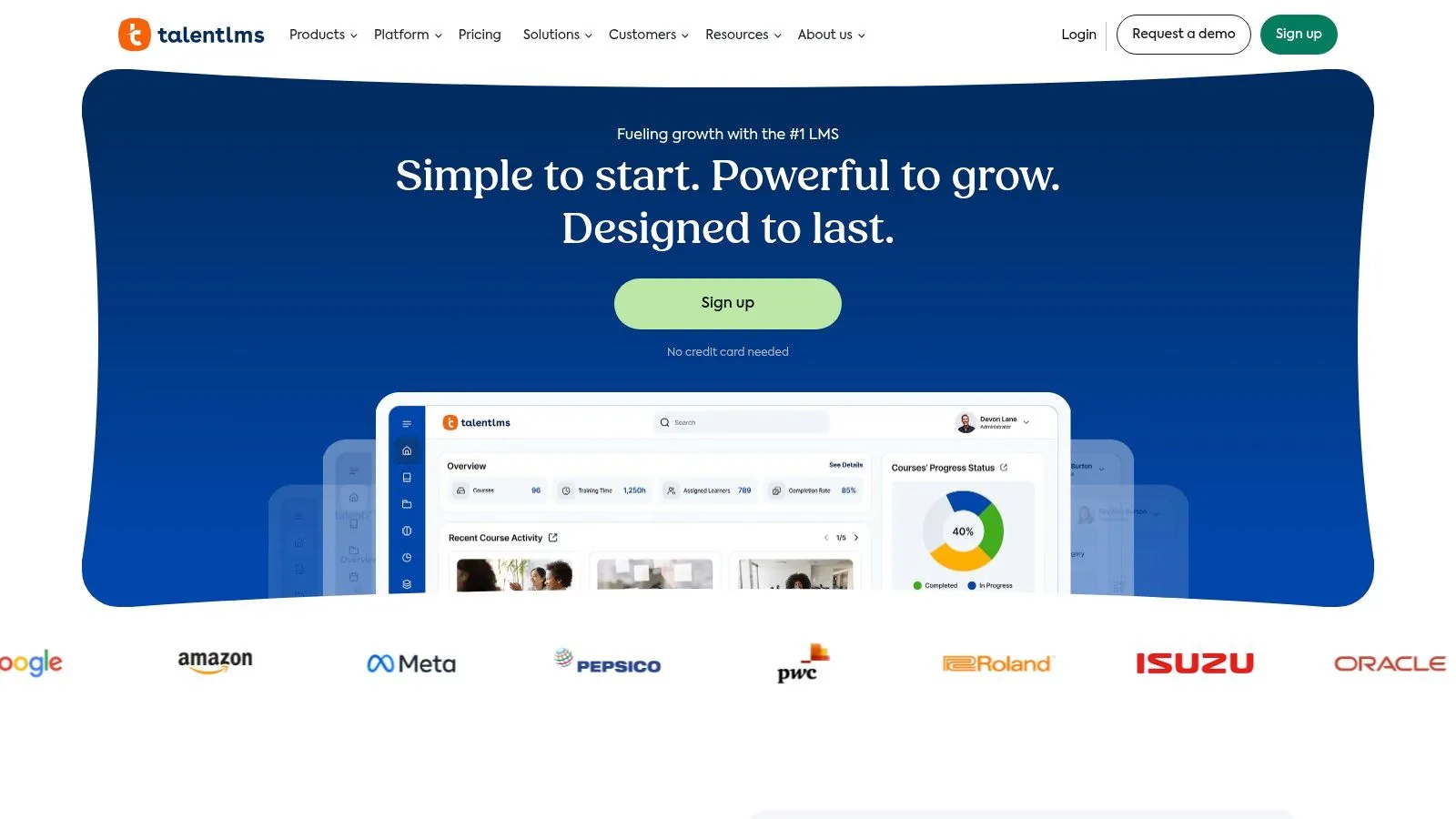
One of its key differentiators is the optional TalentLibrary, a pre-built catalog of over 1,000 ready-made courses on essential business skills. This add-on is a massive time-saver for teams that lack the resources for extensive in-house course development. While its built-in authoring tools are more suited for assembling existing content like presentations or videos, they are perfectly functional for standard training needs. For more dynamic content, you might consider external tools for training video creation before uploading.
Core Features & Use Case
TalentLMS is one of the best lms for small business options when speed and simplicity are the top priorities.
- Best For: SMBs needing fast, straightforward employee onboarding, compliance training, or customer education.
- Key Features: Unlimited courses, customizable branding, robust reporting, and gamification elements.
- Pricing: Starts with a generous Free plan (up to 5 users, 10 courses). Paid plans scale by active users, starting from $69/month, making it cost-effective as you grow.
Pros:
- Extremely fast and easy setup.
- Transparent, SMB-friendly pricing with a free tier.
- Optional library of ready-made courses.
Cons:
- Built-in course authoring tools are basic.
- Advanced customization is limited on lower-tier plans.
Find out more at www.talentlms.com.
3. LearnWorlds
LearnWorlds is an all-in-one platform designed for creators and businesses that want to build, market, and sell online courses with a strong emphasis on interactivity and e-commerce. It’s particularly powerful for those focused on customer education or creating paid training academies, as it blends robust learning features with sophisticated site-building and sales tools. This combination allows small businesses to create a fully-branded online school without needing separate tools for their website, course delivery, and payment processing.
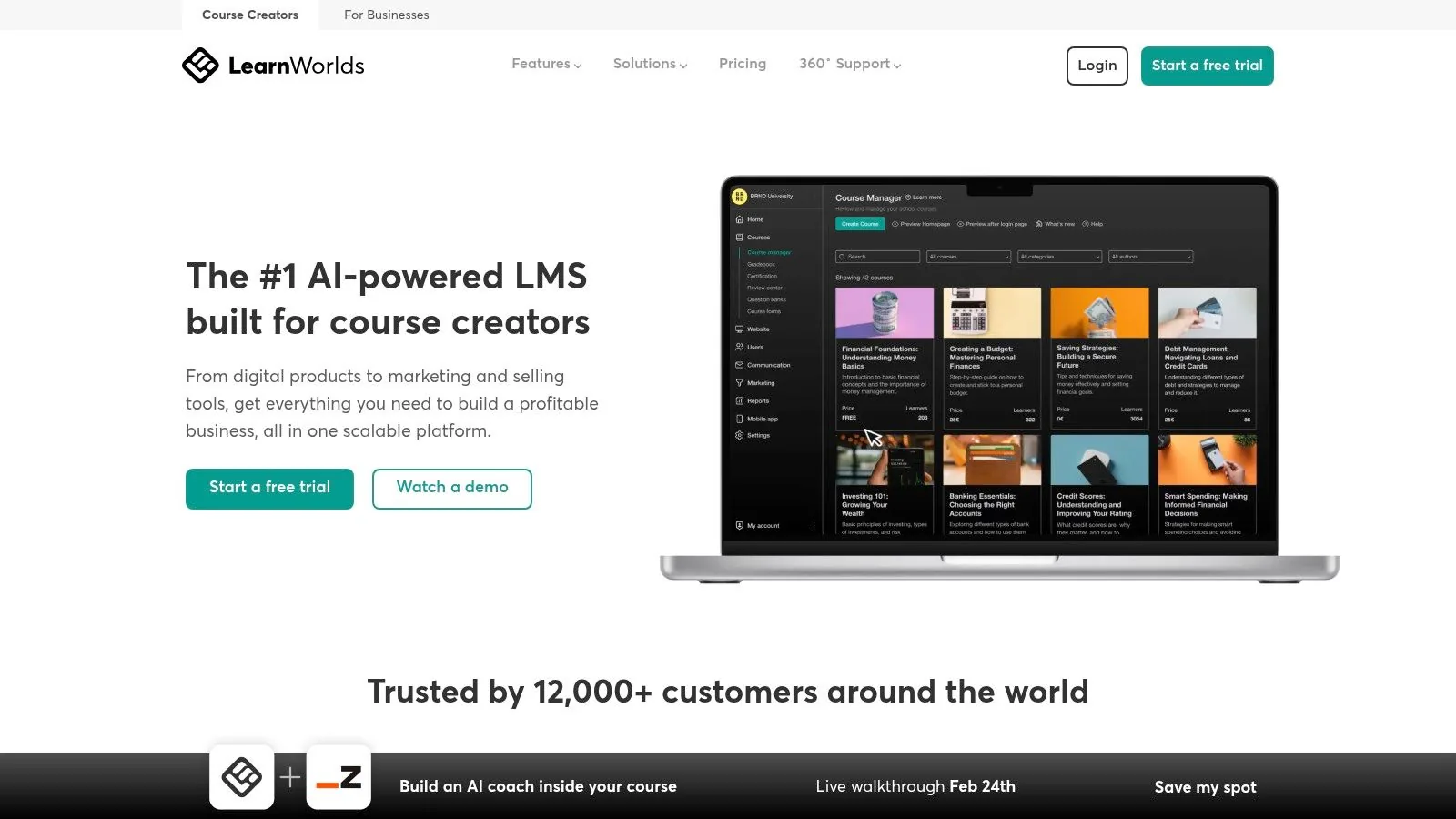
Its key differentiator lies in its deep customization and interactive features. LearnWorlds offers an advanced site and page builder, enabling you to create beautiful, high-converting sales funnels directly within the platform. The course player itself supports interactive video, assessments, and note-taking, creating a much more engaging experience for learners compared to standard video-playback systems. This focus on engagement and sales makes it a prime choice for businesses looking to generate revenue from their knowledge.
Core Features & Use Case
LearnWorlds is one of the best lms for small business options when monetizing knowledge through a custom-branded academy is the primary goal.
- Best For: Entrepreneurs and SMBs selling courses, memberships, or creating customer training programs.
- Key Features: Interactive video, robust assessments, certificates, subscriptions and bundles, advanced site/page builder, and sales funnel creation.
- Pricing: Starts at $29/month, but this plan includes a $5 per-course transaction fee. The Pro Trainer plan at $99/month removes transaction fees and adds more advanced features.
Pros:
- Excellent combination of e-commerce and learning features.
- Deep site customization and page-building capabilities.
- Strong focus on creating interactive and engaging learning experiences.
Cons:
- The starter plan charges a per-course transaction fee.
- Full SCORM support is limited to higher-tier, more expensive plans.
Find out more at www.learnworlds.com.
4. iSpring Learn
iSpring Learn is a business-focused LMS that stands out for its powerful integration with iSpring Suite, a top-tier authoring tool. This combination is ideal for businesses that prioritize creating high-quality, interactive, and polished training content in-house. The platform is designed for serious corporate training, from employee onboarding to complex compliance modules, and provides robust reporting and automation to manage it all effectively.
Its key differentiator is the seamless workflow between the authoring tool and the LMS. You can create truly engaging courses, quizzes, and simulations in iSpring Suite and publish them directly to iSpring Learn with one click. This streamlined process is a significant advantage for instructional designers and teams who need more than basic content assembly. For those new to course creation, understanding how to write curriculum is the first step, and iSpring provides the tools to bring that curriculum to life. The platform's 24/7 live technical support is also a major plus for businesses that can't afford downtime.
Core Features & Use Case
iSpring Learn is one of the best lms for small business options for companies that need professional-grade course authoring combined with a reliable delivery platform.
- Best For: Internal corporate training, compliance, and certification programs where high-quality, custom course creation is essential.
- Key Features: Advanced authoring via iSpring Suite, mobile apps with offline access, detailed analytics and reporting, and powerful automation rules.
- Pricing: Based on the number of active users per month, starting at $2.29 per user/month for up to 300 users, billed annually. This model can be very cost-effective for businesses with a large but infrequent learner base.
Pros:
- Superior course authoring capabilities with the companion iSpring Suite.
- Transparent active-user pricing model helps control training budgets.
- Excellent 24/7 live technical support and implementation guidance.
Cons:
- Maximum value is unlocked when you purchase the iSpring Suite, which is a separate cost.
- The built-in content library is smaller than some competitors.
Find out more at www.ispring.com.
5. 360Learning
360Learning brings a unique, collaborative approach to corporate training, positioning itself as a platform that empowers teams to create and improve learning content together. It blends traditional LMS features with Learning Experience Platform (LXP) elements, emphasizing peer-driven learning and turning internal subject-matter experts into course creators. This is ideal for agile small businesses that want to rapidly develop and iterate on training materials without a dedicated L&D department.
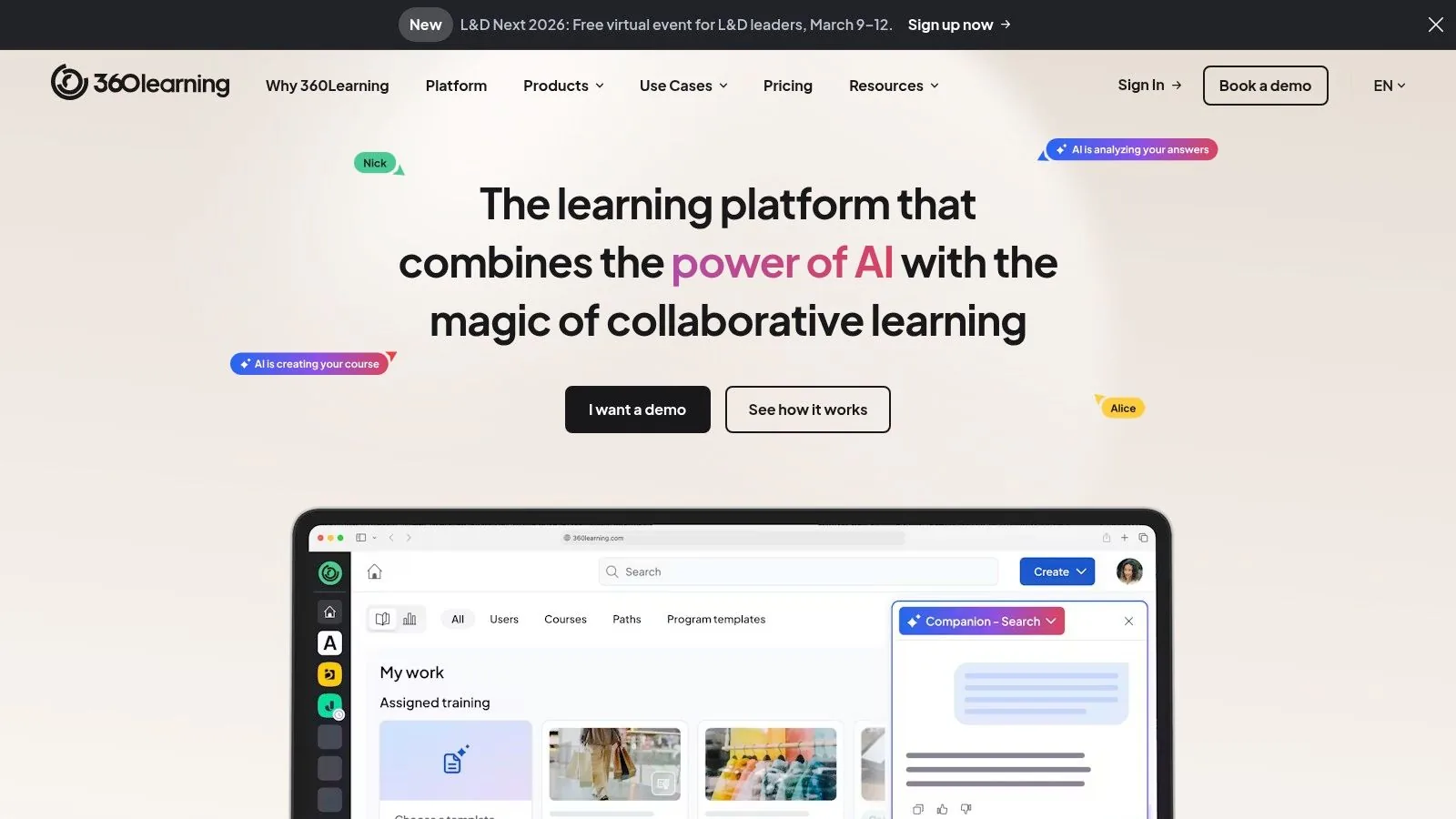
Its key differentiator is the built-in collaborative authoring tool, which allows employees to co-create courses, provide feedback, and react to content in real-time. This bottom-up approach ensures training is relevant, up-to-date, and engaging because it’s built by the people who know the subject best. For teams looking to refine their content creation process, focusing on strong course design for online learning principles can further enhance the effectiveness of SME-generated material. The platform’s user experience is clean for both learners and administrators, simplifying the content creation workflow.
Core Features & Use Case
360Learning is one of the best lms for small business options for companies that want to build a culture of continuous, peer-to-peer learning.
- Best For: Fast-moving SMBs that need to capture and share internal knowledge quickly, especially in sales, product, or technical training.
- Key Features: Collaborative course authoring, peer feedback loops, skills and academies management, and robust integrations.
- Pricing: The Team plan is designed for SMBs, starting at $8 per registered user/month, with a cap of 100 users. Larger needs require a custom Business plan.
Pros:
- Enables rapid content creation and iteration by subject-matter experts.
- Affordable and transparent entry-point pricing for small teams.
- Excellent user experience promotes learner and admin adoption.
Cons:
- The Team plan is limited to 100 registered users.
- Advanced enterprise features require upgrading to the more expensive Business plan.
Find out more at www.360learning.com.
6. SAP Litmos
SAP Litmos is a mature, enterprise-grade learning management system that also caters to growing small businesses. It offers a comprehensive, mobile-ready platform designed for organizations that need a broad feature set to manage both internal and external training programs, such as for employees, customers, and partners. The platform is built for scale, providing a robust solution for compliance, sales training, and e-commerce from a single, unified interface.
A key differentiator for Litmos is its extensive functionality that covers everything from SCORM-compliant course authoring and instructor-led training (ILT) to powerful reporting dashboards and integrations. It’s a solid choice for businesses that anticipate significant growth and need an LMS that can evolve with them. While it supports standard training, it’s also equipped for more structured formats, including those used in a cohort-based course model, thanks to its learning path and scheduling features.
Core Features & Use Case
SAP Litmos stands out as one of the best lms for small business options for companies prioritizing a feature-rich, scalable environment for diverse training needs.
- Best For: Ambitious SMBs and mid-market companies that require a single platform for internal compliance, sales enablement, and external partner or customer training.
- Key Features: Learning paths, SCORM/xAPI support, ILT/vILT management, white-labeling, e-commerce, SSO, and optional content library add-ons.
- Pricing: Pricing is not publicly listed and requires contacting their sales team for a custom quote, which is typical for enterprise-focused solutions.
Pros:
- Broad, all-in-one functionality for various training types.
- Excellent for both internal and external (customer/partner) education.
- Scales effectively from small teams to larger enterprises.
Cons:
- No transparent pricing; requires a sales consultation.
- Can be more complex to implement than simpler, SMB-focused tools.
Find out more at www.litmos.com.
7. MoodleCloud
MoodleCloud offers the power and flexibility of the world-renowned open-source Moodle platform without the technical burden of self-hosting and server administration. Maintained directly by Moodle HQ, it provides a ready-to-go, cloud-based solution tailored for smaller organizations and educators who want a robust, feature-rich learning environment that is also budget-friendly. It’s a great entry point into the Moodle ecosystem for those who value control but prefer to avoid IT overhead.
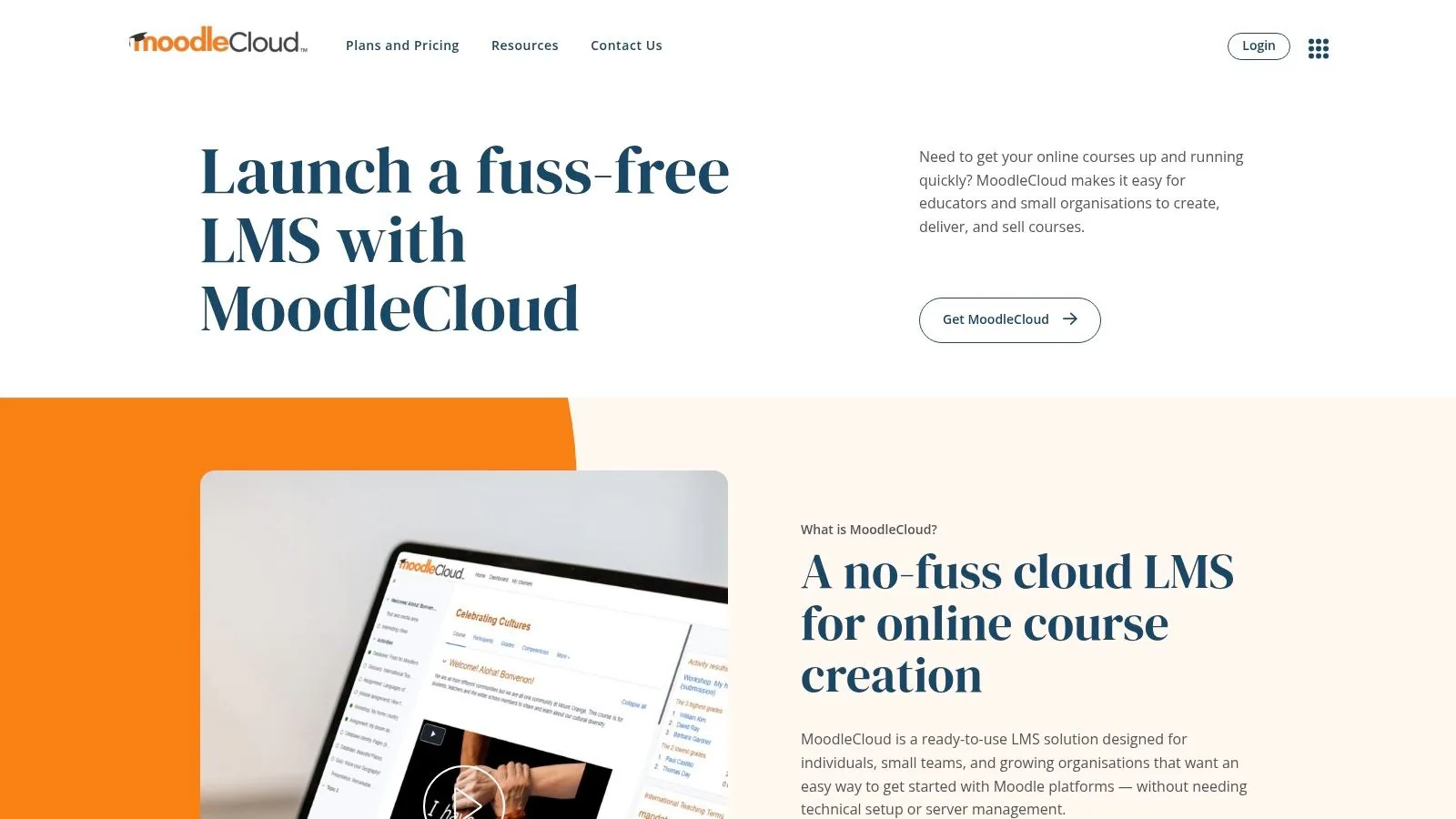
The platform stands out by bundling key functionalities directly into its plans, such as integrated BigBlueButton web conferencing for live virtual classrooms and full mobile app support. While it doesn't allow the installation of custom plugins available in the vast Moodleverse on its standard plans, it comes pre-loaded with the most popular and essential ones. This makes it a balanced choice for businesses needing a structured, powerful, and scalable learning system with predictable costs.
Core Features & Use Case
MoodleCloud is one of the best lms for small business options for those who want the proven, pedagogical power of Moodle in a simplified, hosted package.
- Best For: Educational institutions, training departments, and SMBs that need a powerful, structured LMS but lack the IT resources for self-hosting.
- Key Features: Unlimited courses and activities, integrated BigBlueButton web conferencing, mobile app support, and basic reporting and enrollment controls.
- Pricing: Transparent annual pricing based on user numbers and storage. Plans start from around $120 USD/year for 50 users, scaling up to 750 users.
Pros:
- Very budget-friendly with clear, transparent annual pricing.
- The official Moodle experience without server administration headaches.
- Includes powerful tools like web conferencing out of the box.
Cons:
- Standard plans do not permit installing custom plugins from the Moodle directory.
- Lacks some advanced enterprise features found in self-hosted or premium Moodle solutions.
Find out more at www.moodlecloud.com.
8. LearnDash
For small businesses built on WordPress, LearnDash is a premier LMS plugin that transforms an existing website into a powerful and fully-owned learning platform. It allows you to create and sell courses with complete control over branding, user experience, and data. This approach is ideal for entrepreneurs and SMBs who are already comfortable managing a WordPress environment and want to avoid the recurring fees and branding limitations of hosted platforms.
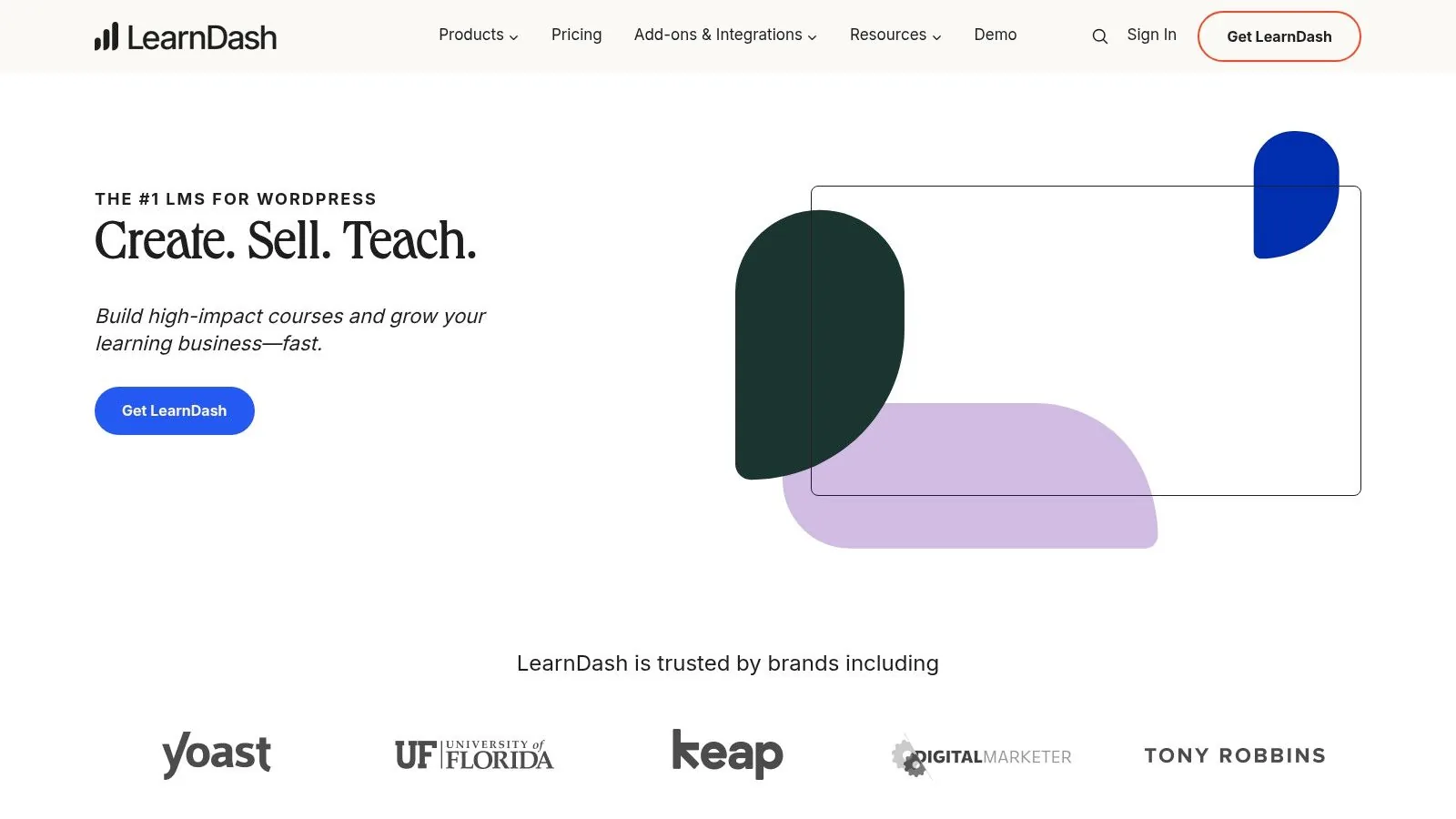
Unlike hosted all-in-one platforms like Zanfia, which handle hosting, updates and the AI layer for you, LearnDash requires you to manage your own WordPress hosting, security, and updates. While this demands more technical responsibility, it offers unparalleled flexibility. Its extensive ecosystem of third-party add-ons and themes means you can integrate almost any functionality you can imagine, from advanced e-commerce to specific gamification or community features, creating a truly bespoke learning environment.
Core Features & Use Case
LearnDash is one of the best lms for small business options for those who demand full ownership and customization within the WordPress ecosystem.
- Best For: WordPress-savvy businesses, content creators, and educational institutions wanting to sell courses directly from their own site.
- Key Features: Advanced course builder with drip-fed content, sophisticated quizzing, user groups, and detailed reporting.
- Pricing: Based on an annual license. Plans start at $199/year for one site, with no per-user fees, making it highly scalable.
Pros:
- Complete ownership of your platform and data.
- One-time annual license fee, with no commissions on course sales.
- Extremely extensible with a massive library of themes and add-ons.
Cons:
- Requires you to manage your own WordPress hosting, updates, and security.
- Can have a steeper learning curve than hosted solutions.
- Advanced features often require purchasing additional paid add-ons.
Find out more at www.learndash.com.
9. Thinkific
Thinkific is a powerful platform that excels in empowering creators and small businesses to build, market, and sell their own online courses and membership sites. It’s particularly well-suited for businesses focused on external training, like customer education or selling educational products as a primary revenue stream. The platform offers a comprehensive suite of tools designed to create a professional, branded online school without requiring deep technical expertise.
Its main differentiator lies in its strong focus on the creator economy, providing robust e-commerce and marketing features out of the box. Thinkific gives you the tools to package your knowledge into distinct products, whether that’s a flagship course, a recurring membership community, or a bundle of digital downloads. This makes it an excellent choice for businesses aiming to build a profitable education-based business model from the ground up.
Core Features & Use Case
Thinkific is one of the best lms for small business options when the primary goal is monetizing expertise and creating a polished, saleable educational product.
- Best For: Entrepreneurs, coaches, and SMBs building a customer-facing training academy or selling courses directly to consumers.
- Key Features: Unlimited courses on all paid plans, integrated communities and memberships, built-in payment and checkout tools, and API access on higher tiers.
- Pricing: Offers a Free plan to test core features. Paid plans start at $36/month, scaling up to support growth with more advanced features and business tools.
Pros:
- Excellent tools for packaging and selling educational products.
- Strong analytics and group ordering support on the Grow plan.
- A branded mobile app is available as an add-on service.
Cons:
- A third-party payment gateway fee may apply if not using Thinkific Payments.
- Some advanced enterprise-level features are gated to the most expensive Plus plan.
Find out more at www.thinkific.com.
10. Teachable
Teachable is an end-to-end platform designed for creators and small businesses who want to monetize their expertise by creating and selling online courses, coaching, and digital downloads. It stands out for its strong focus on sales and marketing features, enabling users to go to market quickly. The platform provides a simple-yet-effective site builder and handles complex tasks like payment processing and tax remittance, letting creators concentrate on content rather than administration.
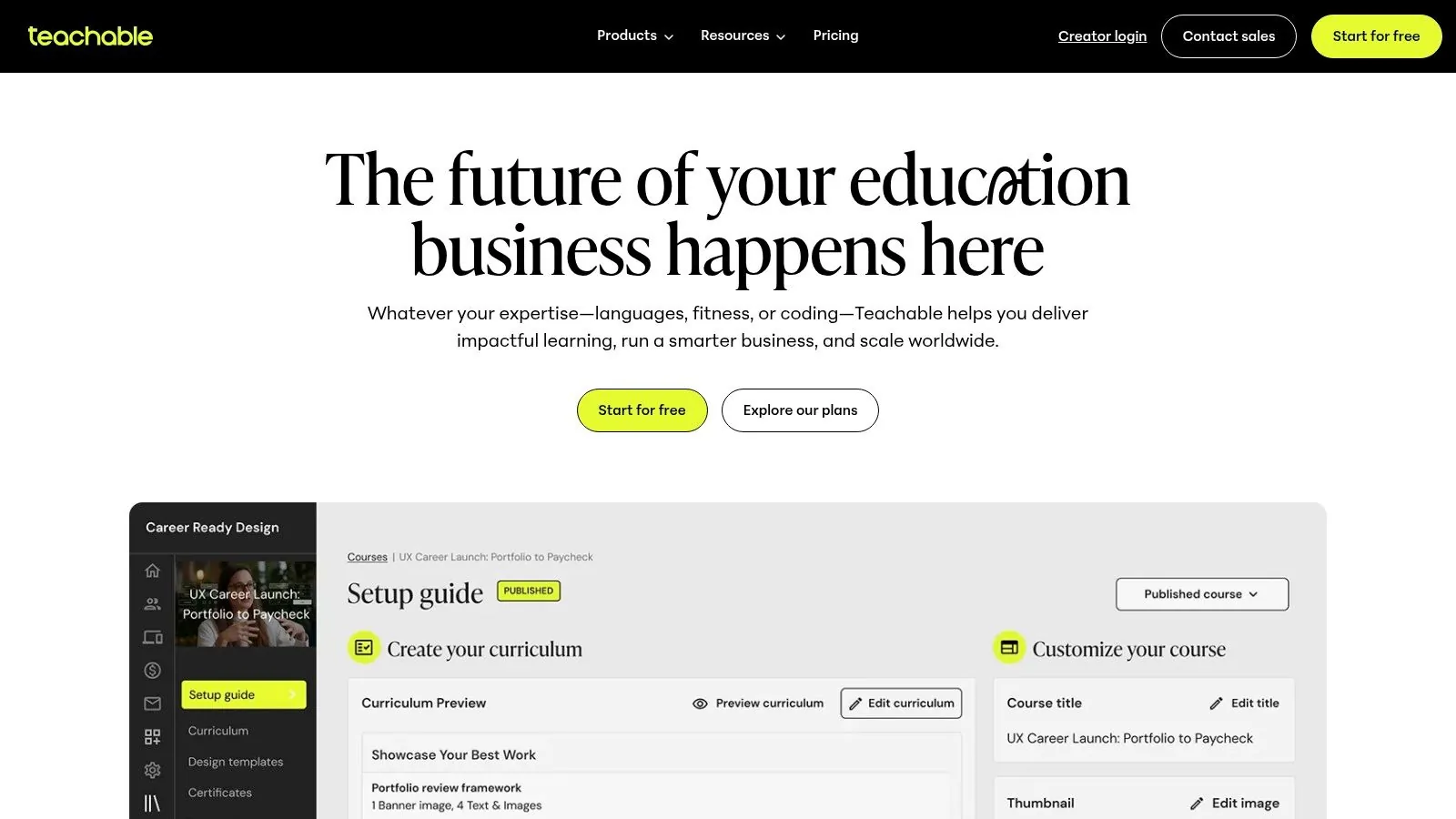
Its key differentiators are the robust monetization tools built directly into the platform. Users can easily create product bundles, offer coupons, set up affiliate programs, and implement one-click upsells to maximize revenue. While it's a powerful tool for solo entrepreneurs, it approaches the platform as a sales engine rather than an AI-driven workspace. Zanfia, by contrast, charges 0% platform commission as of August 2026 and layers an AI Assistant, community AI agent and MCP endpoint (availability depends on the plan, see the current Zanfia pricing) on top of tightly integrated community and course delivery under one brand.
Core Features & Use Case
Teachable is one of the best lms for small business options for those prioritizing direct course sales and marketing over deep corporate training functionality.
- Best For: Solo entrepreneurs, coaches, and creators focused on selling courses and digital products directly to consumers.
- Key Features: Unlimited courses and students on all paid plans, integrated payment processing, affiliate marketing tools, and product bundling.
- Pricing: A Free plan is available with a 10% transaction fee. Paid plans start at $39/month (billed annually) with a 5% transaction fee, scaling to plans with 0% fees.
Pros:
- Very fast and simple to launch a new online course.
- Handles complex payment processing and tax forms.
- Excellent built-in marketing and sales tools (upsells, affiliates).
Cons:
- Transaction fees on lower-tier plans can be costly.
- Fewer native enterprise-level admin controls for corporate training.
- Lacks the integrated community features of specialized platforms.
Find out more at www.teachable.com.
11. Kajabi
Kajabi is an all-in-one platform built for entrepreneurs and small businesses aiming to create, market, and sell digital products. It moves beyond a traditional LMS by integrating course creation with powerful marketing automation, email funnels, website building, and checkout processes. This unified approach is ideal for businesses that want to replace a complex, multi-tool tech stack with a single, cohesive system for their entire online presence.
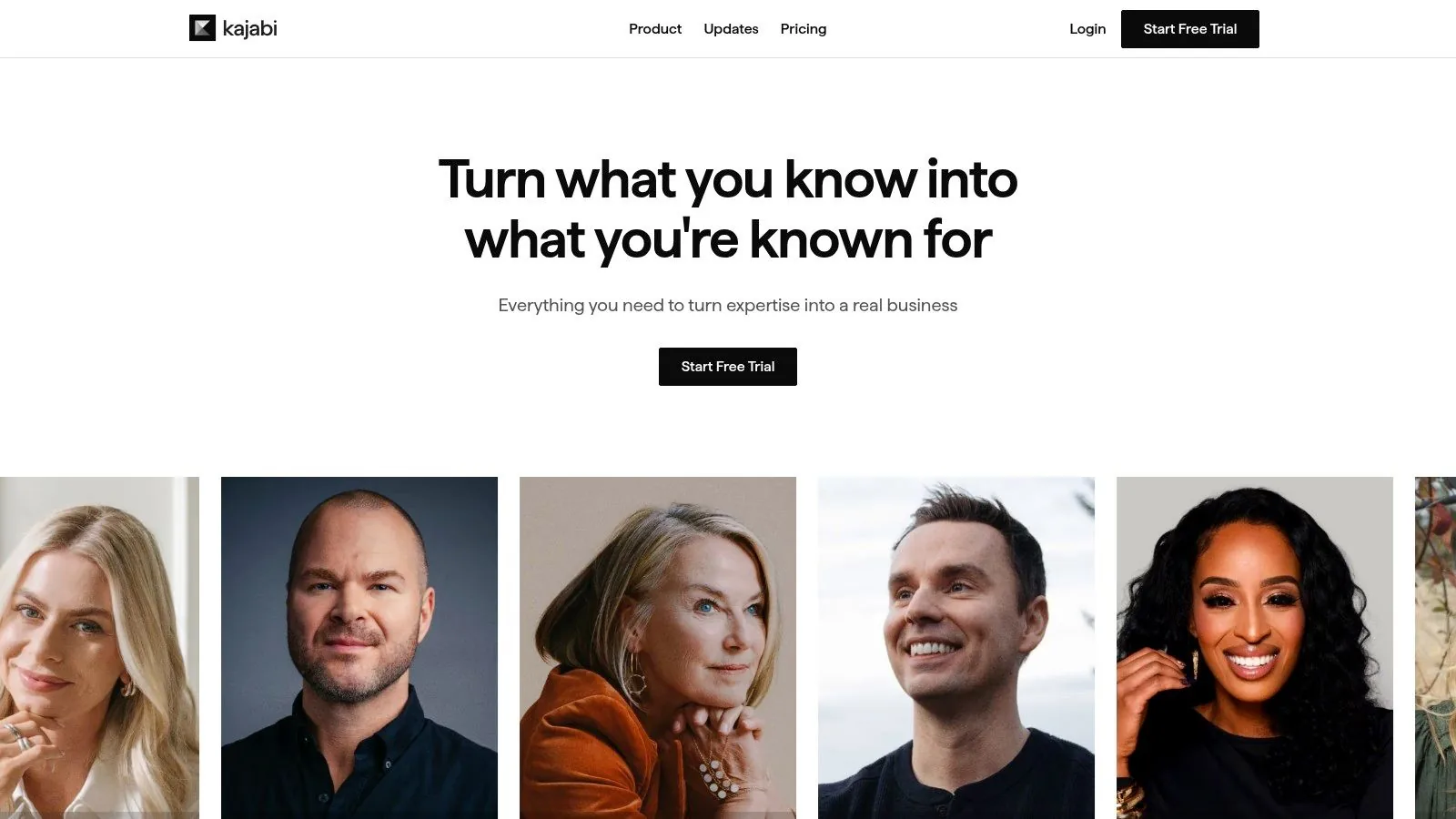
The platform's strength lies in its commercial focus. It's designed not just for hosting content but for actively selling it through sophisticated funnels and email campaigns. Features like its branded mobile app (on higher plans) and integrated community spaces help foster student engagement and retention. While it's more expensive than a pure LMS, its value proposition is in consolidating costs and simplifying workflows by bringing everything from your landing page to your paid community under one roof.
Core Features & Use Case
Kajabi is a solid best lms for small business option when your primary goal is monetizing knowledge through a single, marketing-heavy platform.
- Best For: "Edupreneurs," coaches, and SMBs that need an integrated solution for courses, marketing, and sales funnels.
- Key Features: All-in-one products (courses, communities, coaching), powerful marketing automation and funnels, integrated payments, and a mobile app.
- Pricing: Starts at $149/month for the Basic plan, which includes 3 products and 3 funnels. Higher-tier plans offer more products, contacts, and features like a branded app.
Pros:
- Replaces multiple tools (website, email, checkout, LMS).
- Excellent marketing and sales automation features.
- Strong support resources and a vibrant user community.
Cons:
- Significantly more expensive than dedicated LMS platforms.
- Can be overkill for businesses that only need internal employee training.
Find out more at www.kajabi.com.
12. ProProfs Training Maker
ProProfs Training Maker is a cloud-based learning management system designed with simplicity and affordability in mind, making it a strong contender for small businesses on a tight budget. It provides an accessible entry point for companies looking to establish basic training programs for compliance, employee onboarding, or simple skill development. The platform focuses on ease of use, allowing administrators to create and assign courses quickly, often with the help of AI-assisted authoring tools.
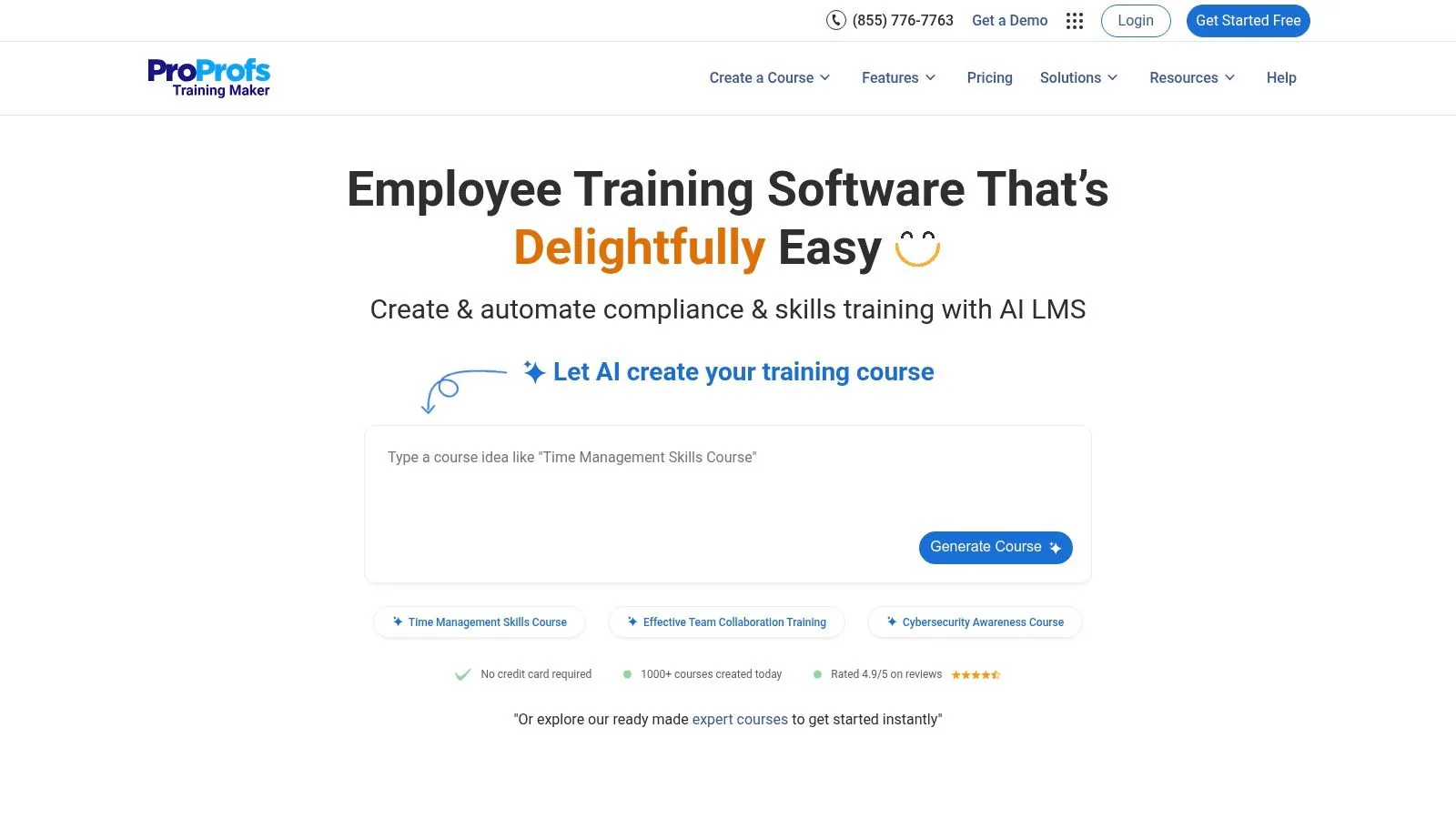
A standout feature is its integrated quiz and assessment maker, which is robust for a platform at this price point. ProProfs also offers a library of ready-made courses focused on compliance and soft skills as a paid add-on, saving time for teams without dedicated content creators. While its interface and analytics are more straightforward compared to higher-end systems, it delivers the core functionality needed for essential training without overwhelming users with complex features.
Core Features & Use Case
ProProfs Training Maker is one of the best lms for small business options when cost and rapid, simple course creation are the main drivers.
- Best For: Small businesses and startups needing a cost-effective solution for compliance, basic onboarding, and skills training.
- Key Features: Unlimited courses, built-in quiz/assessment tools, AI-assisted course creation, user groups and roles, and optional ready-made course library.
- Pricing: A free plan is available for up to 10 learners. Paid plans are very affordable, priced on a per-learner basis, making costs predictable as you scale.
Pros:
- Very low per-learner costs and a free entry point.
- AI assistance helps speed up the creation of simple training content.
- Well-suited for fundamental compliance and onboarding needs.
Cons:
- The user interface and analytics are simpler than mid-market LMS platforms.
- Advanced integrations and automation features are gated to higher-tier plans.
Find out more at https://www.proprofstraining.com.
Top 12 LMS for Small Business — Features & Pricing Comparison
| Product | Core features ✨ | UX & quality ★ | Price/value 💰 | Best for / USP 👥 |
|---|---|---|---|---|
| 🏆 Zanfia | AI Assistant, MCP endpoint, courses, communities with AI agent, paid newsletters, checkout with order bumps and installments, automations, analytics ✨ | ★★★★☆ AI-first workspace; test mode for checkout and tracking | 💰 14-day trial → from $39/mo ($31/mo billed annually) on Starter; 0% platform commission | 👥 Creators & SMBs who want an AI team running the business, not just an LMS 🏆 |
| TalentLMS | Unlimited courses, SSO/API, reporting, TalentLibrary | ★★★★ Quick to implement; low admin overhead | 💰 Free tier; SMB‑friendly pricing | 👥 SMBs wanting fast rollout; ready course catalog |
| LearnWorlds | Interactive video, assessments, funnels, subscriptions | ★★★★☆ Strong commerce + learning; deep customization | 💰 Paid plans; starter has transaction fees | 👥 Paid academies & customer education; interactive courses ✨ |
| iSpring Learn | Native authoring (iSpring Suite), mobile/offline, analytics | ★★★★ Reliable support; strong reporting | 💰 Active‑user pricing; best with iSpring Suite | 👥 Internal training & compliance; authoring + LMS combo ✨ |
| 360Learning | Collaborative course creation, skills/academies, automation | ★★★★ Fast content iteration; good learner UX | 💰 Affordable team plans; user caps on lower tiers | 👥 Teams & SMEs focused on peer‑created content ✨ |
| SAP Litmos | SCORM/xAPI, ILT/vILT, e‑commerce, localization, SSO | ★★★★☆ Mature, scalable; enterprise‑grade | 💰 Contact sales; enterprise pricing | 👥 SMBs scaling to mid‑market with compliance needs |
| MoodleCloud | Hosted Moodle, unlimited courses, BigBlueButton, mobile | ★★★ Budget‑friendly Moodle experience | 💰 Transparent annual plans; low cost | 👥 Orgs wanting Moodle without self‑hosting; open‑source feel |
| LearnDash | WordPress plugin: drip, quizzes, groups, add‑ons | ★★★★ Full ownership & extensibility via WP | 💰 Annual license; no per‑learner fees | 👥 WP‑savvy SMBs wanting full brand control ✨ |
| Thinkific | Unlimited courses (paid), communities, checkout, API | ★★★★ Creator‑friendly; solid analytics | 💰 Free/paid tiers; add‑ons for apps | 👥 Creators & SMBs packaging education for sale |
| Teachable | Site builder, bundles, apps, affiliates, cart recovery | ★★★★ Fast go‑to‑market; strong payments/tax handling | 💰 Starter (7.5% fee) → Builder+/0% fees higher tiers | 👥 Solo creators & small teams monetizing expertise ✨ |
| Kajabi | Products, funnels, email automations, communities, payments | ★★★★ Polished marketing stack; frequent updates | 💰 Higher price vs pure LMS; all‑in‑one plans | 👥 SMBs replacing multiple tools with marketing focus |
| ProProfs Training Maker | Unlimited courses, quizzes, certificates, AI authoring | ★★★ Simple UI; quick authoring for basics | 💰 Free up to 10 learners; low per‑learner costs | 👥 Small businesses for compliance/onboarding |
Making Your Final Decision: Which LMS Is Right for Your Business?
Navigating the landscape of learning management systems can feel overwhelming, but after reviewing the top contenders, a clear pattern emerges: the best LMS for small business isn't a one-size-fits-all solution. Instead, it's the platform that most precisely aligns with your unique business model, audience, and growth ambitions. Your final choice hinges on asking the right questions and prioritizing what truly matters for your operational success and profitability.
Throughout this guide, we've explored platforms built for distinct purposes. For businesses focused on internal employee training and compliance, tools like TalentLMS and iSpring Learn offer robust, SCORM-compliant features designed for rapid onboarding and skill development. If your goal is to foster a culture of collaborative learning where every team member can contribute, 360Learning stands out with its decentralized content creation model.
Conversely, for entrepreneurs, digital creators, and educators selling knowledge products, the considerations shift dramatically. Platforms like Thinkific and Teachable provide excellent entry points for launching and selling online courses with user-friendly interfaces. For those ready to build a sophisticated marketing machine with advanced funnels and email automation, Kajabi offers a powerful, albeit more expensive, all-in-one suite. And for users who prefer the total control and customization of the WordPress ecosystem, LearnDash remains an unparalleled choice.
Key Factors to Guide Your Selection
As you narrow down your options, move beyond feature checklists and focus on strategic fit. Here are the critical factors to weigh:
- Primary Use Case: Is your main goal internal staff training or external monetization? A platform optimized for one rarely excels at the other. Be clear about your number one priority.
- Business Model and Monetization: Do you need simple one-time course sales, or will you offer complex subscriptions, memberships, payment plans, and product bundles? Ensure the platform’s payment tools match your revenue strategy without taking a significant cut.
- Community and Engagement: Is building an interactive community central to your offering? Some platforms treat community as an afterthought, forcing you to use external tools like Discord or Facebook. Others, like Zanfia , deeply integrate community with course content and add an AI community agent (with every AI-generated post clearly labeled) to boost retention and customer lifetime value.
- Technical Expertise and Resources: Be realistic about the time and skill you can dedicate to setup and maintenance. A WordPress-based solution like LearnDash offers endless flexibility but requires more technical management than a fully-hosted SaaS platform.
- Total Cost of Ownership: Look beyond the monthly subscription fee. Factor in transaction fees, costs for essential integrations (like video hosting or email marketing), and the price of add-ons. A platform with a 0% platform commission model, for instance, can save you thousands of dollars as you scale.
The Zanfia Advantage for Modern Creators
For small businesses and creators, Zanfia is worth a serious look if you want the work of running the business handled by an AI team rather than by another five tools. It was engineered to solve the core challenges faced by digital entrepreneurs: fragmented tools, punitive transaction fees, and the struggle to build a cohesive brand experience. Courses, community with an AI agent, paid newsletters and digital downloads live in the same workspace, on your own subdomain (or a mapped custom domain), and any action available in the interface can also be driven by chat, voice or an outside AI assistant through the MCP endpoint on higher plans (see the current Zanfia pricing).
Its 0% platform commission model (as of August 2026) means you keep 100% of what customers pay, with only the payment processor taking its standard cut. Combined with native video hosting, Stripe and PayPal checkout with Apple Pay and Google Pay, order bumps and installments, and a native iOS and Android mobile app for courses, paid newsletters and knowledge bases, it works well as a long-term platform for creators who want to scale without stitching together a stack.
Choosing an LMS is a significant decision that impacts everything from customer experience to your bottom line. As your small business evaluates an LMS, it's also crucial to consider how this new platform fits into your broader software ecosystem. This can involve principles like those for designing and optimizing a killer toolkit for your entire business operation. The right platform should feel less like a tool and more like an extension of your team. Take advantage of free trials, test the user experience from both an admin and a student perspective, and choose the system that empowers you to focus on what you do best: creating value for your audience.
FAQ
How does 0% platform commission actually work on Zanfia?
Zanfia charges 0% platform commission on customer sales as of August 2026, meaning you keep 100% of what customers pay minus only the standard payment processor fee (Stripe or PayPal, roughly 2.9% + $0.30 in the US). The SaaS subscription is the entire platform cost. This differs from LearnWorlds' starter plan, which adds a $5 per-course transaction fee on top of its monthly price.
What payment models can I offer at checkout on a small-business LMS like the ones listed?
Zanfia's Cart 2.0 supports one-time payments, subscriptions, installment plans, and free trials, with Stripe and PayPal as processors and Apple Pay and Google Pay for wallet payments. It also handles order bumps, subscription upsells at checkout (on higher plans), discount codes, and multi-quantity offers for team licensing. Availability of specific checkout features is plan-dependent, see zanfia.com/pricing.
Can I test a checkout before my first real sale?
Zanfia includes a test mode that opens the real checkout with conversion events firing to test surfaces of connected platforms, tagged TEST in the event log so no production data is recorded. Test orders can be hidden from the real order list, which lets you verify tracking end to end before launch. This is test mode, not a full sandbox environment.
Do these platforms let me keep members inside my own brand instead of sending them to Discord?
Zanfia gives every plan a slug.zanfia.co subdomain, with custom domains and removing Zanfia branding available on higher plans (plan-dependent, see zanfia.com/pricing). Community, course content and checkout all live under that domain, and the community includes an AI agent that writes from your own content with every AI-generated post clearly labeled as AI. This contrasts with community-first tools like Skool or Circle, which host members on their domain.
How do I choose between a course-focused LMS and an all-in-one platform for a small business?
Pick a course-focused LMS like TalentLMS or iSpring Learn when your main need is fast employee onboarding, compliance training, or polished course authoring with reliable delivery. Choose an all-in-one platform when you also need to run a community, sell paid newsletters, offer digital downloads, and handle subscriptions or installments from a single dashboard without stitching separate tools together. The right fit depends on whether your growth path is internal training or monetized customer-facing products.
Ready to stop wrestling with tech and start growing your business with clarity and control? Zanfia gives you an AI team plus an all-in-one platform for courses, communities, paid newsletters and digital products, all under your brand, with 0% platform commission as of August 2026. Discover how the right LMS can become your most powerful growth asset by exploring Zanfia today.