Top 7 Best Subscription Management Software for Creators

As a creator, your goal is to build a sustainable business, which means shifting from one-off sales to predictable, recurring revenue. But managing subscriptions—handling payments, granting access, processing upgrades, and dealing with cancellations—can quickly turn into a chaotic nightmare of spreadsheets and manual work.
This chaos doesn't just waste your time; it creates a poor experience for your members and puts your hard-earned revenue at risk. The solution isn't to add another complicated tool to your stack. It's to find a central hub that automates the busywork so you can focus on creating. For instance, a platform like Zanfia integrates subscriptions directly with your courses and communities, eliminating the need to connect multiple systems just to manage member access. This integrated approach is the key to scaling your business without adding complexity.
This guide cuts through the noise to show you the 7 best subscription management software options available today, helping you choose the one that will transform your business from overwhelmed to streamlined and scalable. We will dive deep into each platform, analyzing key features, pricing structures, and ideal use cases to give you a clear path forward. Each review includes screenshots and direct links, so you can easily compare options and find the perfect fit for your specific needs. Forget the juggling act; it’s time to find a single, powerful system to manage and grow your recurring revenue effortlessly.
Table of Contents
1. Zanfia
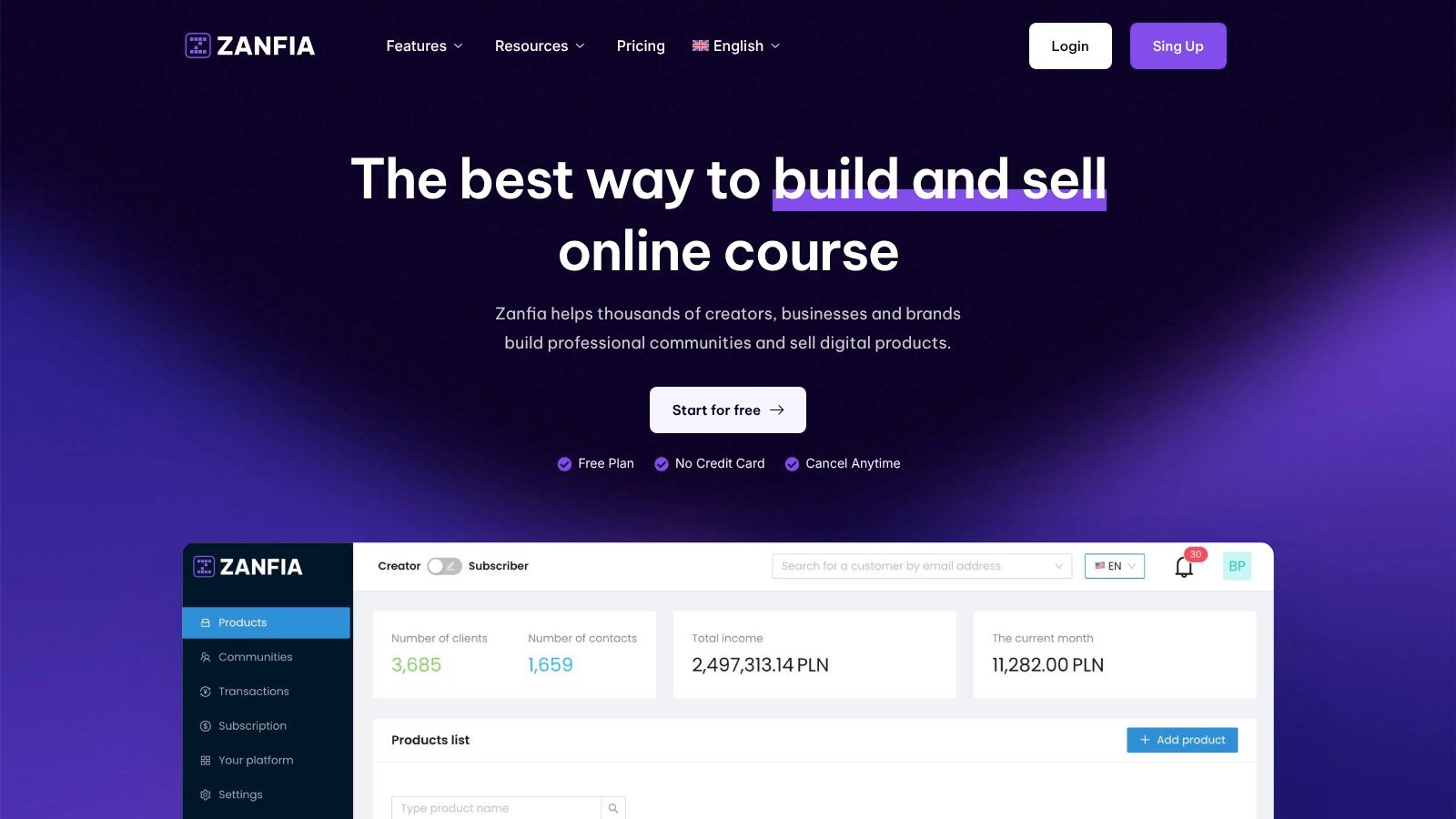
Zanfia is an all-in-one platform built specifically for creators who need to monetize digital content and foster vibrant online communities. It stands out by unifying traditionally separate tools—course hosting, community forums, and payment processing—into a single, cohesive ecosystem. This integration makes it a top contender for the best subscription management software, especially for creators selling digital products like courses, newsletters, and exclusive content alongside community access.
Instead of patching together different applications, Zanfia provides a centralized hub where you can manage every aspect of the customer journey under your own custom brand and domain. A new subscriber is not just a transaction; they are instantly and automatically granted access to the correct courses and community channels, creating a seamless experience from day one.
Key Strengths & Differentiators
Zanfia's core advantage is its holistic, integrated approach. It isn't just a payment gateway with subscription features; it's a complete business operations platform built to solve the specific challenges creators face when scaling.
- Integrated Product Ecosystem: Seamlessly sell subscriptions that grant access to multiple products at once. For example, a single monthly fee could unlock a premium discussion channel, an ongoing online course, and a weekly paid newsletter. This bundling capability is a powerful, built-in tool for increasing customer lifetime value. For more ideas on structuring your offers, you can explore various subscription business model examples for creators.
- Powerful Automation Workflows: The platform allows you to automate repetitive tasks that are crucial for scaling a subscription business. You can connect events in the customer journey, such as a new subscription purchase, to trigger specific actions. For instance, a new member can be automatically enrolled in a course, added to a specific community channel, and tagged in your integrated mailing system (like MailerLite or ActiveCampaign) without any manual intervention.
- Built-in Community Engagement: By hosting your community and paid content in the same place, Zanfia directly addresses customer churn. When subscribers feel connected and see tangible value in a dedicated space, they are more likely to maintain their subscription. The platform includes features for creating professional discussion channels, managing members, and posting rich media content to keep engagement high.
Ideal Use Cases
Zanfia excels in scenarios where subscriptions are tied to access and community rather than just software or physical goods.
- Online Educators: Sell course access via monthly or annual subscriptions, providing students with ongoing content updates and a dedicated community space to interact with instructors and peers.
- Community Builders: Create tiered membership levels that offer escalating access to exclusive discussion channels, live events, or premium content within a branded community portal.
- Content Creators: Monetize a following by offering a paid newsletter, a knowledge base with exclusive articles, or a subscription that bundles various digital products like ebooks and video tutorials.
Pros and Cons
| Pros | Cons |
|---|---|
| All-in-one platform integrates communities, courses, paid newsletters, and digital products under one brand. | Primarily tailored for digital products and communities; may not suit businesses with extensive physical product needs. |
| Powerful automation tools save time by connecting customer actions to tasks, eliminating manual work. | Lacks some of the highly specialized, enterprise-grade financial reporting found in dedicated billing systems. |
| Flexible, scalable pricing plans with no commission fees, catering to users from beginners to enterprises. | |
| Seamless integrations with popular payment gateways (Stripe, PayU, BLIK), invoicing, and mailing systems. | |
| Highly praised customer support with responsive help and detailed onboarding for a smooth setup. |
Overall, Zanfia is a formidable choice for any creator looking for a robust, integrated solution to build, manage, and scale a subscription-based business. Its focus on combining content, community, and commerce into one platform makes it an exceptional piece of subscription management software.
Website: https://zanfia.com
2. Stripe Billing
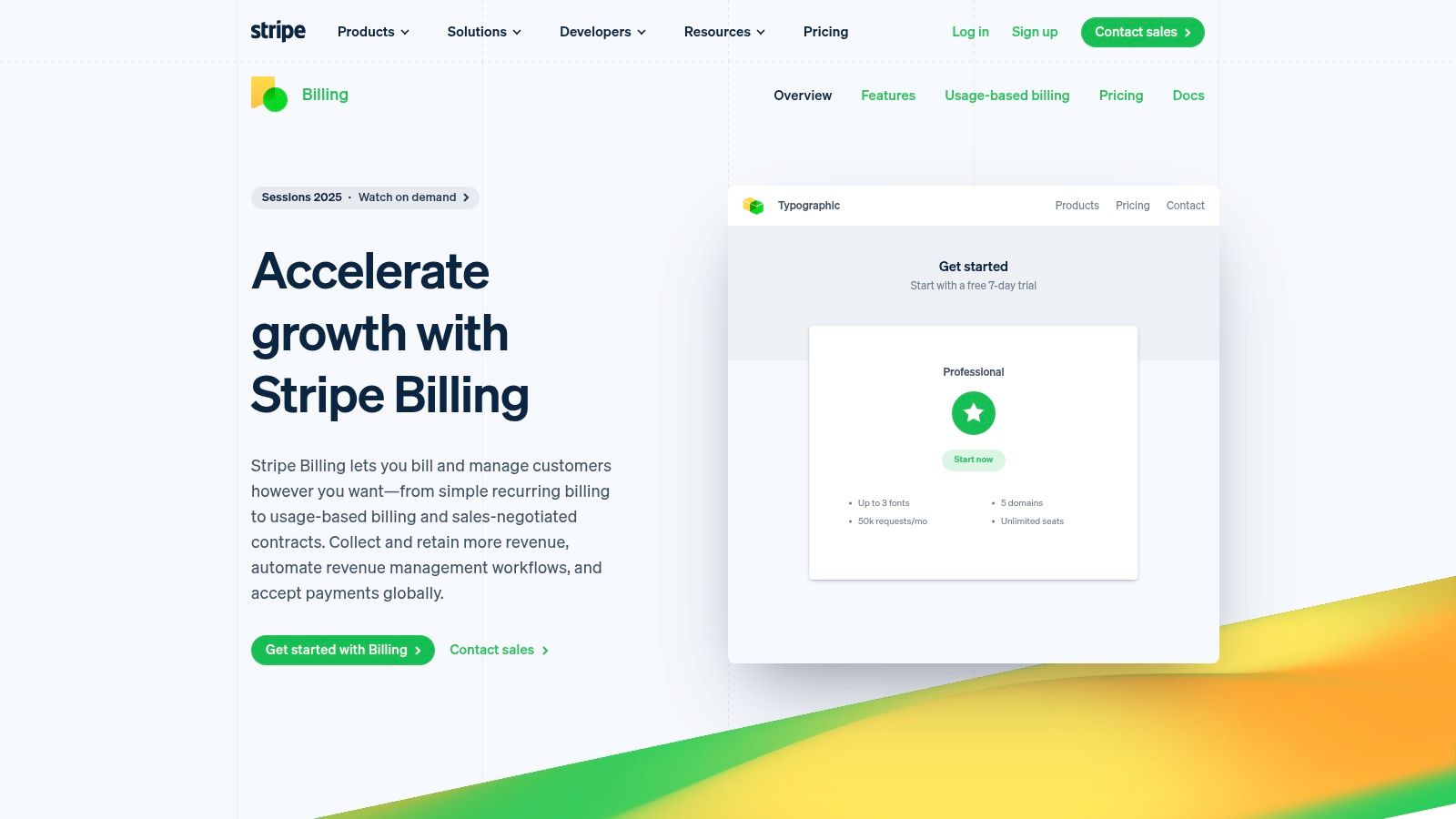
Stripe Billing is an incredibly popular choice for businesses that want to manage recurring revenue and subscriptions, largely because it is built directly on top of the global Stripe Payments platform. This tight integration makes it a powerhouse for companies, from startups to large enterprises, that need a fast, reliable, and scalable way to handle complex billing scenarios without patching together multiple systems. Its core strength lies in combining user-friendly, no-code tools with a robust API, appealing to both non-technical founders and development teams.
This dual approach means you can launch a subscription product quickly using pre-built components like Stripe Checkout and a customer portal, and then layer on more sophisticated logic as you grow. For instance, a digital creator could start by selling a simple monthly newsletter subscription using a hosted payment page and then later use the API to introduce metered billing for access to a premium content library.
Key Features and Use Cases
Stripe Billing excels at providing flexibility. It supports a wide array of pricing models, from simple flat-rate recurring fees to more complex tiered, per-seat, and usage-based (metered) billing. This makes it one of the best subscription management software options for SaaS companies, membership sites, and platforms that need to experiment with pricing strategies.
Key functionalities include:
- Flexible Pricing Models: Easily implement recurring, tiered, per-seat, and usage-based billing.
- Automated Dunning: Smart retries and customizable email reminders help recover failed payments and reduce churn automatically.
- Hosted Customer Portal: A pre-built, secure portal where customers can manage their subscriptions, update payment methods, and view invoices without requiring you to build the interface from scratch.
- Global Payment Support: Leverage Stripe’s core infrastructure to accept payments in over 135 currencies and through numerous local payment methods like iDEAL or SEPA Direct Debit.
This flexibility allows you to not only secure recurring revenue but also to implement strategies that maximize customer lifetime value. For example, the customer portal makes it simple for users to upgrade their plan, creating a natural opportunity for upselling. If you're looking to dive deeper into these growth tactics, you can find valuable insights on what is upselling and cross-selling.
Pricing and Integration
Stripe Billing's pricing is separated into two main tiers: Starter and Scale.
| Tier | Price | Key Features |
|---|---|---|
| Starter | 0.5% on recurring payments | Subscription logic, invoicing, customer portal |
| Scale | 0.8% on recurring payments | Everything in Starter + quotes, advanced reporting |
While Stripe offers powerful native tools, its strength is amplified through integrations. For creators looking for an all-in-one solution, platforms like Zanfia leverage Stripe’s payment gateway to manage subscriptions for digital products, online courses, and paid communities. This allows you to combine Stripe’s reliable payment processing with Zanfia’s integrated course builder, community management, and automation tools, creating a seamless experience without needing to manage separate systems.
Pros and Cons
Pros:
- Fast Implementation: Get started quickly with hosted components and excellent developer documentation.
- Unified Platform: Seamlessly integrated with Stripe's global payment processing, fraud detection, and other financial tools.
- Strong Ecosystem: Widely adopted with a vast number of third-party integrations and developer talent available.
Cons:
- Can Become Costly: The percentage-based fee on recurring revenue can add up significantly as you scale.
- Advanced Features Gated: Key features like quotes and revenue recognition are locked behind the more expensive Scale plan.
Website: https://stripe.com/billing
3. Chargebee
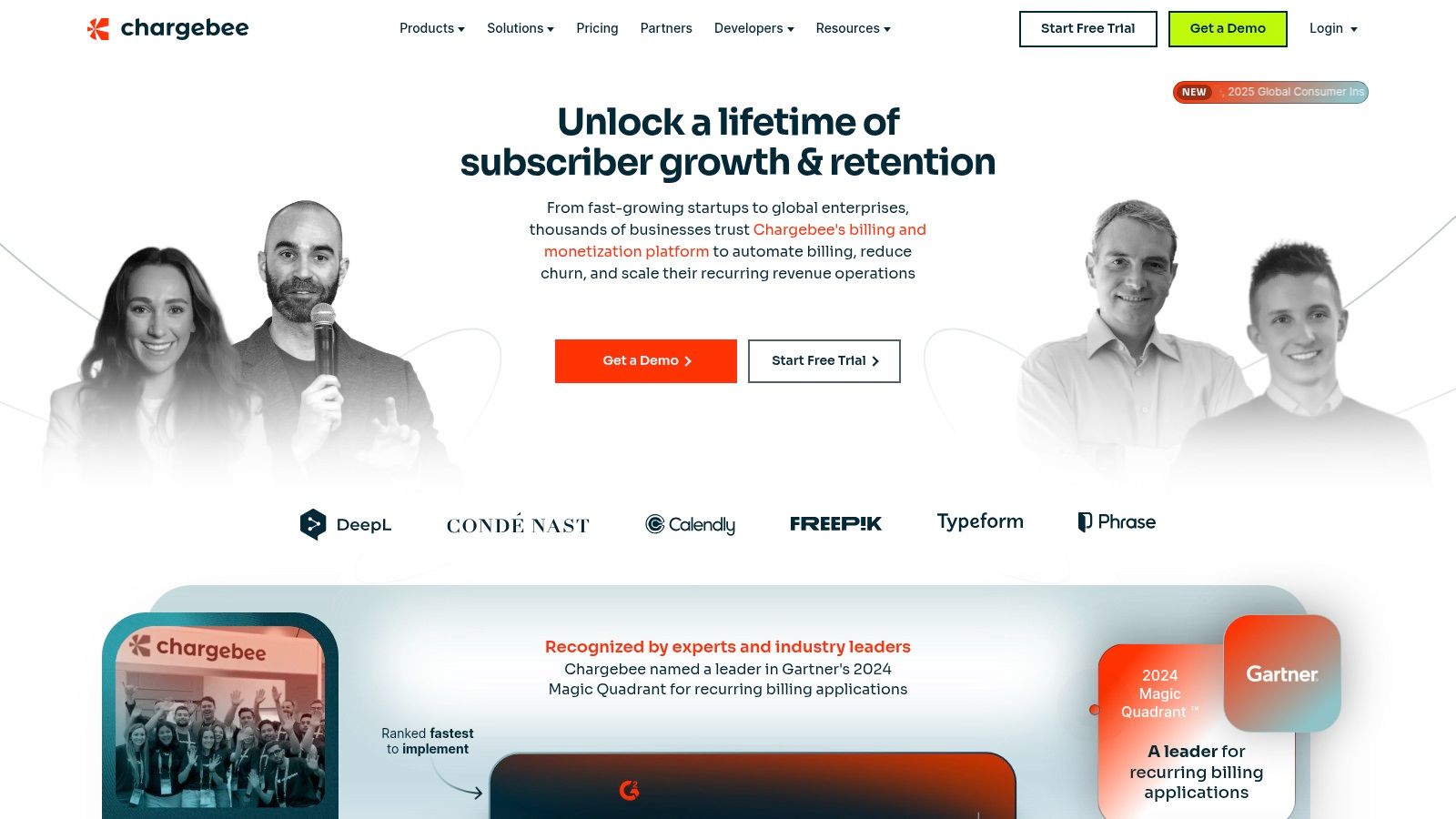
Chargebee is a full-suite subscription management and recurring billing system designed for high-growth SaaS and subscription-based businesses. It stands out by offering a comprehensive solution that goes beyond simple payment processing, focusing heavily on revenue operations, retention tooling, and enterprise-grade automation. This makes it an ideal choice for companies that have outgrown basic billing systems and need a platform that can handle complex subscription lifecycles, global compliance, and detailed financial reporting without requiring extensive custom development.
The platform is built to give finance, marketing, and sales teams the tools they need to manage and scale recurring revenue effectively. For example, a B2B SaaS company can use Chargebee to manage everything from initial customer quotes and complex pricing models to automated dunning for failed payments and detailed revenue recognition reports. This end-to-end management capability is what makes it one of the best subscription management software options for businesses focused on operational efficiency.
Key Features and Use Cases
Chargebee excels in providing deep automation and flexibility, particularly for SaaS and membership businesses. It supports a wide variety of billing logic, including flat-rate, usage-based, tiered, and calendar-based models, allowing businesses to experiment with their go-to-market strategies. Its robust feature set is designed to automate the entire order-to-revenue lifecycle.
Key functionalities include:
- Flexible Pricing & Billing Logic: Supports complex recurring, usage, and calendar billing, plus CPQ-lite functionality for creating and managing quotes.
- Broad Gateway Support: Integrates with over 35 payment gateways, including Stripe, Braintree, and Adyen, giving you global reach and flexibility.
- Advanced Retention Tools: Includes smart dunning management, customizable cancellation and retention flows, and a self-serve customer portal to reduce churn.
- Revenue Recognition: Offers built-in reporting to simplify compliance with accounting standards like ASC 606 and IFRS 15, complete with multi-currency support.
These features are particularly valuable for businesses scaling their operations. For instance, creators and entrepreneurs can learn how to build a membership site and leverage Chargebee's tools to manage member subscriptions, handle renewals, and analyze churn, all from one dashboard.
Pricing and Integration
Chargebee's pricing structure is designed to grow with your business, starting with a free plan for early-stage companies.
| Tier | Price | Key Features |
|---|---|---|
| Starter | Free for the first $250K in cumulative revenue | All core billing, invoicing, and subscription management features |
| Performance | Starts at $599/month | Everything in Starter + smart dunning, SaaS metrics, sales tax automation |
| Enterprise | Custom Pricing | Everything in Performance + advanced compliance, custom logic |
While Chargebee offers extensive native features, its power is often realized through integrations. For creators selling digital products or courses, platforms like Zanfia can manage the front-end user experience, including course delivery and community access, while using a payment gateway that integrates with Chargebee for sophisticated billing in the background. This combination allows you to leverage Zanfia's specialized creator tools with Chargebee’s powerful revenue operations engine.
Pros and Cons
Pros:
- Generous Free Tier: The Starter plan is free until you reach $250K in revenue, making it accessible for new businesses.
- Deep Automation: Offers powerful, out-of-the-box automation for dunning, invoicing, and revenue recognition.
- Strong Migration Support: Provides a sandbox environment and dedicated support for migrating from other systems safely.
Cons:
- Complex Pricing at Scale: The Performance plan includes platform fees plus overage charges that can become costly.
- Opaque Enterprise Costs: Pricing for the Enterprise plan is not publicly listed and requires a custom quote.
Website: https://www.chargebee.com
4. Recurly
Recurly is a mature and enterprise-focused subscription management platform known for its scalability and sophisticated tools designed to reduce churn. It is a preferred choice for high-volume B2C businesses, media companies, and SaaS brands that require robust analytics and advanced subscriber retention features. Its core value proposition is built around maximizing customer lifetime value by intelligently managing the entire subscriber lifecycle, from acquisition to retention.
The platform distinguishes itself by providing specialized tools that go beyond simple recurring payments. For instance, a streaming service could leverage Recurly’s cancel-save flows to present a personalized discount to a customer attempting to cancel, directly reducing churn. Similarly, a subscription box company could use its upsell and cross-sell capabilities to offer a one-time product add-on during checkout, boosting average order value.

Key Features and Use Cases
Recurly is engineered for businesses that need to optimize recurring revenue at scale. Its feature set is heavily focused on churn management and revenue optimization, making it one of the best subscription management software options for companies with a large and active subscriber base. The platform’s advanced dunning management, for example, uses machine learning to retry failed payments at the most optimal times, recovering more revenue than standard retry schedules.
Key functionalities include:
- Advanced Churn Management: Implement intelligent dunning, automatic account updaters, and customizable cancel-save flows to retain subscribers.
- Flexible Billing Models: Supports fixed, quantity-based, and hybrid billing, with powerful coupon and trial management capabilities.
- Global Payments: Process payments in over 140 currencies through multiple gateways, ensuring a smooth checkout experience for international customers.
- Revenue Recognition: Offers an optional, add-on module to automate revenue reporting and maintain compliance with ASC 606 and IFRS 15 standards.
This enterprise-grade infrastructure is built to handle high transaction volumes, making it a reliable choice for established brands. The platform’s focus on complex billing logic and compliance caters to businesses with sophisticated accounting needs.
Pricing and Integration
Recurly’s pricing for its core subscription management platform is quote-based and tailored to a business's specific needs and transaction volume. The publicly available pricing primarily applies to its optional Revenue Recognition module, which is an add-on.
| Tier | Price | Key Features |
|---|---|---|
| Core Plan | Quote-based | Subscription lifecycle management, analytics, dunning |
| Revenue Recognition | Starts at $1,250/month | ASC 606/IFRS 15 compliance, automated reporting |
While Recurly is a powerful standalone system, creators often seek more integrated solutions to manage their entire business. For those selling digital products or online courses, a platform like Zanfia offers a more unified approach. Zanfia provides a modern cart for digital products and subscriptions, allowing creators to manage payments, course delivery, and community engagement all in one place. This eliminates the need to integrate a separate, high-end billing system like Recurly, simplifying operations and reducing costs for entrepreneurs.
Pros and Cons
Pros:
- Proven at Scale: Strong reputation for reliability and performance with large, high-volume subscriber bases.
- Excellent Churn Reduction Tools: Industry-leading features for recovering failed payments and retaining customers.
- Enterprise-Ready: High uptime, robust security, and compliance features suitable for established companies.
Cons:
- Opaque Pricing: The core platform pricing is not publicly available and requires a custom quote, making it difficult to estimate costs upfront.
- Complexity for Smaller Businesses: The feature set may be overly complex and expensive for startups or individual creators.
Website: https://recurly.com
5. Zuora
Zuora is a leading enterprise-grade subscription management suite designed for the complexities of large-scale, global operations and hybrid business models. Positioned as a "Subscription Economy" pioneer, it goes beyond simple recurring payments to offer a complete quote-to-revenue system. This makes it an ideal choice for established companies that need to manage millions of subscribers, navigate complex financial compliance, and integrate deeply with existing ERP and CRM systems like Salesforce and NetSuite.
The platform's core strength is its ability to handle immense complexity. A large B2B SaaS company, for example, could use Zuora to manage thousands of enterprise clients, each with unique contracts, usage-based pricing tiers, and multi-entity billing requirements across different countries. It centralizes this entire lifecycle, from the initial sales quote to ongoing billing and revenue recognition, providing a single source of truth for finance and product teams.
Key Features and Use Cases
Zuora is built to empower large organizations to launch and iterate on subscription offerings without being hindered by legacy financial systems. It is arguably the best subscription management software for businesses that have outgrown simpler solutions and require deep finance, billing, and operational capabilities. Its architecture is designed for scalability and global reach.
Key functionalities include:
- End-to-End Monetization: A complete quote-to-revenue pipeline, including Configure, Price, Quote (CPQ), dynamic product catalogs, and automated billing schedules.
- Global Payment and Billing: Supports over 40 payment methods and multi-entity structures, allowing companies to manage billing and compliance across different regions and subsidiaries.
- Advanced Revenue Recognition: A dedicated module to automate and ensure compliance with accounting standards like ASC 606 and IFRS 15.
- Enterprise-Grade Scalability: Architected to handle millions of subscribers and complex, high-volume billing scenarios without performance degradation.
This comprehensive approach is essential for large enterprises aiming for agility. The platform provides the necessary tools for scaling with systems that can support sophisticated monetization strategies, from pure subscriptions to consumption-based and hybrid models.
Pricing and Integration
Zuora’s pricing is not publicly listed and is entirely sales-led, tailored to the specific needs and scale of each enterprise customer. The implementation is typically a high-touch, consultative process reflecting the platform's depth and complexity.
| Tier | Price | Key Features |
|---|---|---|
| Custom | Quote-based | Varies by modules (Billing, Revenue, CPQ), usage volume, and support level |
While Zuora is a heavyweight solution for enterprises, creators and small businesses often need a more integrated and accessible platform. For those looking to sell digital products, courses, and communities, a solution like Zanfia provides a streamlined alternative. Zanfia integrates payment gateways like Stripe with built-in tools for course creation, community management, and product sales, allowing creators to manage their entire business from one central hub without the complexity of an enterprise system.
Pros and Cons
Pros:
- Comprehensive Enterprise Capabilities: A complete suite for finance, product, and sales teams to manage the entire subscription lifecycle.
- Proven Scalability: Trusted by major global brands to handle extremely large subscriber volumes and transaction loads.
- Robust Ecosystem: Extensive integrations with major CRM, ERP, and financial systems.
Cons:
- Complex Implementation: The scope and power of the platform often require a significant investment in time and resources to implement correctly.
- Opaque and High-End Pricing: Pricing is not transparent and is generally positioned for the enterprise market, making it inaccessible for smaller businesses.
Website: https://www.zuora.com/product/
6. Paddle
Paddle offers a fundamentally different approach to subscription management by acting as a Merchant of Record (MoR). This all-in-one model means Paddle doesn't just process your payments; it takes on the legal responsibility for selling your software, handling global sales tax compliance, managing fraud, and dealing with chargebacks on your behalf. This makes it a powerful choice for SaaS and digital product businesses, particularly those selling internationally, who want to offload the immense operational complexity of global commerce.
The MoR model simplifies everything. Instead of integrating a payment gateway, a subscription logic engine, and a tax compliance tool, you integrate Paddle, and it handles the entire stack. For a software developer selling a new app, this means they can focus on their product instead of navigating the intricate tax laws of dozens of countries. Paddle calculates, collects, and remits the correct sales tax for every single transaction, a task that can otherwise be a huge burden.

Key Features and Use Cases
Paddle is designed for software and digital product sellers who need to scale globally without building a dedicated finance and compliance team. Its unified platform provides checkout, subscription management, invoicing, and tax remittance in a single package. This makes it one of the best subscription management software solutions for businesses that prioritize simplicity and risk reduction over granular control of the payment stack.
Key functionalities include:
- Merchant of Record (MoR): Paddle acts as the reseller, completely handling global sales tax (like VAT) and remittance.
- Unified Commerce Platform: Combines payment processing, subscription logic, invoicing, and fraud prevention.
- Global Payment Options: Localized checkout experiences with support for various currencies and popular payment methods.
- Automated Recovery Tools: Includes dunning management and payment retries to combat involuntary churn.
This comprehensive approach is especially valuable for creators selling digital products across borders. If you are exploring different ways to market and sell your work online, you can learn more about finding the right platform to sell digital products and how an MoR can streamline your operations.
Pricing and Integration
Paddle uses a simple, all-inclusive pricing model based on a percentage of each transaction. There are no monthly fees or hidden charges for features like fraud protection or tax compliance.
| Plan | Price | Key Features |
|---|---|---|
| Pay-as-you-go | 5% + $0.50 per transaction | All-in-one platform, payments, subscriptions, tax, fraud |
| Custom | Custom pricing | Volume discounts, dedicated support, implementation services |
While Paddle provides an end-to-end solution, some creators prefer to pair a powerful payment gateway with a platform that offers more integrated tools for community and content delivery. For instance, platforms like Zanfia connect with robust gateways such as Stripe, allowing you to manage subscriptions for digital products, online courses, and paid communities. This lets you combine world-class payment processing with Zanfia’s specialized tools for course creation, community engagement, and marketing automations, offering a seamless experience for both you and your customers.
Pros and Cons
Pros:
- Simplified Global Compliance: Completely offloads the burden of calculating, collecting, and remitting sales taxes worldwide.
- All-Inclusive Pricing: One fee covers payments, subscriptions, tax, fraud, and support, making costs predictable.
- Reduced Operational Overhead: Handles chargebacks, currency conversion, and customer billing support.
Cons:
- Higher Per-Transaction Fees: The all-inclusive fee can be higher at scale compared to a la carte solutions.
- Less Control: As the Merchant of Record, Paddle has more control over the checkout process and policies than a direct gateway.
Website: https://www.paddle.com
7. G2 – Subscription Management Software Category
While not a direct software provider, G2's subscription management category is an indispensable resource for any business owner navigating the complex landscape of recurring billing tools. Think of it as a comprehensive, crowdsourced marketplace where you can compare, filter, and analyze dozens of platforms based on real user reviews. This approach is invaluable because it cuts through marketing jargon and provides candid feedback from people who have actually used the software to solve problems similar to your own.
Instead of presenting a single solution, G2 empowers you to build a shortlist of the best subscription management software tailored to your specific needs. You can filter options by market segment (small business, mid-market, enterprise), user satisfaction scores, and specific features. For a creator just starting out, this means you can easily find tools that are praised for their simplicity and affordability, while a scaling enterprise can identify platforms renowned for their robust APIs and complex billing logic.
Key Features and Use Cases
G2’s primary function is to provide clarity and social proof in the software selection process. Its platform is designed to help you make an informed decision by aggregating data points that are often hard to find in one place. It serves as a crucial first step before committing to a free trial or sales demo.
Key functionalities include:
- Detailed User Reviews: Access verified, in-depth reviews that cover what users like, dislike, and the business problems they are solving with the software.
- Comparison Grids: Directly compare up to four different platforms side-by-side on key features, satisfaction ratings, and pricing information.
- Advanced Filtering: Narrow down the extensive list of vendors based on specific capabilities, such as support for metered billing, dunning management, or integrations with certain payment gateways.
- Educational Resources: The platform includes articles and guides that explain core subscription management concepts, helping you understand what features are truly essential for your business model.
This makes G2 perfect for discovering solutions you might not have otherwise considered. For instance, while researching, you might find that your chosen tool lacks a native community-building feature. A platform like Zanfia could then emerge as a strong contender, as it integrates subscription management for digital products and courses directly with a professional community space, simplifying your tech stack significantly.
Pricing and Integration
G2 itself is free for users who are researching and comparing software. The business model relies on vendors paying for enhanced profiles and lead generation, but the core review and comparison data is openly accessible.
The platform provides direct links to vendor websites, where you can explore specific pricing tiers or request a demo. This transparent approach saves you time by consolidating all your initial research and outreach activities in one place.
Pros and Cons
Pros:
- Unbiased, Crowdsourced Data: Relies on a high volume of recent, verified user reviews, providing a current and realistic view of each platform.
- Powerful Comparison Tools: The ability to filter and create side-by-side comparisons makes shortlisting options incredibly efficient.
- Transparent Methodology: G2 is clear about its ranking algorithms and how it verifies user reviews, building trust in the data presented.
Cons:
- Information Overload: The sheer number of options and reviews can be overwhelming without a clear idea of your requirements beforehand.
- Sponsored Placements: While clearly labeled, sponsored listings can sometimes overshadow equally good, non-sponsored alternatives.
Website: https://www.g2.com/categories/subscription-management
Top 7 Subscription Management Software Comparison
| Product | Implementation Complexity 🔄 | Resource Requirements ⚡ | Expected Outcomes 📊 | Ideal Use Cases 💡 | Key Advantages ⭐ |
|---|---|---|---|---|---|
| Zanfia | Low; all-in-one setup with guided onboarding | Low; designed for creators without a tech team | High engagement, streamlined sales, unified customer view | Creators, educators, and community builders managing digital products and paid access | Integrated platform for communities, courses, and sales; powerful automations; no commission fees |
| Stripe Billing | Low to Moderate; hosted components with strong APIs | Low; fast launch with no-code tools and developer support | Scalable subscription models with global payments | Startups to scale-ups needing flexible recurring billing | Clear pricing, global payment support, fast implementation |
| Chargebee | Moderate; automation and enterprise-ready workflows | Moderate to High; requires setup for revenue recognition | Strong retention, compliance, and subscription management | SaaS companies with complex billing and compliance needs | Deep automation, multi-gateway support, free starter tier |
| Recurly | Moderate to High; enterprise focus requires tailoring | Moderate to High; supports large subscriber bases | Enterprise-grade uptime, churn reduction, personalized offers | Media, streaming, B2C, SaaS with advanced analytics needs | Focus on retention, scalability, and reliability |
| Zuora | High; complex enterprise implementations | High; extensive integrations and customization needed | Scalable global monetization with finance-grade compliance | Large enterprises with hybrid models and global operations | Comprehensive finance/product features; proven scalability |
| Paddle | Low; all-in-one with Merchant of Record model | Low; no monthly fees but transaction fees apply | Simplified tax compliance and global subscription management | SaaS and consumer apps selling internationally | Handles tax/fraud; simple fee structure; global seller support |
| G2 – Subscription Software | N/A (Marketplace) | N/A | Informed vendor selection and market insights | Buyers comparing subscription management software | Crowdsourced reviews, up-to-date rankings, transparent filters |
Your Next Step: From Managing Subscriptions to Building Your Business
You've just reviewed the top subscription management software on the market. We've seen powerful billing platforms like Stripe Billing and Chargebee, which offer deep financial tools, and solutions like Paddle that solve global tax compliance. Each tool is excellent at its specific job: processing recurring payments.
However, as a creator, your business is more than just a series of transactions. Your challenge isn't just collecting payments; it's building a sustainable business around a loyal community. This requires a strategic shift in how you view your tools.
The Real Cost of a Disconnected Tech Stack
Stitching together separate systems—a billing processor, a course platform, a community tool—creates operational chaos. Every new subscriber forces you to perform a manual checklist: process the payment, grant course access, add them to the community, and tag them in your email list. Or, you're forced to build fragile, complex automations with third-party tools, constantly worrying they might break.
This isn't just inefficient; it's a barrier to growth. Your time is spent managing technology instead of creating value for your members. It also creates a clunky, disjointed experience for your customers, who have to navigate different logins and platforms just to access what they paid for.
From Payment Processor to Central Operations Hub
The most effective creators don't just find a tool to process payments; they build their business on a central hub that connects payments directly to the value they deliver. The best subscription management software for a creator isn't just the one that’s best at billing; it’s the one that integrates billing seamlessly with your actual products.
This is where a unified platform provides a clear, strategic advantage. By managing subscriptions in the same place you host your online courses, digital products, and community, you eliminate friction entirely.
- For your members: They get a single login, a unified brand experience under your custom domain, and immediate, automatic access to everything they paid for.
- For you: You get a single dashboard. You can see a customer's payment history, their course progress, and their community engagement all in one place. This holistic view is invaluable for understanding your audience and reducing churn.
This integrated approach is precisely why we built Zanfia. We saw creators struggling to duct-tape systems together and knew there was a better, more strategic way. Zanfia isn’t just another tool on the list; it’s a decision to consolidate your operations. Its power lies in connecting subscriptions directly to your content. When someone subscribes, our built-in automations can instantly unlock course modules, add them to exclusive community channels, and tag them in your email system. You're not just selling a subscription; you're delivering a seamless, professional experience within a branded ecosystem where your members can learn and connect.
Ready to stop wrestling with technology and start focusing on what you do best? Consolidate your tools into one powerful, streamlined hub built specifically for creators. Register for your free Zanfia account today and discover how an all-in-one platform can transform your business.