

12 Best Platform for Course Creators in 2025: A Deep Dive

The digital creator economy is booming, but turning your expertise into a thriving online course business depends on one critical decision: your platform. The right choice can feel like a strategic partner, automating tedious tasks, boosting student engagement, and maximizing your revenue. The wrong one can become a tangled mess of plugins, hidden fees, and branding limitations that stifle your growth. This guide is designed to cut through the noise and help you find the best platform for course creators based on your specific needs.
We will analyze 12 of the top options, from all-in-one solutions like Zanfia and Kajabi to community-focused platforms like Mighty Networks. For each entry, you'll find a breakdown of core strengths, pricing models, key features, and ideal user profiles, complete with screenshots and direct links. When evaluating these options, it's also helpful to consider the total investment required. Understanding the true cost of a small business website provides a valuable financial perspective that can help you budget effectively for your chosen platform. Our goal is to provide the clarity you need to select a system that not only hosts your content but actively helps you build a sustainable, profitable, and independent online brand.
1. Zanfia
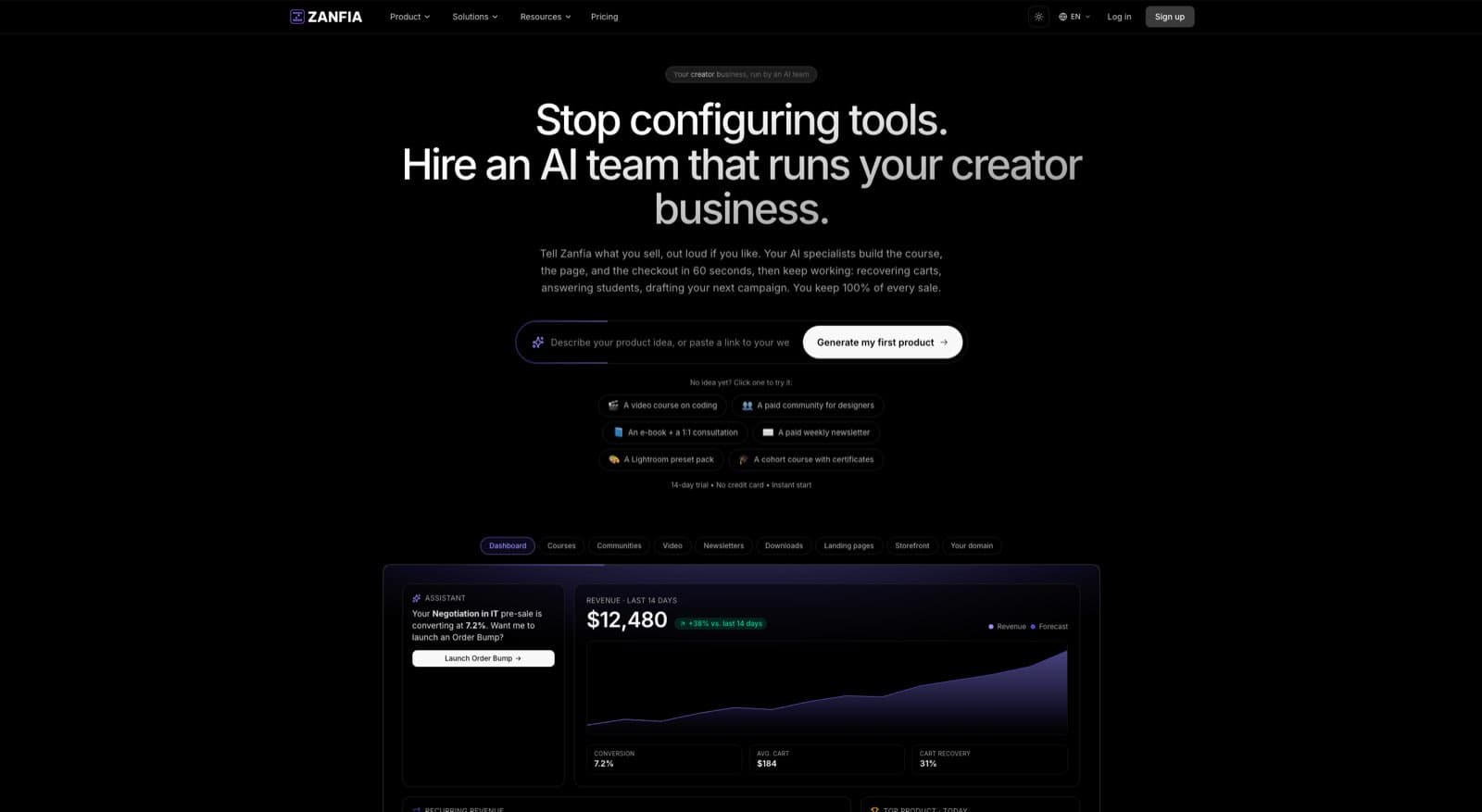
Zanfia is an AI team that runs a creator business, delivered as an all-in-one platform. Instead of stitching together tools, creators tell the system what to do, by chat or by voice, and the AI team handles the work across courses, communities, paid newsletters, digital downloads, memberships, consultations and more, all under the creator's own brand and domain. The full Assistant and the MCP endpoint that lets outside AI agents act on the workspace are strong differentiators, with availability that depends on the plan, see the current Zanfia pricing.
Zanfia is built to sell as much as it is built to host: a checkout with order bumps, installments, upsells and wallet payments (Apple Pay, Google Pay), test mode so you can buy your own product before launch, and 12 product types living side by side under one brand. On top of that, the platform charges 0% platform commission on customer sales as of publication, so creators keep 100% of revenue net of standard payment processor fees. This transparent, partnership approach makes it a strong option for course creators earning $2,500–$25,000+ a month who are tired of commissions eating into their margins.
Key Strengths & Use Cases
Zanfia's power comes from the AI team doing the work you would otherwise assign to a stack of contractors. The creator dictates instead of configuring: the assistant performs any action available in the interface, and the visual automation builder handles the rest, granting course access after payment, adding buyers to community channels, triggering email tool sync and outbound webhooks. White-label features, custom domain support and per-workspace branding ensure a professional brand identity that never dilutes your name.
The platform is ideal for:
- "Business Architects": Seasoned creators earning $2,500–$25,000+ monthly who need an integrated solution to scale efficiently and protect their margins.
- "Craft Masters": Established experts earning $25,000+ a month who require rock-solid tech that matches their premium brand positioning.
- "Potential Explorers": Experts with valuable knowledge seeking the simplest, lowest-risk way to launch their first digital product.
Platform Highlights
- Integrated Community & Courses with an AI agent: Unlike platforms that push audiences to external tools like Discord, Zanfia keeps everything unified under the creator's brand. Communities include an AI agent that writes from the creator's own content, and everything it publishes is clearly labeled as AI.
- Advanced Course Features: Offers native video hosting to eliminate costly services like Vimeo, a smart player that saves student progress, chapters and auto-generated transcripts, quizzes with pass-rate stats, completion certificates, and flexible monetization: one-time sales, subscriptions, bundles, and installments (for example splitting a $600 course into four payments).
- Built for US creators: Stripe and PayPal, cards, Apple Pay and Google Pay at checkout, plus test mode so you can run a real end-to-end purchase (with GA4, Meta and TikTok test events) before your first live sale.
"Without Zanfia, developing a paid newsletter and community would be much harder, it's the best tool in the market." – Wojciech Pisarski, CEO of wMinutę
- Pricing: As of publication, plans start at $39/month, or $31/month billed annually, on Starter, with a 14-day free trial and no credit card required. 0% platform commission on customer sales on every plan. See the current Zanfia pricing .
- Pros: AI-first platform with voice dictation and an MCP endpoint (availability depends on the plan), 0% platform fees, powerful automations, native video hosting, and a checkout built to sell with order bumps, installments and test mode.
- Cons: Some headline capabilities (full Assistant, MCP, advanced analytics, white-label AI) are on higher tiers, so check the current pricing page for what your plan includes. Native email campaigns are rolling out to workspaces and may already be available on your account by the time you read this.
Learn more at Zanfia.com
2. Thinkific
Thinkific stands as a well-established and powerful option for entrepreneurs seeking a robust platform to build, market, and sell online courses and membership sites. It strikes an excellent balance between user-friendliness and deep customization, making it one of the best platforms for course creators who want to scale without a steep technical learning curve. Its drag-and-drop course builder and site templates empower you to create a professional-looking school under your own brand with relative ease.
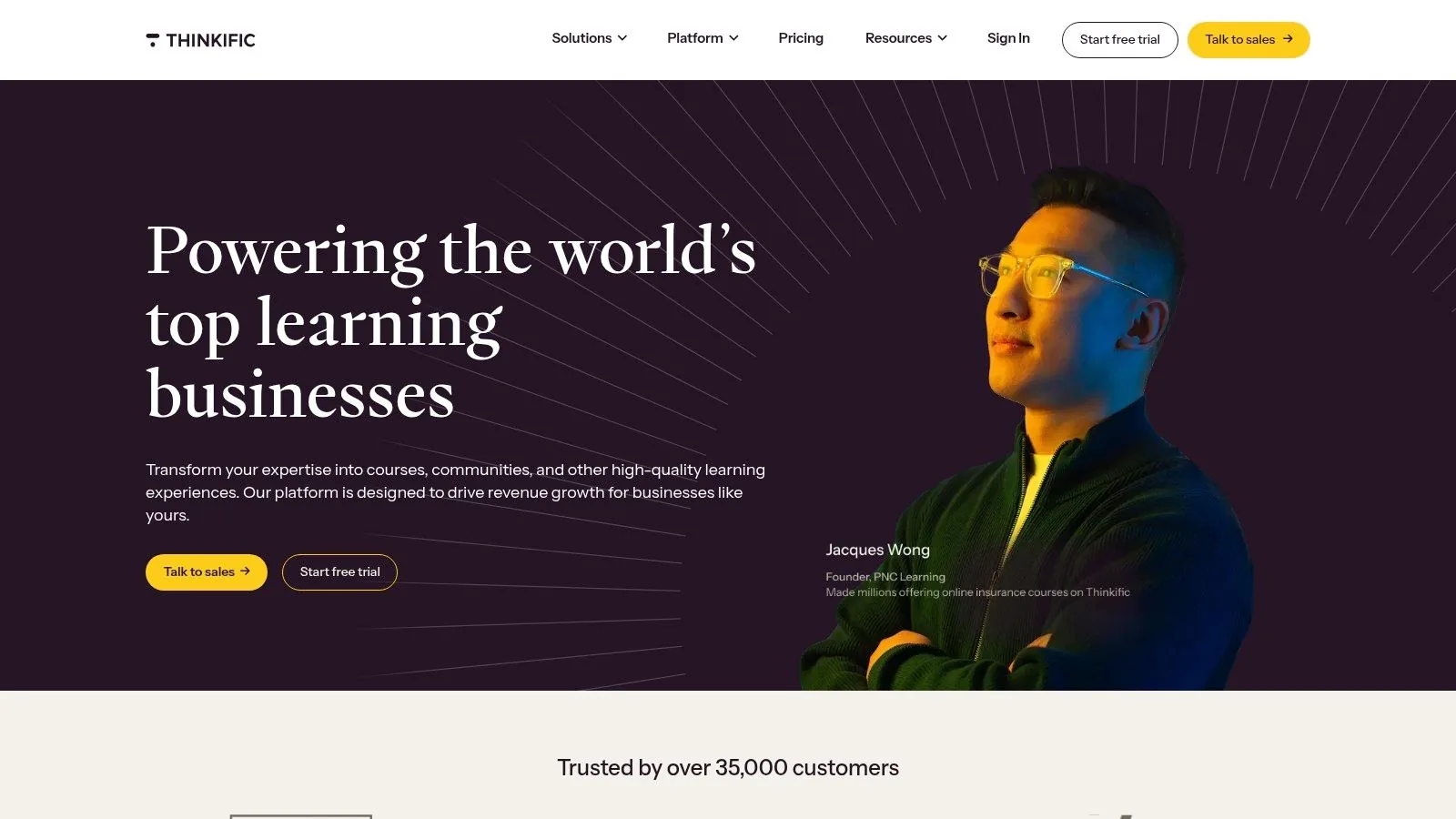
The platform’s strength lies in its comprehensive feature set designed for serious educators. You can offer diverse content types, including live lessons, and build strong student engagement with advanced quizzes, assignments, and community spaces. For a detailed breakdown of its features against competitors, you can review this online course platform comparison.
Key Features and Pricing
Thinkific's pricing structure is designed to grow with your business, starting with a free plan and scaling up to paid tiers (Basic, Start, Grow) that unlock more advanced features. All paid plans offer unlimited courses and students, a key advantage for scaling.
- Pros:
- No transaction fees on any plan (standard payment processor fees still apply).
- Strong course creation and student engagement tools.
- An extensive App Store allows for significant customization and integration.
- Cons:
- The 0% transaction fee benefit is only for those using its native "Thinkific Payments"; a small fee is added if you use third-party gateways like Stripe or PayPal.
- Many advanced features like affiliate marketing and API access are reserved for higher-priced plans.
3. Teachable
Teachable is one of the most popular and beginner-friendly options for creators looking to sell online courses and coaching. It streamlines the process of building a professional school, offering a straightforward interface that allows new entrepreneurs to get their first product launched quickly. The platform is known for its polished checkout process and focus on the core creator experience, handling the technical aspects so you can focus on content.
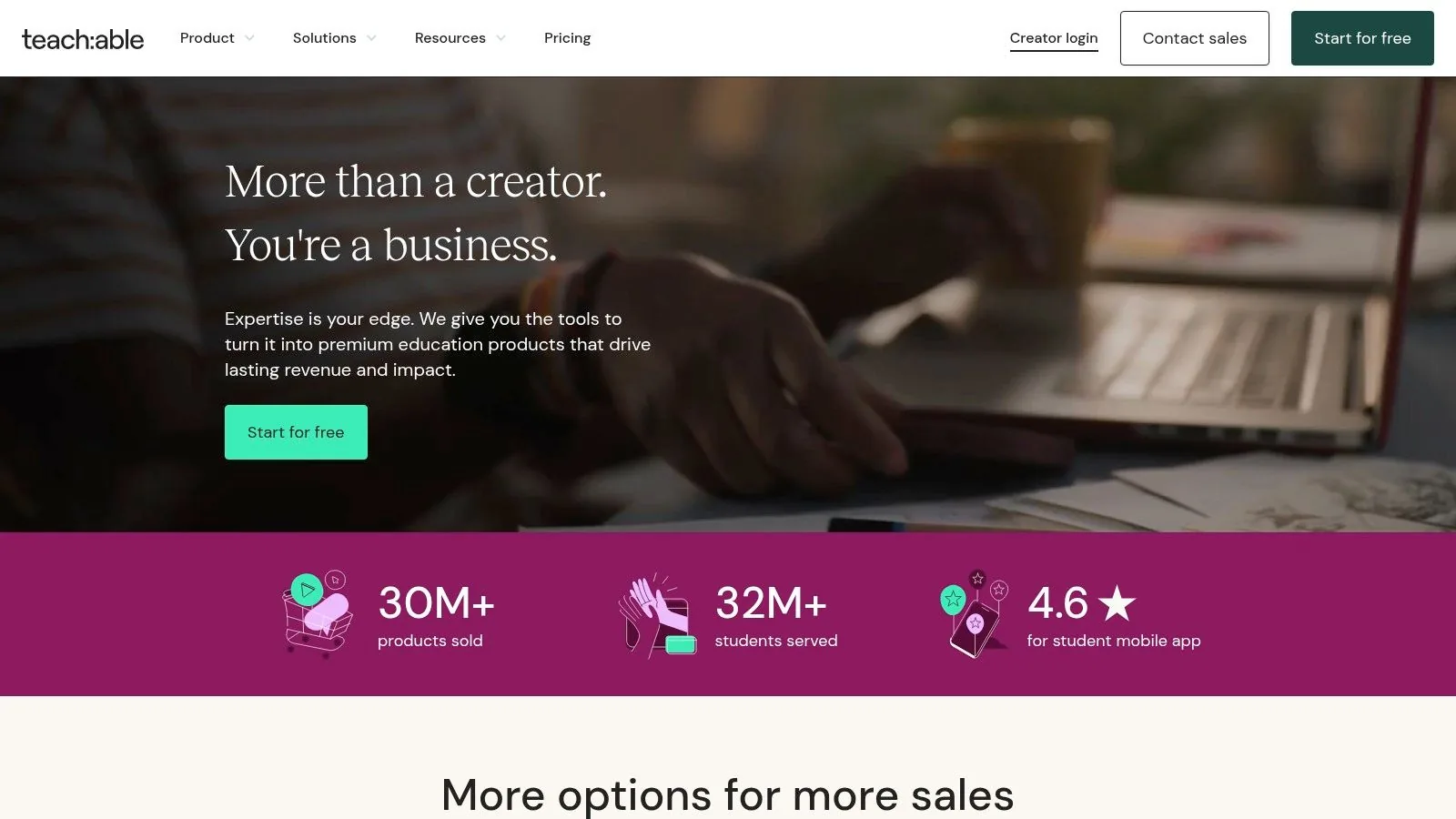
Its strength lies in its simplicity and powerful sales tools, including flexible pricing models, order bumps, and broad currency support. Teachable also provides an excellent iOS app for students, enhancing the learning experience on the go. For a deeper dive into its capabilities, see this guide on how to create and sell online courses with Teachable.
Key Features and Pricing
Teachable offers several tiers, including a free plan, to accommodate creators at different stages. Its new 2025 plans have simplified product limits and lowered transaction fees on paid tiers, making it a more competitive choice for those looking to scale.
- Pros:
- Extremely user-friendly interface, making it very fast to launch.
- Polished, high-converting checkout and sales page builder.
- 0% transaction fees on most paid plans (standard payment processor fees still apply).
- Cons:
- The entry-level paid plan still carries a notable platform transaction fee.
- Customization is more limited compared to competitors; advanced features like affiliate marketing are reserved for higher tiers.
4. Kajabi
Kajabi positions itself as the premier all-in-one platform for serious creators who want to manage their entire digital business from a single dashboard. It integrates course hosting, advanced email marketing, website and landing page building, sales funnels (called Pipelines), and community features into one cohesive system. This integrated approach makes it one of the best platforms for course creators aiming to eliminate complex third-party tools and build sophisticated marketing automations without technical headaches. Its robust feature set supports everything from digital products and coaching to podcasts and memberships.
The platform excels at providing powerful marketing and sales tools out of the box. With its visual funnel builder and deep automation capabilities, creators can design intricate customer journeys that trigger emails, offer upsells, and grant product access based on user behavior. This level of native integration is Kajabi's core strength, allowing entrepreneurs to scale their operations efficiently while maintaining a seamless brand experience for their audience.
Key Features and Pricing
Kajabi’s pricing reflects its all-in-one nature, starting with a Basic plan and scaling to Growth and Pro tiers, which expand limits on products, funnels, and contacts. While it sits at a higher price point, the cost often replaces subscriptions for separate email, website, and funnel-building software.
- Pros:
- True all-in-one solution that consolidates your website, email marketing, products, and checkout.
- Powerful marketing automations and sales pipelines are built directly into the platform.
- A strong educational ecosystem and supportive community for users.
- Cons:
- The higher starting price can be a significant barrier for new creators.
- Transaction fees may apply when using third-party payment gateways instead of the native Kajabi Payments.
5. Podia
Podia positions itself as the creator-friendly, all-in-one platform designed for solopreneurs and small teams looking to quickly launch a digital storefront. It simplifies the process of selling online courses, digital downloads, webinars, and community memberships by bundling essential tools into one cohesive package. Its core philosophy is speed and simplicity, making it one of the best platforms for course creators who want to build a minimum viable business without getting bogged down by complex technical configurations.
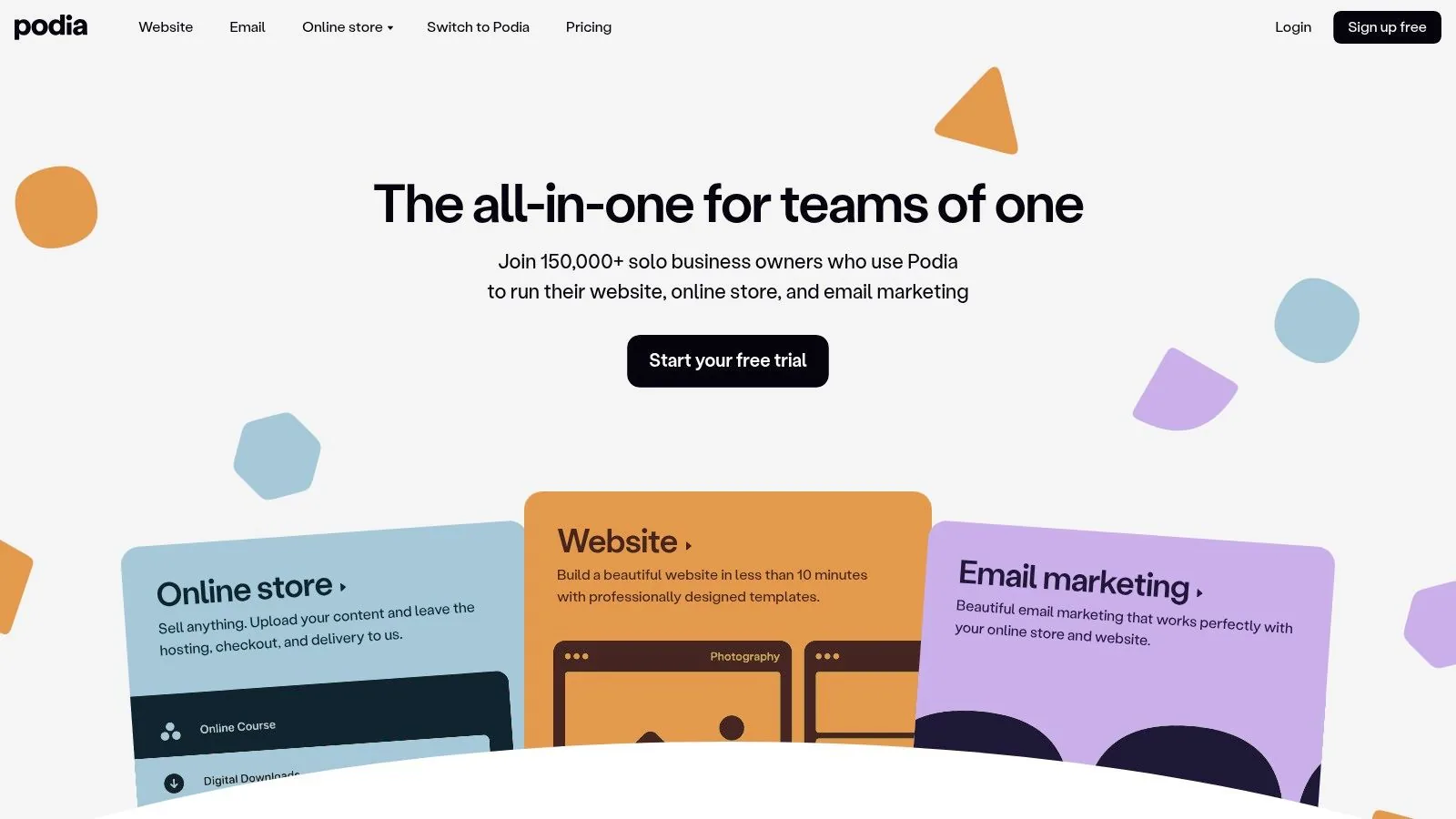
The platform’s major appeal is its integrated nature, offering a website builder, email marketing, affiliate management, and customer messaging all under one roof. This removes the need to stitch together multiple third-party tools, saving both time and money. You can learn more about Podia and its offerings directly on their official website.
Key Features and Pricing
Podia offers a transparent and simple pricing structure with a free plan and two main paid tiers (Mover and Shaker), both of which include unlimited products, customers, and landing pages. The plans are designed to scale as your business needs grow, with the Shaker plan adding affiliate marketing and removing transaction fees.
- Pros:
- Excellent for solopreneurs due to its fast setup and minimal need for other tools.
- Generous 30-day free trial and helpful migration assistance.
- Clear, straightforward pricing structure without complex tiers.
- Cons:
- The entry-level Mover plan has a 5% platform transaction fee.
- Offers fewer deep learning management system (LMS) features compared to more specialized course platforms.
6. LearnWorlds
LearnWorlds is an advanced, pedagogy-focused platform ideal for serious educators and training businesses aiming to create highly engaging and interactive learning experiences. It stands out by prioritizing robust course design features, allowing creators to build more than just simple video lessons. With its powerful interactive video player, advanced assessment engine, and support for SCORM, LearnWorlds is one of the best platforms for course creators who want to deliver a premium, education-first product.
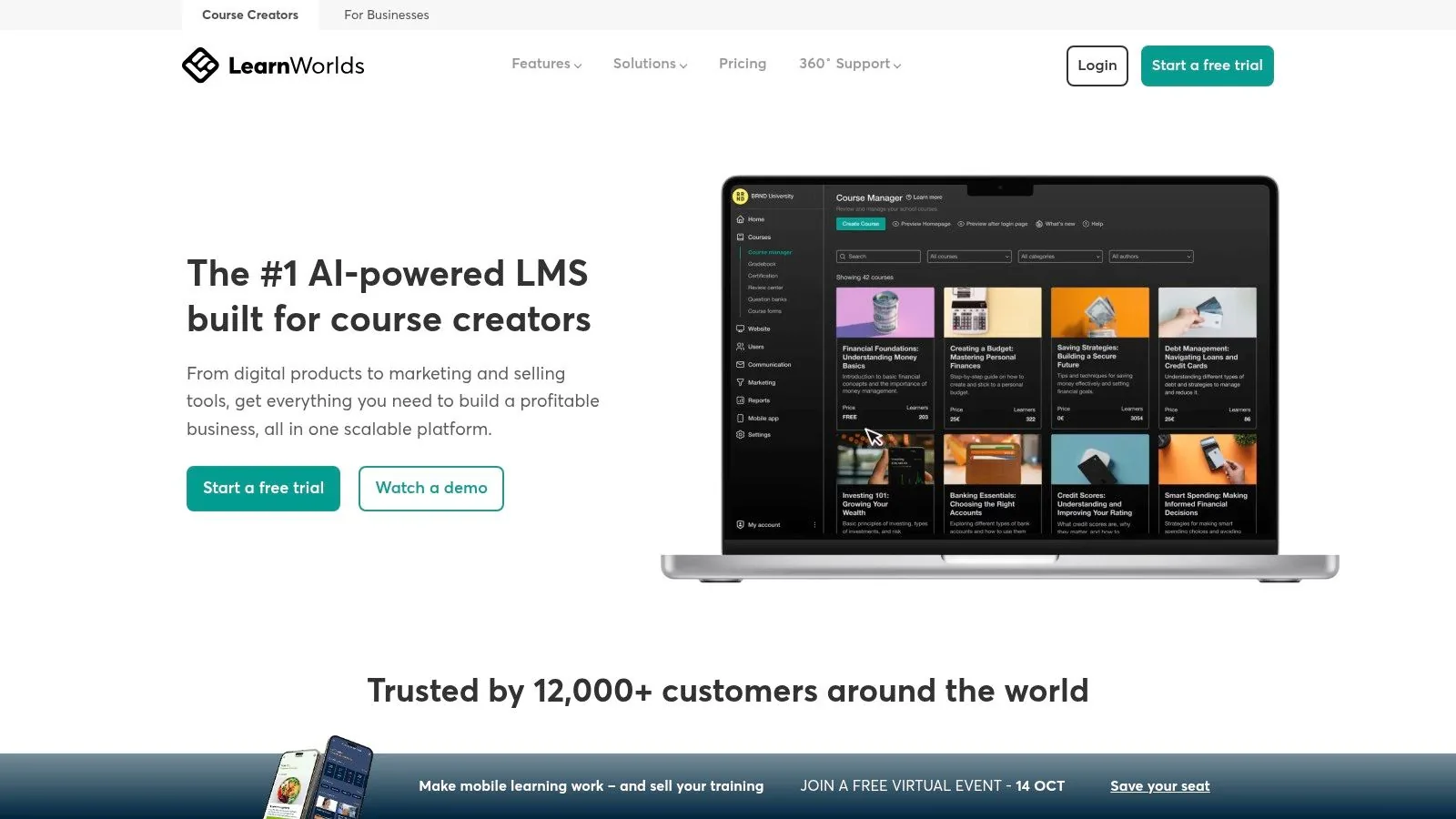
The platform is engineered for deep learning, enabling you to add interactive elements like questions, pop-ups, and navigation directly into your videos. It also supports subscriptions, memberships, and sales funnels to help you market and sell your courses effectively. For corporate trainers, the ability to integrate SCORM/HTML5 content and generate in-depth analytics makes it a powerful choice for professional development programs. You can find more details at https://www.learnworlds.com.
Key Features and Pricing
LearnWorlds offers a tiered pricing structure (Starter, Pro Trainer, Learning Center) that scales with your needs. While the entry-level plan has some limitations, higher-tier plans provide comprehensive features for professional course creators and businesses.
- Pros:
- Excellent pedagogy-friendly features like interactive video and advanced assessments.
- No platform transaction fees on the Pro Trainer plan and above.
- Offers a white-label mobile app on higher-tier plans for a branded learning experience.
- Cons:
- The Starter plan charges a $5 fee per course sale , making it less ideal for beginners.
- The interface can be more complex to master compared to simpler, more streamlined platforms.
7. Udemy (for Instructors)
Udemy operates differently from standalone platforms, positioning itself as a massive online course marketplace. For creators, this means tapping into a global student base actively searching for new skills, making it one of the best platforms for course creators focused on discoverability rather than building a personal brand from scratch. Instead of paying a monthly fee, you publish courses for free and leverage Udemy's powerful marketing engine and promotional events to drive sales.
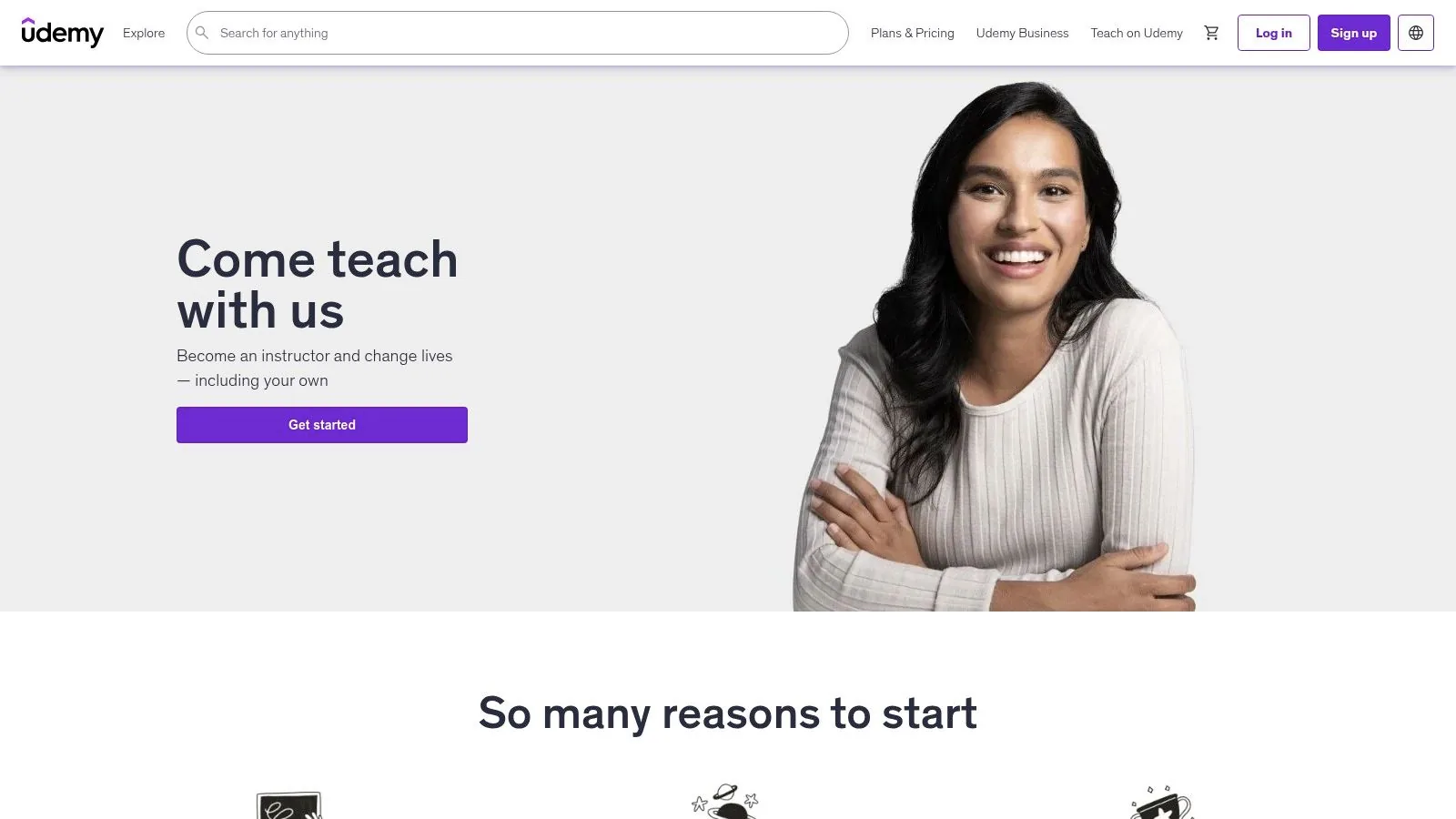
This model is ideal for instructors who want to test course ideas with minimal upfront investment or reach a broad, diverse audience without managing their own marketing funnels. The platform provides free hosting for unlimited courses and gives you tools like instructor coupons, which allow you to promote your course and retain a higher percentage of the revenue from your direct efforts. You can learn more at their teaching center.
Key Features and Pricing
Udemy is free to join as an instructor, with no monthly subscription fees. Revenue is generated through a share of course sales, which varies depending on how the student was acquired.
- Pros:
- Zero monthly platform fee to list and host unlimited courses.
- Massive built-in student base and marketing during sitewide promotions.
- Detailed revenue reporting and analytics to track performance.
- Cons:
- Limited control over course pricing and promotional discounting.
- The revenue share is significantly lower on sales driven by Udemy's organic marketing or affiliate efforts.
8. Skillshare (Teach)
Skillshare offers a distinct marketplace model, making it a unique contender for the best platform for course creators, particularly those in creative fields. Instead of selling courses directly to an audience you build, you publish classes on the Skillshare platform and earn revenue based on student engagement. This approach is ideal for creators who want to tap into a large, existing community of learners without the pressure of direct marketing and sales funnels. The platform is especially dominant in creative niches like design, illustration, and photography.
Your earnings are primarily derived from a monthly royalty pool calculated from the total minutes of your classes watched by Skillshare's paying members. This model rewards high-quality, engaging content that keeps students learning. Top and rising teachers can also earn engagement bonuses, providing an extra incentive to produce exceptional classes. For creators who can attract and retain viewers within this ecosystem, it provides a streamlined path to monetization without managing a personal sales infrastructure.
Key Features and Pricing
Teaching on Skillshare is free, with no hosting costs. Revenue comes from a share of the platform's subscription fees, and payouts are managed monthly through Tipalti. The focus is purely on content creation and student engagement within their ecosystem.
- Pros:
- Access to a large, built-in audience of eager learners.
- No hosting fees or upfront costs to start teaching.
- Excellent for building brand visibility in creative, design, and maker-focused niches.
- Cons:
- Earnings are variable and tied to platform-wide minutes watched, offering less direct control over revenue compared to direct-to-consumer sales.
- Success often requires building traction within specific, popular Skillshare categories to be discovered.
- You don't own the student relationship or their contact information.
9. Gumroad
Gumroad offers a radically simple and accessible entry point into selling digital products, making it an excellent platform for course creators who prioritize speed and flexibility over complex features. It's designed for creators who want to launch quickly with minimal overhead, focusing on content delivery rather than intricate site-building. The platform shines by removing technical barriers, allowing you to upload your course videos, PDFs, or other assets and start selling in minutes with a simple, shareable link.
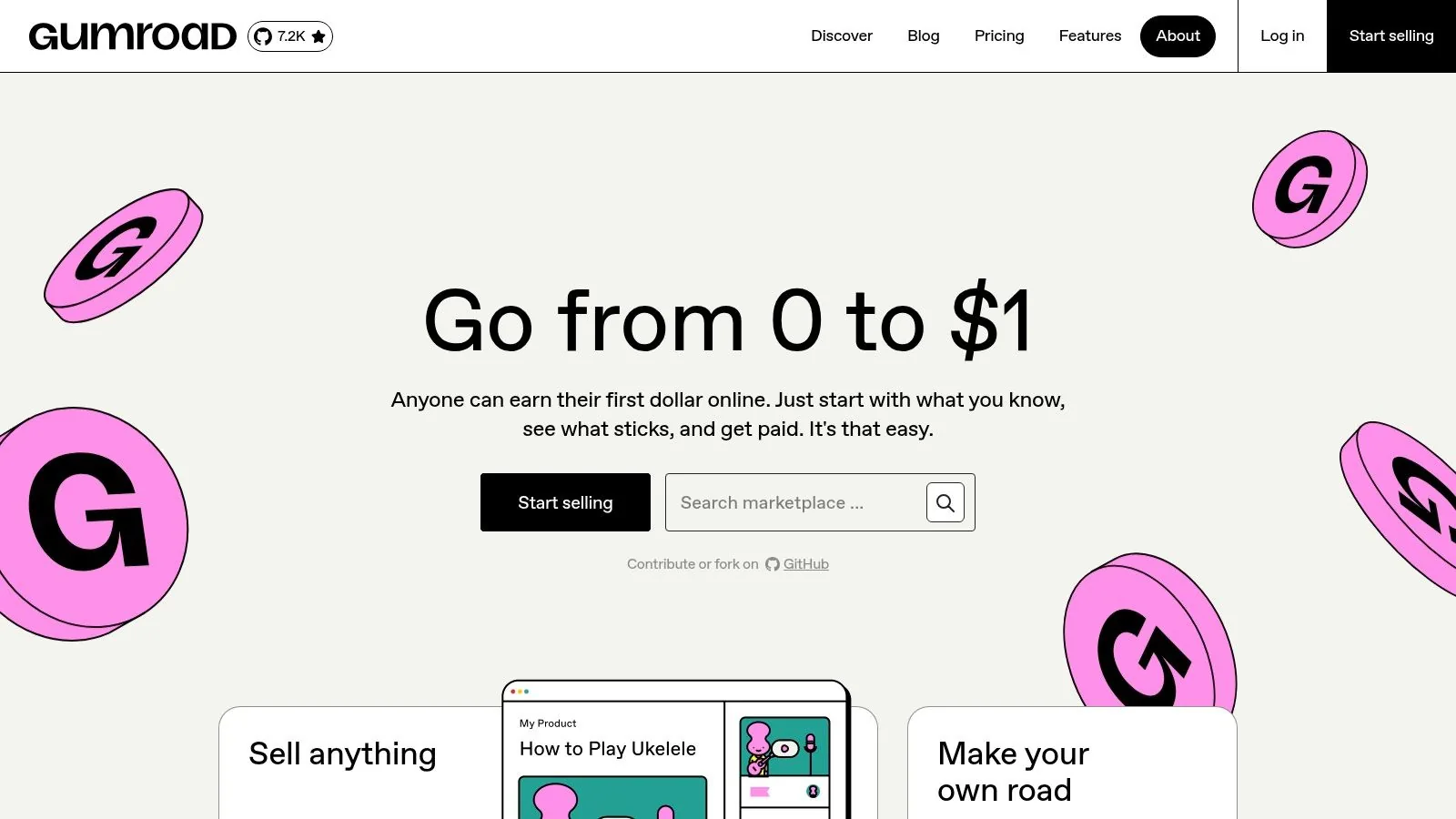
Its biggest differentiator is its role as a merchant of record, which means Gumroad handles the complexities of global sales tax collection and remittance on your behalf. This is a massive advantage for creators selling internationally. For those looking to understand how it fits into the broader market, you can find more information about platforms to sell digital products. This simplicity makes it a top choice for individual creators testing their first course idea or those with an established audience on other platforms.
Key Features and Pricing
Gumroad's pricing is straightforward: there are no monthly fees. Instead, it takes a flat 10% transaction fee on each sale until you reach lifetime revenue milestones, at which point the fee decreases. This pay-as-you-go model is ideal for those with unpredictable sales volumes.
- Pros:
- Extremely quick to launch with a very low commitment model.
- Handles global sales tax, simplifying international sales.
- No cap on products, with flexible payout options available.
- Cons:
- The transaction fees can be higher at scale compared to subscription-based platforms.
- Limited course-building and student engagement features compared to dedicated learning management systems.
10. Mighty Networks (Courses + Community)
Mighty Networks positions itself as a community-first platform where courses are a powerful, integrated feature, not just a standalone product. It's built for creators who believe that learning is most effective when it happens within a vibrant, interactive community. This approach makes it one of the best platforms for course creators whose strategy relies on cohort-based learning, memberships, and long-term student engagement, all supported by native mobile apps.
The platform excels at weaving together courses, live events, memberships, and discussion forums into a single, cohesive experience under your brand. Instead of sending students to a separate Facebook group or Discord server, you can host everything in one place, which significantly boosts interaction and retention. This unified environment allows you to build a true digital ecosystem around your expertise.
Key Features and Pricing
Mighty Networks offers a tiered pricing structure (Community, Courses, Business, Pro) that adds features as you scale. The entry-level "Courses" plan provides the core tools for selling online courses within your community space. Higher tiers unlock more advanced features and the ability to launch your own branded mobile apps.
- Pros:
- Excellent community engagement tools are at the core of the platform.
- Scales all the way to fully branded native mobile apps (Mighty Pro).
- Transparent transaction fee model with clear guidance on handling iOS App Store fees.
- Cons:
- Charges a platform transaction fee on most plans, which is in addition to standard payment processor fees.
- Less focused on traditional, deep learning management system (LMS) features compared to course-first platforms.
11. Circle
Circle has emerged as a leading community-first platform that now integrates native course creation, making it a powerful choice for creators prioritizing engagement. It excels at bringing discussions, live events, and educational content together under one roof. This unified environment is perfect for building a loyal audience, as it eliminates the need to send members to separate platforms like Facebook Groups or Discord for interaction. Its modern and intuitive user interface provides a premium experience for both creators and members.
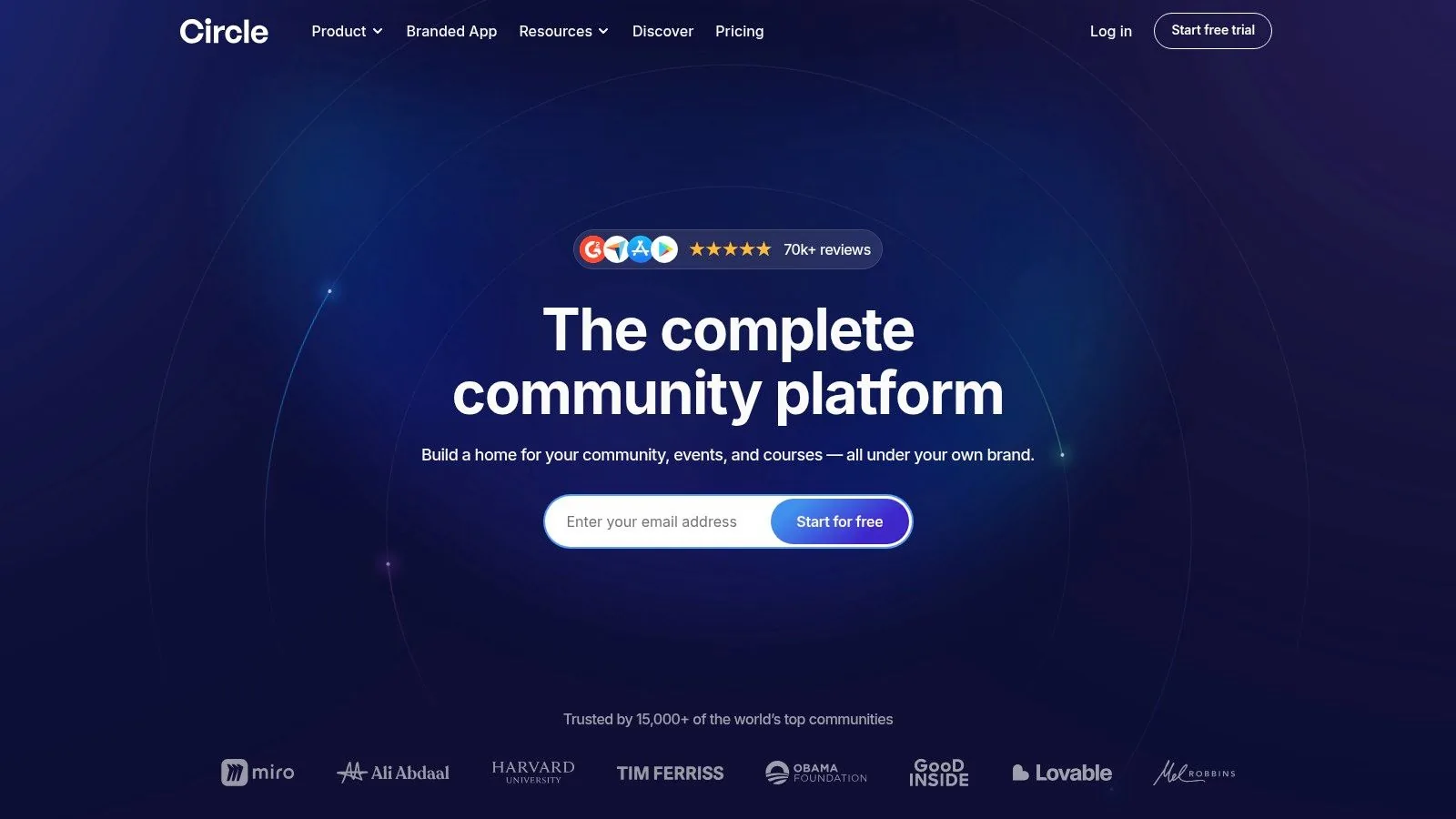
The platform is designed for creators who believe that a strong community is the core of their business. By weaving course content directly into community spaces, you can foster peer-to-peer learning and increase student retention. If you're looking to develop a community alongside your educational products, Circle is one of the best platforms for course creators focusing on a holistic member experience, complete with options for a fully branded mobile app.
Key Features and Pricing
Circle offers tiered pricing plans (Basic, Professional, Business, Enterprise) that scale based on members, storage, and access to advanced features. The course feature is available on the Professional plan and above, integrating seamlessly with its robust community tools.
- Pros:
- Excellent, clean user experience for both community and course delivery.
- Powerful integration of courses, events, live streams, and discussions.
- Developer-friendly options on higher tiers with API access and workflows.
- Cons:
- The core email hub is an extra paid add-on, increasing the total cost.
- Key features like workflows and API access are locked behind more expensive plans.
12. G2 (Online Learning Platforms category)
Instead of being a platform itself, G2 serves as an essential research hub for course creators. It's a leading software marketplace where you can find crowdsourced, verified user reviews and real-time rankings for the "Online Learning Platforms" category. For creators feeling overwhelmed by options, G2 provides a neutral ground to validate your shortlist, compare features side-by-side, and uncover how different tools perform for businesses of a similar size or industry. This makes it an invaluable first or final step in choosing the best platform for course creators.
The platform excels at providing data-driven comparison grids that weigh factors like user satisfaction, market presence, and specific features. You can filter results to see what’s popular with small businesses versus enterprises, helping you find a solution that truly fits your scale. While not a creation tool, its role in making an informed decision is critical to avoiding costly mistakes. For a more curated look at top options, you can also explore this guide on the best platforms for selling online courses.
Key Features and Pricing
G2 is entirely free to use for research. The business model relies on vendors paying for upgraded profiles and lead generation, but the core review and comparison data is accessible to everyone.
- Pros:
- Neutral, user-verified reviews provide honest feedback on a platform's strengths and weaknesses.
- Powerful comparison tools and filters help you make a data-backed decision.
- Often surfaces niche or up-and-coming platforms that might be a perfect fit.
- Cons:
- Sponsored placements can appear at the top of lists, so be sure to look at organic rankings.
- Pricing information is often a range; you must click through to the vendor’s site for current, precise details.
Top 12 Course Creator Platforms Comparison
| Platform | Core Features / Highlights | User Experience & Quality ★ | Value & Pricing 💰 | Target Audience 👥 | Unique Selling Points ✨ |
|---|---|---|---|---|---|
| Zanfia 🏆 | Courses, newsletters, memberships, AI team, MCP endpoint, checkout with order bumps and installments, test mode | ★★★★★ Highly praised support & ease | From $39/mo, or $31/mo billed annually; 0% platform commission | US creators scaling courses, communities and digital products | AI-first with voice dictation, 12 product types under one brand, built to sell |
| Thinkific | Drag-drop builder, TCommerce, app store | ★★★★ Strong onboarding & engagement | Tiered pricing, some fees on gateways | U.S. creators scaling their reach | TCommerce, extensive engagement tools |
| Teachable | Multi pricing models, iOS app, memberships | ★★★★ Fast launch, polished checkout | New plans reduce fees, starter fee | Beginners, coaches, small businesses | Fast setup, educational resources |
| Kajabi | Courses, email marketing, funnels, AI features | ★★★★ All-in-one with strong marketing | Higher price, discounted processing | Solo creators to small teams | Advanced automations, AI & translation tools |
| Podia | Unlimited products/customers, email, affiliates | ★★★★ Simple, quick setup | Transparent two-tier pricing | Solopreneurs, minimal tooling | Affordable, easy migration, clear pricing |
| LearnWorlds | Interactive video, SCORM, advanced analytics | ★★★★ Pedagogy-focused, 24/7 support | No fees on Pro+, starter fees apply | Edupreneurs, training businesses | Advanced learning design, white-labeling |
| Udemy (Instructors) | Large marketplace, free hosting | ★★★ Built-in discovery, revenue reports | No monthly fee, revenue share varies | Instructors seeking wide reach | Massive audience, built-in marketing |
| Skillshare (Teach) | Subscription revenue share, engagement bonuses | ★★★ Regular payouts, good niche support | No hosting costs, earnings variable | Creative/design niches | Built-in audience, engagement rewards |
| Gumroad | No monthly fee, pay-what-you-want, tax handled | ★★★ Quick launch, flexible payouts | Flat transaction fees, higher with discover | Flexible creators, digital sellers | Merchant of record tax handling |
| Mighty Networks | Courses + community, mobile apps | ★★★ Strong engagement tools | Transaction fees + Stripe/Apple fees | Community-centric courses | Native apps, gamification |
| Circle | Courses, community, API, branded app add-on | ★★★ Clean UX, developer-friendly | Pricing add-ons for email hub | Creators wanting community + curriculum | Headless APIs, scalable enterprise features |
Final Thoughts
Navigating the crowded landscape of online course platforms can feel overwhelming, but as we've explored, the journey to finding the best platform for course creators is about matching the right tool to your specific vision and business stage. We’ve analyzed everything from all-in-one powerhouses like Kajabi to community-first platforms like Mighty Networks and marketplaces like Udemy. The key takeaway is that there is no single "best" platform, only the one that best aligns with your goals, budget, and technical comfort level.
Your Path to Choosing the Right Platform
The decision ultimately hinges on a few critical questions you must ask yourself. Are you a "Potential Explorer" just starting out, needing a simple, low-risk solution to validate your first course idea? A platform like Podia or Gumroad might be an excellent entry point. Or are you a "Business Architect," an established creator earning consistently and feeling constrained by a disjointed tech stack? In that case, an integrated solution like Zanfia or Kajabi is designed to help you scale efficiently. For "Craft Masters" operating at the premium end of the market, a platform that offers robust white-labeling and a seamless student experience becomes non-negotiable.
Key Factors to Guide Your Decision
Before you commit, carefully weigh these deciding factors based on our deep dive into each tool:
- Pricing and Fees: Do you prefer a predictable monthly subscription, or are you comfortable with a platform taking a percentage of your sales? As of publication, Zanfia starts at $39/month (or $31/month billed annually) with 0% platform commission on customer sales, a strong way to protect margins as you grow.
- All-in-One vs. Specialized: Do you want a single system that handles everything from your website and email marketing to your courses and community? Or do you prefer a best-in-class, specialized tool for each function and are comfortable integrating them?
- Community Integration: Is building an engaged community a core part of your business model? Platforms like Circle, Mighty Networks, and Zanfia are built with community at their heart, and Zanfia's communities include an AI agent that writes from your own content (with every AI post clearly labeled), a strong assist for boosting student retention and lifetime value.
- Ownership and Branding: How important is it for your platform to be completely under your own domain and brand? Solutions offering full white-label capabilities are crucial for building a strong, independent brand identity that isn't diluted by the platform's own marketing.
Your Next Steps to Success
Once you've selected and launched your courses, your focus must shift from platform selection to student acquisition. Building a beautiful course hub is only half the battle; driving consistent enrollment is what will fuel your business growth. Mastering practical strategies to increase website traffic is paramount for attracting a steady stream of eager students to your digital doorstep.
Ultimately, the best platform for course creators is the one that empowers you to stop wrestling with technology and start focusing on what you do best: creating transformative content and building meaningful connections with your audience. Choose the partner that feels like an extension of your team, one that simplifies your operations and supports your long-term success.
FAQ
Does Zanfia charge platform commissions on my course sales?
As of publication, Zanfia charges 0% platform commission on customer sales, so creators keep 100% of revenue net of standard payment processor fees like Stripe. This is a key differentiator against platforms like Gumroad, which takes 10% + $0.50 on direct sales. Check zanfia.com/pricing for current terms.
What payment methods can I offer at checkout on Zanfia?
Zanfia's checkout supports Stripe and PayPal, cards, plus wallet payments including Apple Pay and Google Pay. You can also configure order bumps, subscription upsells, discount codes, and installment plans (for example splitting a $600 course into four payments). Test mode lets you run a real end-to-end purchase before your first live sale.
Can I try Zanfia before paying?
Yes, Zanfia offers a 14-day free trial with no credit card required, and paid plans start at $39/month (or $31/month billed annually) on Starter. There is no permanent free tier. Advanced capabilities like the full Assistant, MCP endpoint, and white-label AI live on higher tiers, so check the current pricing page for what's included (plan-dependent).
How does Zanfia's community feature differ from using Discord or Circle alongside a course platform?
Zanfia keeps courses and community unified under the creator's own brand and domain, instead of pushing audiences to external tools. Communities include a built-in AI agent that writes from the creator's own content, and everything it publishes is clearly labeled as AI. This removes the fragmentation of stitching together separate tools.
What kinds of products can I sell on Zanfia beyond online courses?
Zanfia supports 12 product types living side by side under one brand, including courses, communities, paid newsletters, digital downloads, memberships, consultations, and more. Creators can dictate actions to the AI team by chat or voice to set up these products, and a visual automation builder handles work like granting course access after payment or triggering email tool sync.
Ready to build your online course business on a platform that grows with you, not at your expense? Zanfia is an AI team that runs a creator business: dictate what you need by chat or voice, sell across 12 product types under one brand, and close the loop with a checkout built for order bumps, installments and test purchases before launch. As of publication, plans start at $39/month (or $31/month billed annually), with a 14-day free trial and 0% platform commission on customer sales. Explore Zanfia.