

Stay Ahead of the Game: Creator’s Guide to 2026 Trends
You can feel when your business is starting to sprawl.
Your audience is in one tool. Your course lives somewhere else. Payments run through another system. Email sits in a separate dashboard. Community discussion happens off-brand, often on a platform you don't control. Then a new trend hits, a platform changes its rules, and you spend the week reacting instead of improving the business itself.
That isn't a lack of ambition. It's usually a systems problem.
Most creators who want to stay ahead of the game don't need more tactics. They need a cleaner operating model. When your community, content, sales, and workflow data live in disconnected places, you lose context. You also lose time, margin, and the ability to tell which changes matter.
Beyond Reacting to Trends
The pressure to chase every new format is real. Short-form video rises, subscriptions shift, audience expectations change, and suddenly your backlog is full of "urgent" experiments that don't connect to a larger plan.
That approach burns people out because it treats growth like a sequence of reactions. It also hides the cost of fragmentation. Every extra tool adds another handoff, another login, another place where customer context goes missing.
Fast markets punish slow feedback loops
A useful lesson comes from digital entertainment. The global online gaming market is projected to generate $29.48 billion in revenue in 2025, and 80% of gamers aged 16 to 24 played online in 2024, according to Uswitch's online gaming statistics. The point isn't that creators should copy gaming. It's that digital-native audiences adapt quickly, and their expectations move with the environment.
If your market behaves like that, even in a smaller niche, scattered operations create lag. You spot demand later. You ship updates later. You fix weak offers later.
Practical rule: The creator who learns faster usually isn't the one consuming more information. It's the one running a tighter feedback loop.
What actually keeps you ahead
A durable setup usually has three characteristics:
- One view of the customer: You can see what people buy, where they engage, and where they drop off.
- One branded experience: Your audience doesn't get pushed into unrelated tools that dilute trust.
- One operating rhythm: Listening, product updates, analysis, and automation happen on a schedule, not in random bursts.
A pieced-together stack can work early on. It often stops working once margin pressure rises and your catalog expands. That's where a unified system changes the conversation. Instead of asking, "What trend do I need to chase next?" you start asking, "What signal inside my business deserves action now?"
That shift matters. Trend chasing keeps you busy. Operational clarity helps you stay ahead of the game.
Tune Into Your Market's True Signals
Creators get bad advice here. "Follow the market" often turns into following everything. Every competitor launch, every platform update, every social post that gets attention, every tool recommendation from someone in a different business model.
That isn't research. It's noise accumulation.
Stop collecting noise
A more useful discipline is angle-awareness. Expert coaching frames the advantage not as learning faster alone, but as deciding what to ignore and asking, "Which signals should I deliberately stop tracking?", as discussed in this video on angle-awareness and focus.
That question changes how you listen.
Instead of treating public visibility as proof of customer demand, you start separating signals into categories:
| Signal type | Usually worth attention | Usually worth filtering |
|---|---|---|
| Customer language | Repeated objections, recurring questions, buying hesitation | One-off praise with no buying intent |
| Product demand | Requests tied to a clear outcome | Requests for features that add complexity but no value |
| Competitor activity | Changes that alter customer expectations | Cosmetic launches designed for attention |
| Content feedback | Questions from paying members | Vanity metrics without follow-up behavior |
Use your community as a listening engine
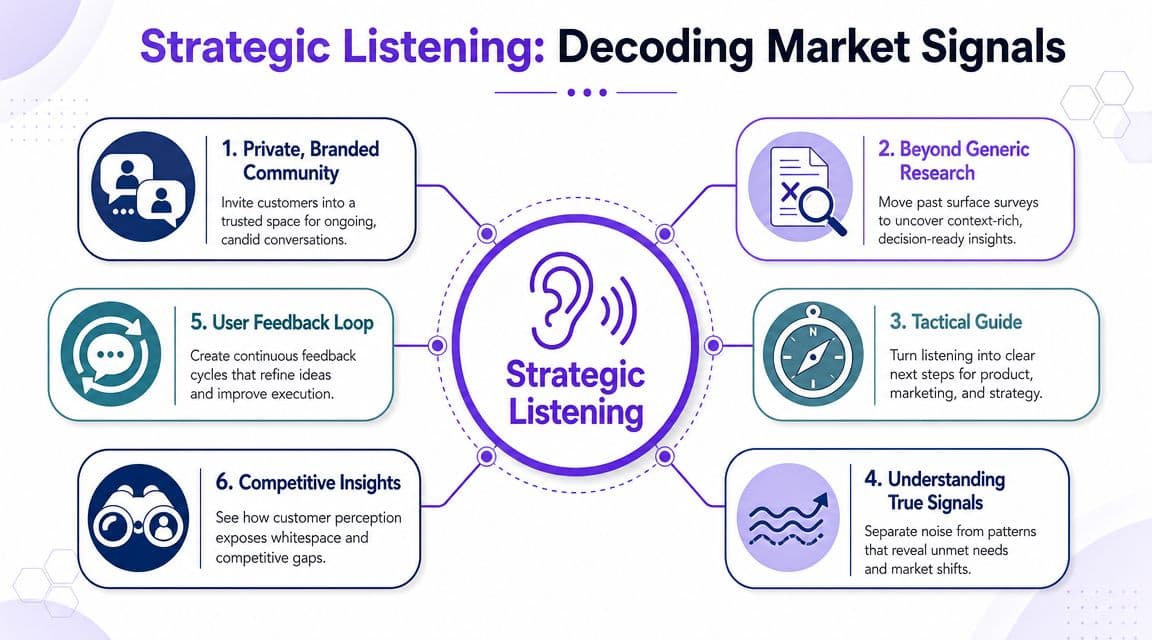
The best feedback often doesn't come from broad social reach. It comes from structured conversation with people who are close enough to your work to explain what they need in plain language.
A private, branded community helps because it creates context. In topical discussion channels, you can separate onboarding issues from advanced questions. In read-only announcement channels, you can test which themes trigger response. In grouped spaces, you can compare how beginners and experienced members describe the same problem differently.
That kind of listening improves three decisions quickly:
- Offer design: You hear where current products stop short.
- Positioning: You learn the exact words customers use to describe the pain.
- Validation: You test appetite before building too much.
If you're still shaping your first paid offer, this guide on how to validate a business idea gives a practical starting point.
What to ask your audience
Don't ask broad questions like "What do you want next?" That produces vague wish lists.
Ask tighter prompts instead:
- What's slowing you down right now?
- Where did the current product stop being useful?
- What would make this easier to finish or apply?
- What would you pay to solve faster, better, or with less friction?
Ignore broad applause. Follow repeated friction.
That's the difference between monitoring the market and actually hearing it. To stay ahead of the game, you need a signal system, not a content diet.
Build a Community-Driven Product Flywheel
Listening matters only if it changes what you build.
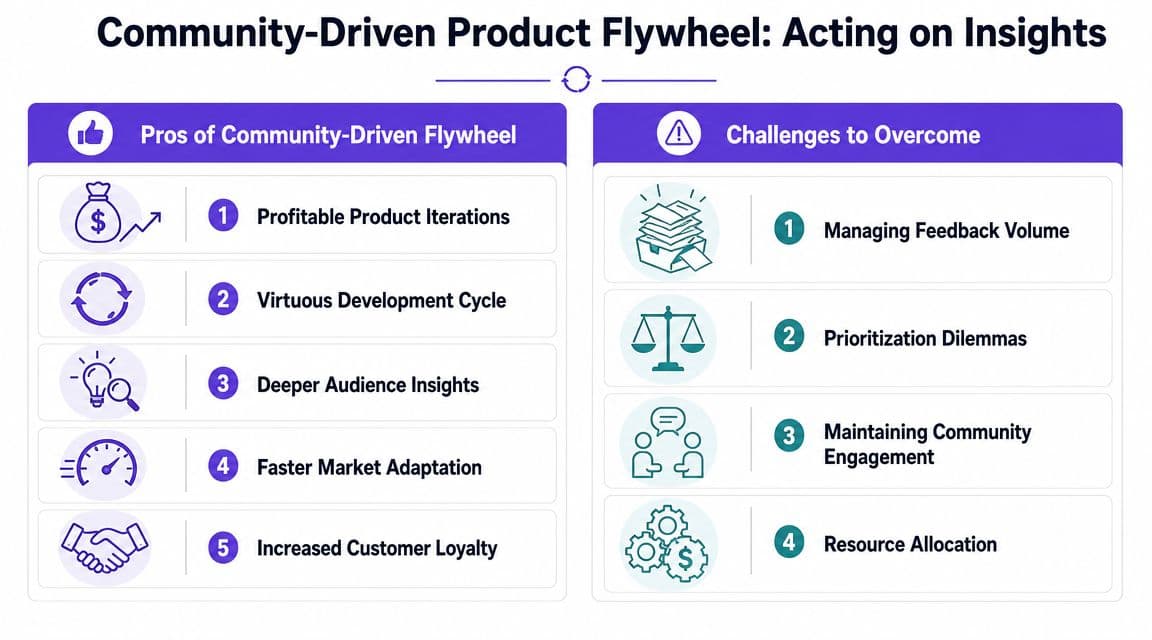
A strong creator business develops a rhythm where community questions shape product improvements, and those improvements make the community more useful. That loop compounds because members see their input reflected in the offer. Trust grows. Participation gets easier. Future launches become less speculative.
A practical example
Take an educator selling a flagship course. Inside the member space, the same question keeps surfacing in discussion channels. Students understand the framework, but they stall when trying to apply it in a live business.
The weak move is to answer each question manually forever.
The better move is to turn that repeated friction into product architecture. Add a bonus lesson. Create a worksheet. Record a walkthrough. Then place that update where current students already learn and talk. If the question has wider relevance, expand it into a paid newsletter issue, a short digital guide, or a new tier inside a membership.
A creator building this way doesn't need to guess what to make next. The audience has already supplied the roadmap.
If you're building that kind of structure, this article on how to develop a community is useful because it treats engagement as part of the product, not an add-on.
Why delayed value often wins
Many creators still optimize for immediate conversion at the expense of retention. That can work for a short launch cycle. It usually weakens the business over time because people buy once, consume partially, and drift away.
Research-oriented guidance on nurturing-focused design makes a stronger case: meaningful engagement is strengthened when rewards are not immediate and when value is created through repeated, compatible interactions over time, as explained in this article on game design strategies to support nurturers.
That idea maps directly to memberships, newsletters, and courses.
- A course gets stronger when student questions improve the material.
- A community gets stronger when members return for ongoing relevance, not just launch energy.
- A subscription gets stronger when each interaction reinforces the value of staying.
Build for the second month, not just the first sale.
What this flywheel looks like in practice
One practical setup is simple:
- Capture discussion themes: Tag common questions by topic.
- Turn repeats into assets: Convert recurring friction into lessons, templates, or bonus resources.
- Package by depth: Free insight, paid resource, premium implementation.
- Feed it back into the community: Let members discuss the updated material and reveal the next gap.
This is where an integrated environment matters. When community, courses, newsletters, and digital products live under one branded login, the jump from insight to offer is much shorter. Zanfia is built around this loop as an AI-first platform where an AI team runs the day-to-day work of a creator business, and you direct that team by chat or by voice instead of clicking through menus. Courses, communities, newsletters, and 12 product types live under one brand, with a checkout built to sell (order bumps, installments so you can split a $600 course into four payments, upsells, and a test mode for buying your own product before launch) and 0% platform commission on customer sales as the current model. For plan-level details, see the current Zanfia pricing. That setup reduces the friction of acting on what your audience is already telling you.
The point isn't to launch more products. It's to let the right conversations shape better ones.
Optimize Your Business with Clear Data
Community feedback tells you what people say. Analytics tell you what they do. You need both.
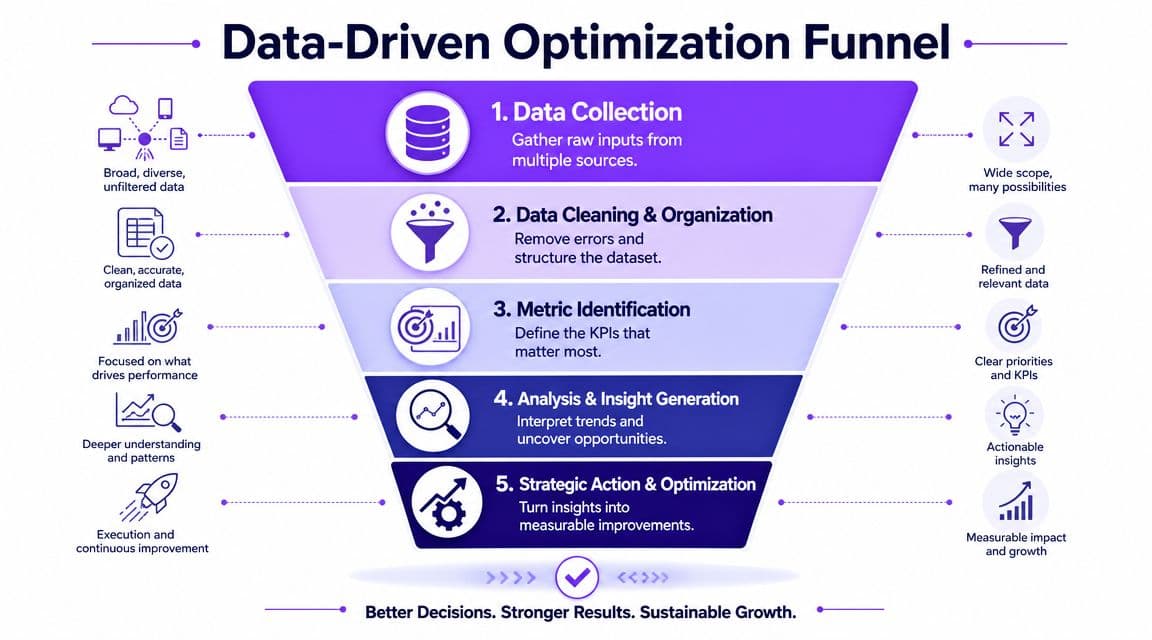
Most creators don't have a data problem. They have a context problem. Numbers sit in separate tools, so they can't connect product behavior, audience behavior, and buying behavior. Then they compensate by watching shallow metrics because those are easiest to find.
Treat business data like an operating asset
The strategic principle is straightforward. Businesses stay ahead when they collate information across operations to get a clear view of what's happening, then use that visibility to understand customers, identify growth opportunities, and adapt faster, as described by Phocas Software on staying ahead of competitors.
For creator businesses, that means your core data should help answer practical questions:
- Where are buyers hesitating?
- Which offer keeps attention after purchase?
- Which audience segment is engaged but under-monetized?
- Which product creates support burden without enough return?
Metrics that actually guide decisions
You don't need a sprawling dashboard. You need metrics that change action.
Sales and funnel behavior
Start with the path to purchase.
- Checkout completion: If people click through but don't buy, the issue may be friction, offer clarity, or payment preference.
- Offer-level conversion points: Compare how different pages, bundles, or pricing structures perform.
- Upsell acceptance: This helps you see whether the next offer feels relevant or forced.
If you want a cleaner way to judge whether your acquisition effort is paying off, this guide on how to calculate marketing ROI is worth reviewing.
Product usage and retention
Then look beyond the sale.
| Metric area | What it helps you decide |
|---|---|
| Course progress | Whether content is too shallow, too dense, or badly sequenced |
| Member activity | Whether the community is adding value or becoming passive |
| Subscription continuity | Whether people experience enough ongoing relevance to stay |
| Content engagement | Which formats deserve expansion and which should be cut |
A course with weak completion may need better pacing, stronger prompts, or tighter integration with discussion. A community with low participation may need clearer use cases, better segmentation, or more visible wins from member interaction.
One view changes your decisions
A unified platform proves its worth. If product access, community participation, payment behavior, and funnel analytics are connected, you can diagnose problems much faster. You stop guessing whether the issue is traffic, messaging, pricing, onboarding, or product design.
You also protect margin better. Under a 0% platform commission model on customer sales, every improvement in conversion or retention has a direct effect on what you keep, rather than being partially diluted by a platform cut. That matters more than many creators realize, especially once they have multiple offers and repeat buyers.
The creators who stay ahead of the game aren't obsessed with dashboards. They use a small set of connected signals to make better product and pricing decisions before problems spread.
Automate Admin Work to Reclaim Creative Hours
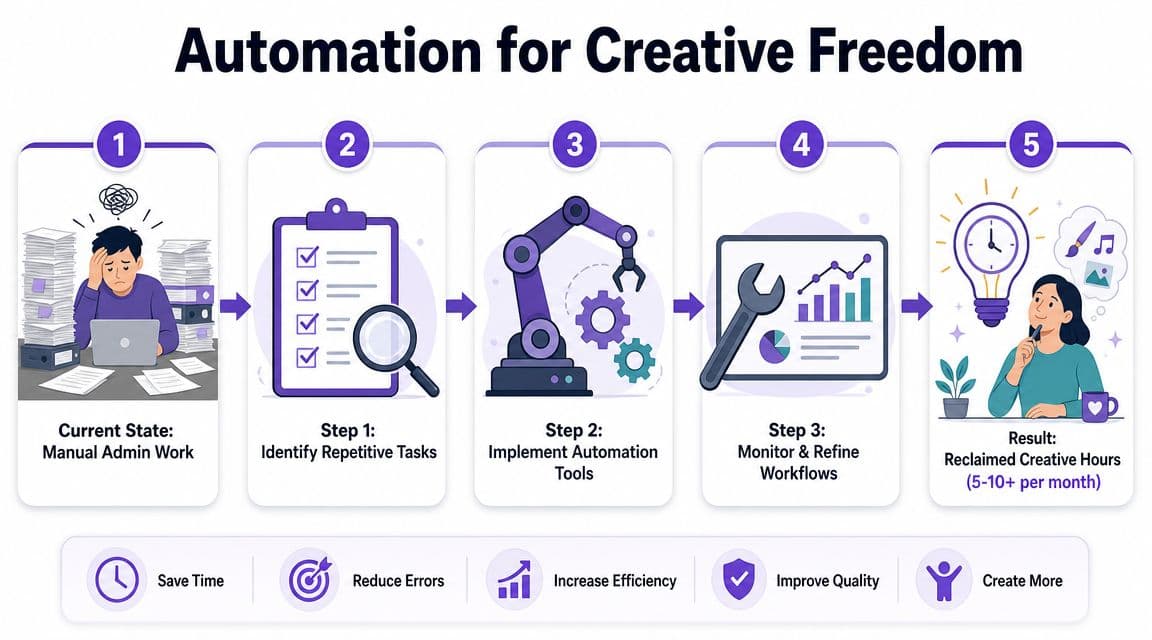
Manual admin is where a lot of creator momentum goes to die.
Not because the tasks are hard. Because they arrive constantly, interrupt good work, and drain attention that should go to teaching, writing, product design, or sales. Access emails. Member tagging. Subscription changes. Invoice handling. Welcome messages. Support cleanup.
Automation should protect human work
The most reliable approach is selective automation, not blanket replacement. Independent reporting on AI adoption recommends using automation as a co-pilot. Automate repetitive work so people can focus on judgment-heavy tasks such as creative problem-solving and communication, as explained in this analysis of AI and staying ahead.
That's the right frame for creators too.
You shouldn't automate the parts of your business that depend on trust, nuance, or taste. You should automate the parts that are predictable and high-volume.
The best automation removes delay. It doesn't remove judgment.
Start with workflow triage
A simple audit works well. List the tasks you repeat every week or every sale, then mark them by two criteria:
- How often does this happen?
- How much judgment does this require?
High-frequency, low-judgment tasks go first.
| Task | Good candidate for automation | Keep human-led |
|---|---|---|
| Granting course access after payment | Yes | No |
| Adding buyers to the right member area | Yes | No |
| Sending welcome emails | Yes | No |
| Renewals and access expiry handling | Yes | No |
| Product strategy decisions | No | Yes |
| Sensitive support conversations | No | Yes |
If you want a broader primer before redesigning your workflows, Refgrow explains marketing automation in a way that's practical for smaller online businesses.
Later, when you're ready to tighten operations, this resource on the best workflow automation tools can help you compare approaches.
What useful creator automation looks like
In an integrated creator setup, the highest-impact automations are usually boring on the surface and powerful in practice:
- Purchase-triggered access: A buyer pays and gets immediate entry to the course or membership.
- Community assignment: Customers are added to the right discussion channels based on what they bought.
- Lifecycle emails: Welcome messages, onboarding prompts, and renewal communication go out without manual handling.
- Subscription control: Access changes automatically when a plan renews or ends.
- Voice-driven operations: Instead of building each rule by hand, you dictate what should happen, and an AI assistant that knows the whole interface sets it up for you.
That kind of automation can save 5 to 10+ hours a month, based on the platform brief for Zanfia. More importantly, it reduces task switching.
Here's a quick look at the mindset behind this shift:
More than just time, the gain is quality of attention. When admin flows in the background, you can spend your best hours on better lessons, sharper offers, stronger conversations, and cleaner strategy. That's how automation helps you stay ahead of the game without turning your business into a machine that feels impersonal.
Your Blueprint for a Resilient Creator Business
A resilient creator business doesn't come from intensity alone. It comes from running a repeatable loop.
Listen closely enough to spot real demand. Turn that demand into product improvements and new offers. Study the right data so you can see what's working and where friction is building. Automate the routine work that keeps pulling you away from high-value decisions.
Run the loop before performance slips
There is a practical model for this. Treat capabilities as a moving inventory. Define what matters now, audit it regularly, watch market signals, and build the next capability before the gap gets expensive, as outlined in this guide to learning agility and staying ahead.
That idea applies to more than skills.
It applies to your offers, your content formats, your customer experience, and your operating system. A course isn't a static asset. A community isn't a side feature. A funnel isn't finished because it once converted. Everything in a creator business drifts unless you revisit it.
What resilient operators do differently
They don't confuse motion with adaptation.
They review what members are asking. They cut channels that produce noise. They refine the offer based on actual usage. They protect margins by simplifying the stack. They install systems that let the business improve without demanding constant reinvention.
A practical blueprint looks like this:
- Listen on purpose: Use structured community feedback and direct customer language.
- Iterate from evidence: Build the next lesson, offer, or tier from repeated needs.
- Optimize with context: Connect sales, engagement, and retention signals before making changes.
- Automate the routine: Remove repeat admin so creative and strategic work gets your best energy.
If you want to make that loop operational, this piece on scaling with systems is a strong next read.
The creators who stay ahead of the game usually aren't doing more than everyone else. They're seeing more clearly, deciding faster, and operating with less friction. That's what gives them room to adapt without breaking their focus.
FAQ
How do I decide which trends to ignore instead of chasing every new format?
Sort signals into categories: repeated customer objections, buying questions, and requests tied to a clear outcome are worth attention, while one-off praise, cosmetic competitor launches, and vanity metrics without follow-up behavior are worth filtering out. The article calls this angle-awareness, and the discipline is deciding what to deliberately stop tracking. That question turns broad market monitoring into a signal system you can actually act on.
What questions should I ask my community to get useful product feedback?
Skip broad prompts like 'what do you want next?' because they produce vague wish lists. Ask tighter ones instead: what's slowing you down right now, where did the current product stop being useful, what would make this easier to finish or apply, and what would you pay to solve faster or with less friction. Ignore broad applause and follow repeated friction.
How does the community-driven product flywheel actually work?
Capture discussion themes by tagging common questions by topic, turn repeats into assets like lessons or templates, package them by depth (free insight, paid resource, premium implementation), then feed the updated material back into the community to surface the next gap. Members see their input reflected in the offer, which builds trust and reduces speculation on future launches. Build for the second month, not just the first sale.
Which metrics actually guide decisions for a creator business?
Focus on a small set of connected signals rather than a sprawling dashboard. For sales, watch checkout completion, offer-level conversion, and upsell acceptance. For product and retention, watch course progress, member activity, subscription continuity, and content engagement, because each one tells you whether to fix pacing, segmentation, pricing, or onboarding.
Which admin tasks should I automate first, and which should stay human?
Audit tasks by frequency and by how much judgment they require, then automate the high-frequency, low-judgment ones first. Granting course access after payment, adding buyers to the right member area, and sending welcome messages are strong candidates. Keep human judgment on anything that depends on trust, nuance, or taste, so automation removes delay without removing judgment.
If you want a simpler way to run that loop under your own brand, Zanfia is built as an AI team that runs a creator business rather than a tool you have to configure. You direct it by chat or by voice, the assistant performs any action available in the interface, and agents can plug in through an MCP endpoint. Courses, communities, paid newsletters, and 12 product types live under one branded custom domain, with a checkout built to sell (order bumps, installments, upsells, and a test mode for buying your own product before launch) and 0% platform commission on customer sales as the current model. It's a practical fit for creators who want less tool sprawl, cleaner operations, and more room to grow with clarity. Try it free for 14 days, no credit card required.