

What Is a Content Creator in 2026?
Not too long ago, a “content creator” was just someone who posted things online. Maybe they had a blog, or a YouTube channel they updated on the weekends. Today, that definition feels ancient.
What Is a Modern Content Creator

The modern content creator is much more than an online personality. They're a new breed of entrepreneur—a unique blend of educator, entertainer, and community architect who operates their own one-person media company.
Think of it this way: they don't just make content anymore. They build entire businesses around their passion and expertise. Whether it’s through videos, articles, podcasts, or in-depth online courses, they produce valuable material for a very specific audience. The real shift is that they've stopped simply broadcasting at people and started building sustainable businesses with them.
This evolution from casual poster to business owner is the single biggest change in the creator economy. It’s a move from chasing views to creating real value and fostering deep, lasting relationships with a loyal community. You can dive deeper into this shift by exploring what a digital creator means in our detailed guide.
The Creator Archetypes
So, where do you fit in? Understanding the common archetypes helps clarify which path aligns with your skills and goals. Most successful creators eventually mix and match these roles, but almost everyone starts by excelling at one.
The most successful creators are those who stop seeing themselves as just 'creators' and start acting like business owners. They build systems, own their audience relationships, and focus on delivering tangible value that people are willing to pay for.
The journey from a passionate expert to a full-fledged business owner is about more than just having good ideas. It’s about having the right infrastructure to build, manage, and monetize an audience directly. This is where a platform like Zanfia fits in: instead of a course tool with add-ons bolted on, Zanfia works as an AI team running the business alongside you. You dictate what needs to happen, by chat or by voice, and the assistant performs any action available in the interface. Your courses, communities, paid newsletters and digital downloads live under one brand, on your own domain, with a checkout built to sell (order bumps, installments, upsells and a test mode so you can buy your own product before launch). Under the current model, Zanfia charges 0% platform commission on customer sales, so you only cover the standard processing fee from gateways like Stripe.
To help you find your starting point, here are the primary creator archetypes we see today.
| Creator Archetype | Primary Goal | Common Content Formats |
|---|---|---|
| The Educator | To teach and share specialized knowledge. | Online courses, tutorials, paid newsletters, e-books. |
| The Entertainer | To amuse and captivate an audience. | Short-form videos, live streams, vlogs, podcasts. |
| The Community Builder | To connect like-minded people. | Paid communities, membership sites, live Q&A sessions. |
| The Expert | To establish authority and sell expertise. | Webinars, case studies, knowledge libraries, cohort-based courses. |
Each archetype has a different primary focus, but they all share a common thread: building a direct connection with an audience and turning that attention into a durable business.
The Reality of the 2026 Creator Economy
The dream of being a content creator often gets painted as a lottery ticket to fame and easy money. And while the creator economy is absolutely massive, the on-the-ground reality is a lot more complex. Success isn't about luck; it's about building a business.
Understanding this from the start is what separates the hobbyists from the professionals. The hard truth is that top-tier, celebrity-level earnings are a tiny fraction of the whole picture. But building a stable, sustainable business that provides a great living? That's more achievable now than ever before—if you approach it like a business owner, not a lottery player.
The Great Income Divide
Let's cut right to the numbers. The creator economy looks a lot like a pyramid, where a very small group at the top captures a huge slice of the income. This can sound discouraging, but it actually reveals the roadmap to success.
A recent survey painted a stark picture: almost half of all creators made less than $500 in a year, and only a slim 9% managed to cross the $100k mark.
Think about it this way: if you’re earning a steady $30,000 a year, you are already out-earning roughly 80% of other creators. You're not just getting by; you're in the top tier.
This is where the strategy pivots. The path into that top 20% isn't paved with viral videos and brand deals. It's built on something much more durable: direct audience relationships and diversified income streams.
The Power of Audience Ownership
Your most important asset as a creator isn't your follower count. It's your direct line of communication with the people who value your work.
Relying on social media algorithms is like building your house on rented land. The landlord can change the rules, raise the rent, or even kick you out overnight. Your business is at the mercy of a platform you don't control.
True ownership means having a direct connection to your community through channels you control, like an email list or a private, branded community. This is your most valuable business asset, insulating you from unpredictable platform changes.
This concept of "audience ownership" is what separates a fragile hobby from a resilient business. When you own your audience, you can:
- Communicate directly: No more fighting with an algorithm just to reach your own people.
- Build real relationships: You can create a dedicated space that fosters genuine loyalty and trust.
- Monetize on your terms: Sell courses, memberships, and products directly to your most engaged fans—the ones who actually want to buy from you.
The data backs this up completely. Creators who focus on growing their email lists are 2.7 times more likely to earn over $31,000 annually. This is the model Zanfia is built to support. Your community, courses and newsletters live under your own brand and domain, so members stay in your ecosystem instead of being pushed out to a Discord server you don't own. On top of that, Zanfia works as an AI team that runs the operational side for you: you dictate what to publish, who to move between plans, or which segment to email, and the assistant performs the action inside the platform. Under the current model, that runs on 0% platform commission, so retention and lifetime value stay yours.
How Content Creators Actually Make Money
For a long time, the path to making money as a creator seemed simple, if a bit fragile: get millions of views and cash in on ad revenue or brand sponsorships. While those old-school methods still exist, today’s smartest creators are building their businesses on a much stronger and more diverse foundation.
They’ve moved beyond chasing fleeting attention and started selling real value directly to their audience. The modern creator’s income isn't just about ads anymore; it's about building a portfolio of revenue streams. This approach is more stable, more profitable, and puts you—not a platform's algorithm—in control of your financial destiny.
This shift is happening for a good reason. The entire creator economy is projected to explode from $127.65 billion in 2023 to an incredible $528.39 billion by 2030. And while brand deals remain popular, the real growth is in direct monetization. Affiliate marketing, advertising, and paid subscriptions are all surging as creators get savvier about their business models. You can dig into more of these trends and find more creator economy stats over at Exploding Topics.
Beyond Ads and Sponsorships
The most resilient creator businesses are built on direct monetization. This just means you sell valuable products and experiences straight to your community, cutting out the middlemen who control ad payouts and brand deals.
It's a strategy that puts you firmly in the driver's seat. Instead of waiting for a brand to notice you, you create offers your audience genuinely needs and is happy to pay for.
The most popular direct monetization models include:
- Online Courses: Packaging your expertise into a structured learning experience is one of the most powerful ways to generate serious income.
- Paid Communities: Building exclusive, premium spaces where members can connect, learn, and get direct access to you.
- Digital Products: Selling things like e-books, templates, guides, or other downloadable resources that solve a specific problem.
- Paid Newsletters: Delivering high-value, premium content straight to your subscribers' inboxes for a recurring fee.
To understand the financial landscape, it's helpful to see how income is distributed across the creator economy. This infographic paints a clear picture.
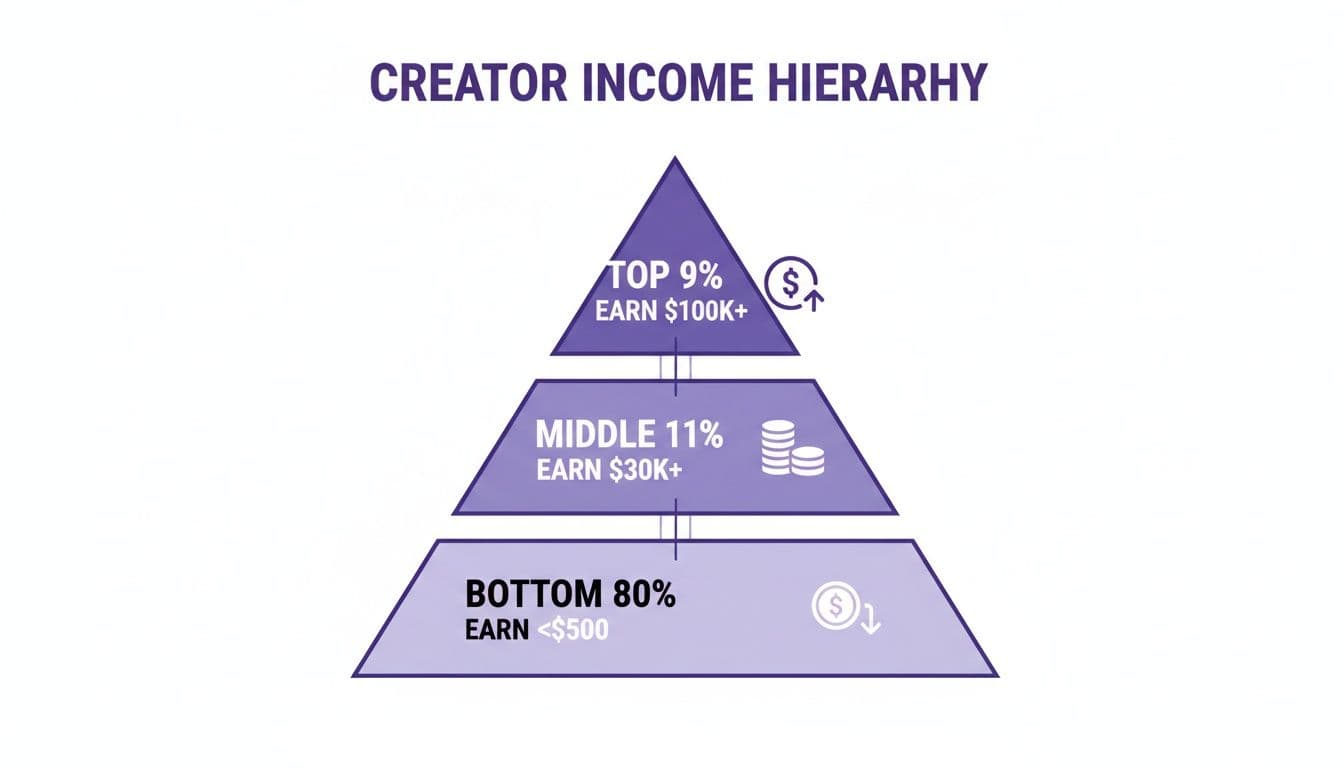
As you can see, breaking into those top tiers requires a strategic approach that goes far beyond just relying on ads.
Choosing the right monetization mix depends on your niche, audience, and how much time you can invest. Here’s a quick comparison to help you weigh your options.
Creator Monetization Models Comparison
| Monetization Model | Typical Income Potential | Effort Level | Platform Dependency |
|---|---|---|---|
| Advertising | Low to Medium | Low | Very High |
| Sponsorships | Medium to High | Medium | High |
| Affiliate Marketing | Low to High | Low to Medium | Medium |
| Digital Products | Medium to Very High | Medium | Low |
| Online Courses | High to Very High | High | Low |
| Paid Memberships | High (Recurring) | High | Low |
The key takeaway? Models with lower platform dependency, like courses and digital products, put more control (and profit) back in your hands.
The Power of Zero Percent Platform Fees
When you’re selling your own digital products, every single percentage point of revenue counts. This is where your choice of platform becomes one of the most critical business decisions you’ll make.
Many platforms take a hefty cut of every sale, eating directly into your profits and making it harder to scale your business.
Imagine you sell an online course for $500. On a platform that takes a 10% transaction fee, you instantly lose $50. After just 50 sales, that’s $2,500 gone—money that you could have reinvested into growing your business.
Under the current model, Zanfia charges 0% platform commission on your transactions. You only cover the standard processing fees from your payment gateway (Stripe or PayPal, roughly 2.9% + $0.30 per transaction in the US). You keep the rest of the revenue you worked to earn. For creators pulling in several thousand dollars a month in sales, that transparent split adds up to real money you can reinvest into marketing, better equipment, or your own paycheck.
Managing all these income streams—a course, a community, and an e-book—can get complicated fast. Zanfia centralizes them, but it goes a step further than a typical all-in-one dashboard: the AI team on top of the platform is designed to run the operational work, not just host it. You can dictate an update to a product page, ask the assistant to move a customer to a different plan, or launch a paid newsletter, and it does the work inside the interface. For teams that want to plug their own agents in, Zanfia also exposes an MCP endpoint so external AI assistants can act on the workspace directly (availability depends on the plan, see the current Zanfia pricing).
If you’re ready to go deeper on these strategies, check out our complete guide on how to monetize online content.
The Essential Creator Toolkit and Skills

Knowing what a creator is and how they get paid is just one piece of the puzzle. The other, more critical part, is understanding how they actually do the work. Success isn’t about having a great idea; it's about having the right skills and the right tech to execute that idea and turn it into a real business.
At its core, being a creator is a blend of art and entrepreneurship. This demands a surprisingly balanced skillset that goes way beyond just hitting "record." You need the timeless soft skills to connect with people and the essential hard skills to deliver professional-grade work.
Core Creator Skills
To really thrive, you need to develop a solid foundation in a few key areas. This isn't about becoming a world-class expert in everything overnight. It's about building enough competence to operate your business independently.
- Storytelling: This is the magic ingredient. The ability to weave a narrative is what makes your content connect and stick with people.
- Copywriting: Your website, emails, and sales pages are your digital storefront. Writing persuasive copy is what turns casual followers into paying customers.
- Basic SEO: Understanding how search engines work is how new people find you. It’s the engine for organic, long-term audience growth.
- Community Management: Knowing how to build and maintain a safe, engaging space is what turns a one-time buyer into a loyal, long-term member.
A huge part of this also involves getting comfortable with editing software. For anyone working with images, checking out the best professional photo editing app is a great place to start.
The Problem with a Fragmented Tech Stack
As creators start to gain momentum, they almost always end up with a messy, disconnected collection of tools. This "duct tape" approach is all too common: a WordPress blog here, an e-commerce plugin there, a Discord server for community, and yet another service for the email newsletter.
This fragmented system creates a massive administrative headache. You’re constantly bouncing between different logins, wrestling with plugins that don’t talk to each other, and praying that a simple update doesn't break your entire setup.
The most common ceiling creators hit isn't a lack of ideas—it's a technical one. Wrestling with a dozen disconnected tools steals energy that should be spent creating value for your audience.
This is precisely why your choice of platform is a strategic business decision, not just a technical one.
The Power of an All-in-One Platform
Instead of patching together a dozen different services, a unified platform brings everything under one roof. Think of it like moving from a cluttered garage workshop into a clean, organized studio where every tool is exactly where you need it.
Zanfia is engineered to eliminate that chaos, but the difference isn't just consolidation. Sitting on top of the platform is an AI team you can direct by chat or by voice: you describe the change you want, and the assistant performs it inside the interface, from publishing a lesson to updating a checkout to moving a member between plans.
- Integrated Community and Courses: Your online courses and community channels live in the same place. This creates a frictionless experience where members can discuss lessons right where they learn, dramatically boosting engagement and member retention.
- Native Video Hosting: You can upload all your video content directly to the platform, eliminating the need for costly external services like Vimeo or Wistia, while a smart video player saves student progress automatically.
- A Checkout Built to Sell: Sell courses, memberships, digital downloads and newsletters through one checkout that supports Stripe and PayPal (plus Apple Pay and Google Pay), and layer on order bumps, installments (split a $600 course into four payments) and post-purchase upsells. A built-in test mode lets you buy your own product first to confirm the whole funnel and tracking fire correctly before launch.
This integrated approach is about more than convenience; it's about radical efficiency. Powerful automations, like instantly granting course access after payment or adding buyers to the right community channels, regularly save creators 5–10+ hours a month, freeing them up to focus on high-impact work.
To see a breakdown of the top options, check out our guide to the best tools for content creators. Ultimately, an integrated system acts as your business partner, handling the technical heavy lifting so you can get back to what you do best: creating.
Building Your Business on an Owned Platform
For any serious creator, the single most critical strategy for long-term success is building your business on land you actually own. It’s tempting to start and stay on social media platforms—they’re great for getting discovered—but building your entire business there is like constructing a beautiful house on rented property.
You’re completely at the mercy of the landlord. At any moment, an algorithm shift, a new content policy, or even a platform outage can demolish your reach and income overnight. This isn't just a risk; it's a fundamental vulnerability no business owner should accept.
The only real solution is to move your core business to an "owned platform". This is your digital headquarters, a space where you control the experience, the branding, and your direct line to your audience. This is where you build real, lasting value.
Owning Your Brand with a White-Label Platform
An owned platform strategy usually means using a white-label platform. Think of it as your own branded digital space, completely free of someone else’s logo.
Instead of your audience landing on a generic platform page, they see your brand, your colors, and your custom domain in the address bar. This instantly elevates your professionalism and builds the trust you need to make sales.
Zanfia is built around that principle: each creator gets their own subdomain or maps a custom domain, and the whole experience runs on your brand rather than the platform's. Custom domain support and white-label branding are available on Zanfia plans (specifics are plan-dependent, see the current Zanfia pricing). Your clients experience your brand, not the platform's. That matters especially for recognized experts and premium brands who can't afford to dilute their reputation on a generic, third-party page.
How Different Creators Use Owned Platforms
This strategy isn’t just for the pros; it serves creators at every stage of the journey, but in different ways. Zanfia fits three core personas:
- "Potential Explorers": Just starting out and feeling overwhelmed by tech? An all-in-one owned platform like Zanfia offers the simplest, lowest-risk way to launch your first digital product. You get a professional look from day one, without the headache. A 14-day free trial (no credit card required) lets you set the whole thing up before you commit.
- "Business Architects": Earning several thousand dollars a month and tired of juggling a dozen different tools? An owned platform consolidates your entire operation into one system, protects your margins from stacked transaction fees, and lets an AI team handle the operational work so you can focus on the product.
- "Craft Masters": For top-tier leaders, brand identity is non-negotiable. An owned platform provides elegant, rock-solid technology that matches your premium positioning, ensuring your audience gets a first-class experience that reflects the quality of your work.
Real-World Success with Full Brand Control
The power of owning your platform isn't just theoretical. Creators are already using this model to build resilient, independent businesses.
When you have total control over your brand and technology, you’re free to do what you do best—create amazing content and serve your community. This level of control is vital for recognized experts unwilling to dilute their reputation on a platform that imposes generic branding.
Ready to make the jump from consuming content to creating it? The path can feel like a big one, but it’s really just a series of clear, actionable steps. This is where we distill everything down to a practical roadmap, giving you the confidence to launch with purpose.
This isn't about getting everything perfect on day one. It's about starting smart, building momentum, and putting the right foundation in place to support your growth.
Step 1: Define Your Niche and Audience
Before you hit record or type a single word, you have to answer two critical questions: Who are you creating for, and what specific problem are you solving for them? This is the core of your entire business.
A well-defined niche doesn’t box you in; it gives you focus. Instead of trying to be everything to everyone, your goal is to become the go-to expert for a specific group of people who share a common problem or passion. For example, don't just be about "fitness." Narrow it down to "strength training for busy parents over 40." That’s a niche.
Step 2: Choose Your Core Content Format
Next, pick one primary content format and commit to it. Don't try to master a YouTube channel, a blog, a podcast, and a TikTok account all at once. That's a direct path to burnout.
Choose the one format that plays to your natural strengths and where your target audience already spends their time.
- Love to write? Start with a blog or a paid newsletter.
- Comfortable on camera? Focus your energy on YouTube or short-form video.
- A great speaker? A podcast might be the perfect fit.
You can always expand into other formats later. Mastering one platform first allows you to build a solid initial following and nail down a consistent workflow.
Step 3: Build an Initial Following
With your niche and format locked in, your next job is to build a small but engaged audience on one key social platform. Consistently share valuable, free content to attract the right people and start building your credibility. The goal here isn’t to go viral—it's to build a "small but mighty" community of true fans who actually trust your expertise.
The opportunity for new creators has never been better. Brands are investing huge sums, with 94% of companies now reporting a better ROI from creator-led content than from their old-school digital ads. This massive investment confirms that brands see immense value in the authentic audiences that dedicated creators build, which opens a clear path to monetization for you. You can dive deeper into statistics on creator marketing trends to see the full scale of this shift.
Step 4: Plan Your First Digital Product
Once you have a small, engaged community, it’s time to think about your first paid offer. This doesn't need to be some massive, 20-hour flagship course. Start with a smaller, high-value product that solves a very specific, painful problem for your audience.
Your first product is your proof of concept. It validates that your audience is willing to pay for your expertise and gives you the confidence—and the revenue—to build more ambitious offers down the line.
Think about launching a focused mini-course, a paid community, a premium e-book, or a curated knowledge library. The key is to deliver a quick, tangible win for your customers. Zanfia supports 12 product types (courses, communities, newsletters, memberships, knowledge bases, downloads, digital content, services, events, consultations, bundles and custom), and each one can be sold as a one-time purchase, subscription, installment plan, or bundled with others, giving you maximum flexibility from day one.
Step 5: Select Your Platform and Launch
Finally, you need the right technology to bring your creator business to life. This is the point where you choose a platform that can handle your products, payments, and community without turning into a technical nightmare.
An all-in-one platform like Zanfia is engineered to support this exact journey. You can start small by launching a simple paid newsletter, then seamlessly add a full online course or a vibrant community as your business scales—all managed from a single dashboard. And because Zanfia works as an AI team on top of the platform, most of the setup happens by dictation: you tell the assistant what the product looks like and it builds the page, the checkout and the emails for you. A 14-day free trial (no credit card required) lets you test the entire workflow before you commit to a plan.
With an intuitive course builder, native video hosting, integrated payment gateways (Stripe and PayPal, plus Apple Pay and Google Pay), and powerful automations, Zanfia removes the technological friction that stalls so many creators. It lets you launch with confidence, knowing your business is built on a reliable foundation designed for clarity, control, and scalable growth.
Frequently Asked Questions
Let's cut to the chase. Here are the real answers to the questions every aspiring creator asks before they start.
How Much Money Can a Content Creator Make?
This is the big one, isn't it? The answer varies wildly, but let’s be realistic. While the top 1% hit millions, a far more achievable and sustainable target is building a business that generates $30,000–$100,000+ per year.
That's not from ad revenue. That income comes from selling your own digital products—like courses, paid newsletters, and memberships—directly to your audience. This model puts you in control and places you squarely in the top 20% of earners in the creator economy. Under Zanfia's current 0% platform commission model, you keep that revenue minus only the standard processor fee from your payment gateway.
How Much Time Does It Take to Become Successful?
Success is a marathon, not a sprint. Forget the "overnight success" myth. For most creators, it takes 12 to 24 months of consistent work to build a real audience and generate reliable income streams.
The right platform can absolutely compress that timeline. By automating the technical and administrative work, you claw back hours every single week. That’s time you reinvest into creating high-value content and connecting with your community—the only real shortcuts to growth.
Think about it: a platform like Zanfia can save you 5-10+ hours a month on setup and tedious admin, and because the AI assistant performs interface actions by chat or by voice, a lot of that time comes back on day one instead of after you finish learning the tool.
Do I Need to Be a Tech Expert to Sell Products Online?
Absolutely not. That’s a common fear, but modern SaaS platforms are built specifically to eliminate the tech headaches for creators. You don’t need to be a developer to build a professional business anymore.
An all-in-one solution like Zanfia handles the complicated stuff for you:
- Secure Native Video Hosting: No need to pay for and manage a separate service like Vimeo or Wistia.
- Integrated Payment Processing: Accepts payments through Stripe and PayPal, including Apple Pay and Google Pay, without you lifting a finger.
- Voice-Ready AI Assistant: Dictate the change you want (add a lesson, update a price, move a customer between plans) and the assistant performs it inside the platform, so you don't have to hunt through settings.
This means you can skip the tech stack juggling entirely. Your job is to focus on what you're best at: creating incredible content your audience is willing to pay for.
Ready to stop wrestling with technology and start building your online empire? Zanfia gives you an AI team on top of an all-in-one platform to create, sell, and scale your digital products, currently with 0% platform commission and a 14-day free trial. Launch your creator business with Zanfia today.