Creating Online Communities That Actually Boost Revenue

Building an online community is about making a fundamental shift in how you think about your business. Instead of focusing on one-off sales, you're building a home for your people—a loyal, engaged audience that sticks around for the long haul. The idea is to create a valuable, branded space where members connect with you and, just as importantly, with each other. Get this right, and you'll see retention and lifetime value go through the roof.
Table of Contents
Why a Community Is Your Most Valuable Asset

In the old days, business was purely transactional. A customer bought something, and that was pretty much the end of the road. But the game has changed. Today, the most successful creators and brands know the real magic isn't in a single sale; it's in building a sustainable ecosystem around their audience. This is where creating online communities becomes your secret weapon.
An online community is so much more than a group chat or a forgotten Facebook page. It’s a dedicated hub where your biggest fans can gather to connect, learn, and grow—all under your brand's roof. When you host this space on your own platform, like with Zanfia, you get complete control. No more fighting algorithms, no more distracting ads, and no more platform risk.
This community-first mindset isn't just a fleeting trend. We've seen a massive shift in how people connect online over the last two decades. With global social media users expected to hit 5.24 billion by 2025, it’s clear these spaces are deeply woven into our daily lives. They've gone from niche forums to central hubs where real relationships are built.
The Power of a Unified Brand Experience
Think about it: when you send your audience off to third-party platforms, you're building your empire on someone else's land. You give up control over your brand, your data, and your direct line of communication with the people who matter most. A fragmented experience—courses here, discussions there, payments somewhere else—just creates confusion and weakens your brand.
An integrated community brings everything together. It connects your members directly to your courses, paid newsletters, and digital products in one seamless environment. This unified approach is what turns casual followers into die-hard advocates. They feel like they're part of something special, something cohesive. For you, this translates directly to higher engagement, better retention, and a much healthier bottom line.
A thriving community is the ultimate feedback loop. It’s where your members celebrate wins, ask tough questions, and tell you exactly what they need next. This gives you a direct line to creating products and content you know they'll be excited to buy.
Let's break down the difference in thinking.
Community-First vs Traditional Business Models
| Attribute | Community-First Model | Traditional Model |
|---|---|---|
| Primary Goal | Build lasting relationships and a sense of belonging. | Drive one-time transactions and maximize immediate sales. |
| Customer Role | Active participants, contributors, and co-creators. | Passive consumers of products or services. |
| Value Creation | Value is co-created through member interaction and shared knowledge. | Value is created by the business and delivered to the customer. |
| Communication | Multi-directional: member-to-member and member-to-brand. | One-directional: brand-to-customer (marketing and sales). |
| Key Metric | Lifetime Value (LTV), engagement, and retention. | Customer Acquisition Cost (CAC) and conversion rate. |
| Long-Term Asset | A loyal, self-sustaining ecosystem of advocates. | A customer list and brand recognition. |
This table really highlights the philosophical shift. A community-first approach isn't just a tactic; it's a completely different way to build a sustainable and resilient business.
From Passive Consumption to Active Participation
The real power of a community comes from fostering a genuine sense of belonging. It elevates the customer relationship from someone who just passively consumes your content to someone who actively participates in a shared journey. Members aren't just buying a course; they're joining a network of peers who get their goals and struggles.
This collaborative environment creates a ton of value that goes way beyond what you alone can offer. Members start helping each other, sharing their own wins and tips, and becoming your most passionate evangelists. For any creator, this community-driven engagement is the ultimate asset. It’s what builds a brand that can not only survive but thrive for years to come.
Choosing a Platform That Unifies Your Brand
The tech you choose to build your community on will either be your greatest asset or your biggest headache. It’s tempting to just send paying members to a free Facebook Group or a Discord server—it seems easy. But doing that splinters your audience and forces you to give up control.
You're essentially building your business on rented land. Algorithm changes, endless distractions, and the platform's own agenda are constant threats to the focused, premium experience you're trying to create.
This scattered approach also creates a clunky, disjointed journey for your members. They need one login for your course, another for the community, and maybe a third to manage their subscription. That friction isn't just unprofessional; it actively hurts engagement and makes it harder for people to see the full value of what they're paying for. You want a unified brand, and that starts with a unified platform.
An all-in-one solution brings everything together under one roof: your community, courses, newsletters, and digital products. When you use a platform like Zanfia, your members get a single login to access everything. It’s a seamless experience that keeps them immersed in your world, not lost across the web.
The Problem with a "Duct Tape" Tech Stack
So many creators start out by patching together different tools. They’ll have a WordPress site for their main content, bolt on an e-commerce plugin, and then punt their community over to a separate group. It might work for a little while, but it quickly turns into a technical and administrative mess.
This "duct tape" approach has some serious downsides:
- No Central Hub for Member Info: You can't see a member's complete story in one place—what they've bought, how active they are, and where they are in your courses. The data is all over the place.
- A Maintenance Nightmare: Juggling plugin updates, security patches, and compatibility issues on a self-hosted site can feel like a full-time job. It pulls you away from what you should be doing: creating great content. When you're weighing your options, a good comparison of different website builder platforms can really highlight how much technical overhead you might be signing up for.
- A Frustrating User Experience: Forcing your members to jump between different interfaces and remember multiple passwords just creates frustration. It’s a recipe for churn.
A managed SaaS platform, on the other hand, gets rid of these headaches. It gives you peace of mind and lets you focus on your members, which is where the real work happens.
Core Features of a True Community Platform
When you're picking a home for your community, a few features are absolutely non-negotiable if you want to deliver a premium experience. Your platform needs to be a central hub that not only fosters real connection but also integrates perfectly with your paid content.
First, look for a solution with robust community tools built right in. I’m talking about things like dedicated discussion channels for specific topics and read-only announcement channels for your important updates. This kind of structure prevents your space from turning into a single, chaotic chat feed and allows for organized, high-value conversations.
"Without Zanfia, developing a paid newsletter and community in Poland would be much harder—it’s the best tool in the market."
— Wojciech Pisarski, CEO of wMinutę
Next, the platform has to connect your community directly to your courses. The ability to link a specific course lesson to its own dedicated discussion channel is a game-changer. It turns passive learning into an active, collaborative experience. This is how you create a powerful learning environment that actually improves completion rates and member satisfaction. For a deeper look at what to prioritize, check out our guide on choosing a community platform for creators.
Another make-or-break feature is native video hosting. Relying on external services like Vimeo or Wistia just adds another monthly bill and another tool to manage. An integrated solution with a smart video player that saves a student’s progress simplifies your tech stack and cuts down on your expenses. Most importantly, it keeps your members inside your branded ecosystem, which is exactly where you want them.
How to Structure and Launch Your Community Space
A great community doesn't just happen; it's designed with intention. The way you structure your space is everything—it dictates how members talk to each other, where they find information, and ultimately, if they feel like they belong. Nailing this architecture before you launch is often the difference between a vibrant, buzzing hub and a quiet, confusing forum.
The goal here is to create a place that feels organized and intuitive, encouraging people to jump in from day one. Instead of tossing everyone into one giant, chaotic feed, a well-planned community uses dedicated spaces for different kinds of conversations. This clarity helps new folks find their footing fast and lets your veteran members take the lead on topics they know best.
This approach transforms your community from a jumbled collection of ideas into a unified, welcoming home for your brand.
This infographic really captures the journey from a scattered, clunky setup to a cohesive, unified brand experience.
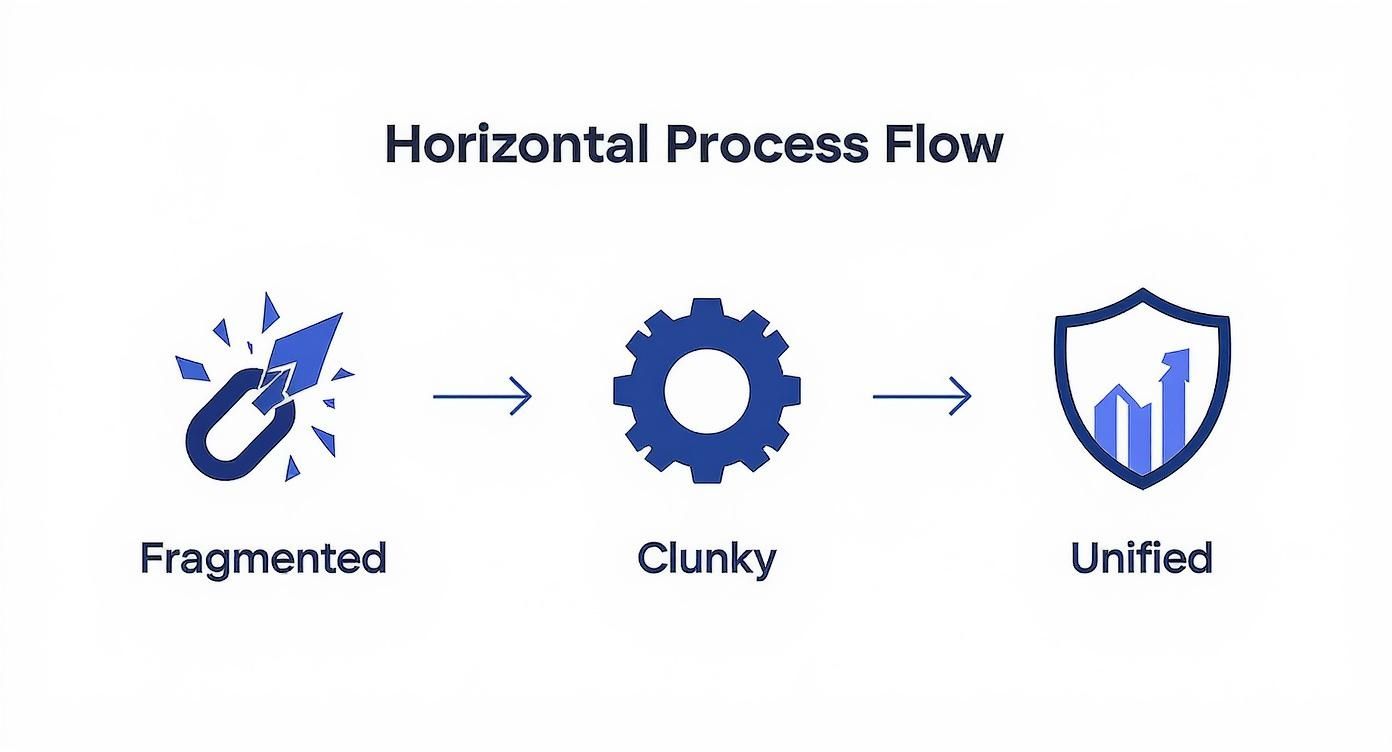
As you can see, moving to an integrated platform isn't just a tech upgrade. It's a strategic move to build a professional, trustworthy brand that keeps members coming back.
Designing Your Core Community Channels
First things first, let's map out your community's channels. Think of them as dedicated rooms for specific topics or purposes. This structure is your best defense against important conversations getting buried and helps people easily find what interests them most.
A solid starting point usually includes a few essential channel types:
- General Discussion: This is your central hangout spot. It's where members can introduce themselves, chat about broader topics, and just connect.
- Topical Channels: Get specific here. If you run a fitness community, you might create channels for "Nutrition," "Workout Plans," and "Mindset."
- Q&A or Help Desk: Create a go-to channel where members can ask questions and get support, both from you and from other experienced members.
- Wins & Success Stories: This is one of my favorites. It’s a space for people to share their progress and celebrate wins, which builds incredible social proof and keeps everyone motivated.
This thoughtful layout is absolutely essential for creating online communities that feel organized and valuable right from the get-go. It guides the conversation and saves your members from feeling overwhelmed.
Leveraging Read-Only and Member-Specific Spaces
Remember, not every channel needs to be a free-for-all. Read-only announcement channels are a fantastic tool for getting key updates, news, and exclusive content out to everyone without the chatter. Use them for your most important messages to ensure they never get missed.
You can also get strategic by organizing members into groups based on their membership level or what they’ve purchased. With a platform like Zanfia, you can automatically grant access to private channels when someone buys a specific product. For example, you could create an exclusive channel just for people in your high-ticket course or a private mastermind group.
This tiered access does more than just add a layer of exclusivity; it makes your community incredibly scalable. As you launch new products, you can spin up new, dedicated spaces that deliver targeted value to each customer segment.
This level of organization turns a simple forum into a dynamic, multi-layered ecosystem. If you want to dig deeper into these foundational ideas, our guide on forming a community is a great next read.
Integrating Community with Your Courses
One of the most powerful moves you can make is to weave your community and online courses together. Don't treat them as separate things. When you link them, you create a seamless learning environment that gets real results.
Picture this: a student is deep in a tricky module in your course. With an integrated platform, you can have a specific discussion channel linked directly to that lesson. If they have a question or a breakthrough, they can jump straight from the video into a conversation with others who are right there with them.
This tight connection between content and conversation does a few amazing things:
- It boosts course completion rates. Students who feel supported are far less likely to get stuck and quit.
- It deepens the learning. Talking through concepts with peers helps solidify knowledge and brings in fresh perspectives.
- It builds real relationships. Students bond over shared challenges and successes, which strengthens the entire community.
As you think about how to foster this engagement, it's worth exploring proven strategies for connecting with clients on social media to build that initial trust. The same principles of authenticity and direct interaction are gold inside your own branded community.
Just look at the success of platforms like Reddit, which is projected to hit 556.59 million users by 2028. Its biggest communities, like r/funny with its 56.6 million subscribers, prove the power of focused, interest-driven spaces. They thrive on authentic engagement—a model you can absolutely replicate in your own world. You can find more insights on social media trends over at Sproutsocial.com.
Smart Monetization Models That Protect Your Profits
https://www.youtube.com/embed/ODWgul9tXus
You've put in the work to build an audience that trusts you. That's a huge win. But to turn that audience into a sustainable business, you need a smart way to monetize your efforts. The real goal is to get off the revenue rollercoaster of one-off sales and build reliable, predictable income streams.
Relying on a single e-book launch or a one-time course sale can feel like a constant hustle. You're always chasing the next transaction. A much better approach is to offer a mix of payment models, like subscriptions and installment plans. This doesn't just stabilize your cash flow; it gives your members more ways to buy from you, which is a proven way to boost conversions.
But here’s something experienced creators learn the hard way: it’s not just about how you charge, but how much of that money you actually keep.
Why a 0% Platform Fee Changes Everything
If you're earning anywhere from PLN 10,000 to PLN 100,000+ a month, you know how much platform commissions hurt. A 3%, 5%, or even 10% cut on every single sale might seem small at first, but it quickly adds up to a staggering amount of lost revenue over a year.
That's your money—money you earned—being skimmed right off the top. It limits your ability to reinvest in your content, hire help, or just pay yourself what you're worth.
A 0% platform transaction fee model flips this dynamic on its head. When you use a platform like Zanfia, you only pay the standard processing fees from operators like Stripe or PayU. You keep 100% of your revenue. Your growth directly funds your business, not the software you’re using.
Let's break down what that looks like with real numbers.
Platform Fee Impact on a PLN 20,000 Monthly Revenue
This table illustrates the financial difference between Zanfia's 0% platform fee and a competitor's typical 5% fee model over one year.
| Metric | Zanfia (0% Platform Fee) | Competitor (5% Platform Fee) |
|---|---|---|
| Monthly Revenue | PLN 20,000 | PLN 20,000 |
| Monthly Platform Fee | PLN 0 | PLN 1,000 |
| Annual Platform Fee | PLN 0 | PLN 12,000 |
| Your Annual Take-Home | PLN 240,000 | PLN 228,000 |
As you can see, a "small" 5% fee costs you PLN 12,000 every single year. For creators earning more, that number can easily balloon into the tens of thousands. Choosing a 0% fee model is one of the most impactful financial decisions you can make for your business.
Designing Your Product and Payment Offers
Once you've secured a profitable fee structure, you can get creative with your offers. Don't box yourself into just one way of selling. The best monetization strategies meet people where they are, with different price points and payment options.
Here are a few powerful models you can set up right away:
- Recurring Subscriptions: This is the bedrock of predictable income. Offer monthly or annual plans for exclusive community access, a premium newsletter, or an entire content library.
- Installment Plans: Have a high-ticket course or coaching program? Breaking the cost into smaller monthly payments makes it far more accessible and can instantly lift your sales figures.
- Product Bundles: Combine a few of your products—like a course, an e-book, and a month of community access—into a single high-value package. Bundles feel like a great deal and can significantly raise your average order value.
If you’re brainstorming ideas, our guide on subscription business model examples for creators has plenty of real-world examples to get you started.
Automating Access for a Seamless Experience
Finally, a smart monetization system has to be automated. I've seen creators lose countless hours manually adding new customers to a course, sending welcome emails, or chasing down failed payments. This kind of admin work can easily swallow 5–10+ hours of your month.
An integrated platform handles all of that grunt work behind the scenes. When someone makes a purchase, the system should automatically:
- Unlock access to the right course or digital product.
- Add them to the correct private community channels.
- Send out a welcome email sequence.
- Manage subscription renewals and remove access if a payment fails.
This is more than just a time-saver. It creates a smooth, professional experience for your new member. They get what they paid for instantly, which builds trust right from the start. You get to step away from the tedious admin and focus on what you do best: creating incredible value for your community.
Integrating Your Community and Courses for Deeper Learning
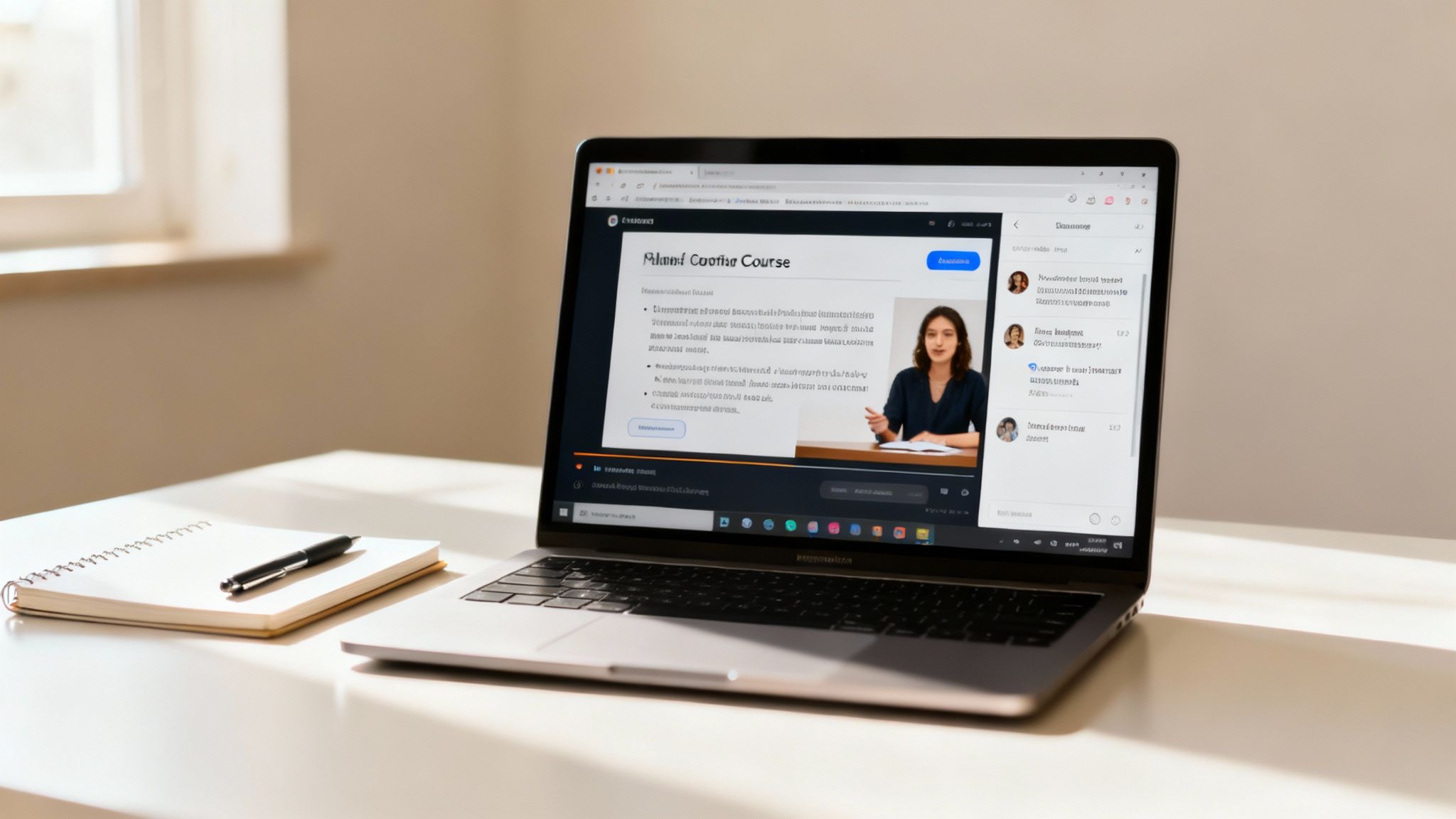
The real magic happens when your community stops being an add-on and becomes the very heart of your learning experience. A standalone course can deliver information, sure. But when you fuse it with a community, you create an environment for genuine transformation.
Think of it as a living ecosystem. Your content and your members' interactions start feeding into one another.
When a student can seamlessly jump from a video lesson to a dedicated discussion about that exact topic, learning goes from passive consumption to active engagement. It’s the difference between listening to a lecture alone and joining a vibrant study group where ideas spark, questions get answered, and breakthroughs happen together.
That synergy is what builds a fiercely loyal student base. They aren't just connected to your content; they feel a real connection to your brand and, most importantly, to each other.
The Power of Social Learning
This interconnected model is really just social learning theory in action. People simply learn better when they can discuss, debate, and apply new concepts with their peers. A student who gets stuck on a tough module is far more likely to push through if they can get instant feedback from others on the exact same journey.
This is where an all-in-one platform like Zanfia changes the game. Instead of telling students to "go ask in the Facebook group," you can embed the entire conversation right where the learning is happening. For a deeper look at this idea, check out our guide on what is social learning.
By linking course content directly to community spaces, you're not just selling a course; you're facilitating a collaborative experience. This dramatically increases student satisfaction and, as a result, course completion rates.
Practical Strategies for Integration
So, how do you actually build this unified world? It starts with being intentional from day one. Stop thinking of your course and community as two separate products and start seeing them as two halves of the same whole.
Here are a few concrete strategies you can use right away:
- Create Lesson-Specific Channels: For each major module—or even individual lessons—set up a dedicated discussion channel in your community. This keeps conversations laser-focused and makes it incredibly easy for students to find help exactly when they need it.
- Assign Community-Based Tasks: Don't limit homework to solo work. Encourage students to post their projects, share their progress, or give feedback to a peer directly in the community. Suddenly, an assignment becomes a chance to connect.
- Host Live Q&As for Course Cohorts: Use your community space for live, interactive sessions with students currently taking a course. This reinforces the material and builds a powerful sense of group identity.
- Feature Member Success Stories: When a student has a big win using what they learned, celebrate it! A community-wide announcement provides incredible social proof and motivates everyone.
This integrated approach taps into a huge shift in digital education. The global online learning industry is projected to hit a staggering $686.9 billion by 2030, and that growth is fueled by platforms that expertly blend content with real human interaction.
The Long-Term Benefits of an Integrated Ecosystem
When your community and courses are deeply intertwined, you create a powerful flywheel. Engaged students become active community members. Active community members become your most enthusiastic customers, ready to buy your next product.
Your business suddenly has a self-sustaining engine.
It also gives you an incredible feedback loop. The questions and discussions popping up in your community are a goldmine of insights. They tell you exactly where your students are getting stuck and what they want to learn next. This lets you refine your current courses and create new ones you know your audience is waiting for.
Ultimately, this unified approach is what turns a one-time sale into a long-term relationship, boosting member retention and the lifetime value of every single person who joins.
Got Questions About Building an Online Community? You’re Not Alone.
Jumping into the world of online communities can bring up a lot of questions. That’s completely normal. You're not just creating a product; you're building a digital home for your audience, and it's smart to think through the details. Let's tackle some of the most common hurdles creators face so you can move forward with confidence.
Most of the time, these questions boil down to the big three: technology, making money, and keeping people engaged. Nailing these from the get-go is what separates a thriving community from one that fizzles out.
The great news? Modern platforms have completely changed the game, making it easier than ever for creators of any size to build a successful, profitable space without needing a team of developers.
Why Not Just Use a Free Facebook Group?
Look, starting a Facebook group is tempting because it's free and familiar. But that "free" comes with some serious strings attached. You're essentially building your business on rented land. You have zero say when Facebook changes its algorithm, floods your group with distracting ads, or limits your reach. Your brand gets lost in the noise, and you never truly own your member list or your direct line of communication.
An integrated platform like Zanfia, on the other hand, puts your brand on its own custom domain. This immediately creates a focused, premium feel without all the external clutter. The entire experience is yours to control, which seriously bumps up the perceived value for your members and solidifies your professional image.
How Much Tech Skill Do I Really Need to Get Started?
Honestly? With a modern, all-in-one platform, you need zero technical skills. The days of battling with WordPress plugins, worrying about security updates, and managing server issues are over. These platforms are designed to handle all that backend complexity for you—from hosting and payment processing to all the ongoing maintenance.
You can get your entire community hub set up, design your sales pages, and launch your courses through a simple, intuitive dashboard. No code, no tech headaches. This lets you pour all your energy into what you're actually good at: creating fantastic content and connecting with your members.
"If you plan to sell digital products and build a community of paying customers, Zanfia is the best solution."
— Mateusz Grzywiński, EFL Teacher
This kind of peace of mind is a game-changer, especially for creators who feel overwhelmed by technology and just want the simplest, lowest-risk path to launching their first digital product.
What's the Best Way to Actually Make Money from a New Community?
The smartest approach is a flexible one. Instead of betting on a single revenue stream, it's far more effective to offer a mix of products and payment options. This allows you to meet people where they are, catering to different budgets and commitment levels. For example, you could start with a one-time purchase, like an e-book or a mini-workshop, to build trust and get some early wins.
Once you have some momentum, you can introduce a core community membership with a recurring subscription (monthly or annual). Platforms that support bundles, installment plans, and tiered access give you the power to experiment. You can see what your audience responds to without being locked into one model. The real secret is delivering clear, undeniable value that makes the price a no-brainer. And when you're on a platform with a 0% platform fee model, you keep 100% of the revenue you work so hard for.
How Do I Keep My Members Engaged for the Long Haul?
Long-term engagement isn't about gimmicks; it's about a consistent blend of value, connection, and a sense of belonging. Simply opening the doors isn't enough. You have to actively cultivate the culture you want to create.
Here are a few things that have worked for countless successful communities:
- Drop Exclusive Content: Regularly share things your members can't get anywhere else. Think behind-the-scenes videos, quick tutorials, or raw, unedited insights.
- Host Live Events: Make your community a destination. Regular Q&A sessions, workshops, or interviews with guest experts create predictable moments for people to gather and connect.
- Spark Member-to-Member Connections: This is the magic ingredient. Create dedicated spaces or channels for members to ask each other questions, share their wins, and offer support.
Your community truly comes alive when members start forming real relationships with each other. When they feel connected to their peers, the community provides value that goes far beyond anything you could create on your own. That’s how you build a loyal, vibrant ecosystem that lasts.
Ready to build a thriving community, launch your courses, and keep 100% of your revenue? With Zanfia, you get a true all-in-one platform built for Polish creators, offering 0% platform fees, native video hosting, and powerful automations. Start building your online business with Zanfia today.