How to Build a Membership Website: From Scratch and Without the Headaches
Before you even think about platforms, plugins, or payment gateways, we need to talk strategy. A solid plan is what separates thriving membership sites from the ones that fizzle out after a few months. This is where you lay the groundwork, ensuring you’re building something people will actually pay for.
Defining Your Membership Strategy
Forget the tech for a minute. The most crucial work you'll do happens long before you build anything. A strong strategy is your blueprint for a profitable, sustainable online business. It’s how you turn a cool idea into a venture that attracts and keeps members for the long haul.
This is all about getting crystal clear on who you're serving and the unique value you're bringing to their lives. You’re not just selling content; you're offering a solution, a community, or a transformation.
Pinpoint Your Ideal Member
You can't build a membership for "everyone." The single most important first step is to get laser-focused on your ideal member. Who are they? What keeps them up at night? What are they trying to achieve?
Go deeper than surface-level demographics. The best membership sites solve a specific, nagging problem. For instance, instead of targeting "small business owners," you might zero in on "Polish e-commerce entrepreneurs struggling to scale their marketing beyond social media ads." See how much more powerful that is? It makes your value proposition instantly clear. For a deeper dive into these foundational steps, this comprehensive step-by-step guide to building a membership site platform is a great starting point.
Choose the Right Membership Model
Once you know who you're serving, you can figure out how to serve them. Your membership model is all about how you structure and deliver your content. There are a few tried-and-true approaches.
Here’s a breakdown of common membership models to help you decide which structure best fits your content and business goals.
Choosing Your Membership Model
| Model Type | Best For | Pros | Cons |
|---|---|---|---|
| All-Access Community | Broad topics where members benefit from self-paced exploration. | High perceived value from day one. Simple to manage access. | Can be overwhelming for new members. |
| Drip-Fed Content | Structured courses or sequential learning paths. | Prevents overwhelm, keeps members engaged over time. | Less initial value; members have to wait for content. |
| Premium Content Library | Experts who consistently produce new resources (e.g., templates, videos). | Creates a growing asset that becomes more valuable over time. | Requires a constant stream of new content to retain members. |
Ultimately, the best model depends entirely on your specific content and how you want your members to experience it. Think about the journey you want to take them on.
This infographic neatly summarizes the core decisions: nailing down your target member, picking a model, and setting your price.
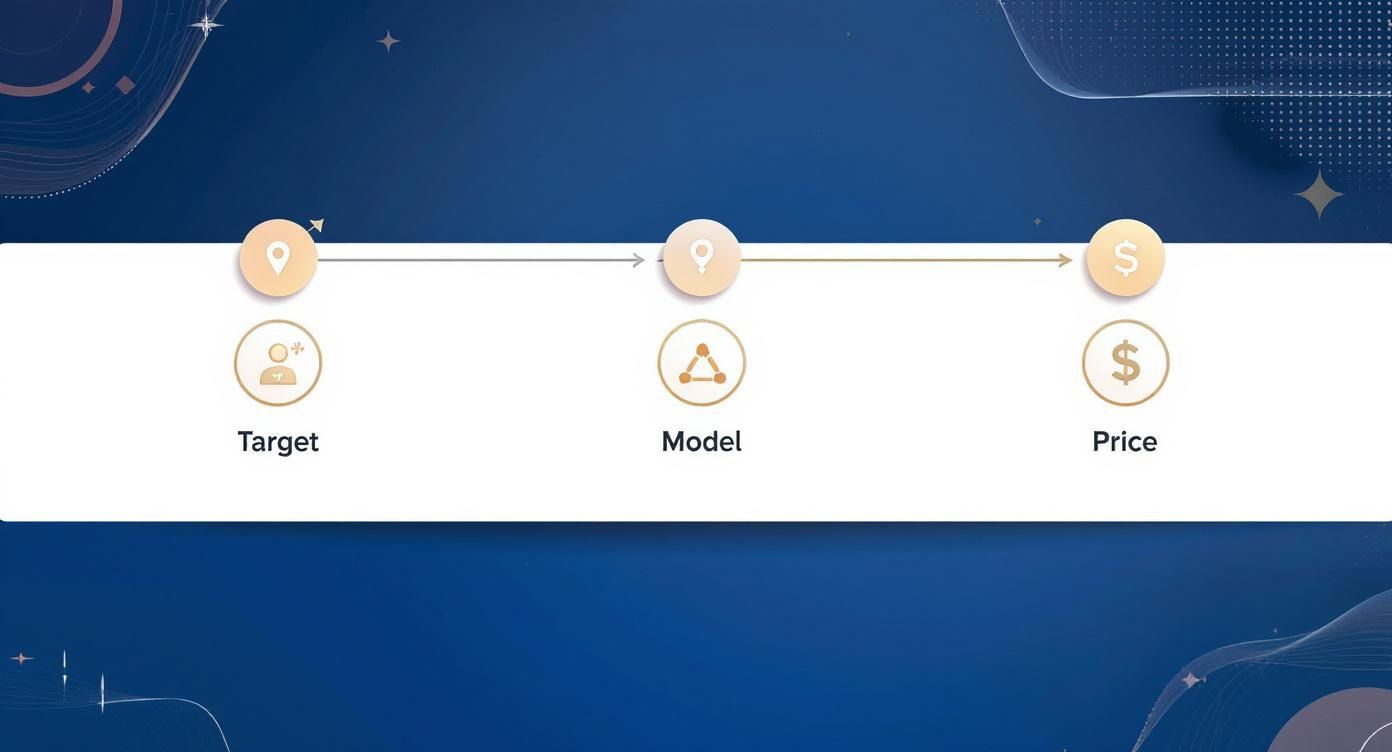
Each of these pillars supports the others. Get them right, and you've built a solid foundation. The timing couldn't be better, either. The global subscription economy is projected to hit an incredible $2.1 trillion by 2025. People are more willing than ever to pay for recurring access to real value.
A huge part of that value is connection. Don't underestimate the power of bringing people together. As you map out your strategy, it's worth exploring practical ways of forming a community to make your membership truly sticky.
Selecting Your Technology Stack
Choosing the technology for your membership website is one of the most foundational decisions you’ll make. This isn't just about software; it's the engine that will run your entire online business. Get it right, and the tech feels invisible, letting you focus on creating amazing content and connecting with your members. Get it wrong, and you'll find yourself tangled in a constant web of technical headaches.
The decision really boils down to two main routes: the do-it-yourself (DIY) path using a system like WordPress, or going with an all-in-one platform built specifically for creators. Each approach comes with its own set of trade-offs in cost, control, and sheer complexity.
The WordPress Approach vs All-In-One Platforms
The classic way to build a membership site has been to use WordPress and stitch together a collection of plugins for everything—memberships, courses, payments, community forums, you name it. This gives you incredible flexibility and total control over every little detail.
The downside? You become the system administrator. You’re on the hook for security, hosting, updates, and making sure all those different plugins play nice together. It can be a massive time sink. Before you even get to plugins, picking the right foundation is key; this guide on how to choose web hosting is a great starting point for understanding that piece of the puzzle.
On the flip side, an all-in-one platform like Zanfia is designed to lift that technical weight off your shoulders. It bundles all the essential tools—courses, community, e-commerce, and payments—into one professionally managed ecosystem.
That means you never have to sweat a plugin update breaking your site or deal with managing separate hosting. The entire infrastructure is handled for you. For many creators, especially those who aren't developers, this simplicity is a huge win, as powerful automations can save 5–10+ hours per month that would otherwise be spent on tedious admin tasks.
The Zanfia homepage really drives this point home, showing how it brings everything you need into a single, cohesive environment under your own brand.
You can see the focus is on a unified experience—exactly what you want to provide for your members.
Key Factors for Your Decision
So, how do you choose? Your platform choice should be a direct reflection of your business goals, how comfortable you are with technology, and your budget.
Here’s what I tell people to think about:
- Ease of Use: Be honest with yourself. How much time do you really want to spend managing technology? A WordPress setup has a much steeper learning curve. Platforms like Zanfia are built so non-technical folks can get up and running fast.
- Total Cost of Ownership: Don't just look at the sticker price. A DIY build might seem cheaper at first, but the costs of premium plugins, themes, robust hosting, and maybe even a developer to fix things can add up quickly. All-in-one platforms typically have predictable pricing and often include expensive features like native video hosting, which can save you hundreds of dollars a year compared to using Vimeo or Wistia.
- Scalability and Growth: You need a platform that can grow with your success. A huge benefit of a SaaS solution is that its infrastructure is built to handle scale. As your community expands, you won’t have to worry about your server crashing or your site slowing down.
- Transaction Fees: This one is a big deal, and it's easy to overlook. Many platforms take a cut of every single sale you make. Zanfia is a standout here with its 0% platform transaction fee model. You keep 100% of your revenue (minus the standard processing fees from operators like Stripe or PayU). For established creators earning PLN 10k–100k+ a month, those percentage-based fees can carve out a huge chunk of your profit.
“Without Zanfia, developing a paid newsletter and community in Poland would be much harder—it’s the best tool in the market.” – Wojciech Pisarski, CEO of wMinutę
Ultimately, you’re not just picking software; you’re choosing a business partner. An integrated platform streamlines your operations, automates annoying tasks like invoicing and managing member access, and gives your customers a seamless experience with a single login. This unification is what helps you build a strong brand and a truly engaged community. To get a better feel for the landscape, it's worth exploring some of the best subscription management software out there to see how they handle these critical functions.
Crafting Your Membership Tiers and Pricing
Let's talk about one of the most crucial parts of your membership site: the price tag. Figuring out how to structure your tiers and pricing isn't just about picking numbers out of thin air. It's a strategic move that tells your potential members exactly what your content is worth. Get it right, and you'll make it a no-brainer for them to sign up and a clear path for them to upgrade later.
The idea is to build a clear value ladder. Each tier needs to offer a noticeable, tangible step up in value. This makes it super obvious why someone would pay more. You're not just gatekeeping content; you're aligning your price with the level of access or transformation you're promising.

Proven Pricing Strategies for Your Membership
There’s no magic bullet for pricing, but a few tried-and-true strategies tend to work well across different niches. The secret sauce is flexibility—giving people options that feel right for their budget and how committed they are.
This is where having the right platform makes a world of difference. Tools like Zanfia are designed for this kind of flexibility, letting you mix and match payment structures without needing a developer on speed dial. It's a game-changer when you're trying to appeal to a broad audience.
Here are a few common structures I see work all the time:
- Recurring Subscriptions (Monthly/Annual): This is the bread and butter for most membership sites. It creates predictable, stable revenue. A great tip is to offer a discount on annual plans (like "get two months free") to boost your cash flow and lock in members for the long haul.
- One-Time Payments: Perfect for selling a standalone digital course or offering a "lifetime access" deal. This really appeals to people who have subscription fatigue and just want to buy something once.
- Installment Plans: These are fantastic for high-ticket offers. Instead of a single scary price tag, you break it down into smaller, more digestible payments. It dramatically lowers the barrier to entry for your premium products without making them feel cheap.
- Tiered Access: Think "Basic, Pro, VIP." This lets you serve different people with different needs. Maybe your basic tier is just content, while the higher tiers unlock community access, one-on-one coaching, or exclusive downloads.
The best membership sites aren’t just selling content—they’re selling outcomes and a sense of belonging. Your pricing tiers should mirror the different levels of transformation you offer.
Bundling Content to Increase Perceived Value
Bundling is your secret weapon for making higher-priced tiers look like an absolute steal. Instead of selling a course and a community pass separately, package them together into a premium bundle that offers way more value for the money.
Imagine you have a "Business Architect" persona—a seasoned creator earning PLN 10k-100k+ monthly. They’d likely jump at an all-access tier that bundles your advanced course, a private community channel, and monthly Q&A calls with you. Suddenly, you've created a comprehensive, high-value offer that easily justifies a premium price.
An all-in-one platform is your best friend here. With a tool like Zanfia, you can easily bundle different products—courses, community spaces, digital downloads—into one neat package. When someone buys it, they automatically get access to everything. No fuss, no manual admin work for you.
The Psychology Behind Effective Tiering
A well-designed pricing page is more than just a menu; it's a guide. From my experience, a three-tier structure is often the sweet spot because it plays on a powerful psychological bias called price anchoring.
Here’s how it usually breaks down:
- The Entry-Level Tier: This is your foot-in-the-door offer. It’s affordable and provides real value, but it intentionally leaves out some of the best stuff, making the next tier up look very tempting.
- The "Most Popular" Tier: You position this one right in the middle. This is the offer you want most people to choose because it strikes the perfect balance between features and price. It’s the solution to your ideal member's biggest problems.
- The Premium Tier: This is your anchor. It’s the highest-priced option, and while not everyone will buy it, its very presence makes that middle tier look incredibly reasonable in comparison.
When you understand these dynamics, you can structure your tiers to do more than just list features—you can gently guide people to the best option for them. If you want to see how this plays out in the wild, check out these insightful subscription business model examples to get some inspiration.
Creating Content and Building Community
A membership website is a living, breathing thing. Its long-term survival comes down to two things that work hand-in-hand: the quality of your content and the strength of your community. While your pricing and fancy tech might get people in the door, it’s the day-to-day experience that convinces them to stick around. This is where you stop thinking about customer acquisition and start focusing on building a loyal tribe.
https://www.youtube.com/embed/e3n83TKGU5M
The real goal isn't just to hand out information; it's to create an entire ecosystem. You want members to feel like they’re part of something special, a place they can count on to learn, connect, and grow. That feeling of belonging is the best way to keep people from canceling.
Developing a Sustainable Content Strategy
Think of your content as the promise you make to your members every single month. To keep them happy, you need a plan that delivers real value without running you into the ground. Trust me, creator burnout is a very real risk if you bite off more than you can chew.
First thing's first: map out a content calendar. Decide what kinds of content you'll create and how often you'll release them. This sets a predictable rhythm that members can actually look forward to.
A few proven content types to consider:
- Online Courses: These are often the bedrock of a membership. Look for a platform with native video hosting—it's a game-changer that saves you a ton of money on services like Vimeo or Wistia. A smart video player that automatically saves student progress is another small feature that makes a huge difference.
- Paid Newsletters: A weekly or bi-weekly email packed with exclusive insights is a fantastic low-effort, high-value way to stay top-of-mind.
- Knowledge Libraries: Picture a growing vault of resources—checklists, templates, e-books, and swipe files. The library's value grows every month, making it that much harder for a long-time member to justify leaving.
- Exclusive Resources: This is your chance to offer things they can't get anywhere else. Think monthly Q&A calls with you, interviews with other experts, or behind-the-scenes looks at your own work.
"The course module in Zanfia is characterized by simplicity and high functionality." – Przemysław Niemczuk, TreningBiegacza.pl
The trick is to find a mix of content that works for different learning styles. Don't feel like you have to do it all from day one. Start with one or two core offerings and then build from there.
The Art of Integrated Community Building
While content gets people to sign up, community is what gets them to stay. I've seen so many creators make the mistake of outsourcing their community to a separate Facebook Group or Discord server. It just fragments the experience, forcing members to remember another login and ultimately pulling them away from your brand.
The most successful membership sites I’ve seen build the community right into the platform. When your lessons and your conversations are all in the same house, engagement goes through the roof. This is a core strength of platforms like Zanfia, which keep everything unified under your brand, boosting lifetime value and member retention.
"If you plan to sell digital products and build a community of paying customers, Zanfia is the best solution.” – Mateusz Grzywiński, EFL Teacher
This integrated approach creates a really powerful feedback loop. A member can finish a video lesson and then immediately pop over to a dedicated discussion channel to ask a question or share a win. It turns passive learning into a truly active, collaborative experience.
Fostering Meaningful Conversations
An empty forum is the kiss of death for a community. In the early days, you have to be the one to light the fire. Proactively starting discussions and encouraging people to chime in is absolutely essential.
Here are a few tools and tactics that work wonders:
- Topical Discussion Channels: Don’t just have one giant "general chat." Organize conversations into channels based on course modules, specific interests, or member goals. This keeps things tidy and easy to follow.
- Read-Only Announcement Channels: Use these for your important updates—like when new content drops—so your messages don’t get buried in conversation.
- Group-Based Organization: As you grow, you can create smaller, more intimate cohorts. You could, for example, group members by the month they joined or how far along they are in a course.
- Automated Welcomes: Set up an automation that adds new members to the right community channels the moment they sign up. It’s a small touch that makes a huge first impression.
Building a community that eventually runs itself takes time and a lot of upfront effort. For a deeper dive into what works, exploring different community engagement strategies will give you plenty of ideas to keep your members coming back. When you get this right, you’re not just building a website—you’re creating a true home for your audience.
Launching and Growing Your Membership Site
You’ve done the hard yards—you’ve mapped out your strategy, wrestled with the tech decisions, and poured your soul into creating amazing content. Now comes the exciting part: opening the doors. A strong launch is more than just flipping a switch; it’s about creating a wave of energy that can propel your business forward for months.
But once the launch dust settles, the real work begins. The game shifts from getting people in the door to making them want to stay. Your focus has to pivot to making every single member feel welcome, valued, and instantly at home. This is how you build a loyal community that becomes the foundation of a truly profitable membership.

Executing a Smooth and Effective Launch
The best launches I’ve seen are less about a single "go-live" moment and more like a well-choreographed performance. The whole point is to build anticipation and ensure that your first members have a fantastic, bug-free experience the second they sign up.
Never make your first paying members your beta testers. Instead, start with a "soft launch." Invite a small, hand-picked group to kick the tires. Let them test everything from the login process to the payment gateway. Their honest feedback is gold for catching those little glitches and smoothing out the user experience before you go public.
As you get closer to the big day, it’s time to ramp up your marketing. A simple, effective launch plan usually looks something like this:
- Build Pre-Launch Buzz: Start teasing what’s coming on your social media channels and email list. Countdown timers, behind-the-scenes videos, and sneak peeks of your content work like a charm to get people excited.
- Create a Founder's Offer: Nothing creates urgency like a special, limited-time deal for your first members. This could be a lifetime discount, a bundle of bonus content, or exclusive access to you. It's a powerful way to reward your earliest supporters.
- Have a Crystal-Clear Call-to-Action: On launch day, every email, social post, and ad should funnel people to one place with one purpose: signing up. Make sure your sales page is polished and persuasive.
An organized launch gives you momentum from day one, which is far easier than trying to create it from a dead stop.
Mastering Member Onboarding and Retention
Getting a new member to sign up is just the starting line. The real work kicks in the moment their payment goes through. A solid onboarding process is your secret weapon for fighting churn and turning new sign-ups into raving fans. If you want to dive deeper into this, we have a whole guide on what customer onboarding is and why it matters.
Your onboarding should be all about guiding new members to a "quick win." Help them get a tangible result within their first few hours. Maybe it’s finishing the first lesson, introducing themselves in the community, or downloading a game-changing template.
The goal of onboarding is to make the value of the membership so obvious and immediate that canceling never even crosses their mind.
Automating this is absolutely crucial if you want to scale without going crazy. Using a platform like Zanfia, you can set up automated welcome email sequences, instantly add new members to community channels, and grant access to their content right away. These automations can save you 5–10+ hours a month and guarantee a consistent, welcoming experience for everyone.
The Economics of Keeping Your Members
Focusing on retention isn't just a nice-to-have; it's a rock-solid business strategy. The numbers don't lie: it costs five times more to acquire a new member than to keep an existing one.
Community is a huge part of this. We've seen that memberships with a strong community element boast retention rates of 85-92%, crushing the 60-70% seen in content-only models. With a median renewal rate of 84% across the board, it's clear that delivering ongoing value from day one is essential.
To keep people around, you need to understand what they're doing. Dive into your analytics. See what content they love, who your power users are in the community, and where people seem to be losing interest. This data is a treasure trove that helps you spot opportunities to improve and re-engage members who might be on the fence. By pairing a stellar onboarding experience with data-driven insights, you build a loyal following that will become your greatest asset.
Got Questions About Building a Membership Site? Let's Clear Things Up
Diving into the world of membership websites always stirs up a few key questions. It's totally normal. Getting these sorted out early is the difference between a confident launch and feeling stuck in the planning phase. Let’s walk through the big ones I hear all the time.

How Much Does It Cost to Build a Membership Website?
Honestly, the cost can be all over the map, and it really depends on the route you take.
Going the DIY route with WordPress might look cheaper at first glance. You buy a theme, grab some essential plugins, and you're off. But then the hidden costs start creeping in: reliable hosting, annual plugin renewals, and maybe even a developer's emergency fee when things inevitably break.
On the other hand, all-in-one platforms like Zanfia give you a much clearer financial picture. You have a predictable monthly subscription that covers everything—hosting, security, updates, even advanced features like native video. The real game-changer is a 0% platform transaction fee model. This means you keep 100% of your revenue (less payment operator fees), which adds up to massive savings for creators earning PLN 10k–100k+ a month. When you're budgeting, don't just look at the sticker price; consider the total cost of ownership, including your own time and sanity.
What Is the Most Important Feature for a Membership Site?
Excellent content is the price of admission, that's a given. But the one feature that truly separates thriving communities from the rest? An integrated community.
A lively, engaged community creates a powerful sense of belonging that keeps people coming back month after month. It becomes the "moat" around your business that no competitor can copy. When you unify your community, courses, and payments under a single login, you stop scattering your audience across external tools like a separate Facebook group or Discord server. This keeps engagement focused, directly boosts member lifetime value, and cements your brand as the center of their universe.
How Do I Keep Members from Canceling Their Subscriptions?
The key to reducing churn is simple in concept but requires consistent effort: deliver undeniable value and build real connections. You want your membership to become an indispensable part of your members' lives.
Here are the strategies that actually move the needle:
- A Killer Onboarding Process: Don't just welcome new members; guide them to an immediate "quick win." Show them the value from day one.
- A Consistent Content Calendar: Give people something to look forward to. A predictable schedule of new content, live calls, or events keeps them hooked.
- Active Community Engagement: Be present. Spark conversations, answer questions, and make every member feel seen and heard.
- Listen to Your Members: Use surveys and casual conversations to figure out what they want next. When they feel like co-creators, they stick around.
You also need to keep an eye on your engagement analytics. They're your early warning system, helping you spot at-risk members so you can re-engage them with a personal check-in before they even think about hitting "cancel."
“The peace of mind that came with moving my business to Zanfia is invaluable. It’s rock-solid, and the tech just works, which lets me focus 100% on teaching.” – Daniel Roziecki, 30-year veteran developer
Do I Need Technical Skills to Build a Membership Website?
Not anymore. It used to be that launching a serious membership site on WordPress meant you either had to be pretty tech-savvy or have a developer on speed dial. You were the one juggling plugins, security patches, and server updates.
Thankfully, modern all-in-one platforms have completely changed the game. They’re built from the ground up for non-technical creators, handling all the complicated backend stuff for you. With intuitive builders and straightforward settings, you can create a beautiful, professional site without touching a single line of code. This shift lets you pour all your energy into what you do best: creating incredible content and connecting with your community.
Ready to stop juggling tools and start building a thriving online business with clarity and control? Zanfia provides the all-in-one platform you need to launch professional communities, sell online courses, and manage subscriptions—all under your own brand with 0% platform fees. Discover how Zanfia can help you build your membership website today.