

How to Blog in 2026 and Turn Your Passion Into Profit
Learning how to blog is about so much more than just writing. It’s about building a real business asset. If you get it right, you move through a few key stages: finding a profitable corner of the internet, creating genuinely helpful content, getting that content in front of the right people, and finally, turning your expertise into income.
Nail these steps, and you’ll have a thriving online business, not just a passion project.
Laying the Groundwork for a Profitable Blog
Before you type a single headline, you need a plan. A blueprint. This is where the real work begins, starting with the most critical decision you'll make: choosing a niche you actually care about that also has an audience willing to pay for answers. A blog isn't just a creative outlet; it's a serious business tool.
In the world of online marketing, blogs consistently punch above their weight. In fact, 70% of consumers prefer to learn about a company through a blog post rather than an ad. That's a massive trust signal for anyone selling their knowledge online.
And this trend isn't slowing down. By 2026, an estimated 83% of all internet users—a staggering 4.44 billion people—will be reading blogs every single month. It’s no wonder 37% of marketers say blog posts are their most important type of content.
Defining Your Niche and Audience
Your blog’s entire future rests on finding a specific group of people and solving a very specific problem for them. Trying to appeal to everyone is a surefire way to appeal to no one.
Instead, get brutally honest with yourself:
- What could I talk about for the next five years? Your passion and deep knowledge are what make your content authentic. Don't chase a "hot" niche you'll burn out on in six months.
- Who am I actually writing for? Get a crystal-clear picture of your ideal reader. What are their biggest frustrations? What are their goals? What problem keeps them awake at 3 AM?
- Is there money here? Passion is the fuel, but profitability is the destination. You need to make sure a market actually exists for what you have to say. That's why you have to validate your business idea before you go all-in.
Once you’ve got your niche, you need a hook. What makes you different? It might be your personal backstory, a unique teaching style, or a laser-focus on a tiny sub-topic everyone else ignores. If you're still on the fence, asking yourself should I start a blog is a valid question, and that resource gives some great reasons to take the leap.
Choosing Your Platform The Smart Way
Your blogging platform is a foundational choice, and it's one that can either accelerate your growth or bog you down in technical headaches. The traditional path is a self-hosted WordPress.org site, which is powerful but requires stitching together dozens of plugins for SEO, sales, and community, leading to constant updates and complexity.
This is a problem that all-in-one platforms are built to solve, especially ones that lead with an AI team doing the day-to-day work instead of a stack of plugins.
Choosing Your Blogging Platform
Your platform is a foundational choice. This table compares building a blog with WordPress versus using a streamlined, all-in-one platform like Zanfia.
| Feature | WordPress + Plugins | Zanfia (All-in-One) |
|---|---|---|
| Core Function | A flexible CMS that requires multiple add-ons. | A unified ecosystem for content, courses, and community, with an AI assistant that can act inside the workspace. |
| Technical Management | You manage hosting, updates, security, and plugins. | Fully managed; no technical maintenance required. |
| Monetization | Requires separate e-commerce or LMS plugins. | Built-in checkout with order bumps, installments and upsells for courses, products, and memberships. |
| Community | Needs a third-party plugin (e.g., BuddyPress). | Native community features are integrated. |
| Cost Structure | Multiple small costs (hosting, themes, plugins). | A single, predictable SaaS subscription with 0% platform fees. |
This comparison makes it clear: while WordPress offers endless customization, an all-in-one solution like Zanfia prioritizes business efficiency, letting you focus on what you do best—creating.
We built Zanfia so a creator can hire an AI team instead of stitching tools together. Your blog, online courses, paid newsletters, communities and digital downloads live in one workspace under your own domain, and an AI assistant can act on that workspace by chat, by voice, or through an MCP endpoint your own agents can plug into. Starter begins at $39/month, or $31/month billed annually, with 0% platform fees on sales.
This integrated approach means you have a clear path to monetization from day one without duct-taping five different tools together. You can focus on creating value for your readers, knowing the checkout, the community, the course delivery and the AI that runs alongside them are already built in. Availability of specific AI capabilities depends on the plan, so check the current Zanfia pricing.
Building Your Technical Foundation Without the Headaches
Let's be honest, the tech is where most aspiring creators throw in the towel. Talk of hosting, domains, and content management systems can feel like a totally different language, but it doesn't have to be a deal-breaker.
Think of it this way: you're building your digital home. First, you need an address. That's your custom domain name (like yourblog.com), a core piece of your brand. Then, you need the actual land and house for your blog to live on. That's your hosting.
From here, you have two very different paths you can take.
The DIY Route with WordPress
The classic, do-it-yourself approach is building with WordPress.org. It’s the engine behind a massive chunk of the internet, famous for its nearly infinite flexibility. With WordPress, you have total control to build literally anything you can imagine—but that freedom comes with a lot of responsibility.
It's an "à la carte" model where you have to assemble all the pieces yourself.
- Find and pay for a hosting provider: This is the server where your site’s files are stored.
- Install the WordPress software: Most hosts have one-click installers, but it's still a step you own.
- Pick and configure a theme: This is what controls your blog’s look and feel.
- Juggle plugins: You’ll need separate plugins for everything: SEO, email sign-up forms, security scans, site speed, and selling products.
This approach can be incredibly powerful if you love to tinker, but it can quickly become a second job. You'll spend hours managing updates, fixing plugin conflicts, and worrying about security vulnerabilities. For those who go this route, you might want to consider specialized WordPress support for bloggers to handle the technical side so you can focus on content.
The All-in-One Platform Advantage
The alternative is a fully integrated, all-in-one platform built specifically for creators like you. This path is designed to completely remove the technical hurdles, letting you launch a professional site on your custom domain without touching a single line of code.
An all-in-one system handles the headaches for you. Hosting, security, software updates, and speed are all managed behind the scenes. You get a single, unified dashboard to write blog posts, build your community, and sell your digital products.
Zanfia is built as an AI team that runs a creator business, not just a CMS you have to babysit. Your blog, online courses, communities and checkout live in one workspace, and you can dictate the work: the assistant knows the whole application and can perform anything available in the interface by chat or by voice. Managed SaaS infrastructure means zero plugin juggling; a 14-day free trial (no credit card required) lets you launch before you commit.
Before you lock in your tech choice, however, you need to be crystal clear on your blog's actual concept. The platform you choose should serve your strategy, not the other way around. This decision tree can help you nail down the fundamentals first.
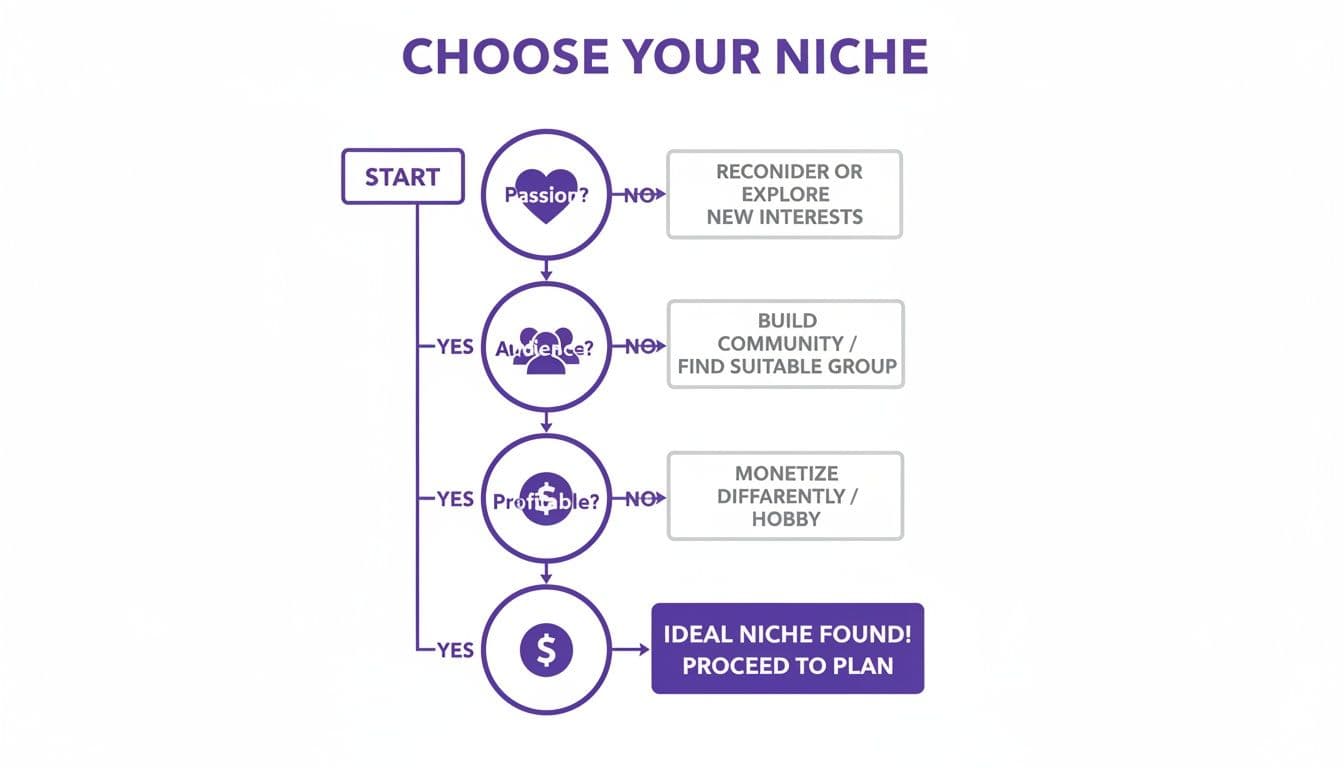
As the graphic shows, a winning blog idea sits at the intersection of your passion, a real audience, and a clear path to profitability. Figure that out before you commit to a platform. And if you need more help finding the right software to support your work, check out our guide on the best tools for content creators.
Ultimately, the choice between WordPress and an all-in-one platform comes down to what you value most. Do you crave total control and enjoy managing technology? Or do you want a streamlined, reliable system that frees you up to focus on your content and business? For most creators trying to build a business, the less time you spend on tech, the better.
Creating Content That Captivates and Converts
Your content is the engine of your blog. It's what drives traffic, builds trust, and ultimately converts readers into loyal followers and paying customers. Great content isn't just about sharing information; it’s about solving specific problems and creating a real connection.
Let’s be honest, getting noticed in 2026 is a challenge. You’re stepping into a digital space with over 600 million other blogs. Every single day, 7.5 million new posts go live. But here’s the key statistic that matters: 80% of internet users actively read blogs, making them a powerhouse for reaching audiences hungry for genuine expertise.
The data is clear. Businesses that blog see 434% more indexed pages and 97% more inbound links—the foundational elements of organic traffic that turns visitors into subscribers.

Uncovering What Your Audience Craves
Before you write a single word, you have to know what your audience is actually looking for. This process is called keyword research, and it’s your roadmap to creating content people will find and read. It’s not about stuffing awkward phrases into your articles; it’s about understanding the exact questions your ideal reader is typing into Google.
Start by brainstorming the big topics in your niche. For a running coach, this might be "marathon training," "running gear," or "injury prevention." Then, fire up a keyword research tool to drill down into specific, long-tail keywords.
- Long-tail keywords are longer, more specific phrases. Think "how to start marathon training for beginners" instead of just "marathon training."
- They almost always have lower competition, making it easier for a new blog to rank in search results.
- Crucially, they reveal user intent . Someone searching that long-tail phrase isn't just browsing—they're looking for a solution you can provide right now.
Your goal is to build a list of these problems and questions. Each one is a potential blog post guaranteed to attract the right people to your site.
Structuring Your Posts for Success
Once you have a topic, the structure of your post is critical. A well-organized article keeps readers engaged and signals to search engines that your content is high-quality and deserves to rank.
A winning blog post structure always includes:
- An Engaging Headline: It must promise a clear benefit and spark curiosity. Instead of "Running Tips," try "7 Simple Changes to Run Faster Without Getting Injured."
- A Hooking Introduction: Open with a relatable story, a surprising statistic, or a direct question that speaks to the reader's pain point. Tell them exactly what they will learn.
- Clear Subheadings (H2, H3): Break your content into logical sections with descriptive subheadings. This makes your posts scannable, helping readers find the exact information they need fast.
- Short Paragraphs and Visuals: Nobody wants to read a wall of text. Keep your paragraphs to 1-3 sentences , max. Use bullet points, numbered lists, images, and blockquotes to create visual breathing room.
Pro Tip: Write your entire post first. Then, go back and craft the perfect headline and introduction. It’s much easier to summarize the value and hook the reader once you know exactly what the post delivers.
This framework is the first step. For a deeper dive into turning these ideas into a full-blown plan, you should check out our guide on how to create a content strategy.
Consistency: The Unspoken Rule of Blogging
The final piece of the content puzzle is consistency. Publishing one great post is good, but publishing consistently is how you build a real audience and establish authority.
A regular posting schedule—whether it's once a week or twice a month—builds anticipation and trust. This consistent effort primes your audience for what comes next. As they come to rely on your free content, they become far more receptive to high-value offers like an in-depth online course, a members-only community, or a paid newsletter—all of which can be seamlessly hosted on an integrated platform like Zanfia. Quality content is the foundation that makes monetization possible.
Promoting Your Blog and Building a Thriving Community
Hitting ‘publish’ is a start, not the finish line. Fantastic content is the price of admission, but getting it in front of the right people is what separates a hobby from a business. This is where promotion and community building become the twin engines of your growth.
Your promotion strategy can't be an afterthought; it has to be baked into your workflow from day one. You have two primary engines to get your blog off the ground: search engines for long-term, passive growth and social media for immediate momentum.
Mastering Search and Social Promotion
Search Engine Optimization (SEO) is your engine for sustainable traffic. It’s the process of signaling to Google that your content provides the best, most authoritative answer to a user's query. It takes time, but the payoff is a steady stream of high-intent visitors who are actively searching for your expertise.
Social media, on the other hand, is your launch fuel. Sharing your articles on the right platforms delivers instant visibility, sparks initial conversations, and starts building that crucial early buzz.
Here are the essential promotional tactics to implement immediately:
- On-Page SEO Fundamentals: For every post, your target keyword should appear naturally in the headline, URL, introduction, and a few subheadings. Your meta description needs to be a compelling pitch that makes someone want to click.
- Strategic Social Sharing: Don't just dump a link and run. Frame your post on each platform. Pose a question, pull out a surprising statistic, or design a custom graphic for platforms like Instagram to stop the scroll.
- Content Repurposing: One blog post should fuel an entire week of content. Turn it into a short-form video for YouTube, a carousel for Instagram, a thread for X (formerly Twitter), or a collection of Pins for Pinterest . This maximizes your reach without burning you out.
A fatal mistake new bloggers make is spending 80% of their time on creation and only 20% on promotion. You need to flip that ratio. Your content's value is zero if no one sees it. Your expertise deserves an audience.
Transforming Readers Into a Community
Once traffic starts flowing, the real work begins: converting passive readers into an active, engaged community. An audience consumes your content; a community interacts with you and, more importantly, with each other. This is where true brand loyalty and long-term value are forged.
Unfortunately, this is where many creators go wrong. The default move is to immediately send your hard-won audience away to a third-party platform like Discord or Facebook, fragmenting their experience and diluting your brand. Your members are forced to create new logins, learn different interfaces, and get bombarded with notifications from competing communities.
The Power of an Integrated Community Platform
A far more powerful strategy is to host your community directly on your own platform. This is where an all-in-one system like Zanfia is worth a close look for community-driven creators. Unlike platforms that push audiences to external tools, Zanfia keeps everything unified under your brand, and you can run the day-to-day work by chat or by voice instead of clicking through menus.
Imagine the user journey: a reader finishes your incredible blog post on marathon training. Right at the bottom is a call-to-action to join your private community. With a single click, they’re inside your branded space with topical discussion channels, read-only announcement channels, and access based on what they've purchased—all with a single login.
This unified model is a massive engagement booster. When your courses, community, and content all live under one roof, the experience is seamless. Communities can also run an AI agent that writes from your own content, and everything it publishes is clearly labeled as AI so members always know what came from you and what came from the assistant. For a deeper dive, it's worth reading about how to find your tribe and build a strong community.
With a platform like Zanfia, you can embed community discussions directly within your lesson pages, creating a unified learning environment. This centralization is not just better for your members; it gives you a single command center to manage your entire business with absolute clarity and control.
Monetizing Your Expertise with Digital Products

You’ve done the hard work. You've built an audience that genuinely trusts your advice. This is the inflection point where your blog can become a real business.
Too many new bloggers get lured by the low-hanging fruit of display ads or affiliate links, only to be disappointed by the pennies they generate. The most direct path to a sustainable income is actually selling your own digital products. This strategy puts you in complete control, shifting your role from a content publisher to a true business owner.
Moving Beyond Ads to True Ownership
Instead of earning a tiny commission by "renting out" your audience's attention, you can create high-value assets that solve their biggest problems directly. This is how you transition your blog from a simple publication into a sales engine for your own brand.
Think of it as offering your readers the next logical step in their journey with you. The most proven formats for this include:
- Online Courses: The ultimate way to guide your audience through a structured transformation. A well-designed course turns your best blog posts into a step-by-step, actionable program.
- Paid Newsletters & Memberships: These are perfect for creating recurring revenue. You offer exclusive content, deeper insights, and community access to your most dedicated followers.
- E-books & Digital Downloads: Fantastic for packaging your expertise into a single, high-value resource. We have a complete guide on how to create digital downloads that you'll want to check out.
Seasoned creators earning serious monthly revenue understand that transaction fees are a silent killer of profit. This is why a platform’s fee structure is one of the most critical factors in scaling your business.
The Power of an Integrated Monetization Platform
Here's where things can get messy. If you try to duct-tape different tools together—a plugin for courses, another for subscriptions, a third for e-book delivery—you create a logistical nightmare. It’s not just a headache for you; it’s a clunky, disjointed experience for your customers.
This is exactly why an all-in-one platform like Zanfia is worth considering when you're ready to sell. It brings all your monetization tools into one unified system that's built to sell, not just to publish.
Imagine launching a course with native video hosting (goodbye, expensive Vimeo bills), selling it as a one-time purchase, a subscription, or splitting a $600 program into four installments, adding an order bump at checkout, and automatically granting buyers access to an exclusive community channel—all from a single dashboard. You can even open the checkout in test mode to buy your own product before launch and confirm the whole flow works end to end. Powerful automations can save you hours every month by handling things like revoking access after a failed payment or triggering welcome email sequences.
Comparing Blog Monetization Models
To see the full picture, it's helpful to compare the different ways you can make money from your blog. Each model has its own pros and cons, but one stands out for long-term growth.
| Monetization Model | Revenue Potential | Effort Level | Best For |
|---|---|---|---|
| Selling Digital Products | High | High | Experts with an engaged, trusting audience. |
| Affiliate Marketing | Medium | Medium | Bloggers in product-heavy niches. |
| Advertising (Display Ads) | Low | Low | Blogs with massive, high-volume traffic. |
| Sponsored Posts | Medium | High | Influencers with a strong personal brand. |
As you can see, selling your own products offers by far the highest revenue potential. But to make it work, your choice of platform is everything.
Zanfia's pricing model is built around creator success. As of 2026, we charge 0% platform transaction fees, so you keep 100% of the revenue you earn and pay only the standard, unavoidable fees from payment processors like Stripe and PayPal (roughly 2.9% + $0.30 per transaction in the US). Plans start at $39/month, or $31/month billed annually, on Starter, with a 14-day free trial and no credit card required.
This transparent approach means Zanfia grows with, not at the expense of, its users, making it especially attractive to creators tired of seeing commissions eat into their margins. It empowers you to build a truly independent brand on your own white-labeled, custom domain, backed by an AI team that can help run it.
Common Blogging Questions, Answered
Jumping into blogging is a rush, but it also brings up a ton of questions. Let's tackle the big ones I hear all the time so you can move forward without the guesswork.
How Long Until My Blog Actually Makes Money?
There's no magic number here, but here’s the reality: most bloggers start seeing their first dollar within 6 to 12 months of consistent, quality work. Earning a real, full-time income often takes closer to 2 or 3 years.
Consistency is everything. You can't just drop a few posts and wait for the cash to roll in. But you can be smarter about how you earn from day one.
Don't fall into the trap of waiting years for ad revenue to add up. You can start with high-value monetization right away. A platform like Zanfia is well suited to experts looking for a low-risk way to launch their first digital product: sign up for the 14-day free trial (no credit card required), sell a mini-course, a paid newsletter, or a download to a small, dedicated audience, and generate meaningful income far sooner. You can even test the whole checkout on yourself before you open it up.
How Many Posts Should I Write Before I Launch?
This is where so many new bloggers get stuck. But the answer is probably less than you think. Don't aim for a massive library; aim for a strong foundation. A great strategy is to launch with 5 to 10 cornerstone articles.
These aren't just any posts. They should be deep, valuable pieces that cover the most important topics in your niche. Think of them as the pillars holding up your entire blog. This does two critical things:
- It gives new visitors a reason to stick around, immediately showing them you know your stuff.
- It sends a strong signal to Google that your site is a serious resource right from the start, giving your SEO a much-needed kickstart.
Once you're live, your job shifts from building a backlog to maintaining a rhythm. One incredible post per week is infinitely better than three mediocre ones.
Can I Really Do This with Zero Tech Skills?
Yes, absolutely. The days of needing to know code to blog are long gone. Modern tools have completely leveled the playing field.
The old-school WordPress path is still popular, but let's be honest—managing hosting, themes, security, and a dozen plugins can turn into a second job. It’s a huge source of burnout for creators who just want to write and connect with their audience.
This is exactly why all-in-one platforms were created. Systems like Zanfia are built for creators, not developers. You get an AI assistant that knows the whole application and can perform actions by chat or by voice, so you can dictate what needs to happen instead of clicking through menus. Hosting is managed for you. Security patches are automatic. Weird plugin conflicts aren't your problem anymore.
You get simple tools to build a professional blog on your own custom domain, with a checkout ready for one-time sales, subscriptions, installments and order bumps whenever you're ready to sell. You can be live in hours, not weeks, with zero technical headaches, and put 100% of your energy into your content and your community.
SEO vs. Social Media: What’s More Important for a New Blog?
For a brand-new blog, this isn't an "either/or" question. It’s a "how and when" question. They both play a crucial, but very different, role.
Think of social media as your ignition. It’s how you get immediate traffic, find your first readers, and build initial buzz. It's perfect for short-term wins and building that early community vibe.
SEO, on the other hand, is your long-term growth engine. This is how you build a steady, passive flow of traffic from people actively searching for your expertise on Google. It takes longer to kick in, but SEO traffic is pure gold—it's highly targeted and converts like crazy.
Your best bet is to use both in tandem. Go hard on social media from day one to promote your work and build your tribe. At the same time, bake solid SEO practices into every single article you publish. As your authority grows, your organic search traffic will eventually become your most reliable and valuable asset.
Ready to turn your expertise into a thriving online business without the technical headaches? With Zanfia, you get an AI team that can run your blog, community and digital products from one workspace, a checkout built to sell with order bumps and installments, and 0% platform fees. Start building your creator business on Zanfia today.