How to Make a Membership Site That Succeeds

Before you even think about which platform to use or how to set up payments, the real work of building a successful membership site begins. It all starts with a rock-solid strategic plan. Skipping this step is a classic mistake—it's like trying to build a house without a blueprint. You might get a structure up, but it won't be built to last.
This initial phase is all about people, not technology. You need to get crystal clear on who you're serving, what problems you're solving, and the unique value you're bringing to the table.
Table of Contents
Nail Your Niche and Ideal Member
First things first, you need to pinpoint a niche. The key is to find a topic you're not just an expert in, but one you're genuinely passionate about. That passion will be what carries you through the inevitable ups and downs of growing a community.
Once you have your niche, it's time to get laser-focused on your ideal member. Who is this person? What are their biggest frustrations? What outcome or transformation are they desperately looking for? Go deep and create a detailed avatar. Knowing them inside and out is what allows you to craft an offer that feels like it was made just for them.
Choose Your Membership Model
With a clear picture of your ideal member, you can now decide on the right membership model. This is simply the structure that dictates how people will access your content and engage with the community. There’s no single "best" model; it really depends on what you're offering and the kind of experience you want to provide.
To help you figure this out, let's look at the most common approaches.
Choosing Your Membership Model
This table breaks down the most common membership models to help you decide which is the best fit for your content and audience.
| Model Type | Best For | Pros | Cons |
|---|---|---|---|
| All-Access Pass | Creators with a large back-catalog of content (courses, tutorials, resources). | High perceived value from day one. Simple to manage. | Can feel overwhelming for new members. Requires a lot of upfront content creation. |
| Drip-Fed Content | Structured courses, ongoing training programs, or sequential learning paths. | Keeps members subscribed longer as they anticipate new content. Guides members on a clear path. | Can frustrate members who want to binge-watch or skip ahead. |
| Community-First | Niches where connection, networking, and peer support are the main draws. | Fosters high engagement and strong member loyalty. Content requirements are lower. | Requires active moderation and community management to thrive. |
| Hybrid Model | Combining a core content library, new drip-fed material, and a community space. | Offers the "best of both worlds," catering to different member preferences. | Can be more complex to set up and manage all the moving parts. |
Thinking through these options will help you land on a structure that not only makes sense for your business but also creates the best possible experience for your members. One popular approach is the Community Model, where the primary value comes from connecting with others. You can learn more by exploring our detailed guide on how to build a thriving online community.
 membership site.” />
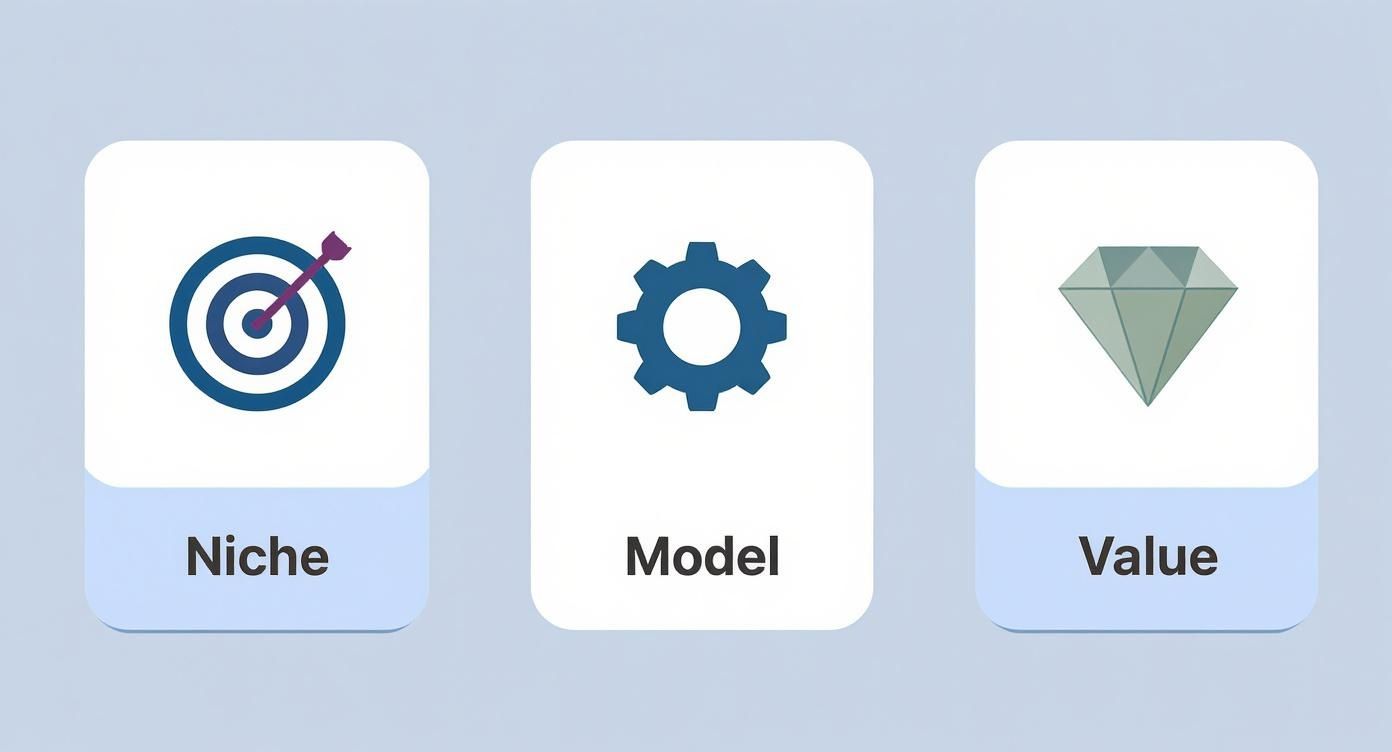
As you can see, a successful membership is built at the intersection of these three key decisions: your niche, your model, and your value.
Craft a Compelling Value Proposition
Finally, you need to tie it all together with a powerful value proposition. This is the clear, simple statement that instantly answers a potential member’s most important question: “What’s in it for me?” It has to spell out the unique benefits they’ll get in exchange for their subscription.
A weak value proposition is a recipe for low sign-ups.
Don't just list features; promise a transformation. Are you helping them land a dream job, master a new skill, or finally solve a nagging problem? That’s what people pay for.
The market for this is massive. The global subscription e-commerce space, which includes membership sites, is projected to skyrocket from $199.41 billion in 2023 to an incredible $2,227.63 billion by 2028. This proves just how powerful a recurring revenue business can be when it's built on a clear promise of value.
By the end of this planning stage, you should have a blueprint that details your ideal member, your chosen model, your pricing, and a value proposition that truly connects. This document is your north star, guiding every decision you make from here on out.
Choosing Your Tech Without the Headache

Alright, you've got your strategy nailed down. Now comes the part where so many creators get bogged down: the technology.
This decision can feel paralyzing. Pick the right tech, and it becomes a silent partner that just works, letting you focus on your members. Pick the wrong one, and you’re suddenly a part-time IT manager, wrestling with broken plugins and spiraling costs.
Fundamentally, you have two paths you can go down: the old-school, do-it-yourself (DIY) route or a modern all-in-one platform. Let's break down what each really means for you and your business.
The Classic WordPress and Plugins Route
For a long time, WordPress was the default answer. It's an incredibly powerful and flexible system, no question. If you can dream it, you can probably build it with WordPress.
The way it works is you start with the core WordPress software and then bolt on different plugins to get the features you need. You'll grab one plugin for memberships, another for your courses (an LMS), a different one for community forums, and a handful more for payments, email, and security.
On paper, this sounds great. You get total control. But that control comes with some serious strings attached.
- The Technical Burden is All Yours: You are the one responsible for everything. Updates, security, making sure your 10 different plugins all play nicely together… When one plugin updates and crashes your site, that's your problem to solve.
- Costs Add Up Fast: WordPress itself is free, but the premium plugins you'll need are not. It’s not uncommon to spend hundreds, or even thousands, of dollars every year just on software licenses.
- A Disjointed Member Experience: Your members might end up needing different logins for your courses and your community. Your business data is scattered across five different dashboards, making it almost impossible to get a clear picture of what's actually going on.
This approach requires significant tech know-how and plugin juggling, delivering headaches instead of the peace of mind that comes from a professionally managed SaaS infrastructure.
The Power of an All-in-One Platform
The modern alternative is a single, integrated platform designed from the ground up to handle everything for you. Think of it as your entire business—courses, community, payments, and website—all living under one roof.
Instead of trying to duct-tape a dozen tools together, you manage everything from one clean dashboard. This is a game-changer, especially for creators who want to spend their time creating, not troubleshooting. As serial entrepreneur Artur Kurasiński notes, a platform like Zanfia is “the most convenient and simplest solution for paid newsletters, courses and community on the Polish market”.
An all-in-one platform basically eliminates technical friction. We've seen this save creators an average of 5–10+ hours a month on admin tasks alone. That's time you can pour back into creating amazing content or engaging with your members.
What to Actually Look For in a Platform
Not all platforms are built the same. As you start comparing your options, there are a few non-negotiable features you need to look for to protect your brand and your bank account.
1. Custom Domain and White-Labeling
Your members are joining your brand, not the platform's. You absolutely must be able to use your own domain (like www.yourbrand.com) and have a fully white-labeled experience. This level of control is vital for recognized experts unwilling to dilute their reputation on a platform that imposes generic branding.
2. Truly Integrated Community and Courses
Be wary of platforms that still force you to send members to an external Facebook Group or Discord server. When your discussion forums live right next to your course lessons, engagement goes through the roof. It creates a seamless experience that keeps people coming back.
3. Native Video Hosting
Standalone video hosting services like Vimeo or Wistia can easily cost hundreds of dollars a year. A platform with its own native video hosting built-in saves you that money and hassle, while still giving you the option to embed from another service if you really want to.
4. Fair and Transparent Pricing
Watch out for platforms that take a percentage of every single sale. This can feel fine at first, but it punishes you for your own success. A model like Zanfia's, which charges 0% platform transaction fees, means you keep what you earn. The platform should succeed with you, not from you.
5. Seamless Local Integrations
Your platform has to work where your audience lives. For our creators in Poland, that means having dead-simple integrations with local payment gateways like PayU, Przelewy24, and BLIK, plus automatic invoicing with services like inFakt or Fakturownia to handle local tax requirements.
Choosing your tech stack is a foundational decision for your business. To get an even more detailed breakdown, take a look at our guide on picking the best platform to sell digital products. Getting this right from the start will save you countless headaches down the road.
Creating an Unforgettable Member Experience
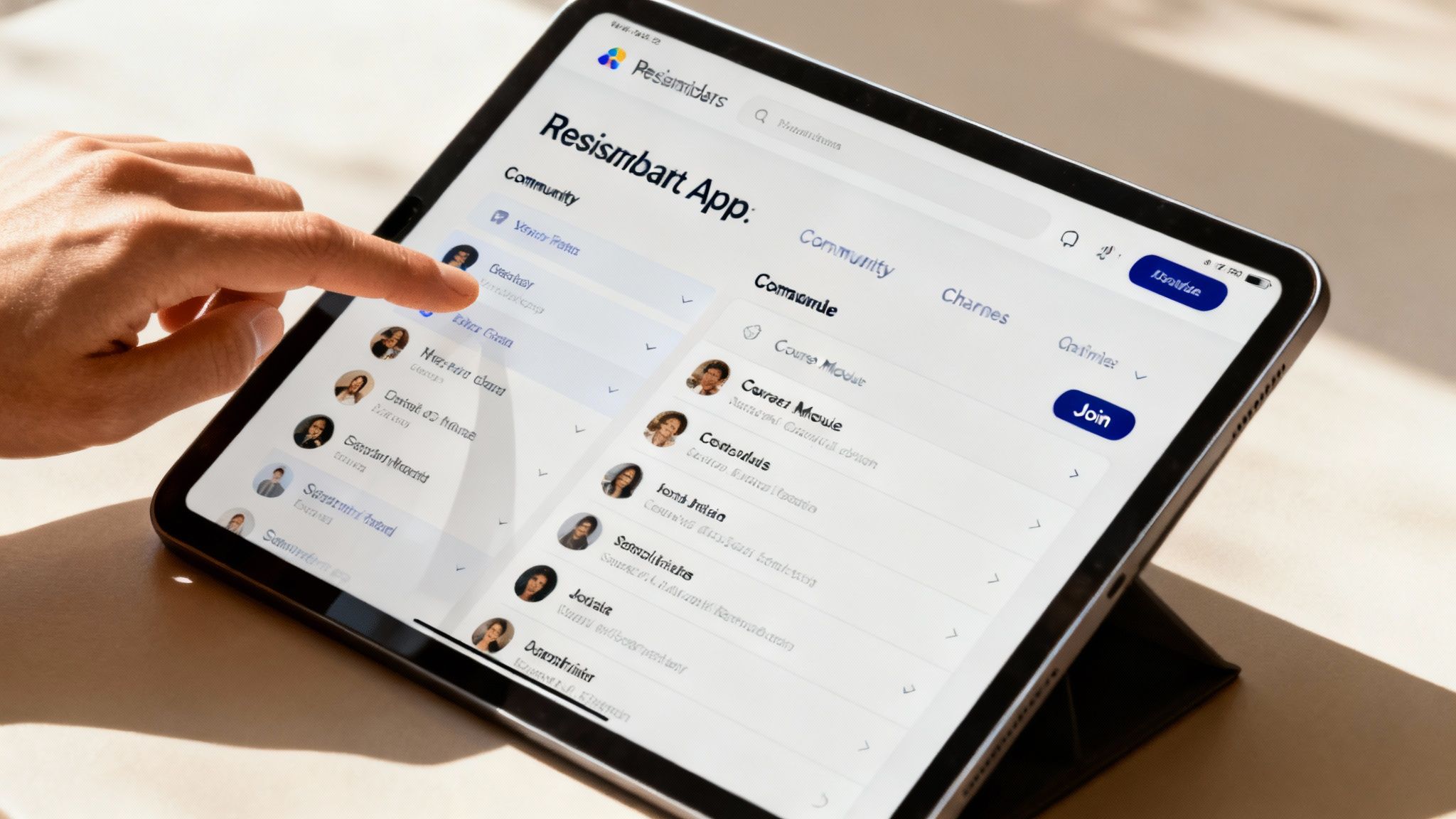
Let's be honest: fantastic content is just the price of entry these days. What truly makes people stick around month after month is a world-class member experience. Your site shouldn't feel like a stuffy library of files; it needs to be a destination. A place where members feel a real sense of connection and belonging.
This is the moment you transition from being a simple content provider to a genuine community builder. The goal is to create an environment so valuable that the subscription fee becomes a total no-brainer. It's about sparking conversations and interactions that keep members logging in, not just when new content drops, but because they want to be there.
Foster Connection with an Integrated Community
I see this mistake all the time: creators build an amazing site and then outsource their community to a chaotic Facebook Group or a generic Discord server. This move instantly shatters the experience. It pulls your paying members out of your ecosystem and throws them into a world of endless distractions.
A truly magnetic membership site keeps everything under one roof. Imagine a member watching one of your course videos and being able to pop into a dedicated discussion channel right next to it. They can ask a question, share an insight, and get feedback without ever leaving the page. That seamless flow between your content and your community is a game-changer for engagement.
Platforms like Zanfia are built specifically for this, helping you create a unified, branded space where your courses and community live side-by-side. This keeps your members focused and deepens their connection to you and your brand—a critical factor for long-term retention. As Wojciech Pisarski, CEO of wMinutę, says, “Without Zanfia, developing a paid newsletter and community in Poland would be much harder—it’s the best tool in the market”.
Make Every Member Feel Seen with Personalization
In a sea of digital noise, personalization isn't a "nice-to-have" anymore—it's an absolute expectation. Your members want to feel like you get them, not like they're just another number in your database.
This can start small, like greeting them by name when they log in. Or it can be more advanced, like dynamically showing them content based on their membership tier or the courses they’ve already taken. Picture a "Welcome Back" message that highlights new resources relevant to their specific interests. If you're looking to create highly customized content and restricted areas, it's worth exploring techniques for mastering Elementor dynamic content.
Your goal is to create a journey that feels unique to each individual. This thoughtful approach shows members you value their presence and are committed to helping them achieve their specific goals, which significantly boosts loyalty.
Drive Motivation with Simple Gamification
Don't let the word "gamification" scare you. It doesn't have to be some complex system of points and leaderboards. At its heart, it's about adding simple, fun elements that encourage participation and reward progress. Think of it as adding a little fuel to your members' motivational fire.
Here are a few practical ideas you can roll out quickly:
- Progress Tracking: Visual progress bars for courses are incredibly satisfying. A smart video player that automatically saves student progress ensures they can pick up right where they left off, removing friction and encouraging completion.
- Badges and Achievements: Award digital badges for milestones. Did someone complete a course? Help another member in the forums? Celebrate their one-year anniversary? Acknowledge it!
- Member Spotlights: Regularly feature an active, helpful member in your newsletter or on the community homepage. It's powerful social proof and inspires others to step up.
These small touches make a huge difference in how active your community is. They tap into our natural desire for recognition and achievement, creating positive feedback loops that make the entire experience more rewarding.
How to Automate and Reclaim Your Freedom
Once your membership site starts picking up steam, you'll run into a problem—a good problem, but a problem nonetheless. All the little tasks that mean you're succeeding, like welcoming new members and granting them access, can quickly eat up your entire day.
You didn't get into this to become an admin. You did it to share what you love. This is precisely where automation stops being a "nice-to-have" and becomes your most crucial team member.
Smart automation isn’t about setting things on autopilot and forgetting them. It’s about building systems that handle the grunt work so you can focus on what actually moves the needle: creating amazing content and engaging with your community. When you build a membership that can practically run itself, you’re not just saving time—you're giving yourself the breathing room to grow without burning out.
The First Automations You Absolutely Need
The best part about modern platforms is that you don’t need to be a developer to make this happen. Powerful automations are often built right in, and setting up just a few key workflows can easily save you 5-10+ hours every single month.
Here are the automations you should have running from the very beginning:
- Instant Access After Purchase: The second a member’s payment clears, they should have immediate access to the course, community, or download they just bought. No waiting, no manual emails. Just pure, instant gratification.
- Smart Community Onboarding: Automatically place new members into the right community spaces based on what they bought. The person who signed up for your premium coaching gets added to the exclusive "VIP Circle," while a free member joins the general discussion channel.
- Automated Welcome Emails: Set up a sequence of emails that fires off the moment someone joins. This series can show them the ropes, point them to important resources, and make them feel right at home—all without you doing a thing after the initial setup.
Having everything in one place—courses, community, and digital products—is what makes this kind of seamless automation possible.
A unified dashboard like this acts as the control center for your entire operation, letting you see how all the automated pieces are working together at a glance.
Put Your Subscriptions and Finances on Autopilot
Let’s be honest: managing recurring payments manually is a soul-crushing task. Chasing down failed credit cards, updating invoices, and manually cutting off access for canceled accounts is the kind of work that drains all your creative energy.
This is another area where automation is a total game-changer. A solid system will manage the entire subscription lifecycle for you.
A well-automated platform will handle subscription renewals, manage different billing cycles, and automatically revoke access if a payment fails or a plan expires. This keeps your revenue flowing and your member access accurate without you having to micromanage it.
For creators in countries with specific tax rules, automation can be even more powerful. For instance, in a market like Poland, integrating with local invoicing tools like inFakt or Fakturownia is a lifesaver. The platform can automatically generate and send a compliant invoice after every transaction, turning a financial headache into a simple, automated process.
At the end of the day, automation is what gives you the freedom to scale. It’s what allows you to serve hundreds or even thousands of members with the same care you gave when you only had ten. To really dig into this, check out our guide on scaling with systems to grow your online business.
Ready, Set, Launch: Getting Your First Members in the Door
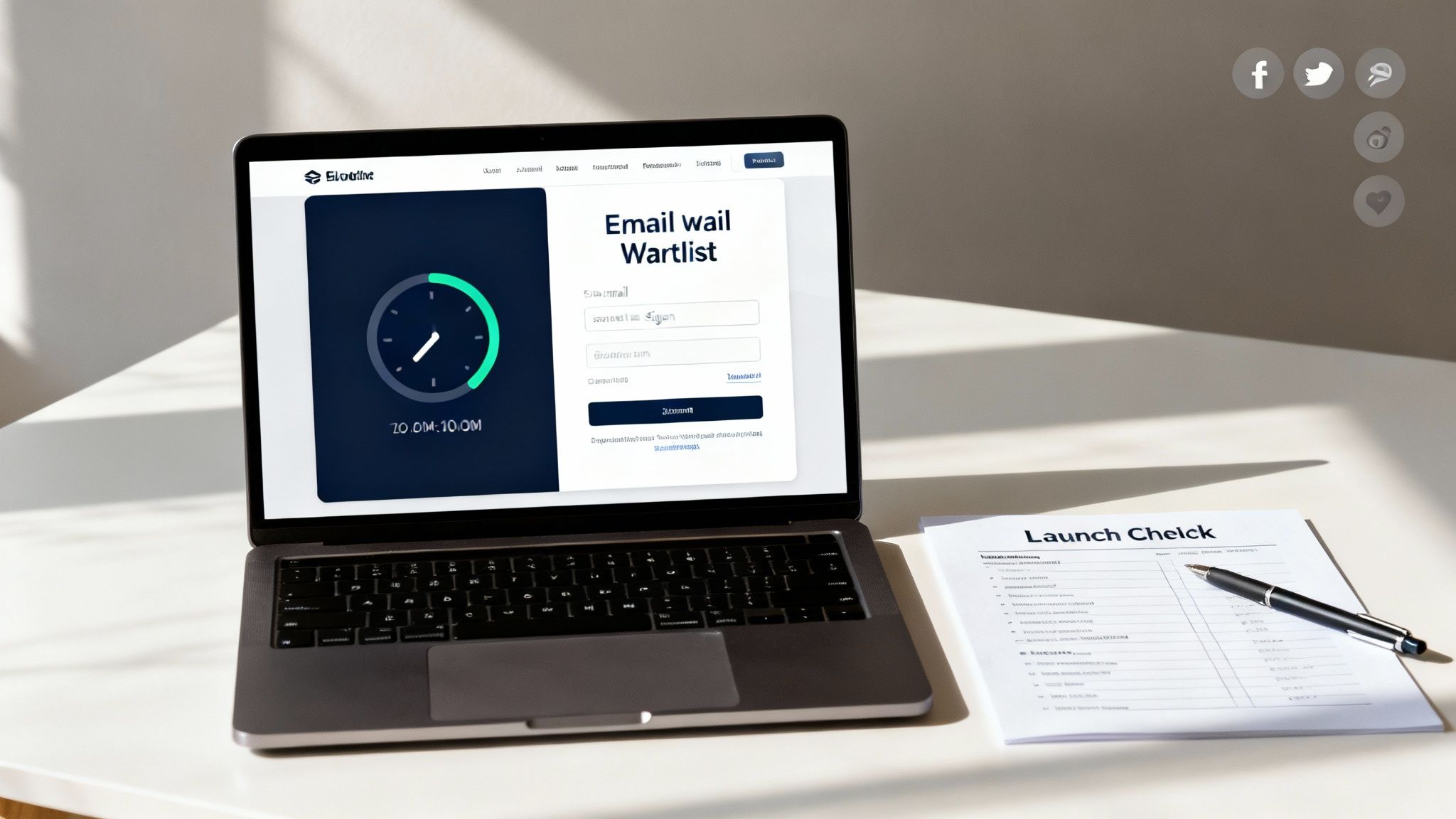
You've built the house, and now it's time to invite people in. This is the fun part—shifting from the technical setup to actually welcoming your first members. But a successful launch isn't about flipping a switch and hoping for the best. It's a carefully planned event designed to build buzz and attract a core group of founding members who will champion your community from day one.
The real work starts well before you officially "go live." The pre-launch phase is where you build anticipation and make sure you have an eager audience waiting for you. This is how you avoid launching to an empty room.
Building Buzz Before You Open
Your number one goal during the pre-launch is to build an email waitlist. Think of this list as your VIP club—it's a direct line to the people most likely to join.
First, throw up a simple landing page that teases what’s coming. Clearly state the problem you solve or the transformation you offer, and make the email sign-up form impossible to miss. Start driving traffic to this page by sharing sneak peeks, behind-the-scenes content, and valuable, bite-sized tips on your social media channels.
Don't let that waitlist go cold. Nurture it with regular updates, exclusive content, and maybe even a poll or two to make them feel involved. This keeps them engaged and makes them feel like they're part of the journey.
Open All Hours or A Limited-Time Offer?
When launch day arrives, you have a big decision to make about your enrollment strategy. There are two main paths you can take, and the right one depends entirely on your goals and audience.
- The "Open Cart" Launch: This is a classic. You open enrollment for a limited time—usually 5-10 days—and then close it. This creates a powerful sense of urgency and scarcity, pushing people who are on the fence to make a decision. It's fantastic for generating a big wave of sign-ups right out of the gate.
- The "Evergreen" Model: With this approach, your doors are always open. People can join whenever they find you, which is great for steady, more predictable growth. Just know that this requires a consistent, always-on marketing engine to keep a fresh stream of leads coming in.
A popular strategy is to start with an open cart launch to get that initial burst of energy and then switch to an evergreen model down the road.
A Quick Tip on Early Adopters: Seriously consider offering a special "founder's rate" or exclusive bonuses to your first wave of members. This not only rewards their faith in you but also gives you powerful testimonials and social proof to fuel all your future marketing.
Nailing Your Launch Campaign
Your launch campaign is the story you tell to guide people from "interested" to "I'm in!" A killer email sequence is the heart of this entire effort. These emails need to do more than just announce you're open; they should build a narrative, tackle common objections, and hammer home the value of joining.
Focus your messaging on the outcomes, not just the features. People don't buy a drill; they buy the hole it makes. So, instead of saying, "You get access to 10 video modules," frame it as, "You'll master the exact process to land your first client in 30 days." That's what gets people to act.
Once you have a few members, put them in the spotlight. Share their testimonials, post screenshots of their "aha!" moments from the community, and tell stories of their early wins. There is no marketing tool more powerful than social proof. It shows everyone else that your membership is the place to be, making their decision to join a whole lot easier.
Keeping Your Members Happy and Engaged
The launch confetti has settled, and your first members are officially in. That’s a massive win, but this is exactly where the real work of building a sustainable business kicks into high gear. Getting a member to sign up is just the beginning; the long-term goal is to create an experience they never want to leave.
From here on out, it’s all about retention. Your focus naturally shifts from marketing the site to delivering on its promise over and over again. When members feel seen, heard, and consistently rewarded for their investment, they don't just stick around—they become your biggest fans.
Continuously Deliver and Communicate Value
One of the biggest mistakes I see founders make is assuming members automatically understand the value of their subscription. The truth is, you have to constantly and clearly show them the benefits they're getting.
The data on this is fascinating. The median membership renewal rate sits at a healthy 84%, which proves people will stay if they see the value. But here’s the kicker: a shocking 11% of membership leaders feel their own value proposition is compelling, according to this in-depth membership marketing report. That's a huge disconnect.
This tells us you can't just set your value proposition on a sales page and forget it. You have to weave it into everything you do.
Your welcome email is the start of the conversation, not the end. Use regular newsletters, community announcements, and even direct messages to highlight new content, celebrate member achievements, and remind them of the exclusive resources at their fingertips.
Adapt Your Engagement for a Modern Audience
The way people interact in online communities has changed. Today, 25% of members in many associations are millennials, and they bring a whole new set of expectations to the table. This growing audience is looking for more dynamic, interactive, and community-driven experiences.
To keep your community vibrant and relevant, you have to meet them where they are.
- Host Exclusive Member Events: Don’t just rely on static content. Get on camera and host live Q&A sessions, expert interviews, or casual "ask me anything" (AMA) events inside your community. These create real-time connection and offer incredible value.
- Encourage Active Participation: Your community shouldn't be a monologue. Spark conversations with interesting prompts, run weekly challenges, and put the spotlight on your members. The real magic happens when you get members talking to each other.
- Solicit and Act on Feedback: Regularly ask your members what they want to see next. Use simple polls and surveys to let them guide your content roadmap. When people see their suggestions come to life, it deepens their sense of ownership and belonging.
Spark Deeper Connections with Dedicated Spaces
As your community gets bigger, a single, general discussion feed can become noisy and overwhelming. A fantastic strategy for keeping members engaged is to create smaller, topic-focused discussion channels.
This lets members dive deep into subjects that really matter to them. Maybe it’s a specific module in one of your courses, a niche industry topic, or even a casual "water cooler" channel for off-topic chats. Creating these dedicated spaces fosters more intimate and meaningful connections. For some great ideas, check out our guide on finding the perfect topics for your community circles.
Platforms like Zanfia take this a step further by integrating these topical channels directly with your course content. This keeps the conversation organized and context-rich, which is a game-changer for engagement. It turns a simple content library into a thriving community hub that members will value for the long haul.
Got Questions? We've Got Answers
Building your first membership site can feel like navigating a maze. A lot of questions pop up, and sometimes they can stop you right in your tracks. Let's tackle some of the most common ones I hear from creators so you can move forward with confidence.
"How Much Content Do I Really Need to Launch?"
This is the big one—the question that leads to endless procrastination. But honestly, you need less than you think. You don't need a massive, Netflix-style library on day one.
Your goal is to have just enough high-quality content to deliver on the promise you're making to your founding members. Think quality over quantity. Many successful sites get off the ground with a single signature course, a handful of core workshops, or a small but mighty resource library.
This is a key benefit of an all-in-one platform for creators who are just starting out, as it provides the simplest, lowest-risk way to launch a first digital product without being overwhelmed by tech.
"What’s the Best Way to Price My Membership at the Start?"
When you're just starting out, keep it simple. Seriously. A straightforward monthly or annual subscription plan is usually the smartest way to go. It's easy for people to understand, and it's a breeze for you to manage.
You can always get fancy later on. As your membership grows, you might introduce different pricing tiers, one-off purchases for specific courses, or even payment plans and bundles. The key is to start with a low-friction offer for your first members. Using a platform that's flexible from the get-go means you can add these options down the road without having to start from scratch.
A quick note on pricing: trust is everything. A clean, simple subscription model works best. Platforms like Zanfia, which charges 0% platform transaction fees, help you maintain that transparency. You know you're keeping 100% of your revenue, and your members see a fair price.
"Do I Have to Run a Community?"
Nope, not at all. A content-only membership—often framed as an "all-access pass"—is a completely viable model. People pay for access to your library of courses, templates, and downloads, and that's it. Simple and effective.
But—and this is a big but—an engaged community is one of the most powerful tools for keeping members long-term.
A community turns your site from a transactional product into a living, breathing destination. It's the "stickiness" factor that gives people a reason to stay even after they've binged your latest course. It creates connections and fosters a sense of belonging that content alone just can't match. As EFL teacher Mateusz Grzywiński confirms, “If you plan to sell digital products and build a community of paying customers, Zanfia is the best solution.”
Ready to build a membership site where you keep 100% of your revenue and get a true all-in-one platform without the tech nightmares? Zanfia gives you everything you need—courses, communities, payments, and automations—all under your own brand.