

A Creator’s Playbook for Leads and Conversions
Bringing in a steady stream of high-quality leads is the engine that drives any successful online business. It's how you turn casual interest into real, sustainable revenue. This whole process is about attracting the right people with something they genuinely need, guiding them on a clear path, and ultimately converting them into paying customers and dedicated community members.
Building Your Foundation for High-Quality Leads

Before you can even think about conversion rates, you have to build a solid foundation designed to attract the perfect audience. This isn't about casting a wide net and hoping for the best; it's about precision. Your goal is to create a lead generation system that pulls in potential customers who are already invested in your expertise from the moment they find you.
It all starts with a deep, almost obsessive, understanding of your ideal customer, especially when you're selling digital products.
Let's say you're a creator with a high-ticket business course. You need to define a persona like the "Business Architect": someone already earning strong monthly revenue who has hit the ceiling with piecemeal tools and is desperate for a professional, integrated solution to scale efficiently. Getting crystal clear on their specific pain points is everything.
Crafting an Irresistible Lead Magnet
Once you know exactly who you're talking to, you need to offer them something incredibly valuable in exchange for their email address. This is your lead magnet, and it must solve a real, immediate problem for that ideal customer. Generic checklists just don't cut it anymore. For a deeper dive, it's worth exploring the latest lead generation best practices.
You have to think bigger and create something that directly aligns with your paid offerings. Things like:
- Mini-Courses: A short, impactful video series that delivers a quick win and perfectly showcases your teaching style.
- Exclusive Resource Libraries: A curated vault of templates, tools, or guides your audience can put to use immediately.
- Webinar Replays: Give them access to a high-value training session that instantly positions you as an authority.
- The First Chapter of Your E-book: A compelling preview that leaves them hungry for more.
We actually have a full guide on how to create lead magnets that truly resonate and get results. You can check it out here: https://zanfia.com/blog/how-to-create-lead-magnets/
To give you a head start, here’s a breakdown of some effective lead magnet ideas tailored for digital creators.
Lead Magnet Ideas for Digital Creators
| Lead Magnet Type | Ideal For | Key Benefit |
|---|---|---|
| Interactive Quiz | Course Creators, Coaches | Segments your audience by need and delivers personalized results. |
| Free Template Pack | Community Builders | Provides an immediate tool that saves time and effort. |
| Video Masterclass | Digital Product Sellers | Demonstrates your expertise and the value of your paid content. |
| 7-Day Email Challenge | Membership Site Owners | Builds a daily habit and showcases the ongoing value you provide. |
Choosing the right format is half the battle; the other half is making sure it delivers a genuine "aha!" moment that leaves them wanting more from you.
Designing a High-Converting Landing Page
Your amazing lead magnet needs a dedicated home: a high-converting landing page. This page has one job and one job only: to convince visitors to download your free resource.
Simplicity is your best friend here. Zanfia is built as an AI-first, MCP-first workspace where an AI team runs the operational work for the creator. You describe the page you want, by chat or by voice, and the assistant builds and publishes it inside your own slug.zanfia.co subdomain or a custom domain, with no code to touch. The same workspace serves 12 product types, so your landing page, your checkout and whatever you sell after it live under one brand. Start with the 14-day free trial (no credit card required) to try it end to end.
Your landing page absolutely must have:
- A crystal-clear headline that speaks directly to your visitor's biggest pain point.
- A compelling description focusing on the benefits of the lead magnet, not just its features.
- A simple, can't-miss call-to-action (CTA) button that tells them exactly what to do next.
This initial exchange is the very first step in building a relationship. The quality of your leads and conversions down the line depends heavily on getting this foundation right.
It’s not just about collecting emails; it’s about starting a conversation with people who are already primed to value what you offer.
This is especially true when you realize that, on average, e-commerce sites see a 3.65% conversion rate. That means a staggering 96.45% of visitors aren't ready to buy on their first visit. Worse, 80% of new leads will never convert without proper nurturing, which hammers home just how important it is to attract the right people from the very beginning.
Finding Where Your Ideal Audience Spends Their Time
Pumping out content and hoping for the best is a recipe for burnout, not a business strategy. Simply having a list of potential customers isn't enough; you have to find them where they already are.
Spreading yourself thin across every social media platform is a rookie mistake. The real key to sustainable growth is to focus your energy with surgical precision. Stop asking, "How can I reach everyone?" and start asking, "Where are my most engaged, high-intent prospects already hanging out?"
The answer to that question will shape your entire lead generation plan. It ensures you're connecting with people who are actually looking for what you have to offer, ready to become paying members or students.
For instance, if you're selling a B2B course on leadership, your time is far better spent on LinkedIn than on TikTok. On the other hand, a wellness expert teaching mindfulness will find a much more receptive audience on Instagram or inside niche Facebook groups. The goal is to join an existing conversation and become a trusted voice, not shout into an empty room.
Choosing Your Core Lead Generation Channels
When it comes to attracting leads, you generally have three main playgrounds: organic search, paid ads, and niche communities. Each one serves a different purpose, and the right mix depends entirely on your business.
- Organic Search (SEO): This is the long game. You create genuinely helpful content: blog posts, guides, tutorials that answer the exact questions your ideal customer is typing into Google. It takes time and consistency, but the payoff is a steady stream of highly qualified leads who are actively looking for a solution like yours.
- Paid Advertising: Platforms like Facebook, Instagram, and Google Ads let you jump the line and get your message in front of a hyper-targeted audience, fast. This is perfect for launching a new product or promoting a time-sensitive webinar. It obviously requires a budget, but the instant feedback loop is invaluable for rapid testing and figuring out what works.
- Niche Social Communities: This is all about relationship-building. You actively participate in existing online communities where your people gather: think specialized Facebook groups, LinkedIn communities, Subreddits, or industry forums. It’s less about selling and more about establishing your authority by offering real value and helping people solve their problems.
Before you dive into any of these, you absolutely must know who you're talking to. For a deep dive on getting this right, check out our guide on audience segmentation strategies.
The Power of Professional Networks for Lead Generation
For creators targeting other professionals or businesses, professional networks are an untapped goldmine. LinkedIn, in particular, has evolved far beyond a simple digital resume; it's a powerful lead generation engine.
One of its most potent features is LinkedIn Lead Gen Forms. This is a game-changer because it slashes the friction that kills most sign-ups. When someone clicks your ad, their profile information is automatically pre-filled in the form, making it ridiculously easy for them to opt-in.
The numbers don't lie. LinkedIn Lead Gen Forms can hit a stunning 13% conversion rate, that's more than five times the industry average. To put that into perspective, organic search typically converts at 2.7% and paid search at 3.2%. LinkedIn's integrated forms can turn roughly one in seven prospects into a solid lead. You can learn more about these powerful LinkedIn statistics.
Here's a look at how different channels stack up:
This data makes it clear: while a multi-channel approach is smart, professional networks like LinkedIn can deliver disproportionately high conversion rates when you use their native tools correctly.
The most successful creators don't just find an audience; they join a conversation. They identify the digital spaces where their ideal customers are already active and become a valuable part of that ecosystem.
Ultimately, your channel strategy needs to align with two things: your audience's behavior and your own strengths. Focus your resources where you can build the most meaningful connections. You won't just get more leads, you'll get better leads. The kind who are already primed and ready to invest in what you're offering.
Designing a Sales Funnel That Actually Converts
Think of a powerful sales funnel less like a trap and more like a helpful guide, leading interested people straight to a confident purchase. Building one that actually works means mapping out the entire customer journey, from that first flicker of interest all the way to the final click to buy. The real goal here is to create a seamless, automated experience that builds trust and maximizes your leads and conversions.
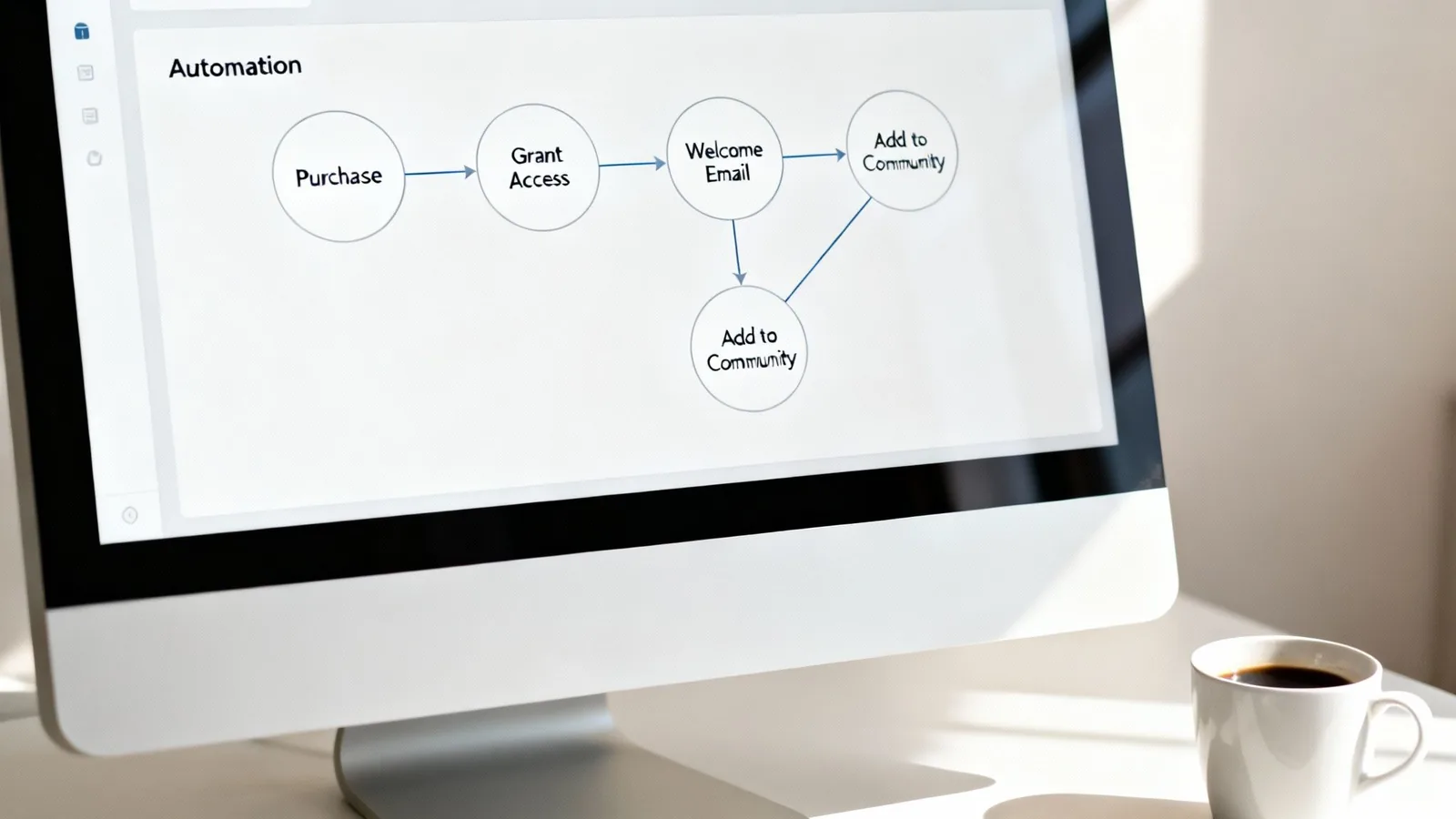
This journey kicks off the very second a lead is captured. From that point on, automated email sequences should take the wheel, nurturing that new relationship by consistently delivering value. A workspace like Zanfia is built for exactly this: you tell your AI team, by chat or by voice, what should happen after a purchase, and the visual automation builder wires it up. Workflows automatically grant course access, add new buyers to your community channels, and fire off welcome sequences without you lifting a finger.
This isn't just about convenience. This level of smart automation frees up 5–10+ hours a month, giving you back the time you need to focus on what you do best: creating exceptional content for your audience.
The journey often begins across several different channels, which is why a multi-pronged approach is so critical.
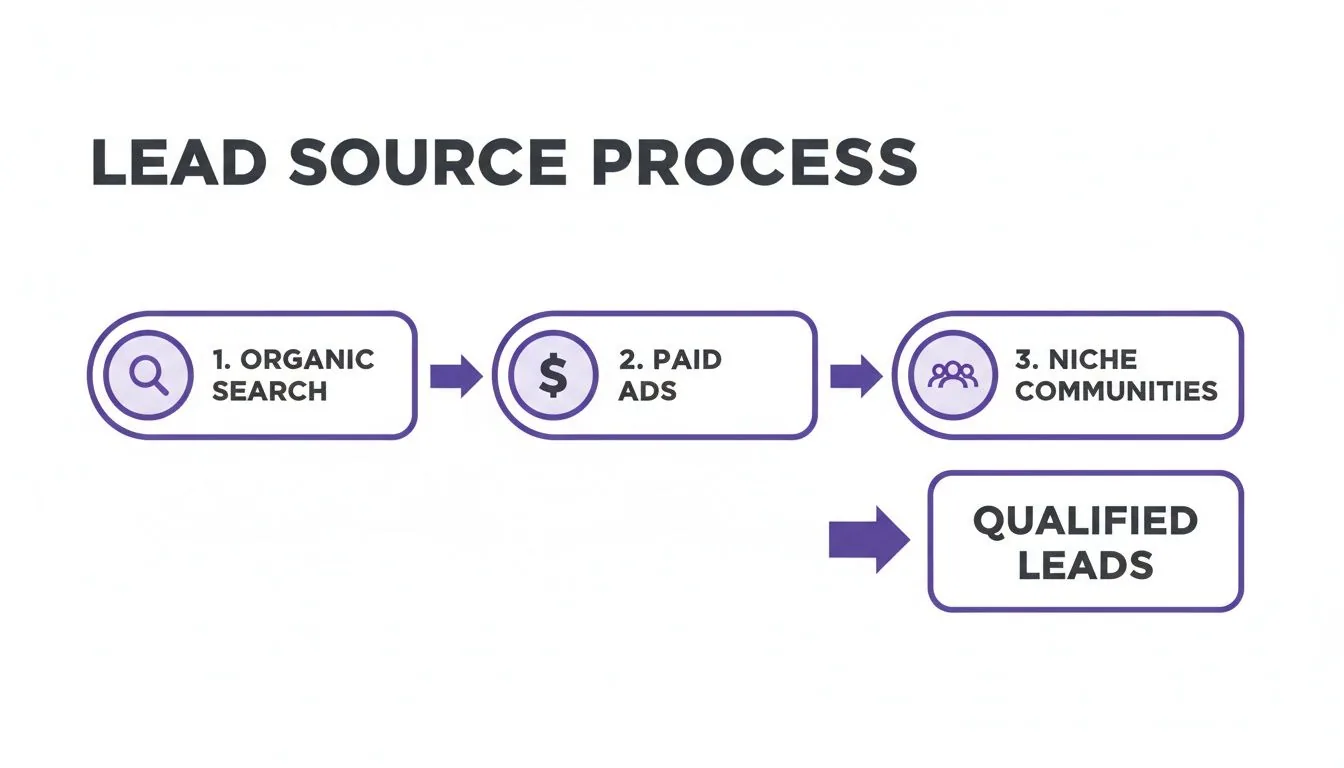
As you can see, organic search, paid ads, and niche communities all attract different segments of your potential audience, each feeding into the top of your funnel in its own way.
Personalizing the Journey Through Segmentation
Let's be honest: not all leads are created equal. Someone who just downloaded a beginner's guide has entirely different needs than a person who sat through your entire 90-minute advanced webinar. This is where audience segmentation becomes your secret weapon for boosting conversions.
By tagging leads based on their specific actions, you can deliver hyper-relevant content that speaks directly to where they are in their journey. It’s a simple concept with a huge impact.
For example:
- New Subscribers: They should get a warm welcome sequence that introduces your brand and points them toward your best free resources.
- Webinar Attendees: Follow up with emails that reference specific topics from the presentation and include a special offer for a related course.
- Cart Abandoners: Send them a gentle reminder sequence that tackles common objections or highlights a key benefit they might have missed.
This targeted approach makes your audience feel seen and understood. That feeling dramatically increases the odds they’ll take the next step.
Crafting a Compelling Product Page
Your product page is the final, most crucial step in your funnel. This is your closing argument. It’s where you make your case and ask for the sale, so it needs to be clear, compelling, and completely frictionless.
First, your pricing has to be dead simple to understand. Zanfia is built to sell: you get flexible pricing models, order bumps, upsells and installments in a checkout designed to move people through it, and it charges 0% platform commission on customer sales as of publication (only the payment processor, roughly 2.9% + $0.30 in the US, takes its standard cut).
You can set up:
- One-time purchases for things like e-books or individual courses.
- Recurring subscriptions for ongoing access to a community or content library.
- Installment plans to make your higher-ticket offers feel more accessible (split a $600 course into four payments instead of asking for the full amount up front).
- Product bundles that pack in extra value and encourage upselling.
This kind of flexibility removes price as a roadblock, which is one of the biggest reasons for cart abandonment. And while you’re designing your funnel, think about how tools like a Lead Generation Chatbot can help streamline the process even further.
Leveraging Social Proof and a Frictionless Checkout
Next, you need to build overwhelming trust, and social proof is your best friend here. Weave testimonials from respected figures in your industry or success stories from past students directly into your product page. Seeing real results from people just like them gives hesitant buyers the confidence they need to commit.
"Without Zanfia, developing a paid newsletter and community would be much harder, it's one of the strongest tools on the market for what I do." – Wojciech Pisarski, CEO of wMinutę.
Finally, the checkout has to be invisible. A clunky, confusing checkout is a guaranteed conversion killer. Zanfia's checkout runs on Stripe and PayPal for cards, with Apple Pay and Google Pay wallets, so your customers can pay using their preferred method. Before you go live, use test mode: it opens the real checkout in test mode through a shareable link and fires conversion events to the test surfaces of GA4, Meta and TikTok so you can buy your own product end to end without touching real orders. A smooth experience here ensures you don't lose people at the one-yard line.
By combining clear pricing, powerful social proof, and a dead-simple checkout, you create a funnel that doesn't just attract leads, it turns them into loyal customers. If you want to dive deeper into that first touchpoint, check out our guide on what a landing page is and how to optimize it for success.
Optimizing Your User Experience to Boost Conversions
You can build the most brilliant sales funnel in the world, but tiny points of friction in the user's journey will absolutely kill your conversion rates. This is where Conversion Rate Optimization (CRO) stops being a buzzword and becomes non-negotiable.
Think of it this way: a seamless user experience isn't just a "nice-to-have" feature. It's a core driver of both leads and sales, with a direct line to your bank account.
Every frustrating moment, a slow-loading page, confusing navigation, a clunky checkout, is an open invitation for a potential customer to leave. They'll abandon their cart, and they probably won't be back.
Identifying and Fixing Common Conversion Killers
The first step is to put yourself in the shoes of a brand-new user. Be honest. Can you easily find your way around your community? Is the layout of your online course actually intuitive? Answering these questions is what separates a decent user experience from a truly great one.
A workspace like Zanfia is engineered to solve these problems right out of the box. Because everything lives in one unified ecosystem, a single login gets members into your community, courses, and downloads. This creates a smooth, professional journey entirely under your brand. No more pushing people to clunky external tools, which keeps the experience tight, boosts engagement, and increases lifetime value.
To get you started, I've put together a quick checklist of the most common issues I see creators struggle with, along with practical ways to fix them.
Common Conversion Killers and Their Fixes
This table breaks down the typical roadblocks that secretly sabotage your sales and gives you actionable solutions you can implement.
| Conversion Killer | Why It Hurts | How to Fix It |
|---|---|---|
| Confusing Navigation | Users who can't find what they want will simply give up. Frustration is the enemy of conversion. | Design clear, logical menus. Using a workspace with an integrated community and courses prevents a disjointed, confusing user journey. |
| Slow Page Load Speed | Every extra second it takes for your page to load drastically increases bounce rates, especially on mobile. | Optimize your images and use a platform with native hosting. For example, Zanfia’s native video hosting is built for speed. |
| Launching Without a Test Purchase | Broken tracking or a checkout glitch on launch day quietly wastes ad spend and every visitor who lands on the page. | Use test mode to buy your own product end to end. GA4, Meta and TikTok events fire to their test surfaces, so nothing pollutes real orders. |
By addressing these core issues, you're not just making your site prettier, you're removing the obstacles that stand between your audience and a purchase.
For a much deeper dive, you should check out our comprehensive guide on conversion rate optimization strategies.
The Critical Importance of Mobile Optimization
In today's market, a "mobile-first" mindset isn't optional; it's the only way to win. The data tells a powerful story here. While mobile devices drive an incredible 73% of all e-commerce traffic, they only convert at a rate of 2.9%.
Compare that to desktop, which converts at 4.8%.
That huge gap is almost always caused by friction in the mobile experience. It's no surprise that cart abandonment on mobile devices hits a staggering 77.2%. If your funnel isn't flawless on a phone, you are leaving a massive amount of money on the table. You can find more of these e-commerce benchmarks on speedcommerce.com.
A smooth desktop experience is expected, but a flawless mobile experience is what truly sets you apart and captures sales that your competitors are losing.
Using Analytics and Testing for Continuous Improvement
The great news is you don't have to guess what's working. Simple analytics can give you a clear roadmap for improvement by showing you exactly where people are dropping off in your funnel. Zanfia’s built-in analytics give you visibility into every stage, helping you pinpoint bottlenecks and refine your strategy.
Once you spot a problem area, it's time to start testing. A/B testing (or split testing) is your best friend for making data-driven decisions. You can test small but incredibly impactful changes:
- Headlines: Does a benefit-focused headline outperform one that asks a question?
- Button Colors: Does a green "Buy Now" button pull better numbers than a blue one?
- Page Layouts: What happens if you move your best testimonials higher up the page?
This is a cycle. You identify friction, make a small, targeted change, and measure the results. By repeating this process, you can steadily increase your conversion rates over time, ensuring your platform is always working as hard as you are to turn visitors into paying customers.
Using Automation to Nurture Leads and Delight Customers
Let's be honest: manual follow-ups, admin checks, and onboarding tasks are a massive drain on your time. You can't scale your business if you have to clone yourself to keep up. This is where an AI team plus automation becomes your secret weapon, taking over the repetitive work so you can get back to creating amazing content. In Zanfia you can describe the workflow you want by chat or by voice and the assistant wires it up in the visual automation builder, then it runs in the background around the clock.
Setting up smart workflows completely changes how you manage the entire journey for your members. On a truly integrated workspace, these aren't just possible, they're surprisingly simple to build. The right system lets you create a reliable engine that boosts your leads and conversions by delivering a flawless customer experience, every single time.
It's this consistency that builds the deep trust and loyalty that turn one-time buyers into lifelong fans and drive up lifetime value.
Automating the Entire Customer Lifecycle
Picture this: a new customer buys your flagship online course. Without you lifting a finger, a series of automated actions kicks in immediately, creating a seamless and welcoming experience that validates their decision to invest in you.
This isn't some futuristic dream; it's exactly what modern creator platforms are built for. A single purchase can trigger a powerful chain of events:
- Instant Access Granted: The second their payment clears, the customer gets immediate access to the course. No delays, no manual emails.
- Community Onboarding: The system automatically adds them to the correct private community channels based on what they bought.
- Welcome Sequence Initiated: A pre-written welcome email series starts through your connected email tool (Zanfia syncs tags, lists and fields into ActiveCampaign, Kit, Mailchimp, MailerLite and others so the sequence goes out from your own ESP).
- Discord and Community Access: Buyers are added to your Discord server with the right roles, or dropped straight into the matching community channels inside Zanfia, so their access is set up before they even open the welcome email.
Think of these automated systems as your 24/7 operations manager. They handle critical tasks flawlessly, ensuring no customer ever falls through the cracks, day or night. This is how successful creators scale.
By automating these essential but time-sucking processes, creators consistently save 5–10+ hours every month. That's a full workday you get back to pour into content, engage with your community, or think about the big picture. To see more of these in action, check out our deep dive on marketing automation workflow examples.
Building Trust Through Consistent Communication
Automation does more than just save you time, it builds a rock-solid foundation of trust with your audience. When a lead signs up for your newsletter or a customer makes a purchase, that immediate experience sets the tone for the entire relationship.
A prompt, professional welcome confirms they made the right choice. Consistent, valuable communication keeps them engaged and moving forward. Automation ensures this high-quality experience is delivered every single time, without fail.
Consider the long-term impact of these automated touchpoints:
- Handling Renewals: The system can manage subscription renewals automatically, sending reminders and processing payments so you don't have to chase them down.
- Revoking Access: When a subscription ends, access is automatically and cleanly revoked, eliminating awkward manual work.
- Targeted Follow-ups: You can trigger follow-up sequences based on a student’s course progress, offering encouragement or extra resources exactly when they need it.
This level of structured, reliable interaction makes your business feel polished and dependable. It shows customers you’re a professional who has invested in a system that respects their time and their purchase. That, right there, is the cornerstone of turning initial leads into lasting conversions and loyal advocates for your brand.
Burning Questions on Leads and Conversions
Let's cut through the noise. Here are straight answers to the questions I hear most often from creators trying to nail down their sales process. No fluff, just practical advice to help you grow your digital business.
What’s a "Good" Conversion Rate, Really?
Everyone wants a magic number, but the truth is, it depends. For digital products like courses or memberships, a healthy conversion rate usually lands somewhere between 2% and 5%. If you have a super-targeted funnel and a warm, trusting audience, you might even see rates hit 10% or more.
But here’s the thing: obsessing over a universal benchmark is a waste of time. The only number that matters is your number.
Forget asking, "What's a good rate?" Instead, ask, "How can I bump my current rate by 1% this month?" This simple shift in mindset forces you to focus on consistent, small wins, and that’s how you build a wildly successful business over time.
How Long Should My Nurture Sequence Be?
A solid lead nurture sequence typically runs for 5 to 7 emails over the course of one or two weeks. The entire point is to build a relationship, prove your value, and gently introduce your paid offer.
But the "right" length is all about your product and its price tag.
- Low-Ticket Offers (like an e-book): You can often get the job done with a shorter, punchier sequence of 3-5 emails.
- High-Ticket Products (like a premium community or coaching): These require more runway. You might need to nurture leads for several weeks to build the kind of trust needed for someone to make a serious investment.
Remember, every single email needs to deliver genuine value. Don't just sell.
More Leads or Better Conversions: Where Do I Start?
For 99% of creators, the answer is crystal clear: start by improving your conversions. It’s the fastest path to more revenue.
Think of your sales funnel as a leaky bucket. You can keep pouring more water (leads) into it, but you'll just be wasting most of it. It’s far more efficient to patch the holes first.
By optimizing your landing pages, sales copy, and checkout process, you can often double your income without spending a single extra cent on ads or traffic. Once you have a funnel that reliably turns visitors into buyers, then you can confidently pour fuel on the fire and scale up your lead generation. It’s the only way to make sure your marketing budget isn't just leaking out of the bottom of the bucket.
How Can I Convert More People Without Seeming "Salesy"?
The secret to converting more customers isn't about using aggressive tactics; it's about building trust and making it incredibly easy for them to say yes.
Instead of pushing for the sale, pull them in with these three things:
- Leverage Powerful Social Proof: Plaster testimonials and success stories all over your sales page. When a potential customer sees that people just like them have already gotten results with your product, their hesitation melts away.
- Make It Affordable with Payment Plans: A high price tag is often the biggest hurdle. Offering installment plans or subscriptions makes your product accessible to a much broader audience, which can instantly unlock more sales.
- Create a Frictionless Checkout: A clunky, confusing checkout process kills conversions dead. Make sure yours is clean and fast, with card, Apple Pay and Google Pay wallets so buyers can use whatever method they already have set up.
This is exactly what a workspace like Zanfia is designed for. An AI team runs the operational build for you (you dictate landing pages, offers and automations by chat or voice), you get built-in tools for showcasing testimonials, flexible pricing across 12 product types (subscriptions, installments, order bumps and upsells), and a checkout on Stripe and PayPal with Apple Pay and Google Pay. Everything is exposed to your own AI agents through the MCP endpoint (availability depends on the plan, see the current Zanfia pricing).
Ready to turn more of your audience into paying customers? Zanfia gives you an AI team plus every tool you need in one place: high-converting landing pages you can dictate by voice, automated nurture sequences, 12 product types with flexible pricing, and a checkout built to sell with order bumps, installments and test mode. Start with the 14-day free trial (no credit card required) and explore Zanfia today.