What Is a Landing Page and How Does It Drive Growth
So, what exactly is a landing page? In simple terms, it's a standalone web page built for one specific marketing or advertising campaign. It’s the very first page a visitor lands on after they click a link in an email, an ad, or a social media post, and it's designed with a single, focused goal in mind—like getting them to sign up for a newsletter or download a free guide.
Defining the Landing Page and Its True Purpose
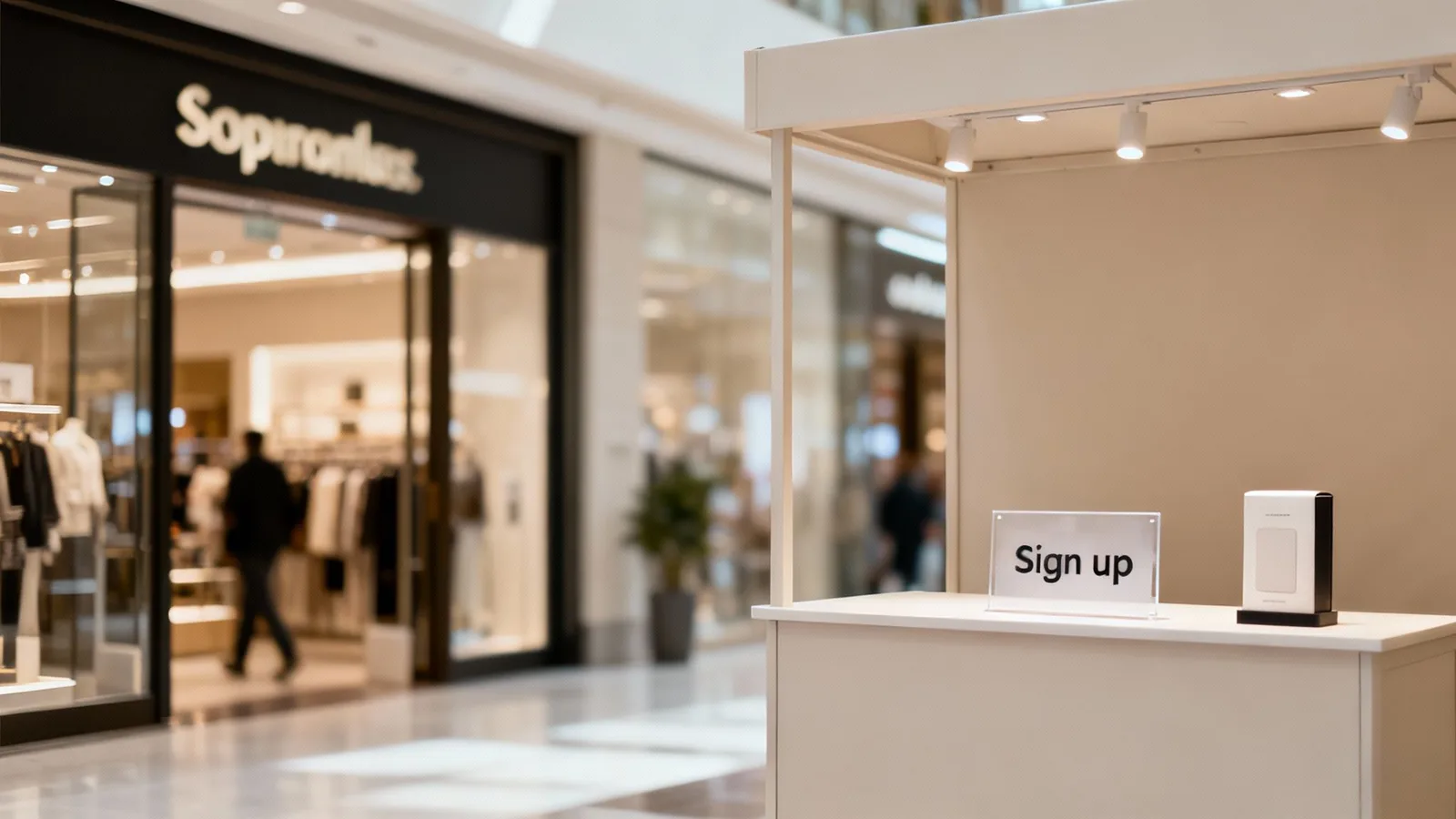
Think of your website's homepage as the main entrance to a giant department store. It's bustling with activity, with signs pointing in every direction—to the blog, the "About Us" page, your full product catalog. It's built for browsing and general exploration.
A landing page, on the other hand, is like a sleek, pop-up booth in the middle of the mall with a single product and one clear objective. There are no distracting navigation menus, no sidebars, and no links pulling visitors away. Every single element, from the headline down to the final call-to-action button, works together to guide the visitor toward one specific action.
The "Any Page" Myth
One of the biggest mistakes people make is thinking any page a visitor happens to land on can be called a "landing page." This simple misunderstanding leads to a huge missed opportunity for conversion. The data is pretty shocking: research shows that a staggering 77% of pages that companies call 'landing pages' are really just their homepages.
That's a problem because homepages are terrible at converting focused traffic. They're designed to serve too many different audiences and purposes at once. A landing page’s real power lies in its singular focus. It picks up the conversation exactly where your ad or email left off, creating a smooth, persuasive journey that leads directly to a conversion.
A landing page isn't just another page on your website; it's a finely-tuned machine within your sales funnel, built to turn clicks into customers with laser precision and zero distractions.
The Role in a Creator's Business
For creators, educators, and entrepreneurs, this distinction is everything. Whether you're launching a new online course, trying to grow your newsletter, or selling a digital download, a dedicated landing page is your most powerful tool. It’s the digital handshake that warmly welcomes a potential customer and clearly lays out the value you’re offering.
Zanfia is built AI-first: an AI team runs the page for the creator, so you can dictate a new headline or a fresh testimonial by voice instead of clicking through a builder, and the same page slots straight into a checkout with order bumps, installments and 12 product types under one brand. Pages ship without code, and you can open the finished checkout in test mode to buy your own product before a single ad runs. For creators on a different stack, it's also possible to create high-converting landing pages in WordPress to get the job done.
Ultimately, these pages are the workhorses of your marketing. They form the critical bridge between your advertising efforts and your business goals. Understanding this is the first real step toward building a reliable, predictable system for growth. To see how these pages fit into the bigger picture, check out our guide on what is a sales funnel.
The Anatomy of a Winning Landing page
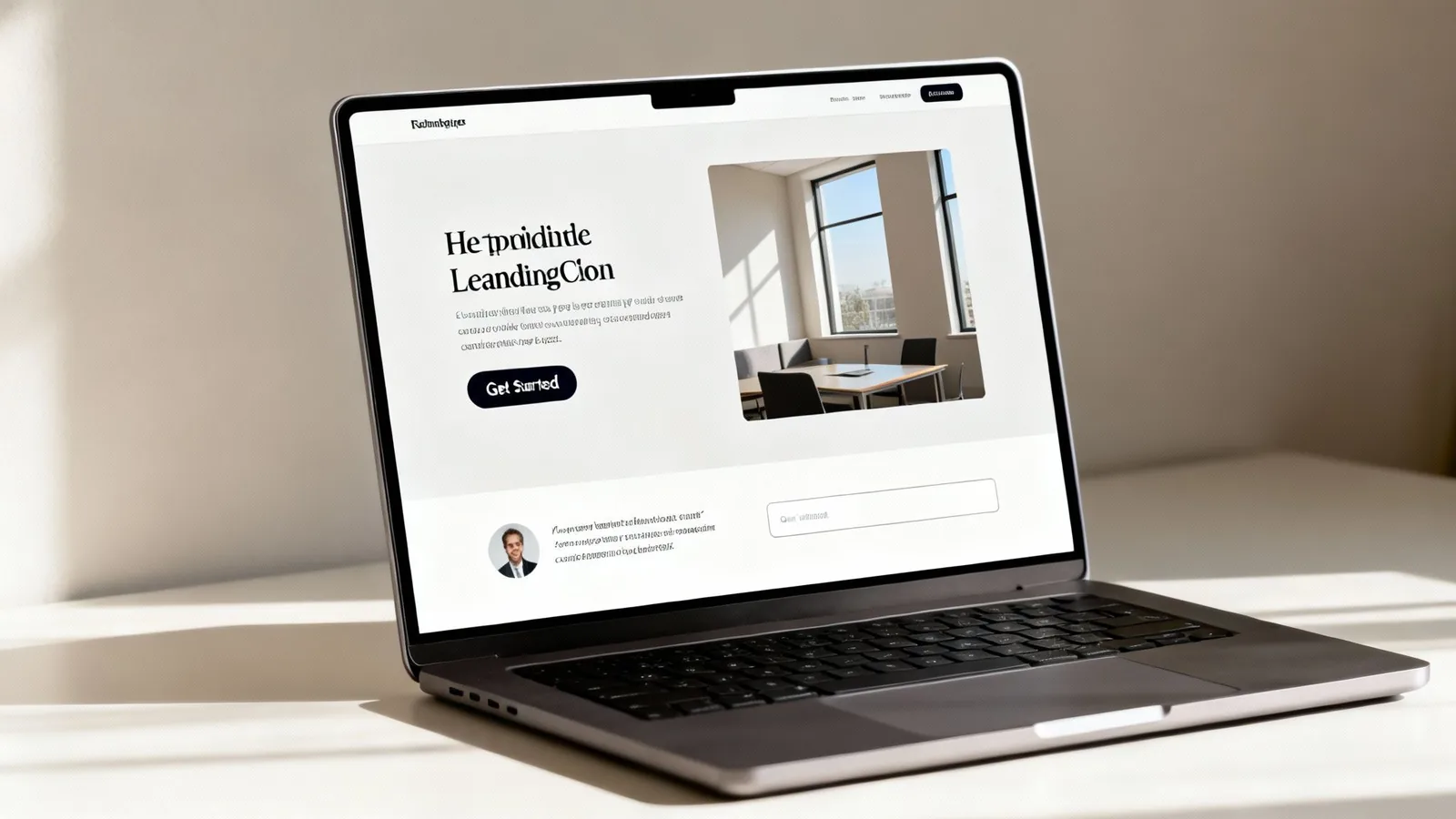
So, what separates a landing page that converts from one that just sits there? It all comes down to its anatomy. The most successful pages aren't just thrown together; they're built from a proven set of components that work in harmony to guide a visitor from "I'm just looking" to "I need this now."
Think of it like building a high-performance engine. Every single part has a job to do. From the very first glance, your page should start a silent, persuasive conversation that leads to one specific outcome.
Let's break down the essential building blocks.
The Compelling Headline and Subheading
Your headline is your first impression. It’s the handshake, the opening line, and often the only thing someone reads before deciding to stay or bounce. It has to grab their attention and instantly confirm they’ve landed in the right spot. A great trick is to mirror the language from the ad or social media post they just clicked—it creates a seamless, reassuring experience.
The subheading is its trusty sidekick. It quickly adds context, summarizing the core benefit or solving the visitor's main problem in a single, punchy sentence. It’s a direct answer to their unspoken question: “What’s in it for me?”
For example, a course creator might use a headline like "Launch Your First Online Course in 30 Days" paired with a subheading like "Join 500+ successful creators using our step-by-step blueprint to turn expertise into income."
Persuasive Copy and Engaging Visuals
Once you’ve hooked them, the body copy does the heavy lifting. It needs to be crystal clear, focused on benefits (not just features), and incredibly easy to scan. Forget long blocks of text. Use short paragraphs, bullet points, and bold text to highlight the transformations your offer provides.
Visuals are your secret weapon for building an instant emotional connection. A powerful image or, even better, a video can explain your offer far more effectively than words ever could. In fact, adding a video to your landing page can boost conversions by over 80%.
A landing page isn't just a collection of text and images; it's a carefully choreographed experience. Every element, from the headline to the button color, is a strategic choice designed to build trust and encourage action.
This is where a platform like Zanfia really helps. It offers native video hosting, so you can drop a welcome video or a course preview right onto your page without wrestling with costly external services like Vimeo or Wistia. And because Zanfia is voice-ready, you can dictate the copy around that video instead of typing it out, and the assistant places it on the page for you.
A Strong Call to Action and Social Proof
The Call-to-Action (CTA) is the grand finale of your page. It’s the big red button that tells people exactly what to do next. It needs to be clear, commanding, and use action-packed text. Skip the boring "Submit" and go for something exciting like "Get Instant Access" or "Enroll in the Course Now."
But before people click, they need to trust you. That’s where social proof is invaluable. Testimonials from real customers, ideally in video, build instant credibility and show that others have gotten real results from your offer. Zanfia lets you show a gallery of a product's approved testimonials right on the checkout page, so the trust you build on the landing page carries all the way through to payment.
For creators and educators, this is a game-changer. Learning how to get testimonials from customers is a skill that directly fuels the performance of your landing pages.
The Frictionless Lead Capture Form
If your goal is to gather leads, your form needs to be as simple and painless as possible. Every extra field you add creates friction, giving your visitor another reason to abandon the page. Be ruthless here.
Only ask for what you absolutely need. For a free ebook download, a name and email are plenty. Respecting your visitor's time is a small but powerful way to start building a great relationship.
To put it all together, think of your landing page like this:
Anatomy of a Winning Landing Page
Here's a quick breakdown of the essential elements and the role each one plays in driving conversions.
| Component | Purpose | Best Practice Example |
|---|---|---|
| Headline | Grabs immediate attention and confirms the visitor is in the right place. | "Master Your Finances in 30 Days" |
| Subheading | Briefly explains the main benefit and answers "What's in it for me?" | "The simple, step-by-step system for building wealth." |
| Visuals | Creates an emotional connection and demonstrates the product or service in action. | A short video testimonial from a happy student. |
| Body Copy | Persuades the visitor by detailing benefits, solving problems, and overcoming objections. | Bullet points highlighting key outcomes, not just features. |
| Social Proof | Builds trust and credibility by showing that others have found value. | "Trusted by 10,000+ Students" with a few customer headshots. |
| Call-to-Action | Clearly tells the visitor what to do next with a compelling, action-oriented verb. | A bright, unmissable button that says "Start Your Free Trial." |
| Lead Form | Captures visitor information with the least amount of friction possible. | A simple form asking only for a name and an email address. |
Each of these components is a critical piece of the puzzle. When they all work together seamlessly, you create a powerful, persuasive experience that turns curious visitors into loyal customers.
Choosing the Right Landing Page for the Job
Think of a landing page like a specialized tool in your toolbox. You wouldn't use a sledgehammer to hang a picture frame, right? In the same way, the landing page you build to sell a high-value course will be completely different from one designed to give away a free checklist.
Picking the right format from the get-go is the first real step toward a successful campaign. Each type has a specific job to do, guiding your visitors on a carefully planned journey. Let's break down the most common types you'll use as a creator or entrepreneur.
Lead Generation Pages (aka "Squeeze Pages")
This is often your digital handshake—the very first point of contact you have with a potential customer. The mission here is simple and singular: capture their contact information (usually a name and email) in exchange for a valuable freebie.
That freebie is called a lead magnet. It could be anything from an ebook or a video tutorial to a handy template or checklist. The page itself is usually short and sweet, with a killer headline, a quick summary of what they'll get, and a straightforward opt-in form. If you're using Zanfia to grow a paid newsletter audience or gather leads for a future launch, this is your bread and butter. It’s like offering a free sample to draw people into your shop.
To really nail this part, check out our deep dive on how to create effective lead magnets.
Long-Form Sales Pages
Okay, now it's time to sell your big-ticket item—that flagship online course, a premium coaching program, or an exclusive community membership. For that, you need a long-form sales page. This page is a masterclass in persuasion, built to tackle every question, crush every objection, and make your offer feel like an absolute no-brainer.
It’s a much longer, more detailed affair than a lead gen page. You'll typically find:
- Compelling copy that tells a story and focuses on the transformation your customer will experience.
- Video testimonials and detailed case studies to build trust and show real-world results.
- Module breakdowns or feature lists that clearly outline everything included.
- A rock-solid guarantee to remove any lingering purchase anxiety.
An experienced creator using Zanfia would lean on a long-form sales page to turn leads into high-value customers, using built-in video features to showcase course previews and powerful testimonials from clients. Because the checkout supports installments, you can split a $600 course into four payments right on the same page, which lowers the bar for buyers without dropping your price.
Click-Through Pages
A click-through landing page is essentially a bridge. Its job isn't to get a lead or close a sale on the spot. Instead, it’s designed to "sell the click" to the next step in the process. You'll see these a lot in e-commerce or for more complex offers that need a bit of a warm-up before asking for the sale.
For instance, you could use a click-through page to introduce a new course bundle. The page would highlight all the amazing benefits and build excitement, with a single call-to-action button like "Explore the Bundle" or "See Your Options." That button then takes them to the actual pricing or checkout page, which supports Stripe and PayPal, with Apple Pay and Google Pay as wallet options at checkout.
This approach breaks the decision-making process into smaller, more manageable steps. By pre-selling the visitor on the value first, you make them far more likely to follow through and complete the purchase on the next screen.
Webinar Registration Pages
Webinars are an incredible way to connect with your audience and sell high-value offers in real-time. A webinar registration page is laser-focused on one thing: getting people to sign up for your live event.
The layout is pretty similar to a lead generation page, but it's all about the event. The essential ingredients are:
- A headline that promises a specific, desirable outcome.
- Bullet points detailing exactly what attendees are going to learn.
- A little bio about you (the host) to build authority.
- The date and time of the webinar, often paired with a countdown timer to create a sense of urgency.
For an expert who feels overwhelmed by tech, a platform like Zanfia makes this easy: you dictate the promise, the bullets and the bio, and the assistant builds the page. A webinar registration page is a solid, low-risk way to build an email list, validate a product idea, and make your first sales in a live, engaging setting.
Getting Eyes on Your Page and Knowing if It’s Working
You've built a killer landing page. The copy is sharp, the design is clean, and the offer is irresistible. That's a huge step, but it's only half the job. A brilliant page with zero visitors is like a storefront on a deserted street—all potential, no results.
Now comes the crucial part: getting the right people to actually see it. Once they arrive, you need to know what they're doing. Are they clicking that button? Or are they hitting the back button in seconds? This isn't just about tracking numbers for the sake of it; it’s about getting the real-world feedback you need to make smarter decisions and actually grow your business.
Where Your Visitors Come From Changes Everything
Let's get one thing straight: not all traffic is the same. Someone who clicks a link in your weekly email is in a completely different headspace than someone who just found you through a random Google search. Understanding your traffic sources is key to setting the right expectations and tailoring your message.
- Email Marketing: This is your warm audience. These people already know you, like you, and (hopefully) trust you. They're already on your team, which makes them far more likely to take you up on an offer.
- Paid Ads (Search & Social): This is often "colder" traffic. You're targeting them based on interests or search terms, but you might be a brand new face to them. You have to work a little harder to earn their trust right away.
- Organic Search (SEO): When someone finds you through Google, they’re actively looking for a solution. If your landing page provides the answer they're searching for, you've got a highly motivated visitor on your hands.
- Social Media: This traffic can be a mix. Some people are just scrolling casually, while others might be ready to buy. It's great for building awareness and getting in front of new audiences.
The source really does make a massive difference. Data shows that landing pages promoted through email marketing can see an average conversion rate of 19.3%. That's a whopping 77% higher than pages getting traffic from paid search ads. It’s a powerful reminder that building a relationship with your audience first pays off big time. You can dig into more of these numbers and find other fascinating landing page stats over at Backlinko.com.
The Handful of Metrics That Actually Matter
Once people start showing up, you need a way to measure what's happening. It’s easy to get lost in a sea of data, so let’s focus on the metrics that tell you the most important parts of the story. For a deeper dive, check out our guide on how to analyze website traffic.
First, it helps to remember that different pages have different goals. Here's a quick look at the main types and what success looks like for each.
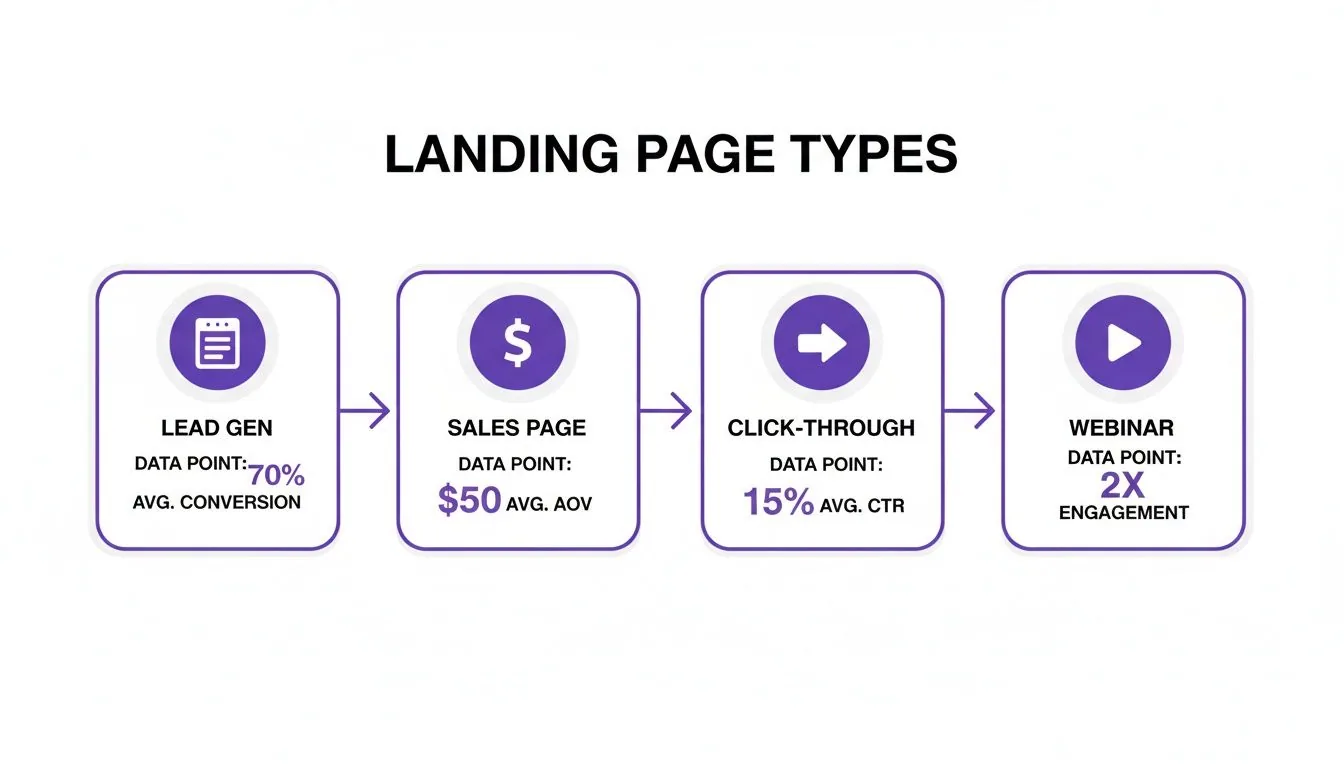
As you can see, the key performance indicators (KPIs) shift depending on whether you're trying to get an email address or close a big sale.
Now, let's break down the three essential metrics every creator or entrepreneur absolutely needs to track.
Conversion Rate
This is the big one. Your conversion rate is the percentage of visitors who do the one thing you want them to do. If 1,000 people visit your page and 100 sign up, you have a 10% conversion rate. Simple as that.
Your conversion rate is the ultimate truth-teller. It cuts through all the noise and tells you one simple thing: is your page doing its job?
It's the clearest, most direct measure of your page's performance.
Bounce Rate
The bounce rate tells you how many people land on your page and leave immediately without doing anything—no clicks, no scrolls, nothing. A high bounce rate is a major red flag. It could mean your ad promised one thing and the page delivered another, your headline is confusing, or the page is just taking too long to load.
Cost Per Acquisition (CPA)
If you're paying for ads, you need to know your Cost Per Acquisition (CPA). This metric tells you exactly how much money you're spending to get a single new customer or lead. Just divide your total ad spend by your total number of conversions. A low CPA means your campaign is running efficiently; a high CPA is a sign you need to either fix your ads or improve your landing page.
This is where having the right tools makes a huge difference. Zanfia puts built-in analytics right in your dashboard, with page views, conversions and revenue in one place, plus session recordings and heatmaps on your checkout so you can see exactly where buyers hesitate. And because everything is exposed through an MCP endpoint, you can point your own AI assistant at those numbers and ask what to change next, instead of exporting CSVs into another tool.
Actionable Strategies for Landing Page Optimization
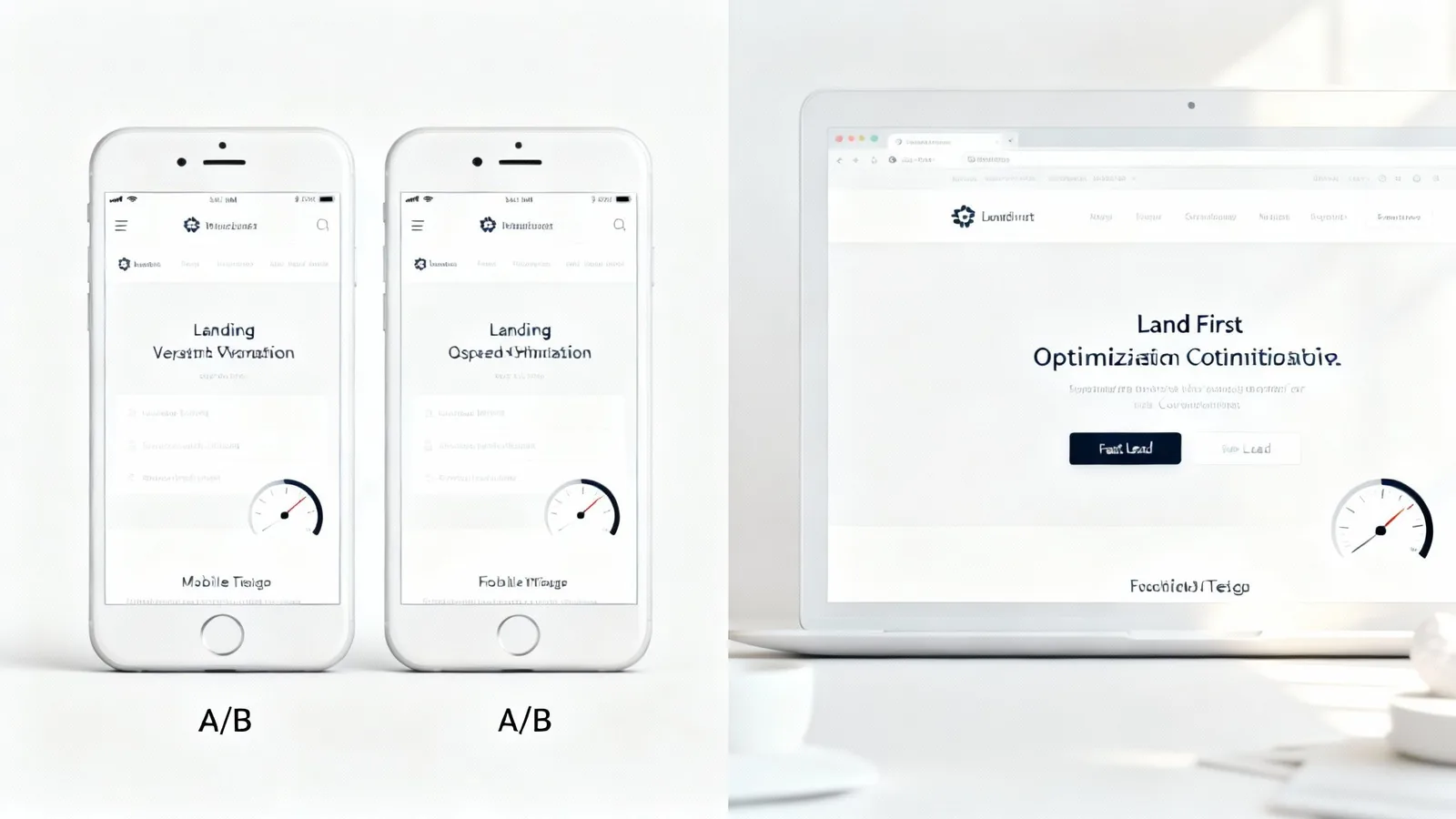
Building a landing page is just the starting line. The real work—and the real results—come from turning that page into a high-performing asset through consistent improvement. This is what optimization is all about: making small, data-driven tweaks over time to steadily increase your conversion rate.
Think of yourself as a scientist in a lab. You start with a hypothesis, like "A blue button will get more clicks than a red one," and then you run an experiment to see what happens. This constant cycle of testing, learning, and refining is what separates a good landing page from a great one.
Test Everything with A/B Testing
The heart of landing page optimization is A/B testing, sometimes called split testing. It’s a straightforward but powerful method: you create two versions of your page (Version A and Version B), change just one element between them, and show each version to different segments of your audience to see which one performs better.
You can test just about anything to find out what truly connects with your visitors.
- Headlines: Does a direct, benefit-focused headline outperform one that asks a provocative question?
- Call-to-Action (CTA) Button: Experiment with the text, color, size, and even its placement on the page.
- Images and Videos: Would a video testimonial from a happy customer be more persuasive than a static image?
- Form Length: Will you get more sign-ups by asking for just an email address, or does adding a name field not hurt conversions?
Zanfia's AI team makes this loop faster: dictate a new headline or ask the assistant to clone a page with a different CTA color, and you have a challenger ready in minutes. Session recordings and heatmaps from Microsoft Clarity and Hotjar are wired into the checkout, so when you see one variant winning you also see why, rather than just a conversion number.
Prioritize Mobile-First Design
Let's be clear: your landing page must work flawlessly on a smartphone. Period. Research shows that nearly 83% of all web traffic comes from mobile devices, and a whopping 86% of the top-performing landing pages are built for mobile. If your page is slow, clunky, or difficult to read on a small screen, you’re basically slamming the door on the vast majority of your potential customers.
A mobile-first approach means you design for the smallest screen first and then adapt the layout for tablets and desktops. This ensures everyone gets a clean, intuitive, and conversion-friendly experience, no matter how they find you.
Focus on Lightning-Fast Page Speed
In an age of instant gratification, every single second matters. A slow-loading page is one of the quickest ways to kill your conversion rate. If people have to wait, they won't—they'll just hit the back button before your offer ever loads.
Here are a few ways to keep your page speed snappy:
- Optimize Images: Use tools to compress your images, reducing their file size without a noticeable drop in quality.
- Limit External Scripts: Every third-party script (like analytics or pop-up tools) adds to your load time. Be ruthless and only keep what's essential.
- Use Fast Hosting: Your hosting environment is the foundation of your page's performance. Don't skimp on it.
A one-second delay in page load time can result in a 7% reduction in conversions. For a creator earning $10,000 a month, that's a loss of over $8,000 a year from a simple technical issue.
Platforms like Zanfia handle the heavy lifting for you. With features like native video hosting, your media is served up quickly without relying on slow, third-party services that can bog down your page.
Personalize the Visitor Experience
Personalization is about making your visitors feel like you're speaking directly to them. The more relevant your message is, the more likely they are to take action. In fact, a tailored CTA can convert over 200% better than a generic one. For anyone serious about boosting their numbers, it’s worth exploring some expert strategies for landing page optimisation.
This could be as simple as changing the headline to match the ad a visitor clicked on, or showing different testimonials to different audience segments. To learn more, check out our guide on landing page optimization best practices.
By putting these strategies into practice, you can transform your landing page from a static online brochure into a dynamic conversion machine that actively grows your business.
Common Questions About Landing Pages (And Straightforward Answers)
As you start using landing pages, you're going to have questions. Everyone does. Getting these sorted out early is the best way to feel confident and build pages that actually get results. Let's tackle some of the most common things creators and entrepreneurs ask.
What’s the Difference Between a Landing Page and a Homepage?
Think of your homepage as the front lobby of your business. It's designed for people to wander around and explore. It has a navigation bar, links to your blog, your "About Us" story, and all your different products or services. Its main job is to introduce your brand and give visitors plenty of options.
A landing page is the complete opposite. It has a single, laser-focused purpose. It’s built for one specific campaign with one specific goal, like getting someone to register for a webinar or download a new guide. You'll notice it's stripped of all distractions—no navigation menu, no extra links. This is done on purpose to steer the visitor toward that one single action, and it’s why landing pages convert so well.
Here's a simple way to think about it: a homepage is a general interest library, while a landing page is a single, must-read book with a sign-up sheet at the end.
How Many Landing Pages Should I Have?
The short answer? Probably more than you think. The more specific your marketing campaigns get, the more landing pages you'll need. Best practice is to create a unique landing page for every distinct offer and audience segment. So, you'd have one for your e-book, another for your flagship online course, and a completely separate one for your paid community.
Businesses that really lean into this see incredible results. Companies with over 30 landing pages generate massively more leads than those with fewer than 10. The secret is making each page feel like it was created just for the person who landed on it.
Building thirty pages sounds like a full-time job, but with an AI-first platform like Zanfia it doesn't have to be. You can dictate a new page out loud, clone a page that's already working and ask the assistant to rewrite the headline for a different segment, or point your own AI agent at your workspace over MCP and have it draft variations for you. Test each one in test mode before you send traffic, so you never launch a page that quietly breaks tracking.
What’s a Good Landing Page Conversion Rate?
You'll hear people throw around an average conversion rate of 2-5%, but honestly, that number can be more distracting than helpful. A "good" rate really depends on your industry, how compelling your offer is, and where your traffic is coming from. Someone in the education space, for example, could easily see conversion rates of 8% or higher for a solid offer.
A much better way to think about it is this:
- Find Your Starting Point: Run your first campaign and see what your conversion rate is. That’s your baseline.
- Compete Against Yourself: Instead of chasing some vague industry benchmark, just focus on beating your last result.
- Test and Tweak: Use A/B testing to experiment with different headlines, calls to action, and images. Those small, incremental wins are what lead to major improvements over time.
One advantage of building on Zanfia: the platform charges 0% commission on customer sales, so every percentage point you gain in conversions lands in your account (only the payment processor takes its standard cut).
Can I Use a Landing Page for SEO?
Absolutely. While it’s true that many landing pages are built for short-term paid ad campaigns (and are often hidden from search engines), you can definitely create SEO-focused landing pages that become long-term assets for your business. These pages are usually much more detailed, packed with valuable content, and designed to rank for specific things your ideal customers are searching for.
This strategy is a fantastic way to attract high-quality, organic traffic. Instead of interrupting people with an ad, you’re showing up with the exact answer they were looking for. It perfectly blends direct-response marketing with helpful, in-depth content.
For instance, a business coach could create a page called "The Ultimate Guide to Launching Your First Digital Product." Over time, this page would start attracting organic traffic from Google, establishing their authority and capturing leads from people who are actively trying to solve that specific problem. It turns your landing page into an evergreen lead generation machine that works for you 24/7.
Ready to stop juggling tools and start building a focused, profitable online business? With Zanfia, an AI team runs your creator business: dictate a landing page by voice, launch it through a checkout with order bumps and installments, and sell 12 product types under one brand, with 0% platform commission on your customer sales. Start with a 14-day free trial, no credit card required.
Discover how Zanfia can simplify your creator business today.