

Social Media Community Management: Proven Strategies for Engagement & Growth
Gone are the days when social media was just a megaphone for blasting out marketing messages. Social media community management is about trading that megaphone for a host's apron. It’s the craft of turning a one-way broadcast into a lively, two-way conversation, transforming passive followers into a genuine, thriving community.
What Is Social Media Community Management Really

Think of it this way: a traditional social media manager is like a town crier. They stand in the square and shout the day's news to anyone who happens to be passing by. Their goal is reach—shout it loud and shout it wide.
A community manager, on the other hand, is the town’s well-loved mayor. They don't just announce things. They host town halls, listen to people’s ideas and concerns, introduce neighbors to one another, and plan events that make the town a great place to live. They’re nurturing the very soul of the town.
This "mayor" sets the tone, makes sure the space is welcoming, and sparks conversations that matter. Success isn't measured by how many people heard the announcement, but by how connected, active, and vibrant the townspeople have become. If you want to dive deeper into the core principles, this is a great primer on what is community management.
The Shift From Broadcasting To Building Communities
At its heart, this is a fundamental pivot from pushing content at people to pulling them in. It's a strategic move away from chasing fleeting attention and toward building a lasting sense of belonging—an asset that traditional marketing simply can’t replicate.
This shift isn't just about feeling good; it's a powerful business strategy. Below, we've broken down the key differences between the old way and the new.
| Aspect | Traditional Social Media Marketing (Broadcasting) | Social Media Community Management (Building) |
|---|---|---|
| Primary Goal | Maximize reach, impressions, and follower count. | Foster engagement, retention, and brand loyalty. |
| Communication Style | One-to-many; a monologue from the brand to the audience. | Many-to-many; a dialogue between the brand and members, and among members. |
| Core Metric | Follower growth, likes, and shares. | Engagement rate, member-to-member interactions, retention, and sentiment. |
| Content Focus | Polished, promotional, and brand-centric content. | Valuable, conversational, and user-centric content (including UGC). |
| Success Looks Like | A large, passive audience. | An active, tight-knit community of advocates. |
As you can see, the focus moves from superficial metrics to deep, meaningful connection. When members feel like they're part of something special, they're no longer just customers. They become your most passionate advocates, your best source of feedback, and your first line of defense.
A well-managed community doesn't just consume your brand; it co-creates it. This is how a simple audience transforms into a sustainable, competitive advantage.
Why This Matters More Than Ever
In a world of constantly shifting algorithms and unpredictable platform reach, an owned community is your anchor. It gives you a direct, stable line to your most dedicated people, insulating you from the whims of Big Tech.
For creators, this is non-negotiable. Building your home on an all-in-one platform like Zanfia means you aren't just renting space from a social media giant; you are cultivating a loyal base that you truly own. Zanfia is built as an AI team that runs the creator business behind the community, so the same platform hosting your members also drafts content, answers questions, and takes voice commands from you to keep the whole operation moving. This is the foundation of a modern digital business, which you can explore further in our guide on what is community building.
The ground is always moving. One recent analysis showed X’s engagement climbing 44% year-over-year while Instagram’s fell by 26%, a stark reminder of how quickly the tides can turn. Owning your community on a platform you control protects you from this volatility.
Ultimately, social media community management is the engine that drives higher customer lifetime value, boosts retention, and builds a powerful moat around your business that no competitor can easily cross.
The Four Pillars of a Thriving Community Strategy

A vibrant online community doesn't just happen. It’s not about luck or landing a viral post; it's engineered with a solid strategic foundation.
Think of it like building a house—you need four strong cornerstones to hold everything up. A successful community is no different. Mastering these four essential pillars is how you turn a passive audience into a loyal, engaged, and self-sustaining ecosystem.
Without this structure, your efforts will feel chaotic and disconnected. These pillars create the framework for sustainable growth and real interaction, making sure every action you take builds toward a coherent vision. Let's break them down.
Pillar 1: Content and Programming
Content is the lifeblood of your community. It’s the scheduled programming that gives members a reason to show up, day in and day out. Think of it as the event calendar for your digital town square—it can't be an afterthought.
Great programming isn’t just about posting updates; it's about creating shared experiences. You need a thoughtful mix of activities designed to educate, entertain, and connect your members.
- Exclusive Content: Offer value they can’t get anywhere else. This could be behind-the-scenes access, early product drops, or deep-dive tutorials for your online courses.
- Expert Q&As: Host live sessions with industry experts or yourself. This creates a direct line for members to get their biggest questions answered.
- Member Challenges: Run weekly or monthly challenges that push people to participate and build skills, creating a powerful sense of collective achievement.
This pillar is your proactive plan to spark conversation and deliver consistent value—a true cornerstone of effective social media community management.
Pillar 2: Engagement and Moderation
If content is what you plan, engagement is what happens organically. And moderation is the art of guiding it.
This pillar is all about nurturing a safe, respectful, and lively space where everyone feels comfortable jumping in. It’s the critical difference between a chaotic free-for-all and a facilitated, productive discussion.
A clear playbook is non-negotiable. This means transparent community guidelines that spell out acceptable behavior and the consequences for breaking the rules. Graceful conflict management and active encouragement are your two most powerful tools here.
A great community manager doesn't just silence negativity; they amplify positivity. They act as a skilled facilitator, knowing when to step in to guide a conversation and when to step back to let members lead.
Pillar 3: Listening and Analytics
Your community is a goldmine of honest, unfiltered feedback. This pillar is about the art of listening to what your members are saying—both directly and indirectly—and using that data to make smarter decisions.
It’s about getting past vanity metrics to understand the true health of your community. For creators using platforms like Zanfia, which offers built-in analytics with a live sales feed, funnels and recurring-revenue reports, this data is pure gold. You can identify bottlenecks, optimize page layouts, and refine content to maximize engagement and revenue.
- Track Engagement: Monitor metrics like active member rates and the amount of user-generated content being shared.
- Gather Feedback: Systematically collect ideas and pain points to make your digital products even better.
- Measure Sentiment: Get a read on the overall mood and how your brand is perceived within the community.
You can learn more by exploring our detailed guide on powerful community engagement strategies.
Pillar 4: Growth and Advocacy
The final pillar is all about bringing new people into the fold while empowering your most passionate members to become advocates. Sustainable growth isn't just about bigger numbers; it's about attracting the right people who will add real value.
It starts with a killer onboarding process that makes new members feel welcome from day one. From there, your job is to identify your "superfans"—the people who consistently show up, contribute, and help others out.
By recognizing and rewarding their efforts, you can turn them into powerful brand ambassadors who will help grow your community organically. This approach has become a key driver of business success. According to one study, a remarkable 76% of consumers reported higher loyalty to brands that actively nurture their online communities. This shows how these four pillars directly build a resilient and profitable brand. You can read more about social trends that are shaping customer loyalty on ogilvy.com.
Understanding the Role of a Modern Community Manager
Let's clear up a common myth: community management is not just about scheduling posts and firing off a few replies. That’s a surface-level take that completely misses the mark. Today's community manager is a strategic force, the true voice and central nervous system of a brand.
They wear a lot of hats. They’re part strategist, part customer support specialist, part content creator, and part data analyst. It's not a reactive job; it’s about proactively building and shaping the entire community experience. They are the critical bridge between what the business wants to say and what the community actually needs to hear.
This role is especially vital for solo creators and small businesses, where one person is often juggling everything. Getting this right is the key to building real loyalty without burning out.
From Public Square to Private Hub
The work of a community manager goes way beyond simple posts and comments. They are the architects of the community's culture, tasked with creating a space where members feel a genuine sense of belonging and value.
This involves a sophisticated blend of responsibilities that directly fuel the business's bottom line. Their daily grind is a delicate balance of art and science, mixing authentic human connection with hard data.
- Content Curation and Creation: They don’t just post for the sake of it. They create and share content that sparks real conversations and provides actual value, moving far beyond basic promotional fluff.
- Customer Issue Resolution: They are the first line of defense, turning potentially bad experiences into moments that build trust. A quick, empathetic response can turn a frustrated customer into a fan for life.
- Community Health Reporting: They have their finger on the pulse of the community. They analyze conversations, gauge sentiment, and report those priceless insights back to the business to inform product and marketing decisions.
The Power of Smart Automation
For creators trying to do it all, these tasks can quickly become overwhelming. This is where the right platform isn't just helpful—it's a game-changer. The admin grind of community management, like granting access, sending welcome emails, and managing subscriptions, can easily eat up hours of your most valuable time.
The goal isn't just to be present; it's to be productively present. A modern community manager focuses their energy on the high-value human interactions that no machine can replicate.
This is exactly where a platform like Zanfia makes a huge difference. Rather than acting as another tool you have to configure, Zanfia works like an AI team you hire: you dictate what needs to happen next by chat or by voice, and the assistant can perform any action available in the interface. Instead of manually adding every new student to your private channels, the system does it for you instantly. Instead of chasing down failed payments, a visual workflow builder handles subscription renewals automatically. This frees you from the back-office chores so you can focus on what truly matters: creating amazing content and building real relationships. Welcoming new members efficiently is a critical first step, and you can dive deeper into creating a great experience with these user onboarding best practices.
Ultimately, a modern community manager isn't just a manager—they are a leader, a facilitator, and a core business strategist. By using smart tools, they can scale their impact and build a thriving, loyal community that becomes the brand's most powerful asset.
Measuring the True ROI of Your Community
How do you prove your community is more than just a “nice to have”? To get buy-in from stakeholders (or even just yourself), you have to connect your community management work directly to real business results. It’s time to look past vanity metrics like likes and follower counts and dial in on the key performance indicators (KPIs) that actually move the needle.
This means building a dashboard that shows your community is a powerful revenue engine, not a cost center. When you know how to measure social media ROI, you can clearly demonstrate the value of your work and make a rock-solid case for more resources.
Core Engagement Metrics
Engagement is the heartbeat of your community. It’s the difference between an active, thriving space and a digital ghost town. These metrics tell you if people are leaning in or just scrolling by.
- Active Member Rate: What percentage of your members are actually doing something—posting, commenting, reacting—in a given week or month? A high rate is a dead giveaway that your content is hitting the mark.
- User-Generated Content (UGC) Volume: Look at how many posts, success stories, or photos your members are creating on their own. UGC is pure gold; it’s social proof that shows deep buy-in from your most passionate fans.
- Response Rate and Time: How fast are you getting back to people? Quick, helpful responses build trust and make members feel seen and valued.
Think of these as your leading indicators. When engagement is strong, the business results almost always follow.
Direct Business Metrics
This is where the rubber meets the road. These KPIs draw a straight line from your community’s activity to your bottom line, proving its financial worth. They answer the big question: "Is this community actually making us money?"
The ultimate goal of social media community management is not just to build a crowd, but to cultivate an ecosystem that drives sustainable business growth. Every conversation should be seen as an opportunity to deepen a relationship and move a member closer to becoming a lifelong advocate.
You can track this with a few critical numbers:
- Conversion Rate from Community Members: How many members are buying your course, signing up for your paid newsletter, or upgrading their subscription? This is the most direct measure of your community’s sales power.
- Customer Retention and Churn: How long do members stick around compared to non-members? A healthy community creates incredible loyalty, slashing churn and boosting Customer Lifetime Value (LTV). We dive deeper into this in our guide to effective member retention strategies .
- Support Cost Reduction: Is your community a place where members help each other out? Every question answered by another member is one less support ticket your team has to field, which directly cuts your operational costs.
Essential Health Metrics
Finally, health metrics give you a read on the overall vibe and long-term sustainability of your community. They help you catch problems before they blow up and ensure your space stays positive and valuable for everyone.
- Sentiment Analysis: Are the conversations mostly positive, negative, or neutral? Keeping an eye on sentiment lets you gauge the mood and get ahead of any widespread frustration.
- New Member Growth Rate: Are you attracting the right new members at a steady pace? Stagnant growth can be an early sign that your community is losing its relevance.
- Member-to-Member Interactions: Are people talking to each other, or are they only talking to you? A high volume of peer-to-peer conversation is the sign of a truly self-sustaining community.
This context is vital when you consider the sheer scale of the online world. As of 2024, global social media users have surpassed 5 billion—that's over 62% of the world's population—with people spending an average of 2.5 hours a day on these platforms.
This massive, dialed-in audience is fertile ground for creators on platforms like Zanfia to build dedicated communities that deliver real, measurable ROI.
Key Community KPIs That Drive Business Growth
To tie it all together, here’s a breakdown of the most important metrics to track. This table connects each KPI directly to a business outcome, giving you a clear framework for measuring success.
| KPI (Key Performance Indicator) | What It Measures | Why It Matters for Creators |
|---|---|---|
| Active Member Rate | Percentage of members posting, commenting, or reacting in a set period. | Shows if your content is resonating and keeping people engaged. High activity often precedes sales. |
| Conversion Rate | Percentage of members who purchase a product, course, or subscription. | Directly links community activity to revenue. The ultimate proof of financial ROI. |
| Member Churn Rate | The rate at which members leave or cancel their subscriptions over time. | A low churn rate means high loyalty and predictable recurring revenue. |
| User-Generated Content (UGC) | The volume of posts, testimonials, and content created by members. | Acts as powerful social proof, fuels your marketing, and shows deep community buy-in. |
| Support Ticket Reduction | Decrease in support requests due to members helping each other. | Lowers your operational costs and frees up your time to focus on growth. |
| Sentiment Analysis | The overall tone (positive, negative, neutral) of conversations. | Helps you maintain a healthy, positive environment that people want to be a part of. |
By focusing on these specific KPIs instead of just follower counts, you can build a powerful story around your community's value—one that's backed by hard data.
From Rented Land to Owned Asset with Zanfia
Relying on platforms like Facebook Groups or Discord to host your community is like building a gorgeous house on rented land. You can invest all your time and energy into it, but the landlord can change the rules, hike the rent, or just kick you out with almost no notice. That’s the fragile reality for creators who build their entire business on someone else’s property.
You’re constantly vulnerable to things you can’t control.
An algorithm change can slash your reach overnight. An update to the terms of service could make your business model obsolete. You don’t own your member data, you can't shape the user experience, and your brand is constantly fighting for attention against the platform’s own ads and distractions. It's a shaky foundation for a real business.
The only strategic move is to get off the rented land and build an owned asset—a digital space that is 100% yours. It’s about building a community on your terms, under your domain, where your brand is the main event.
Building Your Digital Headquarters
This is where having your own dedicated platform isn't just a nice-to-have; it's essential. Zanfia is built as an AI team that runs the creator business, and the community you build sits inside that setup: you dictate posts, replies, and announcements to the assistant by chat or by voice, and it acts inside the workspace the same way any admin action would. Around that assistant, Zanfia gives you a white-label community that lives on your own domain and a checkout built to sell (order bumps, installments, and 12 product types living under one brand), so a single sign-in covers community, online courses, paid newsletters, and digital products.
This integration is a massive driver of real engagement. When a member finishes a course lesson, the discussion channels are right there—no need to push them to a separate Facebook group, breaking their focus and inviting them to scroll away. Everything happens under one roof with a single login, creating a seamless experience that keeps people locked in.
Moving your community to your own platform isn't just a technical change; it's a fundamental shift in business ownership. You stop being a tenant on someone else's property and become the architect of your own digital world.
This control is what separates the hobbyists from the serious businesses. It’s the key to establishing a premium brand that people are willing to pay for.
From Potential Explorer to Business Architect
Zanfia is built to support creators at every stage. If you're a "Potential Explorer" feeling overwhelmed by tech, it’s a simple, all-in-one solution to get your first product launched without juggling a dozen different apps—every plan comes with a 14-day free trial, no credit card required. But for established creators—the "Business Architects" and "Craft Masters"—the platform is where true scale and profitability happen.
As of July 2026, Zanfia charges 0% platform commission on customer sales; only the payment processor (Stripe or PayPal, roughly 2.9% + $0.30 in the US) takes its standard cut. Plans start at $39/month, or $31/month billed annually, on Starter, and scale up through Growth, Pro, and Scale (see the current Zanfia pricing). This is a straightforward SaaS subscription—no per-sale skim—which changes the math for creators earning meaningful monthly revenue.
On top of that, Zanfia's built-in automations are the engine that turns your community into a hands-off business machine. A visual workflow builder handles the tedious admin tasks that drain your time and energy.
- Instant Access: The second a payment goes through, the system automatically grants course access and adds the new member to the right community channels.
- Seamless Onboarding: Trigger automated welcome sequences—synced to your email tool through native integrations—so new members feel valued from the moment they join.
- Effortless Subscriptions: The platform manages renewals, payment reminders, and even revokes access if a subscription ends—all without you lifting a finger.
This frees you from being a glorified administrator so you can focus on what actually grows your business: creating incredible content and fostering genuine connections. By taking control of your platform, your brand, and your revenue, you finally move from renting a temporary space to owning a valuable, scalable business. If you're exploring options, our breakdown of the best community management software can provide further clarity on what to look for.
An Actionable Playbook for Daily Community Engagement
Strategy is nothing without execution. The real magic of community management happens in the daily trenches—the consistent, tactical plays you run to spark conversation and build genuine loyalty. This is your hands-on playbook, breaking down the exact frameworks that turn passive followers into die-hard members.
The end game? Moving people from a rented space (like a Facebook group) to an owned asset—your own branded platform. You're not just building an audience; you're building a digital home.
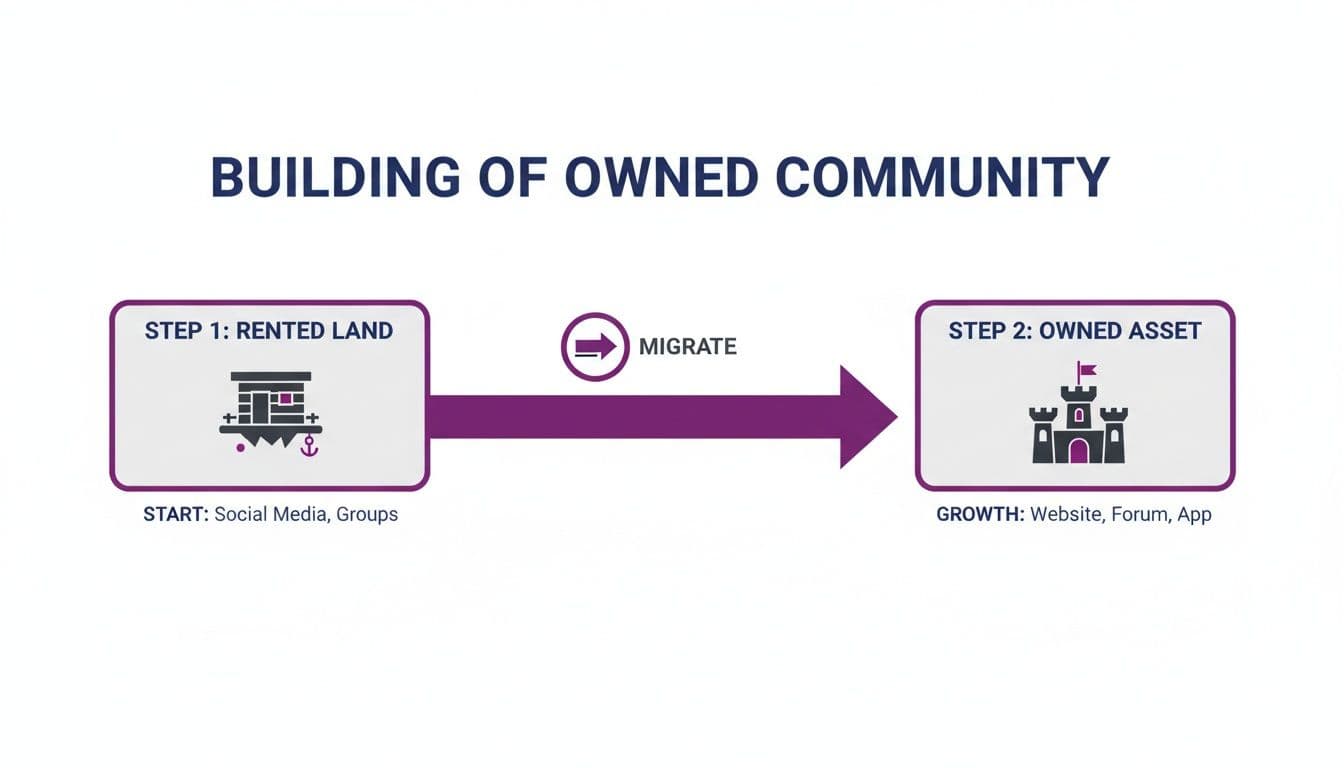
This journey is about shifting from unpredictable third-party algorithms to a stable, predictable business asset you control. Now, let’s get into the daily plays that make it happen.
The Welcome Ritual Play
First impressions are everything. A new member’s first 48 hours will make or break their long-term engagement. A killer welcome ritual makes them feel seen from the second they arrive.
- Step 1: The Automated Welcome: The moment a member joins your Zanfia community, an automated welcome email should hit their inbox. This email confirms access, points them to key resources, and lays down the rules of the road.
- Step 2: The Personal Tag: Within 24 hours , start a dedicated welcome thread and personally tag every new member from that day. Ask them to introduce themselves with a simple prompt, like sharing the #1 thing they want to learn.
- Step 3: The First Interaction: You, or your community manager, need to reply to every single introduction . This tiny act of recognition proves a real human is listening and their voice actually matters.
The Weekly Engagement Loop
Consistency is the heartbeat of a community. A weekly engagement loop creates a predictable content rhythm that trains your members to participate. It becomes a habit.
Here’s a simple structure you can steal:
- Monday Motivation: Kick off the week with a sharp, thought-provoking question tied to your community’s core topic.
- Wednesday Wisdom: Go live with a Q&A session or drop a piece of exclusive, high-value content they can’t get anywhere else.
- Friday Wins: Start a thread where members can post their wins and celebrate progress. It creates incredible social proof and positive energy.
The Content Co-Creation Play
The fastest way to create a feeling of ownership is to get your members involved in building the community. When they help create the content, their buy-in goes through the roof.
The ultimate sign of a healthy community is when members start creating value for each other, not just consuming value from you. This is the shift from an audience to a true community.
Try these simple tactics:
- Poll-Driven Content: Let members vote on the topic for your next webinar, course, or blog post. Give them a stake in the outcome.
- Member-Sourced Newsletters: Feature a "Member of the Week" or pull the best posts and insights from the community into your weekly newsletter.
- Expert Spotlights: Invite a knowledgeable member to co-host a live session or write a guest post. It gives them status and provides massive value to everyone else.
These plays aren't just one-off ideas; they are repeatable, scalable frameworks for your daily community management. They are the engine that turns passive followers into the core of your business.
Frequently Asked Questions
Got questions? We've got answers. Here are some of the most common things creators ask about running a community.
How Much Time Should I Dedicate to Community Management Daily?
When your community is just getting off the ground, a solid starting point is 1-2 hours of focused time each day. This should give you enough time to reply to comments, kickstart new conversations, and handle any moderation that pops up.
The real key is consistency, not intensity. A little bit of engagement every day goes a lot further than a huge effort once a week. As you grow, this becomes unsustainable without help. This is where an AI team like Zanfia earns its keep: you dictate what needs to happen next, and the assistant handles new member onboarding, access control, and other admin tasks inside the platform. That frees you up for the personal, high-touch interactions that actually build loyalty.
What Is the Difference Between a Social Media Manager and a Community Manager?
It’s easy to get these two mixed up, but their core jobs are fundamentally different. It all comes down to their primary focus.
- A Social Media Manager is basically a broadcaster. Their goal is to publish content, manage the brand’s public image, and attract a broad audience. They are talking to people.
- A Community Manager is a nurturer. Their work happens within the audience, building relationships between members, sparking conversations, and creating a sense of belonging. They are talking with people.
Think of it this way: one manages the stage, the other manages the green room where all the real connections happen.
How Do I Handle Negative Feedback or Trolls in My Community?
First thing's first: you need to have clear, public community guidelines. This is your foundation for everything that follows.
When you get legitimate negative feedback, always respond publicly with empathy. Show you're listening. Then, offer to move the conversation to DMs or email to solve their specific problem. This shows the entire community that you take feedback seriously.
Trolls are a different beast. For anyone who breaks your rules, you need to act swiftly and decisively based on your guidelines—whether that’s a warning or an instant ban. The goal is to protect the psychological safety of your members. Never get dragged into a public fight; just enforce the rules calmly and move on. That’s how you keep the space positive for everyone else.
Ready to move your community off rented social media land and onto an owned asset you actually control?
With Zanfia, you get an AI team that runs the operation for you—dictate what needs to happen by chat or by voice, and the assistant acts inside your workspace—plus a white-label community, online courses, digital products, and a checkout built to sell, all under your own brand with 0% platform fees as of July 2026.
Discover how Zanfia can help you build and monetize your community today.