

10 User Onboarding Best Practices for Digital Creators in 2025
The moment a new customer signs up for your course, community, or digital product is the most critical juncture in their entire journey. A confusing, aimless, or overwhelming first experience almost guarantees churn. A clear, empowering, and value-driven introduction, however, creates a loyal advocate for life. Effective onboarding is not about showing users where the buttons are; it’s about guiding them to their first meaningful win as quickly and efficiently as possible. For digital creators building businesses on platforms like Zanfia, this "aha!" moment could be launching their first course, enrolling their first community member, or earning their first dollar.
This article breaks down 10 essential user onboarding best practices that transform new sign-ups into successful, engaged, and high-value customers. We'll move beyond generic advice and dive into actionable strategies, from interactive product tours and goal-oriented workflows to personalized email sequences and community-led support systems. Each tactic is designed to reduce friction, demonstrate value immediately, and set your users up for long-term success.
We'll ground these practices in the context of an all-in-one platform, showing how an integrated ecosystem provides the perfect foundation for a world-class onboarding experience. When your courses, community, and e-commerce are unified, you can create seamless, automated flows that guide users effortlessly. This approach not only enhances the customer experience but also saves you dozens of hours in manual admin, allowing you to focus on what you do best: creating exceptional content. Get ready to build an onboarding process that doesn't just retain users, but turns them into your biggest fans.
1. Interactive Product Tours & Guided Walkthroughs
An interactive product tour is a guided, step-by-step walkthrough that actively engages new users, helping them learn by doing. Unlike passive video tutorials, these tours use elements like tooltips, hotspots, and pop-up messages to direct users through essential tasks within your platform's actual interface. This hands-on approach is one of the most effective user onboarding best practices for demystifying complex software and accelerating the "time to value."
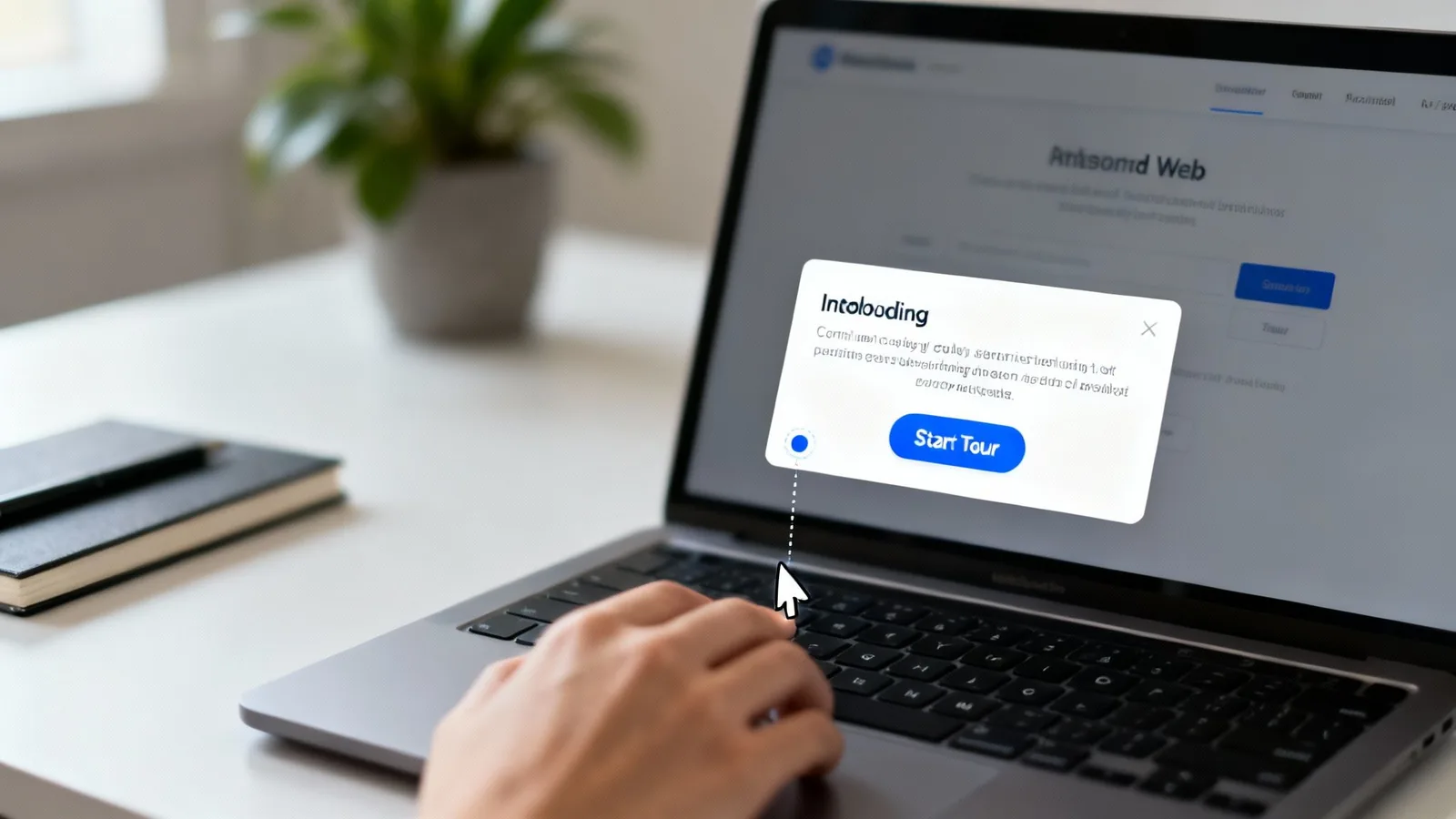
For a platform like Zanfia, an AI team runs the creator business behind the scenes, so a new creator meets courses, communities, newsletters, and digital products as surfaces where that work lands, not as separate tools to wire together. A well-designed tour prevents new creators from feeling overwhelmed, and because the assistant performs any action available in the interface by chat or by voice, the tour can teach dictation alongside clicks. The goal is to guide them to their first "Aha!" moment quickly, such as successfully creating a draft of their first digital product and previewing the checkout in test mode before a real sale. Advanced assistant capabilities are plan-dependent, see the current Zanfia pricing.
Actionable Implementation Tips
- Segment Your Tours: Don't use a one-size-fits-all approach. Create different walkthroughs based on user goals. A "Potential Explorer" just starting out on Zanfia needs a simple tour focused on creating their first e-book, while a "Business Architect" migrating their business might need a tour on setting up advanced community automations.
- Focus on the First Win: The initial tour should be short and focused on one core, value-driving action. For a Zanfia user, this is often creating and publishing their first digital product. This builds momentum and confidence.
- Make It Optional: Always give users the ability to skip, pause, or replay a tour. Forcing guidance on an experienced user can create friction. A simple "Skip Tour" button is essential for a positive user experience.
- Track and Optimize: Use analytics to monitor tour completion rates. If a high percentage of users drop off at a specific step, it’s a clear signal that the step is either confusing or irrelevant. Use this data to refine the tour's content and flow.
By implementing interactive walkthroughs, you transform the initial learning curve from a hurdle into an engaging, confidence-building experience that sets users up for long-term success.
2. Progressive Onboarding (Piecemeal Approach)
Progressive onboarding is a strategic approach that reveals features and functionalities to users gradually, as they become more familiar with the platform. Instead of overwhelming them with every available tool at once, this method introduces capabilities in manageable stages, triggered by user actions and readiness. This piecemeal approach is one of the most intelligent user onboarding best practices, as it reduces cognitive load and aligns the learning curve with the user's natural journey.
For a powerful platform like Zanfia, which serves diverse personas from "Potential Explorers" to "Craft Masters," progressive onboarding is crucial. It ensures a beginner isn't intimidated by advanced automation workflows, while a power user isn't held back by basic setup guides. This method mirrors the success of platforms like Duolingo, which unlocks new lessons only after a user masters previous ones. The goal is to deliver the right feature at the precise moment it becomes relevant.
Actionable Implementation Tips
- Create User Paths: Design distinct onboarding flows for your key personas. On Zanfia , a "Potential Explorer" should first be guided through creating and selling a simple e-book. Only after they achieve this first sale should the system introduce more complex features like building a paid community or setting up a subscription bundle.
- Trigger Features Contextually: Use user behavior as a trigger to introduce the next set of tools. Once a creator onboards their first 50 community members, you can use in-app messaging to introduce features for segmenting members into groups or creating members-only channels. This makes the new feature immediately useful.
- Pace the Introduction of Complexity: Introduce core value features first. For Zanfia users, this means focusing on product creation (course, e-book) and basic community setup. Advanced features like connecting the built-in automation engine to outbound webhooks, or exposing the workspace to AI assistants through the MCP endpoint, should be reserved for later, once the user's business is operational.
- Use Checklists and Progress Bars: Implement checklists to guide users through foundational, intermediate, and advanced stages. This gamifies the experience, provides a clear sense of accomplishment, and shows users what's next, encouraging them to continue exploring the platform's full potential.
3. Goal-Oriented Onboarding Flows
A goal-oriented onboarding flow tailors the initial user experience to the specific outcome a new customer wants to achieve. Instead of a generic tour, this approach asks users upfront what their primary goal is and then presents a customized path with relevant features and tasks. This is a powerful user onboarding best practice because it aligns your platform's value directly with the user's immediate business needs, dramatically shortening their time to value.
For a versatile platform like Zanfia, this method is crucial. A "Potential Explorer" aiming to launch their first e-book has different needs than a "Business Architect" migrating a paid community. By asking, "What do you want to achieve first?", Zanfia can immediately guide one user to the digital product creator and the other to community setup tools. This empathetic, partner-like approach helps creators feel understood from their very first interaction, and because the assistant knows the whole application, they can dictate the next step out loud instead of hunting for a menu.
Actionable Implementation Tips
- Ask Users Their Primary Goal: At the start of the onboarding process, present a simple choice: "I want to launch an online course," "Build a paid community," or "Monetize my newsletter." This single data point is invaluable for personalization.
- Create Goal-Specific Task Lists: Once a goal is selected, display a checklist of steps leading to their first win. For a Zanfia course creator, this could include "Upload your first video," "Set your course price," and "Connect a payment gateway."
- Highlight Relevant Features: Use contextual tooltips and messages to draw attention to the features most relevant to the user's chosen path. If they want to build a community, proactively highlight discussion channels and member management tools, while de-emphasizing course-specific features for now.
- Celebrate Key Milestones: Acknowledge and celebrate when a user completes a critical step toward their goal. A pop-up saying, "Congratulations, you've enrolled your first student!" reinforces their progress and builds momentum, turning activation into a rewarding experience.
4. In-App Messaging & Contextual Help
In-app messaging and contextual help deliver timely, relevant guidance directly within your platform's interface. Instead of forcing new users to search through an external knowledge base, this practice provides proactive support at the exact moment it's needed. For creators on a feature-rich platform like Zanfia, this is a cornerstone of effective user onboarding best practices, preventing confusion and reducing the friction involved in setting up courses, communities, and digital products.
This approach transforms the user experience from a solo exploration into a guided partnership. On Zanfia, that partnership is built to end in a sale, so the contextual help nudges creators toward the pieces that make selling easier: order bumps at checkout, splitting a $600 course into four installments, upsells at checkout, and running a test purchase before going live. When a new creator first navigates to the monetization settings for their course, a small, non-intrusive pop-up can explain the difference between a one-time purchase, a subscription, and an installment plan, all of which are supported. This contextual help significantly lowers the support burden and empowers users to make confident decisions on their own.
Actionable Implementation Tips
- Use Behavior-Based Triggers: Deploy messages based on user actions. For instance, if a Zanfia user spends more than 60 seconds on the community channel setup page, trigger a tooltip highlighting the difference between a discussion channel and a read-only announcement channel. This ensures help is relevant, not random.
- Keep Messages Concise and Action-Oriented: Contextual messages should be short and to the point. Instead of a long paragraph, use a simple prompt like, "Ready to add your first lesson? Click here to upload your video," with a clear call-to-action button.
- Provide Quick Links to Deeper Resources: While the in-app tip should be brief, always offer an escape hatch to more detailed information. A "Learn More" link can direct users to a comprehensive help article or a short video tutorial, catering to those who need more support. This is a key part of building a robust knowledge management system, which you can read more about in our guide to knowledge management best practices on Zanfia.com .
- Include Video Demos for Complex Tasks: For multi-step processes like setting up a course curriculum or connecting a Stripe or PayPal account, embed a brief video demo within a modal window. Zanfia 's native video hosting makes this seamless, eliminating the need for costly external services.
5. First-Value Achievement Acceleration
First-value achievement acceleration is the practice of designing your onboarding flow to guide users to a meaningful result as quickly as possible. Instead of just showing them features, you actively help them accomplish a key task that demonstrates your platform's core value. This creates a powerful sense of momentum and commitment, transforming a new signup into an engaged user who understands what your product can do for them.
For a Zanfia user, especially a "Potential Explorer" feeling overwhelmed by tech, the "first value" isn't learning about every setting; it's seeing their first digital product live or getting their first member signup. Every creator starts on a 14-day free trial with no credit card required, and because Zanfia charges 0% platform commission on customer sales, creators keep 100% of their revenue from day one apart from standard processor fees, making that first sale even more impactful. A test-mode checkout lets them buy their own product end to end before launch, so the first real sale happens on a checkout they already trust. This is a cornerstone of user onboarding best practices because it validates the user's decision to sign up and significantly reduces the likelihood of early abandonment. Learn more about how this impacts your business by understanding strategies to reduce customer churn.
Actionable Implementation Tips
- Offer 1-Click Templates: Create pre-built templates for popular digital products. For a Zanfia creator, this could be a "Mini-Course Template," a "Paid Newsletter Structure," or an "E-book Launch Kit" that they can customize and launch in minutes.
- Use 'Quick Start' Checklists: Design a simple, 3-5 step checklist that guides a new user to their first creation. For example: "1. Name your product," "2. Upload your file," "3. Set your price," and "4. Publish!" This breaks down a big goal into manageable steps.
- Pre-populate Sample Content: To remove the "blank page" problem, pre-fill new products or communities with sample content. For a new membership on Zanfia , you could include pre-populated tiers like "Bronze," "Silver," and "Gold" with example descriptions.
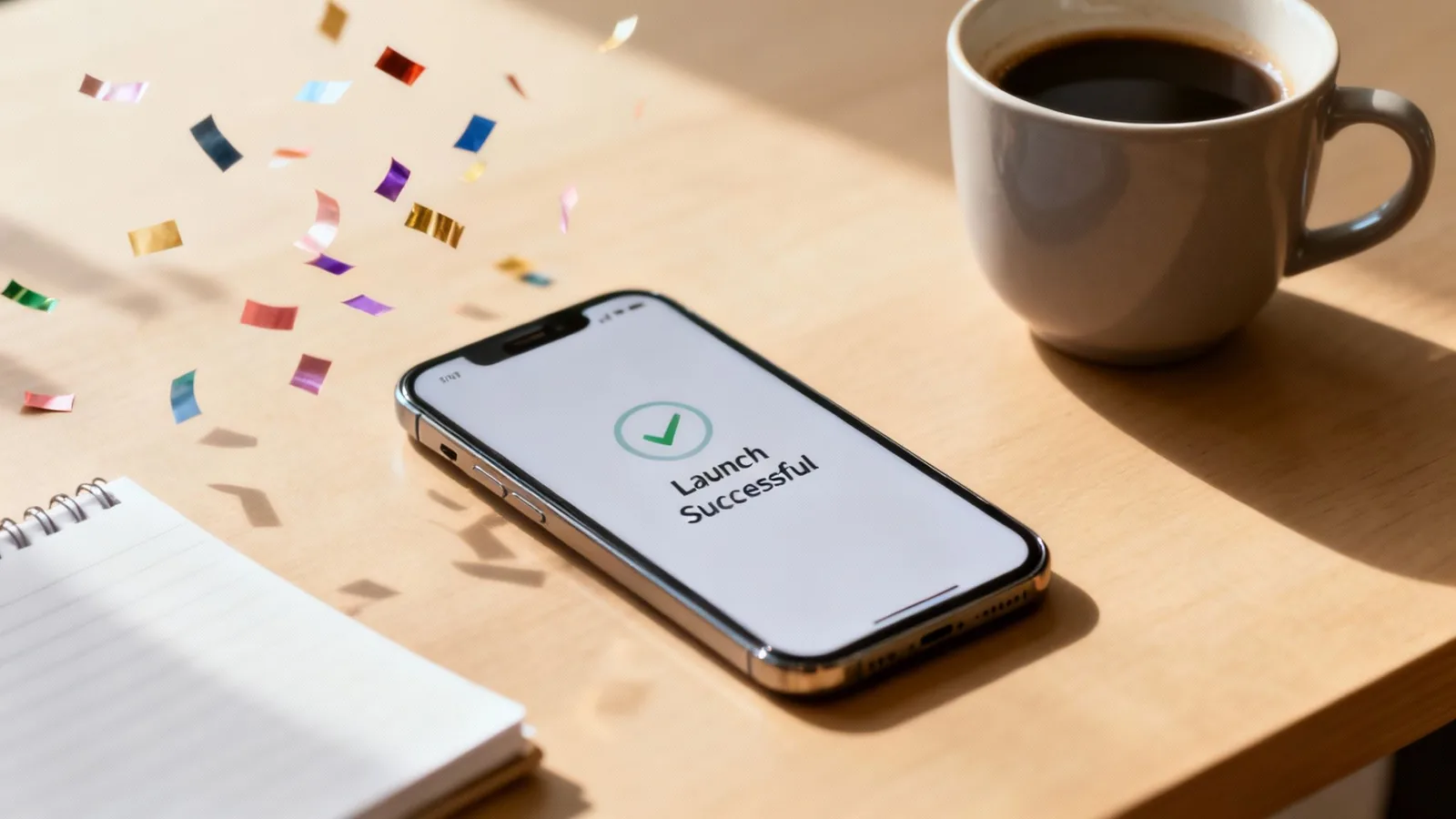
- Celebrate the First Win: Acknowledge the user's first achievement with an in-app confetti explosion and a congratulatory email. This positive reinforcement validates their effort and encourages them to take the next step, like sharing their new product link.
6. Email Onboarding Sequences & Nurture Campaigns
An email onboarding sequence is a series of automated, pre-written emails sent to new users at specific intervals after they sign up. This practice extends the onboarding experience beyond the platform itself, serving as a powerful tool to reinforce value, drive engagement, and guide users toward key milestones between sessions. It’s a direct line of communication that keeps your brand top-of-mind and combats user drop-off.
For a Zanfia creator, who might not complete their entire setup in one sitting, these nurture campaigns are essential. An email can remind a "Potential Explorer" to finish uploading their e-book, or educate a "Business Architect" on the benefits of integrating community channels with their online courses to boost engagement. This pragmatic, mentor-like communication helps build a partnership, not just a customer relationship.
Actionable Implementation Tips
- Segment Your Sequences: Tailor your email flow to different user personas. A Zanfia user who indicated they are an experienced entrepreneur needs a sequence focused on advanced monetization strategies and scaling, while a new educator needs tips on structuring their very first course. Create a 5-7 email sequence for each key segment.
- Focus on Action and Value: Each email should have a clear goal. Email 1 can be a warm welcome with a simple "getting started" checklist. Email 2 could guide them to create their first product, while subsequent emails could introduce community-building best practices or pricing strategies. For a deeper dive into structuring these flows, explore some successful onboarding email sequence examples .
- Include Social Proof: Sprinkle your emails with success stories or testimonials from similar creators. Real quotes from creators who launched their first product on your platform build trust far faster than marketing claims.
- Optimize Timing and Cadence: Don't overwhelm users with daily messages. Space your emails out over the first one to two weeks. Beyond crafting compelling content for your onboarding sequences, the timing and regularity of your emails are paramount to user engagement. Review these email marketing frequency best practices to optimize your nurture campaigns.
By strategically using email, you create a supportive and continuous onboarding journey that guides users to success, significantly improving activation and long-term retention.
7. Personalization & User Segmentation
Personalization is the practice of tailoring the onboarding journey to a user's specific goals, role, or experience level. Instead of a generic, one-size-fits-all introduction, segmentation allows you to present the most relevant features and information first, dramatically improving engagement and demonstrating value faster. This is a critical user onboarding best practice for platforms with diverse audiences, ensuring each user feels the platform was built just for them.
For a versatile platform like Zanfia, the needs of a "Potential Explorer" launching their first e-book are vastly different from those of a "Business Architect" migrating a six-figure course business. By asking a simple question during signup, such as "What is your primary goal today?", Zanfia can immediately guide users down the right path. This strategy makes users feel understood and sets them on a direct course to their first win, reinforcing the feeling of having a competent partner in their corner.
Actionable Implementation Tips
- Ask Upfront: Use a simple, one-question survey during the signup process. Ask about their role ("solo creator" vs. "growing business"), their primary goal ("sell a course," "build a community"), or their experience level ("just starting out" vs. "migrating from another platform").
- Segment Onboarding Flows: Create different product tours or checklist templates for each segment. A "course creator" might see a checklist focused on uploading videos and setting up payment plans, while a "community builder" is guided to create discussion channels first.
- Personalize Communications: Use the data you collect to personalize welcome emails and in-app messages. An email starting with "Ready to build your first course, [Name]?" is far more effective than a generic greeting.
- Provide Segment-Specific Resources: Develop tutorials, case studies, and help-desk articles tailored to each user type. This focused content provides deeper value and helps users overcome segment-specific challenges more efficiently. For more ideas on how to group your audience, check out these audience segmentation strategies .
By segmenting your users from the very beginning, you transform a generic onboarding process into a personalized, high-relevance experience that significantly boosts activation rates and long-term retention.
8. Onboarding Surveys & User Feedback Loops
An onboarding survey is a powerful tool for gathering direct feedback from new users during their crucial first interactions with your platform. Unlike analytics, which show what users do, surveys reveal why they do it. This feedback loop is one of the most insightful user onboarding best practices because it uncovers hidden friction points, clarifies expectations, and provides a direct roadmap for improving the initial experience.
For a comprehensive platform like Zanfia, where a creator might be setting up anything from a paid newsletter to a complex course with community access, understanding a user's initial mindset is critical. Feedback loops help identify which features are causing confusion or which value propositions are not landing as expected, and because 12 different product types live under one brand on Zanfia, that feedback shapes how the AI assistant guides the next creator through the same setup.
Actionable Implementation Tips
- Ask the Right Questions at the Right Time: Don't bombard users. Ask 1-2 key questions right after signup, such as, "What is the #1 thing you hope to accomplish with Zanfia ?" This immediately segments users by intent and helps you tailor future guidance.
- Deploy an Exit-Intent Survey: If a new user navigates away from a key setup page or attempts to close their account within the first week, trigger a simple pop-up survey. Asking, "What would make you more likely to stay?" or "What was missing for you?" can provide invaluable data to prevent future churn.
- Send a Follow-up Email: A few days into their journey, send an automated email asking, "What has been your biggest challenge so far?" This question is open-ended and empathy-driven, encouraging detailed responses that pinpoint exact pain points in your onboarding process.
- Close the Loop: Don't let feedback disappear into a void. When you implement a change based on user suggestions, communicate it back to your users. A quarterly update saying, "You asked, we listened: We've simplified the course lesson editor based on your feedback," builds immense trust and loyalty.
9. Gamification & Progress Visualization
Gamification in user onboarding is the strategic use of game-like elements, such as points, badges, and progress bars, to motivate users and guide their behavior. This approach transforms the learning process into an engaging and rewarding experience, tapping into our natural desire for achievement and competition. It's a powerful user onboarding best practice that creates psychological momentum, keeping users engaged long after their initial sign-up.
For a Zanfia creator, the journey from setting up a profile to launching a first course can feel daunting. Gamification breaks this journey into small, manageable wins. By celebrating small milestones, you can keep users motivated and focused on the next step, effectively turning a checklist of tasks into an exciting quest. The goal is to give creators peace of mind and let them focus on teaching while the AI team handles the setup work in the background.
Actionable Implementation Tips
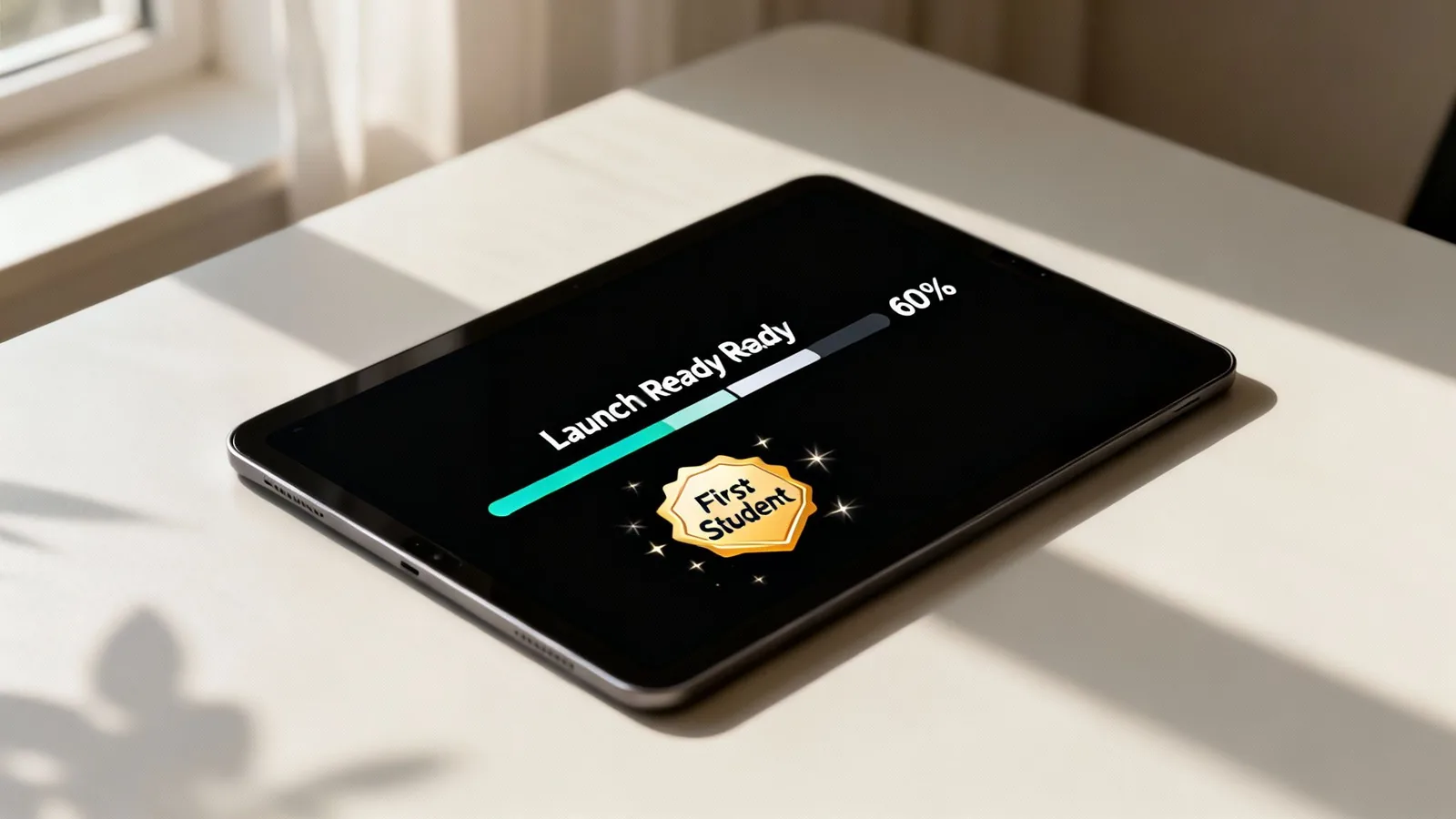
- Create Meaningful Milestone Badges: Design badges that represent real achievements in a creator's journey. For a Zanfia user, these could be 'First Product Created,' 'First Student Enrolled,' or 'First $100 in Revenue.' This makes progress tangible and rewarding.
- Visualize the Path to Launch: Implement a clear progress bar labeled "Launch Readiness" or "Profile Completion." Seeing a bar fill up as they complete tasks like connecting a payment gateway or uploading a video provides a strong visual incentive to finish setup.
- Celebrate Wins In-App and via Email: Don't let milestones pass silently. When a user earns a badge or hits a revenue goal, celebrate it with an in-app confetti animation and a congratulatory email. This positive reinforcement strengthens their connection to the platform.
- Make Achievements Shareable: Add a "Share to X" or "Share to LinkedIn" button to achievement notifications. Allowing creators to share their milestones provides them with social proof while simultaneously acting as organic marketing for your platform.
By incorporating gamification, you reframe the onboarding process from a series of chores into a compelling journey, encouraging users to fully explore your platform's value and build the momentum needed for long-term success.
10. Live Support & Community-Based Onboarding
Automated onboarding is powerful, but it can’t solve every problem. Combining self-service resources with a human touch provides a critical safety net for new users who get stuck. Live support, like real-time chat or scheduled calls, and access to a community of peers, create a supportive environment that prevents frustration and reduces churn. This dual approach is one of the most empathetic user onboarding best practices, showing users you’re invested in their success.
For a platform like Zanfia, which keeps everything unified under the creator’s brand, peer learning is exceptionally valuable. Unlike platforms that push audiences toward external tools, Zanfia’s integrated community tools, including topical discussion channels and group-based organization, allow new creators to learn directly from established "Business Architects" who have successfully scaled their offerings, boosting engagement and member retention.
Actionable Implementation Tips
- Offer 1:1 Onboarding Calls: Provide a free, optional 15-minute onboarding call for new users within their first 14 days. This personal touch can resolve initial roadblocks and make a lasting positive impression.
- Create a Private Onboarding Channel: Set up a dedicated private community channel just for new users. This creates a safe space to ask "beginner" questions and fosters a sense of cohort-based learning.
- Host Weekly Live Q&A Sessions: Run a weekly "office hours" or Q&A session with a product expert to address the most common onboarding hurdles in a group setting, which is both scalable and highly effective.
- Build an FAQ from Support Tickets: Analyze your most frequent support questions from new users and use them to build a dynamic, easily searchable knowledge base or FAQ section. This helps users self-serve and reduces repetitive support queries.
- Highlight Community Success: Regularly document and share success stories from established users within the community. Seeing peers succeed is a powerful motivator for newcomers. Learn more about how to build a thriving online community on zanfia.com .
10-Point Comparison: User Onboarding Best Practices
| Approach | 🔄 Implementation Complexity | ⚡ Resource Requirements | 📊 Expected Outcomes | 💡 Ideal Use Cases | ⭐ Key Advantages |
|---|---|---|---|---|---|
| Interactive Product Tours & Guided Walkthroughs | High — interactive overlays, upkeep 🔄 | High — engineering, design, analytics | Strong feature discovery; fewer support tickets 📊 ⭐⭐⭐ | Complex multi-feature onboarding (courses, memberships) 💡 | Improves adoption and reduces support load ⭐ |
| Progressive Onboarding (Piecemeal Approach) | High — behavior tracking & staged logic 🔄 | Medium–High — analytics, content sequencing | Reduced cognitive overload; higher retention 📊 ⭐⭐⭐ | Users with varying maturity levels (solo → enterprise) 💡 | Better paced learning; improved adoption rates ⭐ |
| Goal-Oriented Onboarding Flows | Medium — multiple tailored paths 🔄 | Medium — content variants and routing | Faster time-to-value; improved activation 📊 ⭐⭐⭐ | Users with clear objectives (launch course, monetize) 💡 | Highly relevant flows that increase activation ⭐ |
| In-App Messaging & Contextual Help | Low–Medium — trigger rules and copy 🔄 | Low–Medium — messaging platform, content | Timely assistance; lower support volume 📊 ⭐⭐ | Task-specific help (pricing, workflows, complex settings) 💡 | On-demand guidance with low deployment cost ⭐ |
| First-Value Achievement Acceleration | Medium — templates + streamlined UX 🔄 | Medium — templates, deployment features | Quick wins; higher early retention and advocacy 📊 ⭐⭐⭐ | Fast first-product launches; overwhelmed new creators 💡 | Rapid time-to-revenue and strong retention effect ⭐ |
| Email Onboarding Sequences & Nurture Campaigns | Low — sequence design and automation 🔄 | Low — copywriting + email tooling | Improved long-term engagement and education 📊 ⭐⭐ | Education between sessions; monetization coaching 💡 | Cost-effective sustained user education and re-engagement ⭐ |
| Personalization & User Segmentation | High — data models & dynamic flows 🔄 | High — data collection, privacy, content variations | Higher conversion and retention through relevance 📊 ⭐⭐⭐ | Diverse audiences (solo creators vs. teams) 💡 | Tailored experiences that boost conversion & upsell ⭐ |
| Onboarding Surveys & User Feedback Loops | Low — survey integration and analysis 🔄 | Low — survey tools and analyst time | Actionable product insights; reduced churn 📊 ⭐⭐ | Diagnose drop-off points and onboarding friction 💡 | Direct user feedback for prioritized improvements ⭐ |
| Gamification & Progress Visualization | Medium — design + minor engineering 🔄 | Medium — UI elements, rewards system | Increased motivation and task completion 📊 ⭐⭐ | Multi-step creation journeys (launch readiness) 💡 | Boosts engagement and visible momentum toward goals ⭐ |
| Live Support & Community-Based Onboarding | Medium — processes; high to scale 🔄 | High — staffing, community management | Faster issue resolution; stronger trust & retention 📊 ⭐⭐⭐ | High-touch users; complex setups; peer-led learning 💡 | Human help plus peer mentorship for stickiness ⭐ |
From Onboarding to Advocacy: Building Your Growth Engine
We've explored a comprehensive toolkit of user onboarding best practices, from interactive product tours and goal-oriented flows to personalized email sequences and community-led support. It’s clear that effective onboarding is far more than a simple checklist of introductory steps; it’s the strategic foundation upon which lasting customer relationships are built. It is the critical bridge between a user's initial curiosity and their realization of your product's true value.
Mastering these techniques transforms a user’s first impression from a passive tour into an active, engaging, and value-driven experience. The goal is to eliminate friction, build momentum, and guide each new customer to their first "Aha!" moment as quickly and seamlessly as possible. When a user feels understood, supported, and immediately successful, they don't just stick around, they become invested.
Distilling the Core Principles of Onboarding Success
If you're wondering where to begin, focus on these three pivotal takeaways that underpin all the strategies we’ve discussed:
- Speed to Value is Paramount: Your primary objective is to help users achieve a meaningful outcome without delay. Whether you're a course creator helping a student complete their first lesson or a community builder guiding a new member to their first meaningful interaction, shrinking the time it takes to experience that first win is non-negotiable. This is what turns a trial user into a paying customer and a paying customer into a long-term advocate.
- Context and Personalization Drive Engagement: A one-size-fits-all approach is a relic of the past. Modern onboarding thrives on relevance. By segmenting users based on their goals, leveraging in-app messaging for contextual help, and tailoring communication, you demonstrate that you understand their unique needs. This personalized guidance makes users feel seen and valued, dramatically increasing their motivation to engage further.
- Onboarding is a Continuous Conversation: The process doesn't end after the first login or the first week. By implementing feedback loops like surveys and consistently monitoring user behavior, you can treat onboarding as an evolving dialogue. This data-driven approach allows you to identify friction points, refine your flows, and continuously improve the new user journey.
From Theory to Action: Your Next Steps
The journey from a good onboarding experience to a great one is iterative. Don't feel overwhelmed by the need to implement all ten best practices at once. Instead, adopt a focused, strategic approach:
- Start Small, Measure Everything: Choose one or two strategies from this list that directly address the biggest drop-off point in your current process. Is it a lack of initial guidance? Implement a simple guided walkthrough. Are users getting lost after signing up? Launch a targeted welcome email sequence.
- Define Your "Activation" Metric: What single action best signifies that a user has understood your product's core value? For a Zanfia creator, this could be publishing their first course module or receiving their first community comment. Define this metric and relentlessly optimize your onboarding to drive users toward it.
- Listen to Your Users: Your new customers are your greatest source of insight. Use simple surveys, check-in emails, or community posts to ask them about their experience. Their feedback will illuminate blind spots and provide a clear roadmap for improvement.
Ultimately, the effectiveness of your onboarding directly impacts customer retention. Delve deeper into the metrics that define long-term user loyalty to connect your initial efforts with long-term business growth and understand which indicators truly matter. By mastering these customer retention metrics, you can build a sustainable model for success. Investing in a powerful, user-centric onboarding experience is one of the highest-leverage activities you can undertake. It is the engine that converts interest into activation, activation into retention, and retention into the powerful word-of-mouth advocacy that fuels sustainable growth.
FAQ
How do I decide what counts as the 'first win' for a new user of my digital product?
Pick the smallest action that proves your product's core value, then design the onboarding around reaching it fast. For a course creator this could be publishing a first lesson, for a community it might be enrolling the first member, and for a digital seller it could be launching a first ebook. The rule is one action, value-driving, achievable in a single session.
Should I make my product tour mandatory or skippable for new users?
Always make tours optional with a clear 'Skip', 'Pause' or 'Replay' option. Forcing guidance on experienced users creates friction and can push them away before they see value. Let beginners lean on the tour, and let power users get to work immediately.
How do I know if my onboarding tour is actually working?
Track completion rates step by step, not just overall. If a large share of users drops off at a specific step, that step is confusing or irrelevant and needs rewriting. Use the drop-off data to shorten, clarify or remove steps rather than adding more instruction.
What is progressive onboarding, and why not just show every feature at once?
Progressive onboarding reveals features gradually as users become ready for them, instead of dumping everything on day one. This lowers cognitive load, keeps beginners from feeling intimidated, and matches introductions to actual user behavior, like unlocking community segmentation only after a creator gains their first members. Duolingo's staged lesson unlocks is a well-known example of the pattern.
How should I ask users about their goals without slowing down signup?
Ask a single, simple question at the start such as 'launch a course', 'build a paid community' or 'monetize a newsletter'. That one data point lets you route each user into a tailored checklist and highlight only the features relevant to their path. Keep it to one choice so it feels like personalization, not a survey.
Ready to implement these best practices on a platform built to make it easy? Zanfia centralizes 12 product types under one brand, from courses and communities to newsletters and digital products, with an AI team that handles the setup work and an assistant you can drive by chat or voice. Every checkout is built to sell, with order bumps, installments, upsells, and a test-mode purchase you can run before the first real sale. Start with a 14-day free trial, no credit card required, and see how a 0% platform commission on customer sales lets you build and scale your business with confidence, clarity, and control.