

How to Ask for the Sale Without Being Pushy: A Guide
You don't usually struggle to ask for the sale because you lack words. You struggle because you don't want to sound needy, awkward, or out of sync with the buyer.
That's especially true if you're a creator, educator, or expert selling digital products. You've spent time building trust through content, newsletters, webinars, or a community. Then the moment comes to make an offer, and the energy changes. Many people either soften the ask so much that nobody moves, or they push too hard and make the whole thing feel transactional.
The fix isn't a clever closing line. It's a better sales process.
When you ask for the sale at the right time, in the right way, and with the right follow-up, it stops feeling pushy. It starts feeling useful. That's the standard to aim for.
Laying the Groundwork When to Ask for the Sale
Most weak closes are really timing problems.
Creators often think they need stronger persuasion when what they need instead is better judgment. A buyer who isn't ready won't be convinced by a smoother script. A buyer who is ready usually doesn't need theatrics. They need clarity and a clean next step.
Sales guidance repeatedly comes back to the same point. A key skill is deciding whether you should ask yet, based on genuine buying intent, not just knowing how to phrase the ask. Forcing a close when timing or fit is wrong is a common mistake, as noted in this guidance on asking for the sale without being pushy.

What real buying signals look like
Engagement is not the same as intent.
Someone liking your post, opening your newsletter, or watching your stories is a good sign, but it's still early. Buying signals are more concrete. They usually sound like questions about implementation, outcomes, access, price structure, timing, or fit.
Look for signals like these:
- Specific outcome questions like “Will this help me launch a paid newsletter?” or “Can this work if I already have a small audience?”
- Logistics questions such as onboarding, access length, community structure, or what happens after purchase
- Commitment language like “If I join now…” or “How quickly could I start?”
- Comparison behavior where the buyer is no longer asking whether the problem matters, but which option makes the most sense
Those moments matter because they show the prospect is mentally moving from curiosity to decision.
Practical rule: Don't ask for the sale when the buyer is still trying to understand the problem. Ask when they're trying to understand the path forward.
Set the expectation early
The cleanest closes start long before the sales page or checkout.
If you run a creator business, your content should teach and qualify at the same time. That means making it obvious who your offer is for, what problem it solves, and what next step makes sense. When you do that well, the sale feels like a continuation of the conversation.
A simple way to structure that journey is to think in funnel stages instead of isolated posts or campaigns. This breakdown of sales funnel stages explained is useful because it helps you match the ask to the buyer's level of readiness.
Listen before you close
One data point from sales conversations is worth remembering. Zendesk cites analysis showing that successful salespeople talk for 54% of a call, while less productive salespeople talk for 42% of a call, in a context that highlights adaptation and listening before making the ask, in these sales statistics.
For creators, “listening” often means paying attention to behavior, not just words. Which emails get replies. Which lesson pages lead to upgrade clicks. Which webinar questions keep repeating. Which product pages people revisit before buying.
That's how you stop guessing.
Proven Scripts to Confidently Close the Deal
You don't need one perfect script. You need a few reliable patterns that fit different moments.
Some offers need a soft close. Some need a direct ask. Some need a small commitment before the full commitment. If you sell courses, memberships, downloads, or paid newsletters, you'll use all three.
The consultative close that works in creator businesses
The most dependable framework here is SPIN. HubSpot's explanation of layered sales questions describes a sequence where you confirm the buyer's situation, surface the core problem, explore the implications, and then ask a need-payoff question that lets the buyer articulate the value of solving it in this SPIN-focused guide.
That sequence matters because it keeps the close anchored in the buyer's own priorities.
A creator can use it like this:
- Situation “What are you using right now to deliver your course and community?”
- Problem “Where is that setup slowing you down the most?”
- Implication “What happens if that stays fragmented for the next few months?”
- Need-payoff “If you had everything in one place under your own brand, what would that make easier?”
By the time you ask for the sale, the prospect has already explained the value in their own words. That's why this approach feels less pushy than jumping straight to price.
Ask questions that earn the right to ask for commitment.
Three closing scripts you can actually use
A few examples work well across digital products.
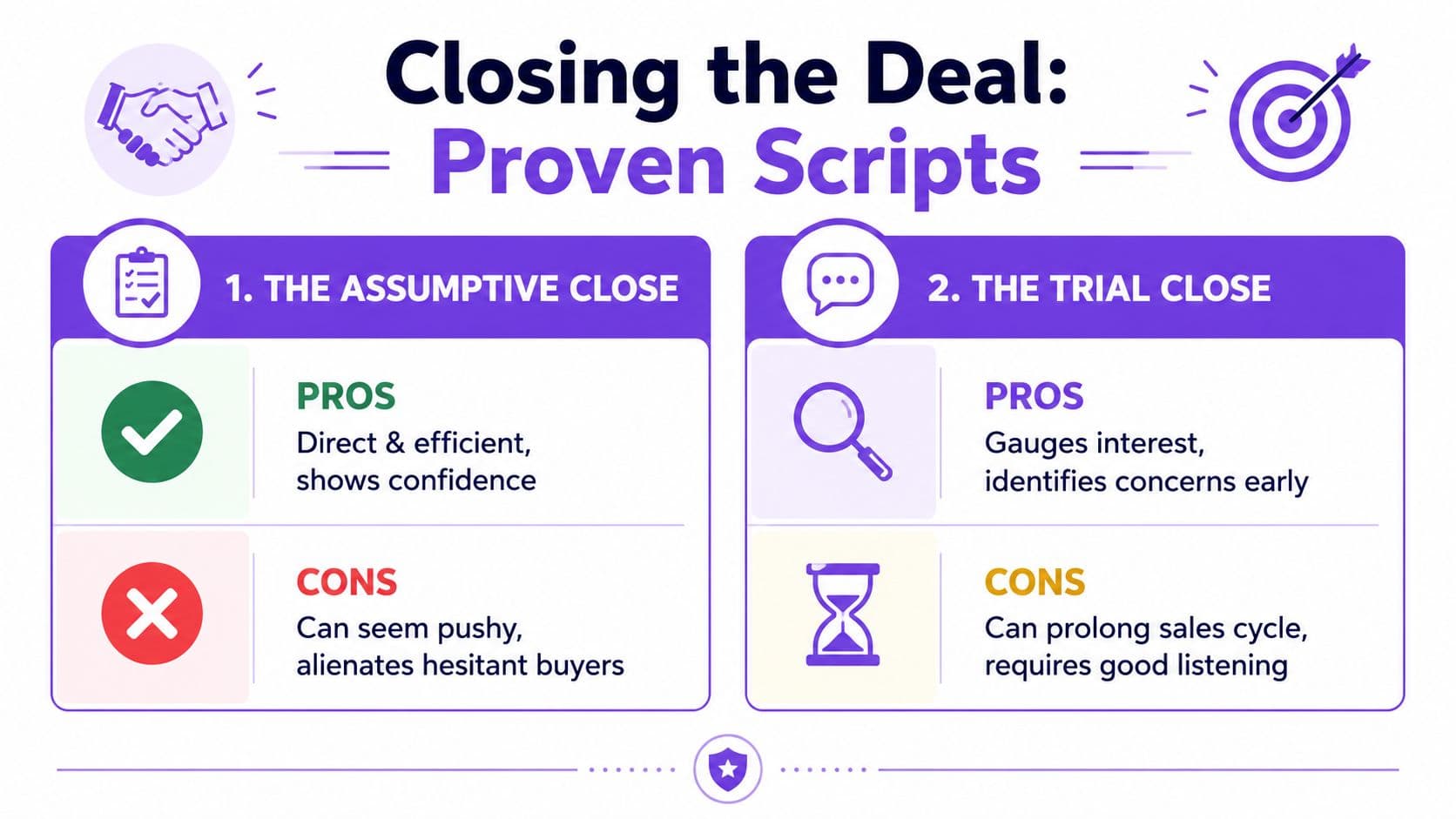
Soft close for a newsletter or lower-ticket offer
“Based on what you said, the paid version sounds like the simplest next step. Want me to show you what you'd get right away?”
This works because it lowers pressure. You're not demanding a yes. You're inviting a look at the next step.
Direct close for a premium course or program
“You've said the main issue is consistency and you want a structured path. This program is built for exactly that. Are you ready to get started?”
Use this when the buyer has already voiced the problem and the fit is clear.
Trial close for uncertain buyers
“If this gave you a simpler way to publish, sell, and support members, would that be worth moving forward on?”
This helps you test readiness without cornering the buyer.
If you want more examples to adapt for calls, demos, and offer conversations, these top sales call scripts are a practical reference point.
Closing technique comparison
| Technique | Description | Best For |
|---|---|---|
| Soft close | Invites interest in the next step without heavy pressure | Newsletters, low-friction offers, warm audiences |
| Direct close | Clearly asks for commitment after fit is established | Premium courses, consulting, cohort programs |
| Trial close | Tests readiness and surfaces concerns before a firm ask | Hesitant buyers, complex decisions, longer cycles |
| SPIN close | Uses questions to connect the offer to the buyer's own priorities | Higher-consideration digital products and memberships |
Confidence comes from structure
Most creators think confidence means sounding assertive. It usually means sounding clear.
A scripted close isn't there to make you robotic. It's there to stop you from rambling, apologizing for your price, or backing away the moment the decision becomes real. If that's a pattern for you, this article on selling with confidence is worth reading alongside your scripts.
Navigating Objections and Customer Hesitation
Objections aren't the end of the conversation. They're a diagnosis moment.
When someone says, “I need to think about it,” the surface meaning is often useless. You still don't know whether they're unsure about value, stuck on budget, worried about risk, or blocked by another person in the decision process. If you answer too quickly, you'll solve the wrong problem.
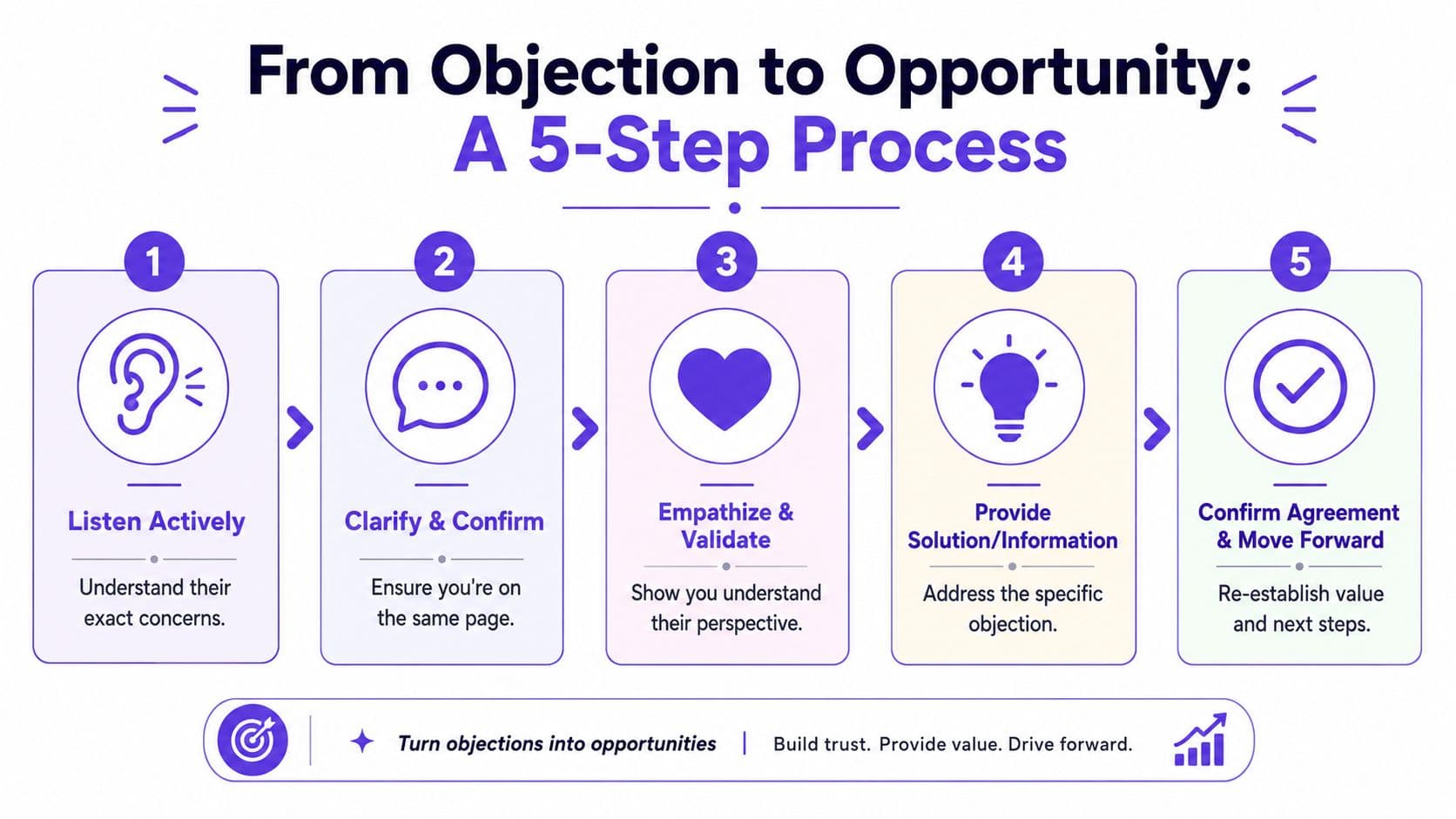
A useful way to handle this is simple: listen, clarify, respond.
Don't fight the first objection
One of the biggest mistakes in selling is treating every objection as literal. A buyer may hesitate because of risk, budget, or internal process, not because they dislike the solution itself. The more useful question is what's underneath the delay. That distinction is highlighted in this explanation of hesitation, urgency, and friction.
That means “It's too expensive” might mean:
- They don't see enough value yet
- They want a safer option
- They need internal approval
- The timing is wrong even if the fit is right
Here's the practical sequence.
- Listen without interrupting Let them finish. Don't jump in with a discount, bonus, or defense.
- Clarify what they mean Ask, “When you say it's not the right time, is that mainly budget, bandwidth, or something else?”
- Respond to the underlying issue Only after that do you address the objection.
“Not now” and “not ever” are very different sales conversations.
Common objections in digital product sales
A few objections show up constantly in creator businesses.
“It's too expensive.” A weak response is listing more features. A stronger response is reconnecting the offer to the problem. “I hear you. Usually when someone says that, they're weighing cost against urgency. Is the bigger issue the investment itself, or whether solving this matters right now?”
“I don't have time.” This usually isn't about calendar space alone. It often means they're unsure the result justifies the effort. Ask what would need to be true for the offer to feel worth prioritizing.
“I need to think about it.” Thinking is normal. Vagueness is the issue. Ask what specifically they need to think through.
Later in your funnel, social proof can help reduce uncertainty. A practical source of reassurance is well-structured customer proof, and this guide on how to get testimonials from customers is useful if you need stronger evidence around your offer.
A short training can also help if objection handling feels tense in real time:
What to say when the fit is wrong
Sometimes the right move is to stop selling.
If the buyer lacks urgency, budget, or need, forcing the close usually creates refunds, churn, or dead weight inside your membership. A calm response like “It sounds like this may be better later than now” often builds more trust than one more persuasion attempt.
That restraint is part of asking for the sale well. You're not trying to win every conversation. You're trying to move the right buyer forward.
The Art of the Follow-Up to Maximize Revenue
Many sales aren't lost in the conversation. They're lost in the silence after it.
Many creators sabotage themselves. They make one offer, get no reply, and assume the lead wasn't interested. In reality, many buyers need more time, more context, or a better moment.
The persistence gap in sales is hard to ignore. A widely cited benchmark says 80% of sales require five follow-ups after the initial contact, yet 48% of salespeople never follow up at all, according to this sales follow-up benchmark. That doesn't mean you should pester people. It means your first ask is often the start of the closing process, not the end.
Follow-up is not nagging
Bad follow-up repeats the same message.
Good follow-up adds value, context, or clarity. It gives the buyer a reason to re-engage. For creators, that might be a useful lesson, a breakdown of your process, a customer story, or a simpler offer path.
A clean sequence could look like this:
- First follow-up after a short delay. Brief note, simple check-in, direct CTA.
- Second follow-up with a useful asset. Share a lesson, walkthrough, or FAQ that reduces friction.
- Third follow-up tied to relevance. Reference a use case, deadline, or implementation scenario.
- Fourth follow-up with a lower-pressure choice. Invite a reply, not just a purchase.
- Final follow-up that closes the loop. Let them know you won't keep nudging, but the door stays open.
If you want a solid outside reference on how follow-up can improve customer relationships, that piece is useful because it focuses on staying helpful instead of repetitive.
Build the system once
Manual follow-up works when you have a handful of leads. It breaks when your audience grows.
That's why email sequences matter. They let you keep showing up without needing to remember every missed reply or abandoned checkout. If you sell digital products regularly, a good place to start is studying email drip campaign examples and building your own sequence around objections, timing, and use cases.
A thoughtful follow-up says, “I'm still here if this matters.” A bad one says, “I need you to buy now.”
The difference is obvious to the buyer.
Asking for the Sale Within the Zanfia Ecosystem
At this point, sales advice either becomes useful or stays theoretical.
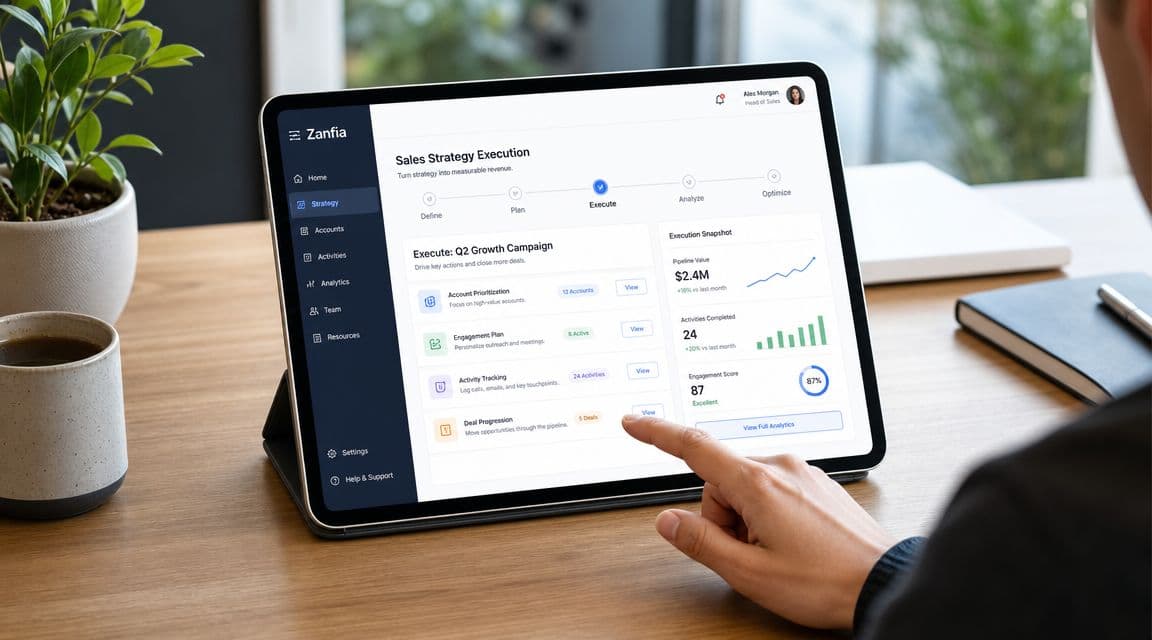
In a creator business, asking for the sale doesn't happen in one place. It happens on the sales page, in the checkout flow, inside a welcome sequence, after a product is consumed, and inside the community itself. If those moments are disconnected, your close feels clumsy. If they work together, the buyer keeps encountering logical next steps.
A practical creator flow
Take a creator selling three things: an ebook, a course, and a paid community.
The ebook is the easy entry point. The ask here should stay light. The page doesn't need hype. It needs a clear promise, a reason this solves a specific problem, and a CTA that tells the buyer what happens next.
After purchase, the next ask should reflect buyer momentum. Someone who bought a focused ebook may be ready for a deeper implementation offer. That's where an upsell works better than a cold pitch inside next week's newsletter.
Then comes retention. A buyer who joins a course often needs a second ask later, not immediately. Once they've had a result, a membership or community offer makes more sense because it extends progress instead of restarting the sale.
Where platform design affects the close
This is one reason an integrated setup matters.
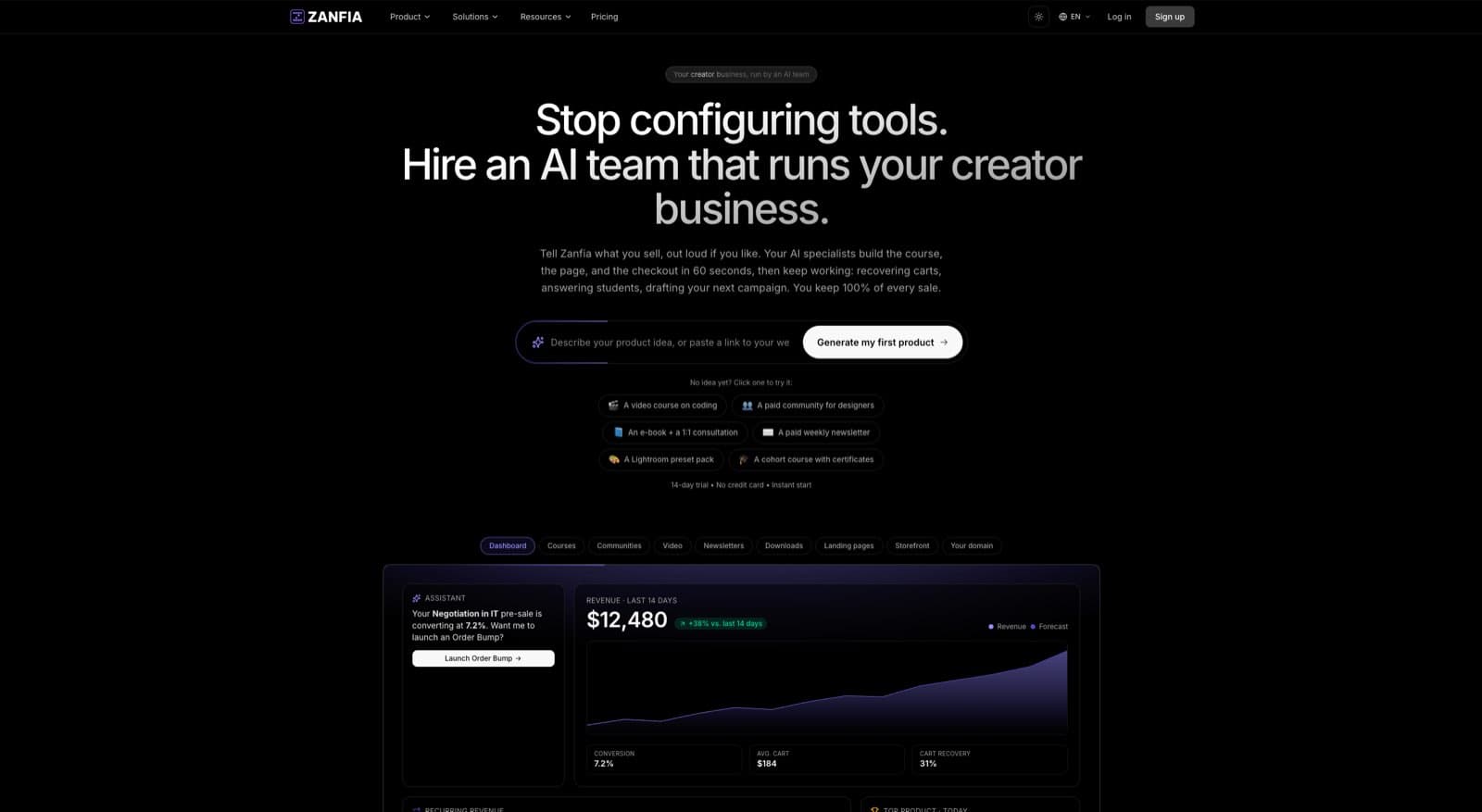
Zanfia is built around an AI team that runs the creator business. The creator dictates by chat or by voice, and the assistant performs any action available in the interface, so you can build a course, a paid newsletter, a community, an ebook or a downloadable product without stopping to configure anything. That work lands in a checkout built to sell: one-time purchases, subscriptions, installment plans, bundles, order bumps, upsells and test mode so you can buy your own product before launch. Zanfia currently charges 0% platform commission on customer sales, with only payment operator fees applying. In practice, that means the effort you put into asking for the sale doesn't get diluted by platform transaction cuts, and the buyer journey can stay inside one connected environment under your own domain. Zanfia also exposes an MCP endpoint, so your own AI assistants can act on the workspace directly. Advanced AI, the MCP endpoint and higher-tier automation depend on the plan, so check the current Zanfia pricing to see what your tier unlocks.
That changes how you ask.
Instead of saying, “Buy this now, then join us somewhere else, then watch on another tool,” you can keep the whole commitment path cleaner. That alone removes a lot of friction.
Strong asks inside a creator funnel
A few examples show how this works in practice:
- On a course page Lead with the problem the course solves. Then ask directly: “Start the course today” works better than vague language that hides the transaction.
- Inside a paid newsletter Don't just teach. Use the end of a strong issue to invite the next level. If readers want implementation, point them to the course or membership.
- After a purchase Use the post-purchase moment for a relevant upsell, not a random one. Complementary offers convert better because they feel like continuation. Zanfia's checkout supports order bumps and installments, so you can split a $600 course into four payments or attach a related add-on without sending the buyer to a second tool.
- Inside a community Read behavior. Members who engage extensively in one topic are often the right people for a more advanced product or offer tier.
If you're mapping these journeys, sales funnel templates can help you structure the sequence before you start writing copy.
The most effective ask usually isn't louder. It's better placed.
Measuring Success and Refining Your Approach
A weak sales result does not always mean the ask was weak.
In creator businesses, missed revenue usually comes from one of three places. The offer reached the wrong segment, the timing was off, or the path from interest to checkout asked for too much work. If you only rewrite copy every time sales dip, you can waste weeks fixing the wrong problem.
Measure behavior instead of relying on instinct. Look at where people click, where they stall, what they buy first, and which follow-up messages produce the next purchase. That is how you improve the ask without guessing.
What to track
Review a small set of numbers on a steady cadence:
- CTA performance so you can see which wording, placement, and format produce action
- Funnel drop-off points so you know where buyers lose momentum
- Email engagement so you can tell whether follow-up messages are building intent or getting ignored
- Offer progression so you can identify which entry products lead to memberships, upsells, or higher-ticket offers
In practice, these metrics answer different questions. A low click-through rate often points to a weak or poorly placed CTA. A strong click rate with weak checkout conversion usually points to friction after the click, such as mismatched messaging, price resistance, or a clumsy purchase flow.
What to change
Change one variable at a time.
Rewrite the CTA without rebuilding the page. Test a different upsell after purchase instead of replacing the entire funnel. Move the membership invitation later if new buyers need a win before they commit to recurring payment. Small tests give cleaner answers.
This matters even more inside Zanfia, because the creator business is not one isolated sales page. It is content, checkout, upsells, memberships, and follow-up working together. If a newsletter CTA drives clicks but few purchases, the issue may sit on the product page. If a course sells well but the membership upsell stalls, the gap may be positioning, not demand.
Over time, asking for the sale becomes less personal and more operational. You stop reacting to a bad day and start improving the system that turns attention into revenue.
FAQ
How do I know a prospect is actually ready to be asked for the sale?
Look for concrete buying signals rather than general engagement. These include specific outcome questions, logistics questions about onboarding or access, commitment language like "If I join now…", and comparison behavior where they're weighing options instead of the problem itself. Ask when they're trying to understand the path forward, not when they're still trying to understand the problem.
Which closing script should I use for a digital product?
Match the script to the moment. Use a soft close for newsletters or lower-ticket offers, a direct close for premium courses or programs once fit is clear, and a trial close for hesitant buyers to test readiness. For higher-consideration offers, the SPIN sequence (situation, problem, implication, need-payoff) lets the buyer articulate the value in their own words.
What should I do when a buyer says "I need to think about it"?
Don't treat the first objection as literal. Listen without interrupting, then clarify what's underneath: budget, bandwidth, internal approval, or timing. Only then respond to the real issue. "Not now" and "not ever" are very different conversations, and answering too quickly solves the wrong problem.
How many times should I follow up before giving up on a lead?
The article cites a benchmark that 80% of sales require five follow-ups after initial contact, yet 48% of salespeople never follow up at all. A useful pattern is five touches: a short check-in, a valuable asset, a relevance-based note, a lower-pressure choice, and a final close-the-loop message. Each one should add context or value rather than repeat the same ask.
How does asking for the sale work across multiple products in a creator business?
Sequence the asks by buyer momentum instead of stacking them in one place. An ebook can be a light entry-point ask, followed by an upsell to a deeper implementation offer while the buyer still has momentum. Save a community or membership ask for after a course buyer has seen a result, so it extends progress rather than restarting the sale.
If you want a cleaner way to turn content, community, courses, newsletters, and digital products into revenue under your own brand, Zanfia gives you an AI team that builds the journey, a checkout built to sell, and voice-ready control so you can dictate the next move instead of clicking through it. It starts at $39 per month, or $31 per month billed annually, on Starter, with a 14-day free trial and no credit card required.