Where Can I Sell My Ebooks? 12 Top Platforms for 2025
You've poured your knowledge, creativity, and countless hours into writing an ebook. Now comes the crucial question: where can I sell my ebooks to reach the right audience and maximize my earnings? The digital landscape is packed with options, from global retail giants to specialized creator platforms, each with its own rules, royalties, and strategic advantages. Choosing the right path can be the difference between a forgotten file and a thriving income stream. This guide demystifies the process, breaking down the 12 best platforms for 2025.
We'll analyze each one's features, fee structures, and ideal use cases to help you build a sales strategy that aligns with your goals. Whether you're a first-time author, an online educator, or a seasoned digital entrepreneur, this resource will help you find the perfect home for your work. Each platform review includes direct links and practical insights to simplify your decision-making. We'll explore everything from royalty-free direct-to-consumer storefronts like Zanfia and Gumroad to massive marketplaces like Amazon KDP, so you can stop searching and start selling with confidence. This list provides the clarity needed to select the best websites to sell your digital products effectively.
Table of Contents
1. Zanfia
For creators seeking more than a simple marketplace, Zanfia offers a comprehensive Polish all-in-one ecosystem designed to transform your ebook into the cornerstone of a thriving digital business. This platform is an excellent answer to the question of where can I sell my ebooks if you envision building a complete brand experience under your own domain. It integrates ebook and download sales with online courses, paid communities, knowledge libraries, and newsletters, keeping everything unified under your brand and eliminating the need for expensive foreign alternatives. This unified approach allows for powerful cross-promotional strategies, such as bundling an ebook with a course or granting buyers access to an exclusive community channel.
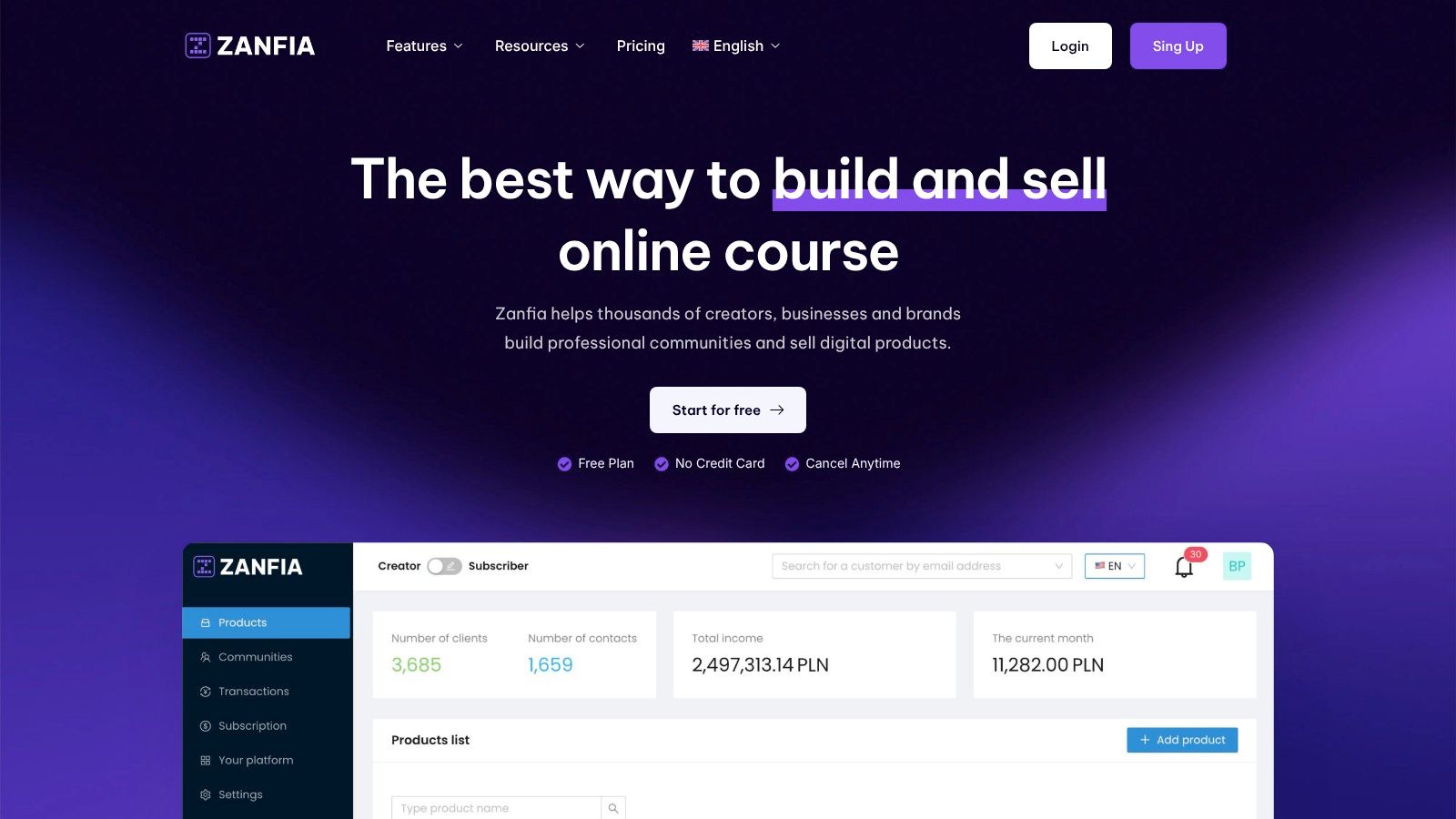
Zanfia's standout feature is its revolutionary 0% platform transaction fee model. While you still pay standard processing fees to payment operators like Stripe or PayU, Zanfia takes no cut of your sales. This transparent SaaS subscription model makes it an incredibly compelling choice for established creators earning PLN 10k–100k+ a month who are tired of commissions eating into their margins. The focus is squarely on letting you keep 100% of your hard-earned revenue while providing the tools to scale. As serial tech investor Artur Kurasiński states, it's "the most convenient and simplest solution for paid newsletters, courses and community on the Polish market”.
Key Features & Use Cases
- All-in-One Ecosystem: Sell ebooks, downloads, courses, subscriptions, and paid newsletters from a single dashboard. This is ideal for a "Business Architect" persona who wants to build a cohesive product ladder and maximize customer lifetime value.
- 0% Platform Commission: Keep 100% of your revenue. Zanfia relies on a clean SaaS subscription model, ensuring it grows with you, not at your expense.
- Integrated Community & White-Labeling: Host your community directly on the platform under your own brand and domain. This boosts engagement and solidifies your brand identity, unlike sending customers to external Facebook or Discord groups.
- Powerful Automations: Automate invoicing with Polish systems like inFakt and Fakturownia, grant course access after payment, and trigger welcome email sequences. These features can save 5-10+ hours of administrative work each month.
- Polish Market Specialization: Zanfia offers deep integrations with local payment gateways (Stripe, PayU, Przelewy24, BLIK) and understands Polish tax and invoicing requirements, simplifying finances and compliance.
Best for: Polish creators, "Business Architects," and established experts who want to build a premium, integrated brand experience around their digital products, including ebooks, courses, and communities, while retaining 100% of their revenue from sales.
Zanfia is more than just a place to sell a file; it's a strategic platform for building a scalable digital empire. To explore how it compares to other platforms for selling digital products, you can find more information on the Zanfia blog.
- Website: https://zanfia.com
2. Amazon Kindle Direct Publishing (KDP)
When considering where can i sell my ebooks, Amazon's Kindle Direct Publishing (KDP) is an unavoidable titan. It is the single largest ebook marketplace in the US, providing authors with unparalleled access to a massive audience of Kindle readers. Its primary strength lies in its sheer scale; listing your ebook on KDP places it directly within the powerful Amazon ecosystem, leveraging its search and discovery algorithms to connect with millions of potential buyers actively looking for their next read. This platform is ideal for authors who want to maximize their sales potential, especially within the American market.
Key Features and Royalties
KDP operates on a two-tiered royalty system. Authors can earn either 70% or 35% on their sales. The higher 70% rate is only available for ebooks priced between $2.99 and $9.99, and Amazon deducts a small "delivery fee" based on the file size from these earnings. Any book priced outside this window automatically defaults to the 35% royalty rate. For those just starting out, you can get more details by exploring how to make and sell an ebook on platforms like this one.
The KDP Select Decision
A crucial consideration is enrolling in KDP Select. This optional program requires you to grant Amazon 90-day exclusivity for your ebook, meaning you cannot sell it on any other platform. In exchange, your book becomes available in Kindle Unlimited (KU), where you earn royalties based on the number of pages read by subscribers. KDP Select also unlocks promotional tools like Kindle Countdown Deals, making it a strategic choice for authors aiming to hit bestseller lists and maximize visibility within the Kindle store.
3. Apple Books for Authors
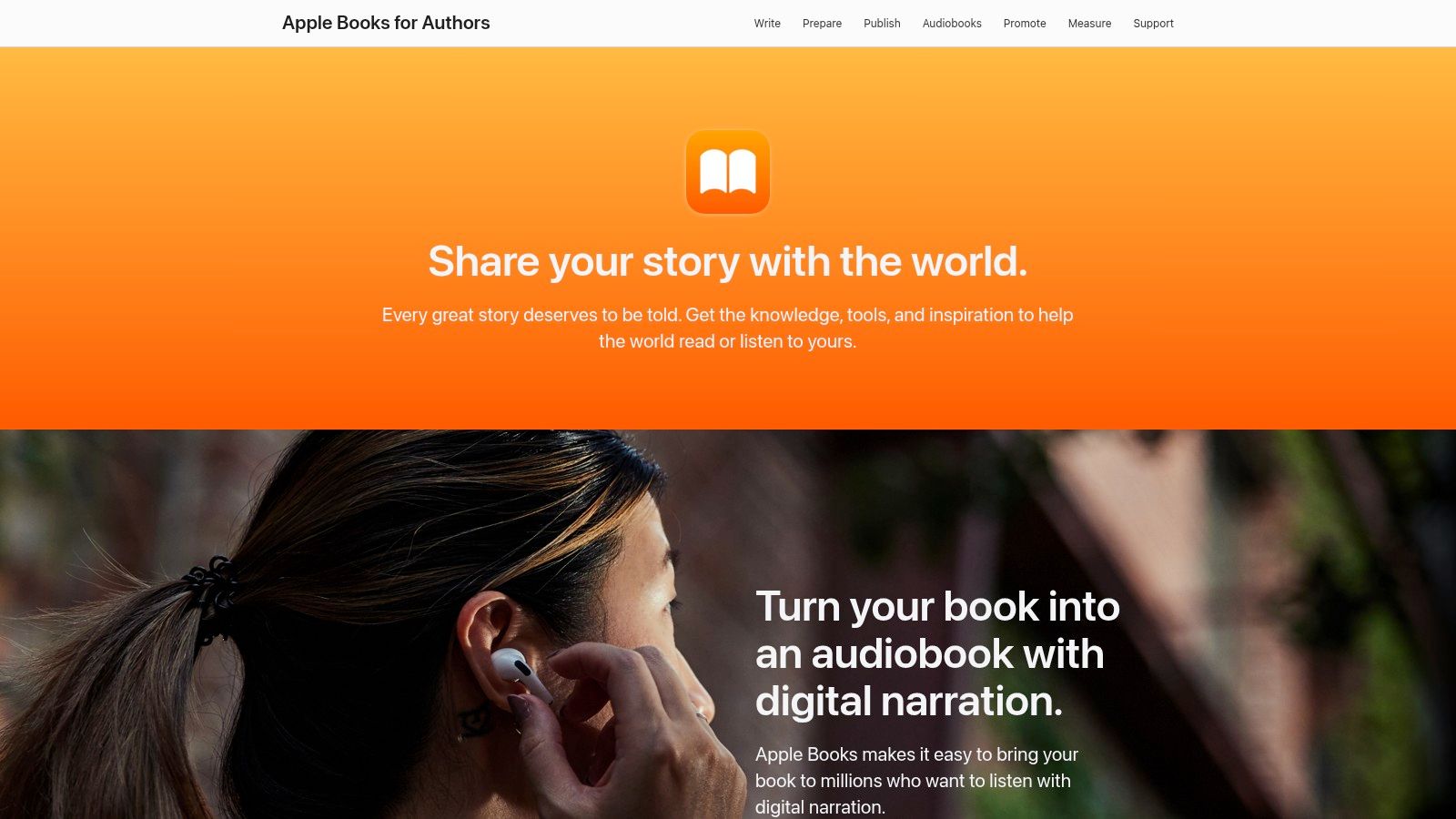
For authors wondering where can i sell my ebooks to reach a dedicated global audience, Apple Books for Authors is a powerful contender. It offers direct access to the massive ecosystem of iPhone, iPad, and Mac users, a demographic known for its high engagement and spending habits. This platform is particularly compelling for creators who value simplicity and transparent earnings, as its author-friendly model stands in contrast to the more complex royalty structures found elsewhere. It is an excellent choice for those wanting to sell directly to Apple users without exclusivity constraints.
Key Features and Royalties
Apple Books simplifies the payment process with a straightforward, flat 70% royalty on all ebook sales, regardless of the price you set. This consistency is a major advantage, as there are no complicated pricing windows to navigate or hidden delivery fees to calculate, which is especially beneficial for image-heavy books with larger file sizes. Authors gain full control over their pricing strategy and can view performance with next-day sales dashboards, offering quick insights into their book's performance.
The Aggregator Option
A key consideration is how you will upload your work. While you can manage everything through Apple’s specific author dashboard, many authors choose to use an aggregator service. This allows you to upload your ebook once and have it distributed to Apple Books along with other major retailers, streamlining the management process. This flexibility lets you decide between a hands-on approach or a more automated distribution strategy, all while keeping your book non-exclusive and available across multiple platforms.
4. Google Play Books Partner Center
For authors questioning where can i sell my ebooks beyond the usual suspects, Google Play Books offers direct access to the massive global Android user base. Publishing through the Google Play Books Partner Center places your work within a vast ecosystem, reaching readers on millions of Android phones, tablets, and devices running ChromeOS. Its primary advantage is its integration with Google's powerful search and discovery tools, providing a significant channel for reaching an international audience that might not be exclusively tied to Kindle.
Key Features and Royalties
Google Play Books offers a straightforward royalty structure, which is a major draw for many authors. In over 60 countries, including the US, authors can earn a competitive 70% royalty on the list price of their ebook. This rate is not tied to a specific pricing window like KDP's, offering more flexibility. However, it's crucial to check the specific terms of service for your country, as royalty splits and program availability can vary by region. The platform also provides tools for promotional discounting to help drive sales.
Platform Considerations
Unlike some more open platforms, the Google Play Books Partner Center has been known to fluctuate in its publisher signup eligibility and workflow requirements. New authors may find the onboarding process less straightforward than on other sites. Additionally, Google employs price-matching algorithms, meaning it might automatically discount your book to match a lower price found elsewhere online. This is a critical factor to consider in your overall pricing strategy, especially if you plan to sell your ebook across multiple storefronts and run promotions.
5. Kobo Writing Life (KWL)
For authors seeking to expand their reach beyond the US, Kobo Writing Life (KWL) is an essential answer to the question of where can I sell my ebooks. As the direct publishing arm of Rakuten Kobo, this platform boasts a strong international presence, particularly in Canada, and offers a straightforward path to reaching a global readership. Its key differentiator is its emphasis on non-exclusivity and its powerful integration with the OverDrive library system, allowing authors to tap into the vast network of public libraries worldwide.
Key Features and Royalties
KWL offers a simple and transparent royalty structure. Authors earn a 70% royalty on original works priced at or above $2.99 USD (or equivalent). For ebooks priced below this threshold, the royalty rate is 45%. A significant advantage is the absence of the delivery fees that Amazon deducts, making royalty calculations more predictable. Kobo also provides robust tools for setting prices in multiple global currencies and running promotions.
Library Distribution and No Exclusivity
A standout feature of KWL is its optional distribution to libraries through OverDrive. This allows your ebook to be discovered by a completely new audience of library patrons, creating an additional revenue stream. Unlike KDP Select, Kobo does not require exclusivity, giving you the freedom to sell your ebook on any other platform simultaneously. This makes KWL a strategic choice for authors adopting a "wide" distribution strategy, maximizing their presence across multiple retailers and reaching readers wherever they choose to buy.
6. Barnes & Noble Press (NOOK)
For authors seeking to diversify their sales channels beyond Amazon, Barnes & Noble Press offers a direct path into a major US bookseller. This platform is the official self-publishing portal for Barnes & Noble, placing your ebook directly onto BN.com and making it available to millions of readers using NOOK devices and apps. Its primary advantage is providing a streamlined way to tap into the established Barnes & Noble customer base, offering a significant US retail presence that complements your other distribution efforts. This makes it a strategic choice for authors who want to ensure their work is available wherever dedicated readers are shopping.
Key Features and Royalties
Barnes & Noble Press offers a competitive royalty structure. For ebooks priced at $0.99 or above, authors typically earn 65% on their sales. A notable advantage is the platform's robust preorder feature, allowing you to list your ebook for sale up to 12 months in advance. This long lead time is invaluable for building buzz and coordinating marketing campaigns. The platform also provides opportunities for authors to be featured in promotional initiatives on BN.com, though these are often curated.
Strategic Considerations
While Barnes & Noble's digital market share is smaller than Amazon's, maintaining a presence here is a key part of a "wide" distribution strategy. It ensures you are not solely dependent on one retailer. However, authors should be aware that royalty terms have changed historically, so it's always wise to confirm the current rates in your author dashboard. Anecdotal reports from authors also suggest that the level of direct support can be variable. Despite this, for those looking for where can i sell my ebooks, getting direct access to the NOOK ecosystem is a valuable and straightforward process.
7. Draft2Digital
For authors seeking to sell ebooks across multiple platforms without managing individual accounts, Draft2Digital is a premier aggregator. It simplifies the process of "going wide" by distributing your book to major retailers like Apple Books, Barnes & Noble, and Kobo, as well as library networks, all from a single dashboard. This platform is perfect for writers who want to maximize their global reach beyond the Amazon ecosystem and value convenience over manually uploading to each store. Draft2Digital handles the complex formatting and distribution, letting you focus on writing.
Key Features and Royalties
Draft2Digital's primary value is its simplicity and reach. With no upfront costs, it takes a commission of approximately 10% of the ebook's list price. This means you receive 60% of the list price on a sale where the retailer (like Apple) pays a 70% royalty. The platform provides free automated formatting, conversion tools, and a universal book link to direct readers to their preferred store. Authors also get a centralized dashboard for sales tracking and receive consolidated monthly payments.
Going Wide with an Aggregator
The main strategic advantage of using Draft2Digital is efficient multi-store distribution. Instead of creating and managing separate accounts for a dozen retailers, you upload your manuscript once. It's an excellent solution for those wondering where can i sell my ebooks to an international audience or through library services like OverDrive. While you sacrifice a small percentage of your royalty compared to going direct, the time saved and the expanded access to smaller, hard-to-reach markets is a significant trade-off for many independent authors.
8. Smashwords Store
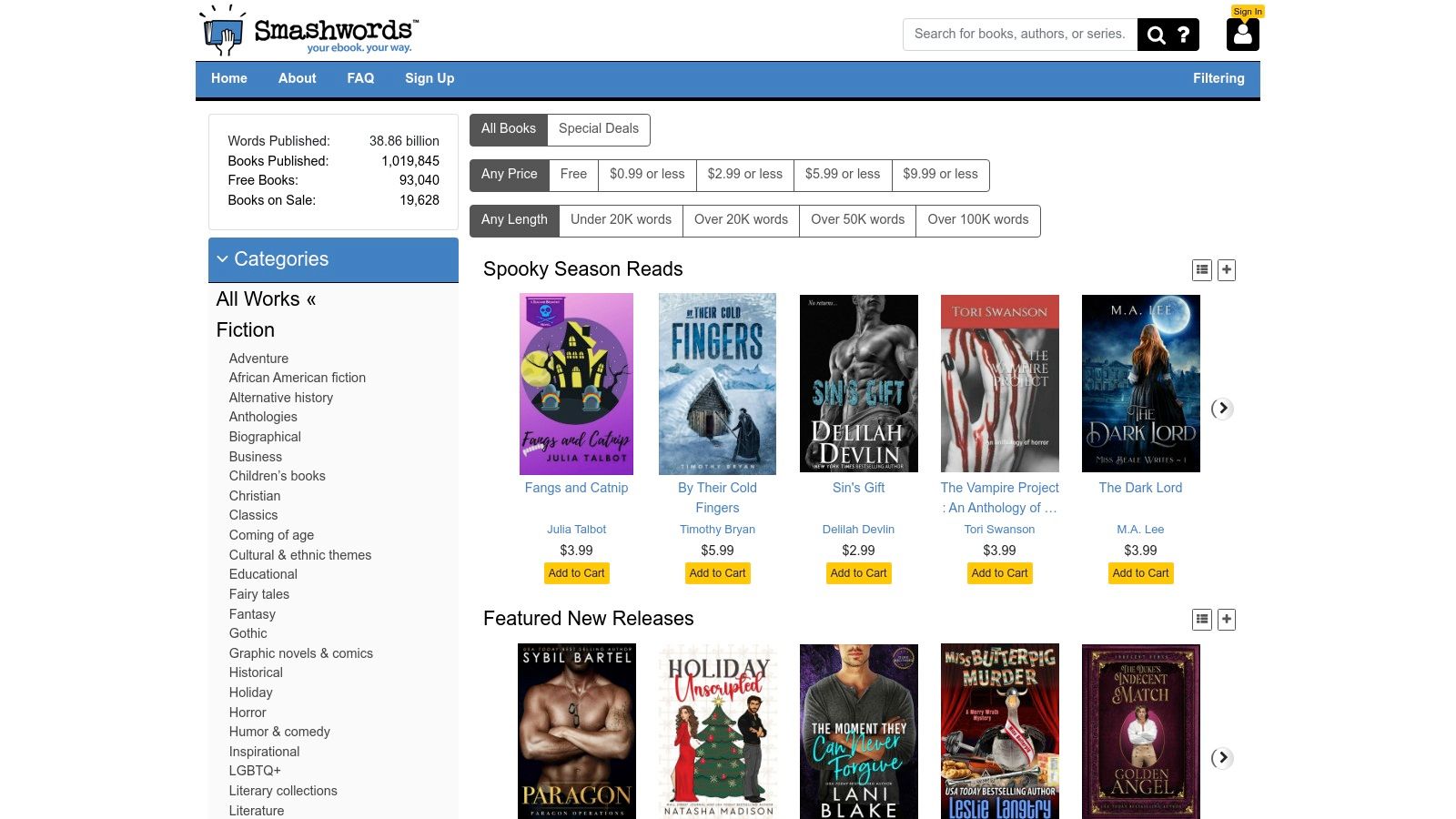
Smashwords has long been a key player for independent authors, and while its distribution network is now managed by Draft2Digital, its direct storefront remains a notable place when considering where can i sell my ebooks. The Smashwords Store is particularly famous for its author-centric promotional tools and seasonal sitewide sales, which can create significant buzz and drive a high volume of downloads in a short period. It attracts a loyal readership that appreciates DRM-free ebooks and enjoys discovering new indie talent during these events.
Key Features and Royalties
The main draw of the Smashwords Store is its promotional opportunities. Authors can easily create custom coupon codes for reviewers or marketing campaigns and participate in large-scale events like the annual "Read an Ebook Week" sale. Uploading and managing your listings is now handled through the more modern Draft2Digital dashboard, simplifying the process. Royalties are competitive, and the platform's commitment to DRM-free content appeals to a specific segment of the market that values ownership.
The Promotional Strategy
Success on the Smashwords Store is often event-driven rather than a source of steady, daily sales. The platform's "super sales" are a strategic tool for authors looking to boost their visibility, gain new readers who might then seek out their other books, or revive interest in a backlist title. While it may not compete with the everyday retail traffic of giants like Amazon, using its promotional calendar effectively can provide a powerful, concentrated marketing push that benefits an author's broader career.
9. Gumroad
For creators looking for a streamlined, direct-to-audience platform, Gumroad is a top contender when asking where can I sell my ebooks. It excels at empowering authors to sell directly from their own websites, social media profiles, or a simple, customizable Gumroad storefront. This platform is built for creators who want to own their customer relationships, offering tools like email capture and direct communication, making it ideal for authors with an existing audience who prioritize direct sales and community building over relying solely on a massive marketplace.
Key Features and Fees
Gumroad stands out with its flexible and powerful features. Authors can set up "pay-what-you-want" pricing, offer discount codes, and run their own affiliate programs to boost sales. It also supports product bundling, which is a great way to explore techniques for increasing average order value. The platform's fee structure is a straightforward 10% flat fee on each sale, which decreases as your lifetime earnings grow. This fee does not include the standard payment processing fees from Stripe or PayPal.
Gumroad Discover and Payouts
A key advantage is the built-in Gumroad Discover marketplace, which recommends products to its user base, providing an additional sales channel. While sales made through Discover incur a higher fee, it offers a valuable source of organic traffic without any extra effort from the author. Gumroad also offers quick payouts, with funds transferred to your bank account or PayPal every Friday, provided you meet the low minimum threshold. This makes it a practical choice for authors who need reliable and frequent access to their earnings.
10. Payhip
If your main goal is to sell directly to your own audience, Payhip offers a simple and powerful solution. Instead of being a massive marketplace where customers discover your work, Payhip acts as a streamlined e-commerce tool that you control. You can embed its storefront directly onto your existing website or use a standalone sales page. This platform is ideal for authors who have already built a following and want a direct, low-friction way to monetize their work while handling complex issues like digital VAT automatically.
Key Features and Royalties
Payhip's fee structure is tied to its subscription plans. The free plan is excellent for starting out but comes with a 5% transaction fee on top of payment processor fees (PayPal/Stripe). Paid monthly plans reduce this fee to 2% or eliminate it entirely, making it more cost-effective as your sales volume grows. A major advantage is instant payouts; your earnings go directly to your Stripe or PayPal account without any holding period. The platform also offers built-in tools for coupons, upsells, and affiliate marketing.
Building Your Own Sales Funnel
Payhip excels when you bring your own traffic. Because it lacks a central discovery marketplace, success hinges on your ability to market your ebooks. This makes it a perfect companion for authors focused on content marketing and audience growth. For authors looking to grow their audience, it is crucial to understand how to build an email list to drive consistent sales to your Payhip store. The platform handles the entire transaction process, from checkout and payment to secure digital file delivery, freeing you to focus on promotion.
11. Leanpub
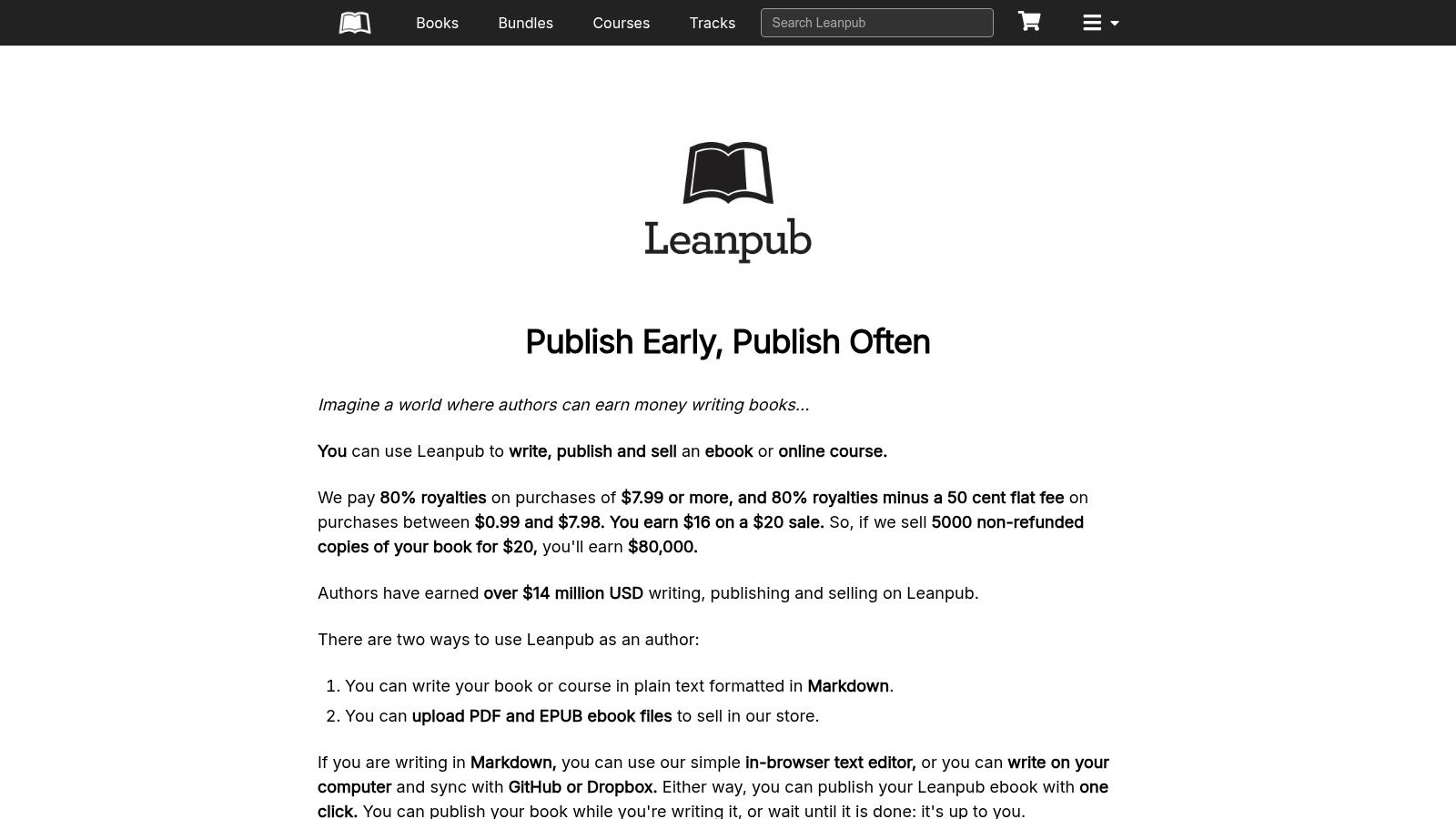
Leanpub offers a unique approach for authors wondering where can i sell my ebooks, particularly those in the technical and nonfiction genres. It is built on a philosophy of "publish early, publish often," allowing writers to release in-progress books and provide continuous updates to readers. This iterative process is ideal for subjects that evolve, such as programming or business strategies, enabling authors to build an audience and gather feedback throughout the writing journey. It's a platform designed for a specific type of creator who values flexibility and a direct connection with their readers.
Key Features and Royalties
The platform stands out with its author-friendly royalty structure and flexible pricing. Authors earn a generous 80% royalty on their sales, a significant increase compared to many larger retailers. Leanpub also champions a variable pricing model, where you can set a suggested price but allow readers to pay what they want above a minimum you define. This empowers readers to support authors they value while providing a low barrier to entry for new customers. Payments are made monthly, streamlining the financial side of self-publishing.
The Leanpub Workflow
A core differentiator for Leanpub is its manuscript-to-ebook workflow. Authors can write using plain text formats like Markdown and use services like GitHub or Dropbox to manage their book's content. Leanpub then automatically converts these files into EPUB, MOBI, and PDF formats for readers. While its marketplace is smaller and more niche than Amazon's, it excels for authors who have an existing audience or are deeply embedded in tech communities, as it provides the tools to serve that audience directly and effectively.
12. Lulu
Lulu has been a long-standing and reliable name in self-publishing, making it a strong contender for authors wondering where can I sell my ebooks. It excels as an all-in-one hub, offering robust ebook distribution to major retailers alongside its highly regarded print-on-demand services. This integrated approach makes it perfect for creators who want to manage both digital and physical book sales from a single, unified dashboard, simplifying a multi-format publishing strategy.
Key Features and Royalties
Lulu provides two primary sales avenues. First, it can distribute your ebook to global retailers like Amazon, Barnes & Noble, Apple Books, and Kobo. For these sales, authors receive 90% of the net revenue that Lulu gets from the retailer. Second, you can sell directly on the Lulu Bookstore, where you earn an impressive 90% of the gross profit. This dual-channel capability gives authors flexibility in their sales approach.
The Distribution Decision
Choosing Lulu means deciding between selling directly, distributing widely, or doing both. The platform’s key advantage is managing everything in one place, which is ideal for authors also creating print versions of their work. However, there are some trade-offs to consider. First-time distributors face a one-time $4.99 review fee, and the review timeline for getting your book onto retail sites can often take 6 to 8 weeks, which requires patience.
12 eBook Selling Platforms Comparison
| Platform | Core features ✨ | Price & value 💰 | UX / Quality ★ | Target audience 👥 | Unique selling point ✨ |
|---|---|---|---|---|---|
| Zanfia 🏆 | Communities, courses, paid newsletters, storefront, automations & analytics | 💰 Free starter; Basic ≈79–99 zł; Std ≈169–199 zł; Pro ≈329–399 zł; 0% platform fee | ★★★★☆ — modern, single-pane operations | 👥 Creators, educators, small teams, brands | ✨ All-in-one branded community + commerce with built‑in automations |
| Amazon KDP | Ebook publishing, Kindle Unlimited, promotions, preorder | 💰 Royalties 35% or 70% (delivery fees apply) | ★★★★★ — unrivaled discoverability | 👥 Indie authors aiming for mass US/global reach | ✨ Massive Amazon distribution & Kindle marketing tools |
| Apple Books | Direct ebook sales, next-day dashboards, image support | 💰 Flat 70% royalty; no delivery fees | ★★★★☆ — strong iOS reader experience | 👥 Authors targeting iPhone/iPad readers | ✨ Simple 70% royalty and great image/format support |
| Google Play Books | Direct publishing to Google Play; promo tools | 💰 Up to 70% in many countries (varies by region) | ★★★★ — broad Android reach | 👥 Authors seeking Android/Chromebook audience | ✨ Wide Android ecosystem distribution and promo flexibility |
| Kobo Writing Life | Direct publishing, global pricing, library opt‑in (OverDrive) | 💰 70% ≥ $2.99; 45% < $2.99; no exclusivity | ★★★★ — strong in Canada/international markets | 👥 Intl authors, library‑focused publishers | ✨ Library distribution + global pricing options |
| Barnes & Noble Press | Direct to BN/NOOK, preorder, BN promotions | 💰 Check dashboard (varied royalties) | ★★★ — US retail presence outside Amazon | 👥 US authors wanting bookstore visibility | ✨ Access to Barnes & Noble channels & preorder promo |
| Draft2Digital | Aggregated distribution, formatting, dashboard | 💰 No upfront; aggregator takes ~10% on partner sales | ★★★★ — easy “go wide” management | 👥 Authors wanting multi‑store distribution without juggling portals | ✨ One dashboard to distribute to many retailers/libraries |
| Smashwords Store | Indie store, coupons, author pages, seasonal sales | 💰 Free listing; sales through Smashwords (via D2D) | ★★★ — event-driven traffic spikes | 👥 Indie authors seeking promotional bursts | ✨ Sitewide “super sales” and DRM‑free merchandising |
| Gumroad | Creator storefronts, Discover marketplace, affiliates | 💰 Fees: ~10%+$0.50 (direct); 30% on Discover + processor fees | ★★★★ — fast setup; direct checkout | 👥 Creators selling direct-to-reader products | ✨ Flexible pricing, affiliates, built‑in email & marketplace |
| Payhip | Embeddable storefront, VAT handling, instant payouts | 💰 Free plan +5% fee; paid plans reduce platform fees | ★★★ — simple storefront & payouts | 👥 Creators wanting embedded checkout & EU VAT handling | ✨ Easy embed + instant PayPal/Stripe payouts |
| Leanpub | Iterative publishing, variable pricing, reader updates | 💰 High author share (e.g., ~80% on higher prices) | ★★★★ — niche, great for technical/nonfiction | 👥 Tech/nonfiction authors publishing iteratively | ✨ Publish-early workflow and strong royalties for updates |
| Lulu | Ebook + print-on-demand distribution, Lulu Bookstore | 💰 90% gross on Lulu store; $4.99 one‑time distribution review fee | ★★★ — print + ebook combo management | 👥 Authors needing print-on-demand + distribution | ✨ Integrated POD + distributor + high Lulu-store split |
Crafting Your Winning Ebook Sales Strategy
Navigating the landscape of where to sell your ebooks can feel overwhelming, but as we've explored, the decision boils down to a single question: what is your primary goal? The ideal platform isn't a one-size-fits-all solution; it's the tool that aligns perfectly with your unique vision, whether that's achieving global visibility, maximizing profit margins, or building a loyal community around your work.
Your manuscript is more than just a file; it's the foundation of a potential business. The path you choose for distribution will define its trajectory.
Key Takeaways for Choosing Your Platform
Reflecting on the dozen platforms covered, from massive retailers to direct-to-consumer tools, several core themes emerge. The most critical decision is between going "wide" (distributing to multiple retailers) or going "exclusive" (committing to a single platform like Amazon's KDP Select).
-
For Maximum Reach: A wide strategy is often superior. Using an aggregator like Draft2Digital simplifies this process, pushing your ebook to major storefronts like Apple Books, Barnes & Noble, and Kobo with a single upload. You can supplement this by directly managing your listing on Amazon KDP to maintain granular control over the world's largest ebook market.
-
For Maximum Control and Profit: If you have an existing audience or are focused on building your own brand, direct sales platforms are your best bet. Tools like Gumroad and Payhip offer simplicity and high royalty rates, giving you full ownership of your customer data, which is invaluable for future marketing.
-
For Building a Digital Ecosystem: For creators who see their ebook as just one piece of a larger puzzle, an all-in-one platform is the most powerful choice. If your long-term plan includes online courses, paid memberships, or a private community, a solution like Zanfia is strategically brilliant. It allows you to sell your ebook while seamlessly upselling customers into higher-value offerings, all under your own domain and brand. Zanfia’s 0% platform fee model is particularly transformative for creators scaling their revenue, ensuring you keep what you earn.
Actionable Next Steps: Define Your Strategy
Instead of getting paralyzed by choice, take these concrete steps to move forward:
- Define Your Author Persona: Are you a novelist chasing bestseller lists, an entrepreneur building a brand, or an educator monetizing expertise? Your identity dictates your platform needs.
- Assess Your Resources: Consider your technical comfort level and marketing capacity. Do you want a set-it-and-forget-it aggregator, or are you prepared to manage direct sales and customer service?
- Choose a Starting Point: You don't have to commit forever. Start with one primary strategy. If you're new, launching on KDP and a direct-sales platform like Gumroad is a fantastic, low-risk way to learn the ropes.
Ultimately, the best answer to "where can I sell my ebooks?" lies in a strategy that serves not just your book, but your broader ambitions as a creator. View these platforms not as mere storefronts, but as strategic partners in your author journey. By aligning your choice with your goals, you transform your finished manuscript from a simple product into a sustainable, rewarding, and profitable asset.
Ready to move beyond just selling an ebook and start building a complete digital business? Zanfia provides an all-in-one ecosystem to sell your ebook alongside online courses, communities, and memberships, all under your own brand and with a revolutionary 0% platform fee. Take full control of your business and maximize your revenue by visiting Zanfia to see how it can scale your creator journey.