

What Is a Digital Creator? Your Guide to Modern Business Success
You've probably heard the term digital creator thrown around a lot, often used interchangeably with "influencer." But there's a crucial difference. A true digital creator is a modern-day entrepreneur who builds an entire business from their passion and expertise.
They don't just post content; they create and sell their own digital products—think online courses, in-depth e-books, and exclusive newsletters—directly to an audience they've built from the ground up. They're not just personalities; they're independent brands.
What Makes Today's Digital Creator Different?
So, what really sets the modern digital creator apart? It's the mindset. They operate as a business owner, a marketing strategist, and a community leader, all rolled into one.
Instead of relying on the unpredictable nature of ad revenue or brand sponsorships, they build sustainable, long-term income by offering real value to a loyal community. This shift creates a much deeper, more authentic connection with their followers, turning them into genuine customers and advocates.
The creator economy isn't just a trend; it's a booming market. Projections show it's expected to grow from an estimated $5.4 billion in 2025 to a massive $19.1 billion by 2035. That's a clear signal of just how significant this shift in digital business has become.
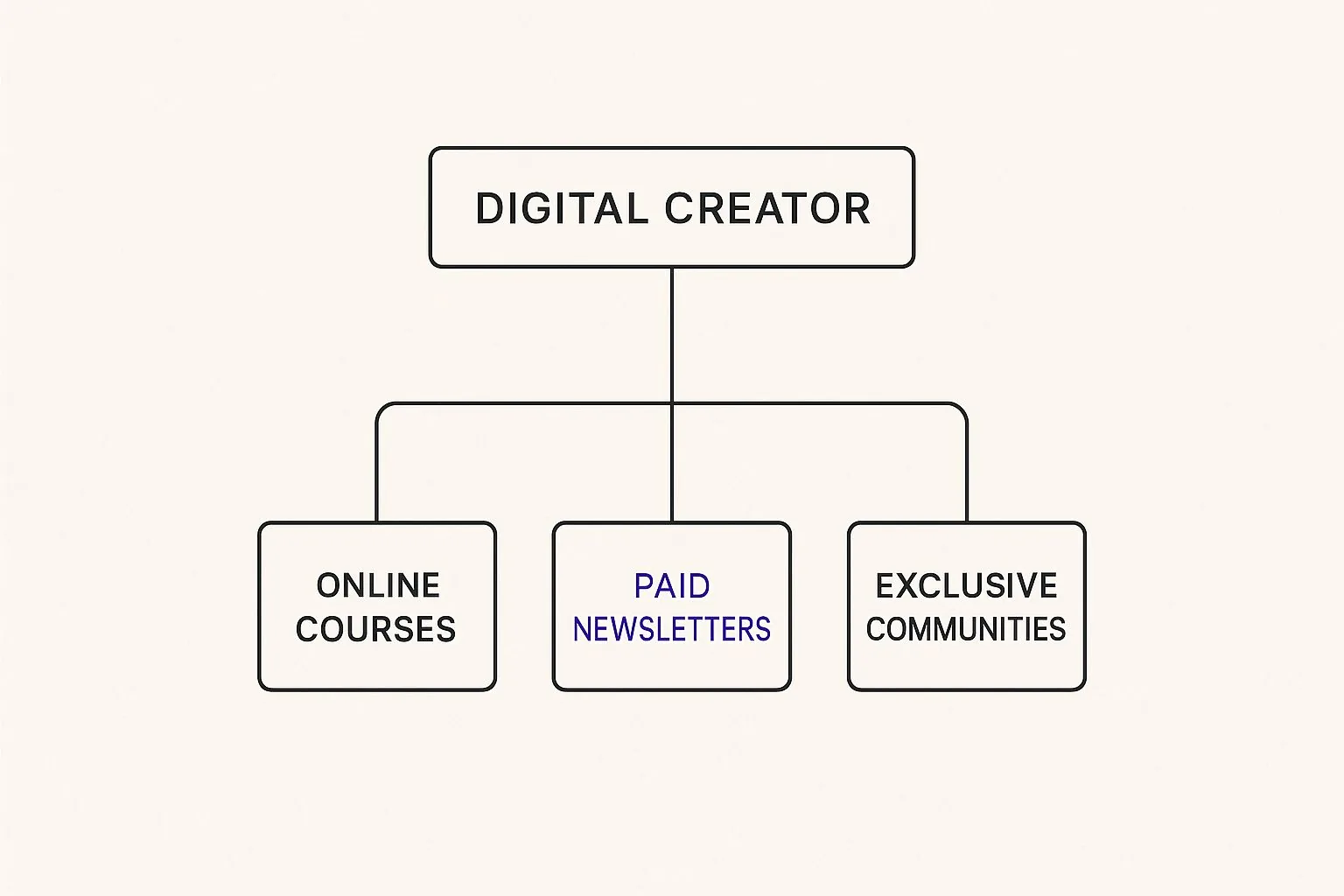
As you can see, a creator's business isn't a one-trick pony. It’s a diverse ecosystem of interconnected offerings. A thriving community, for example, becomes one of the most powerful assets. Choosing the right community platform for creators is essential because it allows them to bring people together, boost engagement, and increase the lifetime value of their audience.
Ultimately, these creators are doing more than just making content. They're building resilient, independent enterprises that they fully own and control.
The Evolution of the Digital Creator
To really grasp this shift, it helps to see how much things have changed from the early days of blogging and vlogging to the sophisticated businesses creators run today.
| Characteristic | Early Creator (Blogger/Vlogger) | Modern Digital Creator |
|---|---|---|
| Primary Goal | Attract a large audience (eyeballs) | Build a loyal, engaged community |
| Monetization | Ad revenue, affiliate links, one-off sponsorships | Diverse income streams (products, memberships, etc.) |
| Focus | Content creation and distribution | Business strategy and brand building |
| Audience Relationship | One-to-many broadcast model | Two-way interaction and community building |
| Tools | Basic blog platforms, early social media | An AI team plus a unified suite of marketing and sales tools |
| Identity | Hobbyist or content producer | Entrepreneur and subject matter expert |
This table highlights the journey from simply producing content to architecting a full-fledged business. The modern creator is a CEO, not just a publisher.
The Many Hats of a Successful Creator

Think a digital creator just hits "publish" and calls it a day? Not even close. The reality is much more like running a one-person startup. You’re the CEO, the creative director, the marketing team, and the accountant, all rolled into one.
One moment you're a strategist, meticulously planning a content calendar to hit just the right notes with your audience. The next, you're a full-blown producer—writing scripts, shooting video, or editing down hours of podcast audio. This juggling act is what turns a creative spark into a real, thriving business.
Core Skills Every Creator Needs
To make it in this space, you need to wear a lot of different hats and wear them well. These skills are the bedrock of any successful creator business, helping you find an audience, earn their trust, and eventually generate income.
Here are a few of the non-negotiables:
- Content Strategy and SEO: It all starts with knowing what your audience actually wants. This means digging into keyword research and understanding SEO basics so people can find your brilliant work in the first place.
- Copywriting and Storytelling: Whether you're crafting an email, a video script, or an Instagram caption, you have to connect with people through words. Powerful storytelling is what gets someone to stop scrolling and actually listen.
- Community Management: Your community is everything. Building a loyal following means actively engaging with people, sparking conversations, and making them feel like a genuine part of what you’re creating.
- Financial and Business Acumen: At the end of the day, creators are entrepreneurs. You have to get comfortable with managing money, tracking expenses, and making smart business decisions to keep things growing.
It's so easy to get lost in the fun of creating and completely ignore the business side of things. But long-term success happens when you find a rhythm between your creative work and the strategic operations that keep it all going.
To get better at this balancing act, it's smart to constantly polish your skills with proven content creation tips. And as you grow, putting solid systems in place becomes a game-changer. Powerful automations can save you 5–10+ hours a month, letting you focus on creating value instead of administrative chores.
How Creators Actually Make a Living
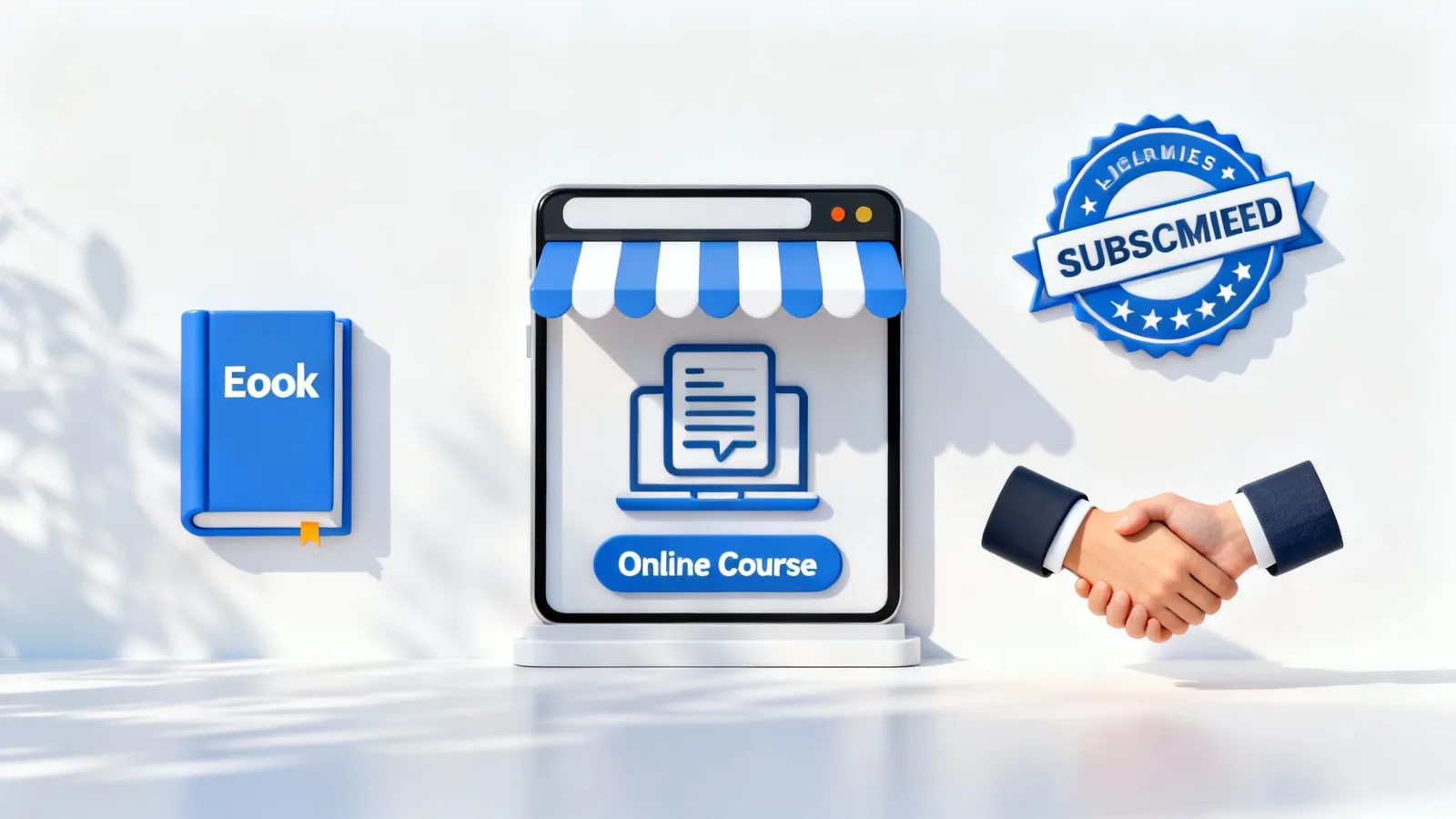
Forget the romantic idea of a creator just getting by on unpredictable ad revenue. That's an old story. Today’s smartest creators are building real, independent businesses by connecting directly with their audience and selling their own expertise.
They're making a strategic move away from "renting" space on social media platforms. Why? Because it gives them full control over their income. Instead of hoping for a decent ad payout, they’re creating and selling high-value digital products like online courses, e-books, and premium templates. This direct-to-audience model is what turns a hobby into a sustainable career.
Building Diverse Revenue Streams
The hallmark of a modern digital creator is their knack for building several reliable income streams at once. It’s a smart business move that shields them from sudden algorithm changes or market dips, giving their business a solid financial footing.
Here’s a look at some of the most common monetization models creators use:
- Selling Digital Products: This is the bedrock for many. They package their knowledge into online courses, in-depth e-books, or helpful resource libraries and sell them directly to their followers.
- Paid Communities and Subscriptions: This creates a predictable, recurring revenue stream. Members pay a monthly or annual fee to get exclusive content, join private discussions, and connect directly with the creator.
- Tiered Memberships: Think of it like a subscription buffet. Creators bundle different products and perks—like a course, community access, and a private newsletter—into different price tiers to appeal to a wider range of fans and budgets.
- Strategic Brand Partnerships: This involves working with brands that genuinely fit their niche and audience. It can take the form of sponsored content, affiliate marketing, or even co-creating a new product.
This isn't just a side hustle; it's a massive economic engine. The broader creator economy was valued at around $205 billion in 2024 and is expected to more than double to nearly $500 billion by 2027. This isn't just content creation; it's entrepreneurship.
To get a clearer picture, let's break down how these income sources fit together.
Digital Creator Revenue Streams
The table below outlines some of the most common and effective ways creators are turning their passion into profit, from foundational methods to more advanced strategies.
| Monetization Model | Description | Example |
|---|---|---|
| Digital Products | One-time sales of valuable digital goods like e-books, courses, presets, or templates. | A fitness coach sells a $49 workout plan PDF. |
| Affiliate Marketing | Earning a commission by promoting another company's products or services to your audience. | A tech YouTuber includes affiliate links for the gear they review. |
| Brand Sponsorships | Paid collaborations with brands for creating dedicated content (e.g., a video, post, or story). | A fashion blogger is paid $5,000 for an Instagram post featuring a clothing brand. |
| Paid Subscriptions | Recurring revenue from fans who pay a monthly fee for exclusive content or community access. | A financial expert offers a $10/month newsletter with premium market insights. |
| Consulting/Coaching | Selling time and expertise directly through one-on-one sessions or group coaching programs. | A marketing creator charges $250/hour for a brand strategy consultation call. |
| Donations/Tips | Direct financial support from an audience through platforms like Patreon, Buy Me a Coffee, or YouTube Super Chat. | A live streamer receives small tips from viewers during their broadcast. |
Each of these models allows creators to build a more resilient business that isn't dependent on a single platform's whims.
The most successful creators don't just find an audience; they build a business around it. They understand that true financial independence comes from owning the relationship with their customers and the platform where they sell their value.
This is exactly why creator-first platforms like Zanfia are becoming so important. Zanfia is built as an AI team that runs the business alongside the creator, and the checkout is built to sell: order bumps, installment plans (split a $600 course into four payments), subscription upsells, and test mode so you can buy your own product before launch. Twelve product types live under one brand, from courses and communities to bookings and bundles, and you can dictate any of it out loud instead of clicking through menus. As of August 2026, Zanfia charges 0% platform commission on customer sales, so creators keep the full revenue and pay only their payment processor’s standard fee (roughly 2.9% + $0.30 with Stripe in the US).
To learn more, check out our guide on how to monetize online content effectively.
Choosing Your Tech Without the Headache
Picking the right tech stack can feel like a make-or-break decision. It often is. So many creators fall into the trap of stitching together a bunch of different tools—one for their courses, another for payments, and maybe a third for their community. Before you know it, you're drowning in a tangled mess of logins, integrations, and monthly bills.
This patchwork system isn't just a headache for you; it's a clunky experience for your audience. Think about it: you're asking them to create one account to buy your product, then jump over to a separate Discord or Facebook group with another login. It’s a surefire way to kill engagement and make your operation feel amateurish.
The Power of a Unified System
This is where an AI-first, all-in-one platform changes the game, bringing your entire business under one roof. Zanfia is built as an AI team that runs your workspace alongside you: you describe what you need by chat or by voice, and the assistant performs any action available in the interface, from drafting lesson content to setting up a checkout. Your courses, community, and sales tools all live in one place, and on higher plans you can even connect your own AI assistants over an MCP endpoint so external agents work directly with your workspace (availability depends on the plan, see the current Zanfia pricing).
The whole point is to spend your time creating, not fighting with tech. A unified system takes all those tedious admin tasks off your plate, easily saving you 5–10+ hours a month. That's time you can pour back into what you actually love doing.
Imagine a new customer buys your course. A unified system can instantly grant them access, pop them into the right community space, and kick off a welcome email sequence without you lifting a finger. That kind of automation is what frees you up and makes your business feel polished and professional to your customers. You can try all of it on a 14-day free trial with no credit card required, then pick a plan that fits: Starter is $39/month (or $31/month billed annually), and Growth is $79/month (or $63/month billed annually).
Features That Build a Professional Brand
Beyond just making your life easier, a dedicated platform gives you the tools to look and feel like a premium brand.
- White-Labeling: Every creator gets their own
slug.zanfia.cosubdomain, and on higher plans you can map a fully custom domain and remove Zanfia branding (see the current Zanfia pricing for what unlocks where). When people visit, they see your brand, not the platform’s logo. - Native Video Hosting: This is huge. You can skip paying for separate, often expensive, services like Vimeo or Wistia , saving money and giving your students a seamless viewing experience.
- An AI Team That Acts Inside Your Business: The assistant can perform anything available in the interface, by chat or by voice, so routine admin work stops eating your week. More advanced AI and white-label AI branded as your own become available on higher plans.
By bringing everything together, you deliver a cohesive experience that builds trust and keeps people coming back. If you want to dive deeper into the specifics, check out our guide on choosing the best platform to sell digital products. This integrated approach is really the key to scaling without burning out.
Building a Community That Powers Your Business
For any digital creator today, having an audience is good. But having a community? That’s a game-changer. A real community isn't just a list of followers; it's a living, breathing ecosystem that feeds every part of your business. It's your most reliable source for honest product feedback and your most passionate customer base, all rolled into one.
Too many creators fall into the trap of outsourcing their community to platforms like Facebook Groups or Discord. While these tools can be useful, they ultimately pull people away from your brand's home base. This fractures their attention and makes it much harder to build the kind of deep, meaningful relationships that turn customers into lifelong fans.
The real magic happens when you own the space where your community lives.
Creating a Unified Brand Experience
Imagine bringing your community, your courses, and all your content together under one roof. This move completely changes the customer experience. Instead of shipping your paying members off to a separate platform, you create a seamless world where they can learn and connect all in the same place.
This unified approach is a massive engagement booster. When someone can watch one of your course videos and then instantly pop into a dedicated discussion channel to ask a question—without ever leaving your website—they become far more invested.
Ultimately, this is how you drive up member retention and customer lifetime value.
A strong community acts as a moat around your business. When members build genuine connections and find immense value in a unified space, they have no reason to leave. Your brand becomes their go-to hub for expertise and connection.
Zanfia is built around this idea. Topic channels, announcement channels, roles, member profiles and moderation live in the same workspace as your courses, so your audience never has to leave to keep learning or talking. On higher plans, an AI community agent can answer members from your own content, and everything it publishes is clearly labeled as AI so members always know when they are reading a human and when they are reading an assistant (availability is plan-dependent, see the current Zanfia pricing). For a deeper dive, check out our guide on how to build an online community that truly works for you. Keeping your members engaged on your own turf strengthens your brand and your bottom line.
The Future of the Creator Economy
Let's be clear: the creator economy isn't just a trend. It’s a fundamental shift in how people build businesses. The future here isn't about renting an audience on social media; it’s about creators owning their platforms and, more importantly, the relationship with their community.
We're seeing this play out in two major ways. First, there's a huge move toward hyper-niche communities. Creators are no longer trying to be everything to everyone. Instead, they’re building tight-knit ecosystems around very specific passions, whether it's vintage camera repair or zero-waste cooking. Second, there's a powerful push for direct monetization, cutting out the middlemen.
Opportunities and Challenges Ahead
This new direction brings a ton of opportunity, but it's not without its hurdles. With more digital content creators jumping in every day, just getting noticed is tougher than ever. The hard truth is that while the number of creators is massive, only a small percentage earn a significant income from their work. If you're curious about the numbers, check out these creator earnings statistics.
This reality forces a critical change in mindset: you have to stop thinking like a content producer and start acting like a business owner. The creators who will win in the long run are the ones building sustainable, direct-to-audience revenue streams on their own turf. They get that a massive follower count is vanity; the real metric is the depth of connection and the value you deliver.
The future belongs to creators who build real businesses. They are the ones who will capture the long-term value by fostering dedicated communities and offering premium products on their own terms, independent of volatile social media algorithms.
Technology's Role in Shaping What's Next
Technology is the engine driving this whole evolution. The next standard for serious creators is not just an integrated platform, but one where an AI team can actually do the work: writing, publishing, running the checkout, answering the community. Zanfia is built this way, with a checkout designed to sell (order bumps, installments, upsells, test mode) and 12 product types living under one brand. It also exposes an MCP endpoint so creators can plug their own AI assistants directly into their workspace (availability depends on the plan, see the current Zanfia pricing). That removes the headache of patching together a dozen different tools and lets you deliver a smooth, professional experience for your audience.
Looking even further ahead, AI is already changing the game. It’s poised to redefine how we produce and market digital content. You can explore the potential of AI for content creation to see how new tools are helping creators work smarter.
Ultimately, the future of the creator economy is about empowerment, ownership, and building something that lasts.
Got Questions? Here Are Some Quick Answers
It's natural to have questions when you're exploring the world of digital creators. Let's clear up a few of the most common ones.
Is a Digital Creator Just Another Word for an Influencer?
Not exactly, though the lines can blur. Think of it this way: an influencer’s main focus is often on leveraging their social media audience for brand promotions and sponsored posts.
A digital creator is a much broader term. They are entrepreneurs who build entire businesses around their original content. They’re not just promoting other people's stuff; they're creating and selling their own—like online courses, exclusive community memberships, or in-depth guides, usually from their own website.
So, How Do Digital Creators Actually Get Paid?
The best creators don't put all their eggs in one basket. They build multiple income streams that go way beyond simple ad revenue.
They make money by:
- Selling digital products like courses, e-books, and templates.
- Running paid subscription communities or premium newsletters.
- Earning commissions through affiliate marketing.
The real goal is direct monetization. It's about earning income directly from an audience that values and trusts your expertise, not just from a platform's ad program.
Do I Need a Massive Following to Succeed?
Absolutely not. This is one of the biggest myths out there. You don't need a million followers to build a thriving business.
Many creators find incredible success by serving a small, dedicated niche. A highly engaged community of 1,000 true fans is almost always more valuable than a passive audience of 100,000. The focus is on deep connection and value, not just vanity metrics.
Ready to stop dreaming and start building your own digital creator business? Zanfia gives you an AI team plus everything you need to launch courses, host a community, and sell digital products, with 0% platform fees as of August 2026. Start on a 14-day free trial, no credit card required. Plans begin at $39/month, or $31/month billed annually, on Starter. Explore the Zanfia platform to see how it works.