

Build a Dog Lovers Community: Creator’s Guide

You probably already see the pattern. People ask dog questions in DMs, comment threads, local groups, and Instagram replies. They want help choosing gear, navigating apartment rules, finding training support, and talking to other owners who understand their routines.
That demand can become a paid business, but only if you stop thinking like a content creator with a dog audience and start thinking like an operator building a product. A paid dog lovers community works when it gives members a clear outcome, a repeatable experience, and a home base that doesn't scatter content across five tools.
Most creators fail because they launch “a community for dog lovers.” That's too broad to charge for. People don't pay for broad interest. They pay for relevance, structure, and relief from specific problems.
Define Your Pack by Nailing Your Community Niche
A strong dog lovers community starts with a narrow promise. Love of dogs is not the niche. It's the umbrella.
The paid offer has to sit underneath that umbrella, where pain is sharper and daily routines are specific. That's where members recognize themselves and say, “This is for me.”

Pick a problem, not a demographic
A lot of creators define the niche too loosely. “New dog owners” is still broad. “Dog moms” is branding, not positioning. Better niches are built around a repeated operational problem.
Examples:
- Urban renters with dogs: This is a real gap. In many major cities, only a minority of rental listings are pet-friendly, and apartment residents often deal with fees, breed restrictions, and limited room for socialization, which creates demand for virtual support and neighborhood-specific resources, as noted in the Pets4Life mission partner discussion.
- Owners of reactive dogs: They need safe routines, not generic meetup advice.
- Breed-specific owners: They want customized routines, local recommendations, and peer context.
- Travel-focused dog owners: They care about gear, logistics, accommodation, and routines on the road.
The fastest way to clarify your niche is to answer three questions:
- What problem happens every week?
- What kind of owner already spends money trying to solve it?
- What support is missing from free groups?
If the answer is vague, the niche isn't ready.
Practical rule: If your community description could also describe a big Facebook group, it's still too generic to sell.
Build a paid reason to join
Your value proposition should be one sentence. It needs a specific audience, a clear benefit, and a mechanism.
A weak version: “An online dog lovers community for connection and support.”
A stronger version: “A membership for apartment dog owners who need neighborhood-specific resources, practical routines, and structured support for daily life without a yard.”
That sentence already tells you what to build. It also tells members why this isn't just another feed.
Here's a useful reference on strategies for building digital communities if you want to compare your niche against broader community design principles. Then pressure-test your positioning against examples in Zanfia's guide on finding your tribe.
Validate before you build
You don't need a huge audience to validate. You need sharp signals.
Use a short intake form and ask prospective members:
- What's the hardest recurring part of life with your dog right now?
- What have you already tried?
- What would make a membership worth paying for?
Look for repetition in language. If people keep asking for the same practical help, that's your offer. If responses scatter in every direction, tighten the niche.
A paid dog lovers community wins by being selectively useful. The narrower the operating context, the easier it is to create retention later.
Design Your Value with Content and Membership Tiers
Most memberships don't fail because the audience is wrong. They fail because the offer is thin. A handful of posts, one monthly live call, and a general chat room won't hold attention for long.
Members stay when your product gives them recurring reasons to show up.
A 2025 study found that stable, recurring touchpoints, not just casual friendships, were the key pathway linking dog ownership to a stronger sense of community, according to this study on anchored interactions and dog ownership. That matters for monetization because it tells you what to package. Don't build around occasional inspiration. Build around habits.
Design anchored experiences
Think in repeating formats. A member should know what happens this week, next week, and next month.
A solid community calendar usually includes a mix like this:
- Weekly cohort activity: A walking challenge, apartment enrichment routine, or behavior practice thread.
- Live implementation session: Office hours, Q&A, or troubleshooting around one narrow issue.
- Resource drop: A checklist, guide, or decision framework that solves a practical job.
- Peer accountability: Small group updates where members report progress or obstacles.
This structure beats random posting because it creates rhythm. Rhythm creates expectation. Expectation creates retention.
Don't ask, “What content should I publish?” Ask, “What member behavior should repeat every week?”
Turn expertise into a product ladder
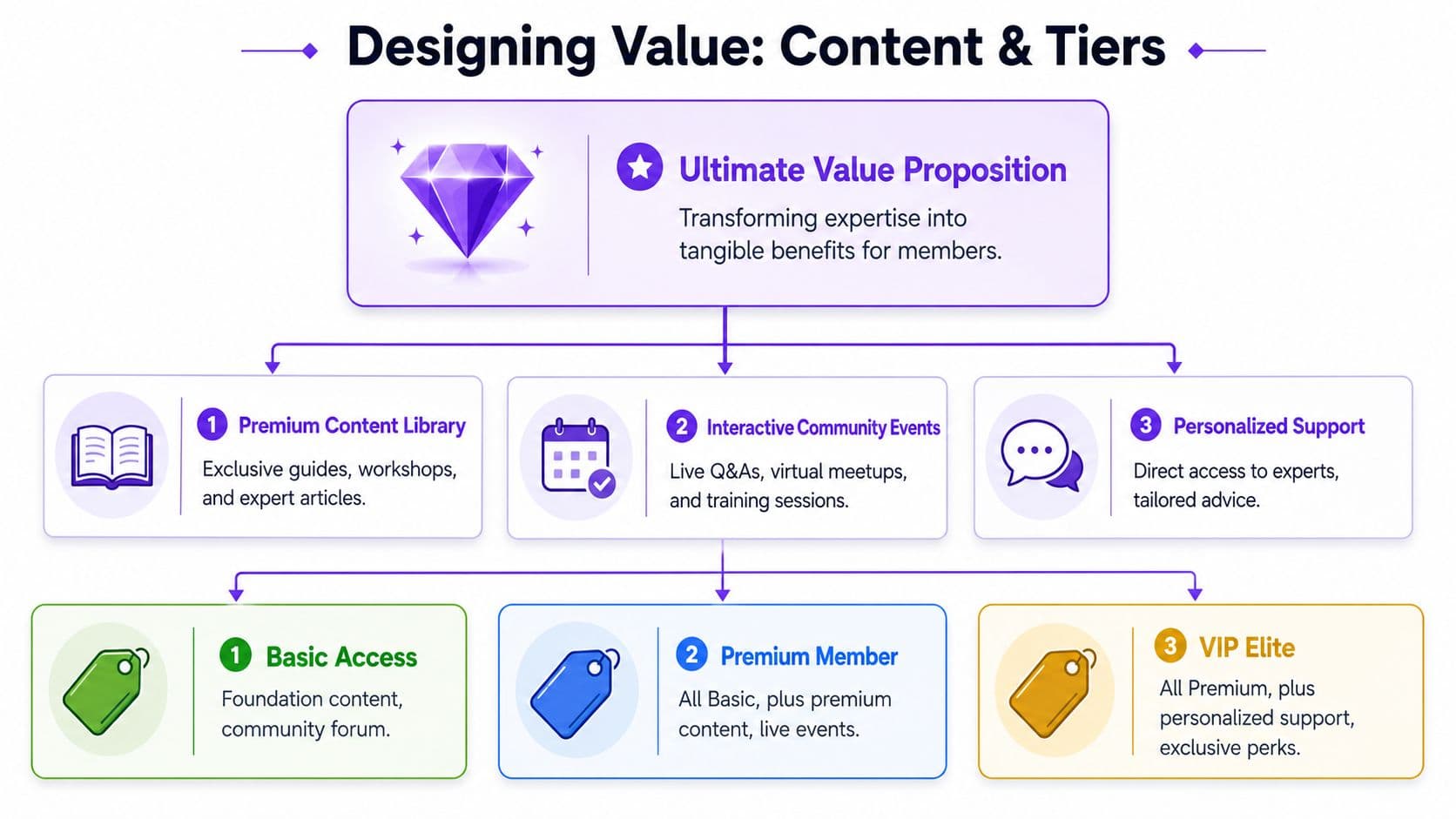
A dog lovers community becomes easier to sell when membership tiers map to depth of support.
Here's a clean model:
| Tier | Best for | What they get |
|---|---|---|
| Entry | Curious followers | Community access, selected discussions, announcements |
| Core membership | Active owners with recurring needs | Full community, live sessions, templates, resource library |
| Premium | Members who want direct help | Everything in Core plus deeper feedback, private groups, or specialized learning |
Keep the logic obvious. Entry gives access. Core gives structure. Premium gives proximity.
If your topic includes areas like food routines, don't fill premium with hot takes. Add vetted frameworks and outside references when useful, such as practical education around natural canine gut health for members who are trying to understand care options. The business lesson is simple. Members pay for curation and judgment, not just volume.
Choose content that compounds
Some content expires fast. Some compounds.
Compounding content includes:
- Decision guides: How to compare crates, harnesses, sitters, trainers, or travel setups
- Step-by-step mini trainings: Apartment recall practice, leash routines, greeting protocols
- Local resource frameworks: What to check before choosing a daycare, clinic, or walker
- Templates: Vet visit prep list, emergency contact sheet, moving-with-dog checklist
Those assets keep helping new members without needing to be recreated every month. That's the base of a predictable membership business. If you're refining pricing and packaging, Zanfia's article on membership and subscription models is a useful reference.
Build Your Community Home Base with Zanfia
Paid communities lose momentum when the experience is fragmented. One tool for payments, another for courses, another for discussions, another for files. Members forget logins, miss updates, and drift.

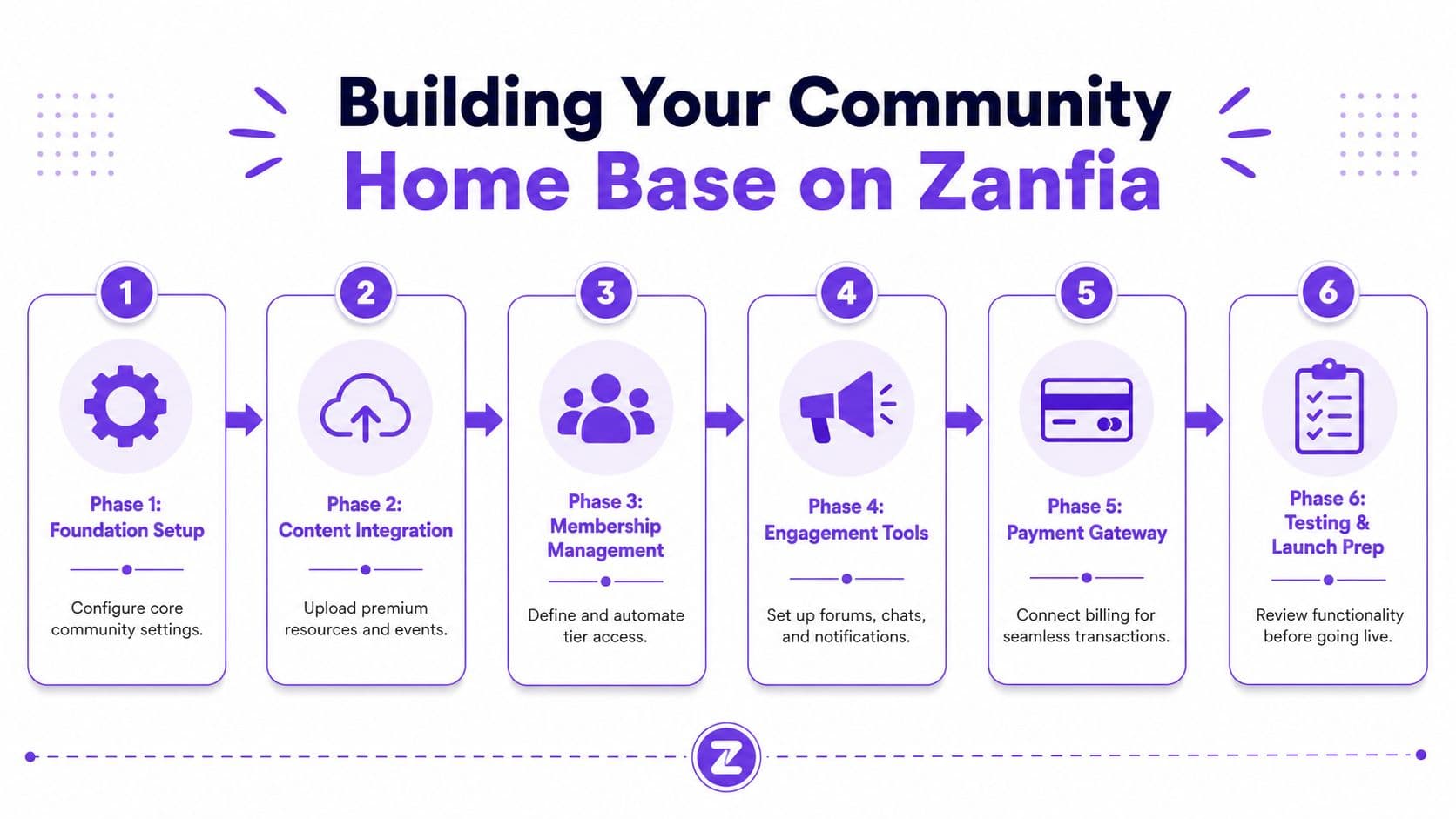
A cleaner setup is one branded home base where members sign in once and immediately know where to go. Zanfia is built around an AI team that runs the operational work for you: the assistant knows the whole platform and can perform any action available in the interface, by chat or by voice, so you dictate what should happen instead of clicking through menus. Communities, courses, paid newsletters and downloads all live under one branded domain, and the checkout is built to sell, with order bumps, installments and a test mode you can use to buy your own product before launch.
Structure the space around member jobs
Start with architecture, not aesthetics. Organize the community around what members need to do.
A practical setup looks like this:
- Announcement channel: Read-only. Use it for weekly plans, event notices, and policy updates.
- Core discussion channels: Training, routines, gear, local resources, wins and questions.
- Tier-specific spaces: Premium feedback room, cohort group, or expert access area.
- Knowledge area: Evergreen guides, checklists, recordings, and mini-courses.
That structure keeps discussion separate from reference material. Members shouldn't have to scroll through chat to find your best resources.
Build one journey, not separate products
Zanfia fits well as an operational setup for a dog-focused business. It lets creators run community spaces, courses, paid newsletters, knowledge libraries, subscriptions, and digital products under one domain with one login, across twelve product types so a membership, a course and a downloadable checklist all live under the same brand. It supports native video hosting, Stripe and PayPal at checkout with Apple Pay and Google Pay, order bumps and installments so you can split a bigger offer into scheduled payments, white-label branding on a custom domain, and automations that handle access and follow-up after purchase. The AI assistant is available by chat or voice, and higher plans expose an MCP endpoint so you can connect your own AI agents (availability depends on the plan, see the current Zanfia pricing).
For a dog-focused business, that means you can bundle discussion with structured learning instead of forcing members into separate systems.
A simple implementation might look like this:
| Part of the business | What to create |
|---|---|
| Community | Topic channels for apartment life, training, gear, and local recommendations |
| Mini-course | “First 30 days with a rescue dog in a small apartment” |
| Knowledge library | Vet prep checklists, walk routines, seasonal safety notes |
| Paid newsletter | Curated updates, product frameworks, event roundups |
| Downloadable resources | Emergency kit list, sitter handoff sheet, move-in checklist |
A paid community feels premium when members don't have to ask where everything lives.
Launch the first version fast
You do not need a giant content library to open the doors. You need a usable member path. Zanfia gives you a 14-day free trial with no credit card, so you can build the first version, run a test purchase on your own checkout, and open the doors before you commit to a plan.
Start with:
- A welcome area that explains where to post, what to read first, and how to get support.
- Three to five discussion channels tied to your niche.
- One mini-course or starter library that solves an immediate problem.
- One recurring live event on the calendar.
- One clear upgrade path for members who want deeper access.
If that foundation is clean, the experience already feels organized. That matters more than trying to impress people with volume. For examples of how creators structure branded spaces, see Zanfia's guide to a member website builder.
Automate Engagement for Lasting Member Loyalty
Manual community management works for a while. Then growth turns every small task into drag. New members need access. Subscribers renew. Expired members need permissions updated. Welcome emails don't send unless you remember. Questions pile up in the wrong places.
That's when creators start feeling like admins.
Automation fixes that, but only if you automate the right moments. The point isn't to remove the human layer. The point is to reserve your energy for conversations that need you.
Automate the first seven days
The first week shapes whether a member becomes active or silent. Build that sequence before you focus on advanced funnels.
A good onboarding flow includes:
- Instant access assignment: Buyers should land in the right channels and products without manual intervention.
- Welcome sequence: Send a short set of emails that explain where to start, how to introduce themselves, and what to join first.
- Prompted participation: Ask one easy question that gets a reply fast.
- First-win resource: Give them a checklist, guide, or mini training they can use immediately.
Platform automation matters. If access, emails, renewals, and expiry handling happen in the background, you stop wasting time on repetitive operations. Zanfia states that its automation and workflow features can save creators 5 to 10+ hours per month, while handling tasks like granting access after payment, adding buyers to the right community areas, triggering welcome emails, and revoking access at the end of a plan. Because the assistant sits on top of the same platform, you can also set up or adjust these flows by voice instead of building each step by hand.
Set rules for what the community is and isn't
Dog communities drift into risky territory fast. Members ask about food, pain, behavior, supplements, and emergencies. Helpful peer support can slide into confident misinformation.
That tension is a real operational issue. Communities need clear governance that separates shared experience from risky medical or training claims, as discussed in this article on misinformation and safety in dog communities.
Use a visible policy that covers:
- What members may share: Personal experience, routines, product use, local recommendations
- What requires caution: Medical interpretation, dosage suggestions, emergency advice
- When to escalate: Urgent health concerns, aggressive behavior, sudden changes, safety risks
- Moderator response: Move, label, close, or redirect posts that cross the line
If advice could affect a dog's safety, your community needs an escalation rule, not just a friendly tone.
Build retention through systems, not constant hustle
Creators often try to improve loyalty by posting more. That usually creates clutter.
Retention improves when members reliably encounter three things:
- A reason to return
- A place they belong
- A next step
Automations support all three. Renewals happen on time. Members receive reminders before events. New buyers don't sit in limbo waiting for access. Inactive members can get re-engagement nudges tied to the products they bought.
That operational consistency is what makes the business feel steady. If you want to map more of those systems, Zanfia's guide on how to automate your business is a useful starting point.
Launch and Grow Your Dog Loving Audience
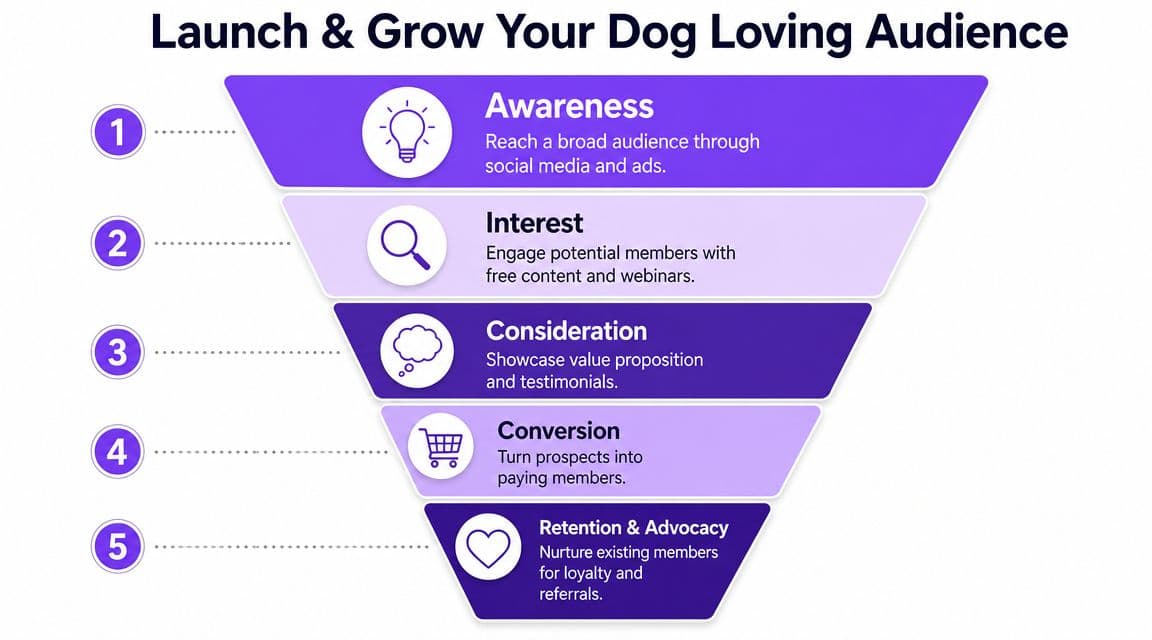
A dog lovers community grows faster when you treat marketing as community design, not audience extraction. People already talk about their dogs constantly. Your job is to give that energy a direction and a destination.
That's why broad reach matters less than relevance. You don't need everyone who likes dogs. You need the people who identify with your niche strongly enough to join, participate, and stay.
Use dogs as a natural social trigger
Pets make introductions easier in real life and online. One survey found that 83% of adults had interacted with people they otherwise wouldn't have because of their pet, and 90% of pet owners said pets contribute to a stronger sense of community, according to this report on pets and community connection.
That makes dog content unusually shareable when it reflects lived problems.
The best launch content usually falls into one of these buckets:
- Identity content: “Life with a dog in a fourth-floor apartment”
- Problem content: “What most renters forget before moving with a large dog”
- Framework content: “How to evaluate a dog daycare when your dog gets overwhelmed”
- Belonging content: “This membership is for owners who need structure, not noise”
Run a compact launch, not a long vague rollout
A focused launch beats an endless “coming soon” period.
Use a simple sequence:
- Waitlist phase with a clear niche promise
- Proof phase with useful public content and direct audience conversations
- Opening window with a reason to join now
- Member activation so new buyers participate in week one
Keep the offer simple. People should understand the membership in a few seconds: who it's for, what happens inside, and what changes after they join.
Borrow trust from existing local networks
The most underrated growth move for a dog-focused business is partnership. Not influencer deals. Practical partnerships.
Useful partners include:
- Local shelters
- Independent trainers
- Dog-friendly cafés
- Pet businesses serving your niche
- Neighborhood admins or renter communities
Give them something easy to share: a workshop, checklist, local guide, or waitlist page suited for their audience.
Launch momentum comes from concentrated trust. A few aligned partners can outperform a large generic audience.
When the membership starts working, growth gets easier because members tell stories about it. That only happens when the product gives them a better routine, not just another place to lurk.
From Passion to a Profitable Community Business
A dog lovers community becomes a business when you stop treating it like an audience accessory. The work is more disciplined than that. You define a narrow niche, build repeatable value, create a clear member path, and run operations that don't collapse under manual work.
This is a key opportunity. Dog ownership is not a fringe identity. In the United States, 45.5% of households owned a dog in 2024, representing 59.8 million dog-owning households and an estimated 89.7 million dogs, according to the AVMA U.S. pet ownership statistics. The same source also notes a much larger global footprint, with dogs described as the most popular pet and present in around one in three homes. That scale is why this category supports serious paid products.
The business upside isn't limited to membership alone. Once you understand your niche, you can expand into courses, paid newsletters, resource libraries, downloads, workshops, or adjacent services. If you're exploring related offers beyond community, this thriving dog grooming business blueprint is a useful example of how niche dog expertise can be turned into a structured business model.
The important part is margin control. If your stack leaks money through transaction cuts, scattered software, and manual overhead, revenue growth won't feel like progress. A cleaner system matters. So does recurring revenue. That's why many creators eventually move from one-off dog content to subscription products and layered digital offers. Zanfia's guide to recurring revenue business models is worth reading if you're shaping the financial side of the offer.
You do not need celebrity status to make this work. You need a defensible niche, an offer with real utility, and a member experience people want to return to. That's how passion becomes retention. And retention is what turns a dog audience into a durable company.
FAQ
How narrow should my dog community niche be to actually get people to pay?
Narrow enough that it names a repeated weekly problem, not a demographic. 'Dog moms' or 'new dog owners' is still too broad; 'urban renters with dogs' or 'owners of reactive dogs' works because pain is sharper and daily routines are specific. A useful test: if your description could also describe a big Facebook group, it's still too generic to sell.
How do I validate the niche before building anything?
Use a short intake form asking prospective members what the hardest recurring part of life with their dog is right now, what they've already tried, and what would make a membership worth paying for. Look for repetition in the language they use. If people keep asking for the same practical help, that's your offer; if answers scatter, tighten the niche further.
What content mix actually keeps a paid dog community alive month after month?
Build around repeating rhythms, not one-off inspiration. A workable weekly calendar is a cohort activity (walking challenge, enrichment routine), one live implementation session such as office hours, a resource drop like a checklist or decision framework, and a peer accountability thread. Rhythm creates expectation, and expectation is what drives retention.
How should I structure membership tiers so upgrades feel obvious?
Map tiers to depth of support, not volume of content. An entry tier gives community access and selected discussions; a core tier adds live sessions, templates and a resource library for active owners; a premium tier adds proximity, such as deeper feedback, private groups or specialized learning. Keep the logic transparent: access, then structure, then proximity.
Where does the line sit between helpful peer support and risky advice in a dog community?
Members can safely share personal experience, routines, product use and local recommendations. Medical interpretation, dosage suggestions and emergency advice need caution, and urgent health concerns, aggression or sudden changes should be escalated rather than crowd-sourced. Write a visible policy and have moderators move, label or redirect posts that cross the line.
If you're ready to turn dog expertise into a paid membership, course, or digital product business, Zanfia gives you one branded home where community, courses, paid newsletters and downloads live under your own domain, an AI team that handles the operational work by chat or voice, and a checkout built to sell with order bumps and installments so you keep control of your revenue and customer experience.