10 Essential Email Newsletter Best Practices for Creator Success in 2025

In a world of fleeting social media trends, an email newsletter remains one of the most powerful assets for digital creators, experts, and brands. It's a direct, intimate channel to your most dedicated followers, immune to algorithm changes and the whims of platform gatekeepers. But simply sending emails isn't enough to build a sustainable business. To transform your newsletter from a simple broadcast into a thriving, profitable community hub, you need a strategic approach grounded in proven methods.
This guide breaks down 10 essential email newsletter best practices that separate amateur efforts from professional, revenue-generating machines. We'll cover everything from building trust with a value-first content strategy to the technical nuances of deliverability that ensure your messages actually land in the inbox. You will learn actionable steps that you can implement today to grow your audience, deepen engagement, and drive conversions.
These practices are designed for ambitious creators and small businesses who see their newsletter as the core of their digital presence. For Polish entrepreneurs looking to scale without giving away their revenue, platforms like Zanfia, which charges zero platform fees, make implementing these advanced strategies both accessible and highly profitable. Let's dive into the practices that will help you build your digital kingdom, one engaged subscriber at a time.
1. Personalization & Segmentation
One of the most powerful email newsletter best practices is shifting from a one-to-many broadcast model to a one-to-one conversational approach. Personalization and segmentation are the keys to this transformation. Instead of sending a single generic message to your entire list, you divide your audience into smaller, targeted groups based on shared characteristics, behaviors, or interests.
This strategy allows you to deliver highly relevant content that resonates with each subscriber’s specific needs and journey stage. Done right, it dramatically increases open rates, click-through rates, and conversions because subscribers feel understood, not just marketed to. Think of how Amazon recommends products based on your browsing history or how Spotify’s Discover Weekly emails feel uniquely curated for your music taste. These are prime examples of segmentation in action.
Why It Works and How to Implement It
Segmentation moves beyond simply using a subscriber's first name. True personalization involves tailoring the entire message, from subject line to call-to-action, based on deep audience understanding. This makes your newsletter feel less like an advertisement and more like valuable advice from a trusted expert.
Actionable Tips for Effective Segmentation:
- Start Small and Scale: Don't try to create dozens of segments at once. Begin with 3-5 key groups, such as new subscribers, repeat customers, and inactive contacts.
- Leverage Behavioral Triggers: Use actions, not just static data. Segment users based on pages they’ve visited, links they’ve clicked, or products they’ve purchased. An e-commerce brand can send abandoned cart reminders, while a creator can send follow-up content to those who clicked on a specific course link.
- Combine Criteria for Precision: Create hyper-targeted segments by layering conditions. For example, target "subscribers who purchased Product A but have not opened an email in 60 days" for a specific re-engagement campaign.
- Automate with Your Platform: Use an integrated platform to automate this process. For example, Zanfia allows you to set up workflows that automatically tag and segment users when they purchase a course, join a community channel, or download an ebook, ensuring they receive the right follow-up sequence without manual effort.
By implementing these practices, you transform your newsletter from a generic blast into a personalized, high-value communication channel that builds loyalty and drives results. For more detailed strategies, you can explore comprehensive guides on this topic. Find out more about how to master your segmentation on Zanfia's blog about audience segmentation strategies.
2. Mobile-Responsive Design
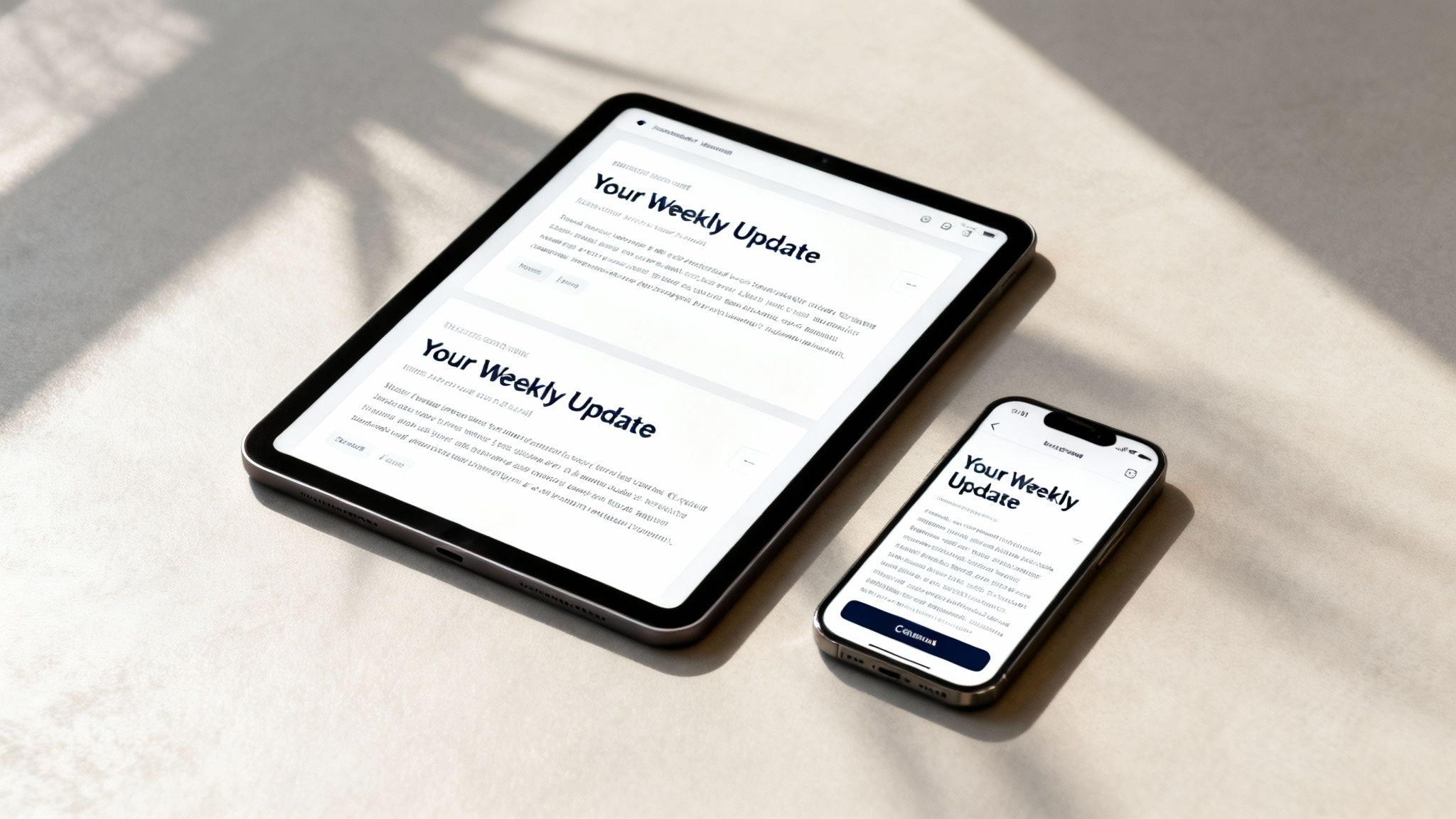
Ensuring your newsletter looks great on any screen is no longer a luxury; it's a fundamental requirement. Mobile-responsive design is the practice of creating email templates that automatically adapt their layout and content to fit the device a subscriber is using, whether it's a desktop monitor, a tablet, or a smartphone. With studies consistently showing that over half of all emails are first opened on a mobile device, a non-responsive email risks being immediately deleted.
This approach directly impacts user experience and engagement. A responsive design prevents subscribers from needing to pinch, zoom, or scroll horizontally to read your message, making your content effortlessly accessible. Think of how newsletters from top brands like The Skimm or Airbnb present a clean, single-column layout on your phone with large, tappable buttons. They prioritize readability and action, which is a core principle of effective email newsletter best practices.
Why It Works and How to Implement It
A mobile-first approach respects your audience's time and modern reading habits, significantly boosting readability and click-through rates. When content is easy to consume on the go, subscribers are far more likely to engage with your call-to-action. This is especially critical for creators selling digital products, as a frictionless mobile experience can be the difference between a lost lead and a new customer.
Actionable Tips for Responsive Design:
- Adopt a Single-Column Layout: This is the safest and most effective structure for mobile. It stacks content vertically, ensuring a clean, easy-to-scroll experience on narrow screens.
- Use Large Fonts and Buttons: Aim for a body font size of at least 16px and design calls-to-action (CTAs) that are at least 44×44 pixels. This makes your content legible and your links easy to tap.
- Keep Your Content Concise: Mobile readers often scan. Use short paragraphs, clear headings, and bullet points to make your key messages stand out. Place the most important information "above the fold."
- Leverage a Capable Platform: Don't code from scratch. All-in-one platforms offer built-in, mobile-responsive email templates. This ensures your newsletters, course announcements, and community updates look professional on every device without any technical effort on your part, saving you from juggling plugins or hiring developers.
By prioritizing mobile-responsive design, you guarantee a seamless and professional experience for every subscriber, which is essential for building trust and driving the actions that grow your business.
3. Strategic Subject Line Optimization
The subject line is the single most important element of your email newsletter. It’s the gateway to your content; a weak subject line means even the most brilliant email body will go unread. Strategic subject line optimization is the practice of crafting compelling, concise, and psychologically persuasive headlines that drive subscribers to open your message. It’s the first impression and the deciding factor in a crowded inbox.
This practice transforms your subject line from an afterthought into a powerful conversion tool. It involves a blend of creative copywriting and data-driven testing to discover what truly captures your audience’s attention. Think of how Grammarly uses a benefit-focused line like "Your writing, now 20% more impressive," or how Netflix leverages personalization with "Based on your watch history…" These are not just clever phrases; they are carefully engineered hooks designed to maximize open rates.
Why It Works and How to Implement It
A well-crafted subject line works because it instantly communicates value, creates curiosity, or establishes urgency, prompting an immediate emotional response. It answers the subscriber's unspoken question: "What's in it for me?" By moving beyond generic descriptions, you make your email stand out and build anticipation for the content inside.
Actionable Tips for Effective Subject Lines:
- Test One Variable at a Time: To get clear results, isolate your tests. Compare a subject line with an emoji to one without, or test a personalized version against a generic one. This systematic approach ensures you know exactly what change influenced your open rates.
- Create Authentic Urgency: Use time-sensitive language like "offer ends tonight" or "last chance" when it's genuine. False urgency erodes trust, but real deadlines can significantly boost engagement.
- Leverage Numbers and Lists: Subject lines like "5 Ways to Boost Engagement" or "3 Mistakes to Avoid" promise structured, easily digestible content, which is highly appealing to busy readers.
- Master the Preview Text: The preview text is your subject line’s crucial partner. Use this space (typically 60-80 characters) to expand on the subject line's promise, provide more context, or add a compelling call-to-action without giving everything away.
- Avoid Spam Trigger Words: Be cautious with words like "Free," "Act Now," or "Limited Time." While not always a deal-breaker, overuse can land your carefully crafted newsletter in the spam folder, a key deliverability concern among email newsletter best practices.
By systematically optimizing your subject lines, you turn a simple line of text into one of your most effective marketing levers. The data you gather from testing will provide invaluable insights into your audience’s motivations, helping you refine your entire content strategy.
4. Clear Call-to-Action (CTA) Placement & Design
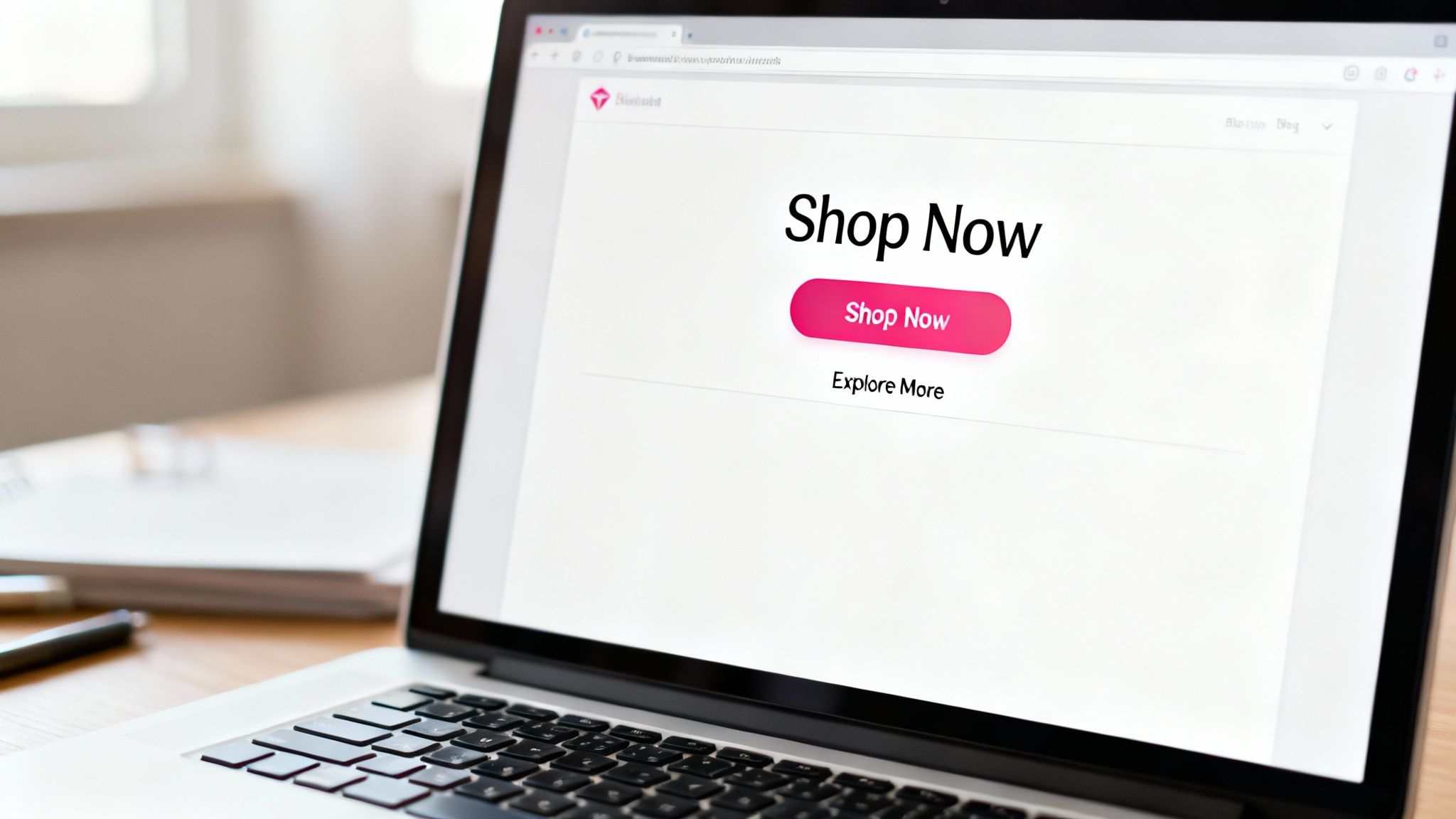
One of the most critical email newsletter best practices is guiding your subscriber toward a specific action. A clear Call-to-Action (CTA) is the bridge between your content and your conversion goal, whether that’s selling a product, driving traffic, or growing your community. Strategically positioning and designing visually prominent CTA buttons removes friction and tells your audience exactly what to do next.
Without a strong CTA, even the most engaging newsletter content will fail to produce results. It's the equivalent of leading a customer through a store, showing them a perfect product, and then walking away without telling them how to buy it. Great CTAs, like HubSpot's clear resource download buttons or Slack's high-contrast "Sign Up Free" prompts, make the next step obvious, intuitive, and compelling.
Why It Works and How to Implement It
An effective CTA cuts through the noise and focuses the subscriber’s attention on a single, valuable outcome. It provides clarity and momentum, transforming passive readers into active participants. This directness not only improves click-through rates but also enhances the user experience by making your emails easy to navigate and act upon.
Actionable Tips for Effective CTAs:
- Focus on a Single Goal: Whenever possible, use one primary CTA per email to avoid decision fatigue. A single, clear directive is far more effective than offering multiple competing options.
- Use Action-Oriented Text: Replace passive phrases like "Click Here" with compelling, action-driven verbs. Use words like "Download Your Guide," "Start Your Free Trial," or "Join the Community Now."
- Design for Visibility: Make your CTA button stand out with a contrasting color that aligns with your brand but is distinct from the email background. Ensure there is plenty of whitespace around it to draw the eye.
- Optimize for Mobile: Design buttons to be at least 44×44 pixels, the recommended size for easy tapping on mobile devices. A frustrating mobile experience can kill conversions instantly.
- Connect to Optimized Landing Pages: Ensure your CTA links to a landing page that is a seamless continuation of the email's message. With a true all-in-one platform, you can easily build dedicated landing pages for your courses or products that match the email's offer, creating a frictionless path from click to conversion.
By mastering the art of the CTA, you empower your subscribers to take meaningful action, turning your newsletter into a powerful engine for business growth. For a deeper look into optimizing these crucial elements, you can find out more about how to master your conversion rates on Zanfia's blog about conversion rate optimization strategies.
5. Value-First Content Strategy
The most successful newsletters follow a simple, yet powerful, principle: give, give, give, then ask. This is the core of a value-first content strategy, one of the most crucial email newsletter best practices for building long-term trust. Instead of leading with sales pitches, you prioritize delivering content that educates, entertains, or inspires your audience, establishing your newsletter as an indispensable resource.
This approach transforms your relationship with subscribers. You’re no longer just a business trying to sell something; you’re a trusted guide consistently providing solutions to their problems. Newsletters like Morning Brew or The Hustle have built massive audiences by offering valuable, curated insights with minimal promotion. This "give-first" mentality ensures that when you do make an ask, your audience is far more receptive because you’ve earned their trust and attention.
Why It Works and How to Implement It
A value-first strategy builds relational equity. Each valuable email is a deposit into your audience’s trust bank. When you consistently deliver useful content, subscribers look forward to your emails, driving higher open rates, deeper engagement, and greater loyalty. This makes the eventual sales process feel natural and welcome, not intrusive.
Actionable Tips for a Value-First Strategy:
- Map the Subscriber Journey: Identify your audience's key pain points and questions at different stages. Create content that directly addresses these needs, from beginner guides for new subscribers to advanced insights for loyal followers.
- Establish a Content Mix: Plan your content calendar with a clear ratio, such as the 80/20 rule: 80% pure value (educational articles, case studies, curated links) and 20% promotional content (product launches, special offers).
- Share Authentic Stories: Use personal anecdotes, behind-the-scenes looks, and customer success stories. These resonate on an emotional level and demonstrate your expertise in a relatable way, making your value tangible.
- Be a Curator: You don't have to create everything yourself. Sharing valuable third-party articles, tools, or resources positions you as a helpful industry expert and saves you content creation time. Platforms like Zanfia make it easy to build a knowledge library where you can host this curated content for your community.
By adopting a value-first mindset, you shift your newsletter from a marketing channel to a value-delivery engine that naturally fuels growth and sales. To dive deeper into creating compelling content, explore Zanfia's guide to content marketing best practices.
6. List Growth & Quality Management
Focusing solely on growing your subscriber count is a common mistake; the quality of your list is far more important than its size. List growth and quality management is a two-part strategy. It involves attracting the right subscribers who are genuinely interested in your content while simultaneously maintaining the health of your list by regularly removing unengaged contacts.
This practice ensures your emails reach an audience that wants to hear from you, which directly improves key metrics like open rates, click-through rates, and deliverability. A smaller, highly engaged list will always outperform a massive, dormant one. Think of it like gardening: you not only plant new seeds but also weed out what isn't growing to ensure the healthy plants can thrive.
Why It Works and How to Implement It
A clean and engaged email list signals to Internet Service Providers (ISPs) like Gmail and Outlook that you are a reputable sender, which is a critical factor in avoiding the spam folder. This proactive approach boosts your sender reputation, making it one of the most vital email newsletter best practices for long-term success.
Actionable Tips for Effective List Management:
- Implement Double Opt-In: This process requires new subscribers to confirm their email address via a confirmation link. It guarantees subscriber intent and drastically reduces the number of fake or misspelled emails on your list from the start.
- Define and Segment 'Inactive': Clearly define what an inactive subscriber means for your business (e.g., someone who hasn't opened an email in 90 or 180 days). Use your email platform to create a segment for these users.
- Run Re-engagement Campaigns: Before removing inactive subscribers, send them a targeted "last chance" campaign. Offer a special incentive or simply ask if they still wish to hear from you. This can win back a portion of your audience.
- Clean Your List Regularly: Schedule a quarterly or bi-annual list cleaning. Systematically remove hard bounces, consistent non-openers, and those who have filed spam complaints to keep your list healthy and your sending costs down. To ensure your newsletter reaches a growing and engaged audience, it's crucial to implement effective strategies for growing your email list that attract high-quality leads.
By prioritizing quality over quantity, you build a stronger, more responsive audience that drives real results for your business. For a deeper dive into this topic, you can find helpful tips on Zanfia's blog about effective email list management.
7. Optimal Send Time & Frequency Testing
Sending a brilliant newsletter at the wrong time is like hosting a party that nobody knows about. Optimal send time and frequency testing is a critical email newsletter best practice that focuses on discovering when and how often your audience is most likely to engage. It moves away from generic industry advice and uses data-driven experimentation to maximize open rates, clicks, and conversions while keeping unsubscribe rates low.
The perfect send schedule isn't universal; it's unique to your audience's habits, industry norms, and even the type of content you share. For instance, a B2B newsletter may perform best mid-week during business hours, while a lifestyle creator might find success on a Sunday morning. By systematically testing different variables, you can pinpoint the sweet spot that ensures your message lands in the inbox at the moment your subscribers are ready to read it.
Why It Works and How to Implement It
Testing removes guesswork from your email strategy, replacing assumptions with hard data about your audience's behavior. A well-timed email feels less intrusive and more helpful, arriving when subscribers are most receptive. This simple adjustment can lead to a significant lift in all key performance metrics, from initial opens to final conversions.
Actionable Tips for Effective Testing:
- Start with Benchmarks: Begin with a hypothesis based on industry data. For example, many B2C brands see success in the evening (5-7 PM), while content for weekend reading often performs well on Friday mornings. Use this as your starting point, not your final answer.
- Isolate Variables: To get clean data, test one thing at a time. First, test different days of the week while keeping the time constant. Once you identify the best day, test different times on that day.
- Run Extended Tests: A single email send is not enough data. Run your tests for at least four weeks to account for weekly fluctuations and gather a reliable sample size before drawing conclusions.
- Leverage Platform Tools: Use your email platform’s built-in features to streamline this process. Many platforms offer send-time optimization tools that analyze past engagement data to automatically send your newsletter at the ideal moment for each individual subscriber.
- Ask Your Audience: Don’t be afraid to simply ask. Include a question in your welcome email or a survey asking subscribers about their preferred frequency and content types.
By continuously refining your sending schedule, you ensure your valuable content gets the attention it deserves, strengthening your relationship with subscribers and driving more consistent results. This commitment to data is a hallmark of professional email newsletter best practices.
8. Authentication & Deliverability Protocols
Beyond crafting compelling content, one of the most critical email newsletter best practices involves the technical foundation of sending emails. Authentication and deliverability protocols like SPF, DKIM, and DMARC are non-negotiable standards that prove to email providers (like Gmail and Outlook) that you are a legitimate sender. They act as your email’s digital passport, verifying your identity and protecting your domain from being used for phishing or spam.
Implementing these protocols is essential for building a trustworthy sender reputation. Without them, your carefully created newsletters are far more likely to land in the spam folder, drastically reducing your open rates and overall impact. As email providers tighten security, proper authentication has shifted from a recommendation to a requirement, especially for anyone sending emails in bulk.
Why It Works and How to Implement It
Authentication protocols signal to Internet Service Providers (ISPs) that your emails are trustworthy and haven't been tampered with. This technical verification directly improves your deliverability, ensuring your messages reach the inbox. It also protects your brand's reputation by preventing unauthorized parties from sending malicious emails that appear to come from you.
Actionable Tips for Effective Authentication:
- Configure SPF (Sender Policy Framework): Start by creating an SPF record in your domain's DNS settings. This record lists all the servers and services (like your email marketing platform) authorized to send emails on your behalf.
- Implement DKIM (DomainKeys Identified Mail): Set up DKIM to add a digital signature to every email you send. This signature is verified by the recipient's email server, confirming that the email’s content hasn't been altered in transit.
- Establish a DMARC Policy: Once SPF and DKIM are in place, create a DMARC (Domain-based Message Authentication, Reporting, and Conformance) record. Begin with a monitoring policy (
p=none) to receive reports on who is sending email from your domain. - Gradually Enforce DMARC: After analyzing the reports and ensuring all legitimate sources are authenticated, gradually move to an enforcement policy like
p=quarantine(sends unauthenticated mail to spam) and eventuallyp=reject(blocks it entirely). - Use Your Email Platform's Guidance: A professional SaaS platform often provides detailed step-by-step guides or support to help you correctly configure these DNS records for your sending domain, simplifying a complex but vital process and providing peace of mind.
9. Progressive Profiling & Data Collection
Instead of asking for every piece of information upfront with a lengthy signup form, one of the most effective email newsletter best practices is to collect data gradually. Progressive profiling is the art of gathering subscriber information over time, balancing your need for data with the user's desire for a frictionless experience. This approach dramatically improves initial signup conversion rates while allowing you to build rich, complete subscriber profiles for future personalization.
This strategy works by asking for information in small, relevant chunks throughout the subscriber's lifecycle. A new subscriber might only provide their email, but as they engage with your content, you can strategically request more details. Think of HubSpot's smart forms, which show new fields to returning visitors, or a creator's welcome series that asks subscribers to click a link to identify their primary interest. It’s a patient, respectful way to learn about your audience.
Why It Works and How to Implement It
Progressive profiling makes data collection feel like a natural conversation rather than an intrusive interrogation. By asking for information when it’s most relevant, you increase the likelihood of getting accurate responses and build trust. This deeper data directly fuels more powerful segmentation and personalization, making your newsletter indispensable to your readers.
Actionable Tips for Effective Progressive Profiling:
- Keep Initial Signup Minimal: At the point of subscription, only ask for the absolute essentials, typically just an email address. Every additional field you add creates friction and can lower your conversion rate.
- Use the Welcome Series: Your automated welcome sequence is the perfect place to learn more. After providing initial value, ask new subscribers to self-segment by clicking a link that best describes their goals or interests (e.g., "I'm a beginner" vs. "I'm an advanced user").
- Leverage Interactive Content: Engage your audience with quizzes, surveys, or polls embedded in your newsletters. This not only boosts interaction but also provides valuable data points that you can use to tag and segment subscribers automatically.
- Automate Profile Updates with a Platform: Use a system like Zanfia to automatically update subscriber profiles based on their behavior. When a user purchases a course, joins a specific community channel, or downloads an ebook, the platform can tag their profile, enriching their data without you lifting a finger.
By implementing progressive profiling, you gather the insights needed for hyper-relevant content without overwhelming new subscribers, creating a smarter and more effective email marketing strategy.
10. Welcome Series & First Impression Strategy
The first interaction a new subscriber has with your brand is critical, and it happens moments after they hit "subscribe." A welcome series is a strategic, automated sequence of emails sent to new subscribers to capitalize on this peak engagement window. Instead of a single, generic confirmation, this multi-email flow sets expectations, delivers promised value, and begins building a strong relationship from day one.
This strategy establishes the tone for all future communications and transitions a curious lead into an engaged community member. It’s your chance to deliver the lead magnet they signed up for, share your brand’s story, and guide them toward the next step in their journey with you. Think of how a great SaaS onboarding flow makes you feel confident using a new tool; a welcome series does the same for your newsletter, making subscribers feel seen and valued immediately.
Why It Works and How to Implement It
A welcome series works because it engages subscribers when their interest is highest. This automated sequence ensures every new member gets a consistent and warm introduction to your brand, moving them from a passive reader to an active participant. It humanizes your brand and provides immediate value, reinforcing their decision to join your list.
Actionable Tips for an Effective Welcome Series:
- Be Immediate and Deliver Value: Send the first email within one minute of signup. If you promised a lead magnet like an e-book or a checklist, deliver it in this initial email to build trust instantly.
- Set Clear Expectations: Use one of your early emails to tell subscribers what kind of content they will receive, how often you will email them, and what makes your newsletter unique. This transparency reduces future unsubscribes.
- Share Your Story and Credibility: Dedicate an email to introducing yourself or your brand. Explain why you are a credible authority on your topic and share the mission behind your work. This builds a personal connection that goes beyond just content.
- Automate the Sequence: Use an integrated platform to build your welcome series with its powerful automation tools. For Polish creators, Zanfia lets you set up workflows that automatically trigger the sequence when someone signs up, downloads a product, or joins your community, ensuring a seamless experience without any manual work.
By implementing a thoughtful welcome series, you create a powerful first impression that significantly boosts long-term engagement and loyalty. For a deeper dive into creating automated sequences, you can learn more about drip campaign best practices on Zanfia's blog.
10-Point Email Newsletter Best Practices Comparison
| Technique | Implementation Complexity (🔄) | Resource Requirements (⚡) | Expected Outcomes (📊) | Ideal Use Cases (💡) | Key Advantages (⭐) |
|---|---|---|---|---|---|
| Personalization & Segmentation | 🔄 High — data models, dynamic content | ⚡ High — CRM, analytics, dev resources | 📊 Higher opens/clicks (≈+29% opens), better conversions | 💡 E‑commerce, SaaS, lifecycle campaigns | ⭐ Increased relevance, improved conversion & retention |
| Mobile-Responsive Design | 🔄 Medium — templates + cross‑client testing | ⚡ Medium — designers, testing tools/dev time | 📊 ↑ mobile CTR 15–25%, lower bounces | 💡 Any brand with substantial mobile opens | ⭐ Better UX, deliverability and brand credibility |
| Strategic Subject Line Optimization | 🔄 Low–Medium — copy + systematic testing | ⚡ Low — copywriters, A/B tools, sample volume | 📊 ↑ open rates 20–50% when optimized | 💡 Time‑sensitive campaigns, newsletters | ⭐ High ROI; quick measurable impact |
| Clear CTA Placement & Design | 🔄 Low — design rules + positioning | ⚡ Low — design + simple A/B tests | 📊 ↑ CTR 25–50% when clear & prominent | 💡 Promotional emails, product launches, landing pages | ⭐ Removes friction, clearer conversion paths |
| Value‑First Content Strategy | 🔄 Medium — editorial planning & cadence | ⚡ Medium — writers, content calendar | 📊 ↑ long‑term engagement, lower unsubscribes | 💡 Newsletters, brand building, nurturing funnels | ⭐ Builds trust, loyalty and lifetime value |
| List Growth & Quality Management | 🔄 Medium — policies, cleaning, segmentation | ⚡ Medium — tools for validation & re‑engagement | 📊 ↑ deliverability, engagement; cost savings | 💡 Any sender focused on deliverability & ROI | ⭐ Higher inbox placement; healthier list metrics |
| Optimal Send Time & Frequency Testing | 🔄 Medium — repeated A/B and analysis | ⚡ Medium — analytics, volume for significance | 📊 ↑ opens 10–40%; fewer unsubscribes with right freq. | 💡 Global audiences; varied content types | ⭐ Timing personalization yields measurable lifts |
| Authentication & Deliverability Protocols | 🔄 High — DNS, signatures, monitoring | ⚡ Medium — IT support, monitoring tools | 📊 ↑ inbox placement 5–20%; reduced spoofing | 💡 High‑volume senders, enterprises, security‑sensitive brands | ⭐ Protects domain reputation and inbox deliverability |
| Progressive Profiling & Data Collection | 🔄 Medium — multi‑step flows + CRM integration | ⚡ Medium — forms, automation, CRM sync | 📊 ↑ data quality and personalization potential | 💡 Complex products, lead scoring, long sales cycles | ⭐ Gathers richer profiles with less signup friction |
| Welcome Series & First Impression Strategy | 🔄 Low–Medium — sequence creation & automation | ⚡ Low–Medium — copy/design + automation setup | 📊 ↑ opens 40–60%; high early engagement & ROI | 💡 New subscribers, onboarding, lead nurturing | ⭐ Highest ROI per sequence; sets expectations and segments early |
From Best Practices to Best-in-Class Performance
Navigating the landscape of email marketing can feel like a complex journey, but by now, the path forward should be clear. We've explored the foundational pillars of success, from the strategic nuances of personalization and segmentation to the technical essentials of deliverability and authentication. Mastering these ten email newsletter best practices isn't just about ticking boxes on a checklist; it's about fundamentally transforming your approach. You're moving from broadcasting messages to building meaningful, one-to-one relationships at scale.
This shift in perspective is what separates a good newsletter from a great one. A great newsletter doesn't just land in the inbox; it becomes an anticipated event. It feels personal because it is personal, thanks to thoughtful segmentation. It looks stunning on any device because of mobile-first design. It drives action because its CTAs are clear and compelling. And most importantly, it consistently delivers value, cementing your authority and building unwavering trust with your subscribers. Each element, from the welcome series that greets a new member to the ongoing testing of send times, is a deliberate step toward creating a powerful, reliable engine for audience engagement and business growth.
The Strategic Advantage of Integration
Implementing these strategies consistently can be a formidable challenge, especially for creators and small business owners juggling multiple responsibilities. This is where the gap between knowing what to do and having the capacity to do it becomes most apparent. Piecing together different tools for landing pages, email automation, payments, and content hosting often creates a clunky, inefficient system that drains time and resources. True mastery of these best practices requires not just knowledge, but a streamlined operational workflow.
This is precisely the problem an integrated platform solves. For Polish creators, this is where Zanfia offers a distinct advantage. As serial entrepreneur and investor Artur Kurasiński states, it’s “the most convenient and simplest solution for paid newsletters, courses and community on the Polish market.” It's built to turn these best practices into a seamless, automated reality. Imagine a new subscriber signs up: a welcome sequence is automatically triggered. When they purchase a product, they are instantly segmented, added to a specific community channel, and granted access to their course—all without you lifting a finger. This level of automation can save 5–10+ hours per month, freeing you to focus on value-packed content instead of admin chores.
Beyond the Inbox: Building a Business Ecosystem
Ultimately, the goal of adopting these email newsletter best practices is to build a resilient, profitable online business. Your newsletter becomes the central hub connecting your audience to your entire ecosystem of products, whether that's a paid community, an online course, or digital downloads. Platforms like Zanfia make this possible by unifying these components under your own brand and custom domain. Unlike alternatives that push your audience to third-party tools, Zanfia keeps everything unified under your brand, dramatically boosting member retention. You are not just sending emails; you are building an independent digital headquarters.
Furthermore, the financial model matters. As your newsletter grows and your revenue increases, platform fees can significantly erode your profits. Zanfia's revolutionary 0% platform transaction fee model ensures you keep 100% of your earnings—a critical factor for creators earning PLN 10k–100k+ a month who are tired of seeing commissions eat into their margins. When you combine powerful automation, a unified creator ecosystem, and a fair financial partnership, you move beyond simple best practices. You achieve best-in-class performance, turning your newsletter from a simple communication tool into the most valuable asset in your digital business. Ultimately, to truly achieve best-in-class performance and ensure your newsletters resonate, exploring overarching best practices for sending better emails and increasing conversions provides a broader strategic framework.
Ready to turn these best practices into reality with a platform that works for you, not against you? Zanfia provides the all-in-one toolkit to launch, grow, and monetize your newsletter, courses, and community with 0% platform fees. Start building your independent online business today.