Ebook Lead Magnets: Turn Free Downloads Into Paying Customers
You have a great free ebook. Someone downloads it, disappears into their inbox, and you never hear from them again. The lead magnet did its job at capturing an email, but it stopped there. No purchase, no relationship, no revenue. If this sounds familiar, you are not alone. Most ebook lead magnets built in 2026 are still designed like it is 2016: a generic PDF, a thank-you page, and hope.
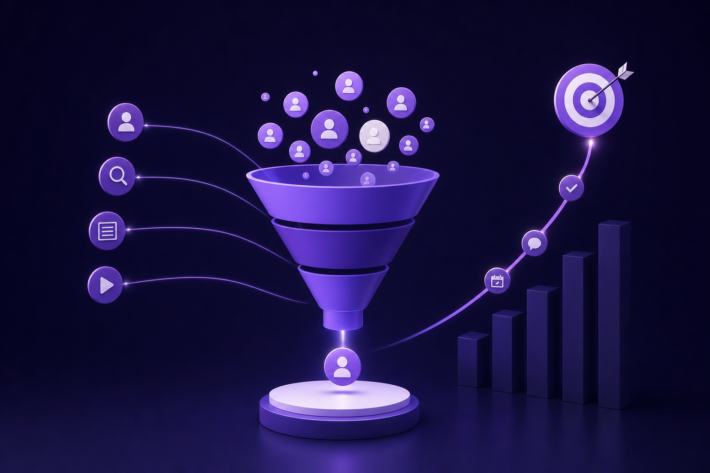
The creators who actually turn free downloads into paying customers treat the ebook as the opening act, not the entire show. They design the ebook, the opt-in, the delivery, and the nurture sequence as a single funnel with one purpose: move a curious reader toward a purchase decision. This guide walks through how to build that system, step by step, from the ebook idea itself to the first paid conversion.
Table of Contents
What Makes an Ebook Lead Magnet Convert in 2026
The bar for a free ebook is higher than it has ever been. Readers have downloaded hundreds of PDFs that promised transformation and delivered filler. According to Pew Research on digital attention, adult readers now abandon long-form content in under 90 seconds if it does not deliver value quickly. Your ebook has to earn attention every page.
An ebook lead magnet converts in 2026 when it hits four criteria at once:
- Specific promise. Not “grow your business” but “the 12 email subject lines that get 40% open rates for coaches with under 1,000 subscribers.”
- Fast to consume. 15 to 40 pages, not 200. Readers want a win in one sitting, not a textbook.
- Actionable in the next 48 hours. The reader should be able to implement at least one thing before your first follow-up email lands.
- Points toward a natural next step. Not a hard sales pitch, but a logical progression: if the free ebook solves problem A, your paid offer solves the bigger problem A leads to.
Generic titles like “The Ultimate Guide to Marketing” are dead. Specific titles like “The 90-Minute Website Audit for Solopreneurs” convert because they signal both scope and outcome. When a reader sees the title on your landing page, they should immediately know what they are getting and roughly how long it will take to consume.
Why Specific, Actionable Ebooks Still Beat Generic PDFs
There is a persistent myth in the creator economy that lead magnets need to be “comprehensive” to prove value. The opposite is true. A 200-page PDF signals that you do not respect the reader’s time. A 20-page ebook that solves one narrow problem completely signals that you understand what they actually need.
Consider two versions of the same offer from a fitness coach:
- Version A: “The Complete Guide to Strength Training” (180 pages, covers everything).
- Version B: “The 4-Week Beginner Barbell Plan: 3 Lifts, 3 Days a Week” (28 pages, one specific outcome).
Version A gets more downloads because it sounds like more value. Version B gets more paying customers because readers actually finish it, implement it, get results, and trust the creator enough to buy the follow-up program. The download-to-customer ratio is what matters, not the download count.
The Depth-Over-Breadth Rule
Pick one persona. Pick one problem they have right now. Pick one outcome they will achieve after reading. Then go deep on that one thing. Your ebook should feel like a paid product that you happen to be giving away, not a promotional pamphlet stretched to 40 pages.
The Harvard Business Review framework on value propositions applies here: clarity of promise beats breadth of coverage every time. If your ebook cannot be summarized in one sentence that makes a specific reader say “I need that,” the positioning needs work before you write another page.
Format Matters More Than You Think
Design the ebook to be read on a phone. Most downloads happen on mobile, and PDFs formatted for print are painful to read on a 6-inch screen. Use larger fonts, shorter paragraphs, plenty of white space, and callout boxes. Include a table of contents that lets someone jump directly to the section they need. If you can, offer an EPUB version alongside the PDF so readers can use their preferred ebook app.
Designing the Opt-In and Delivery Flow
The opt-in page is where most creators leak conversions. A generic “Enter your email” box on a landing page will typically convert at 2 to 5% of visitors. A well-designed opt-in flow can hit 30 to 50% on warm traffic. The difference is not clever copy tricks. It is respecting three principles:
- One decision, one page. The opt-in page should sell one thing: the ebook. No navigation, no sidebar, no other offers competing for attention.
- Preview the value. Show the cover, list three specific outcomes the reader will get, and include one or two testimonials or credibility markers.
- Ask for the minimum. Email address only. Every additional field cuts conversion by roughly 10%. You can enrich the profile later through the nurture sequence.
The Delivery Page Is Not a Dead End
Here is where most creators completely waste an opportunity. After someone opts in, they land on a page that says “Thanks! Check your email.” That is a dead end. It leaves the reader with nothing to do except close the tab and wait.
The delivery page should do three things at once:
- Confirm the download is on its way (and give a direct link to grab it immediately, in case the email is slow).
- Set expectations for what happens next (“You will get an email from me in 20 minutes with the first implementation tip”).
- Present a soft next-step offer. This is the tripwire moment. A $7 to $37 product that expands on the ebook is the highest-converting offer you will ever run.
The tripwire is not a hard sell. It is a natural extension. If the free ebook is “The 4-Week Beginner Barbell Plan,” the tripwire might be “The Video Companion: watch me demo every lift with form corrections, $27.” Roughly 5 to 15% of new subscribers will take a tripwire offer at this moment, which often covers your ad spend within days.
Deliver the File Reliably
Nothing kills trust faster than a broken download link. Host the ebook on a platform that handles secure file delivery, tracks download completions, and does not force the reader through Google Drive permissions or a Dropbox login. Zanfia handles this natively by delivering your free ebook as a $0 product with secure file delivery, so the reader gets the file, you capture the buyer record in your customer database, and you can upsell or bundle a paid offer right at checkout. No separate ESP required for the delivery step itself.
The Nurture Sequence: From Free Download to First Sale
The nurture sequence is where most funnels quietly fail. Someone downloads the ebook, gets one thank-you email, then nothing for two weeks, then a random “Buy my course!” pitch. That sequence has a purchase rate near zero because there is no relationship being built and no logical bridge between the free content and the paid offer.
A high-converting nurture sequence has a specific rhythm: value, then value, then value, then a soft ask, then more value, then a stronger ask. Here is a proven 7-email framework you can adapt:
Email 1: Deliver + Set Expectations (Immediately)
Sent within 5 minutes of opt-in. Contains the download link (again, in case they missed it), a personal note from you, and a preview of what is coming next. Tell them exactly when the next email will arrive and what it will contain. This dramatically improves open rates for the rest of the sequence.
Email 2: The Quick Win (Day 1)
Pull one specific tip from the ebook and expand on it. The goal is to get the reader to take a single action that produces a visible result in under 15 minutes. This action locks in the sense that your advice actually works.
Email 3: The Origin Story (Day 3)
Tell the story of why you built this ebook. What problem were you trying to solve? What was the moment you realized other people had the same problem? This is where you build the human connection that makes people want to buy from you specifically.
Email 4: The Deeper Problem (Day 5)
Introduce the bigger problem that your paid offer solves. The free ebook solved problem A. Now explain why solving A well leads directly to needing to solve B. Do not pitch yet. Just make the reader nod along and think, “Yeah, I do have that bigger problem too.”
Email 5: The Case Study (Day 7)
Show what happens when someone actually solves problem B. This can be a customer story, your own results, or a client transformation. According to Nielsen Norman Group research on web readability, story-driven content gets 30% more engagement than benefit-driven copy. Use that.
Email 6: The Soft Ask (Day 10)
Introduce the paid offer for the first time. Frame it as the logical next step for people who are ready to solve problem B. Include a founding-customer discount or a bonus for the first 48 hours. Not everyone will buy. That is fine.
Email 7: The Deadline (Day 12)
Close the founding discount window. This is your highest-converting email in the sequence, typically 3 to 5x the response of any other email. Real deadlines with real consequences move people who were on the fence.
After Email 7, subscribers who did not buy stay on your general newsletter list. You continue to send value, occasionally point to the paid offer, and stay top-of-mind. Many customers buy 3, 6, or 12 months after their first ebook download. Do not delete non-buyers. They are future buyers.
Pairing Your Free Ebook With a Paid Offer
The single biggest predictor of whether your ebook lead magnet drives revenue is the quality of the pairing between the free ebook and the paid offer. Get this wrong and no amount of email copy will save you. Get it right and even a mediocre nurture sequence will convert.
The paid offer should be the natural completion of what the free ebook started. Think of it as “same audience, bigger transformation.” Here are pairings that work:
- Free: “The 4-Week Beginner Barbell Plan” → Paid: “The 6-Month Strength Program with Video Coaching” ($197).
- Free: “The 12 Email Subject Lines That Get 40% Open Rates” → Paid: “The Complete Email Funnel Framework” ($297).
- Free: “How to Price Your First Consulting Package” → Paid: “The Consulting Business Blueprint” ($497) or “1:1 Positioning Intensive” ($1,500).
Notice the pattern: the free ebook solves the entry-level problem in the same domain. The paid offer solves the ongoing, larger problem for the same reader. They are not selling to different audiences. They are selling deeper into the same audience.
Price Ladders Work Better Than Single Offers
A common mistake is offering only one paid product. Some readers are ready to spend $27. Some are ready to spend $2,500. If you only have one price point, you leave most of the revenue on the table.
A well-designed ladder looks like this:
- Tripwire ($7 to $37): Immediate purchase after ebook download. Covers ad cost, converts subscriber into customer.
- Core offer ($97 to $297): The main product the nurture sequence sells. Solves the bigger problem.
- Premium offer ($497 to $2,000+): High-touch version for readers who want more support. Cohort program, 1:1 coaching, done-with-you service.
You do not need to build all three at launch. Start with the core offer, add the tripwire once the funnel is working, and add the premium offer once you have enough demand to justify the time investment.
Measuring Lead Magnet Performance
You cannot improve what you do not measure. Most creators track only one metric: total downloads. That is the vanity metric. It tells you nothing about whether the funnel is actually driving revenue.
Here are the metrics that actually matter, and roughly what “good” looks like for each:
- Landing page conversion rate: Visitors who submit their email. Target: 25 to 45% on warm traffic, 10 to 20% on cold traffic. Below 10%? Rewrite the promise.
- Email open rate on Email 1: Target: 60 to 80%. This is the highest-open email in your entire business. If it is below 50%, your subject line or sender reputation needs work.
- Email open rate across nurture sequence: Target: 30 to 50% average. According to Mailchimp’s industry benchmarks, this range varies by niche, so track your own baseline over time.
- Tripwire conversion rate: New subscribers who buy the tripwire. Target: 5 to 15%. Below 3%? The tripwire is not close enough to the ebook promise.
- Nurture-to-sale conversion rate: New subscribers who buy the core offer within 30 days. Target: 2 to 8%.
- Cost per acquired customer (if running ads): Total ad spend divided by paying customers. Compare to your average order value and lifetime value.
The 90-Day Optimization Loop
Every 90 days, look at your funnel data and ask: which single number, if it doubled, would change my business the most? Focus your next 90 days of experiments on that number. If the landing page is converting at 8%, work on that. If the nurture sequence is converting at 1%, rewrite the emails. Do not try to optimize everything at once. You will spread your attention too thin and see no meaningful gains anywhere.
How Zanfia Helps Authors Sell Ebooks
Most ebook funnels are held together with duct tape. You have your email list on one platform, your ebook hosted on another, your paid product on a third, and your checkout on a fourth. Every integration is a potential failure point, and every platform takes a cut.
Zanfia is built to run the free lead magnet and the paid follow-up on the same platform. When someone opts in for your free ebook, you deliver it as a $0 product with secure file delivery. That means the reader gets the file safely, and you capture the customer record inside Zanfia with a full order history, tags, and contact info. This is not just a subscriber on an email list. It is a customer relationship with structure.
From there, the checkout does the work most lead magnet funnels have to bolt on with three or four tools. At the $0 checkout, you can present an order bump for a paid ebook, a course, or a subscription. Roughly 5 to 15% of new subscribers will take that offer, and Zanfia charges 0% platform commission on customer sales. You keep everything except the standard payment processor fees. No hidden platform tax.
The Cart 2.0 checkout supports one-time payments, subscriptions, installments, and free trials, with Stripe and PayPal as processors and both Apple Pay and Google Pay for wallet payments. That matters because a large chunk of mobile ebook readers will abandon a checkout that forces them to type a full card number. Wallet payments turn a 3-minute checkout into a 15-second one.
Beyond the initial funnel, Zanfia gives you a home for the full customer journey. Free ebook readers become paid ebook customers. Paid ebook customers become course students. Course students join your community. Newsletter subscribers upgrade to premium tiers. Everything runs under your own white-label domain, so the entire experience feels like your brand, not a third-party platform. If you eventually want to move readers to a mobile experience, Zanfia’s native iOS and Android app supports courses, paid newsletters, and knowledge bases so your best content lives on your customer’s home screen.
You can see current pricing and start on the free plan if you want to build the funnel end-to-end without stitching together five tools. The setup fits in an afternoon. The revenue impact is what compounds over the following months.
FAQ
How long should an ebook lead magnet be?
15 to 40 pages is the sweet spot in 2026. Long enough to deliver real value on a specific problem, short enough that a reader can finish it in one sitting. The goal is completion, not comprehensive coverage. Readers who finish your ebook are 3 to 5x more likely to buy a paid offer than readers who never make it past page 5.
Should I gate my ebook behind an email opt-in or offer it as a free download?
Gate it. An ungated ebook builds no relationship and gives you no way to follow up. The email address is the entire point of a lead magnet. The tradeoff of losing a small percentage of downloads is worth the direct relationship with the reader who did opt in.
What is the ideal delivery format for an ebook lead magnet?
PDF remains the universal standard because every device can read it. If your audience skews toward serious readers, offer an EPUB version alongside the PDF. Avoid formats that require special software, and never require the reader to log into a third-party service like Google Drive to access the file.
How soon should I send the first nurture email after opt-in?
Within 5 minutes for the delivery email, and within 24 hours for the first value-based follow-up. The window of highest engagement is the 48 hours immediately after someone opts in. Waiting a week means most subscribers have forgotten who you are and why they downloaded.Can I use the same ebook lead magnet for years, or do I need to refresh it?
You can use the same ebook for 12 to 24 months if the topic is evergreen. Refresh the data, examples, and screenshots annually. If your ebook references specific tools, prices, or platforms, plan for a heavier update every 12 months so the content does not date poorly.
What is the difference between a lead magnet ebook and a paid ebook?
A lead magnet ebook solves one specific problem quickly and points toward a larger paid offer. A paid ebook is the destination, not the doorway. Lead magnets are shorter, more focused, and designed to build trust. Paid ebooks are more comprehensive and stand alone as the deliverable. Many creators run both, using the free ebook to fill the top of the funnel and the paid ebook as a core offer or upsell.
How many subscribers do I need before an ebook funnel starts making money?
You can generate revenue from your first 100 subscribers if the funnel is well-designed. Most creators see meaningful monthly revenue somewhere between 500 and 2,000 active subscribers. The number matters less than the quality of the funnel. A 500-subscriber list with a strong nurture sequence often outperforms a 10,000-subscriber list with weak follow-up.