

How to Increase Email Open Rates: A Creator’s Ultimate Guide
Let's be honest, all the effort you pour into your emails—the killer content, the perfect offer—is completely wasted if nobody opens them. The single biggest battle is won or lost in the inbox, right at that split-second moment a subscriber decides whether to tap, swipe, or ignore.
This is where your subject line and preview text come in. They aren't just labels; they're your one-two punch to grab attention.
Your Subject Line Is Everything
Think of your subject line as the gatekeeper. It's the headline of your article, the trailer for your movie. It has one job: make a promise so compelling that your reader has to see what's inside.
No matter how groundbreaking your new course is or how valuable your latest community update might be, if the subject line falls flat, your email is dead on arrival. For creators building a business, this isn't just about getting a click—it’s the very first step in the customer journey.
Don't Sleep on the Preview Text
Right next to your killer subject line sits its powerful sidekick: the preview text. This is that little snippet of copy that shows up in most email clients, and it's your chance to seal the deal.
So many creators completely drop the ball here, letting it default to something useless like "View this email in your browser." That's a huge missed opportunity.
Instead, use that precious real estate to:
- Finish the thought: If your subject is "Your weekly blueprint is here," the preview could be, "This week, we're unlocking 3 tactics for…"
- Add some urgency: For a subject about a new course, try a preview like, "Doors close Friday at midnight!"
- Ask a direct question: A subject like "Are you making this mistake?" pairs perfectly with a preview that asks, "Find out if your strategy is holding you back."
When you get the subject line and preview text working together, you create a hook that's almost impossible to ignore.
Crafting Subject Lines That Get Clicks
So, how do you actually write these things? It’s less about a magic formula and more about understanding human psychology. Here are three approaches I've seen work wonders for creators.
- Spark Curiosity: We're hardwired to close open loops. A subject line that hints at an answer without giving it away is irresistible. Instead of a boring "New E-book Available," try something like, "The one mistake 90% of creators make."
- Deliver Obvious Value: Your subscribers are busy. Be direct. Tell them exactly what they'll get. "A 5-minute fix for your landing page" is infinitely better than a generic "Marketing Tips."
- Use Urgency (Ethically): This one is a classic for a reason—it works. Use it to nudge people into action on real, time-sensitive offers. "24 hours left for early-bird pricing" is a powerful nudge for a new product launch.
Your goal isn't just to get an open; it's to build trust by consistently delivering on the promise made in your subject line. Clickbait may work once, but it erodes long-term engagement.
Here are a few proven subject line formulas you can swipe and adapt for your own content.
Subject Line Formulas for Higher Opens
| Formula / Type | Example for a Creator | Why It Works |
|---|---|---|
| The "How-To" | How to get your first 100 newsletter subs | Promises a clear, actionable solution to a common problem. |
| The Question | Are you using these 3 outdated tactics? | Creates an "information gap" and makes the reader want the answer. |
| The List | 5 tools I can't run my business without | Numbered lists feel finite and easy to digest. Very scannable. |
| The "Mistake" | The biggest mistake I made when launching my course | Leverages curiosity and the desire to avoid others' failures. |
| The Sneak Peek | [Sneak Peek] Inside our new community platform | Creates a feeling of exclusivity and insider access. |
Use these as a starting point, but always test them with your own audience to see what resonates.
The Strategic Power of a Single Emoji
In an inbox full of black and white text, a well-placed emoji is a visual speed bump. It grabs the eye, conveys emotion, and can make your email stand out instantly.
The data backs this up. Some studies show that adding a relevant emoji to your subject line can boost open rates by as much as 56%. When the global average open rate is floating around 22.7%, that's a massive advantage.
But don't go overboard. The key is relevance and moderation. A single 🔥 for a hot new offer or a ✅ for a checklist is far more effective than a string of random characters. For more tips on crafting great emails from top to bottom, check out our deep dive into email newsletter best practices.
Moving Beyond First Name Personalization
Let's be honest: just dropping a subscriber's first name into a subject line isn't real personalization anymore. It was a neat trick a decade ago, but today’s audience expects more. It’s the bare minimum, and it won’t move the needle on your open rates.
To genuinely connect and get that click, you need to show people you get them. This means shifting from generic email blasts to campaigns so relevant they feel like they were written just for that one person. The goal is to make every single subscriber feel seen.
When an email speaks directly to their interests, what they've bought, or where they are in their journey, it stops being a marketing message. It becomes a piece of valuable, personal communication they actually want to open.
Building Meaningful Audience Segments
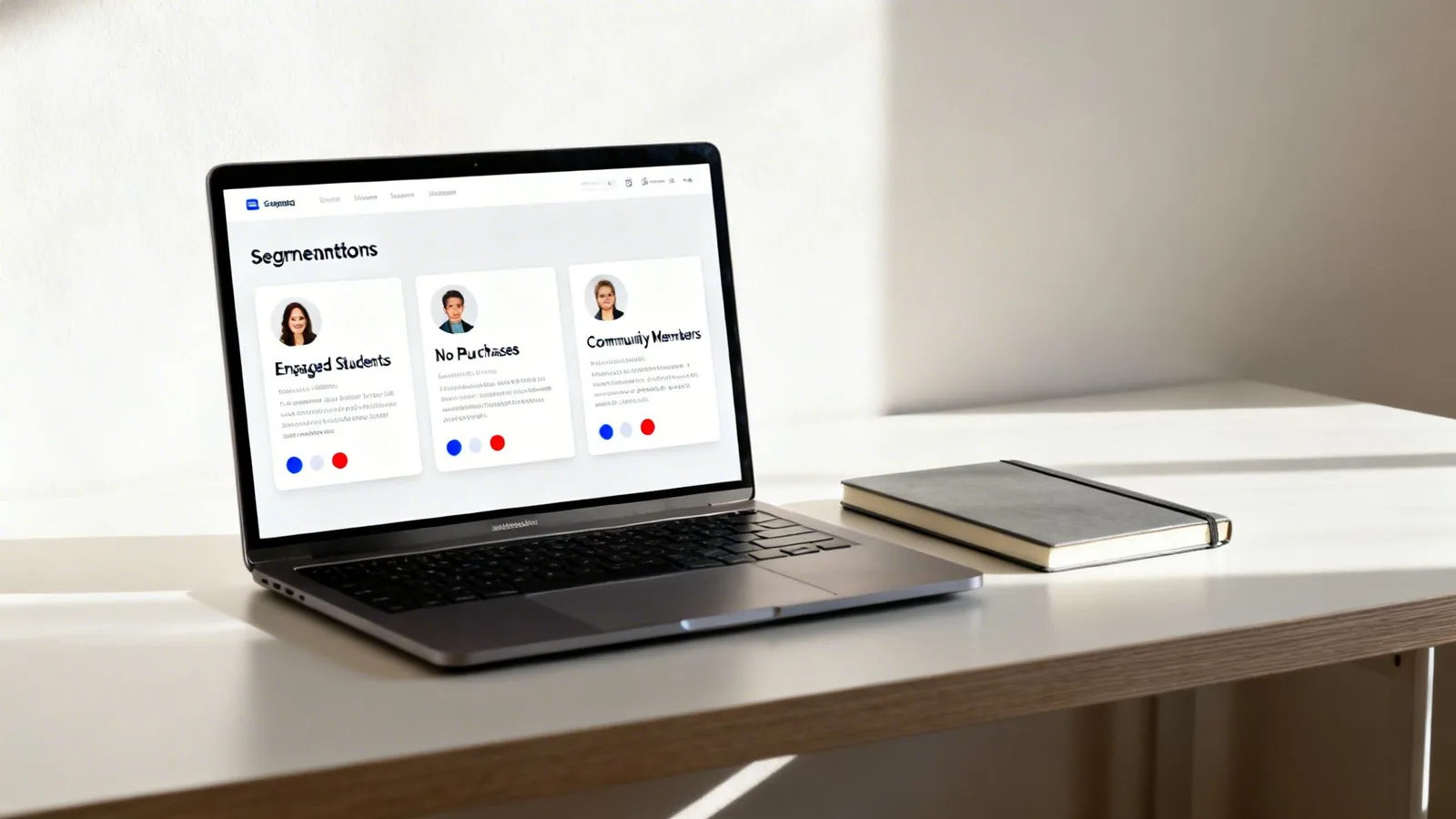
This is where segmentation comes in. It’s simply the practice of dividing your big email list into smaller, more focused groups based on specific criteria. Instead of shouting the same message to everyone, you're having a dozen different, relevant conversations.
The good news for digital creators is that you’re already sitting on a goldmine of data. Zanfia is built around this: it's an AI team that runs the business for you, and the platform underneath sells courses, communities, newsletters and 12 other product types under one brand. The assistant can pull the same reports you would, by chat or by voice, so you can see who buys which e-book, who completes a course, and who engages in your community without hunting through menus. The checkout underneath is built to turn what you learn into revenue: order bumps, installments, upsells and a test mode so you can buy your own product before launch. Availability of the full AI team depends on the plan you pick, so check the current Zanfia pricing.
Here are a few of the most effective segments you can start with:
- Purchase History: Group subscribers by what they’ve already bought from you. The person who purchased your "Beginner's Guide to Podcasting" e-book is the perfect audience for an email about your advanced "Podcast Monetization" course. It's a natural next step.
- Course Engagement: Look at who's finished a course versus who got stuck. Send a congratulatory email with an upsell to the finishers, and a supportive, "Hey, need a hand?" message to those who haven't logged in for a while.
- Community Activity: Separate your most active community members from the lurkers. Your super-users could get exclusive content or early access to new products, making them feel like the VIPs they are.
- Lead Magnet Origin: Where did they come from? Someone who downloaded your "Social Media Content Calendar" is telling you they’re interested in social media strategy. Your next email to them should reflect that.
Crafting Messages That Resonate
Once you have these groups, the magic happens. You craft messages that speak their language—the content, the tone, and the call to action should all align perfectly with why you put them in that segment. This is where personalization truly shines.
The results speak for themselves. Top performers in the coaching and freelancing space regularly see 40-60% open rates with hyper-targeted emails, completely blowing the global average of 22.7% out of the water. Creators who use subscriber data like past course interests often report a 50-60% jump in opens from smart segmentation alone.
Real-World Examples for Creators
Let's make this practical. Say you're a creator on Zanfia with a few courses and a paid community.
Scenario 1: The Abandoned Cart Someone adds your flagship course to their cart but gets distracted and leaves.
- Segment: "Abandoned Cart – Flagship Course"
- Personalized Email: Forget the generic "You left something behind!" email. Send one with the subject line, "Still thinking about [Course Name]?" Inside, you can address common objections, feature a powerful testimonial, or even offer a small, time-sensitive discount to get them across the finish line. If the sticker price is the blocker, split a $600 course into four payments at checkout instead of dropping the price.
Scenario 2: The Disengaged Subscriber You have a subscriber who's been on your list for six months but hasn't bought a thing.
- Segment: "Non-Purchasers (6+ Months)"
- Personalized Email: It's time to show them what they're missing. Send a campaign with a subject like, "A special gift just for you, [First Name]." Offer them a free lesson from one of your top courses or a 7-day pass to your community. Let them experience the value firsthand, risk-free.
By focusing on behavioral data—what people do, not just who they are—you create a powerful feedback loop. The more relevant your emails are, the more your audience engages. The more they engage, the more data you get to make your next email even better.
This level of detailed targeting is how you build an audience that doesn't just subscribe, but actually trusts and buys from you. For a deeper look into creating these groups, you can check out our guide on audience segmentation strategies. It's the key to making every subscriber feel like they're the only one you're talking to.
Finding Your Audience's Perfect Send Time
Sending the right message to the right person is only two-thirds of the battle. The final piece—and one that can make or break your open rates—is sending it at the right time.
Think about it. An email that arrives while your subscriber is deep in focus mode is far more likely to be archived or ignored. But one that lands at the top of their inbox when they’re ready to engage? That’s a different story entirely.
Timing isn't about following some universal, one-size-fits-all rule. It's about understanding your specific audience's unique rhythm. While industry benchmarks can give you a decent starting point, the real magic happens when you dive into your own data.
Starting with Industry Benchmarks
If you’re just starting out and don't have much data, general trends are a solid place to begin. Over the years, countless studies have shown that mid-week and mid-day tend to be strong performers for email engagement across the board.
- Best Days: Tuesday, Wednesday, and Thursday typically see the highest open rates. People are settled into their work week but not yet checked out for the weekend.
- Best Times: Late morning (around 10-11 AM ) and early afternoon (around 2 PM ) often perform well. This timing avoids the morning email avalanche and often hits subscribers right around their coffee or lunch breaks when they’re more likely to be checking personal inboxes.
But treat these as guidelines, not gospel. An email promoting a weekend hobby workshop might perform brilliantly on a Friday evening or Saturday morning, completely defying the "best practices." Your audience's behavior is always the ultimate source of truth.
Uncovering Your Audience’s Sweet Spot
The most effective way how to increase email open rates is by listening to what your subscribers are already telling you through their actions. That means digging into your own analytics to pinpoint your unique engagement patterns.
If you run your business on Zanfia, this data is a question away instead of a menu-diving exercise. The AI team knows every corner of the workspace, so you can ask by chat or dictate by voice: "which day and time got my best opens last quarter?" It answers from your own numbers, and the checkout it feeds is built to turn that traffic into sales with order bumps, installments and upsells. What each plan unlocks depends on the tier, so check the current Zanfia pricing.
Look for trends. Do your emails sent on Wednesday mornings always smoke the ones sent on Monday afternoons? That’s your first clue.
Once you have a hypothesis, put it to the test. Send your next few newsletters at the time you've identified as your potential peak. If your open rates creep up, you've found a winner. This data-driven approach removes the guesswork and aligns your sending schedule with your audience's actual habits.
Setting a Consistent Email Cadence
Just as important as when you send is how often you send. Your email cadence—the frequency and consistency of your communication—sets expectations and builds a relationship with your subscribers. Finding that sweet spot is crucial.
Sending emails too frequently can lead to subscriber fatigue and a spike in unsubscribes. Sending too rarely can cause your audience to forget who you are, making them less likely to open future emails.
The ideal cadence depends entirely on the type of value you're delivering. For many creators, a weekly newsletter is an effective rhythm. It's frequent enough to stay top-of-mind but not so often that it feels overwhelming.
Consider creating different cadences for different types of communication:
- Weekly Newsletter: Delivers consistent value and keeps your audience engaged.
- Monthly Recap: A great way to summarize top content or community highlights for less-active subscribers.
- Launch Sequences: A more intensive series of emails sent over a short period to build excitement for a new course or product.
The key is consistency. If you promise a weekly newsletter, deliver it weekly. This reliability builds trust and trains your audience to look for your emails.
To learn more about setting up these kinds of scheduled sends, you might be interested in our guide on what is email automation and how it can save you a ton of time. By mastering both timing and cadence, you create a powerful system for ensuring your emails not only arrive but are eagerly opened.
Keeping Your Emails Out of the Spam Folder
It's a truth that stings: an email that never reaches the inbox can't be opened. This is why email deliverability—the art and science of actually landing your messages in front of your subscribers—is a non-negotiable part of boosting your open rates.
So many marketers get obsessed with the perfect subject line but completely forget about the technical plumbing that makes it all work. If inbox providers like Gmail and Outlook don't trust you, even the most compelling email is dead on arrival, banished to the spam folder.
The Foundation of Trust: Your Sender Reputation
Think of your sender reputation as a credit score for your email address. It’s a score that Internet Service Providers (ISPs) quietly assign to your domain based on your sending habits. A high score tells them you're a trustworthy sender; a low score gets you flagged as a potential spammer.
Several things feed into this score:
- Engagement Rates: When people consistently open and click your emails, it's a huge green flag for ISPs.
- Spam Complaints: Even a handful of people marking you as spam can tank your reputation fast.
- Bounce Rates: A high number of undeliverable emails signals your list is old or messy.
This is where the technical stuff matters. Protocols like SPF, DKIM, and DMARC are essential authentication methods. They sound complicated, but their job is simple: prove to the internet that your email is really from you and not a scammer impersonating your brand. To get the full rundown on getting this right, check out these essential email deliverability best practices.
The Surprising Power of a Clean Email List
Here’s the single most effective thing you can do to protect your sender reputation: practice regular list hygiene. It feels wrong to shrink your list, I get it. But a smaller, highly engaged audience is infinitely more valuable than a massive, silent one.
A clean list directly translates to higher open rates and better deliverability. The process is straightforward.
First, remove any hard bounces immediately—these are invalid email addresses that will never work. Next, identify subscribers who haven't opened an email from you in the last 90-180 days. But before you delete them, give them one last chance with a targeted re-engagement or "win-back" campaign.
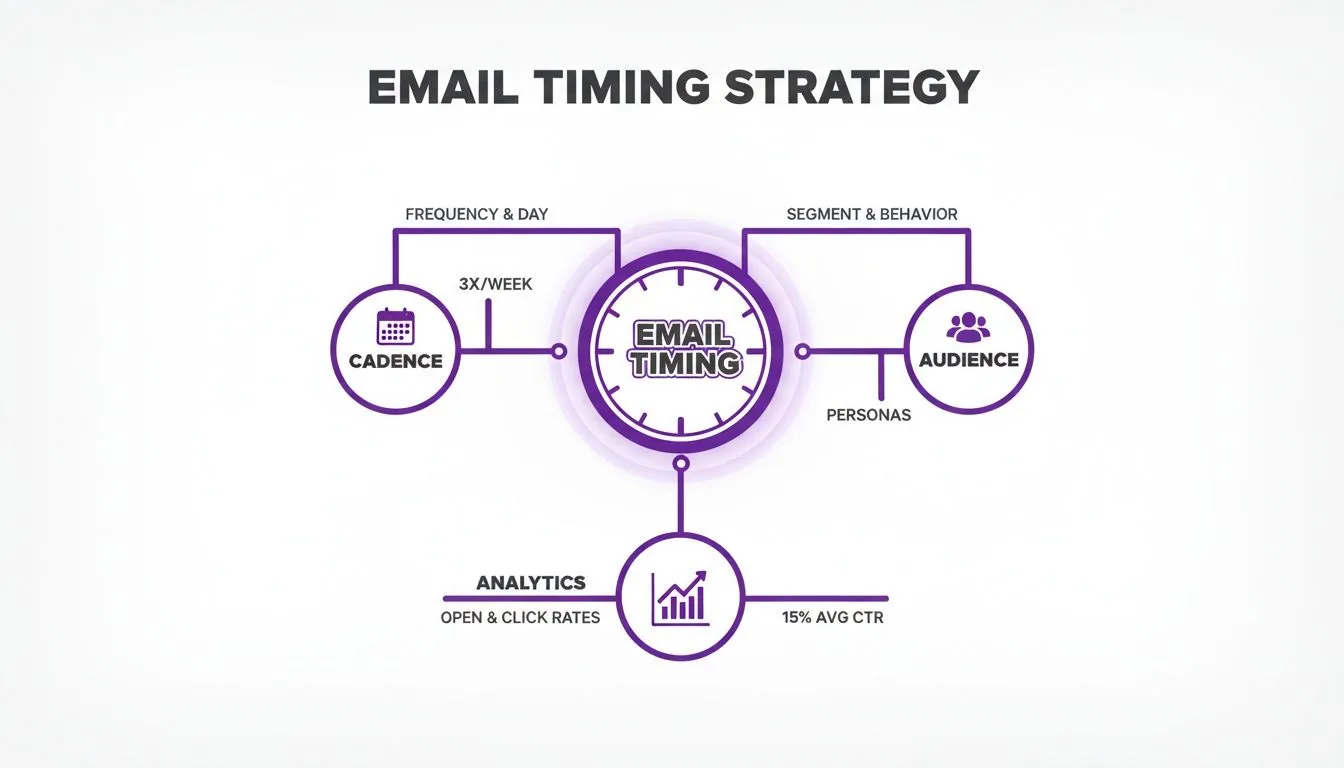
This map drives home how consistent scheduling, deep audience knowledge, and data analysis all work together. Optimal timing isn't a guess; it's a strategy.
Your Quarterly List Health Checkup
Keeping your list healthy isn't a one-time thing; it's an ongoing discipline. Following a simple quarterly checklist makes a world of difference. Think of it as preventative maintenance for your most valuable marketing asset.
For an even deeper dive, our guide on how to improve email deliverability lays out more advanced, actionable steps.
Consistently cleaning your list sends a powerful signal to email providers: You respect your audience’s inbox and only send content to people who truly want it. This single act can dramatically improve your long-term success with email marketing.
Here’s a simple checklist to keep your list in top shape. Following these steps every three months is one of the best investments you can make in your email program.
Quarterly List Hygiene Checklist
| Task | Frequency | Impact on Open Rates |
|---|---|---|
| Remove Hard Bounces | Immediately after each send | High. Prevents you from repeatedly sending to invalid addresses, which hurts your reputation. |
| Segment Inactive Subscribers | Quarterly | High. Separates unengaged contacts so you can target them with a specific win-back campaign. |
| Run a Re-Engagement Campaign | Quarterly | Medium to High. Wins back a portion of your dormant audience and safely identifies those who should be removed. |
| Remove Non-Responders | Quarterly (after win-back) | High. Trims your list to only engaged users, which instantly boosts your open rate percentage. |
Sticking to this routine ensures you're always sending to a receptive audience, which is the secret to both high open rates and a stellar sender reputation.
Using A/B Tests to Find What Works
Stop guessing. Seriously. Your intuition is a great place to start, but data is what will consistently push your open rates higher. This is where A/B testing—also called split testing—becomes your most valuable tool.
A/B testing is a straightforward concept: you send two slightly different versions of an email to two small, separate groups from your audience to see which one performs better. By changing just one thing at a time, you get crystal-clear insights into what truly clicks with your subscribers. It turns email marketing from a game of chance into a science.
Forming a Clear Hypothesis
Every good test kicks off with a solid hypothesis. This isn't just a random idea; it's an educated guess you want to prove or disprove. The best ones follow a simple formula: "If I change [Variable], then [Expected Outcome] will happen because [Reasoning]."
For instance, a creator on Zanfia selling a course might hypothesize: "If I use a question in my subject line instead of a statement, my open rate will increase because questions naturally spark curiosity and make people want to know the answer."
This little framework gives your test purpose and makes it much easier to figure out what the results actually mean later on.
What High-Impact Elements Should You Test
Look, you can test nearly anything in an email. But you want to start with the elements that have the biggest, most immediate impact on open rates. Don't get bogged down testing tiny color changes on a button when you can get a much bigger win somewhere else.
Focus your first A/B tests on these heavy hitters:
- Subject Lines: This is the most obvious and powerful variable to test. Pit different styles against each other—curiosity, urgency, direct value—and see what your unique audience prefers.
- Sender Name: Does your audience respond better to a personal name like "Anna from Yoga Studio" or the straightforward brand name "Yoga Studio"? Sometimes that personal touch builds a stronger connection.
- Send Time and Day: Got a theory about the best time to send? Prove it. Test a 10 AM send versus a 2 PM send, or a Tuesday versus a Thursday, to find your audience's actual sweet spot.
- Preview Text: Try a value-driven preview text against one that creates a little urgency or mystery. See which one convinces more people to open the email.
Real-World A/B Test Examples for Creators
Let's say you're a creator about to announce a new e-book. Instead of just writing one subject line and crossing your fingers, you could run a quick A/B test.
Test Idea 1: Question vs. Statement
- Variation A (Question): "Are you ready to master email marketing?"
- Variation B (Statement): "My new e-book on email marketing is here."
Test Idea 2: Emoji vs. No Emoji
- Variation A (Emoji): "🚀 Your guide to higher open rates is inside"
- Variation B (No Emoji): "Your guide to higher open rates is inside"
After sending these to a small segment of your list, you can see which one gets a statistically significant higher open rate. Then you send the winning version to everyone else. Simple.
Analyzing Your Results Like a Pro
Once the test is done, it's time to check the numbers. But hold on—don't just declare the version with a slightly higher open rate the winner. You need to consider statistical significance. It's a fancy term for a simple idea: making sure the difference in results is because of your change, not just random luck.
Most modern email platforms will calculate statistical significance for you. A result with 95% confidence or higher is what you're looking for. It means you can be 95% sure that if you ran the exact same test again, you'd get the same result.
The insights you get from each test should feed right back into your strategy. If you discover your audience loves emojis, start using them more often. If questions crush statements every time, make them a core part of your subject line toolkit. For creators, this constant loop of testing and learning is how you get better. This iterative process is a key part of any solid conversion rate optimization strategy.
Common Questions About Email Open Rates
Even when you've got your strategy dialed in, you're going to have questions. Everyone does. Let's tackle some of the most common sticking points I see creators run into when they're trying to get more people to actually open their emails.
What Is a Good Email Open Rate for a Digital Creator?
There's no single magic number here. While you'll see the global average floating around 22.7%, a "good" open rate is entirely dependent on your niche and how strong your relationship is with your audience.
For creators in the education space selling courses, hitting 25-30% is a solid goal to aim for. But if you're building a really tight-knit community with a paid newsletter or an exclusive membership, seeing open rates of 40% or even higher is totally realistic. Those audiences are just more invested and are actively waiting for your content to drop.
The best advice I can give you is to stop chasing some universal industry benchmark. Instead, focus on improving your own baseline. Your own month-over-month growth is the only metric that really matters. Using an integrated platform with strong analytics can help you keep an eye on your progress and celebrate those small wins.
How Often Should I Clean My Email List?
For most creators, doing a thorough list cleaning every 3 to 6 months is the perfect rhythm. Think of it as proactive maintenance that keeps your sender reputation healthy and ensures your open rate data is actually accurate.
It’s really a two-step dance:
- Find the inactive folks: First, pull a segment of subscribers who haven't opened a single email from you in the last 90 days.
- Try to win them back: Send this specific group a targeted "re-engagement" campaign. If they still don't bite, it's time to say goodbye.
I know, it feels wrong to shrink your list on purpose. But a smaller, highly engaged list is infinitely more valuable than a huge, dead one. It means your emails are going to people who genuinely want to hear from you.
Will Using Words Like Free or Sale Hurt My Open Rate?
Not always, but you have to be smart about it. Blasting out subject lines with classic spam-trigger words like "Free," "Sale," or "Act Now" can definitely get you flagged by spam filters, especially if your sender reputation isn't rock-solid yet.
But when you use them thoughtfully for an audience that already knows and trusts you, they can work wonders. It all comes down to context and the value you're offering.
For instance, a subject line like "A free guide for our community members" feels personal and valuable. A generic, all-caps "FREE!!! GET YOURS NOW!" just screams spam. The first is an offer; the second is a red flag. Always A/B test these kinds of subject lines with a small part of your audience first to see how they react before you send it to everyone.
Can I Increase Open Rates for an Old Inactive List?
Yes, but you have to tread very, very carefully. You can't just dump this group back into your regular email flow—that's a surefire way to kill your deliverability.
First things first, isolate everyone who hasn't opened an email from you in the last 6-12 months into its own segment. Don't send them your normal newsletters or promotions.
Instead, craft a dedicated "win-back" or "re-engagement" campaign just for them. This is usually a short series of two or three emails designed to grab their attention.
- Give them something irresistible: This could be a free download of a popular product, a steep discount, or maybe temporary access to your paid community.
- Call out the elephant in the room: Use a subject line that acknowledges they've been gone, like, "Is this goodbye?" or "We miss you, [First Name]."
- Ask for feedback: Sometimes, just asking why they haven't been engaged is enough to get a response.
If someone still doesn't engage after this campaign, it’s time to remove them for good. This last step is non-negotiable. It protects your sender reputation and gives your future emails the best shot at landing in the inbox. To get a complete picture of how your email strategy fits into your overall marketing, a comprehensive digital marketing audit can reveal where your biggest opportunities are.
Ready to turn these strategies into action with a platform that puts you in control? Zanfia is an AI team that runs the day-to-day of your creator business, sitting on top of a platform where you sell courses, communities, paid newsletters and 12 product types under one brand. You can dictate the work by voice or ask by chat, and the checkout underneath is built to sell: order bumps, installments, upsells and a test mode so you can buy your own product before launch. Plans start at $39/month, or $31/month billed annually, on Starter, with a 14-day free trial and no credit card required. Platform commission on customer sales is currently 0% — you only pay your payment processor. Discover how Zanfia can elevate your creator business today.