Where Can I Sell Ebooks? 12 Best Platforms for 2025
You've written your ebook, poured your expertise onto the page, and now you face the most critical question: where can I sell ebooks to maximize reach and revenue? The sheer number of platforms can be paralyzing. Each offers a different path to your readers, with unique fee structures, royalty rates, and levels of author control. Choosing incorrectly can mean leaving money on the table or failing to connect with your ideal audience.
This guide eliminates the guesswork. We will dive deep into the 12 best platforms for 2025, from massive global marketplaces like Amazon KDP to direct-to-consumer powerhouses like Zanfia and Gumroad. For each option, you'll find a clear breakdown of its pros, cons, and specific use cases, helping you decide whether your priority is maximizing global distribution or building a direct, high-margin business. We provide a straightforward analysis to help you select the right sales channel for your specific goals. For a comprehensive overview of the current market and the best places to sell your digital work, explore these top platforms for selling ebooks. Let’s find the perfect home for your ebook.
Table of Contents
1. Zanfia
Zanfia is a comprehensive Polish all-in-one platform designed for digital creators, experts, and businesses who want to build and scale their online business under their own domain. If you're looking for where to sell ebooks while also integrating online courses, professional communities, and paid newsletters, Zanfia provides a truly integrated ecosystem. It eliminates the need for expensive foreign alternatives or piecing together multiple tools, allowing you to keep full control of your brand identity and customer relationships.
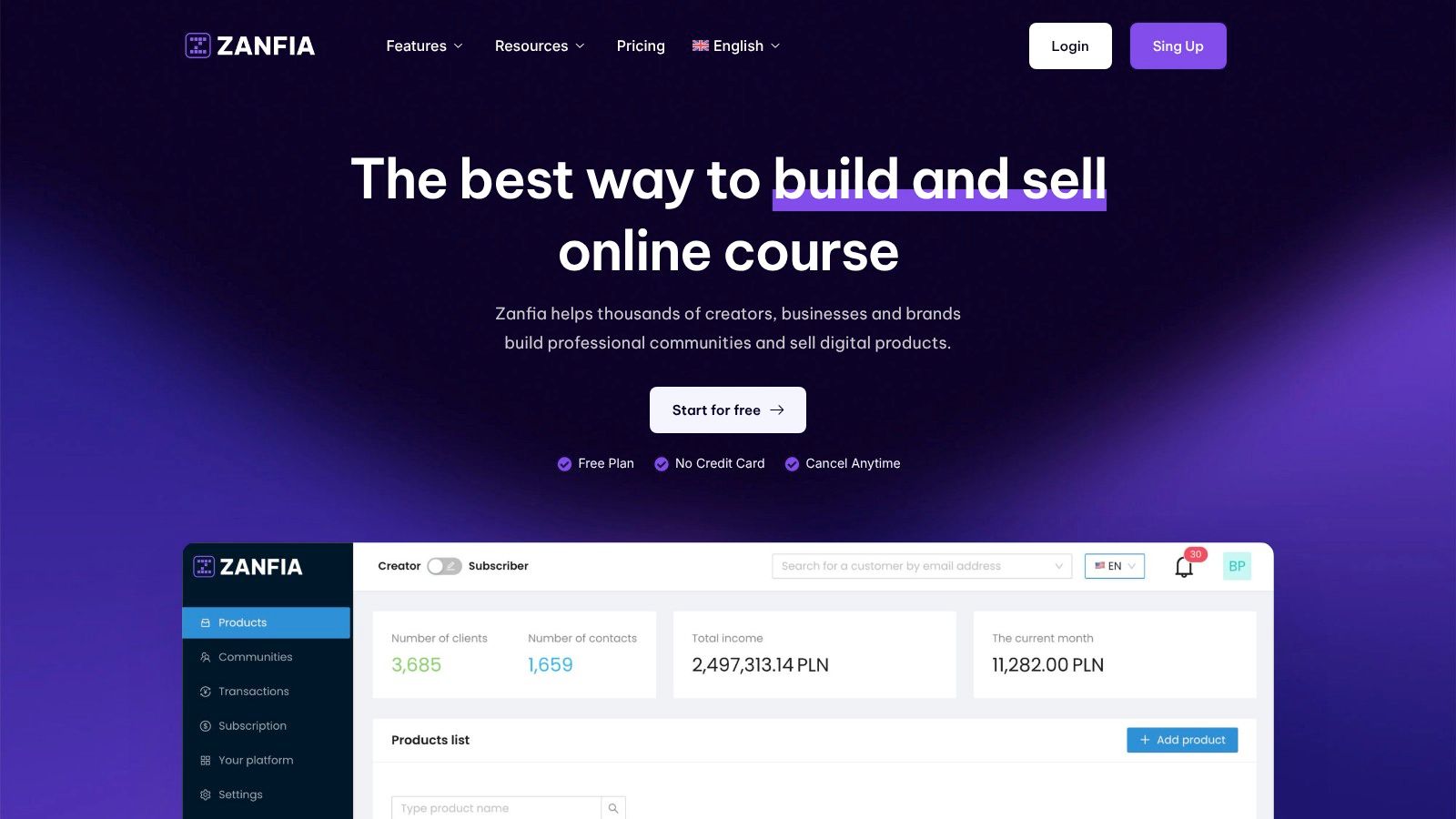
The platform’s revolutionary standout feature is its 0% platform transaction fee model. Where competitors take a cut of every sale, Zanfia relies on a clean SaaS subscription, meaning creators keep 100% of their hard-earned revenue. The only fees are those charged by payment operators themselves. This transparent approach is especially attractive to creators earning PLN 10k–100k+ a month who are tired of commissions eating into their margins. As serial tech investor Artur Kurasiński states, Zanfia is “the most convenient and simplest solution for paid newsletters, courses and community on the Polish market.”
Why It's a Top Choice for Selling Ebooks & More
Zanfia's strength lies in consolidating every aspect of a digital business. You can sell your ebook as a standalone download or bundle it with a companion course featuring native video hosting, eliminating the need for costly services like Vimeo. You can also use the ebook as an entry point to a paid community with advanced tools like topical discussion channels, keeping your audience engaged under your brand instead of on external platforms like Discord.
Powerful automations save 5–10+ hours a month by instantly granting course access after payment, adding buyers to community channels, and triggering email sequences. With seamless integrations for Polish payment gateways (Stripe, PayU, Przelewy24, BLIK) and automatic invoicing systems (inFakt, Fakturownia), it dramatically simplifies finances and compliance. This deep local insight and white-label control make it a rock-solid choice for Polish experts wanting to build a professional, independent brand.
- Best For: Polish creators, "Business Architects," and "Craft Masters" seeking a professional, integrated solution to scale efficiently while protecting margins and brand identity.
- Key Strength: A 0% platform fee model combined with an all-in-one ecosystem for courses, communities, and e-commerce under a creator’s custom domain.
- Pricing: A clean SaaS subscription model with zero platform transaction fees on sales.
- Website: https://zanfia.com
2. Amazon Kindle Direct Publishing (KDP)
Amazon Kindle Direct Publishing (KDP) is the undisputed giant in the world of ebook distribution. As the official self-publishing portal for Amazon's Kindle Store, it offers authors unparalleled access to the largest ebook-buying audience on the planet. If your primary goal is to reach the maximum number of potential readers, especially in the U.S. and major international markets, KDP is an essential platform for selling your ebook.
The platform operates on a straightforward royalty model, giving you a choice between 70% and 35% tiers based on your ebook’s price and sales territory. While the 70% option is more lucrative, it comes with "delivery fees" that are deducted from your earnings, which can significantly impact profits on large, image-heavy files. KDP also provides powerful built-in promotional tools, such as Kindle Countdown Deals and free book promotions, to help boost visibility. For a detailed walkthrough of the entire publishing process, consult this comprehensive guide on .
For authors seeking even more exposure, the optional KDP Select program enrolls your ebook in Kindle Unlimited, a subscription service for avid readers. However, this requires a 90-day exclusivity commitment to Amazon, meaning you cannot sell your digital book elsewhere during that period. Despite its limitations, KDP's massive market share and robust toolset make it an indispensable platform for nearly every independent author. Learn more about how to make and sell ebooks on Zanfia.
3. Apple Books for Authors
For authors targeting the significant market of iPhone, iPad, and Mac users, Apple Books for Authors is a crucial direct-to-reader sales channel. As the official self-publishing portal for the Apple Books store, it offers a streamlined way to sell ebooks directly to a premium, tech-savvy audience deeply embedded in the Apple ecosystem. While its U.S. market share is smaller than Amazon's, its global reach and dedicated user base make it an important platform for any author's distribution strategy.
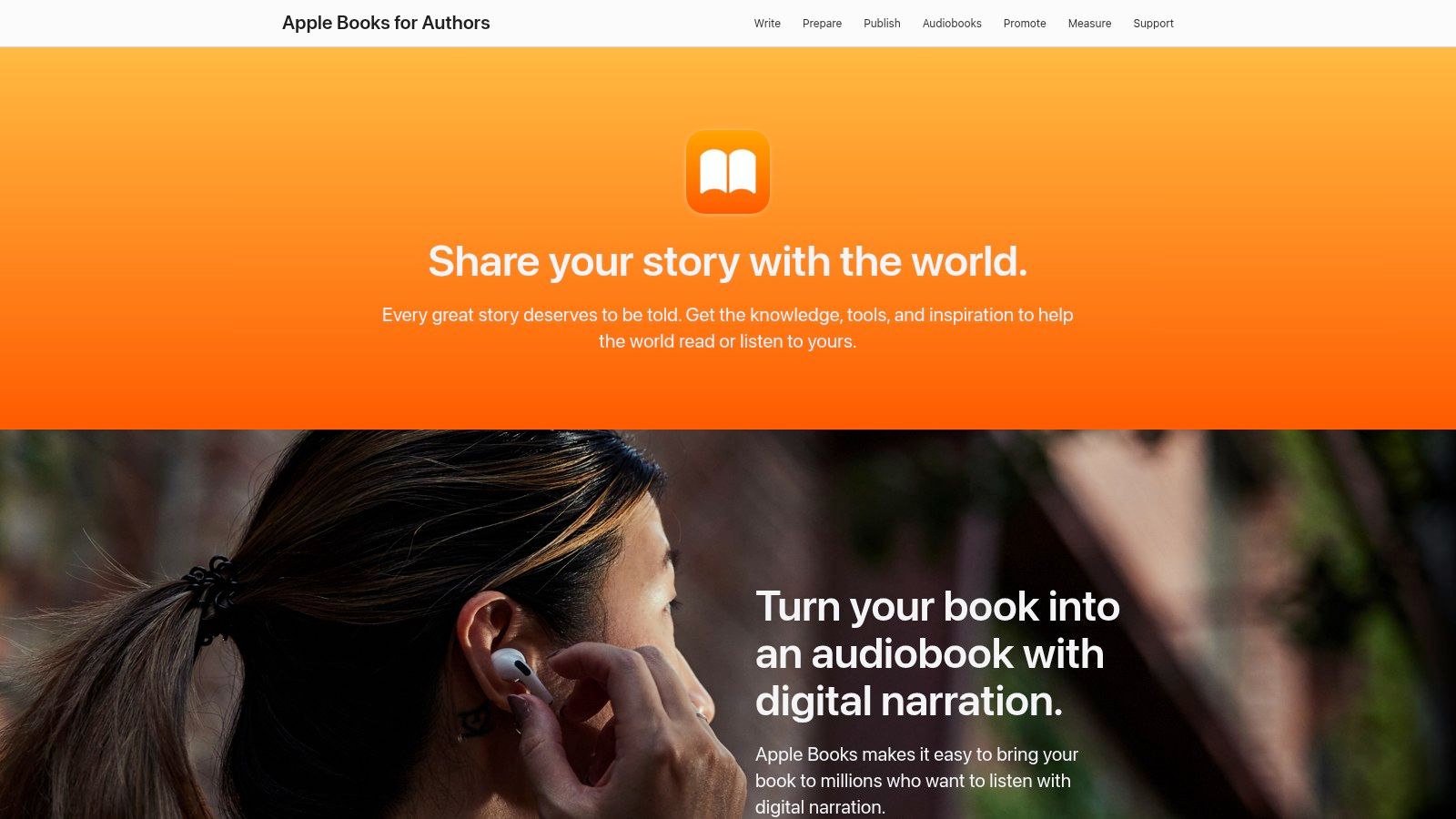
The platform’s standout feature is its remarkably simple and author-friendly royalty structure. Apple offers a flat 70% royalty on every ebook sold, regardless of its price or sales territory. Crucially, there are no "delivery fees," which makes it a highly profitable option for selling large, image-heavy ebooks like photography collections, cookbooks, or textbooks. Authors also retain full control over pricing and promotional schedules through an intuitive dashboard that provides next-day sales data.
Unlike some competitors, Apple Books does not require exclusivity, allowing you to sell your ebooks on other platforms simultaneously. This freedom, combined with its strong ecosystem tools, including support for digital narration and audiobooks, makes it an attractive and flexible option. While you may need to invest in Apple-specific promotional efforts to maximize visibility, the predictable high royalty rate and access to a loyal audience make Apple Books a powerful tool for diversifying your income and finding new readers.
4. Google Play Books Partner Center
As the portal to one of the world's largest mobile ecosystems, the Google Play Books Partner Center is a vital platform for authors aiming for extensive international reach. It allows you to sell your ebooks directly to a massive global audience of Android and web users, making it an excellent complement to other major retailers like Amazon and Apple. If your goal is to tap into emerging markets and ensure your book is accessible on the dominant mobile operating system, this platform is a must-use channel.
The platform offers a non-exclusive agreement, giving you the freedom to publish your work elsewhere simultaneously. It supports both EPUB and PDF formats, providing flexibility for different types of content, from standard novels to image-rich guidebooks. The royalty structure is generally 70% in most of its supported countries, though this rate can drop to 52% in certain regions, so it's important to review the specific terms for your target markets.
One key consideration is Google's dynamic pricing model. To remain competitive, Google may automatically discount your ebook's price to match sales on other platforms, which can affect your earnings per sale. Despite this, its powerful global infrastructure and seamless integration with the Google ecosystem make it an indispensable part of a wide distribution strategy for any author looking to maximize their book's availability. Learn more about how to make and sell ebooks on Zanfia.
5. Kobo Writing Life (KWL)
For authors looking to expand their reach beyond Amazon's ecosystem, Kobo Writing Life (KWL) is a premier destination. As the direct publishing arm of Rakuten Kobo, this platform offers a powerful way to tap into a substantial global audience, particularly in markets like Canada where Kobo has a dominant presence. If a key part of your strategy involves diversifying your sales channels and finding readers in international territories, Kobo is an essential addition to your list of places where you can sell ebooks.
KWL features a competitive royalty structure, offering 70% on ebooks priced at $2.99 or higher and 45% for those priced below. The user-friendly interface and clear reporting dashboards make managing your titles and tracking sales straightforward. The platform also includes built-in promotional tools, allowing authors to schedule merchandising opportunities to boost visibility within the Kobo store. This feature requires proactive participation but can yield significant results when used effectively.
One of KWL’s most significant advantages is its partnership with OverDrive, the leading digital distributor to public libraries. By publishing through KWL, your ebook becomes available for purchase by thousands of libraries worldwide, creating a valuable additional revenue stream and introducing your work to a new audience of avid readers. While its U.S. market share is smaller than Amazon's, Kobo's strong international footprint and unique library access make it an indispensable platform for authors serious about building a global career. Find out more at the official Kobo Writing Life website.
6. Barnes & Noble Press (NOOK)
Barnes & Noble Press serves as the official self-publishing portal for the NOOK e-reader, a well-known brand in the U.S. book market. While its global reach doesn't rival Amazon's, it provides a crucial and reputable answer to the question of where can I sell ebooks to a dedicated audience of American readers. For authors looking to diversify their distribution channels beyond a single dominant platform, B&N Press offers a straightforward and valuable alternative.
The platform's main appeal lies in its simplicity and favorable terms. It offers a flat, non-exclusive 70% royalty rate on most ebook price points, which is highly competitive and easy to calculate without complex delivery fees. This clear-cut model, combined with faster payments made just 30 days after the month of sale, makes it an attractive option for authors focused on the U.S. market who prioritize predictable income and quick cash flow.
While the NOOK ecosystem is smaller than Kindle's, its strong brand recognition as America’s largest retail bookseller provides a degree of built-in trust and authority. Success on the platform often requires proactive marketing, as visibility can be more challenging to achieve without leveraging external promotion. However, for authors pursuing a "wide" distribution strategy, listing on Barnes & Noble Press is an essential step to reach loyal NOOK readers.
7. Draft2Digital (Aggregator/Distributor)
Draft2Digital simplifies the process for authors who want to "go wide" and sell their ebooks across multiple online retailers without managing each one individually. As a leading ebook aggregator, it acts as a single point of entry to a vast network of stores, including major players like Apple Books, Barnes & Noble, Kobo, and even library services. This makes it an excellent choice if you're looking for where to sell ebooks beyond Amazon's ecosystem but want to avoid the administrative headache of multiple uploads and dashboards.
The platform is known for its user-friendly interface and author-centric tools, such as free automatic ebook formatting and a universal book link (Books2Read) that directs readers to their preferred store. Draft2Digital operates on a revenue-share model with no upfront costs, taking approximately 10% of the ebook’s list price after the retailer takes its cut. This fee is the trade-off for the convenience of centralized sales reporting, royalty payments, and distribution management.
While this aggregator model means slightly lower net royalties compared to uploading directly to each retailer, the time saved is a significant benefit for many authors. The primary drawback is the lack of direct control over individual store promotions, as you are working through a middleman. However, for efficient, wide distribution with robust support, Draft2Digital is a top-tier solution. Find out more about how aggregators fit into the broader landscape of the best platforms to sell digital products.
8. Smashwords Store
The Smashwords Store is the direct-to-reader storefront for one of the original independent ebook aggregators. Now part of Draft2Digital, it offers authors a way to sell directly to an engaged, niche readership while earning some of the highest royalties available. If you're looking for an additional sales channel beyond the major retailers and want to maximize your profit on every sale, listing on the Smashwords Store is an excellent strategic move for authors wondering where can I sell ebooks.
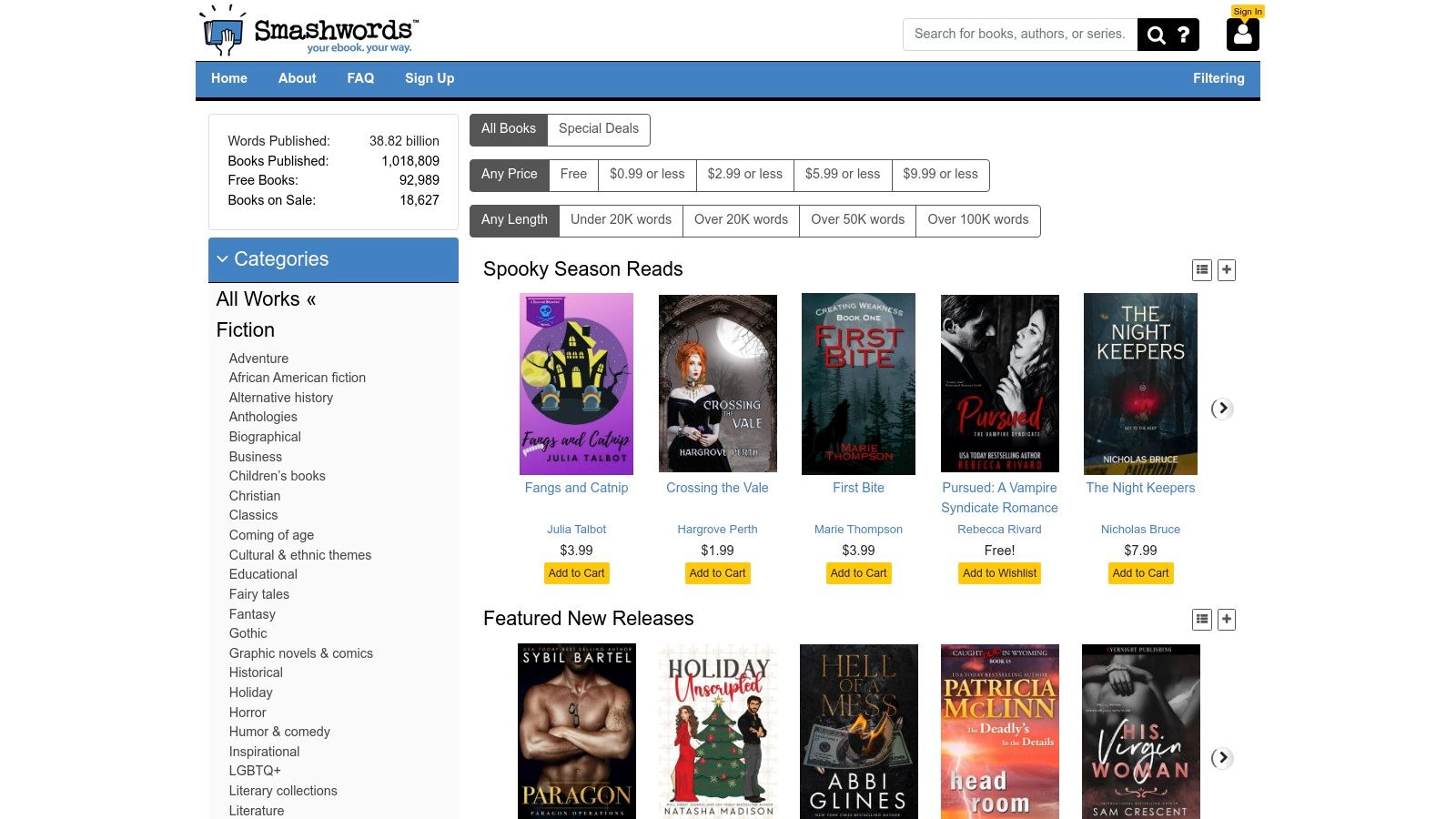
What makes this platform stand out is its author-friendly royalty rate, which can reach over 80% of the list price after payment processing fees. While you cannot upload directly to the store and must manage your titles through the Draft2Digital dashboard, the process is seamless. Authors gain access to exclusive promotional tools like custom coupon codes and participation in site-wide sales events, such as the annual Read an Ebook Week, which can significantly boost visibility and sales.
Although its audience is smaller than giants like Amazon or Apple, the Smashwords Store has a loyal following of readers who specifically seek out independent authors. This creates a more focused marketplace where your work can find a dedicated audience. For authors already distributing through Draft2Digital, opting into the Smashwords Store is a simple and highly profitable addition to a wide distribution strategy, offering a direct connection to a community that champions indie publishing. You can learn more about its offerings at https://www.smashwords.com.
9. Gumroad
Gumroad is a streamlined e-commerce platform built specifically for creators who want to sell directly to their audience. It stands out by simplifying the entire process of selling digital products, including ebooks, making it an excellent choice if you're looking for a quick and easy way to get your work to market. The platform handles payment processing and product delivery, allowing authors to focus on creating and marketing their content without getting bogged down by technical complexities.
One of Gumroad's most compelling features is its role as a "Merchant of Record," meaning it manages global sales tax and VAT compliance on your behalf, a significant advantage for creators with a worldwide audience. The platform operates on a simple transaction fee model with no monthly costs, charging a 10% flat fee on each sale. This straightforward approach makes it an accessible option for new authors. Gumroad also supports unique pricing models like "pay-what-you-want," giving you flexible ways to monetize your ebook and build a loyal readership. To better understand how platforms like this operate, you can find more insights on how to sell digital goods online.
While the platform is incredibly user-friendly and gives you full ownership of your customer data (emails), the fees can be higher than some alternatives, especially if your sales are driven by its 'Discover' feature, which incurs a 30% fee. However, for authors prioritizing speed, simplicity, and direct audience connection, Gumroad offers a powerful and hassle-free solution for selling ebooks.
10. Payhip
Payhip is an all-in-one e-commerce platform designed specifically for creators selling digital products, including ebooks. It offers a streamlined storefront solution that allows you to sell directly to your audience while handling crucial back-end tasks like secure file delivery and EU/UK VAT collection. If your goal is to build your own brand and maintain a direct relationship with your customers, Payhip provides an excellent, low-friction entry point for selling your ebooks.
The platform's pricing is highly accessible, featuring a free plan where you only pay a 5% transaction fee, in addition to standard Stripe or PayPal fees. As you grow, you can upgrade to paid plans that reduce this fee to 2% or even 0%, making it a scalable solution. Payhip stands out by offering its full suite of marketing tools on all plans, including coupons, affiliate marketing capabilities, and email marketing integrations. This empowers even new sellers with powerful promotional features from day one.
While Payhip gives you the tools to sell, you are responsible for driving your own traffic to your store. This makes it ideal for authors with an existing audience or a solid marketing strategy. The trade-off for this responsibility is complete control over your customer data and branding, a key advantage over traditional marketplaces. Learn more about the various options in this guide to platforms to sell digital products.
11. Etsy
While primarily known for handmade goods and crafts, Etsy has emerged as a surprisingly powerful marketplace for selling specific types of ebooks. It's an ideal choice if your digital product is visually driven or serves a niche audience, such as planners, workbooks, craft guides, or recipe collections. The platform offers direct access to a massive, active buyer base already in the mindset of making unique and creative purchases, making it a great place to find customers if you're wondering where can i sell ebooks.
Etsy simplifies the process with automated digital file delivery, sending your ebook to the customer immediately after purchase. The fee structure is straightforward, starting with a $0.20 listing fee per item, followed by a 6.5% transaction fee on the total sale price. While this fee model can accumulate, especially with added payment processing and optional advertising costs, the platform's built-in audience and search functionality provide significant discovery potential that is hard to replicate on your own.
For authors of traditional, text-heavy novels, Etsy might not be the best fit due to intense competition from visually-focused products. However, for creators with niche, graphical ebooks, it offers a ready-made storefront with minimal technical setup required. Leveraging Etsy's marketplace can be an effective way to generate sales and can also be used as a tool to grow your direct audience. In fact, many successful sellers use their Etsy presence as a stepping stone to build their email list on Zanfia for long-term customer relationships.
12. Leanpub
Leanpub is a unique platform built by and for authors, particularly those in the tech and business fields who favor an iterative "publish early, publish often" approach. It serves as both an ebook store and a powerful authoring workflow, allowing creators to write in plain text (like Markdown) and generate beautiful ebooks. This focus on process makes it an excellent choice for in-progress books, technical manuals, and content that requires frequent updates.
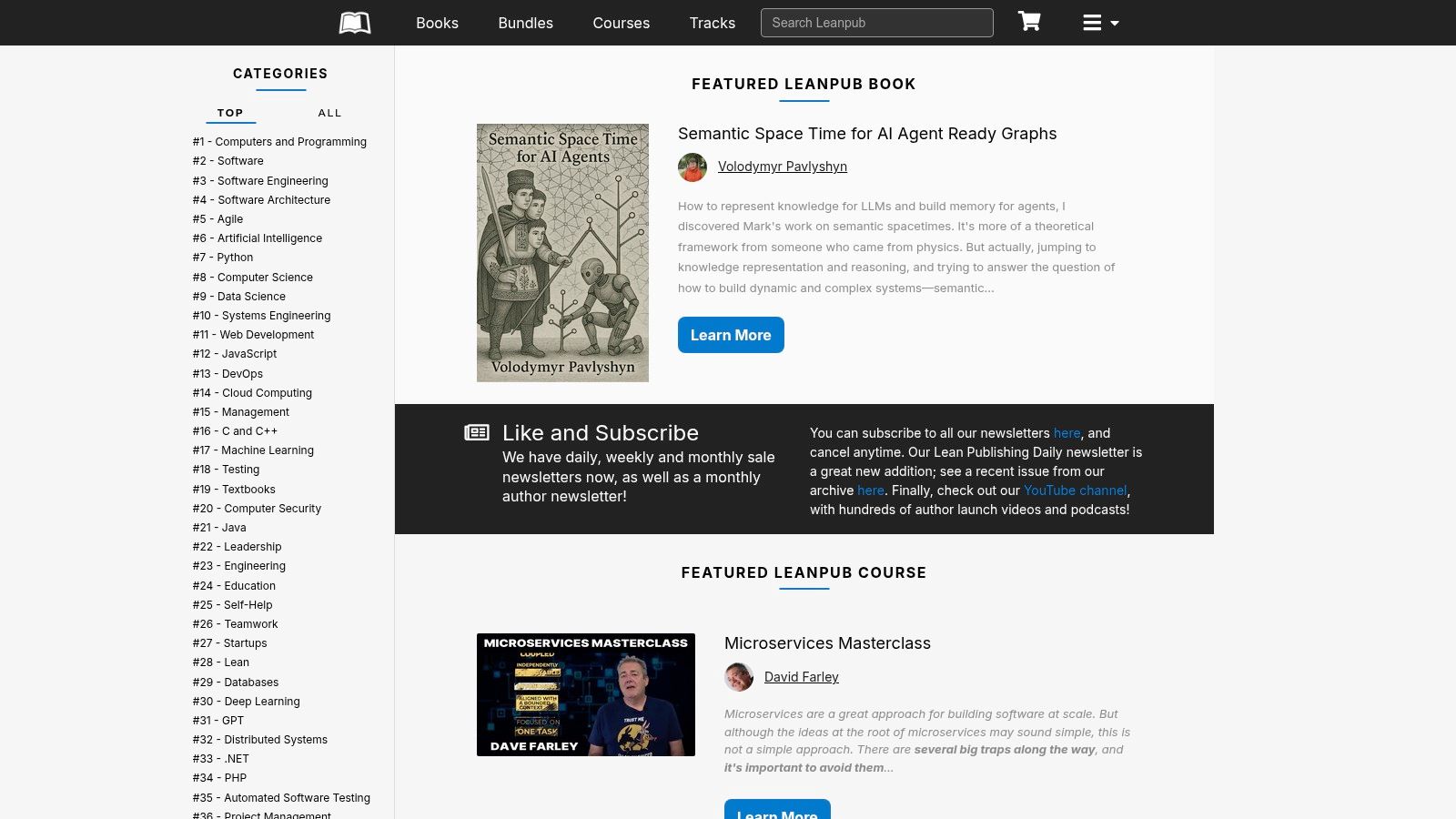
The platform’s economics are exceptionally author-friendly, offering an 80% royalty on sales. A standout feature is its variable pricing model, where authors set a minimum and a suggested price, empowering readers to pay what they feel the book is worth. This, combined with robust coupon tools and the ability to offer free updates for life, fosters a strong, direct relationship between author and reader. Leanpub is also integrated with popular tools like GitHub, making it a natural fit for developers writing technical documentation.
While its audience is more niche compared to massive retailers like Amazon, Leanpub excels for authors who already have an established following. If you're looking for where can I sell ebooks directly to a dedicated community that values in-depth, evolving content, Leanpub offers a powerful and financially rewarding environment. The platform is less suited for general fiction authors seeking broad, casual discovery but is a top-tier choice for non-fiction and technical writers. Learn more at https://leanpub.com.
Top 12 Ebook Selling Platforms Comparison
| Platform | Core Features/Characteristics | User Experience/Quality Metrics | Value Proposition | Target Audience | Price Points 💰 |
|---|---|---|---|---|---|
| 🏆 Zanfia | All-in-one: courses, newsletters, communities, sales ✨ | ★★★★☆ Analytics & automation tools | No commissions, scalable plans 💰 | 👥 Creators, businesses, brands | From $18/mo, flexible tiers 💰 |
| Amazon Kindle Direct Publishing (KDP) | Massive Kindle Store reach, promo tools | ★★★★ Large audience & sales reports | Global exposure, flexible pricing | 👥 Indie authors, publishers | Royalties 35% or 70% 💰 |
| Apple Books for Authors | 70% royalty, no delivery fees, audiobook support | ★★★★ Simple royalties & dashboards | Straightforward rates 💰 | 👥 Apple device users | 70% royalties 💰 |
| Google Play Books Partner Center | 70% royalty (varies), EPUB/PDF support | ★★★★ Wide Android/web reach | Broad international distribution | 👥 Global ebook readers | 52%-70% royalty 💰 |
| Kobo Writing Life (KWL) | 70%/45% royalty tiers, library/audiobook access | ★★★★ Good dashboards & promotions | Strong Intl & library reach | 👥 Intl authors & library users | Royalties 45%-70% 💰 |
| Barnes & Noble Press (NOOK) | 70% flat royalty, faster U.S. payouts | ★★★★ Easy payment & brand trust | U.S.-focused, simple royalties | 👥 U.S. authors | 70% royalties 💰 |
| Draft2Digital (Aggregator) | Multi-store distribution, auto-formatting | ★★★★ Unified dashboard & payouts | Saves time, multiple channels | 👥 Authors needing broad reach | ~10% fee on sales 💰 |
| Smashwords Store | High storefront royalties (~80%), promotions | ★★★★ Niche engaged readership | High author take-home | 👥 Indie authors (via aggregator) | High royalties 💰 |
| Gumroad | Direct sales, hosted pages, tax handling | ★★★★ Fast setup & customer access | Pay-what-you-want support | 👥 Creators, direct sellers | Fees 10%+$0.50 or 30% 💰 |
| Payhip | Digital store w/ VAT, coupons, affiliates | ★★★★ Full feature set, instant payout | Great direct-to-consumer tool | 👥 Creators & marketers | Free plan + fees, paid reduce 💰 |
| Etsy | Marketplace for niche digital downloads | ★★★ Easy setup, built-in audience | Good for niche/graphic ebooks | 👥 Crafters, niche ebook sellers | $0.20/item + 6.5% fee 💰 |
| Leanpub | Iterative publishing, markdown, variable pricing | ★★★★ Author-friendly royalties | Ideal for tech/business authors | 👥 Tech & business authors | 80% royalties on sales 💰 |
Choosing Your Path: The Right Platform for Your Creator Journey
Navigating the landscape of ebook platforms can feel overwhelming, but as we've explored, the central question isn't just "where can I sell ebooks?" but rather, "which platform aligns with my long-term business goals?" Your final decision hinges on a strategic trade-off between reach, control, and profitability. The path you choose will fundamentally shape how you connect with your audience, manage your brand, and scale your digital enterprise.
Recapping Your Core Options
We've covered a diverse range of tools, each with a distinct purpose:
- Maximum Reach: For authors prioritizing sheer volume and discoverability, global retail giants like Amazon KDP, Apple Books, and Kobo Writing Life are indispensable. They offer access to massive, built-in audiences of eager readers, but this comes at the cost of lower royalty rates, limited branding control, and virtually no direct relationship with your buyers.
- Simplified Distribution: Aggregators like Draft2Digital serve as a powerful middle ground. They streamline the process of getting your ebook onto multiple retail sites, saving you immense administrative effort. While they take a small percentage, the time saved can be a game-changer for authors managing a large backlist.
- Direct-to-Consumer Sales: Platforms such as Gumroad and Payhip empower you to sell directly from your own website or social channels. This model grants you higher profit margins, full control over pricing and customer data, and the ability to build a direct line of communication with your audience. The trade-off is that you are entirely responsible for driving your own traffic.
Beyond the Ebook: Building a Digital Ecosystem
For the modern creator, an ebook is often just the beginning. It can be a lead magnet for a high-ticket course, an entry-level product in a membership, or one piece of a comprehensive knowledge library. This is where the strategic choice becomes critical. Piecing together different tools for each product type can quickly lead to a fragmented customer experience and a tangled mess of administrative headaches.
This is the precise challenge that an all-in-one platform like Zanfia is built to solve. It re-frames the question from simply selling a single product to building a unified, branded business. By integrating your ebooks with courses, paid communities, and subscription offers under your own domain, you create a seamless journey for your customers. A person who buys your ebook can be automatically invited into a relevant community channel or receive a targeted offer for a follow-up workshop, all within one ecosystem.
This integrated approach is particularly powerful. It moves beyond a simple transaction and fosters long-term relationships, dramatically increasing customer lifetime value. Furthermore, Zanfia's revolutionary 0% platform fee model means you keep 100% of your revenue, a critical advantage for creators tired of seeing their hard-earned income chipped away by commissions. This, combined with powerful automations and deep localization for the Polish market, makes it a standout choice for serious entrepreneurs focused on sustainable growth and brand ownership.
Ultimately, the best platform is the one that supports your vision. Whether you aim to top the Amazon charts, build a simple direct-sales funnel, or create an interconnected digital empire, the right tool is out there. Define your priorities, understand the trade-offs, and choose the path that empowers you to not just sell an ebook, but to build a lasting and profitable brand.
If you're ready to move beyond just selling ebooks and start building a scalable digital business with courses, a community, and memberships, Zanfia offers a truly all-in-one solution. With 0% platform fees and powerful integration tools, it’s designed to help you build your brand and maximize your revenue. Explore how Zanfia can become the central hub for your entire creator journey.