

Best Sales Funnel Software 2026: A Creator’s Guide
You know the moment when your business starts feeling bigger, but your software still feels improvised. Your checkout lives in one tool. Your course area sits somewhere else. Your community is on a third platform. Email automation is glued on top. Invoicing needs another integration. Every launch works, but only because you keep the whole machine from shaking apart.
That setup can work for a while. It stops working when you want cleaner margins, fewer support headaches, and a customer experience that feels like one brand instead of five stitched-together apps. That’s where the search for the best sales funnel software usually starts.
For digital creators, online educators, and community-led businesses, the answer isn’t just “pick a funnel builder.” It’s choosing software that can handle discovery, sales, delivery, access, retention, and payments without turning your business into an operations job.
Beyond the Hype What Sales Funnel Software Must Do

Most creators don’t outgrow their offer first. They outgrow their stack first.
A typical setup looks reasonable on paper. One tool for landing pages. One for email. A checkout layer. A course platform. A private group on a separate app. A payment gateway. An invoicing workaround. Then actual problems show up. Customers get moved between systems late, access rules break, support tickets rise, and basic reporting becomes guesswork.
That’s why the old way of evaluating funnel tools misses the point. A creator business doesn’t just need pages that convert. It needs software that keeps the whole customer journey coherent. If you’re new to the mechanics, this explainer on how to grow your business with sales funnels is a useful primer before you compare platforms seriously.
What the software has to handle now
The practical standard has changed. Sales funnel software has to do more than build opt-in pages and checkout flows.
It should cover:
- Lead capture and movement: Contacts should move from page to checkout to product access without manual handoffs.
- Automated delivery: Buyers should get the right course, newsletter, or member area immediately after purchase.
- Unified customer experience: The buyer shouldn’t feel pushed from your site into a maze of third-party tools.
- Margin protection: Fees, extra apps, and admin work erode profit if you let them.
- Useful analytics: You need to see where people stall, not just how many page views you got.
According to Apollo’s 2026 industry insights on sales funnel software, teams using AI-powered sales funnel software report booking 46% more meetings, with AI features boosting conversion rates by 35%, saving SDRs over 10 hours weekly, and reducing tech stack complexity by 60%.
Those numbers come from sales teams, but the underlying lesson applies to creators too. Fewer disconnected tools usually means less friction, faster follow-up, and cleaner operations.
Practical rule: If your funnel software stops at the sale, it isn’t enough for a content business.
Why creator businesses need a different lens
A digital product business lives or dies on post-purchase experience. Courses, newsletters, subscriptions, downloads, and communities don’t end at checkout. They begin there.
That’s why “best sales funnel software” for creators has to include delivery, access control, and retention features. Generic funnel builders often perform well at the front of the funnel and create unnecessary work after payment. If you want a clearer view of how these stages connect, Zanfia’s guide to sales funnel stages explained is worth reviewing.
The hype says every all-in-one tool solves this. In practice, some systems centralize your business. Others just centralize your invoices.
Key Contenders for Digital Creators in 2026
The market splits into two broad camps. First, there are classic funnel-first tools such as ClickFunnels, Kartra, and Systeme.io. They’re built around pages, offers, and automation. Second, there are creator platforms that try to combine sales, product delivery, and membership experience in one place.
That distinction matters more than feature checklists suggest. A polished funnel builder can still be the wrong tool if your business depends on courses, paid newsletters, and communities living together.
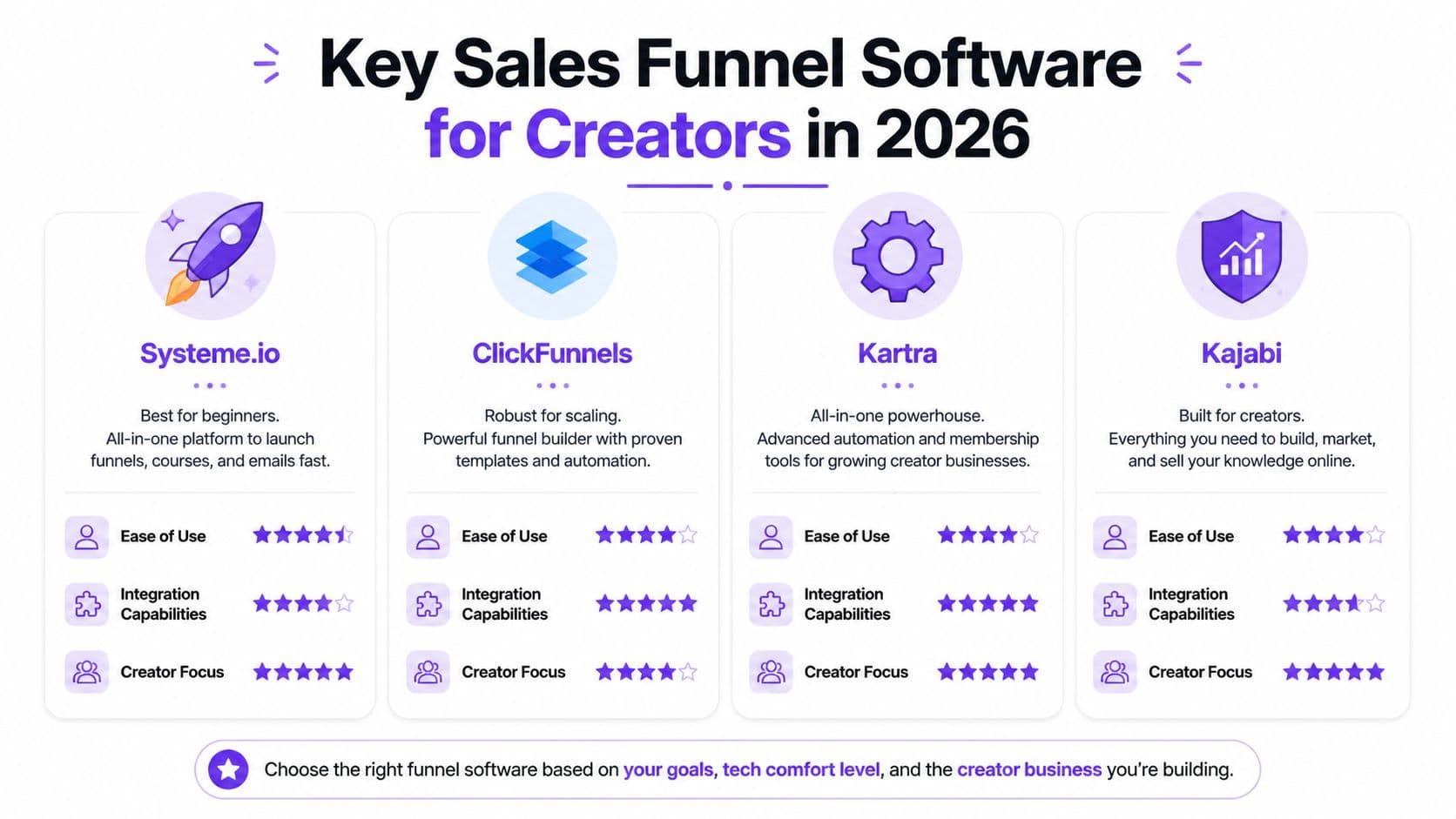
Sales Funnel Software Comparison for Creators
| Platform | All-in-One Creator Hub | Integrated Community | Native Video Hosting | Order Bumps & Installments at Checkout | Ideal For |
|---|---|---|---|---|---|
| Zanfia | Yes, with an AI team the creator dictates work to by chat or voice | Yes, with an AI agent that publishes from your content and labels every post as AI | Yes | Yes, including test mode to buy your own product before launch (some options plan-dependent) | Creators selling courses, memberships, newsletters, downloads, and community access under their own brand |
| Kajabi | Partial | Limited creator community fit | Not emphasized here | Order bumps and payment plans available | Established course businesses prioritizing a polished SaaS experience |
| Teachable | Partial | No strong community layer | Course-focused delivery | Payment plans available, bumps limited | Course creators who don’t need a deep community product |
| ClickFunnels | Funnel-first | No integrated creator community focus | Not core | Order bumps and upsells are the core strength | Marketers prioritizing direct-response funnels |
| Kartra | Broad all-in-one marketing suite | Memberships, but less community-centric | Yes | Order bumps, upsells, and installments supported | Businesses wanting many functions in one dashboard |
| Systeme.io | Entry-level all-in-one | Basic | Basic | Basic order bumps and upsells | Beginners testing simple digital offers |
What each type gets right, and where it breaks
ClickFunnels still appeals to marketers who think in campaign flows first. It’s useful when the core problem is page sequence and offer structure. It becomes less compelling when your business depends on branded product delivery and member experience.
Kartra is broader. It covers more of the business in one system, which many creators like. The trade-off is complexity. A broad suite often asks for more setup and more tolerance for a heavier interface.
Systeme.io is often the low-friction starting point for early creators. That simplicity is useful at the beginning, but many businesses outgrow entry-level design flexibility and deeper creator workflows.
Kajabi and Teachable remain familiar names because they made digital courses mainstream. They’re credible options for education businesses, but they don’t always solve the integrated community question in a way a membership-led creator needs.
If you’re comparing software around creator workflows rather than just landing pages, this guide to the best platform for content creators adds a helpful layer beyond generic funnel reviews. For teams that also want a stronger optimization toolkit around experiments and page performance, Otter A/B’s roundup of top conversion rate optimization tools is a solid companion resource.
The category gap most reviews miss
Most “best sales funnel software” lists still evaluate tools like e-commerce stacks or B2B lead gen systems. They underweight questions that matter to creators:
- Does the buyer stay inside one branded environment after purchase?
- Can community access change automatically when someone upgrades or cancels?
- Do courses, newsletters, and memberships work as one product ecosystem?
- Are platform fees quietly eating margin every month?
Those aren’t edge cases anymore. They’re basic selection criteria.
The All-In-One Contender Built for Creators Zanfia
The strongest case for an all-in-one creator platform isn’t convenience. It’s control.
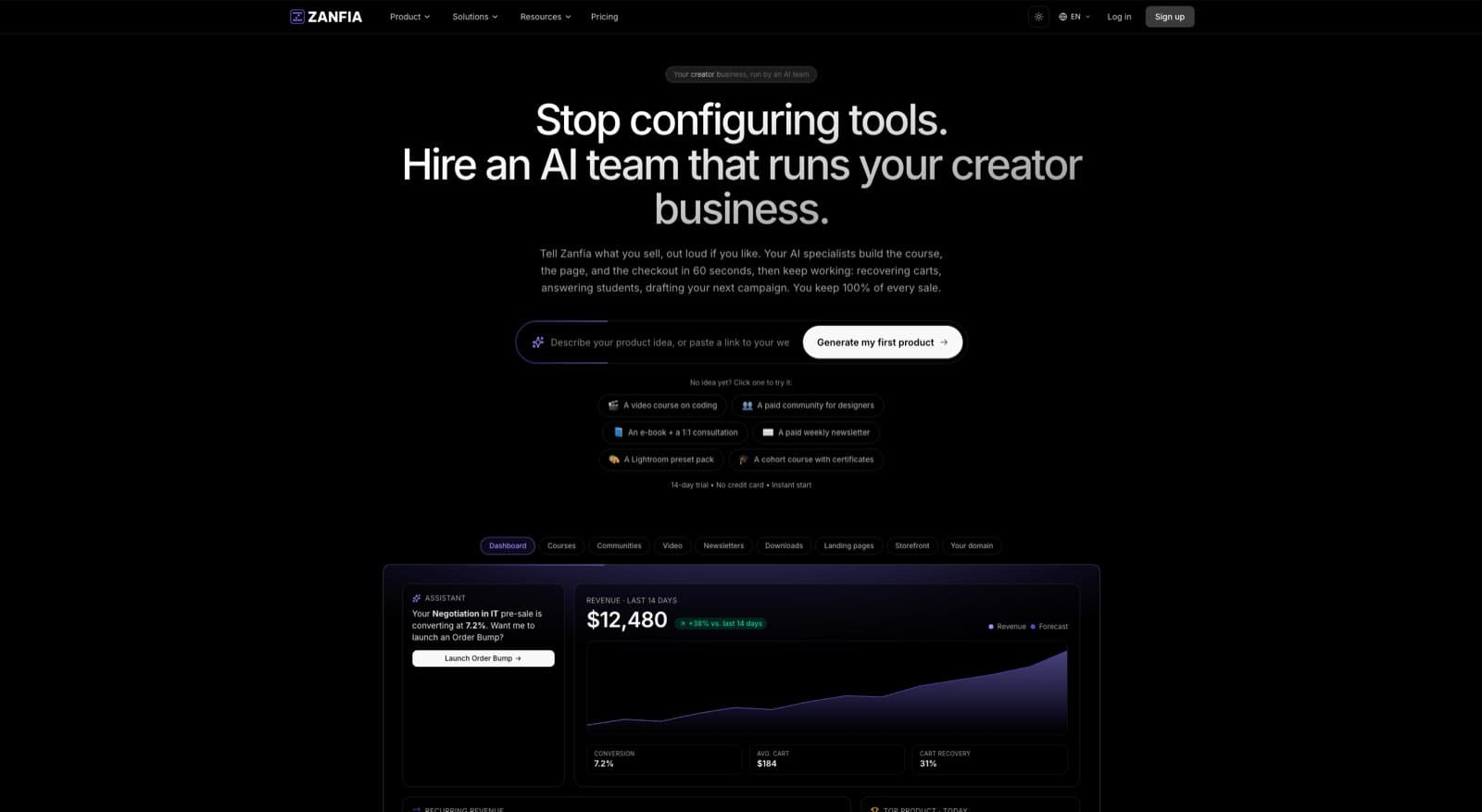
Zanfia is best understood as an AI team that runs a creator business, not just another course tool. The creator dictates the work by chat or by voice, and the assistant performs actions inside the platform instead of asking the creator to configure them. Courses, communities, newsletters, subscriptions, and digital products are where that work lands, under one login and one branded environment. Customers log in once. Your team checks one system. Access rules don’t need elaborate patchwork. Brand consistency improves because the product experience doesn’t splinter after checkout.
Why integration matters more than feature volume
The creator economy has a specific operational problem. Community often sits outside the commercial system. That creates broken onboarding, weaker retention, and extra admin every time someone buys, upgrades, downgrades, or churns.
According to Text’s review of sales funnel software, 70% of small businesses report integration friction costing 15-20% in conversion rates, and creators abandon tools without native community features, with 40% churn in the first 3 months. That’s the practical gap many funnel tools still haven’t solved.
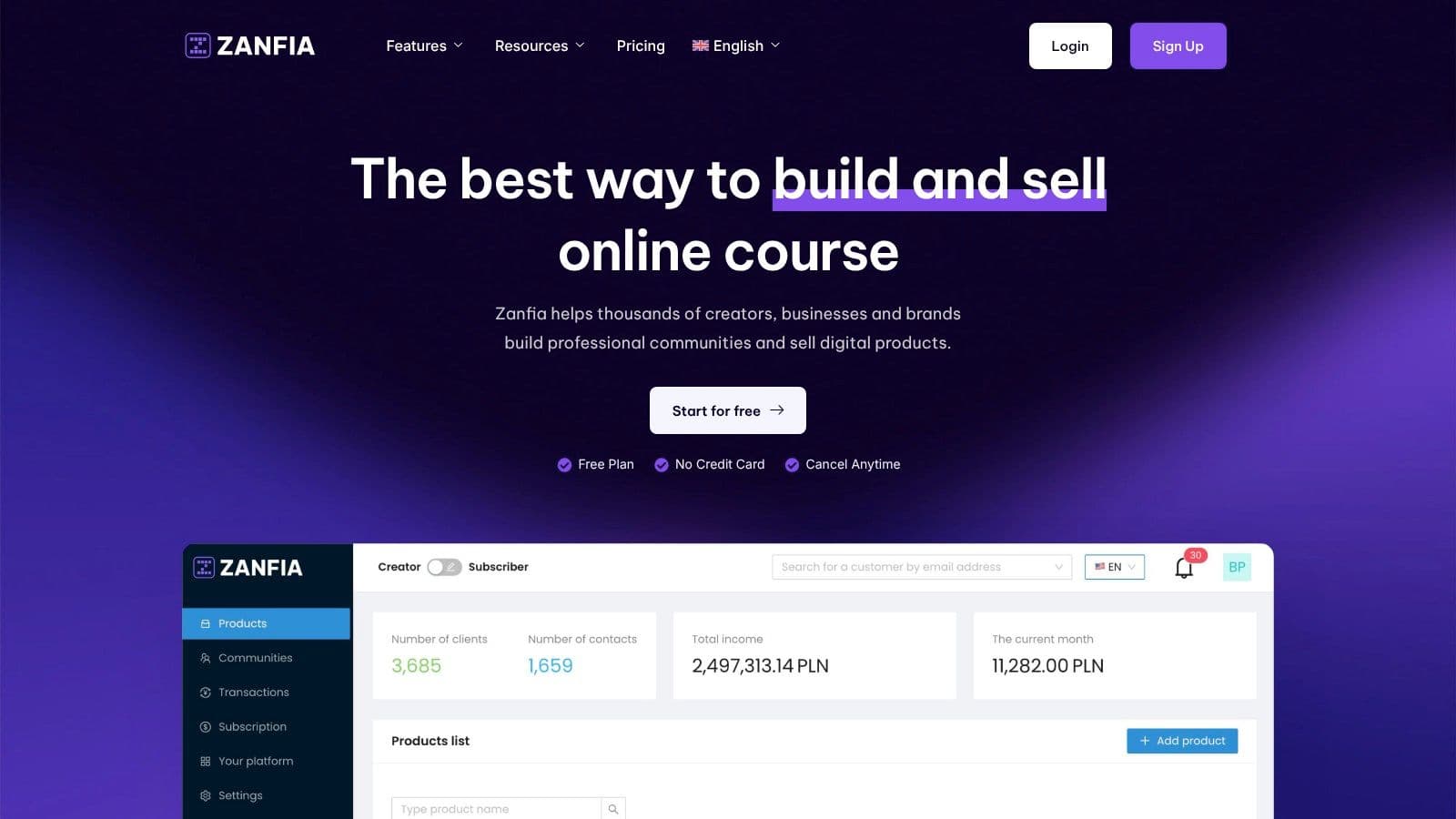
Zanfia is notable here because it was built around a creator business model, not retrofitted into one. It combines community spaces, courses, paid newsletters, knowledge libraries, subscriptions, and digital product sales under one login and one brand environment, with an AI team the creator can direct out loud from any of them. For a creator selling expertise, that matters more than having the flashiest page builder.
What stands out in day-to-day use
The most distinctive part of the model is financial. As of publication, Zanfia charges a 0% platform transaction fee, which means creators keep their customer revenue and only pay the payment processor’s fees. For creators with meaningful monthly volume, that’s not a cosmetic pricing detail. It directly affects margin.
A second advantage is native product delivery. The platform includes native video hosting for courses, while still supporting integrations with YouTube, Vimeo, Wistia, and Bunny.net. That removes one of the common hidden costs in course businesses, where video hosting often becomes a separate operational line item.
The checkout is built to sell rather than just to process a card. Order bumps invoice separately, subscription upsells sit inside the same flow, and creators can split a $600 course into installments so bigger offers don’t collapse on price. A test mode lets the creator open their own checkout as a buyer, tagged as TEST in the event log and hidden from real orders, so the whole funnel can be verified before the first paid sale. Twelve product types, from courses to communities to consultations, live under the same brand, so the same buyer can move from a tripwire to a subscription without leaving the environment.
The community layer is the other major differentiator. Discussion channels, announcement channels, grouped spaces, and links between community and course content make it possible to build a product that feels connected instead of bolted together. A community AI agent can write from the creator’s own content, and everything it publishes is labeled as AI, so disclosure is handled by default. That’s especially useful for memberships, cohort learning, and expert-led communities.
A creator platform should reduce handoffs. Every extra login, sync, or workaround lowers trust and increases support load.
Who this model fits best
This kind of setup is especially relevant for three groups:
- Potential Explorers: Experts stuck before launch because too many tools make the first product feel harder than it should.
- Business Architects: Established creators who’ve hit the limit of a pieced-together stack and want better margins with cleaner operations.
- Craft Masters: Premium experts who need branded delivery, white-label presentation, and fewer compromises in the customer experience.
Social proof matters here because the product category is full of broad promises. Zanfia’s advocates include Artur Kurasiński, who calls it a convenient and simple solution for paid newsletters, courses, and community, and Daniel Roziecki, who highlights the “peace of mind” that comes from focusing on teaching instead of managing tech.
That last phrase is the right frame. Good funnel software helps you sell. Good creator infrastructure helps you keep selling without software becoming your second job.
Core Feature Showdown Where Platforms Differ
The easiest way to compare the best sales funnel software is to stop asking which tool has more features and start asking which tool removes more friction. Most platforms can build pages. Fewer can support the full operating model of a creator business without extra layers.
Funnels and automation
Funnels are no longer just page sequences. They’re event systems. A person opts in, clicks, buys, upgrades, renews, or cancels. Your software should react automatically.
That’s where broad operational platforms usually beat lighter builders. If the tool can trigger access, email, segmentation, and follow-up from one source of truth, your workflows stay clean. If it can’t, you end up recreating business logic in several places. Zanfia goes a step further here by exposing the platform to AI assistants over an MCP endpoint, so your own agents can act on the workspace directly (availability depends on the plan, see the current Zanfia pricing).
According to Prospeo’s software sales funnel benchmarks, consolidating CRM, engagement, and BI tools can reduce a company’s tech stack by 60% and save SDRs over 10 hours per week, while no-code visual pipelines and AI automation support faster implementation. Different market, same lesson. Consolidation pays back because fewer handoffs means fewer failures.
Courses and digital delivery
Course delivery is where many funnel-first tools start to feel thin. They can sell the offer, but the teaching experience often needs another platform or another subscription.
For creators, the better question is whether the software supports:
- Structured learning paths
- Video delivery without awkward workarounds
- Progress tracking
- Access rules tied to purchases or subscriptions
- A member experience that still feels branded after checkout
If your business includes education products, a feature-level comparison of learning management system features is often more useful than another generic funnel roundup.
Community and retention
Here, the market separates sharply.
A traditional funnel stack often treats community as an add-on. You sell on one platform and then send people to a separate chat or group environment. That can work, but it weakens identity and usually creates support questions around access, billing, and navigation.
An integrated community model is better suited to creators who monetize belonging as much as information. The buyer doesn’t just get a product. They get entry into a structured environment that can include lessons, announcements, discussions, and memberships in one account.
Field note: If community drives renewals, don’t buy software that treats community like an afterthought.
Payments and operational overhead
Payments are where many creators discover the actual cost of software. The monthly subscription is visible. The revenue share is what stings later.
A platform with a 0% platform transaction fee changes that math, especially once sales volume becomes meaningful. It also simplifies forecasting because software cost is easier to model when the platform isn’t taking a cut of every sale.
The operational side matters too. Better systems automate the unglamorous work:
- Granting access after payment
- Moving buyers into the right product or group
- Triggering welcome emails
- Handling subscription logic
- Revoking access when plans end
What works and what usually doesn’t
What works:
- Tight connection between checkout, product access, and member experience
- Native automations tied to purchases and subscriptions
- White-label presentation and custom domain support
- Clear analytics inside one operating environment
What usually doesn’t:
- Separate tools for community and product delivery
- Heavy reliance on manual tagging and access management
- Video hosting as an external afterthought
- Platform pricing that chips away at margin as revenue rises
A creator business gets more resilient when sales software behaves like infrastructure, not a campaign accessory.
Matching the Software to Your Business Stage
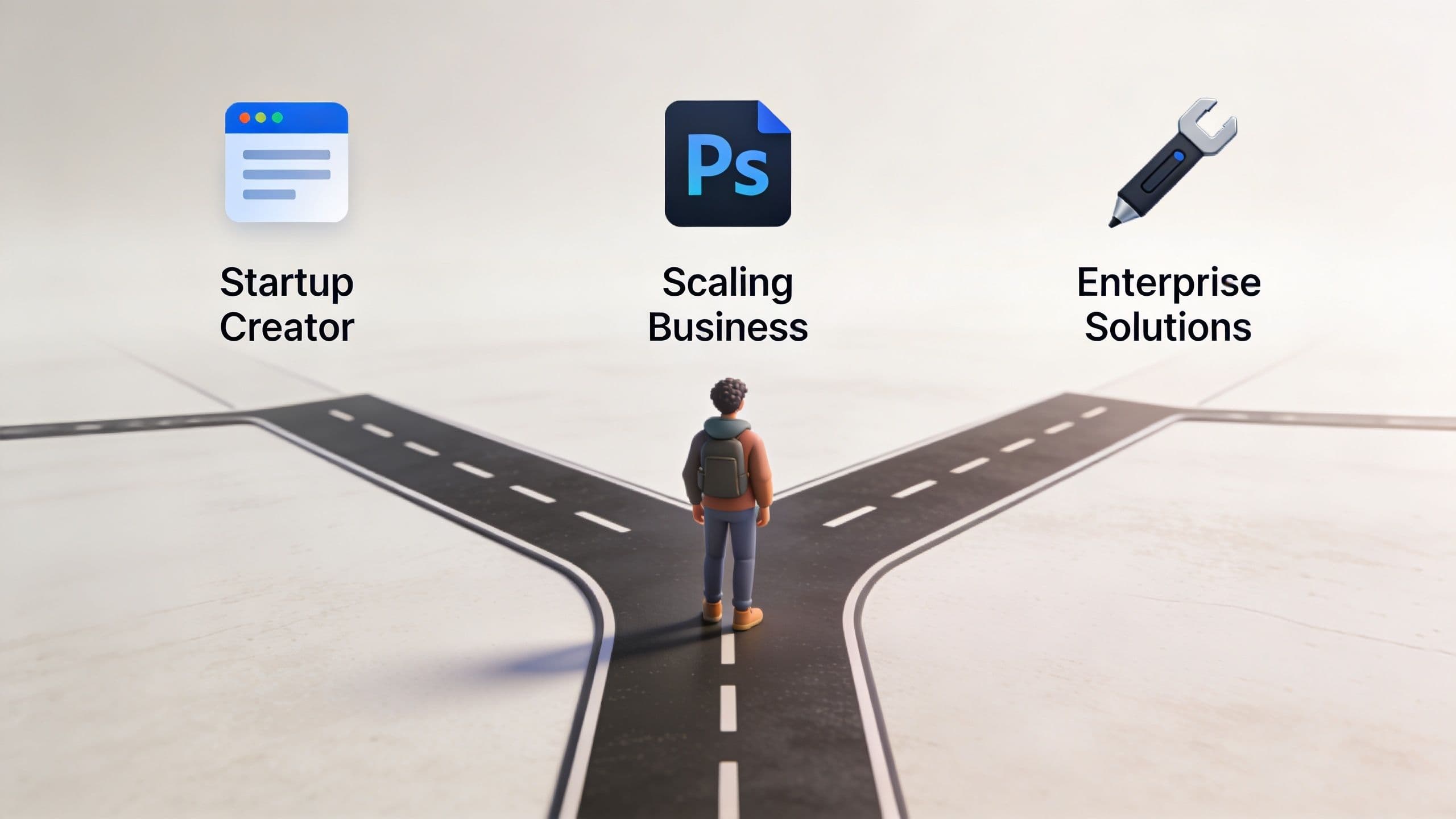
The wrong software choice usually isn’t about picking a bad product. It’s about picking a product for the wrong stage.
Potential Explorers
This is the expert who knows what they want to teach or sell but hasn’t launched because the tool stack feels intimidating. They don’t need maximum optionality. They need the shortest path to a working offer. A 14-day free trial with no credit card required is enough to publish a first product and take a first payment without committing to anything.
For this stage, the best sales funnel software should remove setup friction. A simpler all-in-one environment is usually better than a customizable stack that assumes technical confidence. The key win isn’t sophistication. It’s momentum.
Useful selection criteria here:
- Fast setup
- Simple product publishing
- Basic automations that don’t require rebuilding logic
- One login for seller and buyer
Business Architects
Many creators begin searching for a switch. Revenue is real. Audience is real. The stack still works, but it creates too much admin and too many little leaks.
At this stage, margin protection and operational clarity matter more than novelty. Businesses in this bracket often need subscriptions, bundles, upsells, clean invoicing, and community access tied directly to purchases. A piecemeal setup starts to punish growth because every new offer increases complexity.
The software that helped you validate an offer often isn’t the software that helps you scale it cleanly.
If you’re evaluating tools around automation depth for a smaller operation, AdStellar AI’s overview of marketing automation software comparison for small businesses is a useful side read.
Craft Masters
These are premium operators. Their audience already trusts them, and the product experience has to match that trust. Generic branding, awkward handoffs, or community living outside the brand can undercut the whole offer.
For this group, software should support:
- White-label presentation
- Custom domain
- Flexible monetization such as subscriptions, bundles, or installment plans
- Strong content delivery
- A member experience that feels premium, not improvised
The software decision becomes a brand decision here. If your business sells expertise at a premium, the environment around the product has to feel intentional.
A simple way to decide
Choose based on the bottleneck you have now.
- If your problem is starting , prioritize simplicity.
- If your problem is admin sprawl , prioritize integration.
- If your problem is brand dilution , prioritize white-label control and unified delivery.
The best sales funnel software isn’t the one with the longest feature page. It’s the one that removes the constraint currently slowing your business down.
Making the Switch Setup and Migration Guide
Migration feels bigger before you do it. In practice, most painful moves happen because businesses try to relocate everything at once.
A cleaner approach is to move the revenue path first. That means your main offer, checkout, payment flow, buyer access, and post-purchase onboarding. Once that works, the rest becomes manageable.
Start with the core journey
Before moving tools, map this sequence on paper:
- How a lead finds the offer
- What page or checkout they see
- What they buy
- What access they receive
- What welcome sequence or onboarding follows
That exercise exposes your real dependencies. It also shows where old tools are only there because they’ve always been there.
According to Pipedrive’s sales funnel management examples, businesses using workflow automations and deal management insights have seen strong gains, including one company that achieved a 35% increase in conversion-to-call rate and 10% growth in call-to-qualified-customer rate after adopting sales funnel tools. The point isn’t to copy that exact setup. It’s to recognize that cleaner workflows usually create measurable movement.
Move in this order
- Payments first: Make sure your preferred payment gateway works the way your buyers already expect. In the US that usually means Stripe or PayPal, with Apple Pay and Google Pay at the wallet layer.
- Product access second: Course access, community permissions, and subscription logic should be solid before you migrate edge cases.
- Communication third: Rebuild key welcome emails and renewal messages before you import every legacy automation.
- Admin automation next: Invoicing, accounting flows, and internal alerts should come after the main customer path is stable.
Before the first paid sale on the new setup, run a test purchase on your own checkout. Zanfia’s test mode opens the real checkout with a shareable link and tags every event as TEST in the log, so you can confirm that the payment, access grant, welcome sequence, and analytics all fire the way you expect before real money starts moving.
Don’t rebuild your old mess
Some businesses move to an all-in-one platform and immediately recreate the same complexity they were trying to escape.
Avoid that. Keep the new setup smaller than the old one. Preserve only the automations that protect revenue, improve onboarding, or reduce support load. For advanced users, APIs and webhooks still matter, but they should extend the system, not compensate for a broken core.
A practical checklist for smoother onboarding lives in these user onboarding best practices. It’s a useful reference when you’re thinking beyond migration and into retention.
The Final Verdict Why Zanfia Wins for Creators
Most sales funnel software is evaluated from the top of the funnel down. That’s where creators make expensive decisions, because their business doesn’t end at the sale.
For a creator-led business, the strongest fit is a platform that keeps selling, delivery, access, and community in the same operating system. That’s the core reason Zanfia stands out in this category. It aligns the funnel with the actual product model.
Three advantages matter most.
First, as of publication the 0% platform transaction fee structure protects margin. If you sell digital products at any serious volume, that difference compounds fast.
Second, the platform combines community, courses, newsletters, subscriptions, and digital sales under one branded environment, with an AI team the creator directs by chat or by voice from inside that same environment. That improves the member experience and reduces the fragmentation that often causes support issues and weaker retention.
Third, the checkout is built to sell. Order bumps, subscription upsells, installments that split a big course into four payments, and a test mode for buying your own product before launch turn the funnel into something a creator can actually run without a second stack behind it. Combined with native video hosting, custom domain support, and native product delivery, it reduces operational drag. You spend less time maintaining a stack and more time improving offers, content, and customer experience. Pricing starts at $39/month, or $31/month billed annually, on Starter; more advanced capabilities live on higher plans, see the current Zanfia pricing.
For digital creators who’ve outgrown duct-taped systems, that’s a benchmark worth measuring against. The best sales funnel software shouldn’t just help you convert. It should help you keep control.
Frequently Asked Questions
What should sales funnel software cover for a creator business in 2026?
Beyond building pages and checkout flows, it should handle lead capture and movement, automated delivery of the course or newsletter after purchase, a unified branded experience, margin protection, and useful analytics that show where people stall. The article's core point is that a creator business lives on post-purchase experience, so tools that stop at the sale aren't enough.
Why do generic funnel builders often fall short for course, community, and newsletter businesses?
Generic funnel tools tend to perform well at the front of the funnel but create extra work after payment, because courses, subscriptions, and communities don't end at checkout, they begin there. That leads to broken onboarding, weaker retention, and admin every time someone buys, upgrades, downgrades, or churns.
How do ClickFunnels, Kartra, and Systeme.io differ from creator-focused platforms?
ClickFunnels is funnel-first and best when the main problem is page sequence and offer structure. Kartra is a broader all-in-one marketing suite that trades simplicity for coverage. Systeme.io is a low-friction entry-level option, but many creators outgrow its design flexibility and deeper workflows as their business matures.
What integration problems does the article say most funnel tools still haven't solved?
The article cites that 70% of small businesses report integration friction costing 15-20% in conversion rates, and creators abandon tools without native community features, with 40% churn in the first 3 months. The core gap is that community usually sits outside the commercial system, breaking onboarding and retention.
What does the article mean by "margin protection" when comparing platforms?
Margin protection means watching how platform fees, extra apps, and admin work quietly eat into profit each month. The article frames it as a basic selection criterion for creators, alongside branded post-purchase experience and automatic access changes on upgrade or cancellation.
Is Zanfia a good fit for US creators
Yes. The platform is built for creators globally and supports Stripe and PayPal for payments, with Apple Pay and Google Pay at the wallet layer, so US creators can run the full funnel end to end without extra tools.
Does Zanfia really charge 0% platform fees
Yes. As of publication, Zanfia charges a 0% platform transaction fee. Creators keep their sales revenue, and only payment processor fees apply.
Is it better than a WordPress stack
That depends on what you value. WordPress gives flexibility, but it also gives you plugin maintenance, compatibility issues, and more operational responsibility. A managed SaaS platform is usually better if you want reliability and less technical overhead.
Can it handle more than courses
Yes. The platform supports paid newsletters, knowledge libraries, subscriptions, e-books, downloads, community products, consultations, and bundled offers, twelve product types in total under one brand.
Where should I start if I’m still learning funnels
Start with the fundamentals of offer flow, lead capture, purchase, and post-purchase experience. This overview of what a sales funnel is is a good place to clarify the basics before choosing software. When you’re ready to try a platform, a 14-day free trial with no credit card required is enough to build a first funnel and take a first payment before committing to a plan.
If you want a platform that keeps your courses, community, newsletters, payments, and digital products under one roof, take a closer look at Zanfia. It’s a practical option for creators who want tighter margins, cleaner operations, and full control over their brand experience.