

10 Sources for Free Digital Products to Resell in 2026
A new seller downloads a free PLR ebook, uploads it unchanged, and gets no sales. That result is common. Free files rarely sell because they are free to everyone else too.
The workable approach is simpler and more disciplined. Source free assets with resale potential, check the license, repackage them into something clearer and more useful, then list them on a platform that lets you keep more of the sale. If you need a clean baseline for what counts as a sellable download, start with Zanfia’s guide to digital products and how they work.
That is the angle of this guide. It is not just a list of websites. It covers the full path from finding free PLR, public domain, and CC0 materials to branding them fast and selling them with better margins on a 0% commission platform like Zanfia, where an AI team can do the packaging, checkout, and follow-up work for you. You can dictate the next product by voice or chat, and the same assistant that shapes the offer also builds the checkout that sells it, with order bumps, installments, and upsells built in.
Free digital products can be a smart starting point, but only if you treat them as raw material. A public domain book can become a niche workbook. A bundle of CC0 graphics can become social media templates. A plain PLR guide can become a better titled mini-course, checklist pack, or lead magnet with a cleaner cover and a sharper promise.
Licensing is where beginners make preventable mistakes. Some files allow resale as-is. Some allow editing but not resale. Some are free for personal use only. Before you touch the design, write the product page, or upload anything, verify what the license permits.
The sellers who do well with free content usually win on packaging, positioning, and channel choice. They pick narrower problems, improve the presentation, and avoid giving away margin on every order. That is the difference between dumping generic files into a storefront and building products that can fund the next, better offer.
1. Resell Rights Weekly
Resell Rights Weekly is one of the better starting points if you want variety without paying upfront. It gives you a low-risk way to test niches before you commit to a paid library or start commissioning your own assets.
The practical upside is range. You’re not limited to one format. You’ll find ebooks, articles, videos, audio, and other reseller-style assets, which makes it useful when you’re still figuring out whether your audience wants downloads, bundles, or lead magnets.
What it’s good for
If you’re new, use this site to build small offers, not flagship products. A free PLR ebook can become a checklist bundle, a bonus inside a paid newsletter, or a low-ticket tripwire.
That’s a better use case than uploading the file unchanged and hoping it sells. Buyers can spot generic PLR fast.
- Best use: test a niche before you invest more time
- Good formats: short ebooks, article packs, simple bonuses
- Weak use: selling untouched PDFs with generic covers
If you need a quick primer on what qualifies as a sellable download, Zanfia’s guide on what a digital product is gives a clean starting definition.
Practical rule: If the product title sounds like it came from a 2012 internet marketing forum, rewrite it before listing it.
The downside is saturation. Long-running PLR libraries attract a lot of resellers, so broad topics like motivation, weight loss, and make-money-online are often crowded. I’d only use those files if you’re willing to narrow the angle and repackage them for a specific buyer.
2. InDigitalWorks
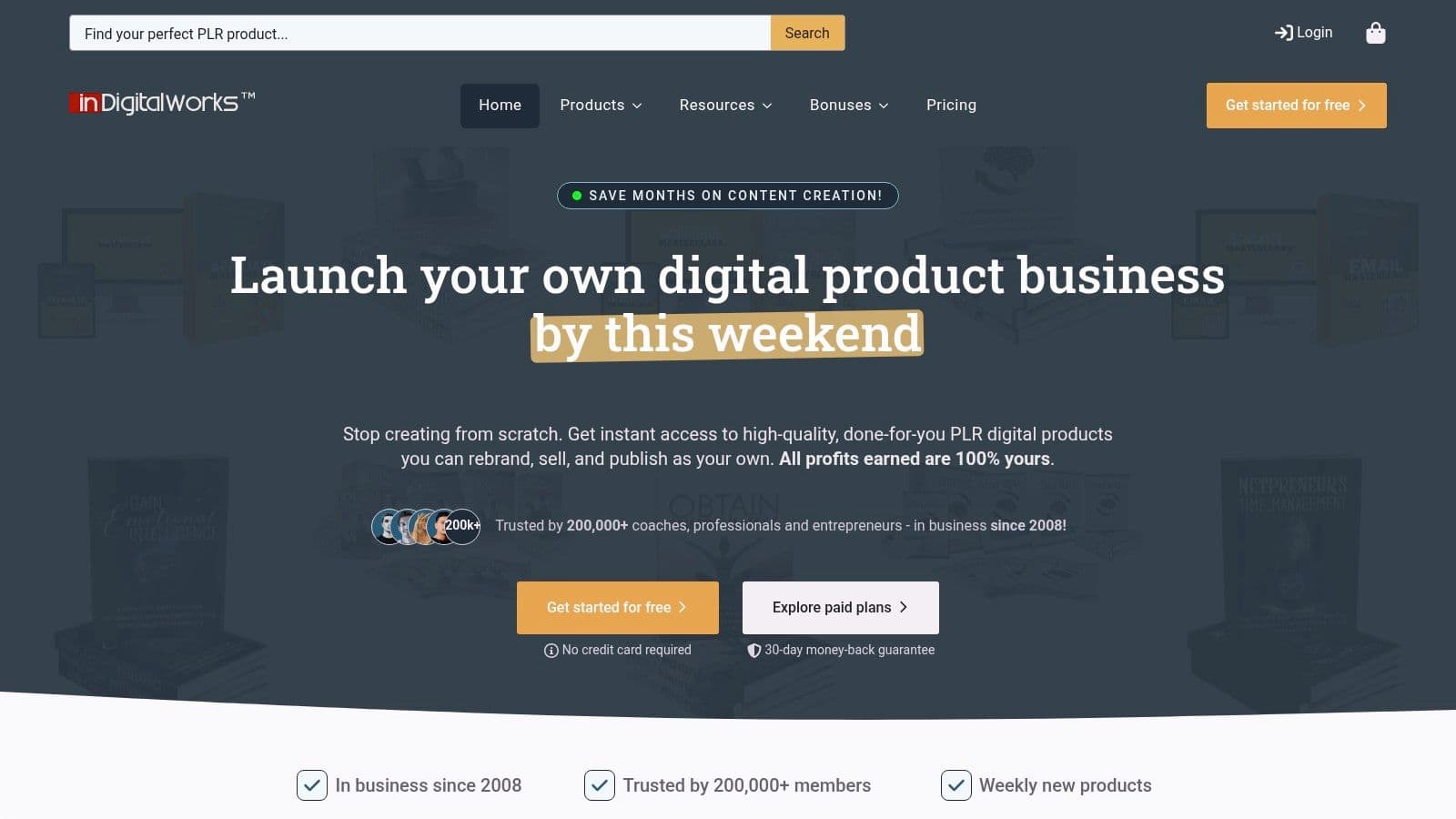
InDigitalWorks is more structured than many bargain-bin PLR sites. That matters when you want to move quickly and don’t want to spend half your time decoding rights labels or hunting for source files.
The library includes ebooks, templates, videos, and other common digital formats. For a beginner, that’s enough to seed a small storefront or create a members-only bonus area without overcomplicating the setup.
Where it fits in a real sales stack
I like this type of source when building a layered offer. Instead of treating each file as a standalone product, combine a few related pieces into one practical package. For example, one ebook, one worksheet, and one template can become a beginner kit that feels more complete than any single download.
That approach also helps when you move from marketplace selling to your own store. If you’re still deciding on channels, Zanfia’s walkthrough on how to sell digital products online is a useful next read.
A few trade-offs matter here:
- Clearer organization: easier for beginners to browse and download
- Mixed quality: some products still need heavy editing
- Better as components: stronger in bundles than as solo offers
Don’t expect the free material to carry your brand on its own. It won’t. You still need a sharper title, cleaner design, and a tighter promise than the original product page gives you.
3. IDPLR
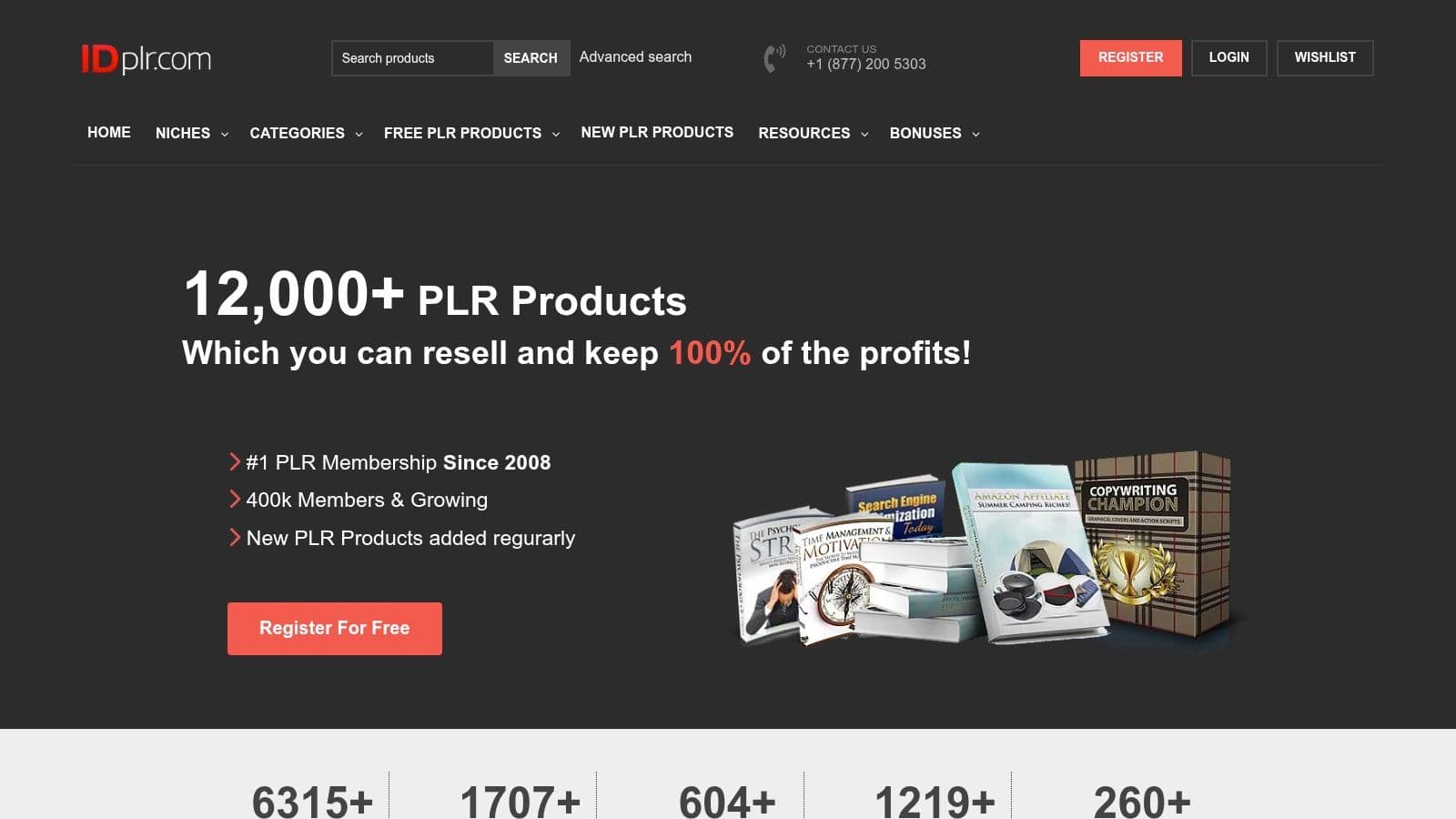
IDPLR has been around long enough that most experienced resellers have crossed paths with it at some point. That history is useful. You get a broad catalog, decent categorization, and plenty of products that already come with supporting sales materials.
Its freebies section is the main reason it belongs on this list. You can start there, learn the platform, and only upgrade later if you find categories that consistently fit your audience.
The real advantage
The best part of IDPLR isn’t the raw content. It’s the surrounding material. When a product includes graphics, emails, or sales copy, you save time during packaging.
That doesn’t mean you should use any of it unchanged. Most of it still needs modernization.
If you can’t explain who the product is for in one sentence, it’s not ready to list.
Pricing also matters more than beginners think. A generic PLR ebook priced too high won’t move, but pricing too low can make the offer look disposable. If you need help thinking through that balance, Zanfia’s article on how to price digital downloads is worth reviewing before you publish.
The weak point is age. Some topics feel dated, and some designs look dated too. That’s not fatal if the underlying information is still useful, but it does mean you need to refresh presentation before asking anyone to pay for it.
4. PLR Database
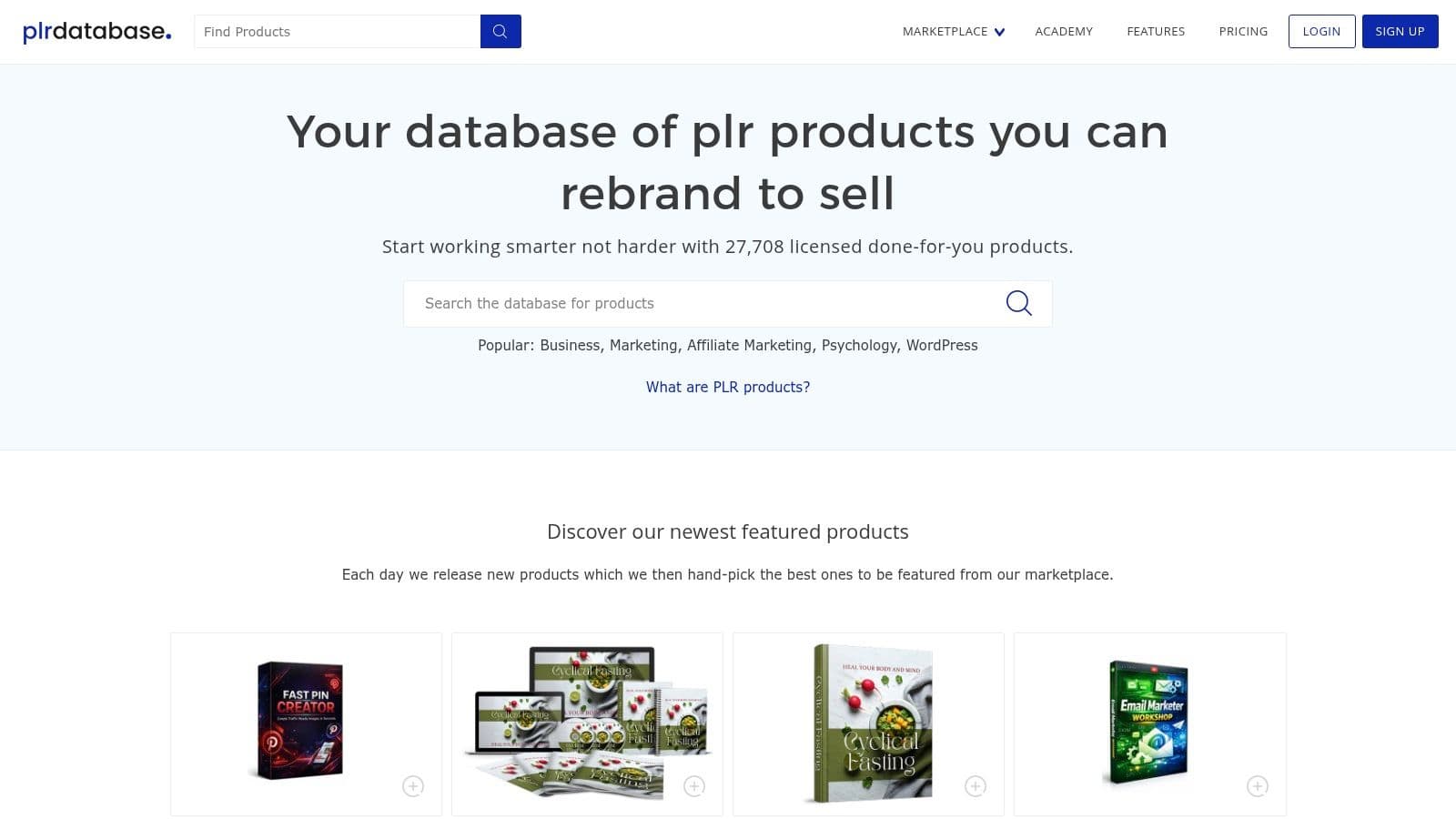
PLR Database is handy when you want volume and quick browsing. It’s the kind of site you use to fill specific gaps in an offer, not necessarily to build a premium brand from scratch.
That distinction matters. Big PLR databases are useful for lead magnets, mini-bundles, bonus vaults, and member resources. They’re less useful when you want a polished hero product with a clear brand point of view.
How to use it without looking cheap
Search with intent. Don’t browse randomly and download whatever looks free. Start with one audience and one outcome, then pull only the assets that support that outcome.
A practical example is a productivity bundle for freelancers. One planner, one checklist, one mini-guide, and one swipe file feels coherent. Ten unrelated PDFs feel like digital clutter.
- Strong use case: filler assets for bundles and bonuses
- Weak use case: giant messy packs with no curation
- Key filter: only keep products that support one buyer goal
When you’re choosing where those offers should live long term, Zanfia’s guide to the best platforms to sell digital products helps you think beyond marketplaces.
PLR Database is useful, but it still has the usual PLR problem. Overlap. You may find products that have circulated across multiple reseller networks, so your differentiation has to come from editing, bundling, and positioning.
5. BuyQualityPLR
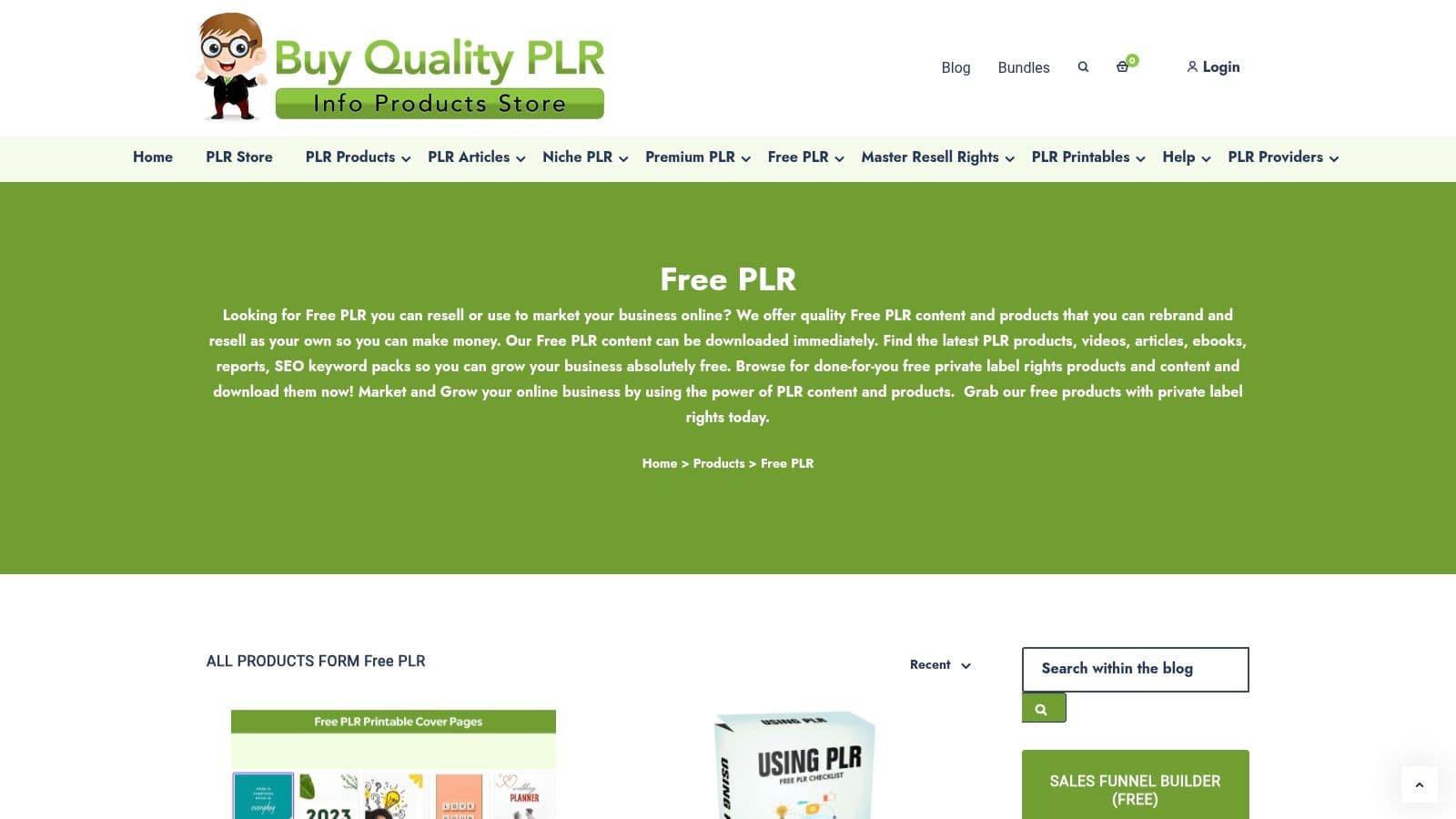
BuyQualityPLR tends to feel a bit more curated than the giant all-purpose PLR warehouses. That alone can save time. Less junk to sort through means faster product assembly.
The free section is especially useful for marketers, coaches, and creators who want simple assets for funnels, bonuses, or topic-specific bundles. A lot of the material leans toward business, self-help, and audience-building themes, so it’s a better fit for service and education brands than for broad lifestyle stores.
When this source makes sense
Use it when you want speed and cleaner presentation. Some items come with editable files, which makes rebranding less painful than working from locked PDFs.
The limitation is topic similarity. Many free items circle around familiar internet-business themes. That’s fine if your audience is entrepreneurs. It’s less useful if you want a distinct niche catalog.
I wouldn’t build an entire shop from this source alone. I would pull selective assets, tighten the copy, redesign the cover, and pair them with your own commentary, worksheet, or onboarding email sequence. That’s usually enough to turn a generic freebie into something a buyer can use.
6. BigProductStore
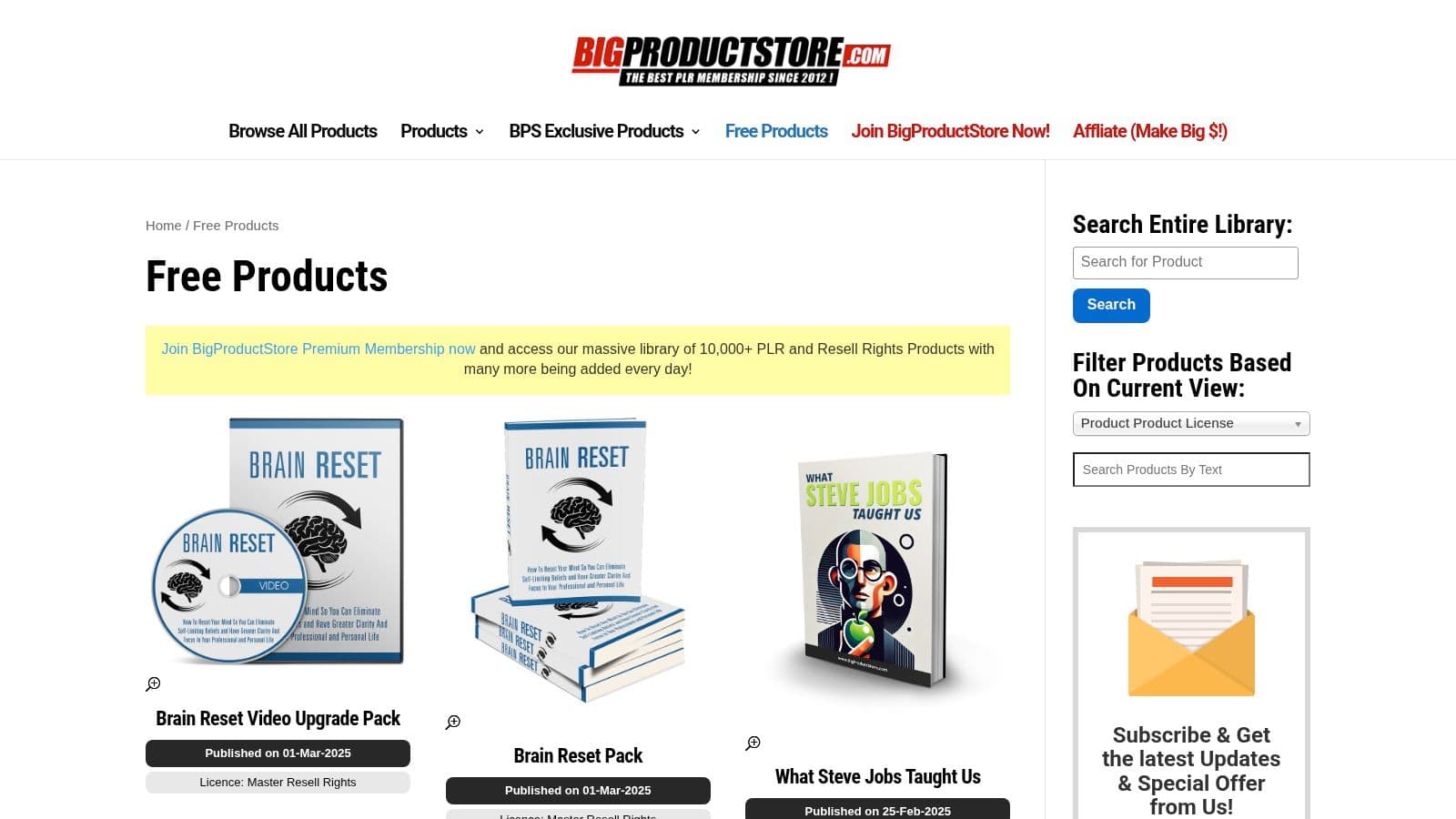
BigProductStore is a practical source when you need breadth more than polish. It has enough variety to support testing across niches, formats, and entry-level offers.
That makes it useful for operators who think in funnels. If you need a freebie for list building, a cheap front-end product, and a bonus for a higher-tier offer, a broad library like this can help you assemble all three without buying custom content first.
The trade-off you need to accept
The graphics often need work. Titles may need work too. In some cases, the content itself needs trimming because PLR products have a habit of saying in twenty pages what could’ve been said in six.
That’s not unusual. It just means your job isn’t sourcing alone. Your job is editorial judgment.
A shorter, cleaner product usually outsells a bloated one, even when both came from the same PLR library.
BigProductStore works best for resellers who already know how to clean up a file, standardize branding, and stack several assets into one coherent offer. If you’re expecting ready-made premium products, this isn’t that. If you’re willing to curate hard, it’s useful.
7. Project Gutenberg
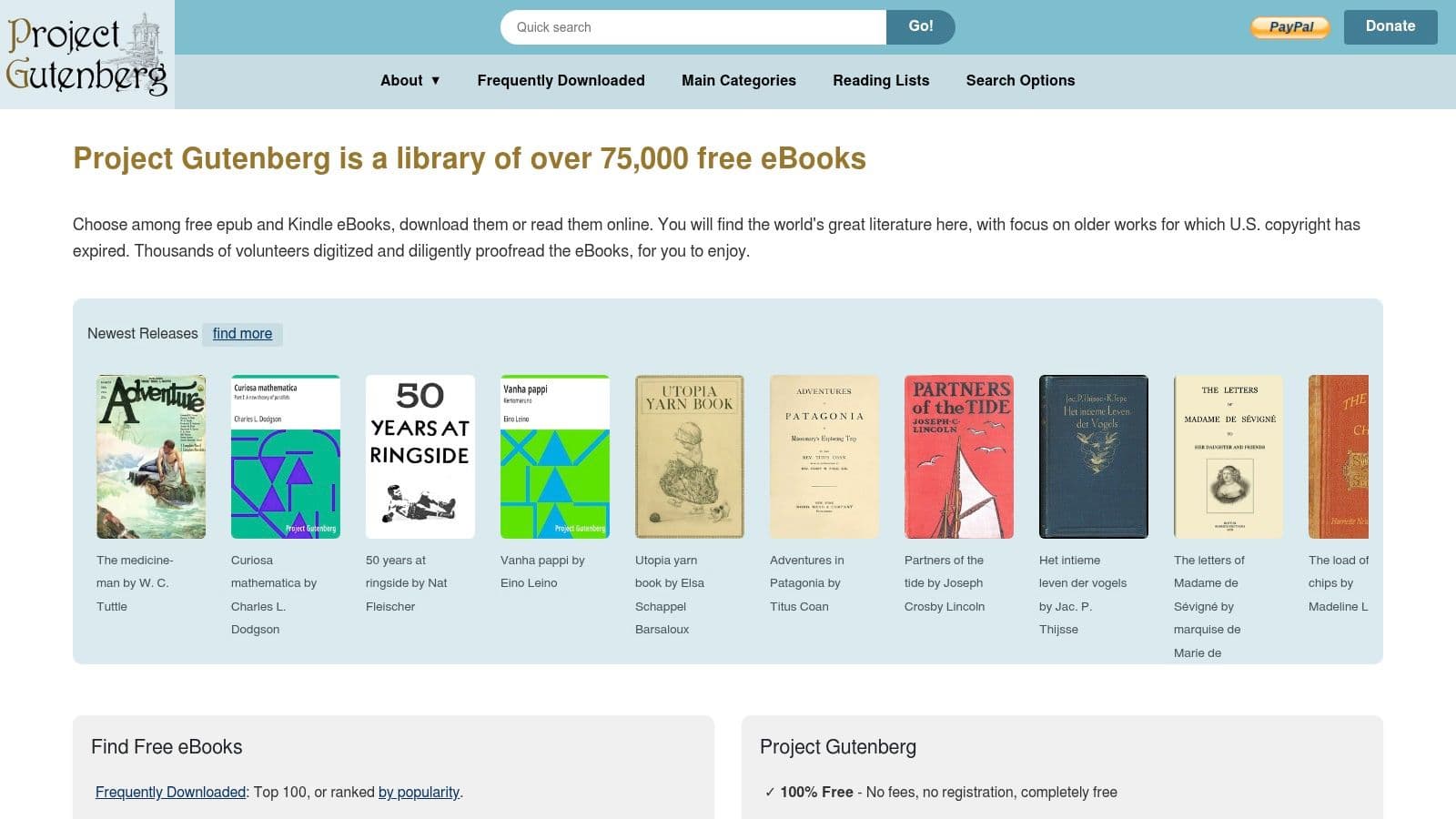
A beginner downloads a public domain classic, uploads the raw file, and wonders why nobody buys it. The problem usually is not the book. The problem is the product.
Project Gutenberg gives you a huge supply of public domain titles, but the resale play is packaging, not simple reposting. The files are useful starting material for themed ebook bundles, study editions, and niche reading collections. If you plan to build paid ebook offers, this guide on how to sell an ebook helps with the storefront side after you prepare the files.
The trade-off is time. Public domain content is free, but cleanup is part of the job. You need to review each title, remove Gutenberg boilerplate where required, check the copyright status for the countries you sell into, and give the product a clear market angle.
The strongest offers usually add context the raw text does not provide. Good examples include:
- Course support packs: required reading grouped for literature, history, or philosophy students
- Reader collections: Gothic novels, Victorian fiction, or children's classics sold as curated sets
- Study editions: books paired with summaries, discussion prompts, or reading guides you created
That last part matters. Public domain text alone is easy to copy. Your margin comes from the editing, design, metadata, cover treatment, and bonus material you add before listing it on a 0% commission platform like Zanfia.
Used well, Project Gutenberg is not just a free library. It is raw inventory for sellers who know how to turn old texts into a cleaner, sharper product people will pay for.
8. Standard Ebooks
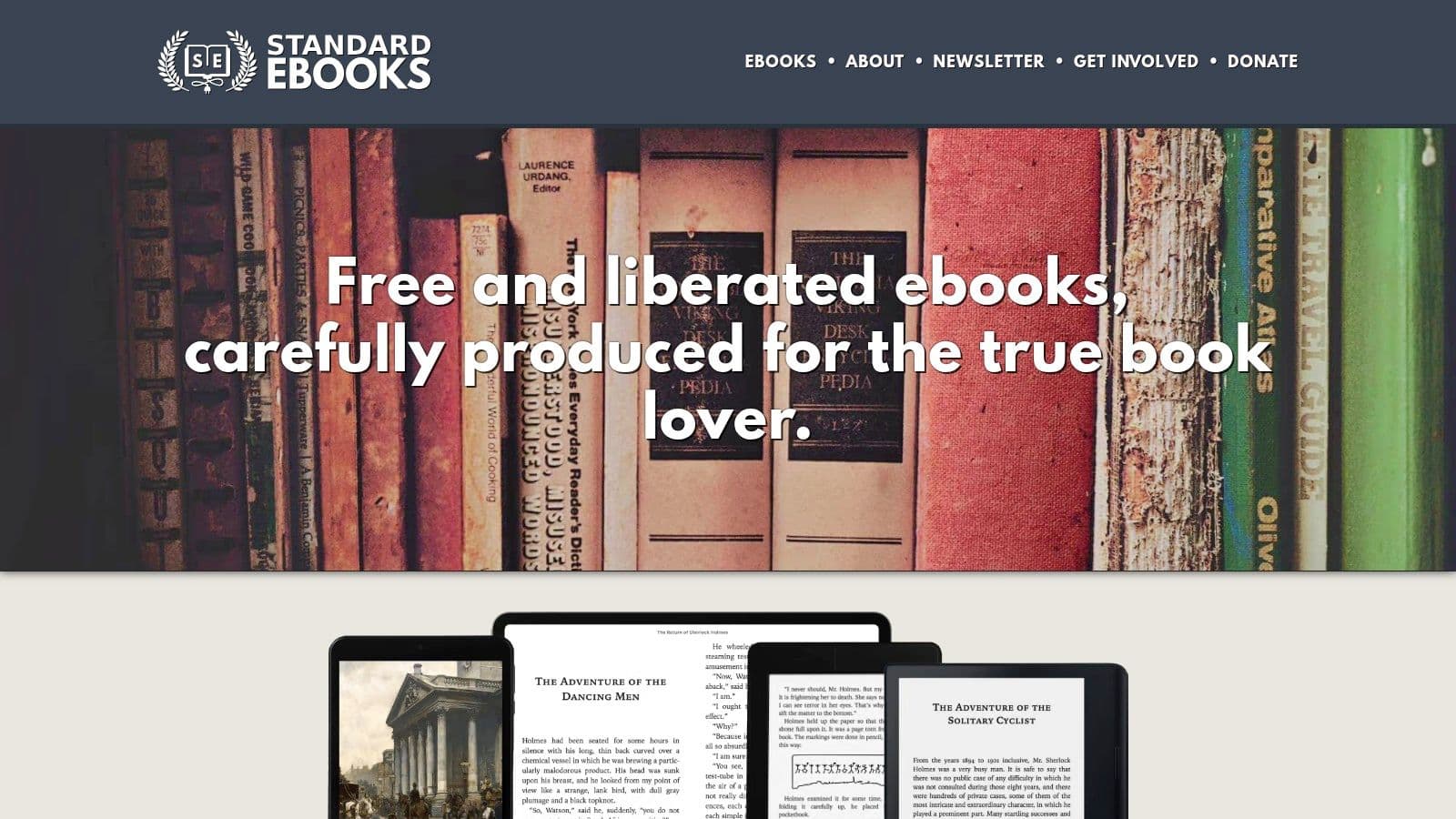
Standard Ebooks solves one of the biggest problems with public domain publishing. Formatting. A lot of public domain files are usable, but messy. Standard Ebooks gives you cleaner editions that already feel modern.
That saves time if your plan is to sell classic literature bundles, themed reading packs, or polished ebook products for niche audiences. The baseline quality is better than many raw scans and scraped text files.
Why this is better than starting from raw text
Formatting is where many public domain resellers lose steam. They spend hours fixing typography, chapter spacing, punctuation oddities, and broken metadata. Standard Ebooks reduces that cleanup load, which means you can focus on packaging and differentiation instead.
If ebooks are your main format, Zanfia’s guide on how to sell an ebook pairs well with this source because it pushes you to think beyond the file itself and toward the customer experience around it.
The main limitation is catalog size. You won’t get the same breadth as Project Gutenberg. You also need to avoid piggybacking on Standard Ebooks branding or presentation assets when creating a paid product.
This source works best when you want fewer titles, but cleaner ones.
9. Openclipart
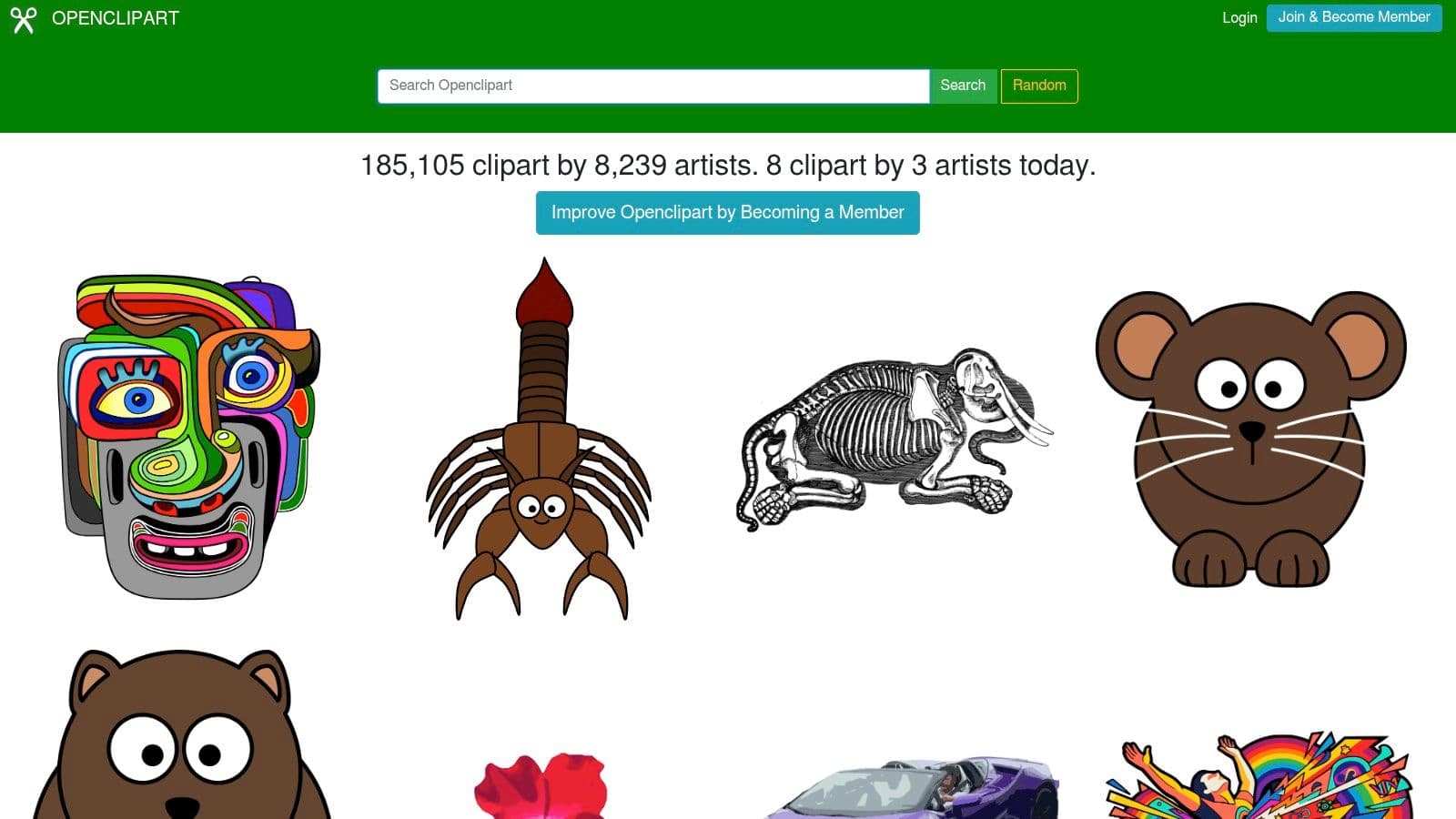
Openclipart is one of the simplest places to source raw visual assets for commercial digital products. It’s especially useful if you want to build printables, planners, sticker packs, classroom materials, icon sets, or editable templates.
The appeal is the CC0 dedication for uploads. That makes it more reseller-friendly than many “free graphics” sites that allow commercial use but restrict redistribution or template resale.
What sells better than raw clipart
Don’t sell a folder of random graphics unless you already have an audience that buys asset dumps. Most buyers want a finished use case. That means templates, themed bundles, printable kits, or niche packs with a clear purpose.
Good examples include:
- Teacher packs: subject-specific worksheet decorations
- Planner kits: icons, labels, tabs, and dividers
- Shop assets: social post graphics and promotional elements
The vector formats are a major plus because they make customization easier. You can recolor, resize, combine, and standardize styles before packaging. That’s where you create value.
The drawback is inconsistency. Openclipart has a lot of useful files, but style quality varies. If you mix assets carelessly, your final product looks like a junk drawer. Curate tightly and keep the visual language consistent.
10. Smithsonian Open Access
Smithsonian Open Access is one of the strongest non-PLR sources on this list because the underlying material has instant perceived value. Museum collections carry weight. Buyers notice that.
The platform includes high-resolution images and some 3D assets, and many items are released under CC0. That opens up commercial uses for printable art, educational resources, visual slide decks, moodboard kits, and niche history bundles.
Where resellers get this wrong
They download a beautiful image, upload it as a bare file, and call it a product. That usually isn’t enough. Curation and framing are what make it sellable.
A stronger offer is a themed collection with context. For example, botanical art for home office decor, historical portrait sets for classroom use, or visual packs for creators building educational content. Some advanced users can also work with the available API or bulk access options, but most beginners should stick to small manual curation first.
There’s another reason this source matters. Legal confusion is common in resale. One overlooked angle in this market is compliance. Questions about whether free assets can be resold come up constantly, and confusion around resale rights is widespread in creator communities. That’s why you need to verify the rights status on each Smithsonian asset instead of assuming all content is open.
Check every item individually. On open-access platforms, “free to view” and “free to resell” are not always the same thing.
Top 10 Free Digital Products to Resell Comparison
A beginner can waste a week collecting free files and still have nothing worth listing. The difference usually comes down to fit. Some sources are better for fast lead magnets, some are better for branded template packs, and some only work if you are willing to clean up formatting, rewrite copy, or rebuild the files into a stronger offer for a 0% commission storefront such as Zanfia, where an AI team helps you shape the offer, build the checkout with order bumps and installments, and run a test purchase before launch.
Use the table below to choose based on the product you want to ship, the license flexibility you need, and how much work you are prepared to do before the first sale.
| Source | Core offerings ✨ | Quality & UX ★ | Value & Pricing 💰 | Best for 👥 / USP 🏆 |
|---|---|---|---|---|
| Resell Rights Weekly | Free membership with PLR and MRR ebooks, articles, courses, and software | ★★★☆☆, broad selection but inconsistent polish | 💰 Free entry, useful for testing offers without upfront cost | 👥 New sellers validating niches • 🏆 Wide format mix for quick packaging |
| InDigitalWorks | Free PLR library with ebooks, templates, videos, and graphics | ★★★☆☆, usable catalog with some older topics | 💰 Freemium model, free tier works for small starter catalogs | 👥 Small shops and bonus bundle sellers • 🏆 Clear product organization |
| IDPLR | Large PLR and MRR catalog with previews and category depth | ★★★★☆, organized and easier to browse than many PLR sites | 💰 Freemium, best range sits behind paid access | 👥 Sellers planning to scale volume • 🏆 Strong catalog depth and rights labeling |
| PLR Database | Large free-focused directory of PLR products across niches | ★★★☆☆, active but quality varies by listing | 💰 Free sampling with paid upgrades available | 👥 Lead magnet creators and niche testers • 🏆 Large pool for idea validation |
| BuyQualityPLR | Curated PLR ebooks, checklists, templates, and marketing assets | ★★★★☆, cleaner presentation and better visual quality | 💰 Mostly free samples with a smaller catalog | 👥 Marketers who need less cleanup work • 🏆 Better starting polish |
| BigProductStore | Free and paid PLR, resell rights products, software, and content packs | ★★★☆☆, mixed presentation and uneven product quality | 💰 Freemium, decent for filling category gaps | 👥 Sellers building broad digital catalogs • 🏆 Variety across product types |
| Project Gutenberg | Large public domain ebook library in multiple formats | ★★★☆☆, source material is strong but packaging often needs work | 💰 Free public domain access, remove boilerplate and reformat carefully | 👥 Classic literature sellers and educational bundle creators • 🏆 Huge zero-cost text archive |
| Standard Ebooks | Professionally formatted public domain ebook editions | ★★★★☆, polished files and cleaner reading experience | 💰 Free, but keep branding rules in mind and avoid passing off their edition as your own | 👥 Sellers who want faster ebook prep • 🏆 Saves editing and formatting time |
| Openclipart | CC0 clip art, icons, and vector graphics in SVG and PNG | ★★★☆☆, useful library with uneven style consistency | 💰 Free CC0 assets for commercial use | 👥 Template creators, printable sellers, and prompt pack designers • 🏆 Easy asset sourcing for visual products |
| Smithsonian Open Access | High-resolution images and some 3D assets, rights vary by item | ★★★★☆, premium visuals with strong perceived value | 💰 Free where open access applies, but each asset needs rights verification | 👥 Curated art pack and educational product sellers • 🏆 Museum-grade source material |
The strongest source is not always the one with the biggest library. It is the one that matches your workflow.
If speed matters, start with BuyQualityPLR, IDPLR, or Standard Ebooks. If margin matters and you are willing to do more repackaging, Project Gutenberg, Openclipart, and Smithsonian Open Access can produce stronger end products because the raw material costs nothing and the buyer sees more original value once you brand it properly.
That trade-off matters. PLR libraries save time, but they also create more competition because other sellers can access the same files. Public domain and open assets usually take more work up front, yet they give you more room to create bundles that do not look copied from the same reseller folder.
From Free Download to First Sale Your Action Plan
On Monday, you grab a free PLR ebook, a public domain text, or a pack of CC0 graphics. By Friday, you either have a product live under your own brand or a cluttered folder you will never touch again. The result usually comes down to execution, not access.
Free digital products work best as inputs, not finished offers. Sellers who make money with them do four things well. They verify the license, shape the asset around one buyer problem, package it cleanly, and sell it where low-ticket margins still make sense.
Step 1. Check the license before you touch the file
This step saves bad weeks.
PLR, MRR, public domain, and CC0 each come with different rights. Some let you edit freely. Some let you resell but not modify. Some are open in principle but still carry restrictions tied to trademarks, source rules, or specific files inside a bundle.
Read the license page, the download notes, and any included terms file. Do not trust the label on the listing.
I have seen new sellers write product copy, design covers, and build sales pages before noticing that the asset was personal-use only. That mistake is common, and it is easy to avoid if you verify rights first.
Step 2. Repackage for a clear outcome
Raw files rarely sell well. Branded solutions do.
A generic PLR ebook can become a workbook with prompts and a short implementation checklist. A public domain title can become a niche edition with annotations, study questions, or a cleaner layout. Open graphics can turn into printables, slide packs, prompt cards, or a themed content kit.
The trade-off is simple. The less work you do, the faster you can list. The more work you do, the easier it is to stand out from every other seller using the same source files.
Cosmetic edits are not enough. A new title and cover help, but buyers pay for convenience, structure, and relevance to a specific use case.
Turn Free Content into Your Next Profitable Product
Video is one of the faster ways to turn free source material into something that feels new. A public domain passage can become a short narrated clip. A PLR article can become a tip series. A set of open images can become a visual explainer. This guide to a text-to-video generator free workflow is useful if you want to test that format without adding production costs too early.
There is a catch. Video raises perceived value quickly, but rough editing makes a product look cheap just as quickly. Start with short, tightly focused assets before you try to sell a full course or media bundle.
Step 3. Price for the customer path, not a one-off sale
A low-ticket product should lead to the next offer.
That first ebook, template pack, or printable set is often the entry point. After the sale, the obvious next step might be a larger bundle, a mini course, a newsletter, or a membership for the same audience. Free-sourced products are good for this model because the upfront cost is low and testing price points is less risky.
A practical ladder looks like this:
- Entry offer. One focused product at an easy first-purchase price
- Bundle upgrade. A stronger themed package with more obvious value
- Next offer. A subscription, course, or service for the same niche buyer
Do not build the business around one cheap file. Use that file to acquire a customer and learn what they want next.
Step 4. Sell where low-ticket math still works
Fees matter a lot on inexpensive digital products. A platform cut can look small on one sale and still wipe out a meaningful share of profit across a month.
That is why many sellers prefer a setup with no platform commission, as noted earlier. On Zanfia, the current model is 0% platform commission on your sales, so only the payment processor takes its standard cut. Plans start at $39 a month, or $31 a month billed annually, on the Starter plan, which comes with a 14-day free trial and no credit card. That gives you more room to test $7 to $19 offers, split a $60 bundle into a few installments, add order bumps and upsells at checkout, and keep enough margin to make the model worth repeating.
It also helps to use a storefront that supports growth from simple downloads into subscriptions, courses, or community access without forcing a platform change later. Zanfia carries 12 product types under one brand, from downloads and ebooks to courses, communities, and paid newsletters, so you can add the next offer on the same domain. You describe the next product by voice or chat, the AI team drafts the page and the checkout, and you run a test purchase in test mode before the first real sale. Availability of the deeper AI capabilities and the MCP endpoint depends on the plan, so check the current Zanfia pricing before you commit.
FAQ
Can I legally resell PLR ebooks and free downloads as-is?
It depends on the license attached to each file. Some allow resale as-is, some allow editing but not resale, and some are free for personal use only. Verify what the license permits before you design, write the product page, or upload anything.
Why don't free PLR files sell well when I upload them unchanged?
Because they're free to everyone else too, so buyers can spot generic PLR fast. Sellers who succeed with free content win on packaging, positioning, and channel choice by picking narrower problems and improving presentation. Uploading an untouched PDF with a generic cover rarely converts.
How should I use Project Gutenberg titles without just reposting the raw text?
Treat public domain books as raw inventory, not finished products. Package them into course support packs for students, curated reader collections like Gothic novels or Victorian fiction, or study editions with summaries, discussion prompts, and reading guides you create. Your margin comes from the editing, design, cover treatment, and bonus material you add.
What's the difference between Standard Ebooks and Project Gutenberg for resellers?
Project Gutenberg gives you a huge catalog but the files are often messy and need heavy formatting cleanup. Standard Ebooks provides cleaner, more modern editions with better typography and metadata, so you spend less time fixing files and more time on packaging. The trade-off is a much smaller catalog.
What sells better than a folder of raw Openclipart graphics?
Most buyers want a finished use case, not an asset dump. Turn CC0 clipart into themed bundles like teacher packs with subject-specific worksheet decorations, planner kits with icons and dividers, or shop assets with social post graphics. A clear purpose beats volume for anyone who doesn't already have an audience that buys raw asset packs.
The practical play is straightforward. Source carefully. Confirm the rights. Rework the asset into something narrower and more useful than the original. Brand it fast, list it, and use the first sale to build the second offer. That is how free digital products turn into a real catalog instead of a hard drive full of abandoned downloads.