

Top Free Self Love Course Options for 2026
You open three tabs looking for a free self love course, and within ten minutes the problem becomes clear. One option feels warm but vague. Another looks credible but reads like a psychology lecture. A third promises a quick reset, yet gives you no sense of what you will practice or whether it fits the way you learn.
A useful course does more than make you feel encouraged for a day. It should help you catch self-criticism in real time, practice a healthier response, and repeat that often enough to change your baseline. Free matters because it lets you test that fit before you spend money, commit to a longer program, or decide you need more direct support.
The best choice depends on the kind of help you need. Some people do better with research-based frameworks and habit exercises. Others need guided mindfulness, body-based regulation, or short lessons they can finish even during a hard week. Learning format matters too. If you already know you stick better with a mix of reflection, audio, and structured exercises, this guide will help you sort options by need rather than by hype. It also connects with different adult learning preferences and study formats, which often makes the difference between starting a course and finishing one.
That distinction matters in practice.
If self-judgment is mild and you mainly want better routines, a science-backed course may be enough. If shame, burnout, grief, or old relational patterns sit underneath the problem, a course can still help, but it may work best alongside personal support such as counselling services in Grande Prairie. For course creators, there is a business angle too. The same need for fit applies when building your own workshop or micro-course, and platforms like Zanfia can help package educational content in a way that is easier for people to use, finish, and return to. Zanfia is set up as an AI team you can dictate to by chat or voice, and it turns those instructions into courses, communities, newsletters and a checkout built to sell, so the same self-love material can land as a paid course, a member community and a booked consultation without a stack of separate tools.
1. The Science of Well-Being
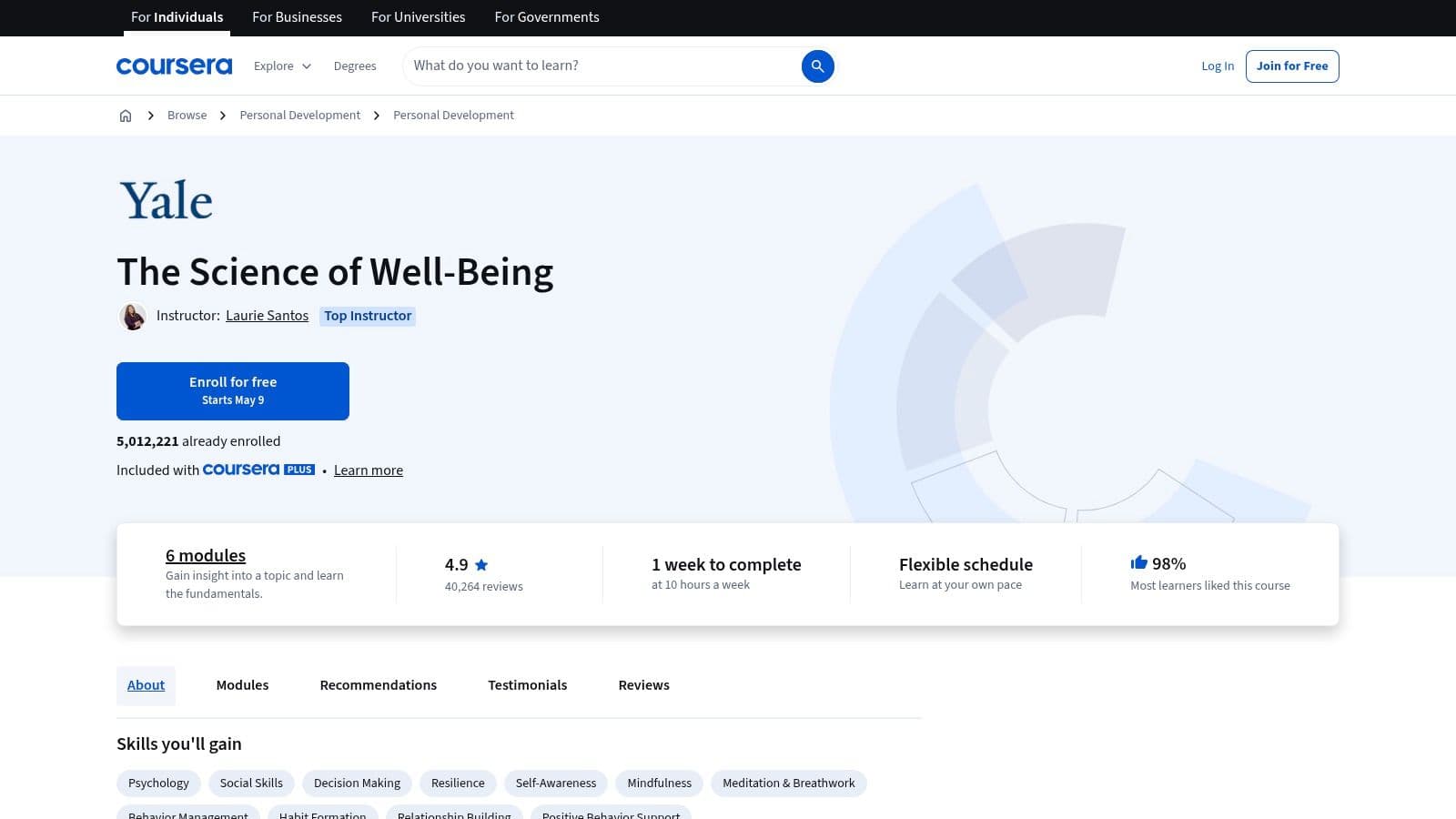
Yale's The Science of Well-Being on Coursera isn't branded as a self-love course, but it often fits people who want self-love without the softer wellness language. If your main struggle is harsh self-judgment, unrealistic expectations, or feeling like you know what would help but still don't do it, this one has a useful structure.
It works best for people who trust frameworks. The course uses lessons, reflections, and repeated daily practices rather than inspirational content alone. That makes it practical. It also means it can feel more academic than nurturing, depending on what you need right now.
Who it suits best
This is a strong choice if you want a self-paced course with clear exercises and a university setting. It also pairs well with readers interested in adult learning styles, because the course mixes video, reflection, and habit practice instead of relying on one teaching method.
A few trade-offs stand out:
- Best for structured learners: You get a defined path instead of an open library.
- Less direct on self-compassion language: The emotional theme is there, but the framing is broader.
- Free to learn, not fully free for every extra: The optional certificate sits behind payment.
Practical rule: Choose this one if you want evidence-oriented habit change more than guided emotional processing.
If you tend to abandon free courses when they feel vague, Yale's format gives you enough scaffolding to keep moving.
2. The Science of Happiness
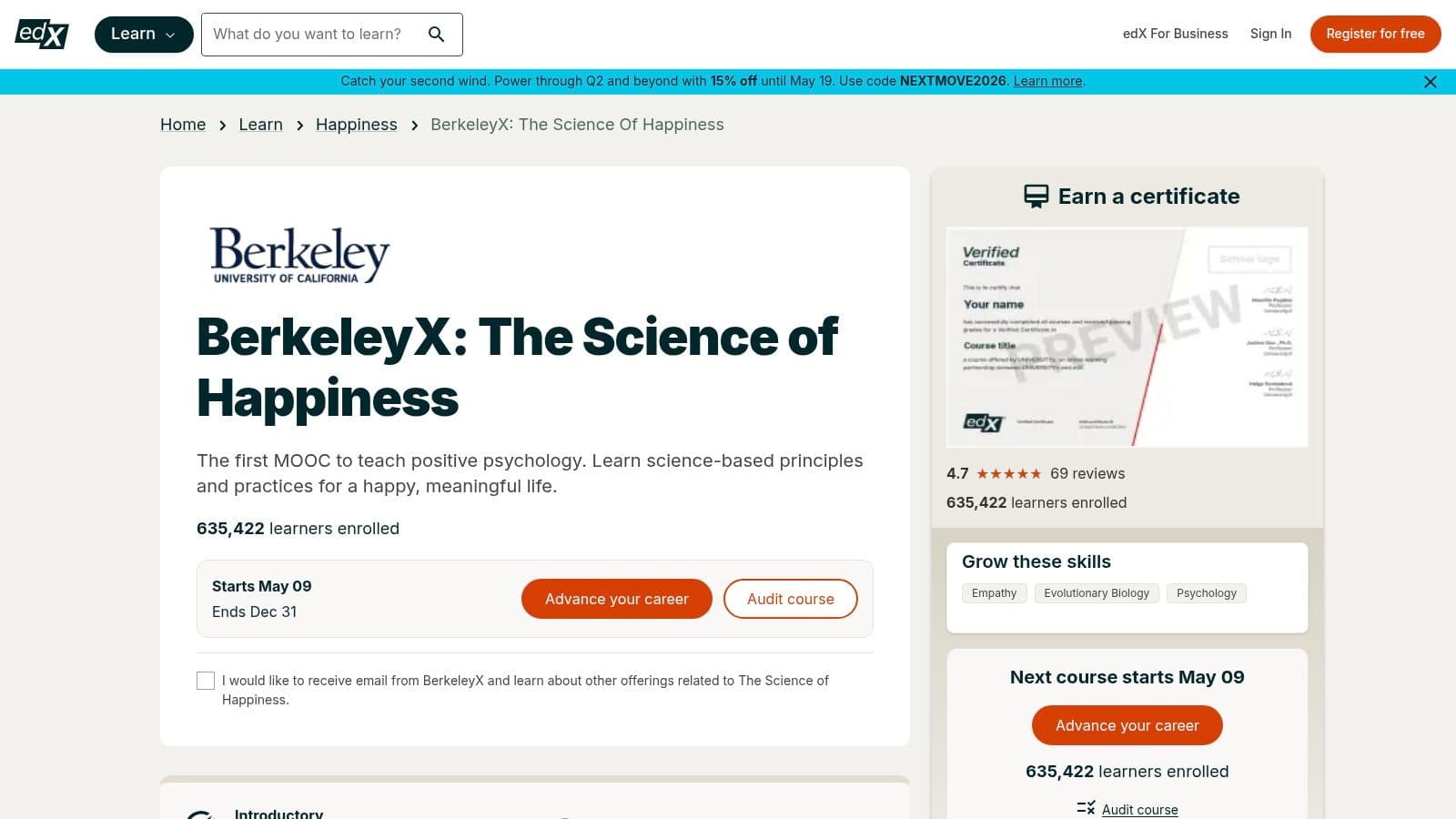
The Science of Happiness from UC Berkeley's Greater Good Science Center on edX leans closer to compassion, gratitude, meaning, and daily well-being practices. If “self-love” feels too narrow for your actual life, this can be a better fit because it places your relationship with yourself inside a larger system of habits, emotions, and relationships.
That broader framing is its strength. It can also be its limitation. If you want a course that talks directly about body image, self-worth, or inner criticism, this one may feel adjacent rather than precise.
What works well here
The strongest part is the blend of research-grounded reading with weekly practices. That mix usually creates better follow-through than passive video learning alone. If you care about student engagement in online learning, this is the kind of design that tends to hold attention better because it asks you to do something with the material.
Use this if you want:
- A thoughtful middle ground: More reflective than a pure academic MOOC, but more structured than a meditation app.
- Practice with context: Gratitude and compassion exercises make more sense when they're explained well.
- A flexible pace: Good for people who need room to move slowly.
One caution. If you already know the science of gratitude and mindfulness but struggle with implementation, you may need extra accountability outside the platform.
Some people don't need more insight. They need a system that makes practice harder to skip.
3. Managing Happiness
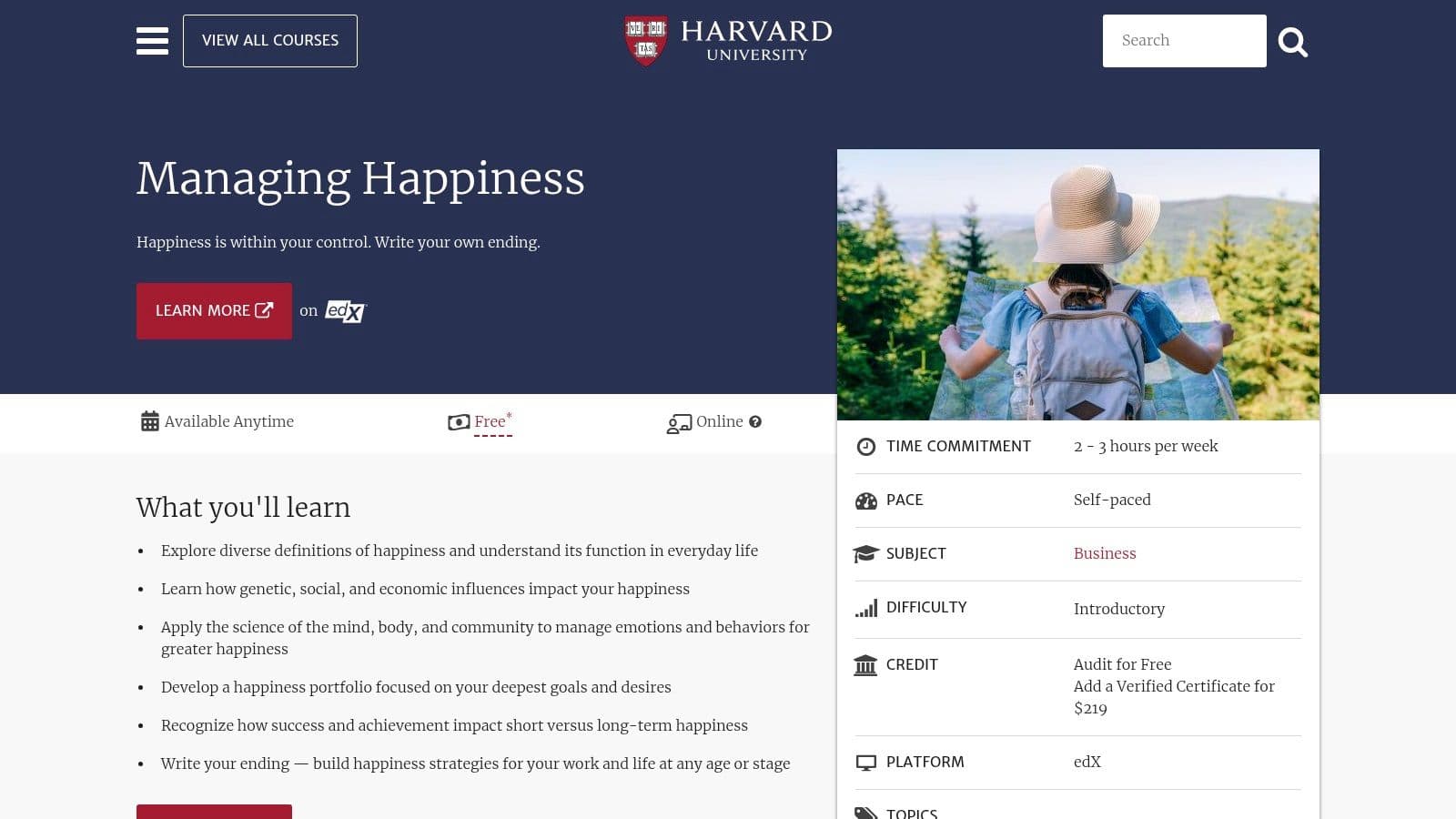
Managing Happiness from Harvard Online is useful for people who want self-love framed through purpose, habits, and personal reflection rather than meditation. That matters because not everyone responds well to breathwork or guided mindfulness, especially when they want something more cognitive and analytical.
The course tends to attract learners who like to think through ideas and monitor progress. If you're motivated by surveys, reflection tools, and practical reframing, it has a strong appeal. If you want a softer, more emotionally held experience, it may feel a bit formal.
The real trade-off
This course works when your inner life improves through understanding patterns and adjusting routines. It doesn't work as well when you need frequent guided regulation or a strong sense of community.
That distinction matters because self-love content often fails in one of two ways. It's either too abstract, or it's too soothing and not actionable enough. Harvard's option lands on the actionable side.
Consider it if you want:
- Clear frameworks: Good for people who prefer concepts they can apply.
- Reflection tools: Helpful if tracking your thinking increases follow-through.
- A reputable free audit path: Useful if institutional trust matters to you.
Skip it for now if your nervous system is overloaded and you know you won't absorb lecture-heavy material. In that season, a shorter guided practice can work better than a prestigious syllabus.
4. Mindfulness for Wellbeing and Peak Performance
Monash University's Mindfulness for Wellbeing and Peak Performance on FutureLearn is one of the more approachable free options for beginners. It's a good fit if your version of low self-love shows up as constant pressure, racing thoughts, irritability, or difficulty slowing down.
The strongest feature is accessibility. You don't need prior meditation experience, and the course introduces mindfulness in a practical way. That makes it less intimidating than some programs that assume you already know how to sit with discomfort.
Why beginners often do well with it
Many people search for a free self love course when what they need is a gentler baseline. They need to reduce internal friction before they can do deeper emotional work. Mindfulness can help with that by making self-judgment easier to notice in real time.
FutureLearn's discussion features also help a bit, because they reduce the sense of learning in isolation. That matters more than many course creators think.
Still, there are limits:
- Great entry point: Low barrier, beginner friendly, practical.
- Less depth than longer programs: You may outgrow it if you want intensive practice.
- Access can be time-bound: That can motivate completion, but it can also create pressure.
One useful note for creators: the gap in many self-love courses isn't information. It's accountability. That missing piece matters because community-based learning often improves consistency. If you're a learner, you can recreate some of that benefit by taking this with a friend and comparing notes once a week.
5. Palouse Mindfulness
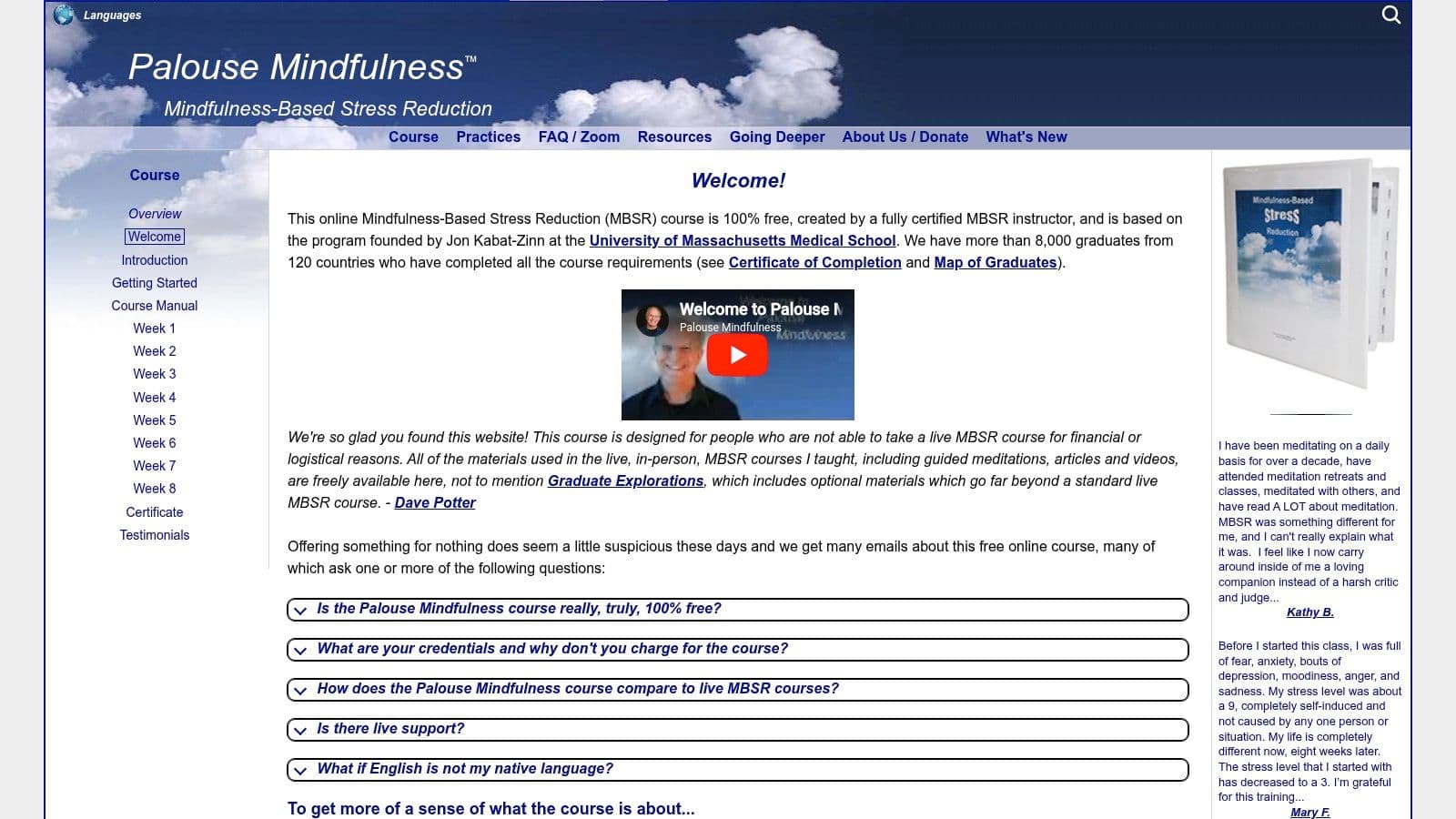
Palouse Mindfulness is the most serious option on this list for people who want a full program without paying. It offers a complete 8-week MBSR-style path with videos, readings, practices, and printable materials. If you want depth, the list changes tone here.
It's not glossy. That's part of the appeal. You get substance rather than a polished app experience, which many practitioners prefer.
Where it shines and where it doesn't
Palouse works well for disciplined learners who want to build steady mindfulness skills over time. It doesn't work well if you need external pacing, instructor contact, or social support built into the experience. That's the core trade-off.
This is also the item that highlights an important design gap in the category. Many self-love courses are self-paced and solitary, even though implementation often improves when learners feel seen by others. That's why ideas from social learning matter here. Reflection deepens when people have structured ways to share, compare, and stay accountable.
- Strongest for rigor: Better than most free options if you want a true curriculum.
- Weakest for accountability: You have to create your own rhythm.
- Best for committed learners: Not ideal if you usually drift after a few days.
If you've quit several self-paced courses, don't assume you lack discipline. The format may be the problem.
6. Insight Timer
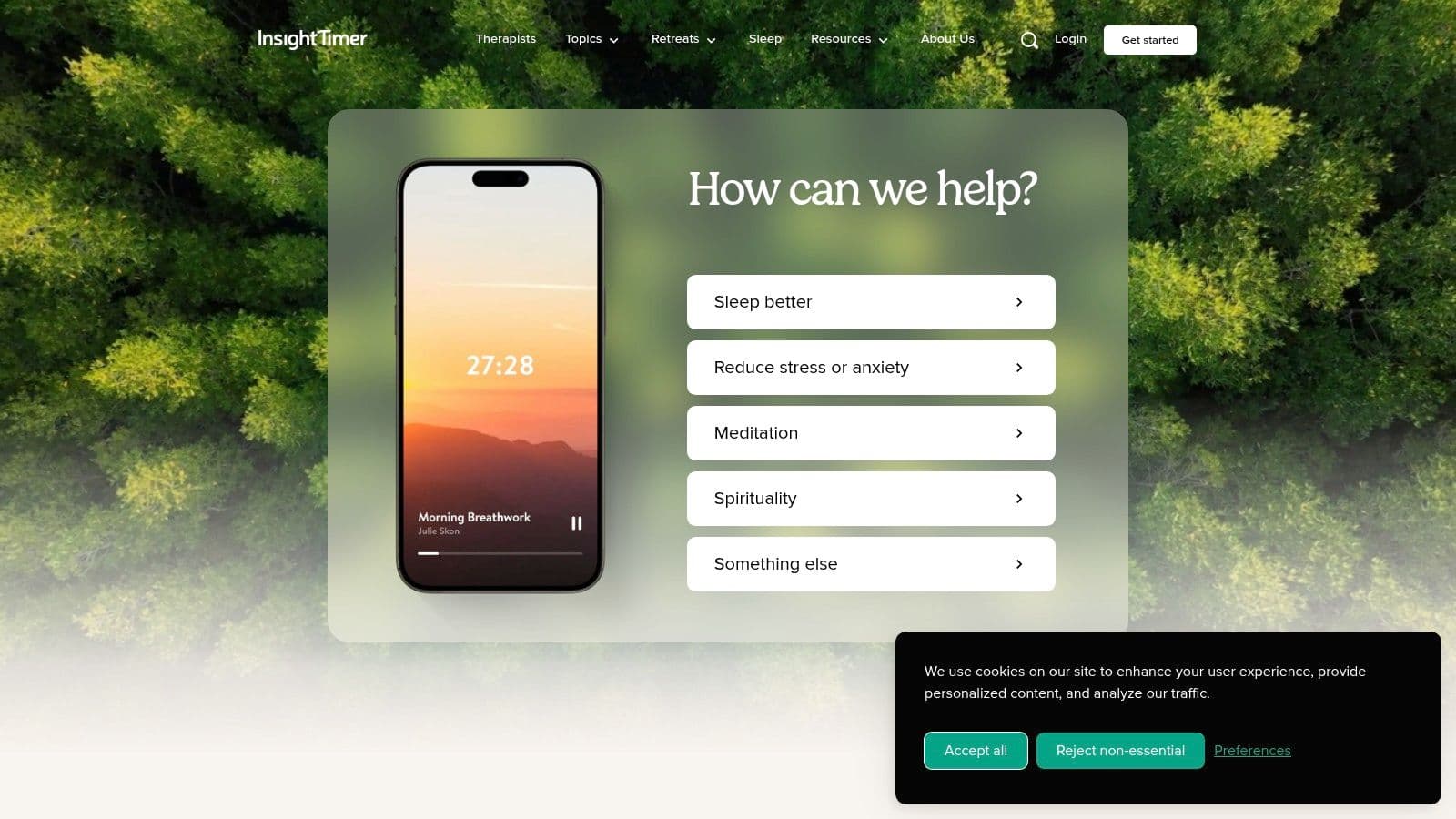
You open an app at 10:30 p.m., tired, overstimulated, and not in the mood for an 8-week syllabus. That is the use case Insight Timer serves well.
Insight Timer is not one self-love course. It is a large practice library with guided meditations, talks, and short programs that can support self-acceptance, emotional regulation, and kinder self-talk. For readers trying to choose the right format, that distinction matters. If you want a science-led curriculum with a clear start and finish, other options on this list fit better. If you need flexibility and low resistance, Insight Timer often gets more real-world use.
Its strength is access. You can do five minutes before work, ten minutes before bed, or repeat the same practice for a week without feeling locked into a formal sequence.
That freedom creates its own problem. Too much choice can weaken follow-through.
The best way to use Insight Timer is with constraints. Choose one teacher, one practice length, and one theme such as self-compassion or body acceptance. Stay with that setup for several days before changing anything. People who learn best with light accountability may also benefit from the app's social features and the broader idea of learning in communities rather than alone.
A few practical trade-offs stand out:
- Best for inconsistent schedules: Short sessions make daily practice easier to keep.
- Best for experimentation: You can test whether you respond better to mindfulness, sleep meditations, affirmation-style audio, or trauma-aware self-compassion work.
- Weakest for structure: You have to curate your own path and ignore a lot of noise.
- Less useful for outcome-focused learners: If you want a step-by-step transformation plan, the platform can feel diffuse.
From a practitioner perspective, Insight Timer works best as a diagnostic tool. It helps you notice what kind of self-love practice you will return to. That is useful for learners, and it is useful for creators too. If you build wellness education through a platform like Zanfia, this pattern is worth studying. Many people need a guided path, but many others need modular lessons, reflection prompts, and community touchpoints they can use in small bursts. On Zanfia that mix sits under one brand: courses, a community with an AI agent that writes from your own content (and labels everything it publishes as AI), paid newsletters and downloads, all reachable from a single member account. Insight Timer shows why course design should match behavior, not just good intentions.
7. CompassionateUSA Free Micro-Course
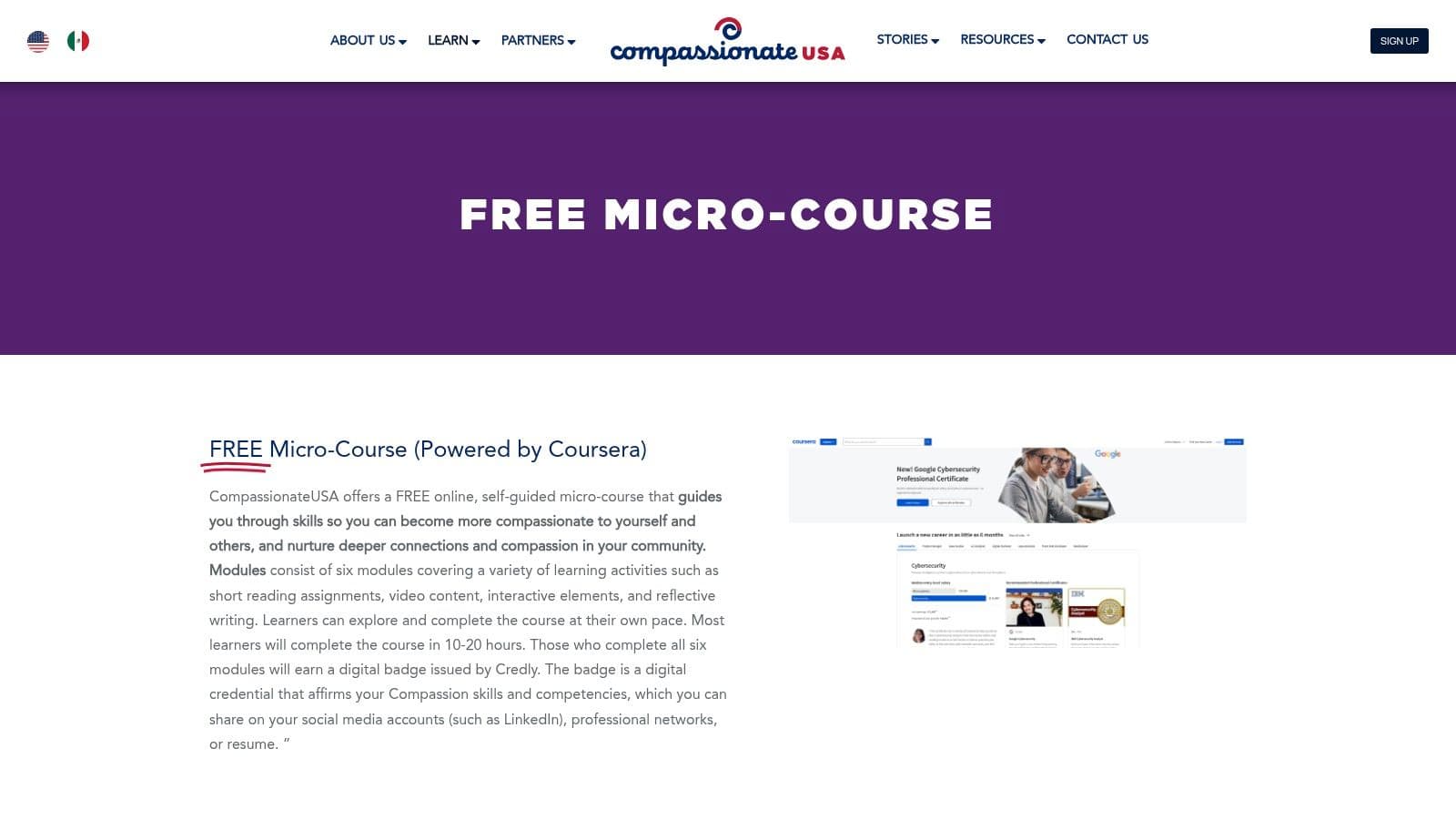
CompassionateUSA's free micro-course is for people who need a low-friction start. Not everyone should begin with an 8-week commitment. Sometimes the right next step is a short, self-guided experience that helps you test whether compassion-based work resonates.
That's the lane this course fills. It's concise, beginner-friendly, and more approachable than university programs for someone who feels emotionally tired.
Why short can be better
A micro-course won't transform your routines on its own. But it can reduce resistance. For many people, that matters more at the start than depth.
Choose this if you're in one of these situations:
- You've delayed starting anything: A smaller commitment lowers the threshold.
- You feel skeptical of self-love language: Compassion is often an easier entry point.
- You want a gentle reset: Short lessons can fit into a difficult week.
The limitation is obvious. You'll likely need something deeper afterward. Still, a short compassion-focused experience can be exactly right when your self-talk is rough and your capacity is low.
One reason compassion matters so much is that self-love often improves when negative self-talk softens. That principle appears repeatedly in evidence-based writing on self-compassion and self-positivity, including Ness Labs' discussion of self-love practices.
8. Mindfulness.com Free 4-Day Self-Love Workshop
Mindfulness.com's free 4-day self-love workshop is short, focused, and practical. It's a good option when you want a self love course that doesn't ask for a major time investment before you know whether the format works for you.
I like this style for people who do better with bounded commitments. Four days is enough to create momentum, but not so long that signup turns into procrastination.
A strong first step, not the whole path
The workshop is best treated as a primer. It can introduce self-compassion and reflective practice, but it probably won't carry long-term change by itself. That isn't a flaw. It just means you should use it intentionally.
It's especially suited to people who respond well to short lessons and daily prompts, which is one reason this style overlaps with microlearning for corporate training. Small units reduce overwhelm and make it easier to return the next day.
A short workshop is useful when your real obstacle isn't willingness. It's mental load.
Use this one if you want a reset after a hard week, a re-entry point after abandoning a longer course, or a simple introduction before deciding whether to go deeper into mindfulness or self-compassion work.
9. Alison Boost Body Confidence
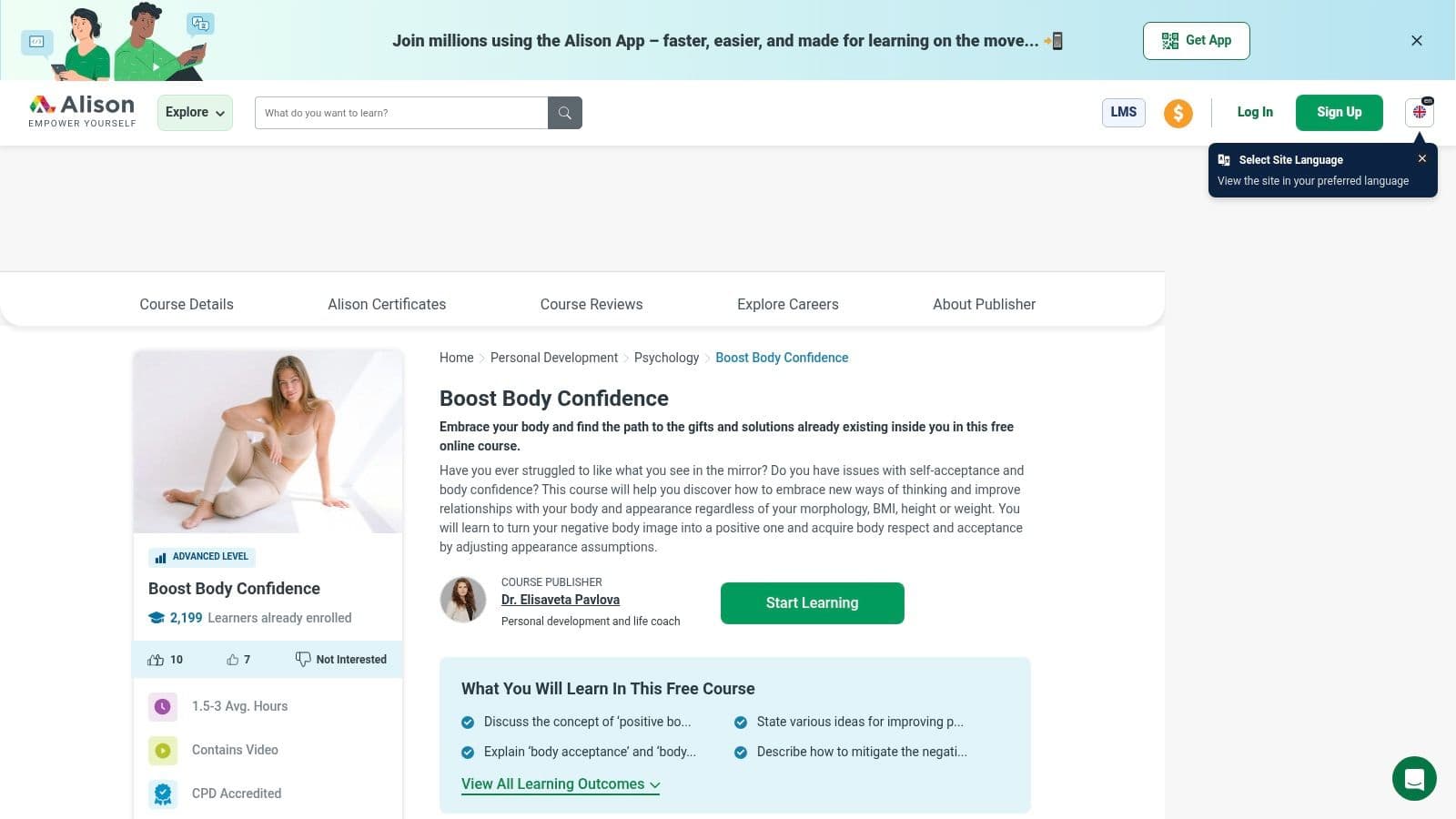
Alison's Boost Body Confidence course is narrower than most entries here, and that's a strength. If your self-love struggle is closely tied to body image, comparison, or appearance-based self-worth, a general well-being course may feel too broad. This one gets closer to the pressure point.
The course uses modules, quizzes, and progress tracking, which can help if you need a little structure without committing to a long academic program.
Good specificity, mixed platform experience
A lot of self-love advice stays abstract. Body image work can't. It has to deal with comparison, self-perception, and the language you use toward your own body. A targeted course is often more useful than a broad one when that's your main issue.
The downside is platform feel. Alison's free access is appealing, but the experience can feel more transactional than premium. That doesn't make the course bad. It just means presentation may not feel as warm or immersive as some mindfulness-first platforms.
This is a smart pick if you want:
- A specific angle: Body confidence rather than generalized happiness.
- Simple structure: Enough support to keep moving.
- Free access to course materials: Useful when budget is tight.
If you're a creator, this item is also a reminder that narrow positioning often helps. A broad “love yourself” promise is easy to ignore. Focused outcomes tend to land better, especially in online course design.
10. NeuroSystemics Free Online Self-CARE Course
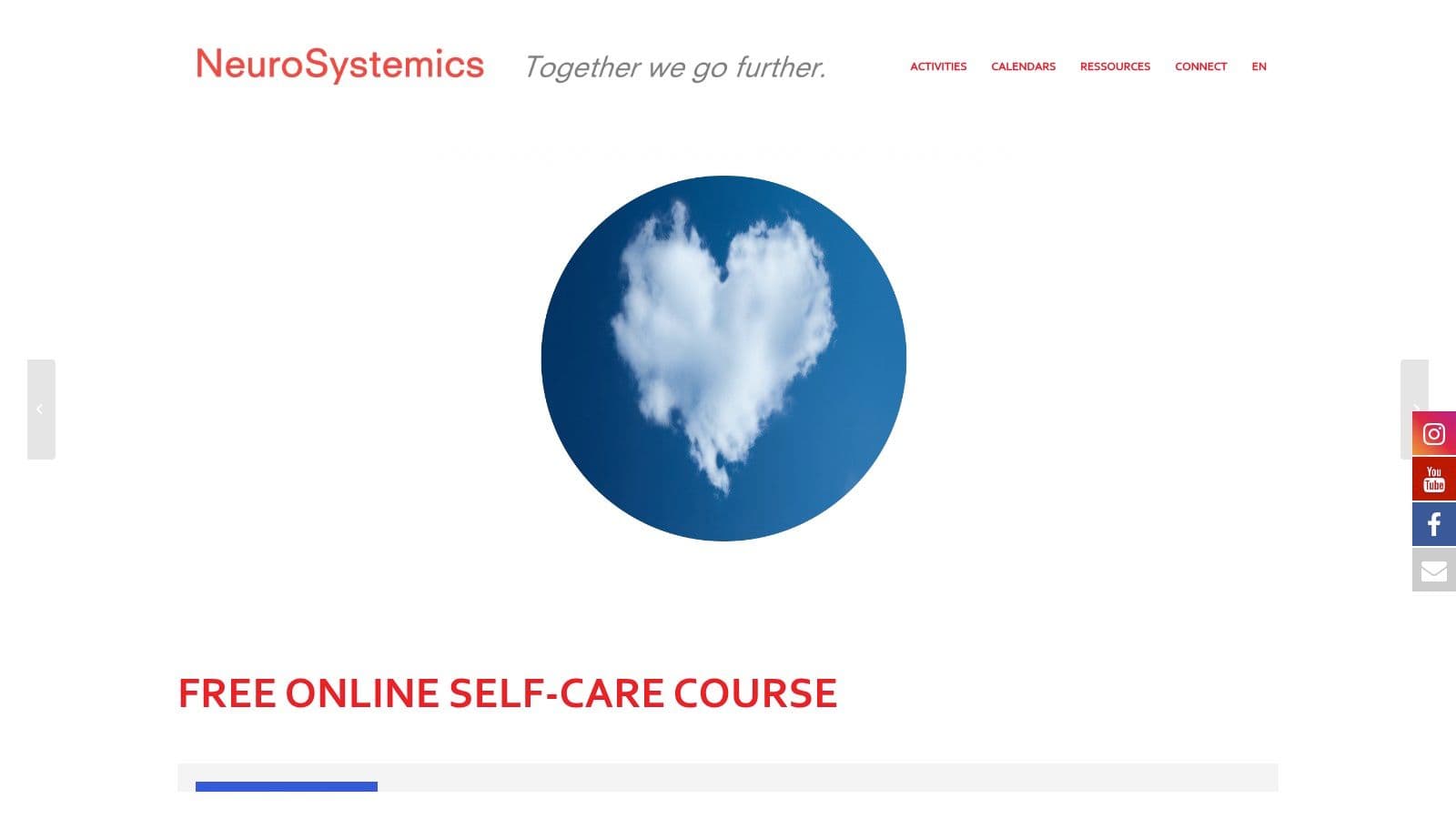
You start a self-paced self-love course with good intentions, miss three days, and stop opening it. If that pattern sounds familiar, NeuroSystemics' Free Online Self-CARE Course deserves a closer look.
Its appeal is not polished production or academic branding. It is the combination of self-care with nervous system awareness, compassion, and, at times, live cohort support. For learners who do not change well in isolation, that format can be more useful than another library of videos.
That distinction matters.
A lot of self-love content focuses on beliefs, affirmations, or journaling prompts. NeuroSystemics appears to work from a different assumption. Self-worth is harder to practice when your body is stuck in stress, vigilance, or shutdown. If your issue is not lack of insight but lack of regulation, a course with a trauma-sensitive tone may fit better than a purely mindset-based option.
The trade-offs are practical, not minor:
- Possible live cohort structure: Better for people who follow through with dates, group rhythm, and external accountability.
- Nervous-system-aware framing: Stronger fit if standard self-help language feels simplistic or irritating.
- Less predictable access: You may need to wait for the next session instead of starting instantly.
- Lower academic signaling: Useful and thoughtful does not always come with the prestige cues some learners want.
I would point this course toward a specific reader: someone who has already tried broad happiness content and needs a gentler, body-aware entry point. It is also a good example of how to diagnose course fit. If you want research-heavy frameworks, choose one of the science-led options earlier in this guide. If you want practice, pacing, and emotional safety, this type of course may hold your attention longer.
There is also a creator lesson here. Cohort-based self-care courses solve a real completion problem because community and timing often keep people engaged better than passive content alone. If you build education in this category, the opportunity is not just to post lessons. It is to design a format people can stay with.
Top 10 Free Self-Love Courses Comparison
| Course / Product | Format & Core Features | Quality ★ | Price & Value 💰 | Target 👥 | Unique Selling Point ✨ |
|---|---|---|---|---|---|
| The Science of Well‑Being (Yale on Coursera) | Self‑paced videos, quizzes, weekly "rewirements" | ★★★★★ 🏆 | 💰 Free audit · Paid certificate | 👥 Evidence‑driven learners | ✨ University research + habit‑focused practice |
| The Science of Happiness (UC Berkeley on edX) | Self‑paced weekly practices & readings | ★★★★☆ | 💰 Free audit · Paid certificate | 👥 Those seeking compassion & meaning | ✨ Emphasis on gratitude & compassion research |
| Managing Happiness (HarvardX) | Lectures, surveys, reflection tools | ★★★★☆ 🏆 | 💰 Free audit · Paid certificate | 👥 Learners focused on purpose & habits | ✨ Practical, habit‑building frameworks from Harvard |
| Mindfulness for Wellbeing & Peak Performance (Monash) | 4‑week course with community discussions | ★★★★☆ | 💰 Free limited runs · Upgrade for cert | 👥 Beginners wanting mindfulness + performance | ✨ Peer discussion + performance lens |
| Palouse Mindfulness – 8‑Week MBSR | Self‑paced 8‑week curriculum, guided practices, manuals | ★★★★☆ 🏆 | 💰 Completely free | 👥 Self‑directed learners seeking full MBSR | ✨ Full MBSR curriculum + printable manuals |
| Insight Timer (app) | App: guided meditations, courses, timers, hubs | ★★★★☆ (varies) | 💰 Large free tier · Premium features paid | 👥 Mobile users needing daily practice | ✨ Huge free library + community features |
| CompassionateUSA, Free Micro‑Course | Short videos & exercises; microlearning format | ★★★☆☆ | 💰 Free | 👥 Busy beginners & quick‑win seekers | ✨ Micro‑course: concise, easy start |
| Mindfulness.com, 4‑Day Self‑Love Workshop | 4 daily lessons with guided exercises | ★★★☆☆ | 💰 Free (short workshop) | 👥 Newcomers wanting a primer | ✨ Time‑bounded intro to self‑compassion |
| Alison, Boost Body Confidence (Free) | Module‑based lessons, quizzes, progress tracking | ★★★☆☆ | 💰 Free (ads) · Paid cert | 👥 People targeting body‑image work | ✨ Practical modules + progress tracking |
| NeuroSystemics, Free Self‑CARE (4 Weeks) | 4‑week C.A.R.E. program; trauma‑sensitive, occasional live cohorts | 💰 Free (cohort‑dependent) | 👥 Those needing trauma‑sensitive support | ✨ Nervous‑system tools + cohort options |
Your Next Step Commit to Your Own Well-Being
You open three tabs, save two courses for later, and tell yourself you'll start this weekend. A month passes. The actual problem usually is not motivation. It is choosing a format that does not match your current energy, attention, or level of support.
Start with fit. A science-based course such as Yale or Harvard suits people who stay engaged through research, frameworks, and reflection prompts. Berkeley tends to fit learners who want warmth, compassion practices, and direct emotional application. Palouse works well for people ready to practice consistently over several weeks. Insight Timer suits people who need short sessions they can repeat on difficult days, not just on ideal ones.
Capacity matters as much as interest.
I have seen exhausted learners pick the most ambitious option on the list, then treat inconsistency as personal failure. In practice, a shorter container is often the better choice. Mindfulness.com or the CompassionateUSA micro-course can give someone enough structure to begin without triggering the familiar cycle of overcommitting, falling behind, and quitting. Starting small is not avoidance. It is good course selection.
As noted earlier, the self-improvement field keeps growing. That creates more access, but it also creates more noise. Free can mean generous and useful. It can also mean shallow, vague, or designed mainly to funnel you elsewhere. The practical test is simple. After one lesson, do you have a clearer understanding of yourself, one specific exercise to repeat, and a reason to come back tomorrow? If not, move on.
Use a short decision rule. Pick one course based on how you learn. Commit to a real trial period. If the material is strong but the format is wrong, switch formats, not goals. A poor fit does not mean self-love work failed. It means the delivery method did.
This section also matters for creators, not only learners. The strongest self-love courses do more than share encouragement. They give people a sequence, a practice rhythm, and some form of accountability. That is the difference between content people admire and a course people finish.
If you're a creator, coach, or educator thinking beyond taking a free self love course and toward building one, Zanfia is a pragmatic platform to consider. It is set up as an AI team you can direct by chat or voice: you dictate what you want and the assistant performs any action the interface offers, from drafting a lesson to configuring a checkout, so you spend less time clicking through menus and more time working with your students. That work then lands under one brand, on your own domain, across courses, a community with an AI agent that writes from your own content (and labels everything it publishes as AI), paid newsletters, memberships, downloads and consultations. The checkout is built to sell, with order bumps, payment plans that let you split a $600 course into four payments, and a test mode so you can buy your own product end to end before your first real student sees it. Zanfia includes native video hosting, and takes 0% platform fees on customer sales as of publication, with only payment operator fees applying. For self-love educators, that matters because the strongest programs often combine lessons with discussion, accountability, and ongoing membership support, all in one branded place instead of a scattered tool stack. There is a 14-day free trial with no credit card required, so you can test the fit before committing; feature availability depends on the plan, so check the current Zanfia pricing for what your tier includes.
FAQ
Which free course fits me if I want structured, evidence-based habit change rather than soothing content?
Yale's The Science of Well-Being on Coursera is built around lessons, reflections, and repeated daily practices in a university setting. It works best if you trust frameworks and tend to abandon courses that feel vague. The certificate is optional and paid, but the learning itself is free.
What should I pick if I feel too tired or skeptical to commit to an 8-week program?
Start with a low-friction option like CompassionateUSA's free micro-course or Mindfulness.com's 4-day self-love workshop. Both are short, beginner-friendly, and useful when your capacity is low or self-love language feels off-putting. You can move to something deeper once resistance drops.
How do I choose between a structured course and a flexible app like Insight Timer?
Pick a structured course if you want a defined start, finish, and curriculum, such as Palouse Mindfulness or the Harvard, Yale, Berkeley, or Monash options. Choose Insight Timer if your schedule is inconsistent and you need short sessions you can fit before bed or work. Insight Timer works best when you constrain yourself to one teacher, one length, and one theme for several days.
Can a free self-love course replace therapy or counselling?
No. A free course can help you notice self-criticism, practice a healthier response, and build routines, but it is not a substitute for personal support. If shame, burnout, grief, or old relational patterns sit underneath the problem, the article suggests pairing a course with counselling or similar direct support.
I'm a creator. What does this list suggest about designing my own self-love or wellness course?
The main gap in the category is accountability, not information, so design for behavior rather than good intentions. Mix guided paths with modular lessons, reflection prompts, and community touchpoints people can use in small bursts. Platforms like Zanfia let you package courses, a community, newsletters, and checkout under one member account (plan-dependent, see zanfia.com/pricing).
Choose one option from this list today and do the first lesson before you close your browser. If self-compassion also connects to your health goals, this perspective on a path to weight loss through self-compassion is a useful reminder that kindness supports change better than shame.