

Email Segmentation Best Practices for 2026: Boost Engagement
Sending the same email to your entire list is like shouting into a crowded room and hoping the right person hears you. For digital creators, where connection and relevance are currency, this scattergun approach falls flat. Real growth comes from understanding that your audience isn't a monolith; it's a dynamic collection of individuals at different stages of their journey with you.
Effective email segmentation, the art and science of dividing your audience into smaller, targeted groups, is the key to unlocking meaningful conversations, driving higher engagement, and ultimately, boosting sales for your online courses, communities, and digital products. It changes your email marketing from a generic broadcast into a series of personal, valuable interactions. By sending the right message to the right person, you build trust and demonstrate that you understand their specific needs.
This guide dives deep into the most crucial email segmentation best practices you need to master. We'll move beyond the basics, offering actionable strategies tailored for creators and online entrepreneurs. You'll learn how to identify your most loyal fans, re-engage passive subscribers, and deliver the perfect offer at the perfect time. For creators using an integrated platform like Zanfia, an AI team that runs a creator business through chat, voice and an MCP endpoint your own agents can call, these practices become even more potent. The assistant performs any action available in the interface, courses, communities, newsletters and 12 product types live under one brand, and the checkout is built to sell with order bumps, installments and test mode. Availability of the deeper AI capabilities depends on the plan, see the current Zanfia pricing. To further master the art of targeting and personalization, explore additional email segmentation best practices designed for ecommerce growth. Let's explore how to make every email you send feel like a one-to-one conversation.
1. Demographic Segmentation
Demographic segmentation is a foundational strategy for organizing your email list. It involves grouping subscribers based on objective, statistical attributes like age, gender, geographic location, and income level. This method provides a clear, data-backed starting point for personalizing your communication, making it one of the most reliable email segmentation best practices for creators and small businesses. By understanding who your subscribers are in a measurable sense, you can move beyond one-size-fits-all messaging.
For example, an online educator using a platform like Zanfia could segment their audience by geographic location to offer courses with region-specific content or schedule live sessions in convenient time zones. A digital creator selling e-books could target different age brackets with promotions for designs that resonate with generational aesthetics. The core benefit is relevance; content tailored to a specific demographic feels more personal and is more likely to drive action.
Key Insight: Demographic data provides the structural "bones" of your audience profile. While not a complete picture, it’s a non-negotiable first step for creating relevant, high-performing email campaigns that respect your audience's context.
Putting Demographic Segmentation into Practice:
- Data Collection: Add optional fields to your signup forms or create a "preference center" where subscribers can share their details. Frame it as a way to receive more relevant content.
- Location-Based Offers: Use IP-based location data to send timely promotions. For instance, you could tailor a course announcement to a specific region, or create language-specific email templates for international segments.
- Tiered Communication: If you offer products at different price points, segmenting by estimated income level can help. You can promote premium membership tiers to higher-income brackets while offering entry-level digital products to others, all managed through Zanfia’s integrated checkout with flexible monetization options (one-time, subscription, installments).
By implementing these tactics, you create a more refined and effective marketing funnel. To explore how this fits into a broader plan, you can discover more in this guide to audience segmentation strategies.
2. Behavioral Segmentation
Behavioral segmentation moves beyond who your subscribers are and focuses on what they do. It involves grouping subscribers based on their specific actions, interactions, and engagement patterns with your emails, content, and digital products. This powerful method tracks behaviors like email open rates, click-throughs, course progress, product purchases, and website browsing history, making it one of the most effective email segmentation best practices available. It allows you to respond directly to user intent and engagement levels with highly relevant, timely communication.
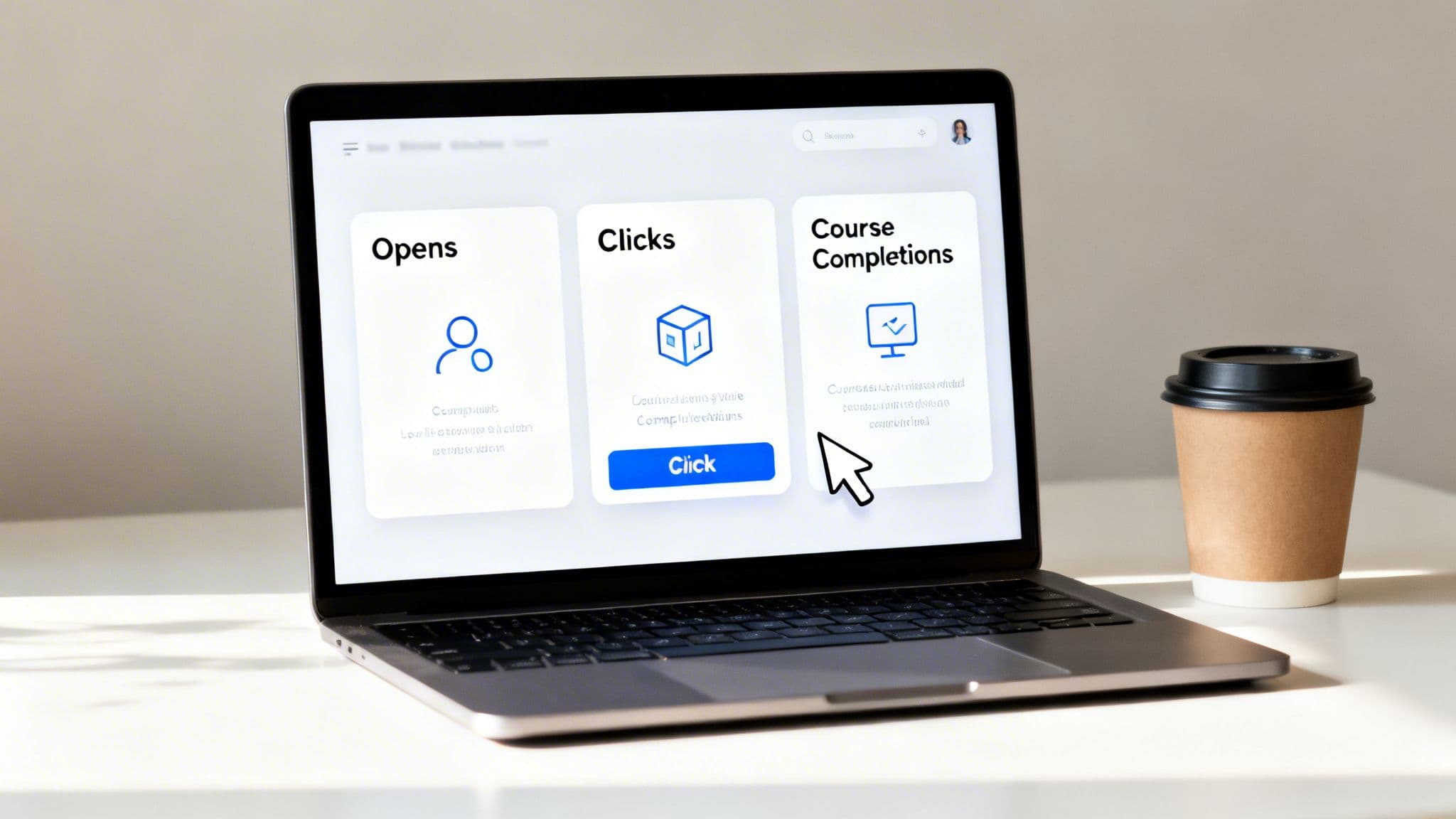
For a creator on Zanfia, this means you can identify which course participants have stalled on a specific module and automatically send them an encouraging email with a helpful tip. You could create a segment of your most engaged readers, those who open every newsletter, to offer them early access to a new product. Conversely, you can tag customers who viewed a digital product page but didn't buy and follow up with a campaign that addresses potential objections or highlights key benefits, directly addressing their demonstrated interest. This approach keeps everything unified under your brand, and because the assistant can perform any action available in the interface by chat or by voice, you can describe the follow-up you want out loud instead of clicking through menus.
Key Insight: Actions speak louder than demographics. Behavioral data reveals your audience’s intent and interest level in real-time, allowing you to create automated, personalized journeys that guide subscribers from casual interest to loyal customer.
Putting Behavioral Segmentation into Practice:
- Track Key Actions: Monitor critical behaviors such as email opens, link clicks, course enrollments, specific module completions, and community post activity. Zanfia’s integrated system makes it easy to see how users interact across your courses and community.
- Automate Your Workflows: Set up automated sequences triggered by specific user actions. For example, automatically send a welcome sequence to new course enrollees or a re-engagement campaign to subscribers who haven't opened an email in 60 days. To see how this can save you hours of work, you can explore what is possible with email automation .
- Segment by Content Preference: Use click tracking to understand what topics resonate most. If a subscriber consistently clicks on links related to a particular subject, you can tag them and send more of that specific content, increasing relevance and building authority.
- Identify At-Risk Users: Create segments for users who have started a course but not finished or whose engagement has dropped off. A targeted incentive or a simple "checking in" email can often reactivate their interest before they churn.
3. Purchase History and Product Affinity Segmentation
Segmenting your audience based on their purchase history is one of the most effective email segmentation best practices you can adopt. This method involves grouping subscribers based on what they've bought, how often they buy, and their overall spending. It moves beyond knowing who your audience is to understanding what they value, allowing you to create highly targeted and relevant marketing messages based on demonstrated behavior.
For a creator using a platform like Zanfia, this opens up powerful opportunities. If a subscriber purchases a beginner-level course on digital marketing, you can automatically add them to a segment that will later receive an offer for an advanced SEO masterclass. Similarly, you can identify your most loyal customers, those with the highest lifetime value, and reward them with exclusive early access to new products or special discounts. Because 12 product types live under one brand on Zanfia, from courses and communities to ebooks and consultations, the transactional data behind them is unified and easy to act on, and the checkout can package the next offer with an order bump or an upsell at the point of sale.
Key Insight: Past purchase behavior is the single best predictor of future purchase intent. Segmenting by product affinity allows you to stop guessing what your audience wants and start responding to what they have already shown you they need.
Putting Purchase History Segmentation into Practice:
- Create Product Categories: Tag every purchase with clear categories (e.g., "beginner course," "premium membership," "e-book"). Zanfia’s system allows you to easily track which customer has access to which product, creating a solid foundation for this segmentation.
- Implement Personalized Recommendations: Use dynamic content blocks in your emails to show each subscriber products that complement their past purchases. This automated cross-selling and upselling is a direct path to increasing customer lifetime value.
- Analyze Purchase Paths: Identify which products are frequently bought together or in sequence. You can use this data to create compelling bundle offers or craft email sequences that guide subscribers from one product to the next logical step in their journey.
- Build Loyalty Tiers: Create segments for "VIP Customers" based on total spending or number of purchases. Target this group with special perks, early announcements, and appreciation campaigns to foster loyalty and encourage advocacy.
By aligning your email content with actual purchasing habits, you create a more personalized and profitable customer experience. To better understand how this works, you can explore this detailed guide on upselling and cross-selling strategies.
4. Engagement Level Segmentation
Engagement level segmentation involves categorizing subscribers based on their interaction with your emails and content. This means dividing your list into groups like highly engaged, moderately engaged, and inactive based on metrics such as open rates, click rates, and interaction frequency. For creators and small businesses, this is one of the most critical email segmentation best practices for maintaining a healthy and profitable email list. It helps protect your sender reputation and ensures you focus your best efforts on your most interested audience members.
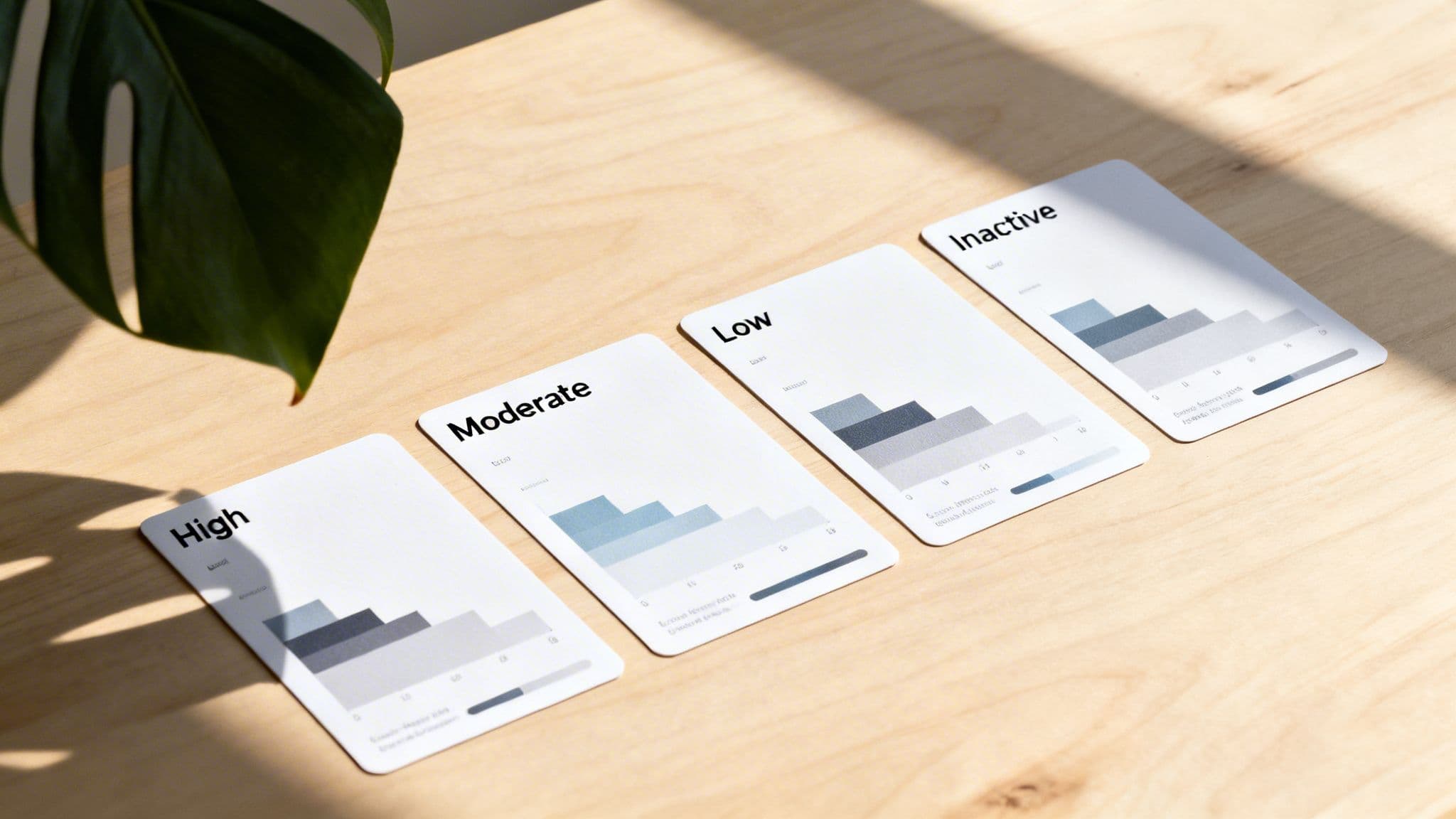
For a creator on Zanfia, this method is essential for identifying the "power users" of their online courses or the most active participants in their integrated community platform. For instance, you could send early access to a new workshop to your highly engaged segment, while creating a simplified, lower-frequency email sequence for those who are less engaged. The primary goal is to match your communication intensity with your audience's interest level, preventing list decay and nurturing passive followers back to activity.
Key Insight: Not all subscribers are created equal in terms of interest. Segmenting by engagement lets you reward your most loyal fans, re-engage those drifting away, and protect your deliverability by cleaning out inactive contacts. It's a proactive approach to list management.
Putting Engagement Level Segmentation into Practice:
- Define Engagement Metrics: Establish what "engagement" means for your business. It could be email opens, link clicks, course lesson completions, or posts in your Zanfia community.
- Create Tiered Strategies: Design separate email cadences for each segment. Highly engaged subscribers might receive exclusive content and special offers, while moderately engaged contacts get your standard newsletters. Inactive users should be entered into a win-back campaign.
- Automate Win-Back Campaigns: Before removing an inactive subscriber, use an automated email sequence to try and re-engage them. Offer a special discount or highlight your most popular content to remind them of the value you provide. This helps to predict and reduce customer churn before it happens.
- Monitor and Adjust: Engagement levels are not static. Review your segments quarterly to see how subscribers move between tiers and adjust your content strategy accordingly. This data can also reveal which topics or offers generate the most interaction.
5. Interest and Content Preference Segmentation
Segmenting your audience based on their stated interests is the most direct way to deliver value. This approach involves grouping subscribers based on what they explicitly tell you they want to receive, often through preference centers, signup form selections, or survey responses. This strategy is one of the most powerful email segmentation best practices because it removes guesswork, allowing you to send content that aligns perfectly with a subscriber’s declared needs.
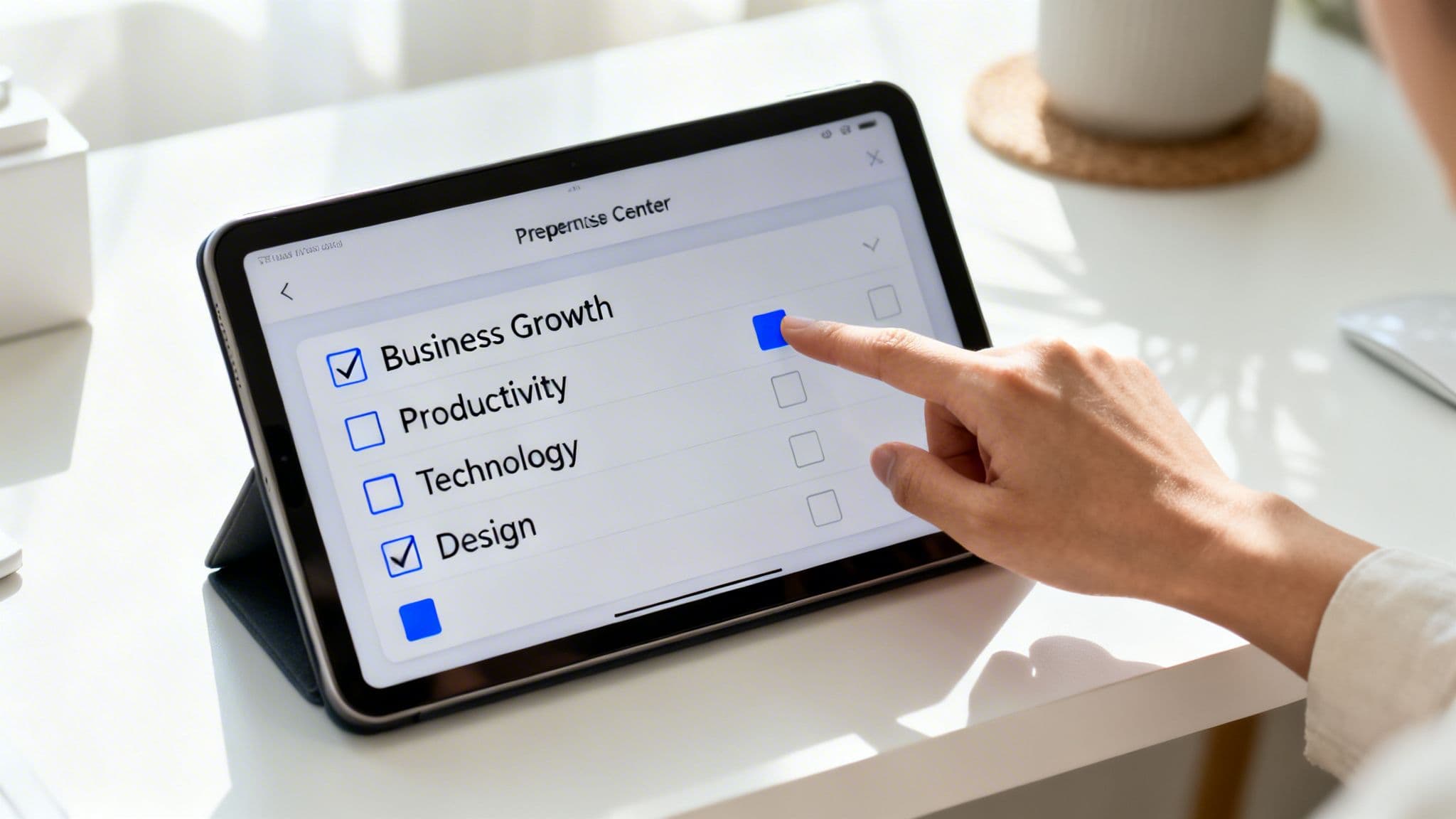
For a Zanfia user managing a diverse portfolio of online courses and community channels, this method is fundamental. An educator could allow new subscribers to choose topics like 'business growth', 'productivity', or 'technology'. Consequently, when a new course on productivity is launched, it can be announced directly to the segment that has already expressed a strong interest. This ensures that your messages are welcomed, not ignored, significantly boosting engagement and conversion rates.
Key Insight: While behavioral data shows what subscribers do, interest-based segmentation captures what they want. Empowering subscribers to choose their content journey builds trust and makes your communication feel like a personalized service rather than a generic broadcast.
Putting Interest and Content Preference Segmentation into Practice:
- Granular Preference Centers: Implement an easy-to-use preference center where subscribers can update their interests at any time. Inside Zanfia, you can link these preferences to specific tags or grant access to topical community channels, automating content delivery.
- Progressive Profiling: Don't overwhelm new subscribers with too many options. Start by asking for one or two key interests at signup, then use follow-up emails to gather more detailed preferences over time.
- Topic-Specific Signups: Create different signup forms or landing pages for different lead magnets. A person who downloads a guide on "Starting a Podcast" can be automatically tagged with an 'audio content' interest, priming them for future related offers.
- Confirmation and Communication: After a subscriber sets their preferences, send a confirmation email. This sets expectations and reinforces the value you provide by personalizing their experience, a key step in building a loyal audience.
6. Lifecycle Stage Segmentation
Lifecycle stage segmentation organizes subscribers based on their position in the customer journey, from initial awareness to becoming a loyal advocate. This method acknowledges that a new lead requires different communication than a long-term, repeat customer. It is one of the most effective email segmentation best practices because it aligns your messaging directly with the subscriber's current relationship with your brand, ensuring every email feels timely and relevant.
For example, a creator using Zanfia can use this to guide new course students through a welcome sequence that introduces community features and sets expectations. In contrast, they might send a separate campaign to at-risk members who haven't logged in recently, offering new content or a special Q&A session to re-engage them. The goal is to nurture the relationship appropriately at every step, moving individuals from prospect to active customer and eventually to a brand advocate who promotes your work.
Key Insight: Your audience is not a static group; they are on a journey. Segmenting by lifecycle stage allows you to meet them exactly where they are, providing the right value at the right time to build momentum and foster loyalty.
Putting Lifecycle Stage Segmentation into Practice:
- Map Your Journey: Define the specific stages for your business, such as Lead → First-Time Course Buyer → Active Community Member → Repeat Purchaser → Advocate. Zanfia’s powerful automations can trigger stage changes based on purchases or community activity.
- Stage-Specific Nurturing: Create dedicated email sequences for each stage. An onboarding flow for new membership subscribers should highlight key benefits and guide their first actions, while a sequence for loyal customers could offer VIP access or early-bird discounts on upcoming products.
- Identify At-Risk Customers: Use platform analytics to spot customers with dropping engagement, like infrequent logins or low course completion rates. Trigger a re-engagement campaign with valuable content or a personal check-in to bring them back.
- Cultivate Advocates: For your most engaged and loyal customers, send emails requesting testimonials or inviting them to a referral program (coming soon on Zanfia). This not only gathers social proof but also rewards their dedication.
7. Revenue Potential and Customer Value Segmentation
Segmenting your audience based on their monetary value is a powerful way to focus your resources where they will have the greatest impact. This approach involves grouping subscribers based on their purchase history, spending habits, and potential to become high-value customers. For creators using a platform like Zanfia to manage multiple revenue streams, this is one of the most critical email segmentation best practices for driving sustainable growth. It allows you to distinguish between your top-spending members, mid-tier customers, and high-potential prospects.
For instance, a creator running a premium community on Zanfia can identify their most invested members and offer them exclusive benefits like personal outreach or early access to new courses. Conversely, a subscriber who has only purchased a low-cost e-book but actively engages with free content could be identified as high-potential and nurtured with targeted emails highlighting the value of a flagship course or membership. This strategy ensures you deliver the right experience to the right customer at the right time, maximizing both satisfaction and revenue. Because the checkout supports installments and order bumps, a mid-tier customer who hesitates on a $600 course can be offered four payments of $150 instead of a single charge.
Key Insight: Not all subscribers are created equal in terms of their financial contribution. Segmenting by customer value allows you to allocate your time and marketing budget strategically, nurturing your most profitable relationships while systematically converting prospects.
Putting Customer Value Segmentation into Practice:
- Calculate Customer Lifetime Value (CLV): Use your platform’s analytics to track total spending per customer across all products, including course purchases, membership renewals, and e-book sales. This data forms the basis of your value tiers. To get started, you can explore this detailed guide on how to calculate customer lifetime value .
- Create Tiered Experiences: Establish clear value-based segments such as "VIP," "Active Customer," and "Prospect." On Zanfia, you can use automated rules to grant VIPs access to exclusive community channels or send them personalized thank-you messages, creating a premium experience that encourages loyalty.
- Identify Upsell Opportunities: Monitor the spending patterns of your mid-tier customers. If someone has purchased multiple standalone workshops, create an automated email sequence offering them a special discount on an all-access membership bundle, framing it as the next logical step in their learning journey.
8. Device and Channel Preference Segmentation
Device and channel preference segmentation organizes your audience based on how they interact with your content. This involves distinguishing between mobile and desktop users, as well as understanding their preferred communication channels, like email, in-app notifications, or SMS. This approach is a critical email segmentation best practice because it ensures your message is not just relevant in content but also optimized for the context in which it’s consumed.
For example, a creator on Zanfia selling online courses with native video hosting can see if most students access lessons on their phones. This insight would prompt them to create short, mobile-optimized video previews and use larger, tappable buttons in their emails. Conversely, if analytics show a segment of users primarily engages with emails on desktop, you could send them more detailed, multi-column layouts. The goal is to meet your subscribers where they are, delivering a smooth and accessible experience that respects their viewing habits.
Key Insight: The medium is part of the message. Optimizing your communications for your audience's preferred devices and channels removes friction and demonstrates a deep understanding of their user experience, significantly boosting engagement.
Putting Device and Channel Preference Segmentation into Practice:
- Analyze User Data: Use your email platform’s analytics to track device types and email client information. Zanfia’s integrated system can provide insights into how community members and students access content, informing both your course design and communication strategy.
- Optimize for Mobile: Design your emails with a mobile-first approach, as a large portion of audiences check emails on their phones. Use a single-column layout, concise copy, and large fonts and buttons to ensure readability and usability on small screens.
- Ask for Preferences: Add a question to your signup form or a preference center asking subscribers how they prefer to hear from you. For example, you could offer course reminders via a channel they opt into, creating a more direct and immediate line of communication.
- Segment by Engagement Channel: If you use multiple channels, segment users accordingly. A subscriber who joins your community and engages with in-app notifications on Zanfia might respond better to direct platform messages than to a traditional email newsletter.
9. Persona-Based Segmentation
Persona-based segmentation moves beyond simple data points to create rich, semi-fictional representations of your ideal customers. This method involves developing detailed profiles based on research, data, and customer feedback. For creators using a platform like Zanfia, this is one of the most effective email segmentation best practices because it addresses the why behind a subscriber's actions. By understanding each persona's specific goals, challenges, and motivations, you can tailor your messaging to resonate on a much deeper level.
For instance, you can create distinct personas for your audience. A seasoned creator running a mature business would receive emails highlighting efficiency, scale, and Zanfia’s current 0% platform commission on customer sales. A first-time expert stuck in pre-launch would respond better to messaging that emphasizes a simple, low-risk way to launch a first product, using test mode to buy their own checkout before going live. Meanwhile, a premium expert selling high-ticket work would be most interested in the elegant, custom-domain storefront that matches their brand. This approach ensures each group receives communication that speaks directly to their needs.
Key Insight: Personas transform abstract data into relatable human stories. This allows you to communicate with empathy and precision, aligning your product's value directly with your audience's core desires and pain points.
Putting Persona-Based Segmentation into Practice:
- Audience Research: Conduct surveys, interviews, and analyze customer data to identify common patterns in goals, pain points, and demographics. Aim to create 3-5 primary personas that represent the majority of your customer base.
- Persona-Specific Messaging: Use the language, tone, and priorities of each persona in your email campaigns. For a scale-focused persona, your emails could focus on scalability, margin protection, and powerful automations, showing how Zanfia supports business expansion while, as of publication, taking no platform cut of customer sales.
- Validate and Refine: Interview existing customers who fit your persona profiles to confirm their accuracy. Share these documented personas with your entire team to ensure consistent messaging across all marketing, sales, and product development efforts. Regularly review and update them to reflect market changes.
10. Seasonal and Temporal Segmentation
Seasonal and temporal segmentation aligns your email marketing with the calendar, capitalizing on time-based events, holidays, and subscriber milestones. This method groups subscribers based on when they signed up, their time zone, or their interest in seasonal events like back-to-school or New Year's. It’s one of the most effective email segmentation best practices because it taps into existing buying mindsets and cultural moments, making your offers feel timely and relevant.
An online educator using Zanfia can deploy this by promoting productivity courses ahead of the new year or offering special bundles during the holiday gift-giving season. Similarly, a creator focused on professional development could target teachers with summer learning programs during their break. The core idea is to connect your content to specific, time-sensitive needs, increasing urgency and driving action. Zanfia’s checkout supports Stripe and PayPal, plus Apple Pay and Google Pay wallets, so seasonal purchases go through smoothly on any device.
Key Insight: Timing is everything. Seasonal and temporal segmentation allows you to sync your marketing efforts with your audience's natural rhythms, ensuring your message lands at the most opportune moment.
Putting Seasonal and Temporal Segmentation into Practice:
- Plan Around Key Dates: Map out your industry's key selling seasons. For example, if you sell courses for parents, August is a prime time for back-to-school campaigns. Plan these campaigns well in advance to build anticipation.
- Celebrate Subscriber Anniversaries: Use the signup date stored in your email platform to trigger an automated anniversary email. You can celebrate a subscriber's one-year journey with your brand by offering a special discount on a premium Zanfia course or membership.
- Optimize Send Times: Use time zone data to schedule your campaigns. Sending an email promoting a "Summer Reading" e-book at 9 AM local time for every subscriber, regardless of where they are, ensures it arrives at the start of their day, not in the middle of the night.
10-Point Email Segmentation Best Practices Comparison
| Segmentation Type | 🔄 Complexity | ⚡ Resources / Setup | 📊 Expected outcomes | 💡 Ideal use cases | ⭐ Key advantages |
|---|---|---|---|---|---|
| Demographic Segmentation | Low — simple static fields | Low — basic signup data | Moderate — improved regional/language relevance | Localization, pricing, regional launches | Scalable, easy to implement |
| Behavioral Segmentation | High — tracking + automation | High — analytics & real-time infra | High — strong personalization & engagement uplift | Re-engagement, churn prevention, activity triggers | Very relevant messaging; predictive insights |
| Purchase History & Product Affinity | Medium — purchase taxonomy needed | Medium — e‑commerce integration & tagging | High — higher AOV and conversion via recommendations | Cross-sell/upsell, bundle offers, loyalty tiers | Boosts ROI and repeat purchases |
| Engagement Level Segmentation | Medium — scoring and thresholds | Low–Medium — engagement metric tracking | High — protects deliverability; improves metrics | Win-back campaigns, prioritizing power users | Maintains sender reputation; reduces fatigue |
| Interest & Content Preference | Medium — preference center + tags | Medium — UI for preferences and tagging | High — higher open rates and satisfaction | Topic-specific newsletters, content routing | Respects subscriber choices; increases relevance |
| Lifecycle Stage Segmentation | High — multi-stage mapping & triggers | High — cross-team integration & automation | High — better onboarding and CLV growth | Nurture flows, onboarding, advocacy programs | Right message at right journey stage |
| Revenue Potential & Customer Value | Medium–High — CLV models & scoring | High — financial tracking & analytics | High — optimizes spend and retention focus | VIP programs, resource allocation, targeted offers | Prioritizes high-value customers for ROI |
| Device & Channel Preference | Low–Medium — device/client detection | Low–Medium — responsive assets & testing | Moderate — improved UX and channel performance | Mobile-first content, SMS reminders, push vs email | Ensures optimal experience per device/channel |
| Persona-Based Segmentation | High — research and persona maintenance | Medium–High — research, content variants | High — deeper relevance and conversion lift | Distinct user types (creators, entrepreneurs, educators) | Aligns messaging and product development |
| Seasonal & Temporal Segmentation | Medium — calendar + timezone logic | Low–Medium — scheduling and campaign planning | Moderate–High — peak-period conversion boosts | Holiday launches, back-to-school, anniversaries | Timely relevance; capitalizes on seasonality |
From Segments to Scale: Your Blueprint for Smarter Marketing
Mastering email segmentation is not about memorizing a long list of tactics; it’s about adopting a customer-centric mindset. Each strategy we have explored, from demographic and behavioral to lifecycle and persona-based, offers a different lens through which to understand and serve your audience. You have seen how to group subscribers by their purchase history, their engagement levels, their content preferences, and even their potential value to your business.
The real power emerges when you begin to layer these segments, creating highly specific micro-audiences you can speak to with exceptional relevance. This is the core of modern, effective communication and the foundation for building a loyal community, not just a list of email addresses. By moving beyond generic "one-size-fits-all" broadcasts, you demonstrate that you are listening to your audience, respecting their time, and are committed to delivering genuine value with every message you send. This shift is what separates thriving online businesses from those that struggle to gain traction.
Turning Theory into Action
The journey from understanding these concepts to implementing them can seem daunting, but it doesn't have to be. The key is to start small and build momentum.
- Choose Your Starting Point: Don't try to implement all ten strategies at once. Select one or two that feel most relevant to your business right now. For many creators, Engagement Level Segmentation is a good first step, allowing you to re-engage inactive subscribers and reward your most loyal fans.
- Define Clear Criteria: Be specific. What exactly qualifies someone as a "VIP Customer"? Is it total spending above a defined threshold, or more than three purchases in the last six months? Clear definitions are essential for clean, reliable segments.
- Automate the Process: Manually managing segments is not a scalable solution. This is where an integrated platform becomes a creator's most valuable partner, turning complex strategies into automated workflows.
This is where a platform like Zanfia earns its place for US creators, small businesses, and educators. Its ecosystem captures data across every touchpoint, from course enrollment and community discussions to newsletter clicks and digital product purchases, then hands that data to an AI team the creator directs by chat or by voice. You can dictate the next segment out loud, or let your own agents work with the platform through the MCP endpoint. That unified data source is the fuel for intelligent segmentation, and the checkout it feeds is built to sell: order bumps, installments and subscription upsells at the moment of purchase, plus test mode so you can buy your own product end to end before the first real sale.
Zanfia’s automation engine puts these email segmentation best practices to work without the technical headache. It can tag users based on their actions, trigger specific sequences, and deliver personalized content that deepens customer relationships. Availability of the deeper AI capabilities depends on the plan, see the current Zanfia pricing.
Imagine granting course access after a sale, adding a new customer to a 'Welcome' community channel, and triggering a targeted onboarding email sequence, all set up by describing what you want. Furthermore, Zanfia charges 0% platform commission on customer sales as of publication, so the revenue you generate from highly-targeted campaigns is not diluted by a platform cut on top of the standard payment processor fee.
The path to scaling your digital business isn't paved with more tools; it's paved with smarter strategy and the right technology to execute it. Start by implementing one of these segmentation practices today. Observe the data, listen to your audience, and refine your approach. To further develop your strategy and drive growth across all your email efforts, consider our comprehensive email marketing guide. With consistency and the right support, you’ll build not just a bigger list, but a more engaged, loyal, and profitable community around your brand.
FAQ
How many segments should I start with as a small creator?
Start with a handful of foundational segments rather than dozens. The article outlines five practical approaches (demographic, behavioral, purchase history, engagement level, and interest-based), so pick two or three that match data you already collect. You can layer more segments as your list and product catalog grow.
What's the difference between behavioral and interest-based segmentation?
Behavioral segmentation tracks what subscribers actually do, such as opens, clicks, course progress, and purchases. Interest-based segmentation captures what subscribers explicitly tell you they want, usually through preference centers or signup form selections. Behavior reveals real-time intent, while stated interests remove guesswork and let readers choose their own content journey.
How do I re-engage subscribers who've gone quiet without hurting deliverability?
Create an engagement segment for inactive contacts and run an automated win-back campaign before removing them. The article suggests offering a special discount or highlighting your most popular content to remind them of the value you provide. If they still don't respond, cleaning them out protects your sender reputation and keeps your list healthy.
Which segmentation strategy predicts future sales best?
Purchase history and product affinity segmentation is the strongest predictor because past buying behavior signals future purchase intent. Group subscribers by what they've bought, how often they buy, and their total spending, then use that data for personalized recommendations, bundle offers, and loyalty tiers. It moves you from guessing what your audience wants to responding to what they've already shown you.
Can AI help me run segmented campaigns instead of configuring them manually?
Yes. Zanfia is built as an AI team you can direct by chat or voice to set up products, checkouts, and follow-ups, and it can act on your workspace through an MCP endpoint. The depth of the AI capabilities depends on the plan (plan-dependent), so check the current details at zanfia.com/pricing.
Ready to stop juggling tools and start building a more profitable, engaged community? See how Zanfia brings your courses, community, and checkout together in one platform, run by an AI team you can direct by chat or by voice and open to your own agents through an MCP endpoint. As of publication, Zanfia charges 0% platform commission on customer sales. Explore Zanfia today and discover how simple it is to implement these best practices and scale your business with confidence.