How to Self-Publish an Ebook Without Amazon (Keep More Profit)
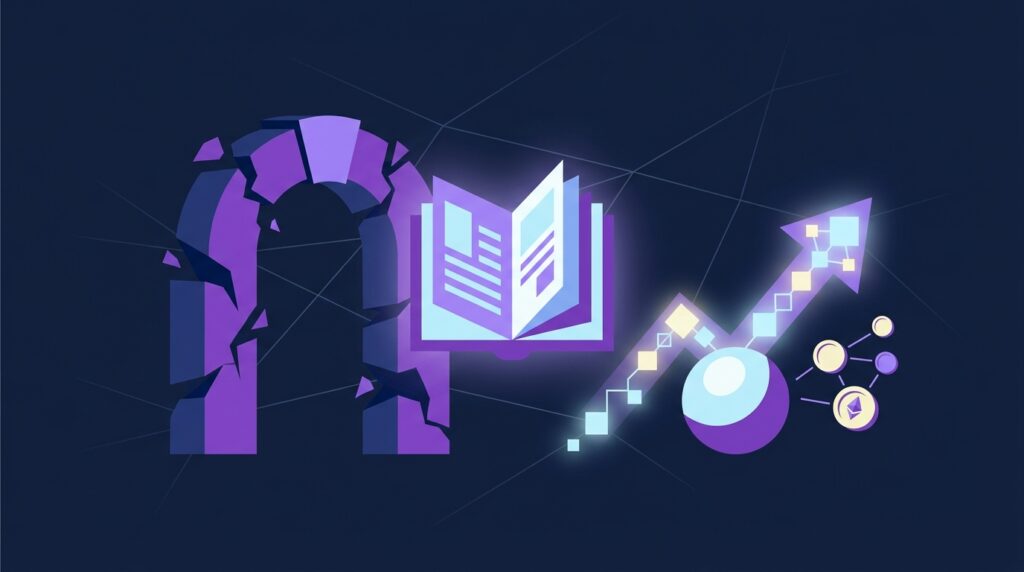
Amazon Kindle Direct Publishing built a generation of self-published authors. It also trained them to accept 35% royalties on books priced under $2.99 or above $9.99, hand over customer data to a competitor, and pray the algorithm keeps surfacing their work. In 2026, more creators are doing the math and walking away.
The shift is not anti-Amazon. It is pro-margin. When you sell an ebook directly through your own platform, you keep 95-97% of every sale instead of 35-70%. You own the customer email. You decide the price. And you can finally bundle the ebook with a course, a community, or a paid newsletter without negotiating with three different terms-of-service documents.
This guide walks through exactly how to self-publish an ebook without Amazon: the royalty math, the tech stack, the tax compliance, the marketing reality check, and the platforms that make it work in 2026.
Table of Contents
Why creators are leaving Amazon KDP in 2026
Amazon KDP is still the largest ebook marketplace in the world. That is precisely the problem. When everyone publishes on the same shelf, three structural issues compound year after year.
First, royalty compression. KDP pays 70% only when your book is priced between $2.99 and $9.99 AND you enroll in KDP Select (90-day exclusivity). Step outside that price band, or refuse exclusivity, and your royalty drops to 35%. For nonfiction creators charging $19, $29, or $49 for a deeply researched guide, 35% is the default, not the exception.
Second, customer ownership. Amazon does not share buyer emails with authors. You can sell 10,000 copies and have zero direct relationship with any reader. When your next book launches, you start at zero again, relying on Amazon’s algorithm to remember you exist.
Third, marketplace saturation. According to recent Author Earnings Report data, the number of self-published titles uploaded to Kindle grows by roughly 20% per year while reader attention does not. The result is downward price pressure and an unwinnable race to the bottom of the bestseller chart.
The creators leaving KDP in 2026 are not amateurs. They are nonfiction authors with audiences, course creators expanding into ebooks, newsletter writers monetizing their archives, and consultants packaging their methodology. They have one thing in common: they already have a way to reach readers without renting Amazon’s traffic.
The royalty math: KDP 35-70% vs direct 100% minus processor
The numbers are the entire argument. Let’s run them on a single ebook priced at $19.
Scenario A: Amazon KDP, 35% royalty (price above .99)
- Cover price: $19.00
- Royalty rate: 35%
- Delivery fee: Approximately $0.15-$0.50 (varies by file size)
- Your take: Roughly $6.40 per copy
- Amazon’s take: Roughly $12.60 per copy
Scenario B: Amazon KDP, 70% royalty (price .99-.99 + KDP Select exclusivity)
- Cover price: $9.99 (maximum to qualify)
- Royalty rate: 70%
- Delivery fee: Approximately $0.15-$0.50
- Your take: Roughly $6.70 per copy
- Catch: You cannot sell this ebook anywhere else for 90 days
Scenario C: Direct sale via your own platform
- Cover price: $19.00
- Payment processor (Stripe): 2.9% + $0.30
- Platform fee: $0 (on a 0% platform like Zanfia)
- Your take: Roughly $18.15 per copy
Direct sales net you 2.8x what KDP pays at the 35% tier, and 2.7x what KDP pays at the 70% tier with exclusivity. Sell 500 copies a month direct at $19 and you generate around $9,075. Sell the same 500 copies on KDP at 35% and you pocket around $3,200. The gap is $5,875 per month, or just under $70,500 per year, for the same effort, the same book, and the same readers.
The counterargument is that KDP brings discovery. Sometimes it does. But discovery from KDP is a renting model: every sale costs you 65-95% of the cover price forever. Direct sales let you reinvest that margin into your own ads, your own email list, and your own product line.
Setting up direct ebook sales (the 3-step process)
Direct ebook sales used to require a developer, a Shopify subscription, a delivery plugin, and a custom checkout flow. In 2026, the entire setup takes an afternoon.
Step 1: Choose a platform that handles file delivery and payments
You need three things in one place: a checkout that accepts cards and wallets, a secure file delivery system that prevents link sharing, and a customer database you actually own. Stitching this together from Gumroad + Mailchimp + your own landing page works, but it taxes your margin and your time. All-in-one creator platforms now handle the entire flow.
Step 2: Upload your ebook and configure pricing
For most nonfiction creators, the right format is PDF (preserves design and pagination) plus an optional EPUB (for readers using Kindle, Kobo, or Apple Books). Many platforms let you bundle both into a single purchase, so buyers download whichever format they prefer.
Pricing decisions to make upfront:
- One-time price. A clean number like $19, $29, or $49 works well for nonfiction.
- Tiered offers. Ebook alone at $19. Ebook plus templates at $49. Ebook plus a 30-minute consult at $149.
- Order bumps. A second related ebook at checkout for $9.
- Discount codes. For launch promotions, affiliates, or your email list.
Step 3: Connect payments and test the full flow
Connect Stripe (or PayPal, or both). Run a real $1 test transaction with a discount code. Confirm the receipt email arrives, the download link works, and the file is delivered without exposing a public URL that anyone could share. If your platform sends a watermarked PDF or expires the download link after a set window, even better.
That is the whole setup. No development, no plugins, no custom landing page if you do not want one.
Payment processing: Stripe, PayPal, and Apple Pay basics
Payment processing fees are the only unavoidable cost when you sell direct. Here is what to expect in the US market in 2026.
Stripe
The default choice for most creators. Stripe charges 2.9% + $0.30 per successful card transaction in the US. International cards add 1.5%. The dashboard is excellent, payouts arrive in 2 business days, and Stripe Radar handles fraud detection automatically.
PayPal
Still worth offering as a secondary option, especially for international buyers and older audiences who prefer it. PayPal Checkout charges 3.49% + $0.49 per transaction in the US (higher than Stripe), but conversion rates often justify the cost because some buyers refuse to enter a card number.
Apple Pay and Google Pay
Wallet payments are no longer optional. According to Pew Research data on consumer payment habits, mobile wallet adoption among US adults under 45 has crossed 60%. If your checkout does not accept Apple Pay and Google Pay, you lose mobile conversions. Both are supported natively through Stripe with zero extra integration work on most modern platforms.
Chargebacks
Selling direct means you handle chargeback disputes yourself. The good news: digital goods chargebacks are rare on legitimate purchases. The better news: a clear refund policy, an instant receipt, and a working download link prevent the vast majority of disputes before they happen. Budget for roughly 0.1-0.3% of revenue in chargeback losses and you will likely overestimate.
EU VAT and US sales tax for direct sales
This is the section creators dread, and it is the section Amazon uses to scare authors into staying. The reality in 2026 is much simpler than it was even three years ago.
US sales tax
Most US states tax digital goods, but only after you cross an economic nexus threshold (typically $100,000 in sales or 200 transactions per year, per state). Below that threshold, you owe no sales tax in that state. Above it, you register and remit. Services like TaxJar, Avalara, or Stripe Tax automate the entire process for $50-$200 per month once you grow into needing it.
For most creators selling under $100,000 in any single state, the practical answer is: collect tax in your home state if required, and ignore the rest until you grow. Always verify with a US-based accountant before launching.
EU VAT on digital goods
If you sell to EU buyers, you owe VAT in the buyer’s country, regardless of where you are based, from the very first sale. The rate ranges from 17% (Luxembourg) to 27% (Hungary). This sounds nightmarish until you realize the EU built the One Stop Shop (OSS) system specifically to solve it: register in one EU country, file one quarterly return, remit VAT for all 27 countries at once.
The bigger win is choosing a platform that handles VAT automatically. Good creator platforms detect the buyer’s country from the IP address and billing address, apply the correct VAT rate at checkout, generate a compliant invoice, and produce the quarterly report you hand to your accountant. You sign one OSS registration form. The platform does the rest.
The pragmatic stance
For US creators selling primarily to US buyers, EU VAT applies to maybe 5-15% of revenue. Set it up correctly from day one and forget about it. The fear of EU VAT has kept more creators on KDP than the royalty math has, and it should not.
Marketing without Amazon’s traffic firehose
This is the honest tradeoff. Amazon brings buyer-intent traffic. Direct sales do not. If you do not have an audience or a way to build one, leaving KDP means zero sales on day one.
The creators who succeed selling direct in 2026 use a small number of repeatable channels. Pick two, not seven.
Email list (the only one that compounds)
According to Harvard Business Review research on direct-to-consumer monetization, owned audiences (email, SMS, app push) convert at 5-15x the rate of rented audiences (social media, paid ads, marketplaces). If you are leaving KDP, your email list is the single most important asset you can build. A 5,000-person engaged list converts roughly the same number of ebook sales per launch as 100,000 cold Amazon impressions.
SEO content
For nonfiction creators, search traffic is durable. Write five long-form articles a year that rank for the problems your ebook solves, and you will compound traffic for years. This is the closest replacement for Amazon’s discovery: people searching for your topic find your free content, then buy your ebook.
Podcast guest appearances
One 45-minute interview on a podcast with your ideal audience routinely outperforms three months of social media posts. The mechanism is simple: you borrow trust from the host for one hour, and listeners convert at 1-3% if you have a clear offer.
Paid ads (only after you have a list)
Meta and YouTube ads work for direct ebook sales, but only after you have proven the funnel converts organic traffic. Running paid traffic to a cold ebook landing page is the fastest way to lose money in 2026. Run paid traffic to a free lead magnet, build the list, then sell the ebook to the list.
Affiliates and referrals
A built-in referral or affiliate system lets your existing buyers earn a commission for recommending your ebook. This is the closest analog to Amazon’s reviewer flywheel, and you control the terms.
How Zanfia delivers direct ebook sales at 0% platform fee
If you are looking for one platform that handles every piece of the direct-sales setup without a 10% or 30% cut, Zanfia is built for exactly this use case.
0% platform fees on every sale
Zanfia charges a flat monthly subscription instead of taking a percentage of your sales. Sell $500 of ebooks this month or sell $50,000. The platform fee is the same. The only deduction from each sale is the payment processor fee (Stripe at 2.9% + $0.30). You keep 97% of every ebook sold.
Full payment stack out of the box
Stripe and PayPal are both supported natively. Apple Pay and Google Pay are enabled automatically through Stripe. Buyers see whichever payment method works for them, you receive the funds in your own connected account, and the platform never touches the money. No payout delays, no held funds, no opaque platform clearing.
Secure ebook file delivery
Upload your PDF or EPUB once. Zanfia generates a secure, expiring download link for each buyer, prevents anonymous link sharing, and sends an automatic delivery email with your branding. If you want to bundle the ebook with a course module, a private community, or a paid newsletter, you do it inside the same dashboard, with one checkout for all of it.
Custom domain and white-label checkout
Your ebook sells under your own domain, with your branding from landing page to receipt email. No “powered by” badge in the customer’s inbox. Buyers experience your brand, not the platform’s. That matters when a reader becomes a customer who later buys your course or joins your community.
EU VAT handled automatically
Zanfia detects EU buyers, applies the correct country-specific VAT rate at checkout, generates a compliant invoice, and produces the report you file under OSS. You do not configure rates. You do not maintain a tax table. You launch and sell.
Built-in referral system
Reward your existing readers for recommending your ebook. Zanfia’s built-in referral program lets you set the commission, generate unique tracking links, and pay out automatically. This is your replacement for Amazon’s reviewer flywheel, except you own the relationship and you set the economics.
Bundling beyond the ebook
The creators getting the most out of leaving KDP are the ones who bundle. Sell the ebook standalone at $19. Sell the ebook plus a 6-module course at $99. Sell the ebook plus the course plus a private community at $199 per year. Zanfia handles courses, communities, paid newsletters, knowledge bases, and consulting bookings under one subscription, so you can ladder up your offer without buying five separate tools.
Mobile app for ongoing engagement
Once a reader has bought your ebook, they download Zanfia’s native iOS or Android app to access any future course, paid newsletter, or knowledge base you publish. The ebook becomes the entry point. The mobile app becomes the retention engine.
FAQ
Do I need an ISBN to self-publish an ebook without Amazon?
No. ISBNs are required for distribution through bookstores and libraries, not for direct sales from your own platform. If you ever plan to list your ebook in Apple Books, Kobo, or Barnes & Noble, you will need an ISBN at that point. For direct sales to your own audience, skip it. It saves $125 per book in the US.
Can I sell on both Amazon KDP and my own platform at the same time?
Yes, as long as you are not enrolled in KDP Select. KDP Select requires 90-day exclusivity for the 70% royalty tier and the Kindle Unlimited program. If you opt out of KDP Select (and accept the 35% royalty cap), you can sell the same ebook on KDP at $9.99 and direct at $19 simultaneously. Many creators use KDP for discovery and direct for margin.
What file format should I use for a self-published ebook?
PDF for design-heavy nonfiction (workbooks, guides, reports). EPUB for prose-heavy reading (memoirs, narrative nonfiction). MOBI is no longer required. Most creators bundle PDF and EPUB into one purchase and let the buyer choose.
How much should I charge for a self-published ebook in 2026?
Direct-sold ebooks typically price between $19 and $79 for nonfiction. The lower end is for general-interest topics. The higher end is for specialized, transformation-focused content (business strategy, technical guides, professional certifications). Avoid the $0.99-$2.99 Amazon trap. You are not competing on price on a marketplace anymore.
How do I handle refunds for direct ebook sales?
Publish a clear refund policy (most creators offer 7-30 day money-back guarantees). Process refunds through Stripe with one click. Budget for 1-3% refund rate for digital goods, which is typically lower than Amazon’s return rate because direct buyers self-select.
Will I lose Amazon search rankings if I leave KDP Select?
Possibly, but only for KDP Select-specific benefits (Kindle Unlimited reads, Kindle Countdown Deals, Kindle Free promotions). Standard Kindle Store search visibility is not tied to KDP Select. Most creators leaving KDP find their Amazon sales were a small fraction of their overall revenue once they built a direct funnel.
Do I need to register an LLC to sell ebooks direct?
Not legally, but most creators do once revenue passes $20,000-$50,000 per year. An LLC separates personal and business liability and simplifies tax filing. Consult a US-based accountant before incorporating. The decision is rarely urgent in year one.
The bottom line on leaving Amazon
Self-publishing an ebook without Amazon is no longer a fringe choice. It is the default path for creators with an audience and the math skills to compare 35% to 97%. The tooling is mature, the tax compliance is automated, and the payment stack works in any country.
The catch, and there is always a catch, is that direct sales require you to bring your own traffic. If you have an email list, a podcast, a YouTube channel, or a body of search-ranking content, leaving KDP unlocks 2-3x the revenue per copy with the same effort. If you have none of those, build one of them first. Then leave.
The creators making this move in 2026 are not anti-Amazon. They are pro-ownership. The ebook is the product. The reader relationship is the asset. See how Zanfia handles direct ebook sales with 0% platform fees, full payment stack, secure file delivery, and your own custom domain.