

How to Get Involved in My Community and Make a Real Impact
Before you can jump into a community, you have to know what you’re bringing to the table. This isn't about having a perfect resume; it's about figuring out where your passions, your skills, and your community’s real-world needs overlap. Getting this right is what turns a vague desire to "get involved" into a clear path that actually feels good and makes a difference.
Finding Your Authentic Place in the Community
The urge to contribute is a powerful thing, but knowing where to start can feel completely overwhelming. It’s tempting to immediately start Googling for organizations, but the most important first step is actually to look inward.
An honest self-assessment isn't just navel-gazing, it’s what prevents you from burning out and ensures your energy goes where it’s needed most.
So, start with what genuinely lights you up. Are you fired up about environmental causes? Mentoring young people? Maybe it's preserving local history or advocating for better public spaces. Your actual interests are the fuel that will keep you going long after the initial excitement wears off.
Aligning Passion with Practical Skills
Once you know what you care about, it’s time to map that to what you’re good at. And I don't just mean your professional C.V. Think broader. Are you a fantastic organizer? A great listener? Do you have a knack for gardening, social media, or fixing things?
- Creative Skills: If you’re a writer, designer, or photographer, local nonprofits are almost always desperate for help creating marketing materials that don't look like they were made in 1998.
- Technical Skills: Your ability to build a simple website, manage a spreadsheet, or troubleshoot basic IT issues is like a superpower for small community groups running on a shoestring budget.
- Interpersonal Skills: If you’re a natural connector or a compassionate listener, you could be perfect for welcoming new members, supporting a community helpline, or mediating discussions.
For many creators and entrepreneurs, finding this fit might even happen within professional coworking communities that bring together people with shared goals. It’s a great way to see how your professional abilities can serve a bigger purpose.
This whole process is about finding that sweet spot where your passions and skills meet a genuine need.
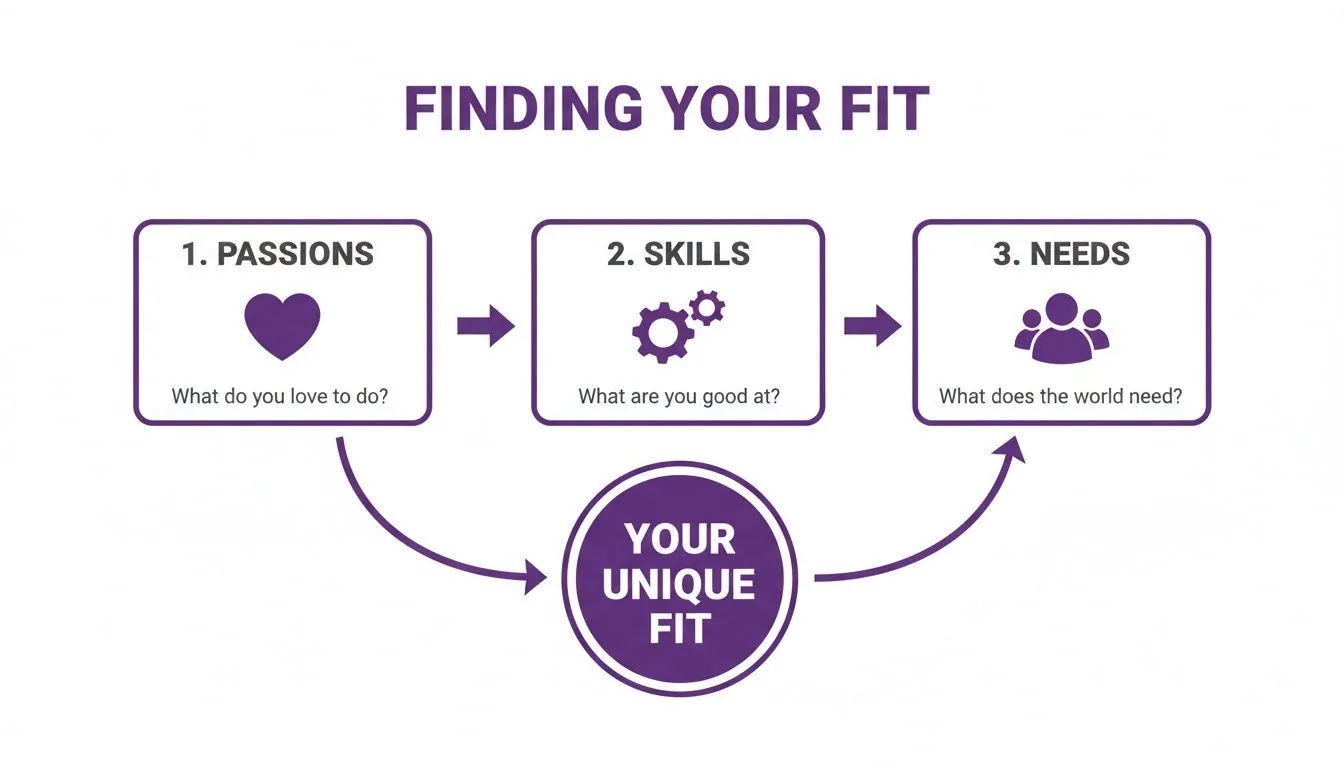
When what you love to do and what you're good at directly solves a problem for a group of people, you've found a sustainable way to contribute. To go even deeper on this, check out our guide on how to find your tribe and connect with the right people.
To make this even more practical, here’s a quick way to brainstorm potential roles for yourself.
Quick Guide to Finding Your Community Fit
This simple chart can help you identify different types of community involvement based on what you enjoy, what you’re good at, and how much time you really have.
| Type of Involvement | Who It's Best For | Typical Time Commitment | Example Activities |
|---|---|---|---|
| Hands-On Volunteering | People who like tangible results and direct interaction. | 2-5 hours/week | Mentoring, park clean-ups, event staffing, food bank sorting. |
| Skills-Based Support | Professionals or hobbyists who want to use specific talents. | Project-based (e.g., 10-20 hours total) | Building a website, designing a logo, managing social media, grant writing. |
| Leadership & Strategy | Those who enjoy planning, organizing, and big-picture thinking. | 5-10 hours/month | Serving on a board, leading a committee, organizing a fundraiser. |
| Advocacy & Awareness | Passionate individuals who want to spread a message. | Flexible | Running an online campaign, speaking at local meetings, writing letters. |
Use this as a starting point. The goal is to match your personal inventory with a real-world role that feels less like a chore and more like a calling.
The most fulfilling community work doesn't feel like work at all. It feels like an extension of who you are. When you align your natural talents with a cause you care about, you create a powerful cycle of positive impact for both you and your community.
Okay, you’ve pinpointed the impact you want to make. Now it's time to find where the action is. This is the crucial step where good intentions become real-world involvement, and it’s easier than you might think.

Your detective work starts online. Your local government’s website, the parks and recreation department, and your public library are fantastic starting points. They often have calendars and directories listing official events, volunteer needs, and registered community groups.
Uncovering Opportunities Both Online and Off
Go deeper than the official channels. Hyper-local social media groups on platforms like Facebook or Nextdoor can be absolute goldmines. Just search for your neighborhood or city name plus keywords like “volunteers,” “community,” or “events.” You’ll find the active discussions and real calls for help.
But don't get stuck behind your screen. The most direct path to getting involved in your community is often through real-world connections.
Your local librarian, the barista at your favorite coffee shop, or a long-time neighbor are walking, talking community directories. A simple question like, "I'm looking for a way to get involved locally, do you know of any interesting projects happening?" can open up a world of possibilities you'd never find online.
These people are embedded in the local fabric. They have firsthand knowledge of which groups are truly making a difference and which ones are genuinely looking for passionate new members.
How to Vet and Connect with an Organization
Once you’ve found a promising opportunity, a quick gut check is essential. Making sure an organization’s values align with yours is what separates a one-time volunteer gig from a long-term passion. Spend a few minutes on their website or social media.
Look for a clear mission statement and, more importantly, proof of their recent work.
Here’s a quick checklist to see if it’s a good fit:
- Review Their Mission: Does their core purpose actually match what you want to achieve?
- Check Recent Activity: Are they actively posting updates, sharing results, or engaging with their followers? A social media profile that hasn't been updated in 6 months can be a red flag.
- Observe Their Tone: How do they talk about their work and their volunteers? A positive and appreciative tone is always a great sign.
Found a group that feels right? Don't overthink the first contact. A simple, direct email or message is all it takes.
Something like this works perfectly: "Hi, I'm [Your Name] and I'm really inspired by your work with [the cause]. I'm looking for ways to get more involved in my community and would love to learn how I can help."
This approach is honest, shows genuine interest, and opens the door for a real conversation. As you become more active, you might even spot gaps where you could create your own digital space for local efforts. You can learn more by reading our article on effective community management using social media. This is the moment your plan becomes action.
Building Your Own Community From the Ground Up

What if the community you’re looking for doesn’t exist yet? Sometimes, the best way to get involved is to build it yourself. This is for the creators and experts who see a gap and feel that pull to fill it with a space where people can truly connect. It's a shift from being a member to becoming a founder.
But before you do anything else, you have to answer one question: Why does this group need to exist? Your answer becomes its soul. Maybe it’s a mastermind for entrepreneurs ready to scale, a safe space for new parents navigating the chaos, or a hub for sustainable gardening nerds. That purpose is your North Star for every decision that follows.
Choosing Your Home Base
Once you’ve nailed down your “why,” the next question is “where.” It’s tempting to default to social media groups, they seem easy and free. But you’re often fighting algorithms, endless distractions, and you never truly own the space. If you do decide to explore that route, resources like A Guide to Marketing on Facebook Groups can offer some solid starting advice.
For a truly professional and branded experience, though, a purpose-built platform is worth considering. Zanfia is set up so an AI team runs the daily work of a creator business: you describe what you want in chat or by voice, and the assistant carries it out across your community, courses, newsletter and checkout. Communities live under your own domain with full white-label control, so instead of scattering members between a Discord for chats, a course tool and a separate newsletter, everything sits in one place designed to end in a sale, with a checkout that supports order bumps, installments and upsells, plus test mode so you can buy your own product before you launch it.
"Zanfia is one of the best tools out there for building a paid newsletter and community." – Wojciech Pisarski, CEO of wMinutę
Sparking Life and Keeping it Going
Getting your community off the ground is one thing; keeping it vibrant is another challenge entirely. The real work is in consistently providing value that gets people talking and forming genuine connections. This is all about your content and engagement strategy.
- Host live events. Think Q&As with experts, casual “ask me anything” sessions, or member spotlights. These create a focal point for interaction.
- Run a challenge. Get your members involved with user-generated content. A "30-day coding challenge" for a developer group or a "weekly recipe share" for foodies are great ways to spark activity.
- Share exclusive content. Use features like read-only announcement channels to post important updates or special insights. It makes members feel like they’re part of an inner circle.
The numbers back this up. Building and managing online communities is no longer a "nice-to-have", a whopping 86% of businesses now see it as essential. In one campaign, a new group grew to over 10,000 members in just two months. The result? They cut support tickets by 40% because members started helping each other, all while achieving a 200% ROI.
Zanfia's built-in analytics give you the deep visibility you need to track your own growth and engagement at every stage of the funnel. For a complete walkthrough, check out our guide on how to create a community online from scratch.
Using Your Expertise to Spark Engagement
Getting involved in a community isn't always about volunteering your time, often, the most powerful way to contribute is by volunteering your knowledge. For creators and business owners, sharing what you know transforms your expertise from a private asset into a shared resource. It’s what sparks real dialogue, forges connections, and provides genuine value.

The trick is to stop thinking about one-way content delivery and start building a two-way street. This could be as straightforward as hosting a weekly "ask me anything" (AMA) on a specific topic or running a specialized workshop. The goal is simple: become the go-to resource who actively listens and responds.
This is especially powerful when building an online community. Modern platforms allow you to create transparent, accessible channels where members feel genuinely heard. Imagine an established consultant who wants a private community for scaling strategies; they can build a high-level peer network from the ground up, all while protecting their margins from hefty transaction fees.
Turning Knowledge into a Community Hub
People are craving direct participation and transparency now more than ever. It's no surprise the global community engagement software market is valued at $2.88 billion in 2024 and climbing. People want to interact on their own terms. In fact, the 2025 community trends report shows a massive push for direct participation, and brands that use analytics to deliver it are seeing 5x higher engagement rates.
Here’s how you can turn your expertise into a real hub for interaction:
- Create a dedicated feedback channel: Use a specific space in your community for suggestions and ideas. This proves their voices matter and gives you a direct line into what they truly need.
- Host expert Q&A sessions: Regularly schedule live sessions to tackle your community's most urgent questions. This builds authority and makes membership incredibly valuable.
- Run specialized workshops: Offer deep dives into specific topics. This can be a free value-add or a monetized offering that helps fund the community itself.
- Develop an online course: Structure your knowledge into a formal course and build the community right alongside it, creating a single, integrated learning environment.
"If you plan to sell digital products and build a community of paying customers, Zanfia is a strong fit." – Mateusz Grzywiński, EFL Teacher
A platform like Zanfia is built around exactly this pattern. You describe what you want to run in chat or by voice, and the AI team behind the platform handles the moving parts across a community, an online course, a paid newsletter or a digital download, all connected to a checkout designed to sell (order bumps, installments, upsells and test mode so you can buy your own product before launch). Because native video hosting and community channels sit next to your course content under one brand and one domain, learning and interaction happen in the same place instead of across three tools.
This approach doesn’t just get you involved; it makes you the very center of a thriving, engaged community. If you want to dive deeper into positioning yourself this way, our guide on what is thought leadership is a great place to start.
How to Sustain and Scale Your Community Impact
Making a one-off contribution feels great, but the real magic happens when you build something that endures. The next step is to shift your mindset from isolated actions to creating sustainable, long-term impact. This is where you graduate from simply participating in a community to building a self-sustaining ecosystem of value.
For individuals and organizations, this means proving your work has made a difference. It’s not enough to just do things; you need to show the results. For entrepreneurs and creators, it means architecting a community model that can grow and thrive, even when you step away.
Measure What Matters to Build Trust
To keep your efforts going, you first have to know what’s actually working. This requires a serious commitment to tracking and analyzing your impact. Showing your reach isn't about vanity, it's how you build unwavering trust, because quiet work doesn't always translate into perceived value.
When you can present hard data on participation, engagement, or member outcomes, you're not just telling people you’re making a difference, you're proving it. This is how you earn buy-in from stakeholders, attract new members, and secure the resources needed to keep the engine running.
This data-driven approach is critical, especially as the industry moves away from one-off projects toward embedded, infrastructure-based community models. In fact, strong community analytics can lead to 40% higher participation. You can learn more about where community engagement is headed in this detailed 2025 review.
Build a Self-Sustaining Ecosystem with Zanfia
For creators, scaling your impact means building a community that doesn't demand your constant, hands-on attention. This is where smart automation and system design become your most powerful assets. Zanfia is designed for this kind of self-sustaining model: instead of stitching tools together, you point an AI team at the work by chat or voice, and it runs your community, courses, newsletter and checkout together under one brand.
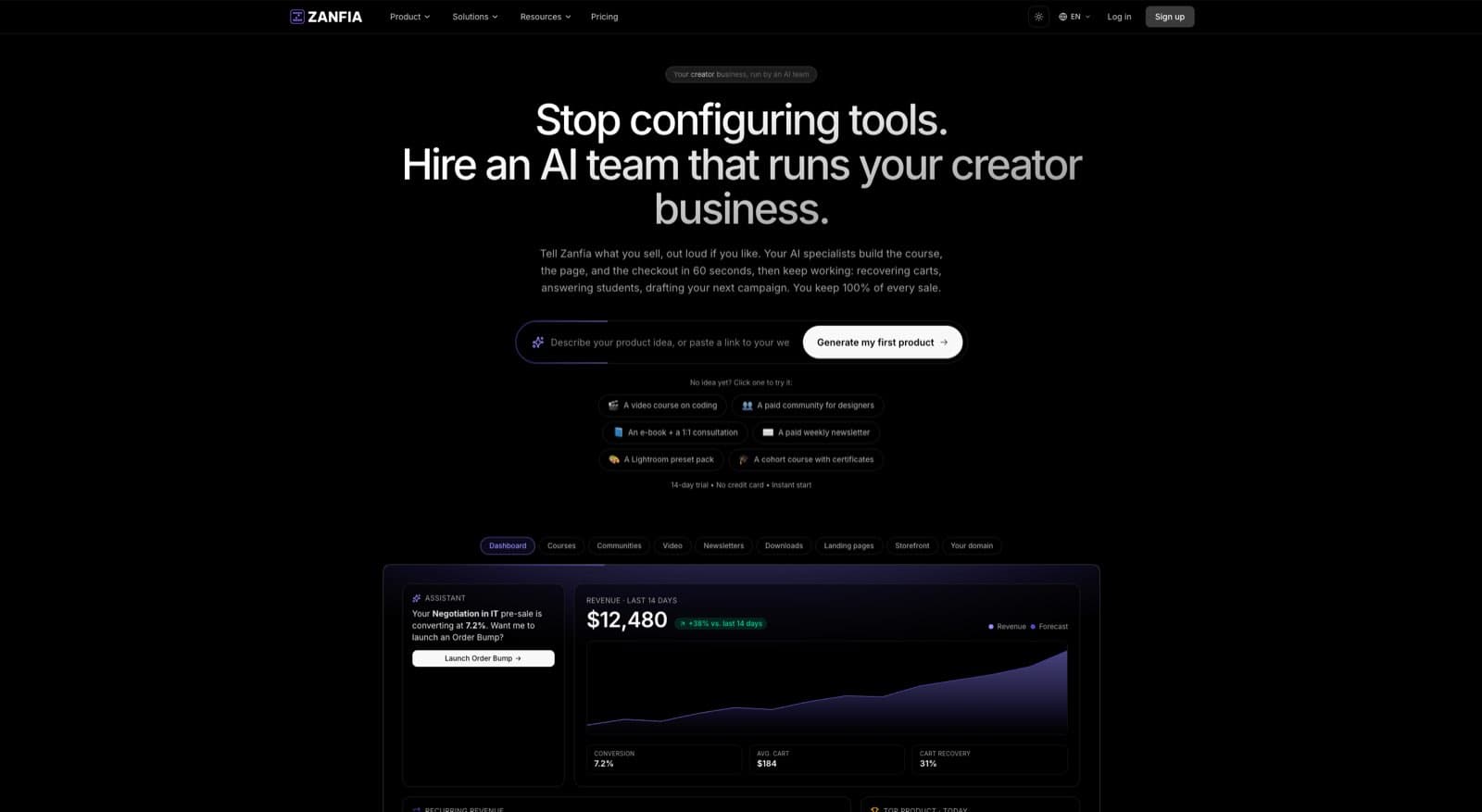
Think about an established expert who has outgrown piecemeal tools. They can use Zanfia to design a tiered membership that automatically guides members through their entire journey.
- Tier 1 (Free): Newcomers get access to a public discussion channel and a free monthly newsletter, getting a taste of the value you offer.
- Tier 2 (Paid): Members unlock your premium courses, get into exclusive Q&A sessions, and join private community channels.
- Tier 3 (VIP): Your most dedicated members get 1-on-1 coaching, early access to new products, and a seat in a high-level mastermind group.
Zanfia's automations make this entire process seamless. When someone buys a product, they are instantly added to the right channels, receive a welcome email sequence, and get immediate access to their courses. Because the checkout is built to sell, you can layer order bumps and installment plans (splitting a $600 course into four payments, for example) without leaving the platform, and use test mode to run the whole flow yourself before your first buyer sees it. This automation can easily save you 5–10+ hours per month, freeing you up to focus on creating high-value content instead of getting buried in admin tasks. Our guide on scaling with systems dives deeper into these strategies.
Zanfia’s integrated ecosystem, where your community, courses and sales all live under one roof with a single login, is designed for this exact purpose. An AI team handles the daily work you describe in chat or by voice, and the checkout is built to sell with order bumps, installments and upsells so engaged members are naturally drawn deeper into your world, increasing their lifetime value and your overall impact.
Your Top Questions on Community Building, Answered
Jumping into community work always brings up a few universal questions. It's completely normal to wonder where to start or how to manage the time commitment.
Let's tackle the big ones head-on, so you can stop second-guessing and start building with a clear plan.
How Can I Get Involved in My Community if I Have No Free Time?
I hear this all the time. The good news is, you don’t need huge blocks of free time to make a difference. The secret is finding "micro-volunteering" opportunities.
Think small, high-impact tasks you can slot into your existing schedule. This might be as simple as helping a neighbor carry their groceries, dedicating a Saturday to a park cleanup, or spending 15 minutes sharing your professional advice on an online forum for a cause you believe in. Many organizations just need short-term, skills-based help, like designing a quick flyer or scheduling a few social media posts. It’s about making the role fit your life, not the other way around.
What Are Good Ways for an Introvert to Get Involved?
Community work isn't just for the outgoing extroverts who love the spotlight. In fact, some of the most critical roles are the quiet, focused ones that happen behind the scenes.
For introverts, the key is to find roles that play to your strengths. Here are a few ideas that are always in high demand:
- Grant writing or data entry for a local nonprofit.
- Managing a website or writing content for a cause-based blog.
- Caring for animals or organizing supplies at a shelter.
- Digitally archiving old photos for a historical society.
These roles are absolutely essential. Your impact is just as powerful, even if it isn't public-facing. You're contributing your unique skills in an environment where you can truly excel.
"A convenient and simple solution for paid newsletters, courses and community.” – Artur Kurasiński, Serial Entrepreneur
Can My Community Involvement Become a Career?
Absolutely. In fact, that's how many of the most successful careers start, with a genuine passion for the work. If you build a thriving online community around your knowledge, you have a direct path to monetizing it with online courses, a premium membership, or a paid newsletter.
Take a seasoned expert who wants to launch a premium course with an attached private community. They could use Zanfia to turn their reputation into a scalable business: an AI team runs the day-to-day work by chat or voice, communities and courses live under one brand, and the checkout is built to sell with order bumps, installments and upsells. As of publication Zanfia charges 0% platform commission on customer sales (only your payment processor takes its standard cut), so plans starting at $39/month, or $31/month billed annually, cover the tooling while your revenue stays with you. See the current Zanfia pricing for what each plan includes.
Even local involvement builds a powerful professional network and a portfolio of real-world results. This can lead directly to jobs in nonprofits, local government, or even inspire you to launch your own social enterprise. Start by documenting your wins and building real connections, those are the cornerstones of a purpose-driven career.
Ready to turn your passion and expertise into a thriving community and business? Zanfia gives you an AI team that runs your creator business by chat or voice, with communities, courses, memberships and digital products under your own brand and a checkout built to sell (order bumps, installments, upsells and test mode). Platform commission on customer sales is 0% as of publication. Get started with Zanfia today and build the community you've always imagined.